

Anticoagulants Market Report
First published: 12 October 2024 | Last updated: 25 May 2026 | Report Code: anticoagulants
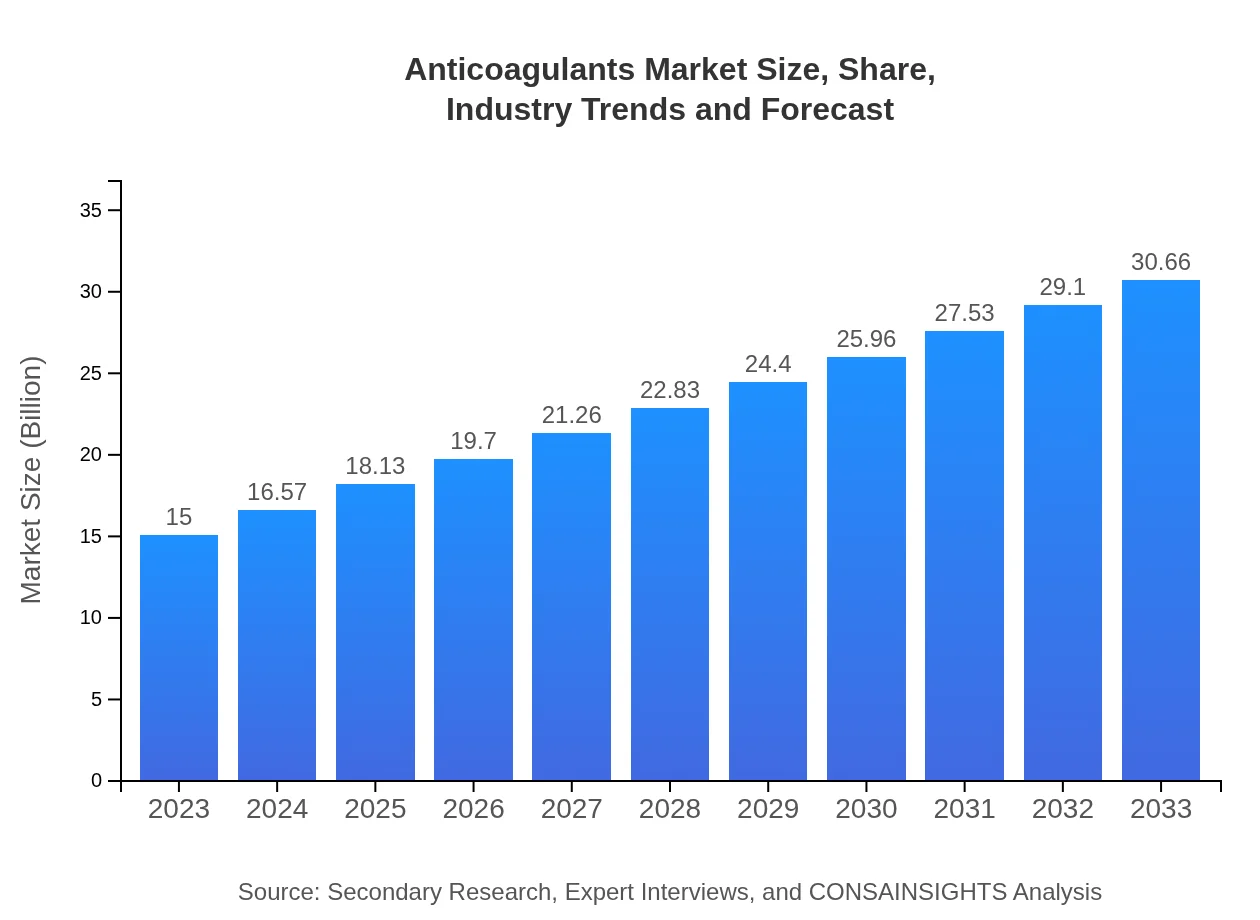
Anticoagulants Market — USD 15 billion in 2023, Growing to USD 30.66B by 2033 at 7.2% CAGR
This report offers a comprehensive analysis of the Anticoagulants market, highlighting key market trends, size projections from 2023 to 2033, and valuable insights into regional dynamics and segment performance.
Key Takeaways
- Global anticoagulant market expands from $15.00 Billion in 2023 to $30.66 Billion in 2033 at a 7.2% CAGR.
- North America is largest regional market, while no single fastest-growing region is stated because regional CAGR differences remain within 0.15 percentage points.
- Europe grows from $5.09 Billion in 2023 to $10.4 Billion in 2033, reflecting strong demand in established healthcare systems.
- Asia Pacific advances from $2.51 Billion in 2023 to $5.14 Billion in 2033, driven by expanding access and rising disease burden.
- Top industry participants include Bayer AG, Bristol-Myers Squibb, Sanofi, and Roche, shaping product development and distribution strategies.
Anticoagulants Market Report — Executive Summary
North America remains largest market by forecast-period value, while no single fastest-growing region is stated because top regional growth rates are separated by less than 0.15 percentage points. The market for anticoagulants is projected to double in value from $15.00 Billion in 2023 to $30.66 Billion by 2033, reflecting steady expansion at a 7.2% CAGR. Key demand drivers include increasing cardiovascular disease prevalence, a growing elderly population, and wider access to treatment modalities. Shifts toward newer oral agents and improved formulations are reshaping therapeutic mixes and channel strategies. The report examines segmentation by product type, end user, distribution channel, therapeutic indication, and route of administration, and evaluates regional trajectories with North America as the largest market. Competitive dynamics feature major pharmaceutical companies such as Bayer AG, Bristol-Myers Squibb, Sanofi, and Roche. The analysis highlights market risks including pricing pressures and regulatory complexities, while pointing to opportunities in innovation and expanded care delivery models across hospitals, clinics, and home care settings.
Key Growth Drivers
- Rising incidence of cardiovascular and thrombotic conditions increasing demand for anticoagulant therapies.
- Ageing populations in key markets driving long-term need for chronic anticoagulation management.
- Adoption of newer oral anticoagulants and improved formulations enhancing treatment convenience and adherence.
- Expanded healthcare access and distribution networks enabling broader patient reach in emerging markets.
- Ongoing R&D and product launches by leading firms reinforcing therapeutic options and market depth.
| Metric | Value |
|---|---|
| Study Period | 2023 - 2033 |
| 2023 Market Size | $15.00 Billion |
| CAGR (2023-2033) | 7.2% |
| 2033 Market Size | $30.66 Billion |
| Top Companies | Bayer AG, Bristol-Myers Squibb, Sanofi, Roche |
| Published Date | 12 October 2024 |
| Last Modified Date | 25 May 2026 |
Anticoagulants Market Overview
Customize Anticoagulants Market Report market research report
- ✔ Get in-depth analysis of Anticoagulants market size, growth, and forecasts.
- ✔ Understand Anticoagulants's regional dynamics and industry-specific trends.
- ✔ Identify potential applications, end-user demand, and growth segments in Anticoagulants
What is the Market Size & CAGR of Anticoagulants Market Report market in 2023?
Anticoagulants Industry Analysis
Anticoagulants Market Segmentation and Scope
Tell us your focus area and get a customized research report.
Anticoagulants Market Report Market Analysis Report by Region
Europe Anticoagulants Market Report:
Europe grows from $5.09 Billion in 2023 to $10.4 Billion in 2033. 09 Billion in 2023 to $10.4 Billion in 2033, driven by mature healthcare infrastructure, strong clinical adoption of advanced anticoagulant therapies, and ongoing investment in chronic care management.Asia Pacific Anticoagulants Market Report:
Asia Pacific grows from $2.51 Billion in 2023 to $5.14 Billion in 2033. 51 Billion in 2023 to $5.14 Billion in 2033, supported by improving healthcare access, rising incidence of thrombotic conditions, and broader availability of newer therapeutic options.North America Anticoagulants Market Report:
North America is largest regional market, rising from $5.21 Billion in 2023 to $10.64 Billion in 2033. This trajectory reflects established healthcare systems, high treatment adoption rates, and significant clinical focus on cardiovascular and thrombotic disease management.South America Anticoagulants Market Report:
Latin America grows from $0.67 Billion in 2023 to $1.37 Billion in 2033. 67 Billion in 2023 to $1.37 Billion in 2033, reflecting gradual expansion of healthcare services, growing demand for chronic disease management, and expanding distribution channels.Middle East & Africa Anticoagulants Market Report:
Middle East and Africa grows from $1.52 Billion in 2023 to $3.11 Billion in 2033. 52 Billion in 2023 to $3.11 Billion in 2033, with growth influenced by improving healthcare infrastructure, increased diagnosis rates, and wider treatment availability.Tell us your focus area and get a customized research report.
Research Methodology
Anticoagulants Market Analysis By Type
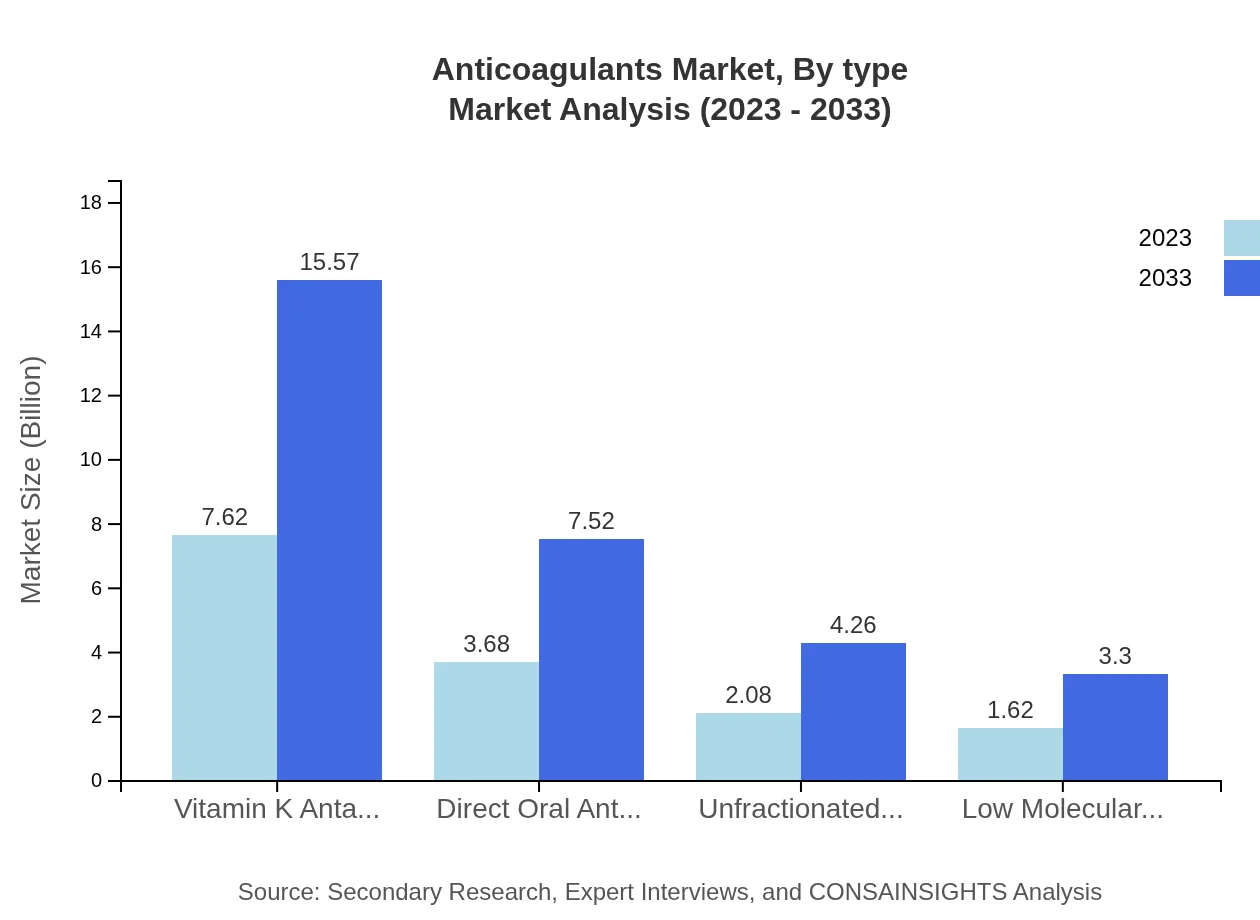
The Anticoagulants market, segmented by type, shows that Vitamin K Antagonists dominate in size with $7.62 billion in 2023, forecasting $15.57 billion by 2033. Direct Oral Anticoagulants (DOACs) are gaining traction, with a market size of $3.68 billion in 2023 growing to $7.52 billion by 2033. Unfractionated Heparin and Low Molecular Weight Heparin claimed $2.08 billion and $1.62 billion, respectively, in 2023, exhibiting potential growth to $4.26 billion and $3.30 billion by 2033.
Anticoagulants Market Analysis By Route Of Administration
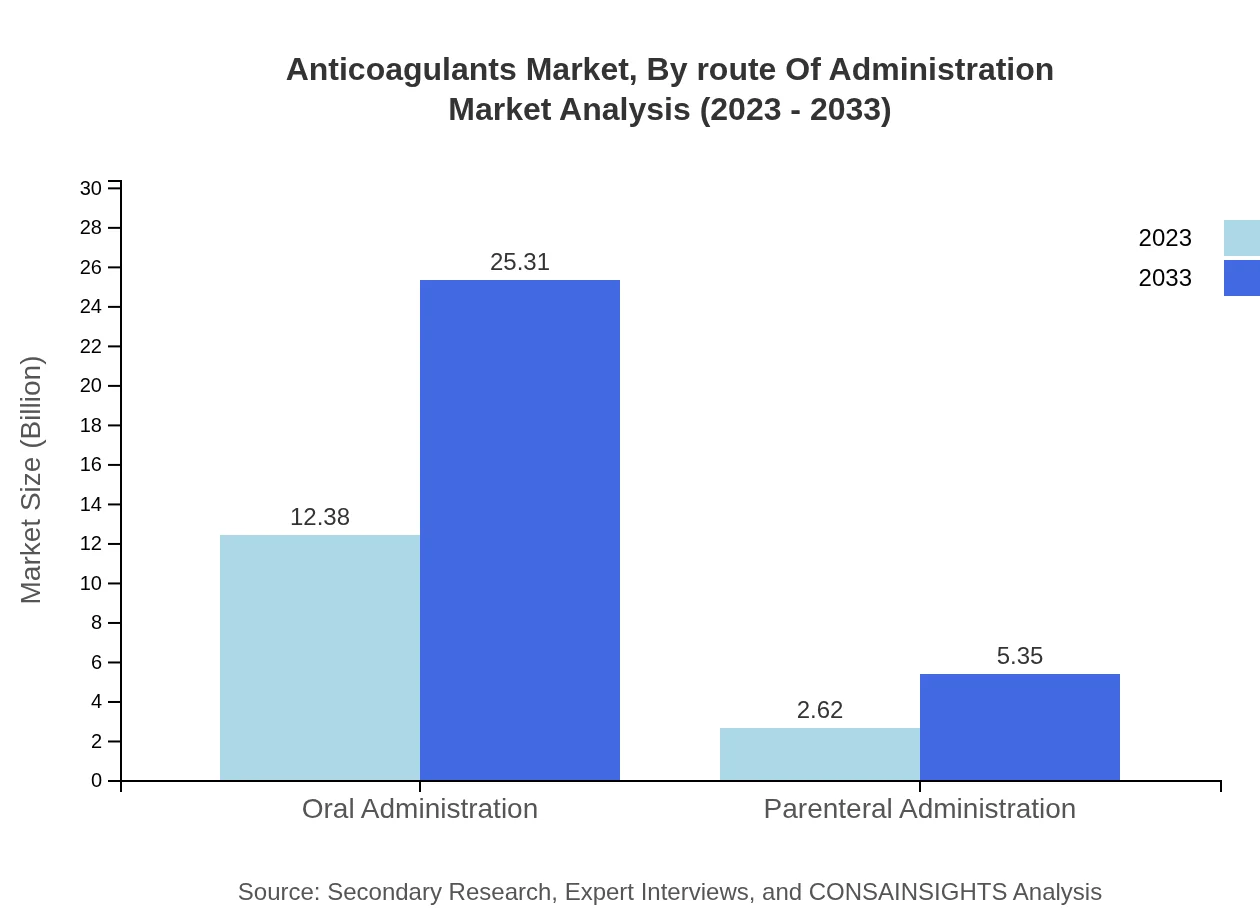
The oral administration route holds the largest market share, valued at $12.38 billion in 2023 with projections of $25.31 billion by 2033. Parenteral administration is also significant, expected to climb from $2.62 billion in 2023 to $5.35 billion by 2033. This expansion reflects increasing patient preference for oral medications and advancements in drug formulations.
Anticoagulants Market Analysis By Therapeutic Indication
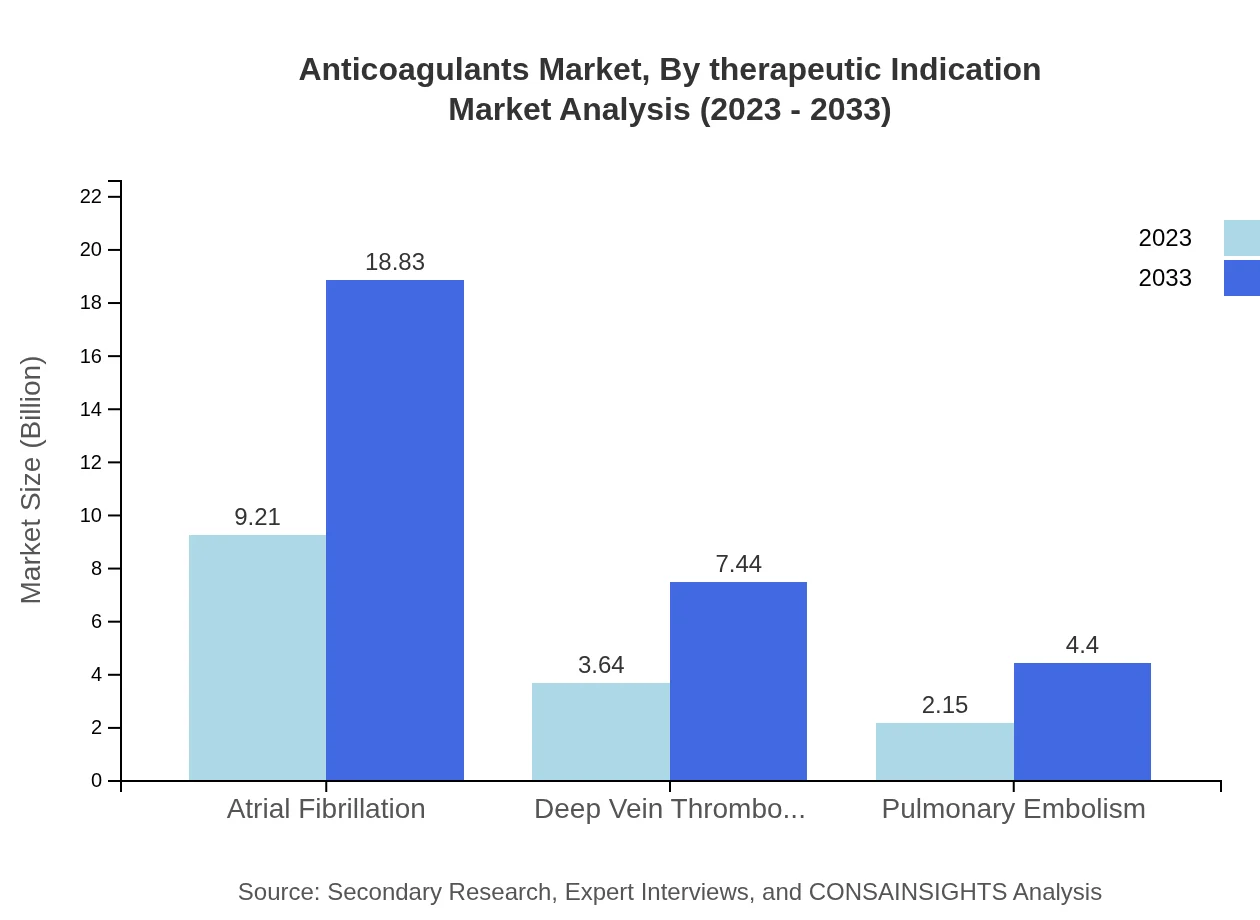
Atrial fibrillation is the leading therapeutic indication for Anticoagulants, anticipated to grow from $9.21 billion in 2023 to $18.83 billion by 2033. Other significant indications include Deep Vein Thrombosis (DVT) and Pulmonary Embolism, which are expected to grow to $7.44 billion and $4.40 billion respectively, underscoring the drug's essential role in managing these critical conditions.
Anticoagulants Market Analysis By End User
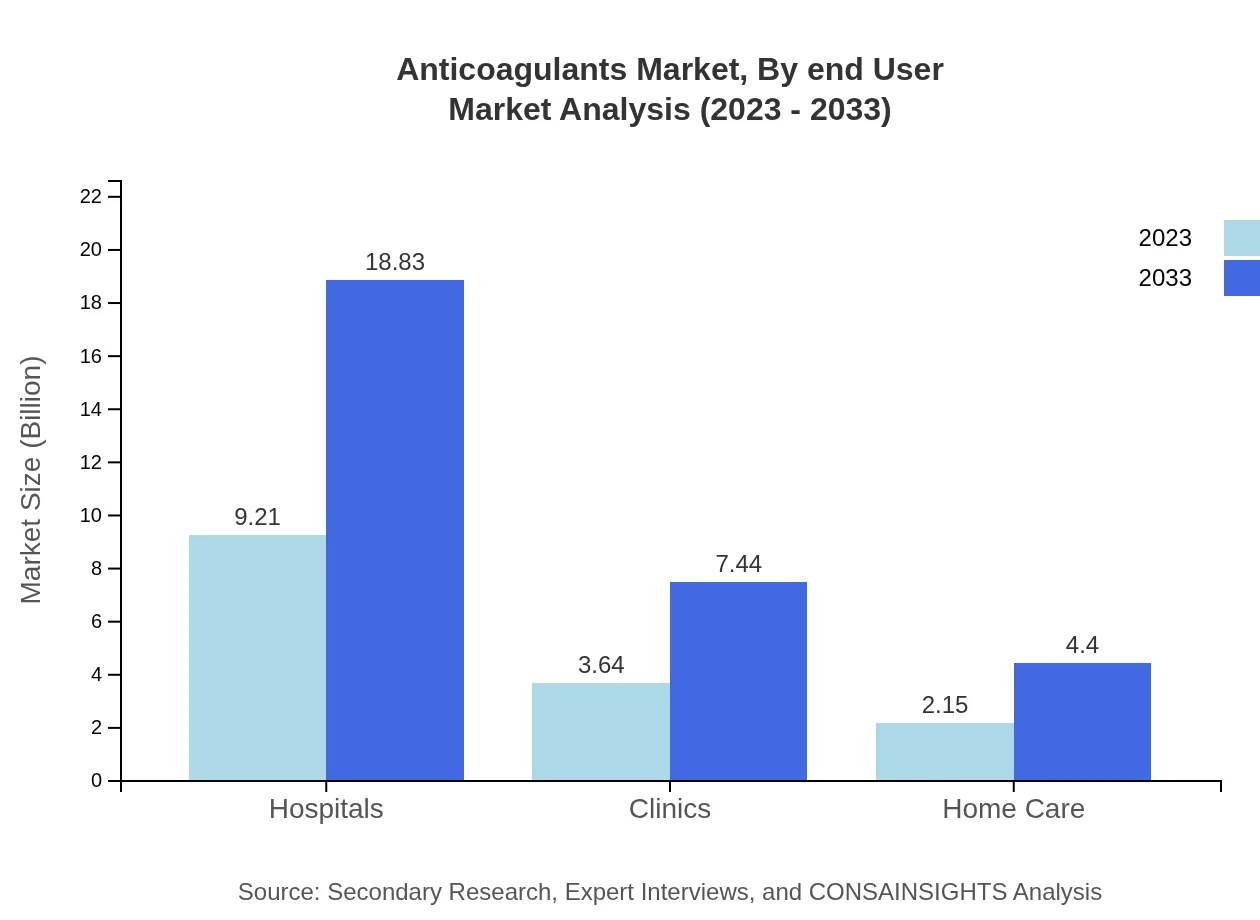
The hospital sector represents the largest end-user segment, forecasted to reach $18.83 billion by 2033 from $9.21 billion in 2023. Clinics and home care settings also show notable demand, driven by increased accessibility to anticoagulant therapies.
Anticoagulants Market Analysis By Distribution Channel
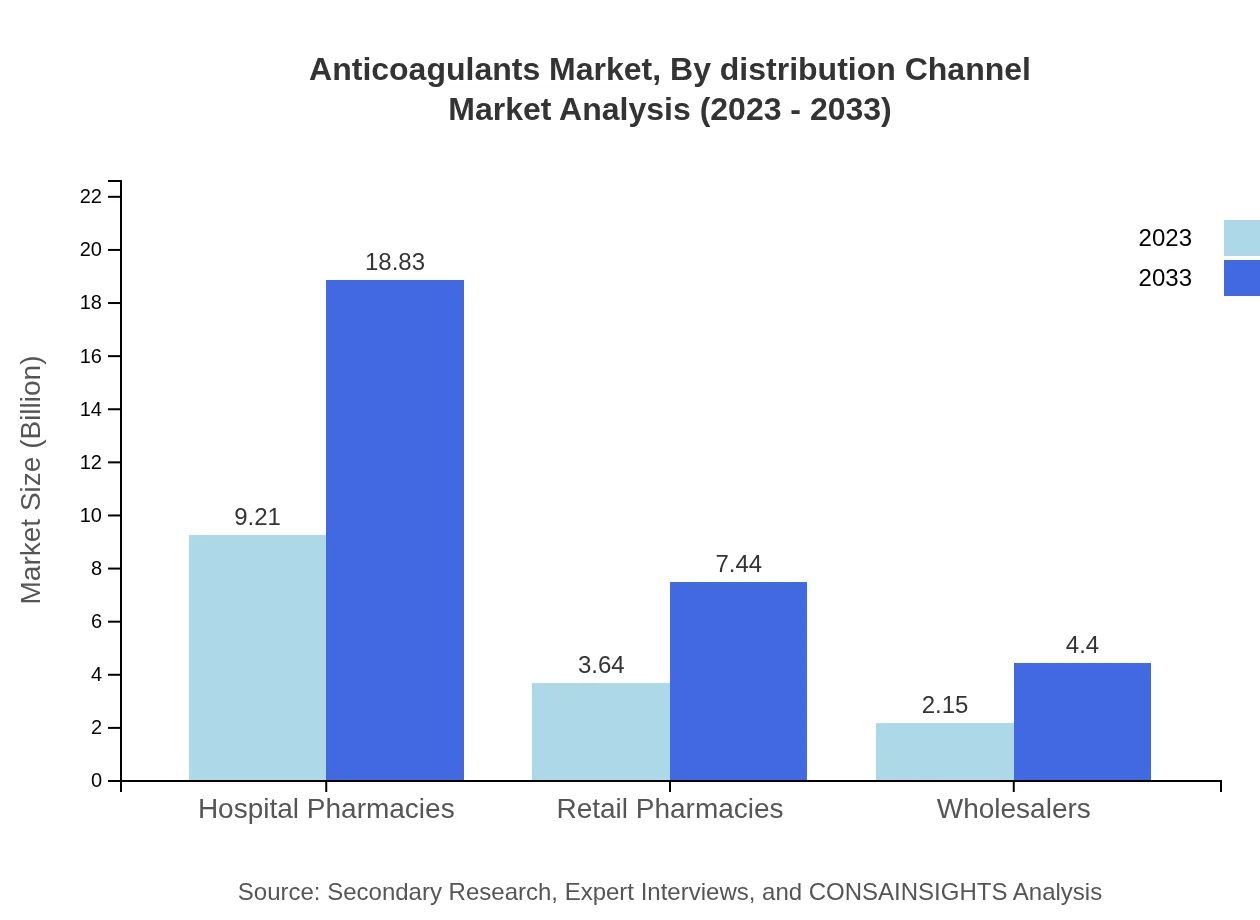
Hospital Pharmacies are the primary distribution channel, expected to maintain a market share of $18.83 billion by 2033. Retail pharmacies account for a significant segment as well, projected to grow substantially due to rising consumer preference and availability of anticoagulant therapies over retail networks.
Anticoagulants Market Trends and Future Forecast
Tell us your focus area and get a customized research report.
Global Market Leaders and Top Companies in Anticoagulants Industry
Bayer AG:
A leading global pharmaceutical company, Bayer AG is at the forefront of anticoagulant innovation, with products like Xarelto revolutionizing treatment options for patients with thromboembolic disorders.Bristol-Myers Squibb:
Bristol-Myers Squibb is recognized for its research and development of anticoagulants including Eliquis, known for its effectiveness in treating atrial fibrillation and DVT, contributing significantly to market revenue.Sanofi:
Sanofi plays a vital role in the anticoagulants market with its product Lovenox, a low molecular weight heparin widely utilized for the prevention and treatment of thrombotic conditions.Roche:
As a global healthcare leader, Roche is involved in developing innovative anticoagulant treatments that address critical patient needs, enhancing overall therapeutic options.We're grateful to work with incredible clients.




FAQs
What is the market size of the anticoagulants market in 2023?
The market size in 2023 is $15.00 Billion, based on reported figures for the global anticoagulants market at the start of the forecast period.
How big will the market be in 2033?
By 2033 the market is projected to reach $30.66 Billion, reflecting the end-point value for the forecast period provided in the report data.
What is CAGR for the forecast period?
The compound annual growth rate for the 2023 to 2033 forecast period is 7.2%, as specified in the market overview and sizing data.
What are the primary drivers of market growth?
Primary drivers include rising cardiovascular disease prevalence, demographic aging, increased access to care, and the adoption of newer oral anticoagulant formulations.
Which companies are leading the anticoagulants market?
Top companies identified in the report include Bayer AG, Bristol-Myers Squibb, Sanofi, and Roche as significant participants in the market landscape.
What are the main distribution channels for anticoagulants?
Key distribution channels listed are hospital pharmacies, retail pharmacies, and wholesalers, reflecting traditional pathways to patients and care settings.
Is there a single fastest Growing region in the Anticoagulants Market Report market?
No single fastest-growing region is stated for the Anticoagulants Market Report market because the top regional implied CAGR values are within 0.15 percentage points of each other, making the ranking too close to call reliably.
Which therapeutic indications are covered?
The report covers major indications including atrial fibrillation, deep vein thrombosis (DVT), and pulmonary embolism, which account for substantial clinical demand.
What end users consume anticoagulant products?
Primary end users include hospitals, clinics, and home care settings, reflecting acute and chronic administration environments for anticoagulant therapies.
How is route of administration categorized?
Routes are classified into oral administration and parenteral administration, representing the principal methods of delivering anticoagulant treatments.