
Antithrombotic Drugs Market Report
First published: 12 October 2024 | Last updated: 25 May 2026 | Report Code: antithrombotic-drugs
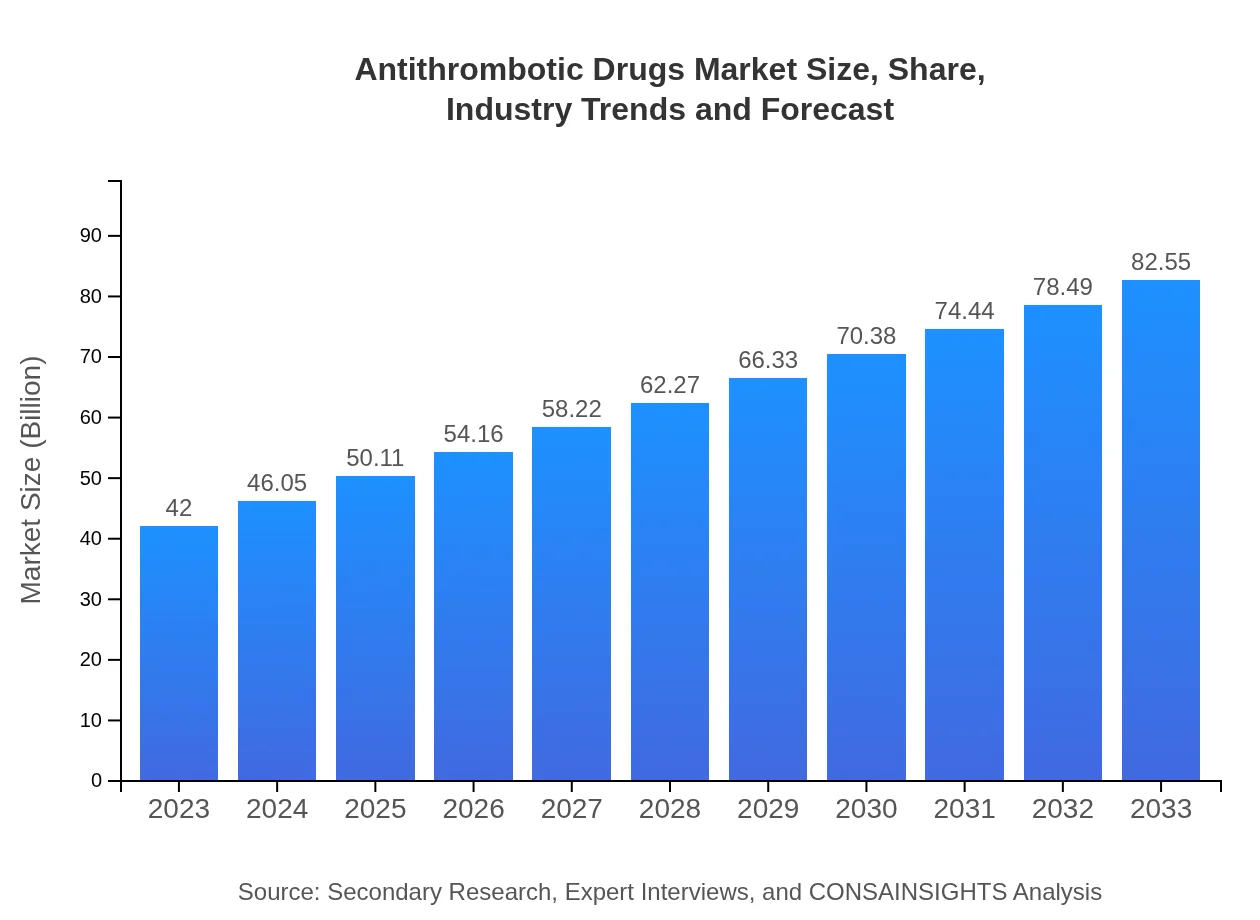
Antithrombotic Drugs Market — USD $42 Billion in 2023, Growing to USD 82.55null by 2033 at 6.8% CAGR
This report provides a comprehensive analysis of the Antithrombotic Drugs market, covering market size, growth projections, and trends from 2023 to 2033. It includes insights into various segments, regional dynamics, industry leaders, and future forecasts.
Key Takeaways
- Global market expands from $42.00 Billion in 2023 to $82.55 Billion by 2033 at a 6.8% CAGR.
- North America is largest regional market, while no single fastest-growing region is stated because regional CAGR differences remain within 0.15 percentage points.
- North America is the largest region, growing from $14.39 Billion in 2023 to $28.28 Billion in 2033.
- Europe and Asia Pacific show strong absolute growth: Europe from $11.4 Billion to $22.4 Billion; Asia Pacific from $8.97 Billion to $17.63 Billion.
- Top companies shaping the market include Bayer AG, Bristol-Myers Squibb, Pfizer Inc., and Johnson & Johnson.
- Segmentation covers drug class, application, patient type, therapeutic area, and distribution channels, reflecting diverse treatment needs.
Antithrombotic Drugs Market Report — Executive Summary
North America remains largest market by forecast-period value, while no single fastest-growing region is stated because top regional growth rates are separated by less than 0.15 percentage points. The Antithrombotic Drugs market is projected to rise from $42.00 Billion in 2023 to $82.55 Billion by 2033, implying a 6.8% CAGR over the 2023 to 2033 forecast period. Growth is supported by increasing prevalence of cardiovascular conditions, ongoing formulation improvements, and a larger geriatric population requiring long-term management. Market structure is multifaceted, with major drug classes including anticoagulants, antiplatelet agents, and thrombolytics, and applications spanning cardiovascular disease management, surgical procedures, and preventive care. Distribution channels range from hospital pharmacies and retail outlets to e-commerce. Competitive activity centers on product development and clinical performance, with companies such as Bayer AG, Bristol-Myers Squibb, Pfizer Inc., and Johnson & Johnson actively participating. Regional patterns show substantial expansion across North America, Europe, and Asia Pacific, while policy and regulatory factors continue to influence adoption and access. No single region is identified as fastest-growing due to closely aligned regional growth rates.
Key Growth Drivers
- Rising incidence of cardiovascular diseases increasing demand for antithrombotic therapies.
- Advances in drug formulations and targeted therapies that improve efficacy and safety profiles.
- Growing geriatric population leading to higher prevalence of thromboembolic conditions and long-term therapy needs.
- Expanded distribution reach, including hospital pharmacies, retail pharmacies, and e-commerce channels.
- Ongoing clinical research and regulatory approvals driving new product introductions and market expansion.
| Metric | Value |
|---|---|
| Study Period | 2023 - 2033 |
| 2023 Market Size | $42.00 Billion |
| CAGR (2023-2033) | 6.8% |
| 2033 Market Size | $82.55 Billion |
| Top Companies | Bayer AG, Bristol-Myers Squibb, Pfizer Inc., Johnson & Johnson |
| Published Date | 12 October 2024 |
| Last Modified Date | 25 May 2026 |
Antithrombotic Drugs Market Overview
Customize Antithrombotic Drugs Market Report market research report
- ✔ Get in-depth analysis of Antithrombotic Drugs market size, growth, and forecasts.
- ✔ Understand Antithrombotic Drugs's regional dynamics and industry-specific trends.
- ✔ Identify potential applications, end-user demand, and growth segments in Antithrombotic Drugs
What is the Market Size & CAGR of Antithrombotic Drugs Market Report market in 2023?
Antithrombotic Drugs Industry Analysis
Antithrombotic Drugs Market Segmentation and Scope
Tell us your focus area and get a customized research report.
Antithrombotic Drugs Market Report Market Analysis Report by Region
Europe Antithrombotic Drugs Market Report:
Europe grows from $11.4 Billion in 2023 to $22.4 Billion in 2033. Regional expansion is driven by established cardiovascular care pathways, ongoing therapeutic innovation, and active regulatory environments that support new antithrombotic approvals and wider clinical use.Asia Pacific Antithrombotic Drugs Market Report:
Asia Pacific grows from $8.97 Billion in 2023 to $17.63 Billion in 2033. Growth is supported by rising cardiovascular disease incidence, expanding healthcare infrastructure, and growing access through hospital pharmacies, retail outlets, and e-commerce channels.North America Antithrombotic Drugs Market Report:
North America is largest regional market, rising from $14.39 Billion in 2023 to $28.28 Billion in 2033. Regional growth reflects strong healthcare infrastructure, concentrated clinical research activity, and broad access to hospital and retail distribution channels supporting antithrombotic adoption.South America Antithrombotic Drugs Market Report:
Latin America grows from $2.41 Billion in 2023 to $4.74 Billion in 2033. Market momentum is influenced by increasing cardiovascular disease burden, improving healthcare delivery systems, and greater availability of antithrombotic treatments across clinical settings.Middle East & Africa Antithrombotic Drugs Market Report:
Middle East and Africa grows from $4.83 Billion in 2023 to $9.49 Billion in 2033. Regional drivers include expanding healthcare investment, rising demand for cardiovascular therapies, and enhanced distribution networks improving patient access to antithrombotic medicines.Tell us your focus area and get a customized research report.
Research Methodology
Antithrombotic Drugs Market Analysis By Drug Class
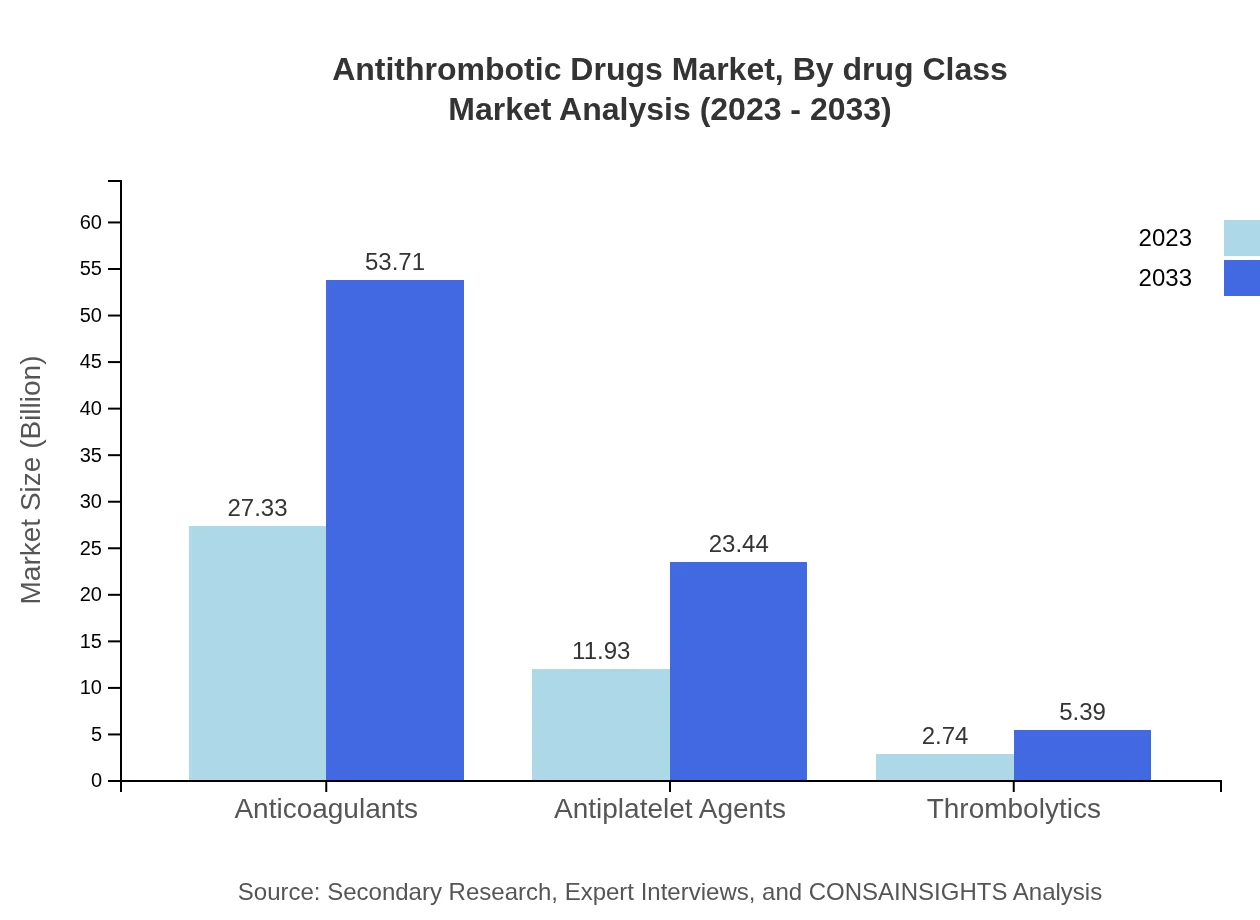
The drug class segment is dominated by anticoagulants, which accounted for a market size of $27.33 billion in 2023, expected to grow to $53.71 billion by 2033, capturing over 65% market share. Antiplatelet agents are also significant, with their market size projected to rise from $11.93 billion in 2023 to $23.44 billion by 2033, maintaining a 28.4% share. Thrombolytics, while smaller, are expected to grow as well.
Antithrombotic Drugs Market Analysis By Application
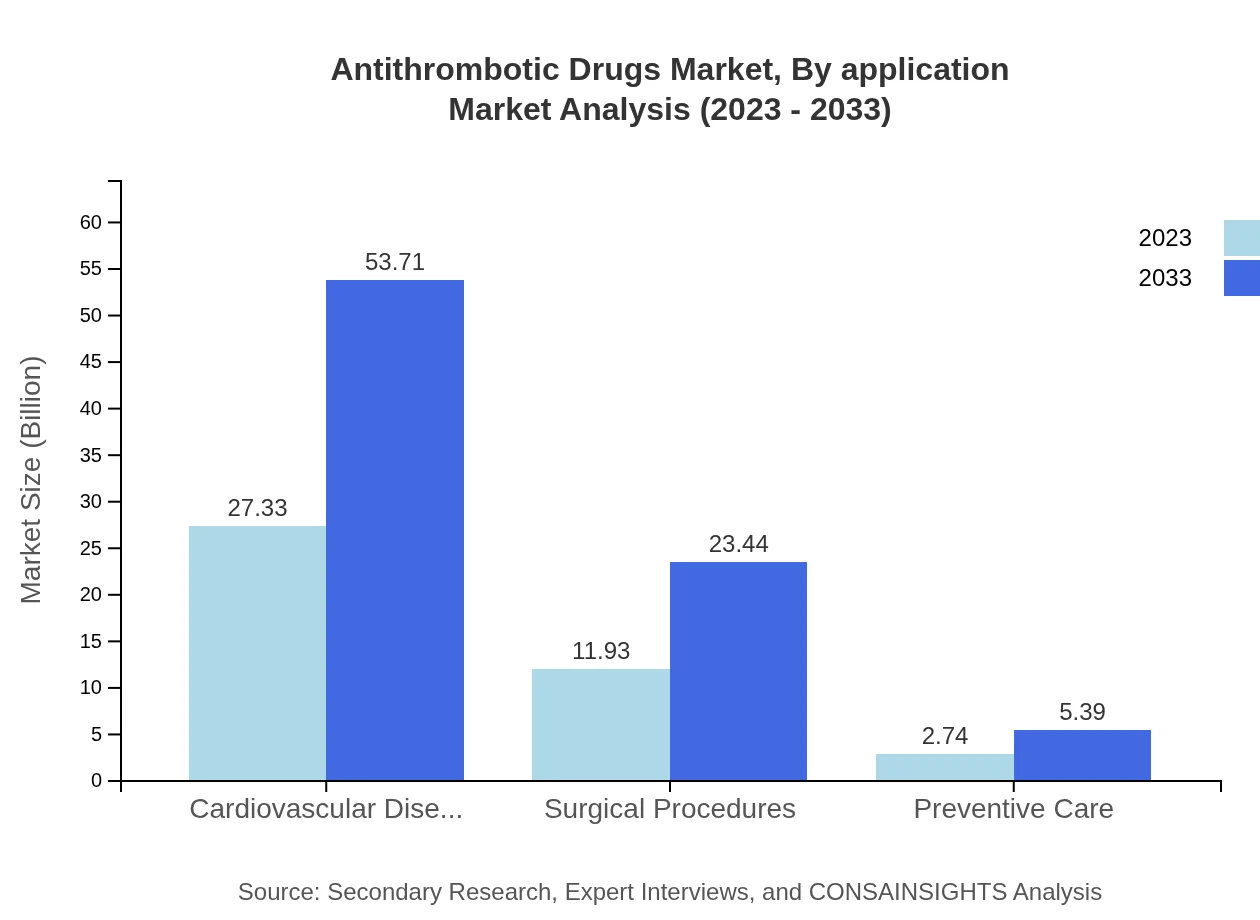
Applications of antithrombotic drugs can be segmented primarily into cardiovascular diseases management, accounting for $27.33 billion in 2023 and projected to maintain a share of 65% of the market. Surgical procedures and preventive care are also important segments, targeted at enhancing patient outcomes pre and post procedures.
Antithrombotic Drugs Market Analysis By Distribution Channel
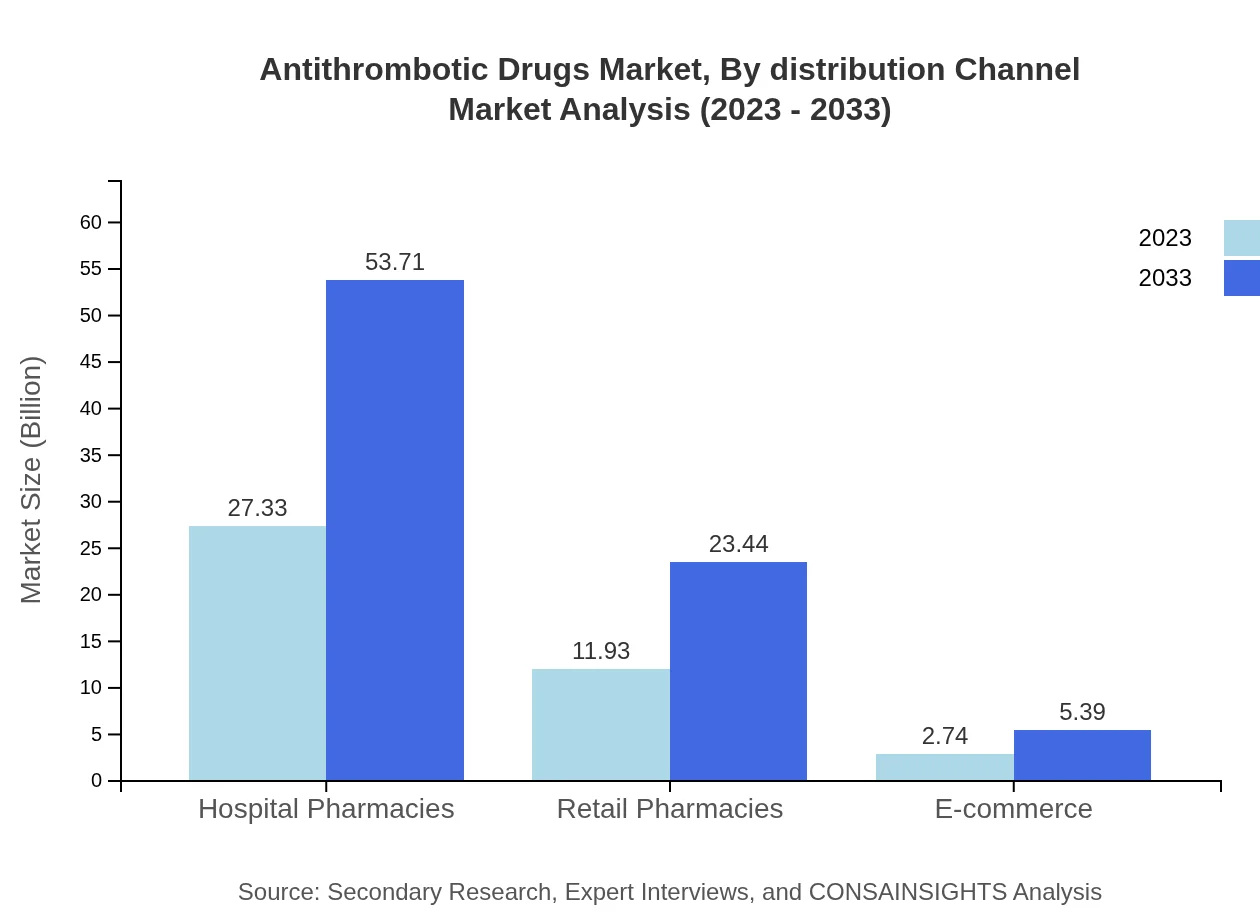
The distribution channel analysis shows that hospital pharmacies lead with a 65.07% market share, valued at $27.33 billion in 2023. Retail pharmacies are projected to grow from $11.93 billion to $23.44 billion due to increased access. E-commerce channels, though smaller at $2.74 billion in 2023, are anticipated to grow rapidly as digital health solutions gain traction.
Antithrombotic Drugs Market Analysis By Patient Type
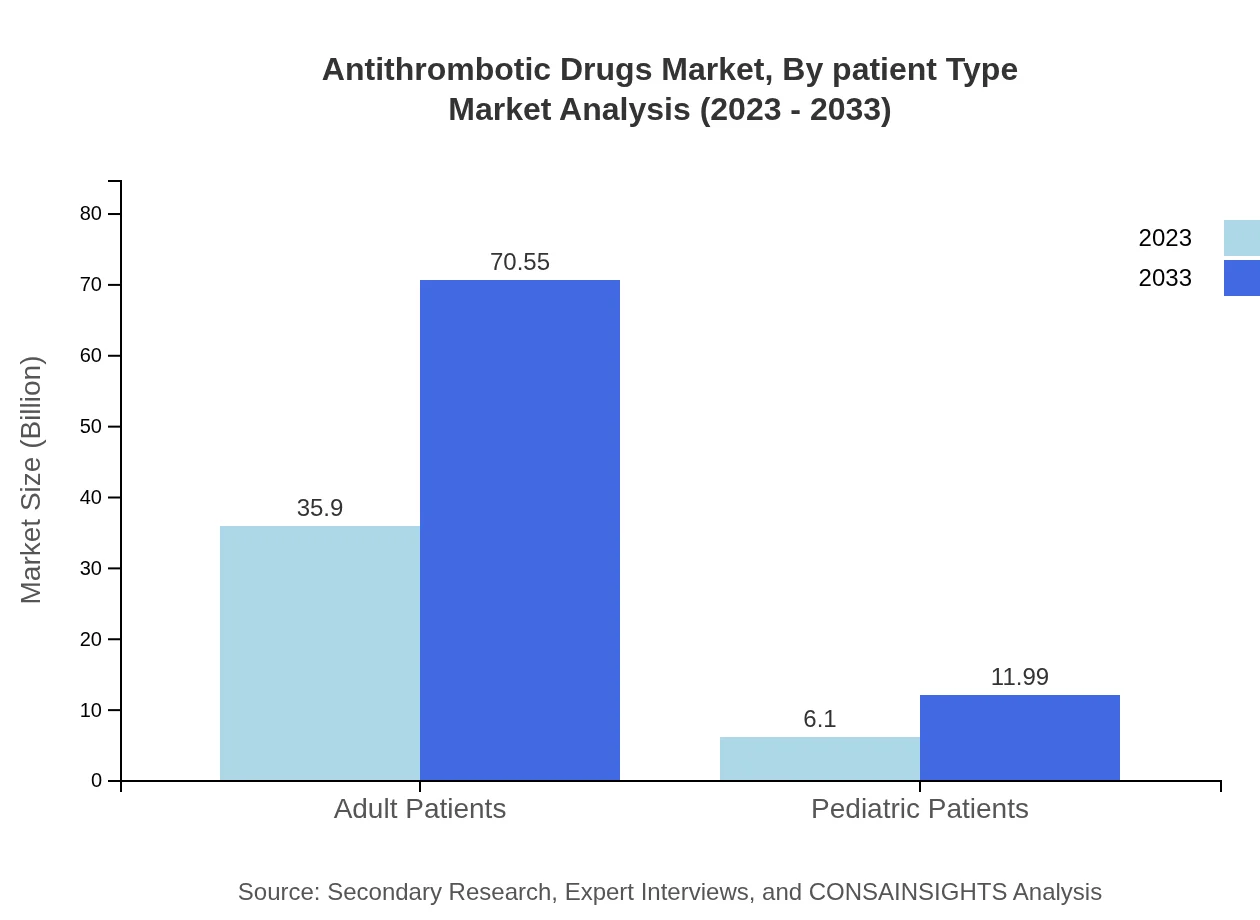
Adult patients comprise a major share at 85.47%, with market sizes expected to grow from $35.90 billion in 2023 to $70.55 billion by 2033. Pediatric patients have smaller representation but show growth potential, emphasizing the need for tailored therapies in this demographic.
Antithrombotic Drugs Market Analysis By Therapeutic Area
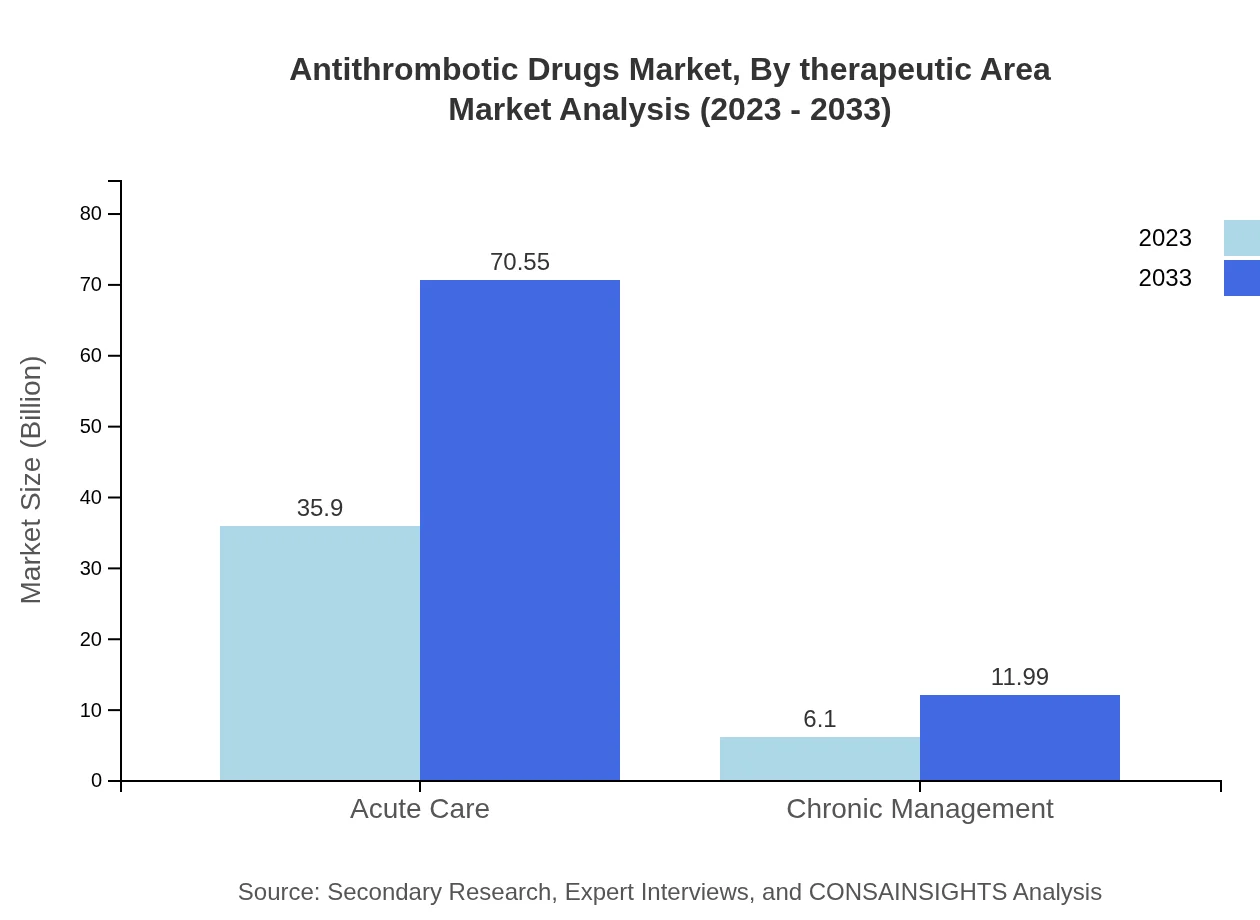
The primary therapeutic area remains cardiovascular diseases, dominating the market. Emerging focus on chronic management and acute care highlights the need for innovative therapies addressing these critical health issues, with respective market sizes expanding as the healthcare landscape evolves.
Antithrombotic Drugs Market Trends and Future Forecast
Tell us your focus area and get a customized research report.
Global Market Leaders and Top Companies in Antithrombotic Drugs Industry
Bayer AG:
Bayer AG is renowned for its comprehensive range of antithrombotic products, particularly its offering of rivaroxaban, which has transformed the management of thromboembolic disorders.Bristol-Myers Squibb:
Bristol-Myers Squibb is a key player in the antithrombotic segment, recognized for its innovation with agents like apixaban that cater to specific patient needs.Pfizer Inc.:
Pfizer focuses on both research and the distribution of anticoagulant medications, addressing the growing demand for effective anticoagulation therapy.Johnson & Johnson:
Johnson & Johnson's broad portfolio includes pivotal antithrombotic solutions, contributing significantly to the industry with insights from clinical research.We're grateful to work with incredible clients.



FAQs
What is the market size of the Antithrombotic Drugs market in 2023?
The market size in 2023 is $42.00 Billion as provided in the report data.
How big will the Antithrombotic Drugs market be in 2033?
The market is projected to reach $82.55 Billion by 2033 according to the forecast figures supplied.
What is CAGR for the Antithrombotic Drugs market over the forecast period?
The compound annual growth rate for 2023 to 2033 is 6.8% as stated in the input data.
Is there a single fastest Growing region in the Antithrombotic Drugs Market Report market?
No single fastest-growing region is stated for the Antithrombotic Drugs Market Report market because the top regional implied CAGR values are within 0.15 percentage points of each other, making the ranking too close to call reliably.
Who are the top companies in the Antithrombotic Drugs market?
Top companies listed include Bayer AG, Bristol-Myers Squibb, Pfizer Inc., and Johnson & Johnson.
What are the main drug class segments covered in the report?
The report includes anticoagulants, antiplatelet agents, and thrombolytics as primary drug class subsegments.
Why is demand rising for antithrombotic drugs?
Demand is rising due to higher incidence of cardiovascular disease, aging populations, and improvements in drug formulations and delivery.
How is the market segmented by distribution channel?
Distribution channels listed are hospital pharmacies, retail pharmacies, and e-commerce platforms.
What patient types are considered in the market segmentation?
Patient-type segmentation includes adult patients and pediatric patients as specified in the input.
Which applications drive use of antithrombotic therapies?
Key applications noted are cardiovascular disease management, surgical procedures, and preventive care.