

Behcets Disease Market Report
First published: 21 October 2024 | Last updated: 25 May 2026 | Report Code: behcets-disease
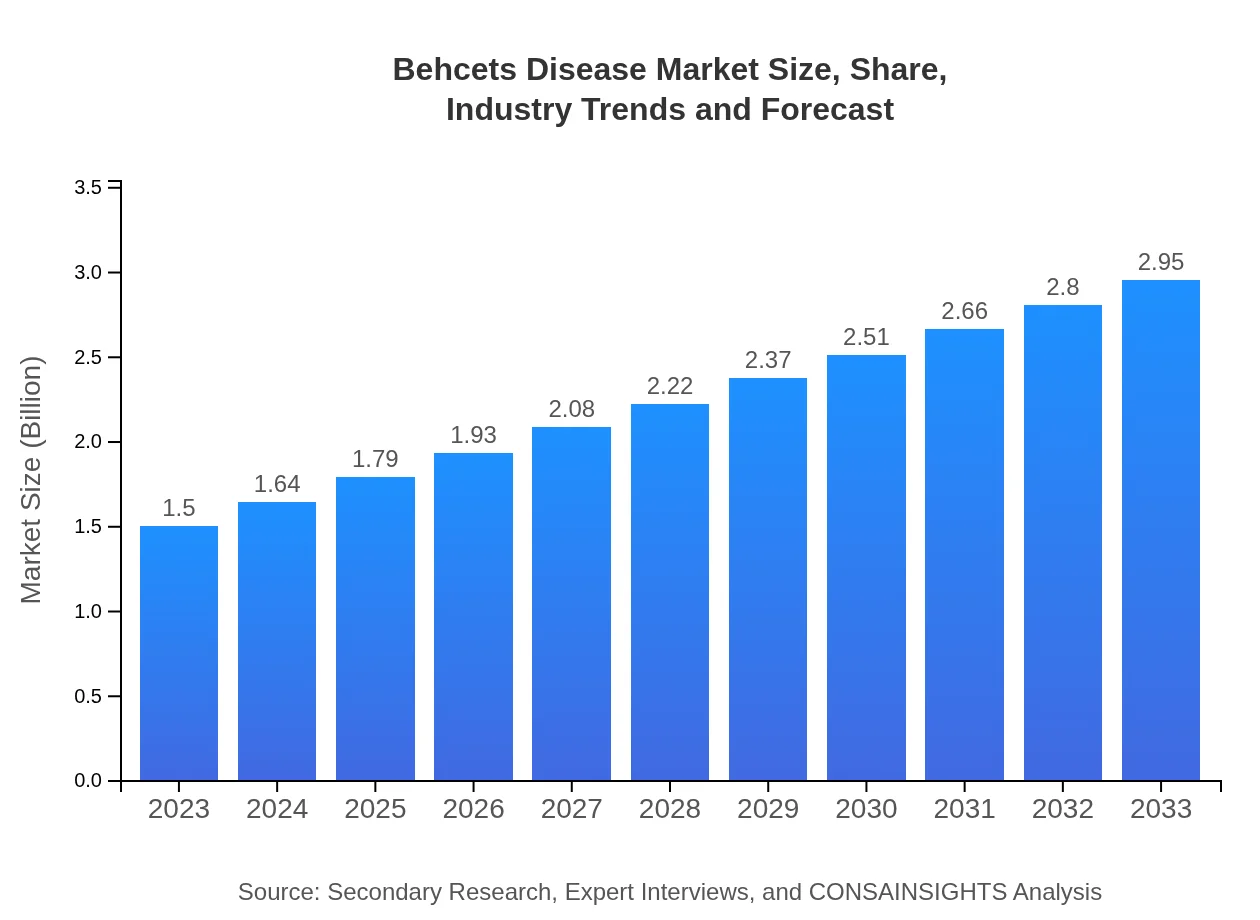
Behcets Disease Market — USD 1.5 billion in 2023, Growing to USD 2.95B by 2033 at 6.8% CAGR
This report provides an in-depth analysis of the Behçet's Disease market from 2023 to 2033, covering market trends, size, segmentation, regional insights, and forecast data for stakeholders and investors.
Key Takeaways
- Global market expands from $1.50 Billion in 2023 to $2.95 Billion in 2033 at a 6.8% CAGR.
- North America is largest regional market, while no single fastest-growing region is stated because regional CAGR differences remain within 0.15 percentage points.
- Therapy mix includes anti-cytokine therapies, immunosuppressants, and topical agents with growing interest in targeted biologics.
- End-user landscape features hospitals, clinics, and homecare channels responding to shifting care patterns and outpatient management.
- Top companies actively present include Novartis, AbbVie, Pfizer, and Amgen, reflecting strong industry participation.
Behcets Disease Market Report — Executive Summary
North America remains largest market by forecast-period value, while no single fastest-growing region is stated because top regional growth rates are separated by less than 0.15 percentage points. This report evaluates market dynamics shaping Behcets Disease treatment through 2033. Key drivers include greater disease awareness, expanded therapeutic options—particularly anti-cytokine agents and immunosuppressants—and increased homecare adoption. The market value is estimated at $1.50 Billion in 2023 and is expected to reach $2.95 Billion by 2033, at a 6.8% CAGR over the forecast period 2023 to 2033. Regional breakdowns highlight North America as the largest regional market, supported by advanced healthcare infrastructure and high treatment uptake. Segment-level coverage addresses drug class, treatment stage, and end-user categories, while competitive review lists major players such as Novartis, AbbVie, Pfizer, and Amgen. Methodology combines primary expert interviews with secondary literature and internal validation to ensure robust insights for strategic planning and investment decisions.
Key Growth Drivers
- Rising clinical adoption of targeted biologics and anti-cytokine therapies expands treatment options and market uptake.
- Improved disease recognition among clinicians and patients increases diagnosis rates and demand for therapies.
- Shift toward outpatient and homecare delivery channels supports broader access beyond hospital settings.
- Ongoing R&D and pipeline activity stimulate product differentiation and new therapeutic introductions.
- Growth in specialty pharmaceutical investment and partnerships enhances availability of advanced treatments.
| Metric | Value |
|---|---|
| Study Period | 2023 - 2033 |
| 2023 Market Size | $1.50 Billion |
| CAGR (2023-2033) | 6.8% |
| 2033 Market Size | $2.95 Billion |
| Top Companies | Novartis, AbbVie, Pfizer , Amgen |
| Published Date | 21 October 2024 |
| Last Modified Date | 25 May 2026 |
Behcets Disease Market Overview
Customize Behcets Disease Market Report market research report
- ✔ Get in-depth analysis of Behcets Disease market size, growth, and forecasts.
- ✔ Understand Behcets Disease's regional dynamics and industry-specific trends.
- ✔ Identify potential applications, end-user demand, and growth segments in Behcets Disease
What is the Market Size & CAGR of Behcets Disease Market Report market in 2023?
Behcets Disease Industry Analysis
Behcets Disease Market Segmentation and Scope
Tell us your focus area and get a customized research report.
Behcets Disease Market Report Market Analysis Report by Region
Europe Behcets Disease Market Report:
Europe grows from $0.46 Billion in 2023 to $0.9 Billion in 2033. Regional expansion is supported by enhanced diagnostic awareness, reimbursement frameworks for specialty treatments, and adoption of biologics and immunosuppressants across care settings.Asia Pacific Behcets Disease Market Report:
Asia Pacific grows from $0.29 Billion in 2023 to $0.57 Billion in 2033. Market progress stems from increasing recognition of the disease, greater access to therapies, and growing investment in rare-disease research and specialty treatment availability.North America Behcets Disease Market Report:
North America is largest regional market, rising from $0.52 Billion in 2023 to $1.03 Billion in 2033. This trajectory reflects strong healthcare infrastructure, higher treatment accessibility, and concentrated adoption of advanced therapies, which bolster demand across hospital and outpatient channels.South America Behcets Disease Market Report:
Latin America grows from $0.07 Billion in 2023 to $0.13 Billion in 2033. Growth factors include expanding healthcare access, emphasis on specialty care adoption, and gradual uptake of pharmacological and homecare treatment approaches.Middle East & Africa Behcets Disease Market Report:
Middle East and Africa grows from $0.16 Billion in 2023 to $0.32 Billion in 2033. Regional drivers include improving healthcare infrastructure, rising awareness among clinicians, and increasing availability of immunosuppressants and targeted therapies.Tell us your focus area and get a customized research report.
Research Methodology
Behcets Disease Market Analysis By Drug Type
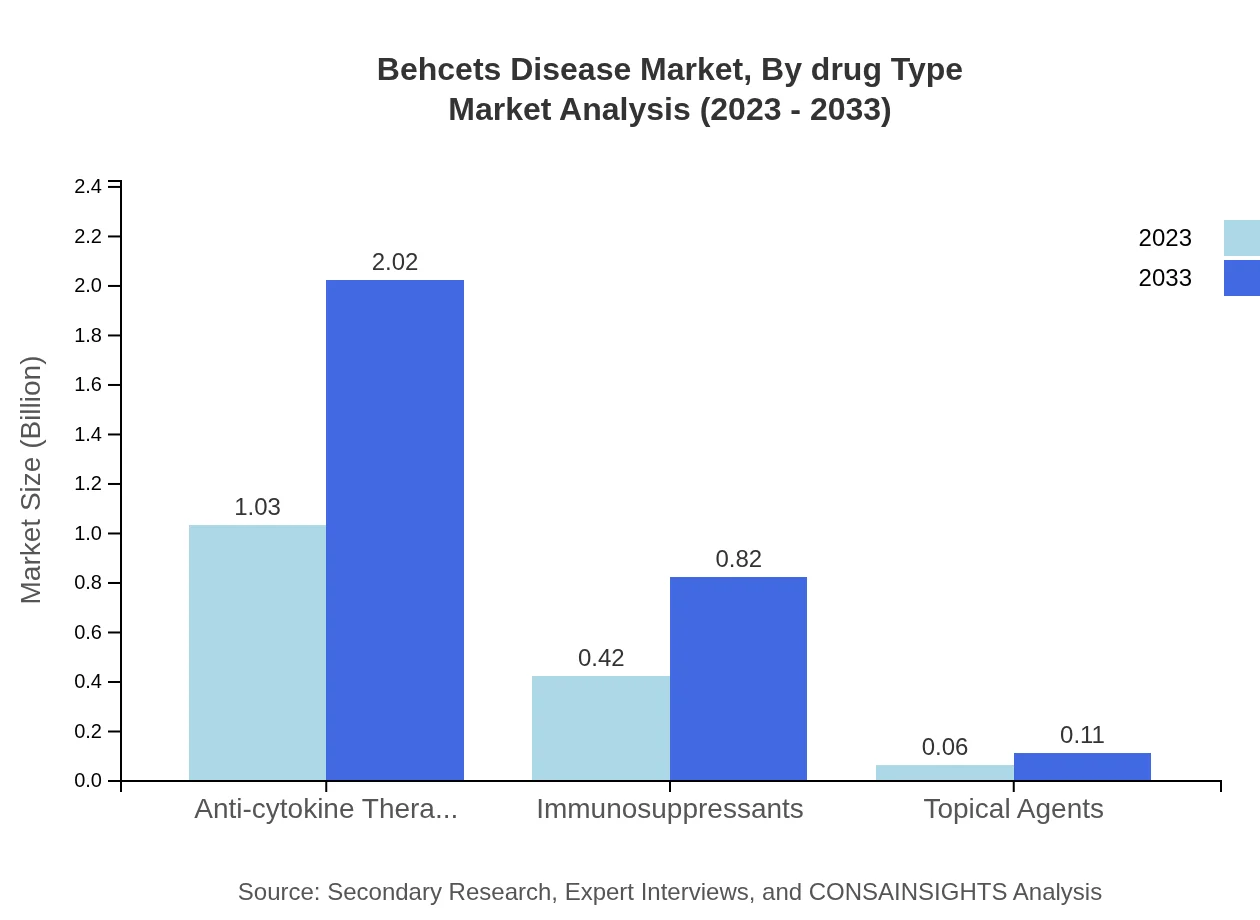
In 2023, the anti-cytokine therapies drive the market with a value of $1.03 billion, expected to double to $2.02 billion by 2033, while immunosuppressants occupy a secondary position with $0.42 billion in 2023, projected to reach $0.82 billion by 2033. Topical agents, although growing, represent a smaller market share across both years.
Behcets Disease Market Analysis By Treatment Method
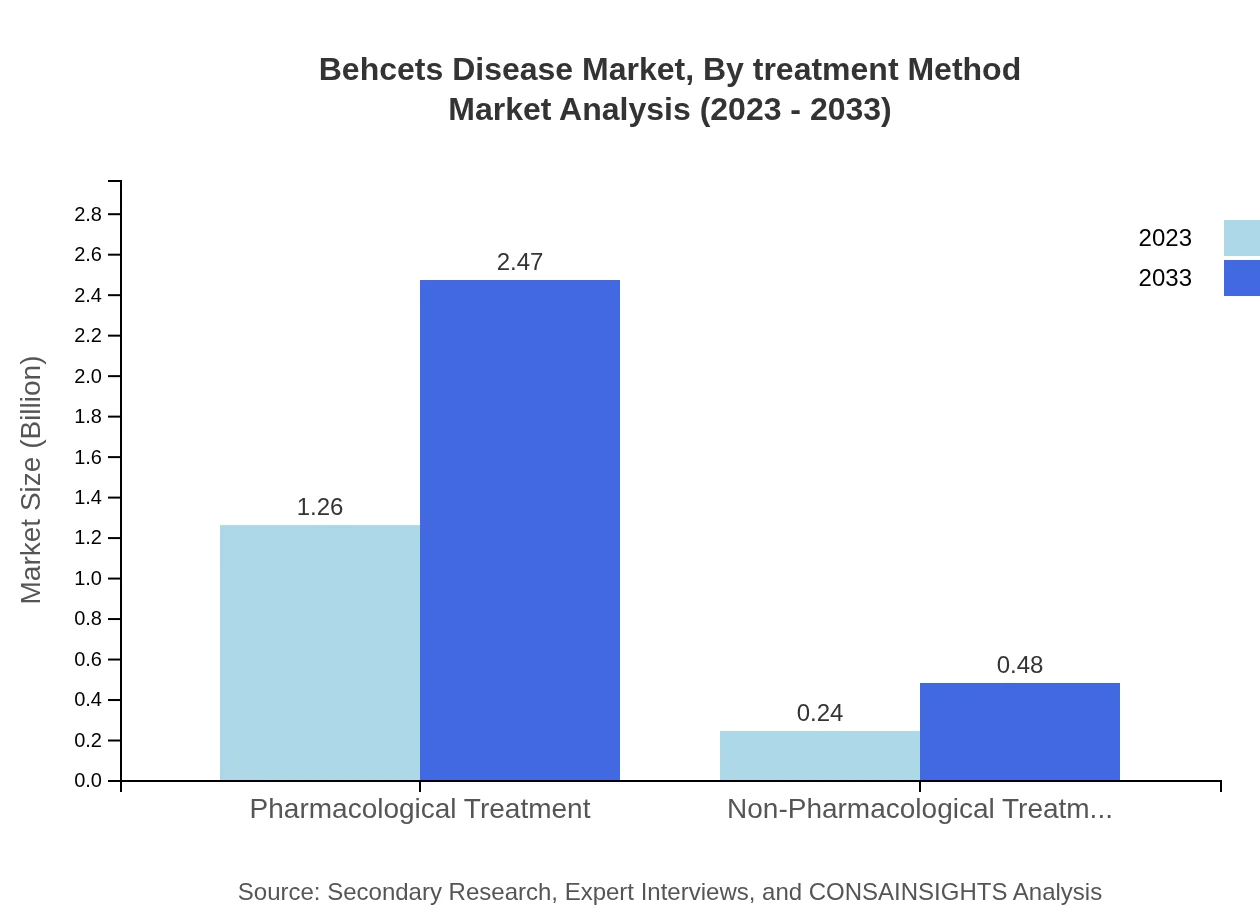
Acute phase treatments currently dominate the market, valued at $1.26 billion in 2023 and expected to grow to $2.47 billion by 2033. Maintenance treatments, while smaller, are growing steadily, anticipated to increase from $0.24 billion to $0.48 billion in the same timeframe.
Behcets Disease Market Analysis By End User
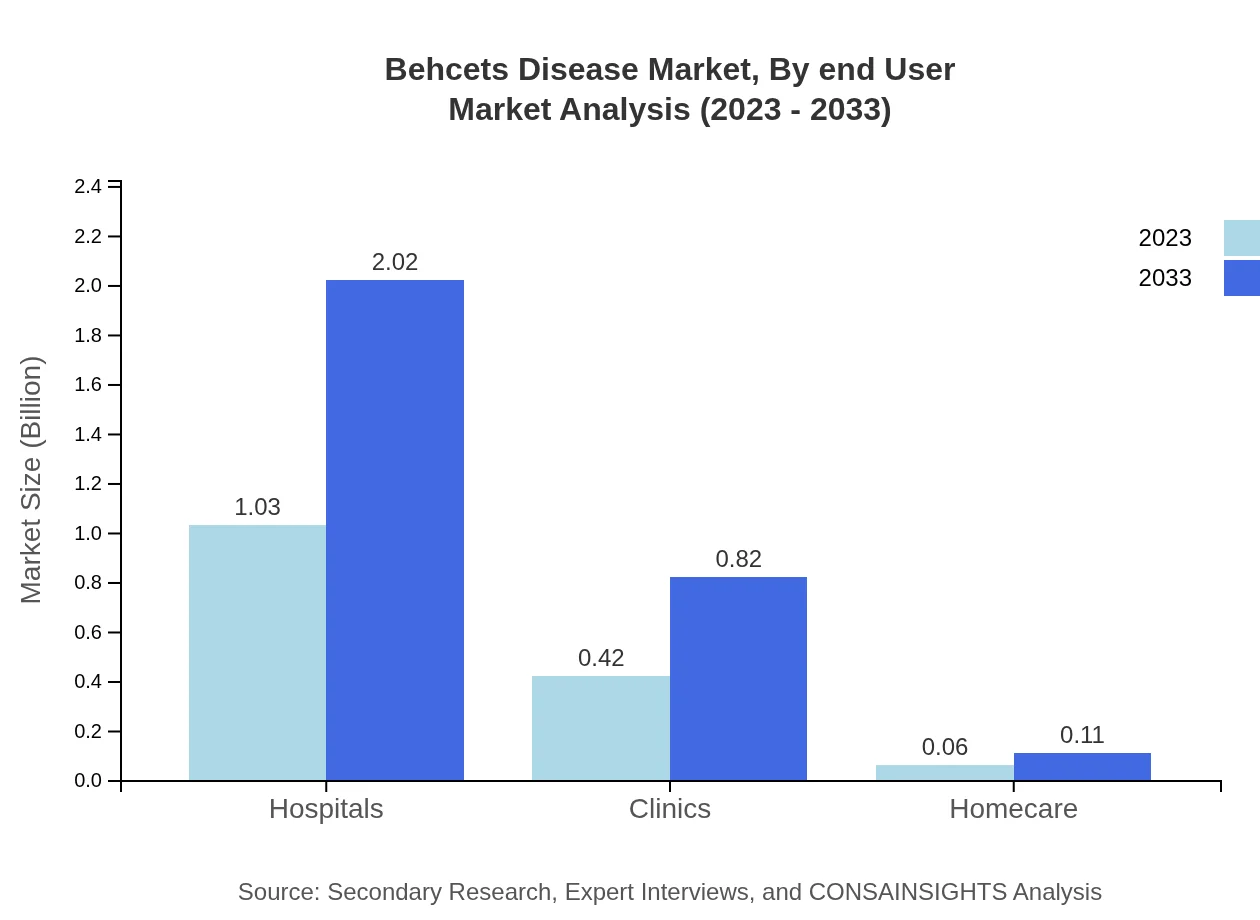
Hospitals are leading end-users, currently maintaining a market share of 68.5%. Clinics, while capturing 27.76% of the market share, show potential for growth through enhanced outpatient care and services.
Behcets Disease Market Analysis By Therapy Stage
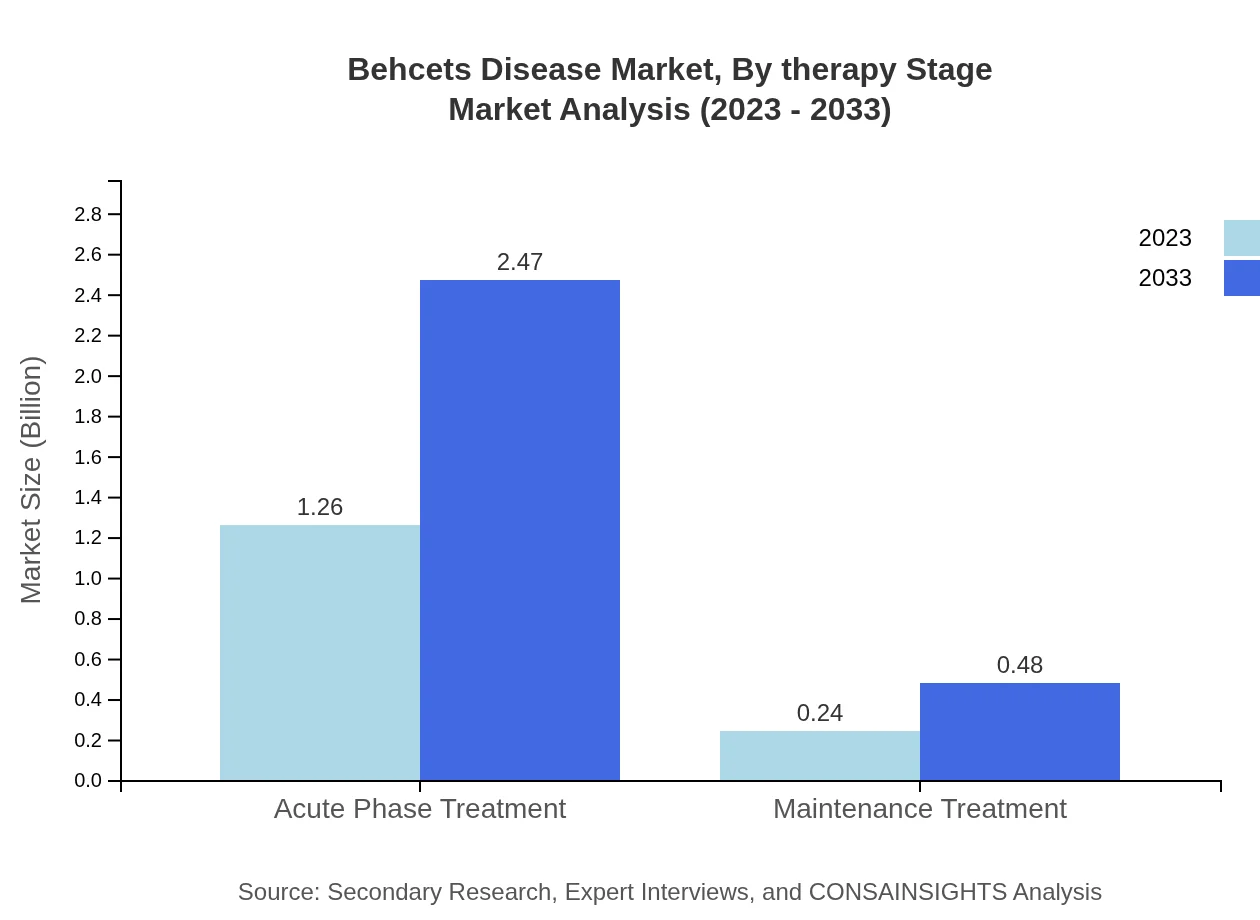
The market shows a clear bifurcation between acute and maintenance treatment stages, with acute therapies commanding 83.71% of the market share in 2023. There is growing interest in maintenance therapies as the need for long-term disease management increases.
Behcets Disease Market Trends and Future Forecast
Tell us your focus area and get a customized research report.
Global Market Leaders and Top Companies in Behcets Disease Industry
Novartis:
Novartis is known for its innovative therapies in rare diseases, including treatments for Behçet's Disease, with a focus on biologics that enhance patient outcomes.AbbVie:
AbbVie specializes in immunology and has developed several key therapies aimed at managing Behçet's Disease, driving significant contributions to the treatment landscape.Pfizer :
Pfizer's commitment to R&D in inflammatory diseases has led to pioneering treatments for Behçet's, emphasizing patient-centric care.Amgen:
Amgen plays a critical role in the development of specific therapies for Behçet's Disease and invests heavily in expanding the therapeutic options available to patients.We're grateful to work with incredible clients.








FAQs
What is the market size of Behcets Disease in 2023?
The market size for Behcets Disease in 2023 is $1.50 Billion, based on the provided data for baseline market valuation.
How big will the Behcets Disease market be in 2033?
By 2033 the market is projected to reach $2.95 Billion, as stated in the forecast figures supplied for the 2023 to 2033 period.
What is the CAGR of the Behcets Disease market for the forecast period?
The compound annual growth rate for the forecast period 2023 to 2033 is 6.8%, using the explicit CAGR value provided in the input.
Is there a single fastest Growing region in the Behcets Disease Market Report market?
No single fastest-growing region is stated for the Behcets Disease Market Report market because the top regional implied CAGR values are within 0.15 percentage points of each other, making the ranking too close to call reliably.
Which therapy classes are included in the market segmentation?
The market segmentation lists anti-cytokine therapies, immunosuppressants, and topical agents as the primary drug-type categories included in the analysis.
Who are the top companies operating in this market?
The top companies specified for this market are Novartis, AbbVie, Pfizer, and Amgen, indicating key industry participants.
What end User channels are covered in the segmentation?
End-user categories included in the segmentation are hospitals, clinics, and homecare, as provided in the sub-segment list.
How was the market research conducted?
The research combined primary interviews with industry experts and secondary review of company reports and publications, with triangulation and internal validation.