

Biosimilars Market Report
First published: 08 October 2024 | Last updated: 25 May 2026 | Report Code: biosimilars
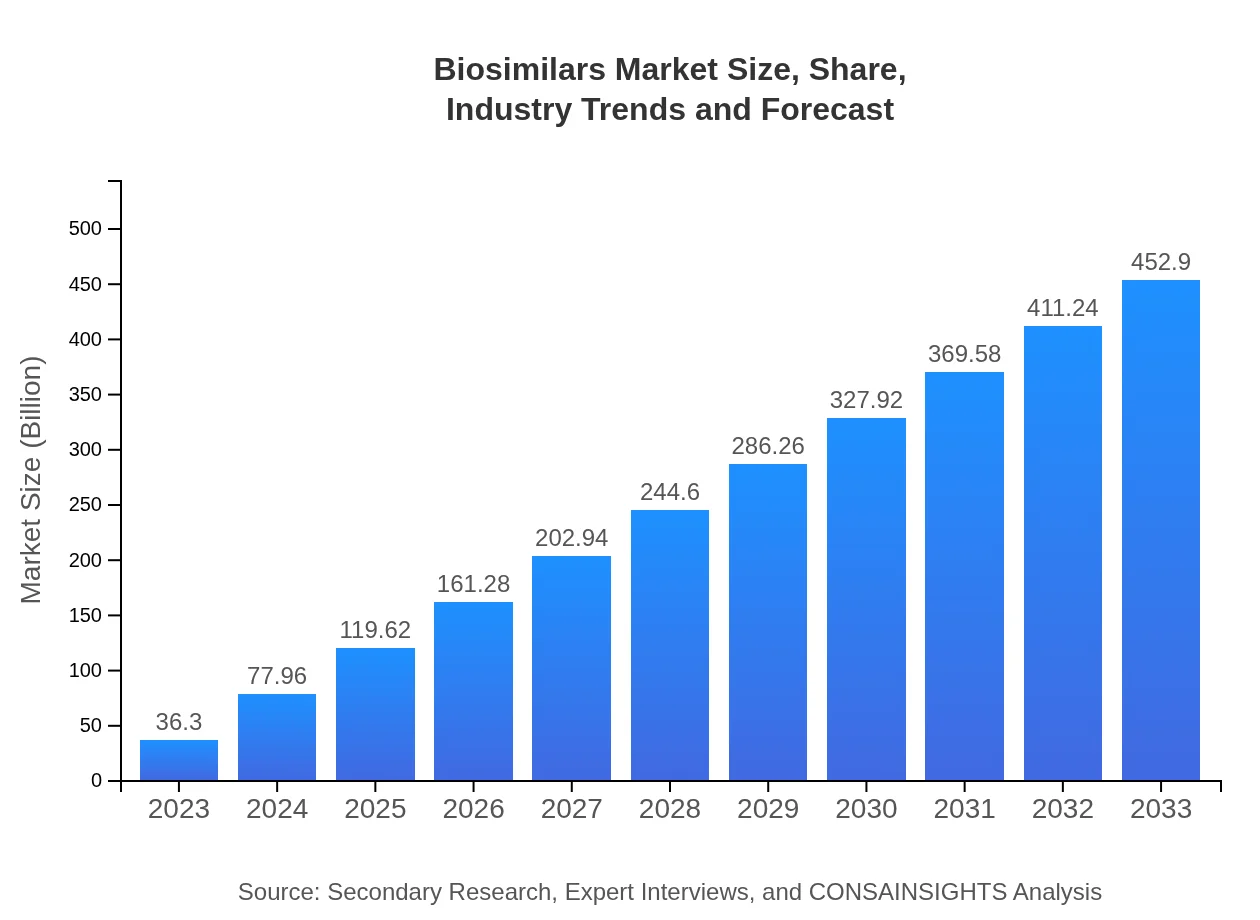
Biosimilars Market — USD 36.3 billion in 2023, Growing to USD 452.90B by 2033 at 26.8% CAGR
This report provides a comprehensive analysis of the Biosimilars market, covering key trends, segmentation, regional insights, and future forecasts from 2023 to 2033.
Key Takeaways
- Market value expands from $36.30 Billion in 2023 to $452.90 Billion in 2033, reflecting a 26.8% CAGR over 2023 to 2033.
- North America is largest regional market, while no single fastest-growing region is stated because regional CAGR differences remain within 0.15 percentage points.
- Growth is supported by patent expirations, expanded regulatory pathways, and advances in biomanufacturing technologies.
- Leading companies include Roche, Samsung Bioepis, Amgen, Sandoz (a Novartis division), and Pfizer, which shape product development and commercialization strategies.
Biosimilars Market Report — Executive Summary
North America remains largest market by forecast-period value, while no single fastest-growing region is stated because top regional growth rates are separated by less than 0.15 percentage points. The biosimilars sector is projected to expand substantially between 2023 and 2033, driven by the need for cost-effective biologic alternatives, patent expirations of originator biologics, and improvements in biomanufacturing. Market growth is underpinned by evolving regulatory frameworks that facilitate approvals and by growing clinical acceptance across therapeutic areas such as oncology and autoimmune diseases. Regional dynamics vary; North America is the largest market by end-period value, reflecting strong market uptake and established reimbursement pathways. Industry activity includes product development in proteins, monoclonal antibodies, peptides, and cellular products, and manufacturers are investing in recombinant DNA and fermentation processes. Competition among established pharmaceutical players and specialty biosimilar firms is intensifying, with consolidation and strategic partnerships shaping distribution and portfolio expansion. The report leverages primary expert interviews and secondary company data to map trends, segment performance, and competitive positioning for stakeholders evaluating entry, partnership, or investment decisions.
Key Growth Drivers
- Patent expirations on originator biologics increasing opportunities for biosimilar entrants.
- Improved regulatory pathways and clearer approval processes facilitating market access.
- Advances in biomanufacturing techniques reducing production costs and improving scalability.
- Rising clinical acceptance of biosimilars across oncology and autoimmune therapeutic areas.
- Strategic collaborations and portfolio expansion by major pharmaceutical companies boosting market penetration.
| Metric | Value |
|---|---|
| Study Period | 2023 - 2033 |
| 2023 Market Size | $36.30 Billion |
| CAGR (2023-2033) | 26.8% |
| 2033 Market Size | $452.90 Billion |
| Top Companies | Roche, Samsung Bioepis, Amgen, Sandoz (a Novartis division), Pfizer |
| Published Date | 08 October 2024 |
| Last Modified Date | 25 May 2026 |
Biosimilars Market Overview
Customize Biosimilars Market Report market research report
- ✔ Get in-depth analysis of Biosimilars market size, growth, and forecasts.
- ✔ Understand Biosimilars's regional dynamics and industry-specific trends.
- ✔ Identify potential applications, end-user demand, and growth segments in Biosimilars
What is the Market Size & CAGR of Biosimilars Market Report market in 2023?
Biosimilars Industry Analysis
Biosimilars Market Segmentation and Scope
Tell us your focus area and get a customized research report.
Biosimilars Market Report Market Analysis Report by Region
Europe Biosimilars Market Report:
Europe grows from $10.16 Billion in 2023 to $126.77 Billion in 2033. Growth is supported by progressive regulatory pathways, early biosimilar adoption in several countries, and focused investments in biomanufacturing capacity.Asia Pacific Biosimilars Market Report:
Asia Pacific grows from $7.23 Billion in 2023 to $90.22 Billion in 2033. Expansion is driven by rising healthcare access, increased demand for affordable biologics, and regional manufacturing investments.North America Biosimilars Market Report:
North America is largest regional market, rising from $12.73 Billion in 2023 to $158.88 Billion in 2033. Regional drivers include established reimbursement frameworks, high healthcare expenditure, and rapid uptake of biosimilar alternatives.South America Biosimilars Market Report:
Latin America grows from $1.52 Billion in 2023 to $18.98 Billion in 2033. Market progress reflects growing demand for cost-effective biologic therapies and expanding regulatory attention to biosimilar approvals.Middle East & Africa Biosimilars Market Report:
Middle East and Africa grows from $4.65 Billion in 2023 to $58.06 Billion in 2033. Drivers include improving healthcare infrastructure, policy support for cost containment, and adoption of biosimilars to broaden treatment access.Tell us your focus area and get a customized research report.
Research Methodology
Biosimilars Market Analysis By Product Category
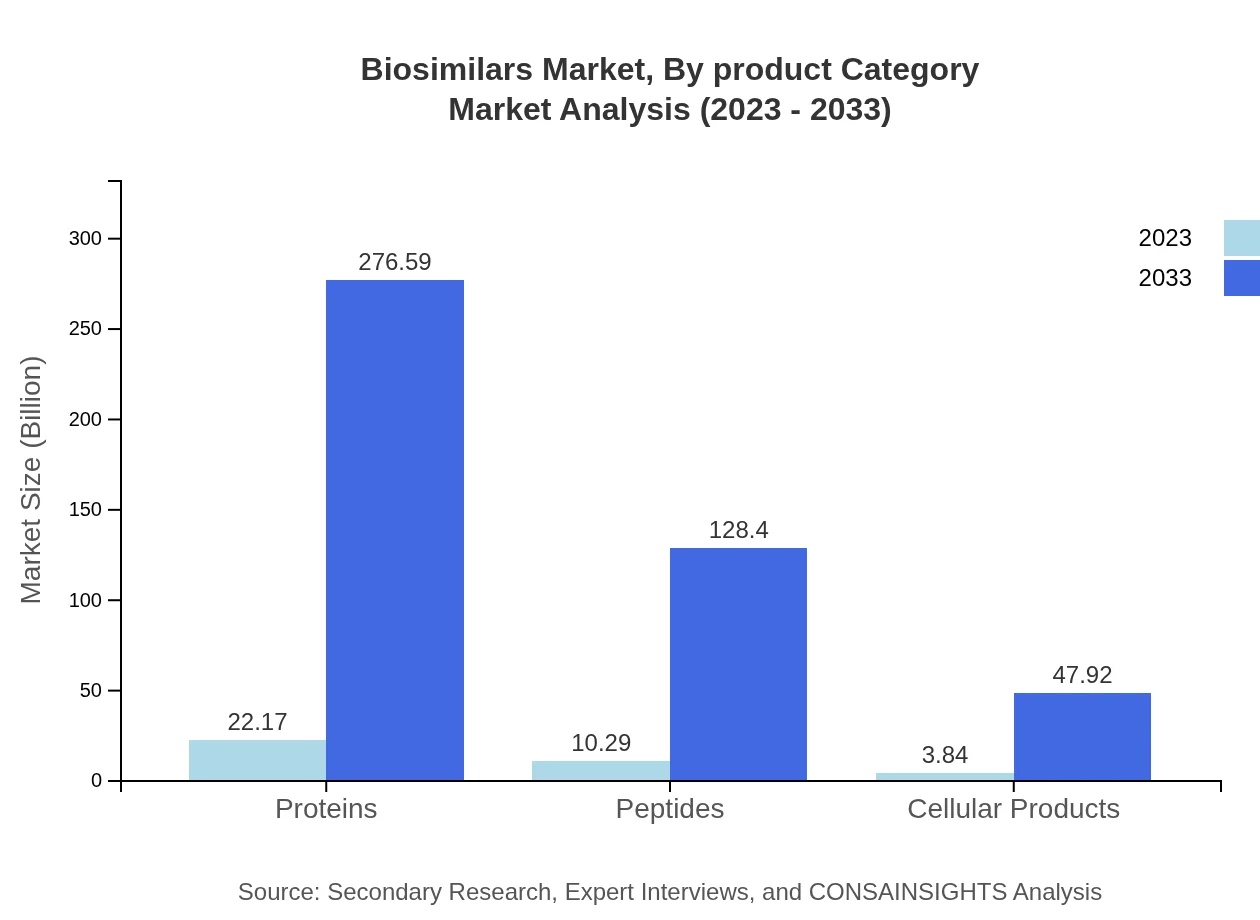
The market segmentation by product category shows strong dominance of monoclonal antibodies, which are projected to grow from $31.57 billion in 2023 to $393.93 billion by 2033, representing an 86.98% market share. Other therapy types, including peptides and proteins, will also expand significantly, demonstrating the versatility of biosimilars across therapeutic applications.
Biosimilars Market Analysis By Therapeutic Area
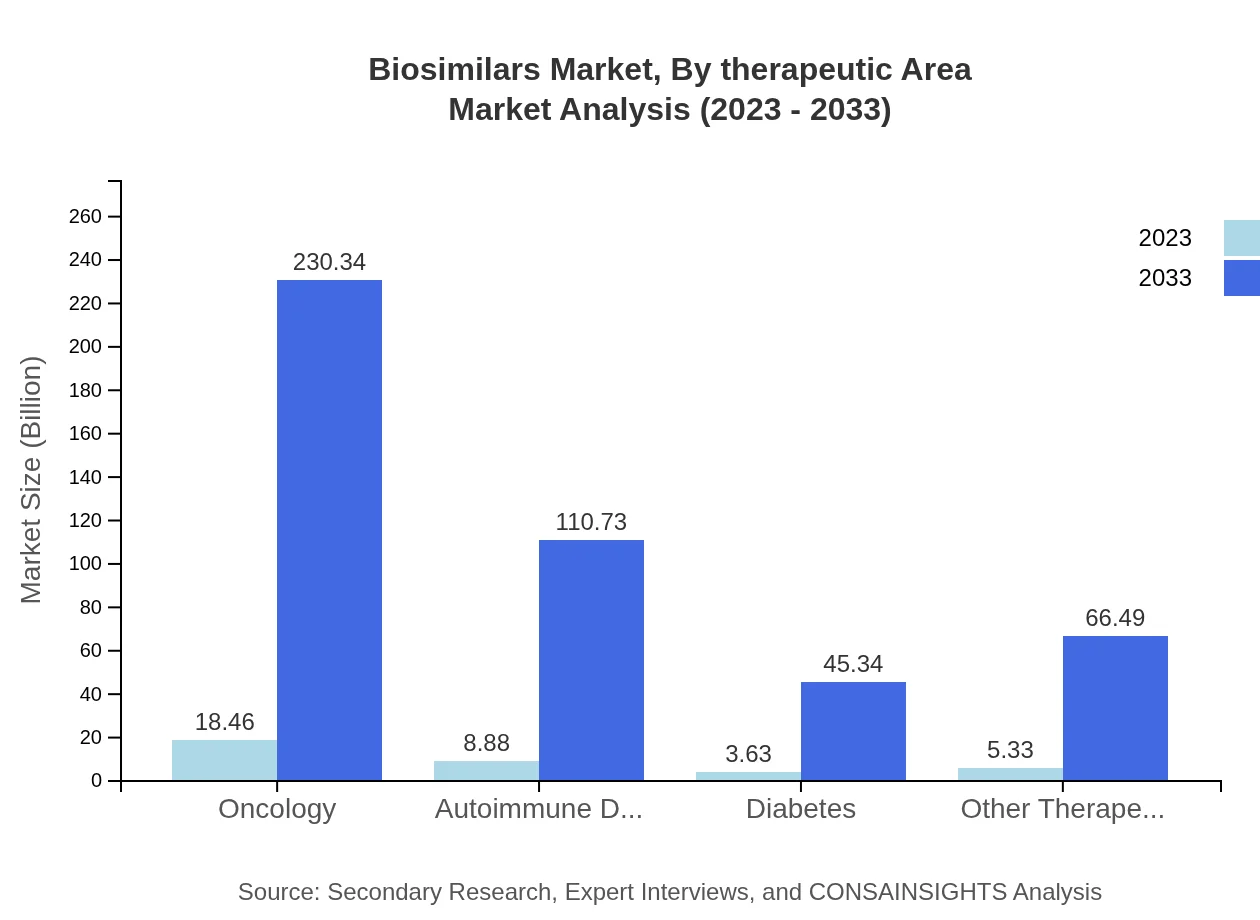
Oncology remains the leading therapeutic area for biosimilars, projected to grow from $18.46 billion in 2023 to $230.34 billion by 2033, capturing 50.86% of the market share. Autoimmune diseases and diabetes also represent key growth areas, developing alongside advancements in personalized medicine.
Biosimilars Market Analysis By Manufacturing Process
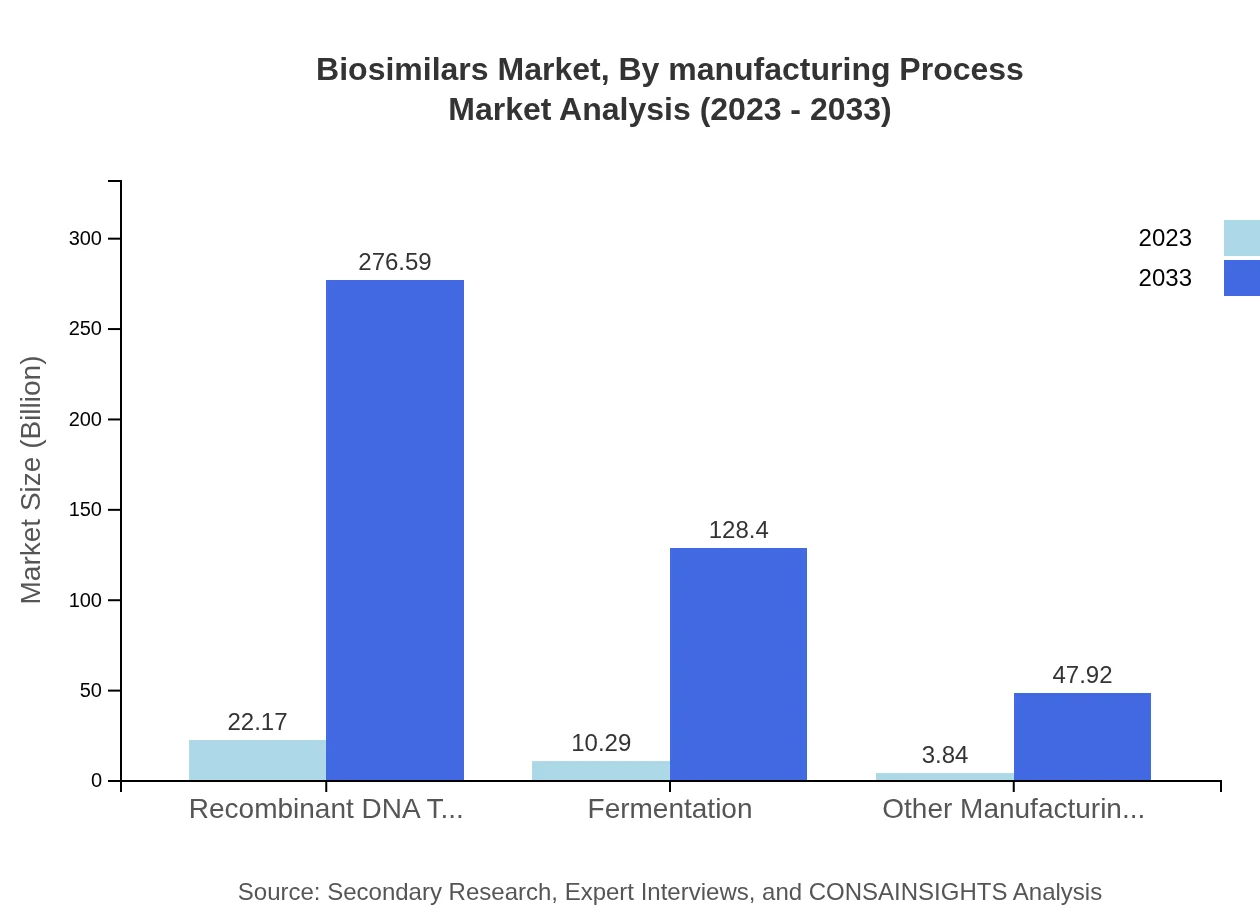
Manufacturing processes are pivotal for biosimilars, with recombinant DNA technology leading this segment, expected to maintain a dominant share of 61.07% while rising from $22.17 billion to $276.59 billion by 2033. Fermentation and other processes are set to experience significant growth rates as demand for various biosimilars accelerates.
Biosimilars Market Analysis By Therapy
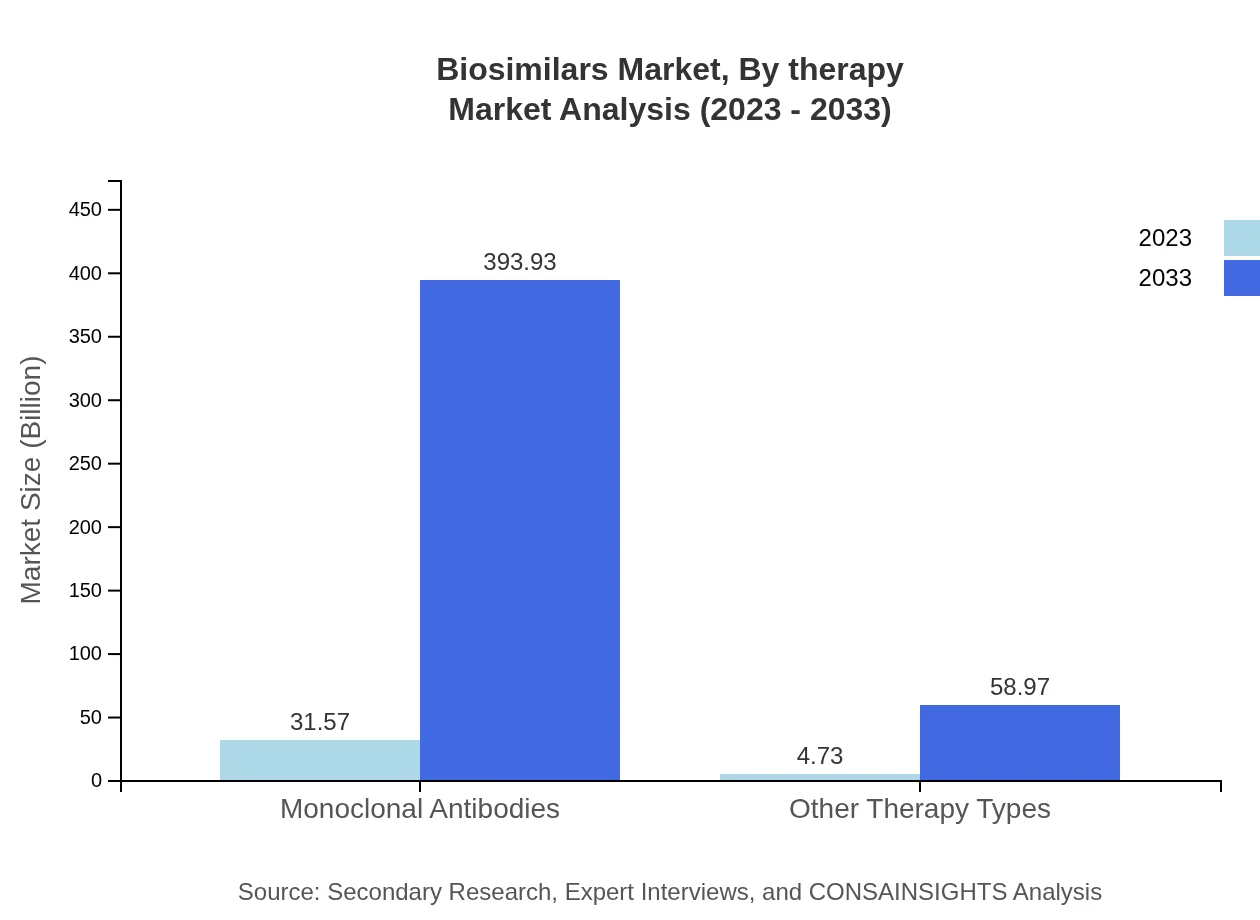
The biosimilars market shows diverse therapy applications, primarily focused on monoclonal antibodies and other biotherapies. With effective treatment options emerging, the market shares for these respective therapies will remain substantial and vital to expanding the overall biosimilars market.
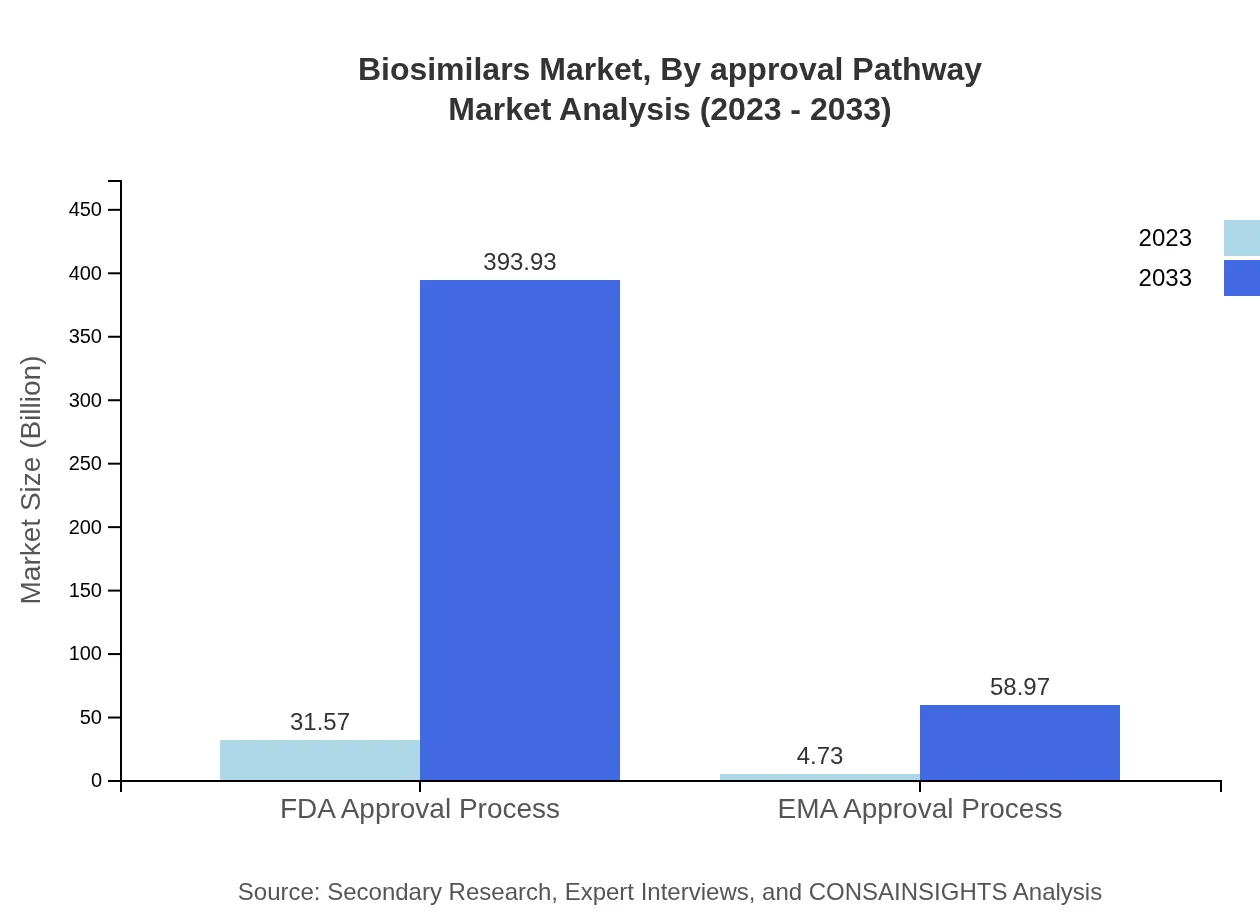
Biosimilars Market Trends and Future Forecast
Tell us your focus area and get a customized research report.
Global Market Leaders and Top Companies in Biosimilars Industry
Roche:
A leading player in the biosimilars sector, Roche is known for its innovation and extensive portfolio of monoclonal antibodies.Samsung Bioepis:
A prominent biosimilars company that produces high-quality biosimilars in various therapeutic areas, leveraging advanced biotechnology.Amgen:
Amgen develops and manufactures biosimilars and has invested significantly in expanding its capabilities in this space.Sandoz (a Novartis division):
Specializes in the development of biosimilars, contributing to market accessibility and affordability.Pfizer :
A major player in pharmaceuticals, Pfizer has a growing presence in the biosimilars market with a range of effective products.We're grateful to work with incredible clients.








FAQs
What is the market size of the Biosimilars Market Report in 2023?
The market size in 2023 is $36.30 Billion, as stated for the baseline year of the forecast period.
How big will the market be in 2033?
The market is reported to reach $452.90 Billion in 2033 according to the provided forecast data.
What is CAGR of the market for 2023 to 2033?
The compound annual growth rate for 2023 to 2033 is 26.8%, as specified for the forecast period.
Is there a single fastest Growing region in the Biosimilars Market Report market?
No single fastest-growing region is stated for the Biosimilars Market Report market because the top regional implied CAGR values are within 0.15 percentage points of each other, making the ranking too close to call reliably.
Which companies are listed as top players?
Top companies named are Roche, Samsung Bioepis, Amgen, Sandoz (a Novartis division), and Pfizer in the provided company list.
What are common therapeutic segments?
Reported therapeutic segments include oncology, autoimmune diseases, diabetes, and other therapeutic applications, reflecting diverse clinical demand.
How are biosimilars manufactured according to the report?
Manufacturing routes noted include recombinant DNA technology, fermentation, and other manufacturing processes as listed in the segmentation facts.
What drives adoption of biosimilars in clinical practice?
Adoption is driven by cost-effectiveness relative to originator biologics, regulatory acceptance, and increasing clinician and patient confidence in therapeutic equivalence.