

Blood Culture Tests Market Report
First published: 11 October 2024 | Last updated: 25 May 2026 | Report Code: blood-culture-tests
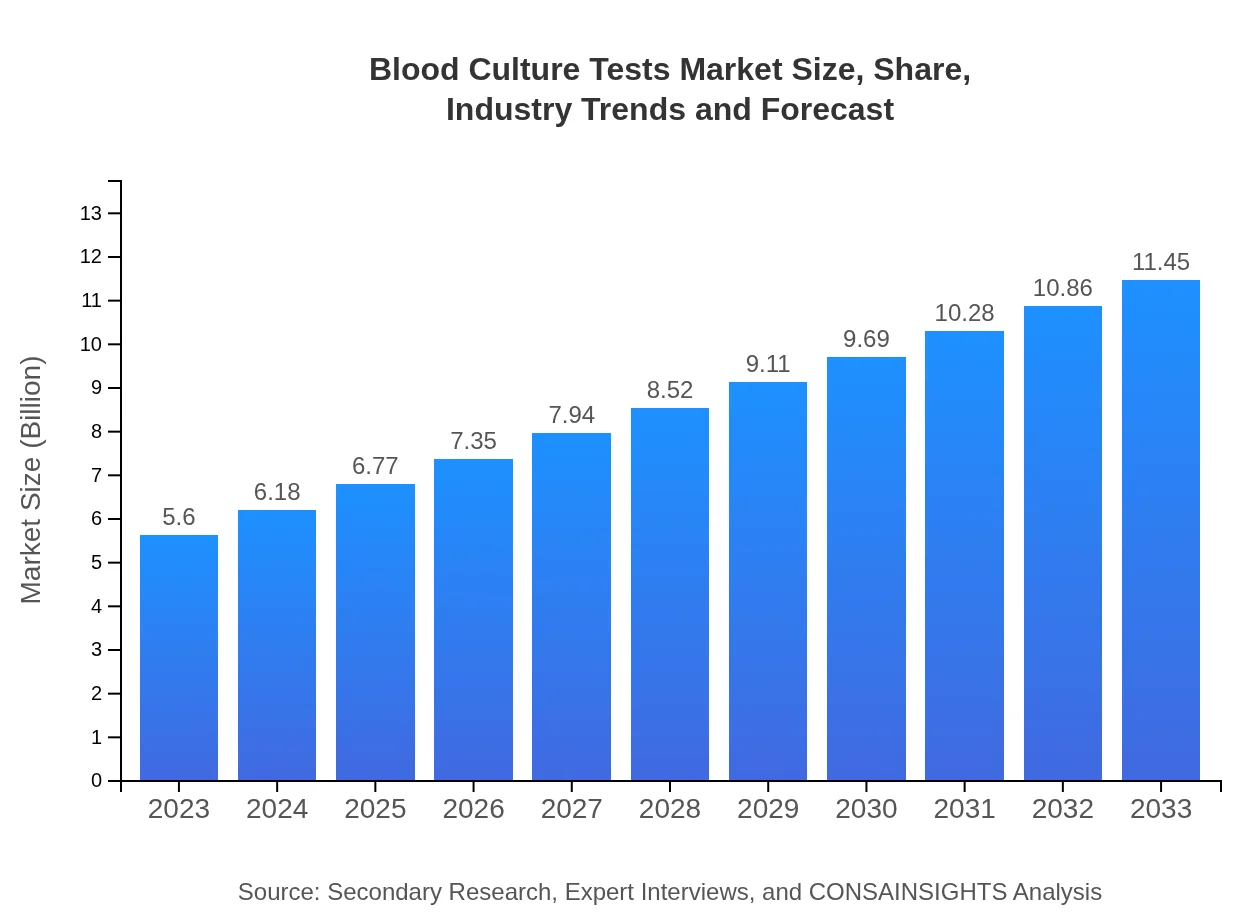
Blood Culture Tests Market — USD 5.6 billion in 2023, Growing to USD 11.45B by 2033 at 7.2% CAGR
This report provides a comprehensive analysis of the blood culture tests market, including current trends, market size, growth forecasts from 2023 to 2033, and an industry overview. Insights include market segmentation, regional performance, and technology advancements shaping this critical healthcare service.
Key Takeaways
- Global market expands from $5.60 Billion in 2023 to $11.45 Billion in 2033 at a 7.2% CAGR.
- North America is largest regional market, while no single fastest-growing region is stated because regional CAGR differences remain within 0.15 percentage points.
- Europe and Asia Pacific show substantial increases: Europe from $1.44 Billion to $2.95 Billion, Asia Pacific from $1.14 Billion to $2.33 Billion.
- Manufacturers such as Becton, Dickinson and Company, BioMérieux, Roche Diagnostics, Thermo Fisher Scientific and Siemens Healthineers shape competition and innovation.
- Emerging trends include automation, enhanced assay sensitivity, and growing demand for faster diagnostics in clinical settings.
Blood Culture Tests Market Report — Executive Summary
North America remains largest market by forecast-period value, while no single fastest-growing region is stated because top regional growth rates are separated by less than 0.15 percentage points. This report examines market drivers, technology trends and regional developments shaping blood culture testing through 2033. The market value is projected to grow from $5.60 Billion in 2023 to $11.45 Billion in 2033 at a 7.2% CAGR for 2023 to 2033. Expansion is supported by rising infectious disease awareness, investments in laboratory infrastructure, and adoption of automated testing platforms that improve turnaround time and sensitivity. North America is identified as the largest regional market, with notable increases across Europe and Asia Pacific. Key firms such as Becton, Dickinson and Company, BioMérieux, Roche Diagnostics, Thermo Fisher Scientific and Siemens Healthineers are active in product development and distribution. The analysis covers segmentation by region, end user, test type and application, and outlines regulatory and technological influences likely to affect market participants and buyers over the forecast period.
Key Growth Drivers
- Rising prevalence of bloodstream infections increases demand for diagnostic testing in hospitals and laboratories.
- Adoption of automated blood culture systems shortens detection times and supports higher testing throughput.
- Investment in healthcare infrastructure and laboratory modernization expands testing capacity in multiple regions.
- Regulatory emphasis on diagnostic accuracy fosters uptake of advanced assays and quality-controlled systems.
- Growing patient and clinician demand for rapid, reliable results drives development of improved testing technologies.
| Metric | Value |
|---|---|
| Study Period | 2023 - 2033 |
| 2023 Market Size | $5.60 Billion |
| CAGR (2023-2033) | 7.2% |
| 2033 Market Size | $11.45 Billion |
| Top Companies | Becton, Dickinson and Company, BioMérieux, Roche Diagnostics, Thermo Fisher Scientific, Siemens Healthineers |
| Published Date | 11 October 2024 |
| Last Modified Date | 25 May 2026 |
Blood Culture Tests Market Overview
Customize Blood Culture Tests Market Report market research report
- ✔ Get in-depth analysis of Blood Culture Tests market size, growth, and forecasts.
- ✔ Understand Blood Culture Tests's regional dynamics and industry-specific trends.
- ✔ Identify potential applications, end-user demand, and growth segments in Blood Culture Tests
What is the Market Size & CAGR of Blood Culture Tests Market Report market in 2023?
Blood Culture Tests Industry Analysis
Blood Culture Tests Market Segmentation and Scope
Tell us your focus area and get a customized research report.
Blood Culture Tests Market Report Market Analysis Report by Region
Europe Blood Culture Tests Market Report:
Europe grows from $1.44 Billion in 2023 to $2.95 Billion in 2033. Drivers include investments in clinical laboratories, regulatory focus on diagnostic accuracy, and uptake of improved testing methodologies across hospital networks.Asia Pacific Blood Culture Tests Market Report:
Asia Pacific grows from $1.14 Billion in 2023 to $2.33 Billion in 2033. Growth stems from expanding healthcare infrastructure, rising awareness of infectious diseases, and increasing access to laboratory services and diagnostic technologies.North America Blood Culture Tests Market Report:
North America is largest regional market, rising from $2.17 Billion in 2023 to $4.44 Billion in 2033. Regional expansion is supported by established healthcare infrastructure, significant laboratory capacity, and adoption of automated and advanced diagnostic platforms.South America Blood Culture Tests Market Report:
Latin America grows from $0.07 Billion in 2023 to $0.14 Billion in 2033. Market growth reflects gradual enhancements in diagnostic capacity, incremental healthcare investments, and broader availability of testing in clinical settings.Middle East & Africa Blood Culture Tests Market Report:
Middle East and Africa grows from $0.78 Billion in 2023 to $1.59 Billion in 2033. Progress is supported by ongoing healthcare investments, expansion of laboratory services, and adoption of more sensitive diagnostic assays.Tell us your focus area and get a customized research report.
Research Methodology
Blood Culture Tests Market Analysis By Test Type
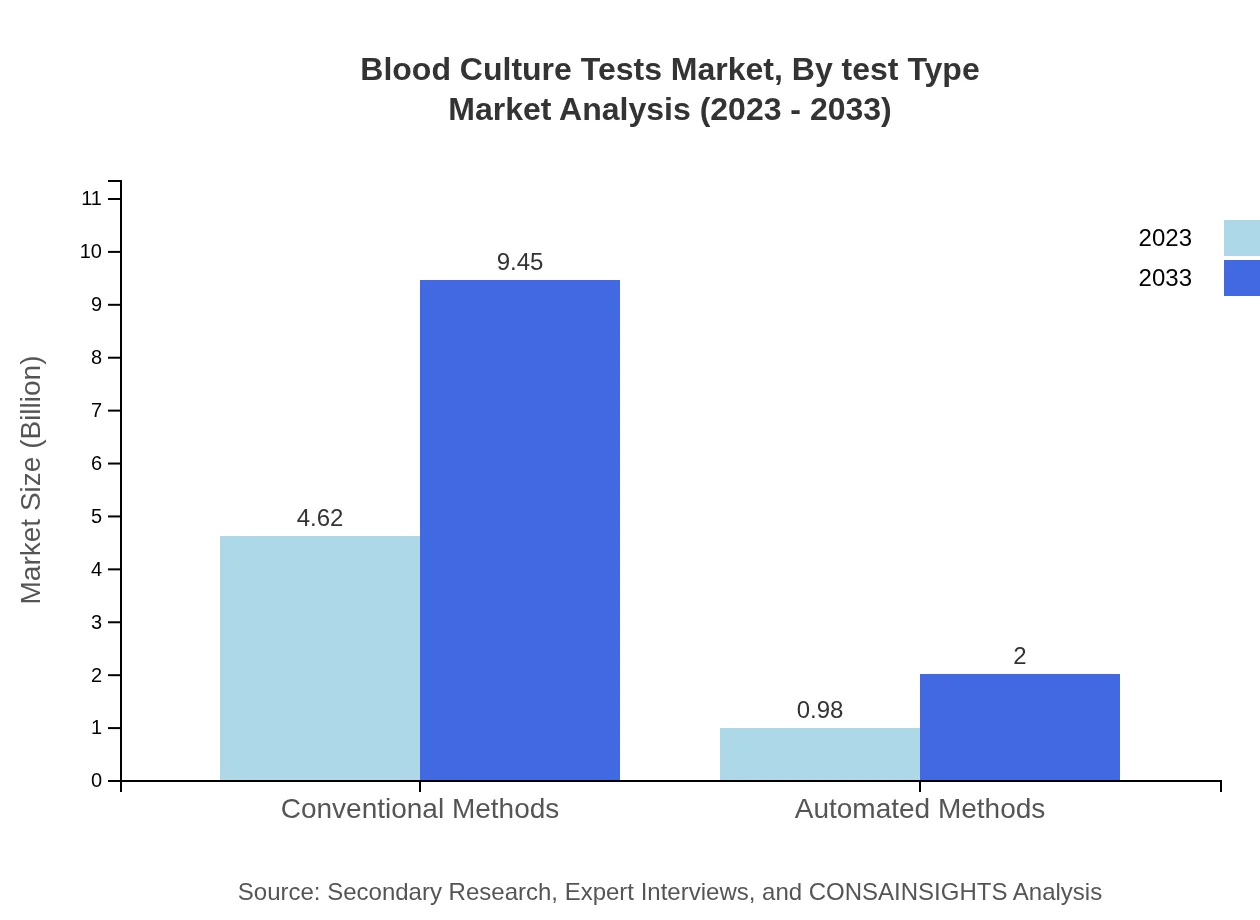
The blood culture tests market by test type includes a focus on conventional methods compared to automated techniques. In 2023, conventional methods dominate the market with 82.57% share valued at $4.62 billion, expected to grow to $9.45 billion by 2033. Automated methods, with a 17.43% share valued at $0.98 billion, are increasingly adopted due to higher efficiency and accuracy, expected to reach $2 billion by 2033.
Blood Culture Tests Market Analysis By Application
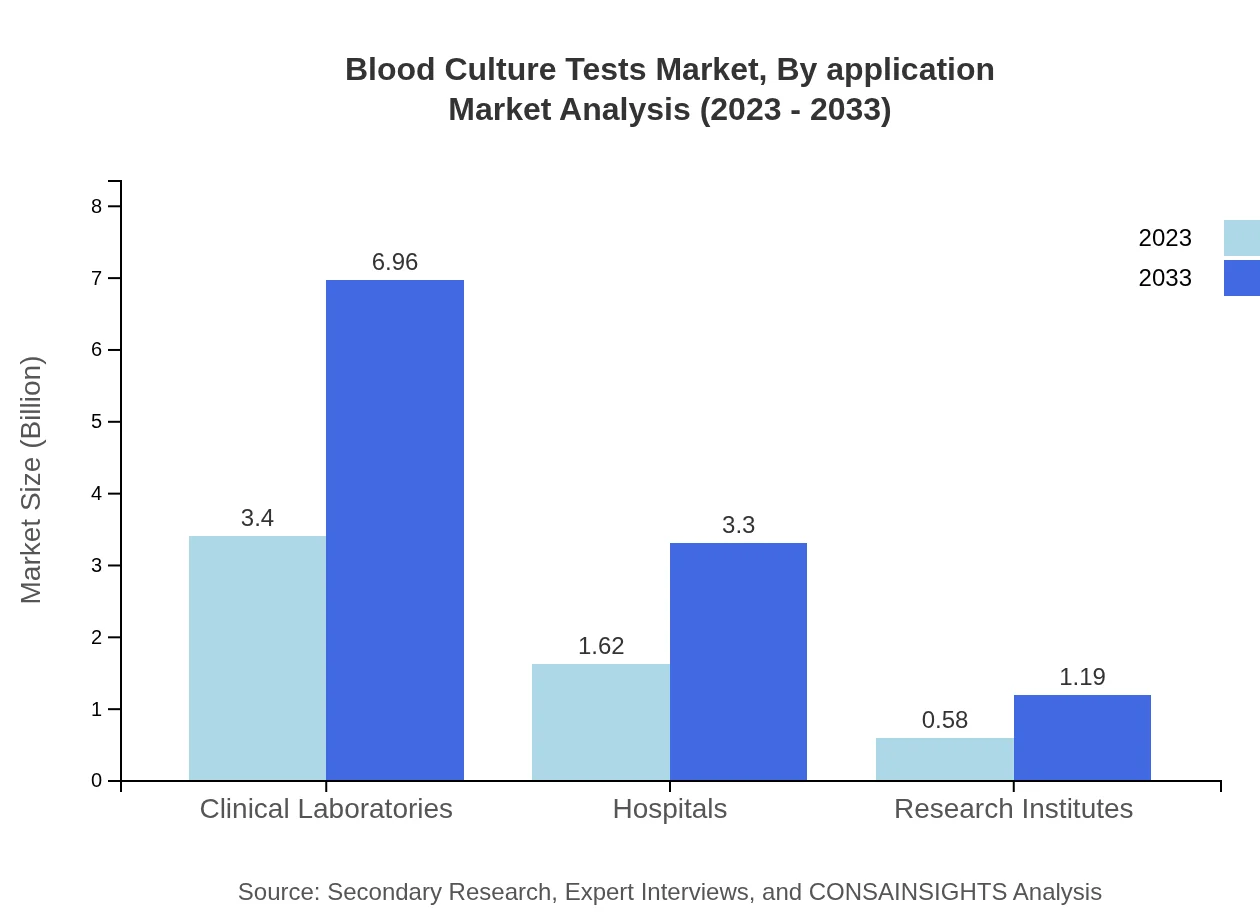
Market segmentation by application shows clinical diagnostics as the primary usage for blood culture tests. The growing focus on sepsis diagnosis within hospitals amplifies the demand in this segment, as healthcare providers push for advanced testing methodologies to enhance patient outcomes.
Blood Culture Tests Market Analysis By End User
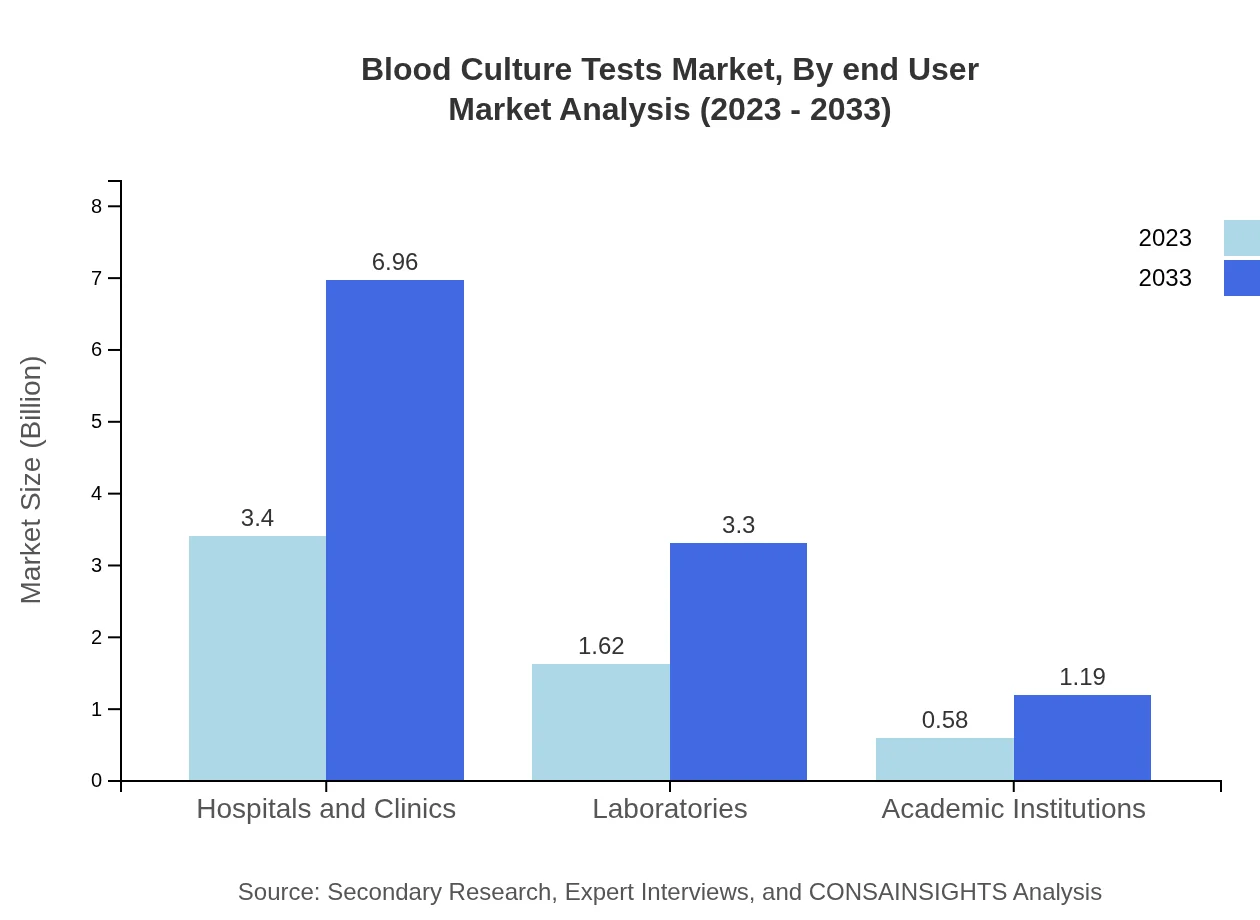
Hospitals and clinical laboratories dominate the blood culture tests market. With a market share of 60.76% in 2023, hospitals value the speed and reliability of these tests for patient diagnostics and management strategies. Clinical laboratories follow closely, given their critical role in delivering timely results.
Blood Culture Tests Market Analysis By Region
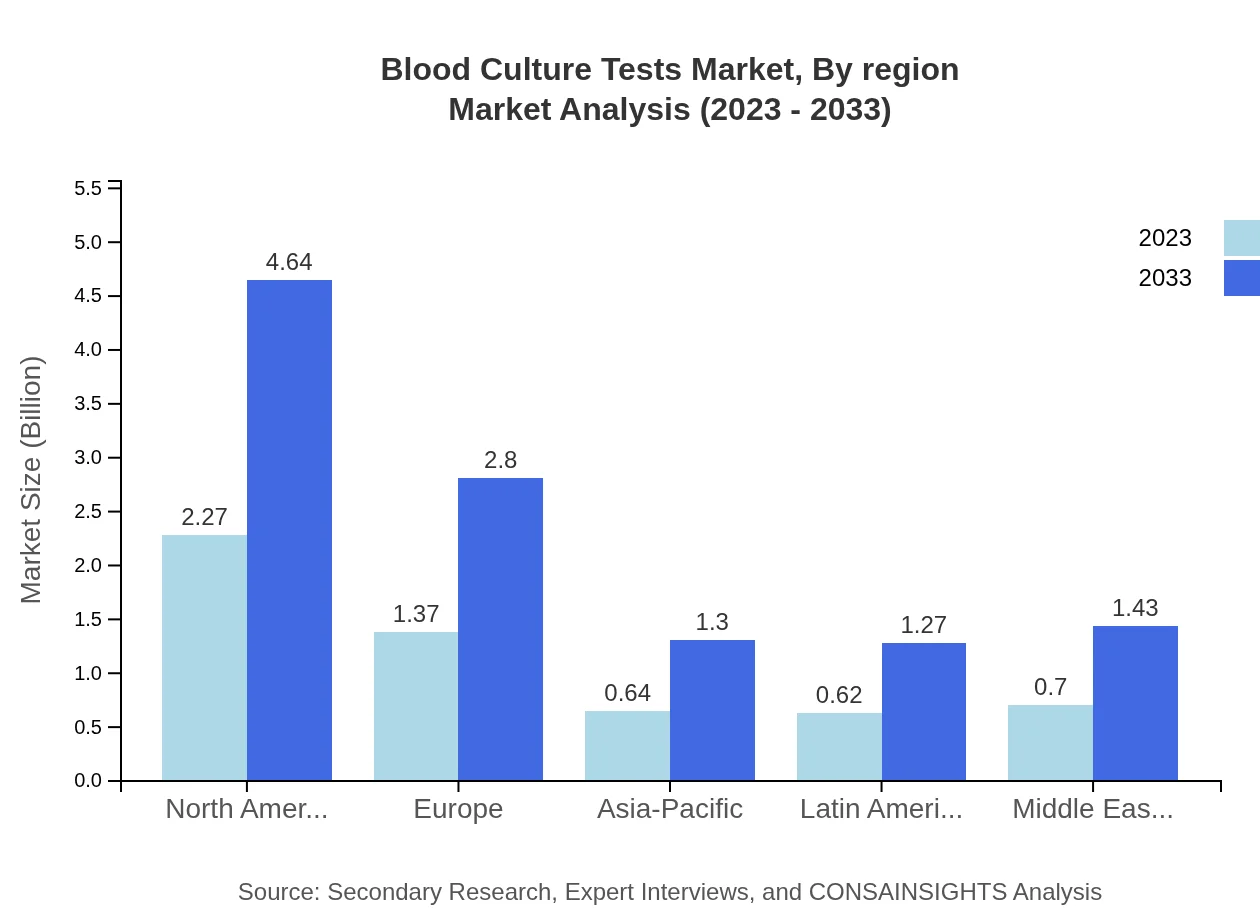
Regional analyses indicate North America as the leading market share holder in 2023, while Europe and Asia Pacific region are experiencing significant growth. Economic factors, technological adoption, and healthcare policies differ by region, prompting diverse strategic approaches among market players.
Blood Culture Tests Market Analysis By Market Trends
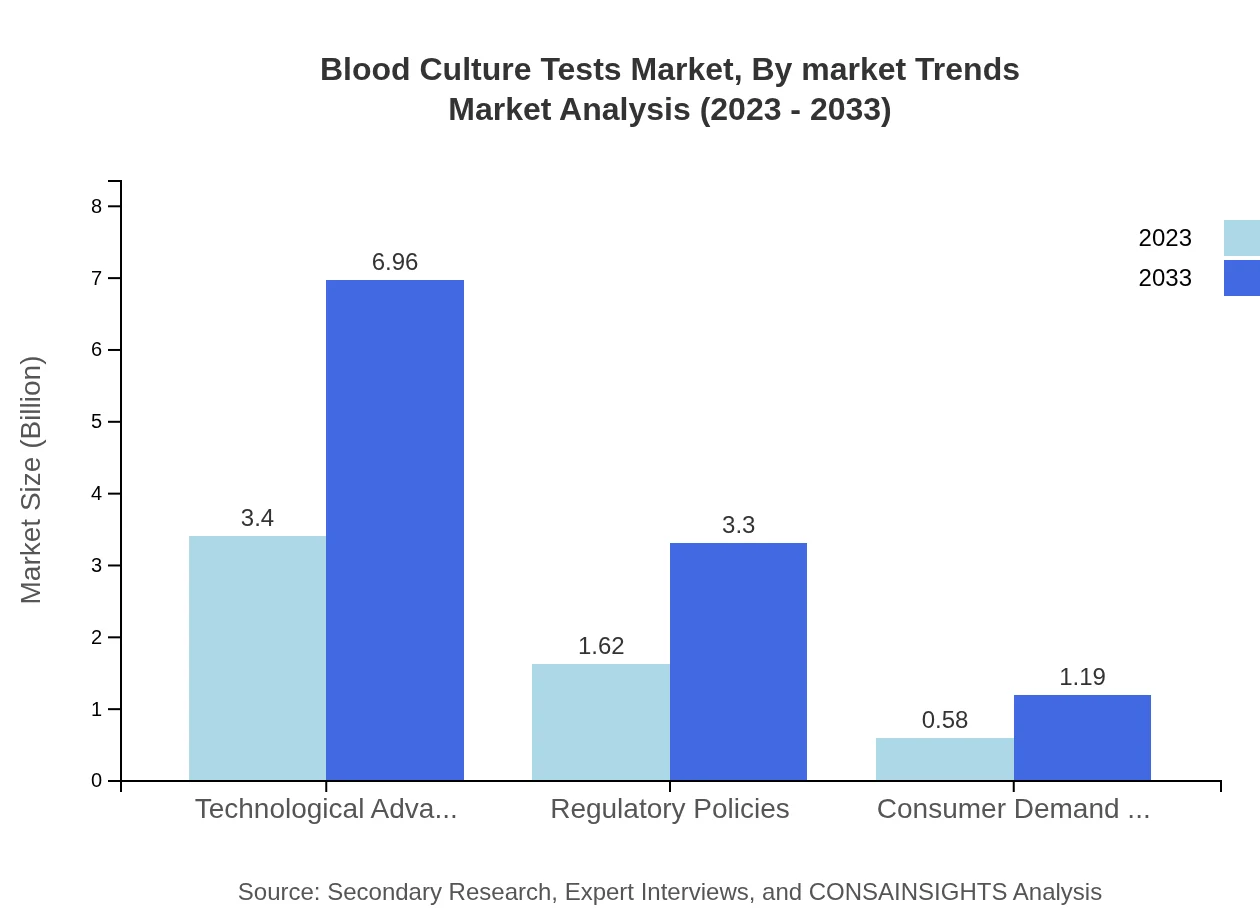
Emerging trends in the blood culture tests market include advancements in automated testing technologies, increasing integration of AI for data interpretation, and heightened investments in sepsis diagnostics. Regulatory changes continue to influence market supply chain dynamics while shifting consumer preferences towards more advanced and quick-testing solutions.
Blood Culture Tests Market Trends and Future Forecast
Tell us your focus area and get a customized research report.
Global Market Leaders and Top Companies in Blood Culture Tests Industry
Becton, Dickinson and Company:
BD is a leading global medical technology company that provides innovative solutions in blood culture testing with products designed to enhance diagnostic accuracy and speed.BioMérieux:
A significant player in the microbiology testing space, BioMérieux develops and manufactures systems and reagents for blood culture that have played a pivotal role in infection diagnostics and management.Roche Diagnostics:
Roche is an established leader in the field of diagnostic testing, offering comprehensive blood culture testing solutions that integrate advanced technology with laboratory automation.Thermo Fisher Scientific:
Known for its commitment to healthcare innovation, Thermo Fisher provides a broad array of solutions for blood culture testing, aiding healthcare providers in rapid and reliable diagnostics.Siemens Healthineers:
Siemens Healthineers specializes in diagnostic imaging and laboratory diagnostics, contributing advanced blood culture products that enhance patient care and treatment outcomes.We're grateful to work with incredible clients.








FAQs
What is the market size of the Blood Culture Tests Market Report in 2023?
The market size in 2023 is $5.60 Billion according to the provided report data for the forecast period of 2023 to 2033.
How big will the market be in 2033?
The market is projected to reach $11.45 Billion by 2033 based on the report's forecast covering 2023 to 2033.
What is CAGR of the market for 2023 to 2033?
The reported compound annual growth rate for the forecast period 2023 to 2033 is 7.2% as provided in the input data.
Is there a single fastest Growing region in the Blood Culture Tests Market Report market?
No single fastest-growing region is stated for the Blood Culture Tests Market Report market because the top regional implied CAGR values are within 0.15 percentage points of each other, making the ranking too close to call reliably.
Who are the key companies in this market?
Top companies listed include Becton, Dickinson and Company, BioMérieux, Roche Diagnostics, Thermo Fisher Scientific and Siemens Healthineers.
Why are automated methods important?
Automated methods improve detection speed and throughput, supporting clinical decision-making and laboratory efficiency, which drives adoption across hospitals and labs.
What are common end users for these tests?
Primary end users identified are hospitals and clinics, laboratories, and academic institutions as noted in the segmentation facts.
How is regional growth described in the report?
Regional growth details show increases across all regions with specific start and end values provided; no single regional growth market is named in the input.