

Organ Transplant Immunosuppressant Drugs Market Report
First published: 11 October 2024 | Last updated: 25 May 2026 | Report Code: organ-transplant-immunosuppressant-drugs
Organ Transplant Immunosuppressant Drugs Market — USD $19 Billion in 2023, Growing to USD 39.22null by 2033 at 7.3% CAGR
This report provides insights into the Organ Transplant Immunosuppressant Drugs market from 2023 to 2033, covering market size, trends, regional analysis, segmentation, and key players, alongside forecasts for market growth and technological advancements in this critical sector.
Key Takeaways
- Global market value rises from $19.00 Billion in 2023 to $39.22 Billion in 2033, reflecting a 7.3% CAGR over 2023 to 2033.
- North America is largest regional market, while no single fastest-growing region is stated because regional CAGR differences remain within 0.15 percentage points.
- North America is identified as the largest region, expanding from $7.02 Billion in 2023 to $14.5 Billion in 2033.
- Europe moves from $5.77 Billion in 2023 to $11.91 Billion in 2033, underscoring sustained regional demand.
- Asia Pacific shows growth from $3.37 Billion in 2023 to $6.96 Billion by 2033, indicating rising market penetration.
- Key manufacturers include Roche, Novartis, AbbVie, and Amgen, reflecting a competitive supplier landscape.
Organ Transplant Immunosuppressant Drugs Market Report — Executive Summary
North America remains largest market by forecast-period value, while no single fastest-growing region is stated because top regional growth rates are separated by less than 0.15 percentage points. This report examines the Organ Transplant Immunosuppressant Drugs market across product types, administration routes, end users, and regions. The market value increases from $19.00 Billion in 2023 to $39.22 Billion by 2033, at a CAGR of 7.3% for the 2023 to 2033 forecast period. Growth is driven by rising transplant procedures, investments in post-operative care, and ongoing therapeutic research. The analysis addresses segmentation by drug type — including calcineurin inhibitors, anti-proliferative agents, mTOR inhibitors, and steroids — as well as administration routes such as oral and injection. End-user coverage highlights hospitals, transplant centers, and homecare providers. Regional breakdowns specify market trajectories for North America, Europe, Asia Pacific, Latin America, and the Middle East and Africa, with North America noted as the largest region. The competitive overview cites Roche, Novartis, AbbVie, and Amgen. Methodology combines expert interviews, company reports, and data triangulation to validate findings and identify trends.
Key Growth Drivers
- Increasing number of organ transplant procedures boosting demand for long-term immunosuppressant therapies.
- Enhanced healthcare infrastructure and access improving availability of transplant-related medications in several regions.
- Sustained research and development leading to improved formulations and treatment protocols for transplant recipients.
- Collaborations between pharmaceutical companies and healthcare providers to support patient adherence and post-operative care.
| Metric | Value |
|---|---|
| Study Period | 2023 - 2033 |
| 2023 Market Size | $19.00 Billion |
| CAGR (2023-2033) | 7.3% |
| 2033 Market Size | $39.22 Billion |
| Top Companies | Roche, Novartis, AbbVie, Amgen |
| Published Date | 11 October 2024 |
| Last Modified Date | 25 May 2026 |
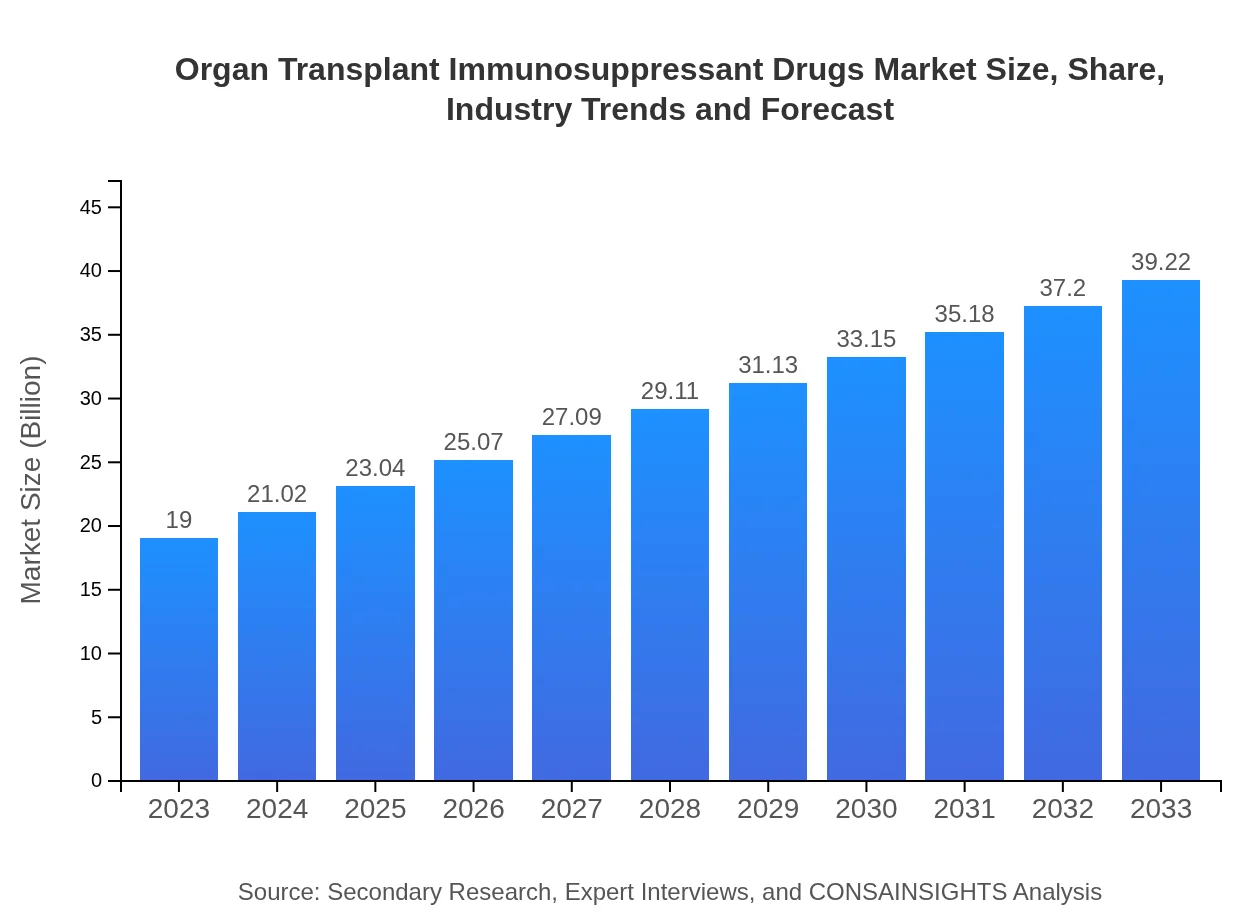
Organ Transplant Immunosuppressant Drugs Market Overview
Customize Organ Transplant Immunosuppressant Drugs Market Report market research report
- ✔ Get in-depth analysis of Organ Transplant Immunosuppressant Drugs market size, growth, and forecasts.
- ✔ Understand Organ Transplant Immunosuppressant Drugs's regional dynamics and industry-specific trends.
- ✔ Identify potential applications, end-user demand, and growth segments in Organ Transplant Immunosuppressant Drugs
What is the Market Size & CAGR of Organ Transplant Immunosuppressant Drugs Market Report market in 2023?
Organ Transplant Immunosuppressant Drugs Industry Analysis
Organ Transplant Immunosuppressant Drugs Market Segmentation and Scope
Tell us your focus area and get a customized research report.
Organ Transplant Immunosuppressant Drugs Market Report Market Analysis Report by Region
Europe Organ Transplant Immunosuppressant Drugs Market Report:
Europe grows from $5.77 Billion in 2023 to $11.91 Billion in 2033. Drivers across the region include enhancements in post-transplant care, investments in clinical research, and adoption of improved therapeutic protocols for transplant recipients.Asia Pacific Organ Transplant Immunosuppressant Drugs Market Report:
Asia Pacific grows from $3.37 Billion in 2023 to $6.96 Billion in 2033. Growth is supported by increasing healthcare capacity, greater access to transplant services, and rising emphasis on post-operative management in several markets.North America Organ Transplant Immunosuppressant Drugs Market Report:
North America is largest regional market, rising from $7.02 Billion in 2023 to $14.5 Billion in 2033. Regional drivers include advanced transplant programs, established healthcare infrastructure, and strong clinical research activities supporting uptake of immunosuppressant therapies.South America Organ Transplant Immunosuppressant Drugs Market Report:
Latin America grows from $0.68 Billion in 2023 to $1.41 Billion in 2033. Regional growth factors include improving healthcare infrastructure and expanding availability of transplant-related treatments and follow-up care.Middle East & Africa Organ Transplant Immunosuppressant Drugs Market Report:
Middle East and Africa grows from $2.15 Billion in 2023 to $4.44 Billion in 2033. Drivers include gradual enhancements in transplant services, investments in healthcare systems, and growing focus on long-term patient management.Tell us your focus area and get a customized research report.
Research Methodology
Organ Transplant Immunosuppressant Drugs Market Analysis By Drug Type
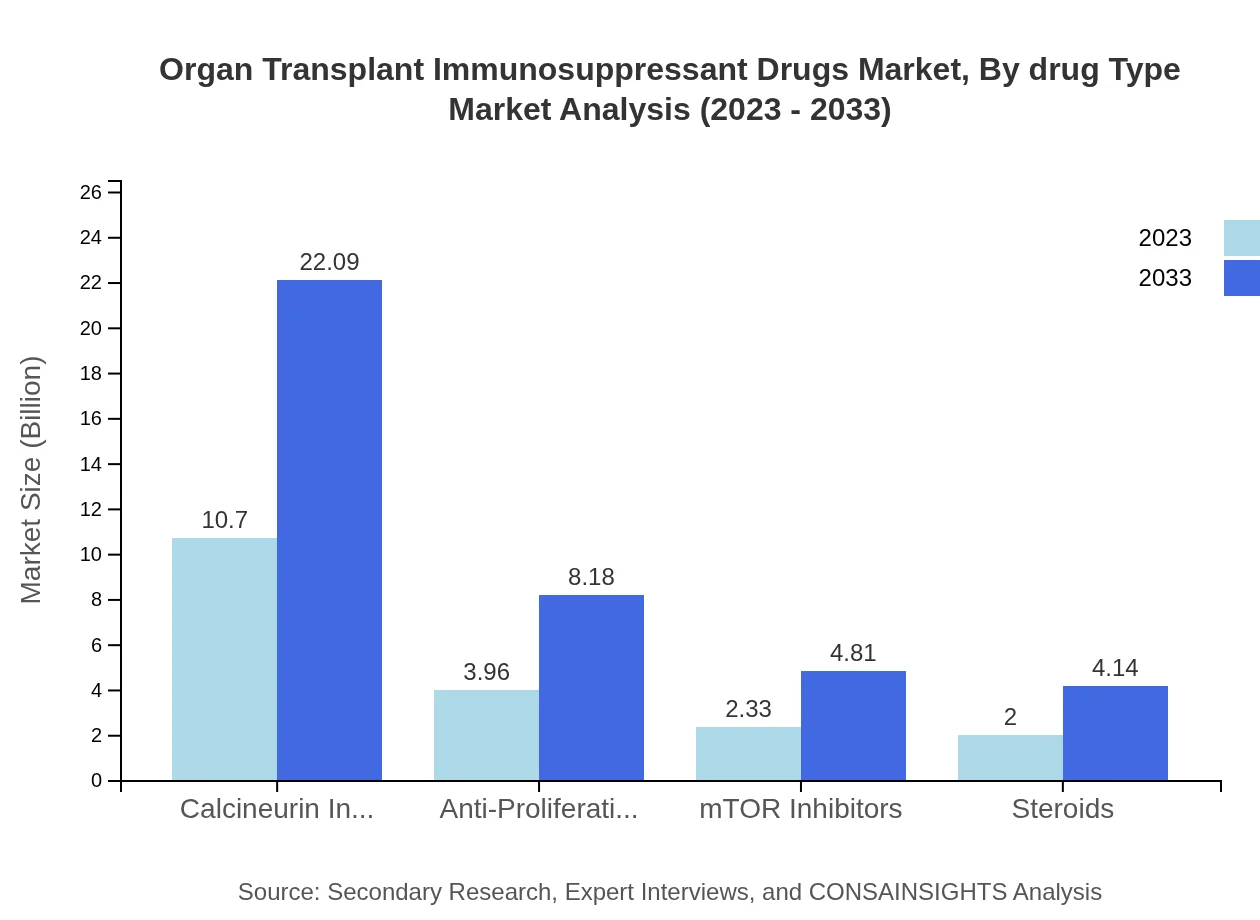
The market is significantly influenced by Calcineurin Inhibitors, which held a market size of $10.70 billion in 2023 and is projected to grow to $22.09 billion by 2033. Other segments like Anti-Proliferative Agents ($3.96 billion in 2023, growing to $8.18 billion), mTOR Inhibitors ($2.33 billion to $4.81 billion), and Steroids ($2.00 billion to $4.14 billion) show promising growth trajectories.
Organ Transplant Immunosuppressant Drugs Market Analysis By Application
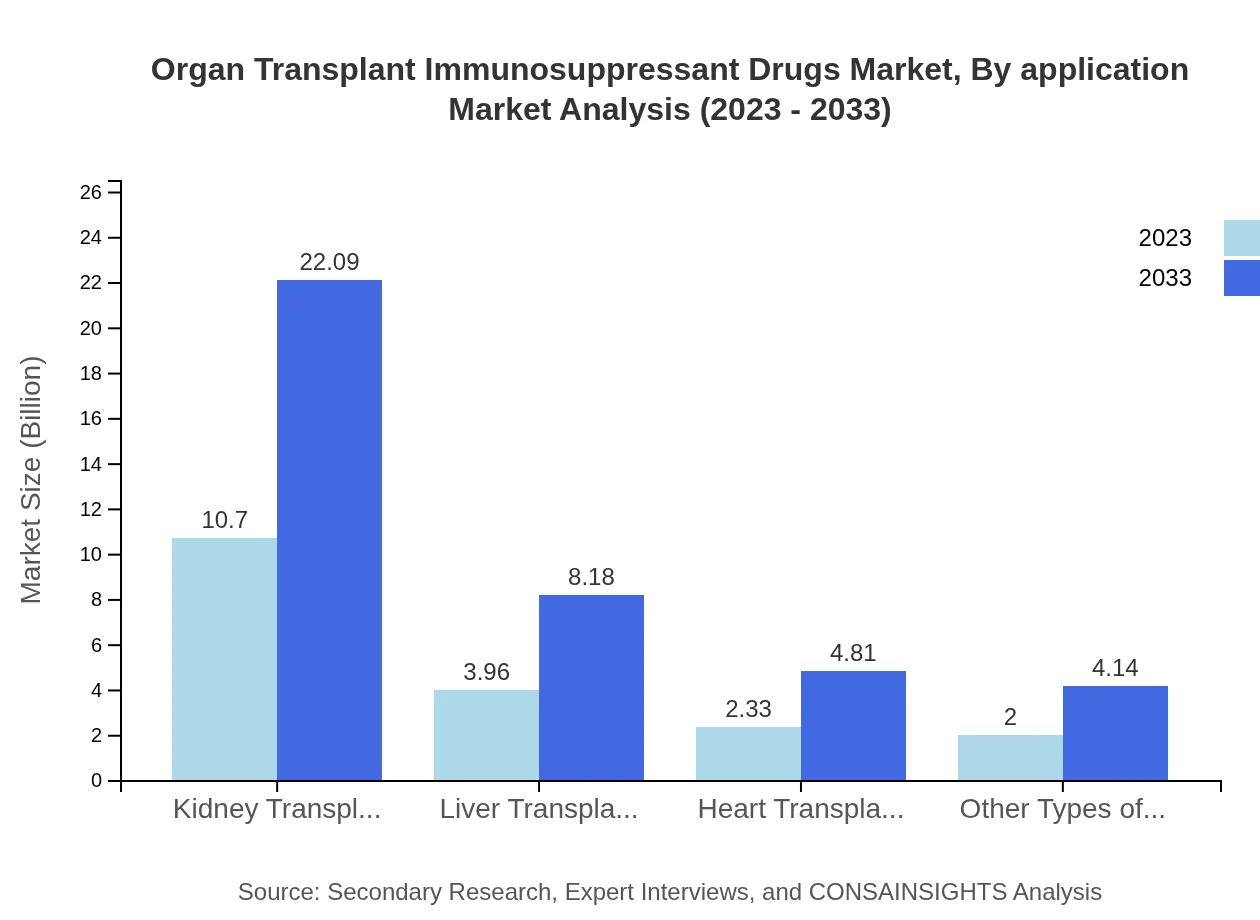
The applications of these drugs predominantly involve kidney transplantation, yielding a market valuation of $10.70 billion in 2023, projected to reach $22.09 billion. Other applications like liver ($3.96 billion to $8.18 billion) and heart transplantation ($2.33 billion to $4.81 billion) also represent critical segments.
Organ Transplant Immunosuppressant Drugs Market Analysis By Route Of Administration
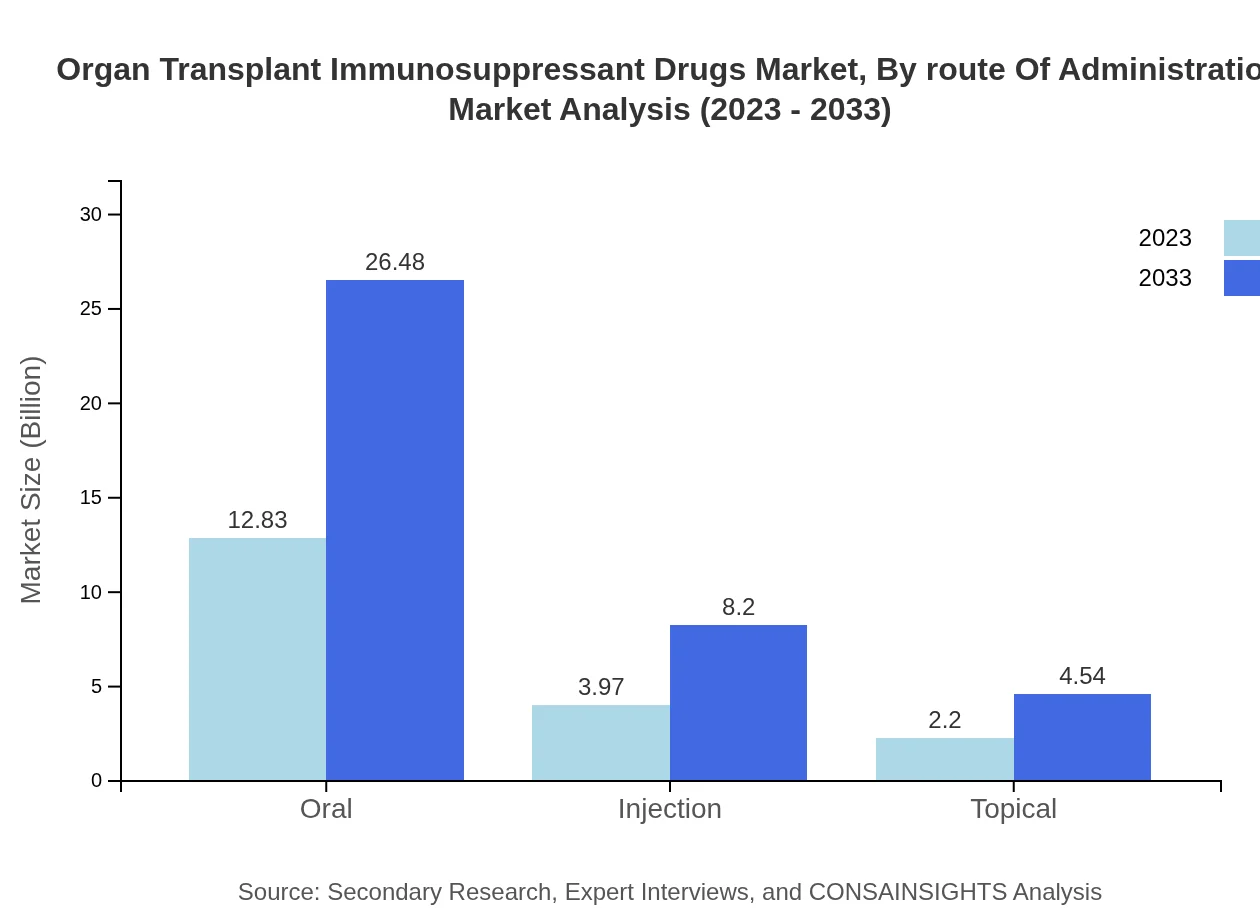
Oral administration dominates the market, standing at $12.83 billion in 2023 and expected to rise to $26.48 billion by 2033. Additional routes such as injection ($3.97 billion to $8.20 billion) and topical ($2.20 billion to $4.54 billion) are also important segments of consideration.
Organ Transplant Immunosuppressant Drugs Market Analysis By End User
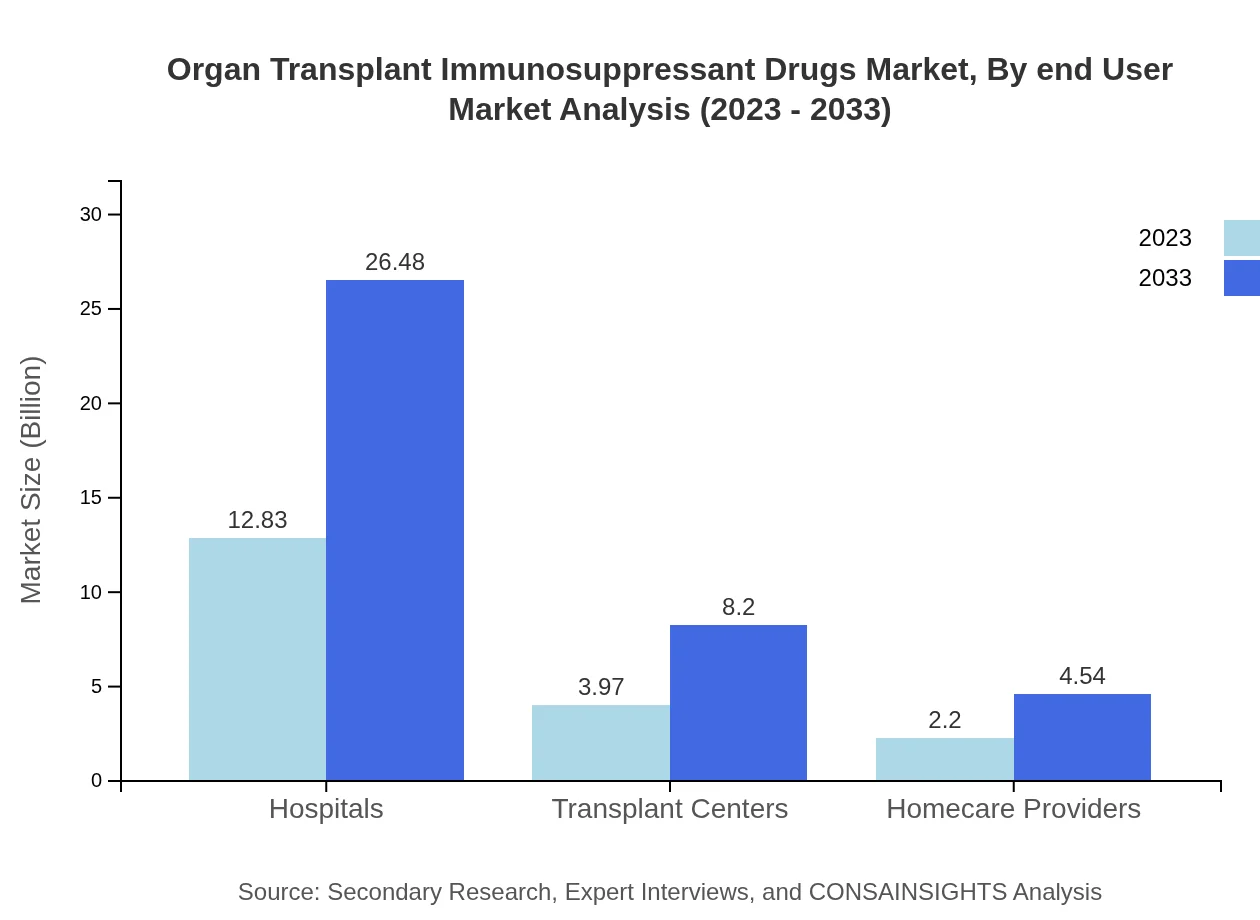
Hospitals account for the largest share of the end-user market, with a projected size of $12.83 billion in 2023, increasing to $26.48 billion by 2033. Transplant centers ($3.97 billion to $8.20 billion) and homecare providers ($2.20 billion to $4.54 billion) also play significant roles in the treatment paradigms.
Organ Transplant Immunosuppressant Drugs Market Trends and Future Forecast
Tell us your focus area and get a customized research report.
Global Market Leaders and Top Companies in Organ Transplant Immunosuppressant Drugs Industry
Roche:
A leading player offering innovative immunosuppressant therapies, Roche is renowned for its development of cell-based treatment options for organ transplant rejection.Novartis:
Novartis provides a comprehensive range of transplant medications, focusing on improving patient outcomes through advanced pharmacological research and patient education programs.AbbVie:
AbbVie specializes in antibody-based therapies for immunosuppression, significantly contributing to the Organ Transplant sector with well-researched and clinically proven products.Amgen:
Amgen's strong portfolio of biologic medications encompasses key immunosuppressants critical in the organ transplantation process, ensuring effective patient support.We're grateful to work with incredible clients.








FAQs
What is the market size of the organ transplant immunosuppressant drugs market in 2023?
The market size for 2023 is $19.00 Billion as stated in the report, reflecting the baseline value for the 2023 to 2033 forecast period.
How big will the market be in 2033?
By 2033 the market is projected to reach $39.22 Billion, according to the provided forecast figures for the 2023 to 2033 period.
What is CAGR for the 2023 to 2033 period?
The reported compound annual growth rate (CAGR) for 2023 to 2033 is 7.3%, based on the stated market size progression from 2023 to 2033.
Is there a single fastest Growing region in the Organ Transplant Immunosuppressant Drugs Market Report market?
No single fastest-growing region is stated for the Organ Transplant Immunosuppressant Drugs Market Report market because the top regional implied CAGR values are within 0.15 percentage points of each other, making the ranking too close to call reliably.
Who are the top companies in the market?
Top companies listed in the report include Roche, Novartis, AbbVie, and Amgen as key participants in the competitive landscape.
Why is the market growing during 2023 to 2033?
Growth is attributed to factors such as rising transplant procedures, enhancements in post-operative care, improvements in healthcare infrastructure, and ongoing therapeutic research.
What end users are covered in the segmentation?
Reported end-user segments include hospitals, transplant centers, and homecare providers as specified in the by-end-user breakdown.
Which drug types are analyzed in the report?
The report covers drug-type segments including calcineurin inhibitors, anti-proliferative agents, mTOR inhibitors, and steroids.
How is the route Of Administration segmented?
Route-of-administration segments detailed in the report include oral, injection, and topical options for immunosuppressant therapies.
What methodology supports the findings?
The study combines primary interviews with industry experts, secondary research from company reports and publications, and internal data triangulation for validation.