

Blood Disorder Therapeutics Market Report
First published: 21 October 2024 | Last updated: 25 May 2026 | Report Code: blood-disorder-therapeutics
Blood Disorder Therapeutics Market — USD 25 billion in 2023, Growing to USD 44.53B by 2033 at 5.8% CAGR
This report provides a comprehensive analysis of the Blood Disorder Therapeutics market from 2023 to 2033, covering market size, trends, and forecasts. It aims to offer insights into the competitive landscape, technological advancements, and segmentation within the industry.
Key Takeaways
- $25.00 Billion market size in 2023 expanding to $44.53 Billion by 2033 at a 5.8% CAGR during 2023 to 2033.
- North America is largest regional market, while no single fastest-growing region is stated because regional CAGR differences remain within 0.15 percentage points.
- Europe and Asia Pacific show substantial absolute growth: Europe from $6.62 Billion to $11.79 Billion, Asia Pacific from $5.28 Billion to $9.41 Billion.
- Top companies active in the market include Roche, Bayer AG, Novo Nordisk, and CSL Behring.
- Segment breadth includes therapeutic approach, disorder type, route of administration, end‑user and distribution channels.
Blood Disorder Therapeutics Market Report — Executive Summary
North America remains largest market by forecast-period value, while no single fastest-growing region is stated because top regional growth rates are separated by less than 0.15 percentage points. The Blood Disorder Therapeutics Market Report outlines market expansion driven by rising prevalence of blood disorders, increased investment in novel therapies, and strengthening healthcare infrastructure. The market value grows from $25.00 Billion in 2023 to $44.53 Billion by 2033, with a 5.8% CAGR across the 2023 to 2033 forecast. Key treatment categories covered include recombinant therapies, monoclonal antibodies and small molecule therapies, delivered via intravenous, subcutaneous and oral routes. The study analyzes end‑users such as hospitals, clinics and home care, and distribution channels including hospital, retail and online pharmacies. Regional breakdown highlights North America as the largest regional market. The competitive landscape profiles leading firms such as Roche, Bayer AG, Novo Nordisk and CSL Behring. The report synthesizes primary interviews and secondary sources to present actionable insights for stakeholders planning investment, R&D or market entry strategies.
Key Growth Drivers
- Rising prevalence of blood disorders increases demand for therapeutic options and long‑term care.
- Investment in innovation and pipeline development accelerates availability of recombinant and antibody‑based therapies.
- Improved healthcare infrastructure and greater diagnostic awareness expand patient access to treatment.
- Growth in distribution channels, including hospital and online pharmacies, enhances therapy availability.
- Focus on personalized and gene‑based approaches encourages targeted treatment adoption and clinical advancement.
| Metric | Value |
|---|---|
| Study Period | 2023 - 2033 |
| 2023 Market Size | $25.00 Billion |
| CAGR (2023-2033) | 5.8% |
| 2033 Market Size | $44.53 Billion |
| Top Companies | Roche, Bayer AG, Novo Nordisk, CSL Behring |
| Published Date | 21 October 2024 |
| Last Modified Date | 25 May 2026 |
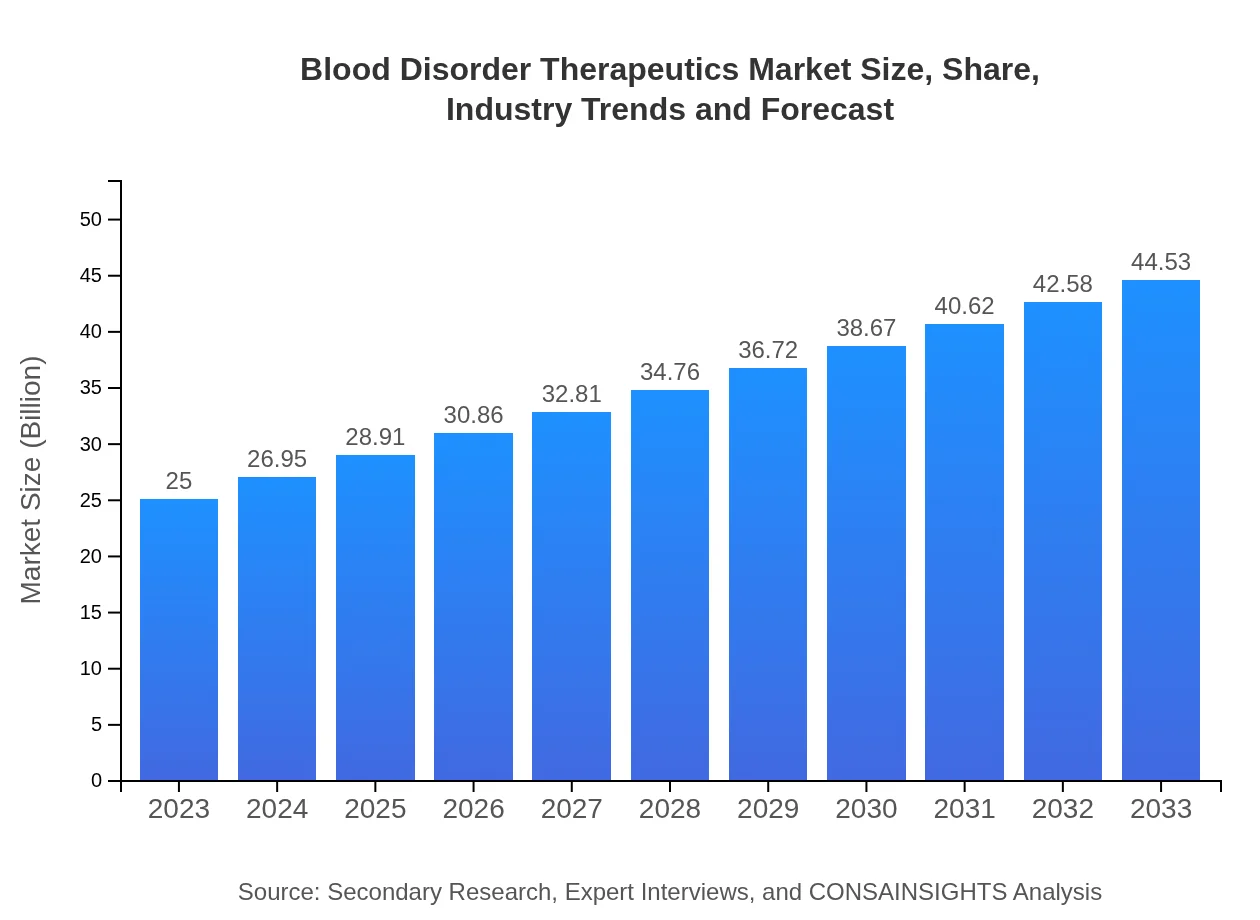
Blood Disorder Therapeutics Market Overview
Customize Blood Disorder Therapeutics Market Report market research report
- ✔ Get in-depth analysis of Blood Disorder Therapeutics market size, growth, and forecasts.
- ✔ Understand Blood Disorder Therapeutics's regional dynamics and industry-specific trends.
- ✔ Identify potential applications, end-user demand, and growth segments in Blood Disorder Therapeutics
What is the Market Size & CAGR of Blood Disorder Therapeutics Market Report market in 2023?
Blood Disorder Therapeutics Industry Analysis
Blood Disorder Therapeutics Market Segmentation and Scope
Tell us your focus area and get a customized research report.
Blood Disorder Therapeutics Market Report Market Analysis Report by Region
Europe Blood Disorder Therapeutics Market Report:
Europe grows from $6.62 Billion in 2023 to $11.79 Billion in 2033. Expansion reflects strengthening diagnostic capabilities, ongoing innovation in therapeutics and increasing awareness of blood disorders among healthcare providers and patients.Asia Pacific Blood Disorder Therapeutics Market Report:
Asia Pacific grows from $5.28 Billion in 2023 to $9.41 Billion in 2033. Growth is driven by improving healthcare access, rising diagnosis rates and expanding treatment availability as markets adopt newer therapeutic approaches.North America Blood Disorder Therapeutics Market Report:
North America is largest regional market, rising from $9.31 Billion in 2023 to $16.59 Billion in 2033. Regional drivers include established healthcare infrastructure, significant R&D investment and broad access to advanced therapies, supporting sustained uptake across end‑users.South America Blood Disorder Therapeutics Market Report:
Latin America grows from $1.02 Billion in 2023 to $1.82 Billion in 2033. Regional growth is supported by enhanced healthcare delivery, growing patient awareness and gradual adoption of advanced therapies in urban centers.Middle East & Africa Blood Disorder Therapeutics Market Report:
Middle East and Africa grows from $2.76 Billion in 2023 to $4.92 Billion in 2033. Drivers include incremental improvements in healthcare systems, increased investment and expanding availability of specialized treatments in key markets.Tell us your focus area and get a customized research report.
Research Methodology
Blood Disorder Therapeutics Market Analysis By Therapeutic Approach
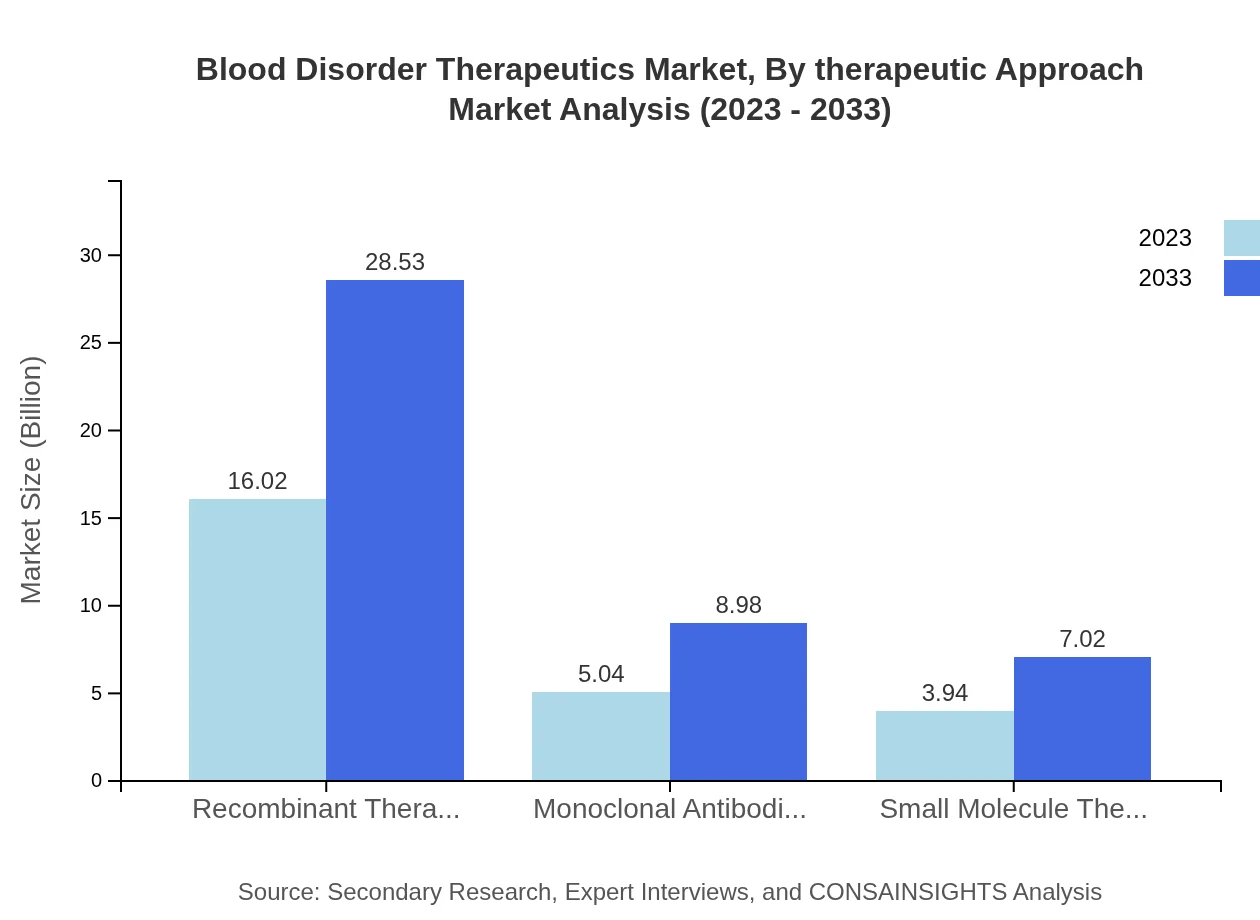
The therapeutic approach segment, which includes recombinant therapies, monoclonal antibodies, and small molecule therapies, plays a crucial role in treatment efficacy. Recombinant therapies dominate the market, accounting for a significant share due to their effectiveness in treating hemophilia, with a market size expected to grow from $16.02 billion in 2023 to $28.53 billion in 2033.
Blood Disorder Therapeutics Market Analysis By Disorder Type
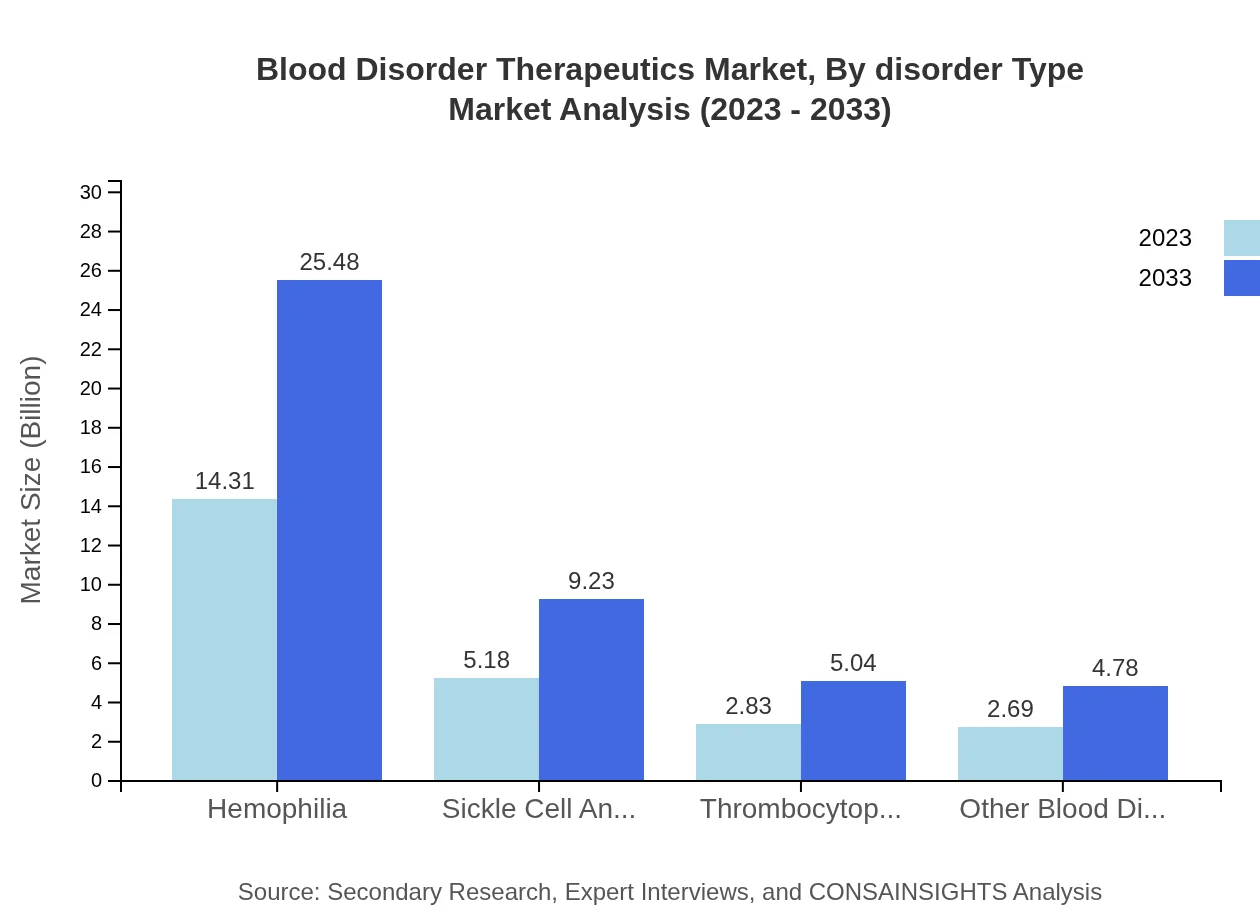
The disorder type segment is crucial, with hemophilia leading the market, showcasing growth from $14.31 billion in 2023 to $25.48 billion in 2033. Sickle cell anemia and thrombocytopenia also represent important sub-segments, expected to maintain strong growth due to increasing incidences and improved treatment options.
Blood Disorder Therapeutics Market Analysis By Route Of Administration
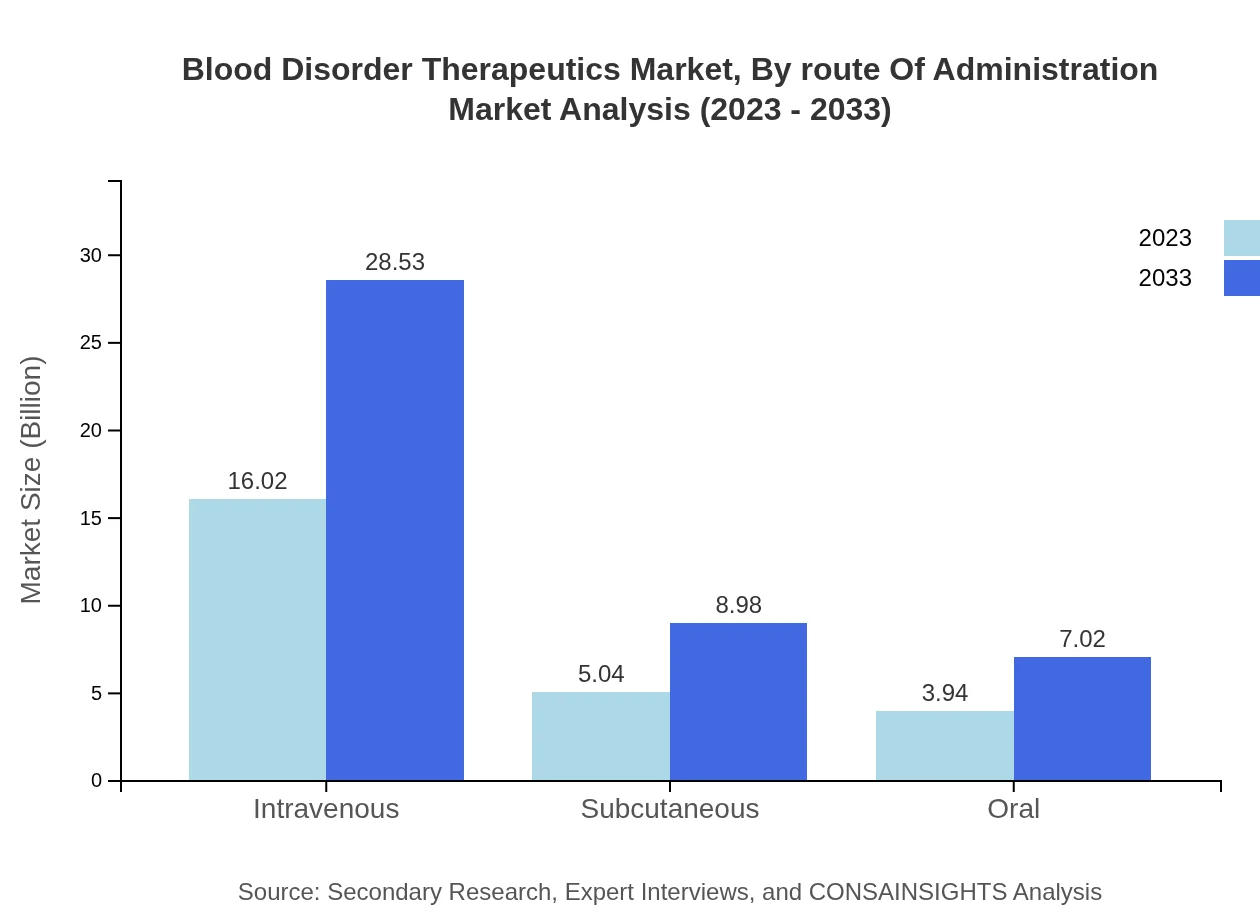
The market is segmented by route of administration, with intravenous therapies leading, projected to grow from $16.02 billion in 2023 to $28.53 billion in 2033. Subcutaneous and oral routes are gaining traction due to patient convenience and are crucial for future market innovation.
Blood Disorder Therapeutics Market Analysis By End User
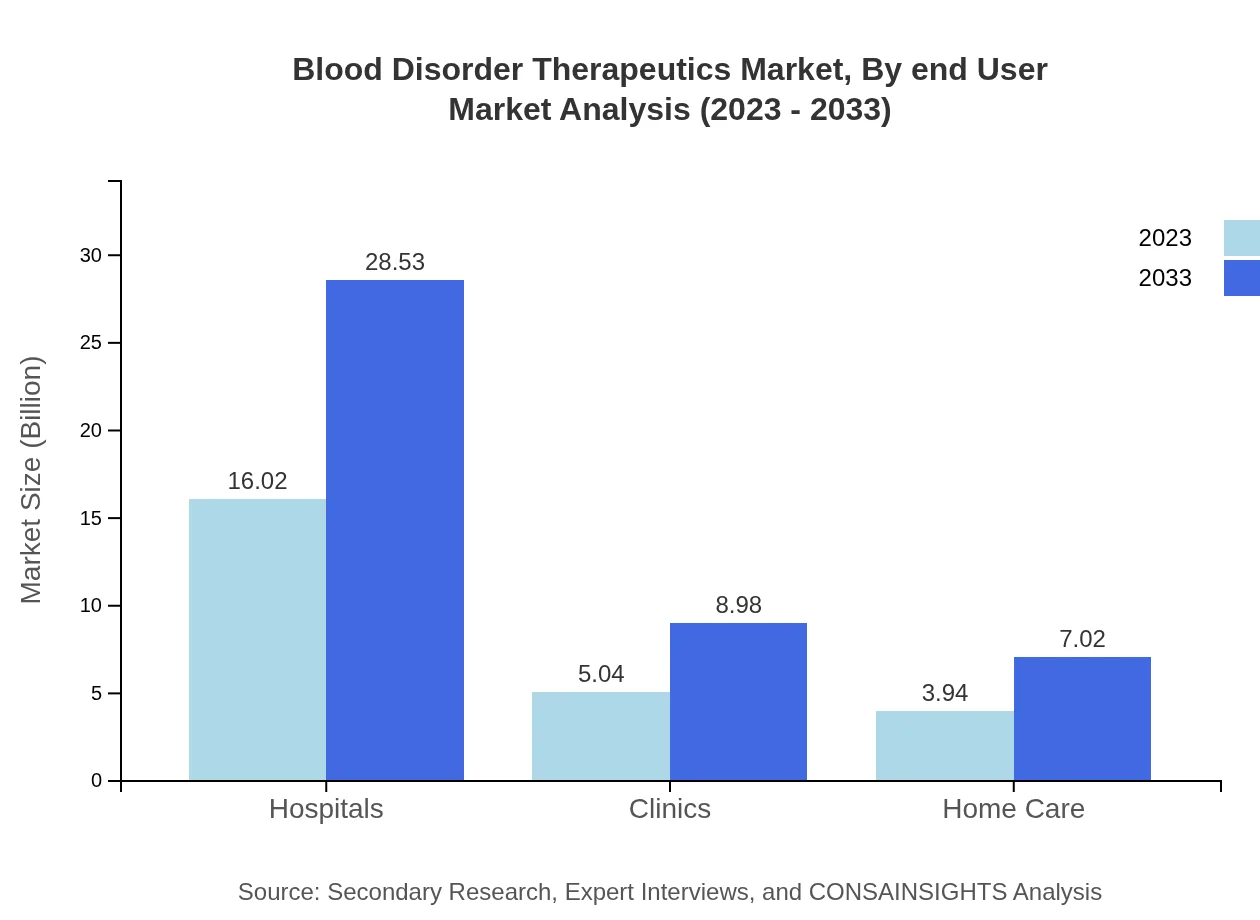
Hospitals dominate the end-user segment, with a market share expected to remain steady at 64.06%. The growth of clinics and home care treatments, though smaller at 20.17% and 15.77% respectively, is significant as care models evolve toward outpatient and at-home therapies.
Blood Disorder Therapeutics Market Analysis By Distribution Channel
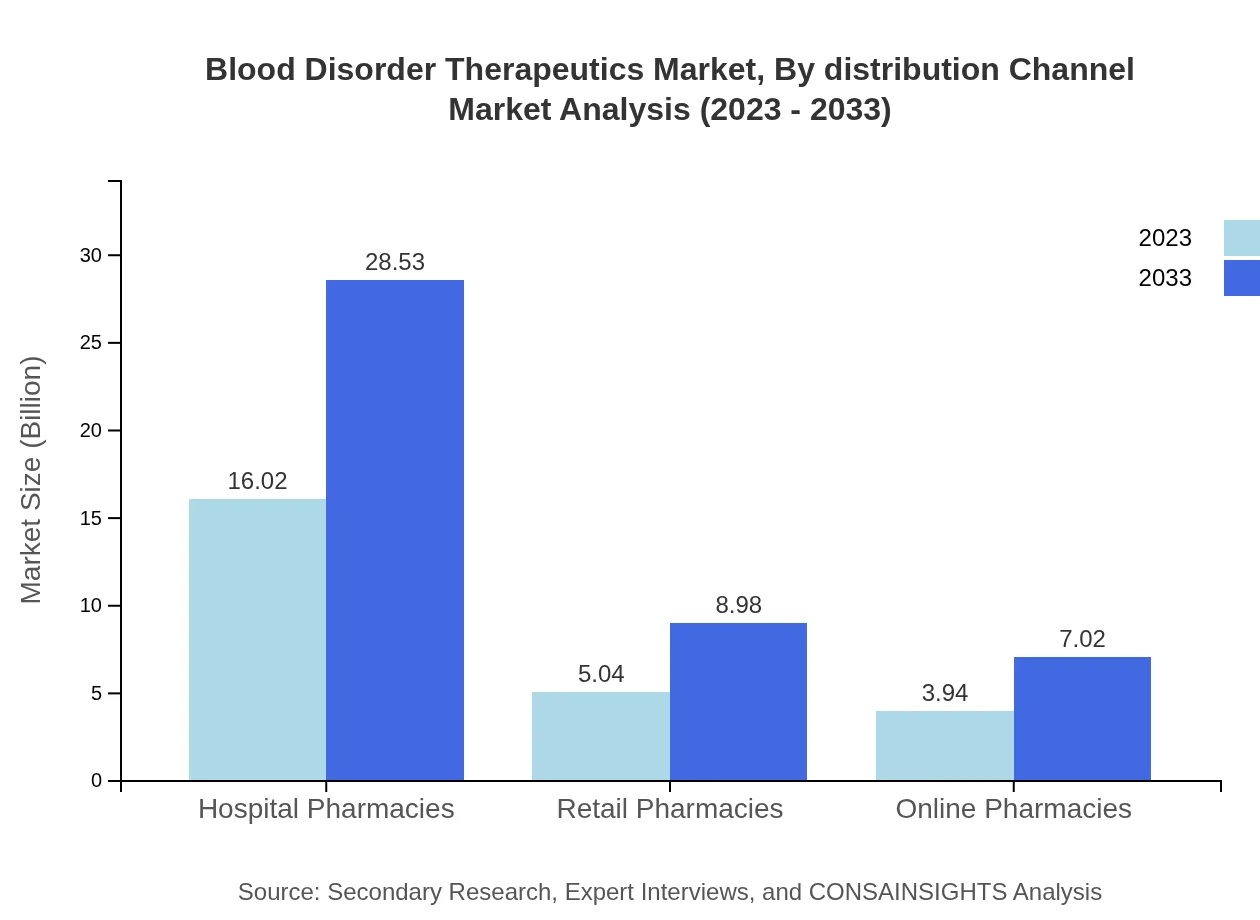
Distribution channels for the market include hospital pharmacies, retail pharmacies, and online pharmacies. Hospital pharmacies hold the largest share (64.06%), while online pharmacies are becoming increasingly popular, growing from $3.94 billion in 2023 to $7.02 billion by 2033, driven by changes in consumer behavior.
Blood Disorder Therapeutics Market Trends and Future Forecast
Tell us your focus area and get a customized research report.
Global Market Leaders and Top Companies in Blood Disorder Therapeutics Industry
Roche:
Roche is at the forefront of Blood Disorder Therapeutics, leading with innovative treatments for hemophilia and investing heavily in research for new therapies.Bayer AG:
Bayer AG focuses on developing comprehensive solutions for blood disorders, particularly in gene therapy and personalized medicine.Novo Nordisk:
Novo Nordisk offers a range of therapies focusing on hemophilia, with a commitment to patient education and healthcare improvements.CSL Behring:
CSL Behring is known for its specialized treatment options for bleeding disorders, including a wide array of immunoglobulin products.We're grateful to work with incredible clients.








FAQs
What is the market size of the Blood Disorder Therapeutics Market Report in 2023?
The market size in 2023 is $25.00 Billion according to the report's baseline value for the 2023 year.
How big will the market be in 2033?
The market is projected to reach $44.53 Billion by 2033 as stated in the report's forecast for that year.
What is CAGR for the forecast period?
The reported compound annual growth rate (CAGR) for the forecast period 2023 to 2033 is 5.8%.
Is there a single fastest Growing region in the Blood Disorder Therapeutics Market Report market?
No single fastest-growing region is stated for the Blood Disorder Therapeutics Market Report market because the top regional implied CAGR values are within 0.15 percentage points of each other, making the ranking too close to call reliably.
Who are the top companies mentioned in the report?
The report lists Roche, Bayer AG, Novo Nordisk, and CSL Behring as key companies operating in the market.
What are the primary therapeutic approaches covered?
Therapeutic approaches covered include recombinant therapies, monoclonal antibodies, and small molecule therapies as noted in the segmentation.
How are end‑users segmented in the report?
End‑user segmentation includes hospitals, clinics and home care settings as specified among the by‑end‑user subsegments.
Why is regional analysis included?
Regional analysis explains market distribution and growth patterns across North America, Europe, Asia Pacific, Latin America and Middle East and Africa using region‑specific values.
What distribution channels are analyzed?
The distribution channels analyzed comprise hospital pharmacies, retail pharmacies and online pharmacies as listed in the report.
What disorder types are examined?
The report examines disorder types including hemophilia, sickle cell anemia, thrombocytopenia and other blood disorders.