
Reports >
Life Sciences
>
Biobanks Market Report

Biobanks Market Report
First published: 21 October 2024 | Last updated: 25 May 2026 | Report Code: biobanks
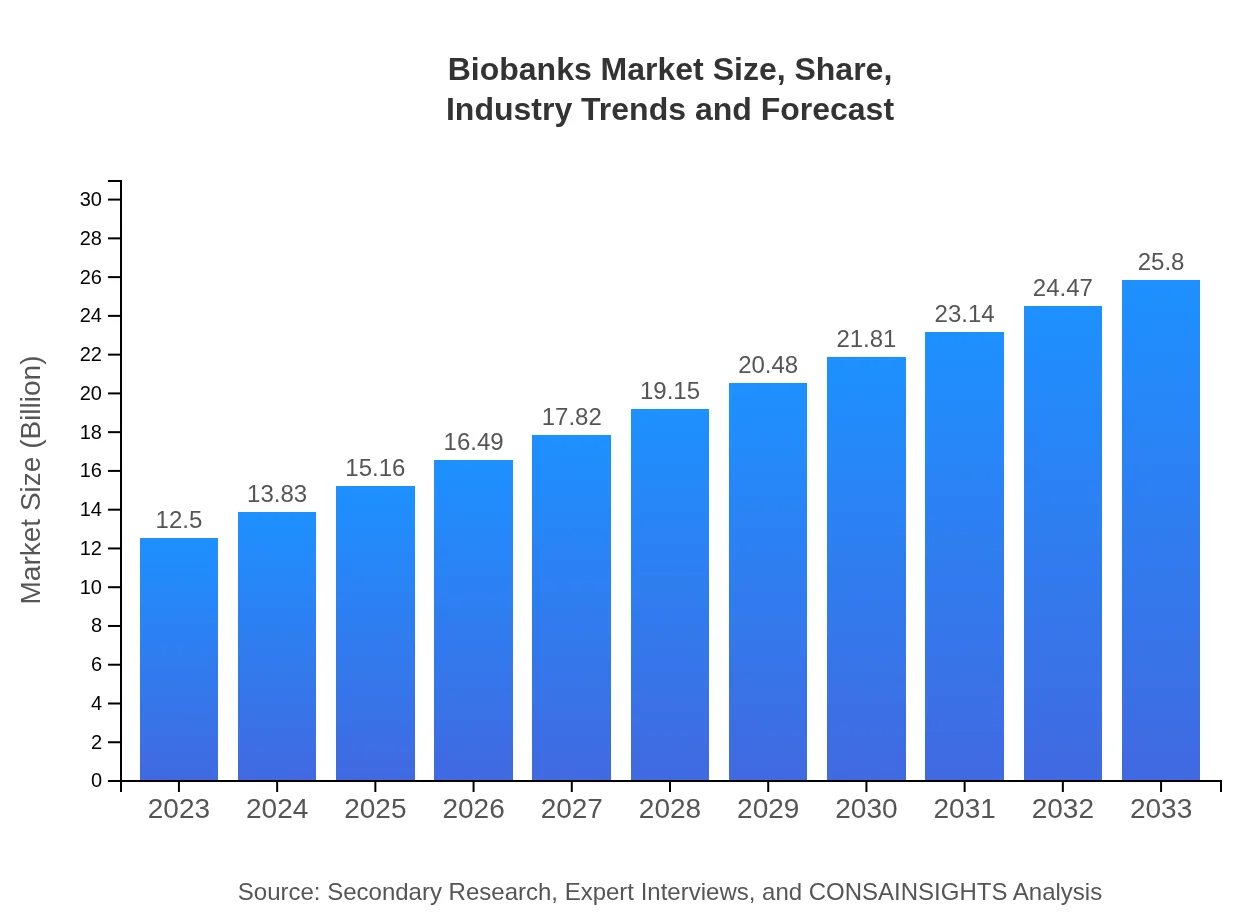
Biobanks Market — USD 12.5 billion in 2023, Growing to USD 25.80B by 2033 at 7.3% CAGR
This report provides an in-depth analysis of the Biobanks market from 2023 to 2033, including market size, growth potential, regional insights, and trends that are shaping the industry. It aims to equip stakeholders with valuable data for strategic planning.
Key Takeaways
- Global market value increases from $12.50 Billion in 2023 to $25.80 Billion in 2033, reflecting a 7.3% CAGR over the forecast period.
- North America is largest regional market, while no single fastest-growing region is stated because regional CAGR differences remain within 0.15 percentage points.
- Europe and Asia Pacific show substantial growth potential, with Europe moving from $3.39 Billion to $7.01 Billion and Asia Pacific from $2.45 Billion to $5.06 Billion.
- Top industry players include Thermo Fisher Scientific, Qiagen, Bristol Myers Squibb, Luminex Corporation, and Medpace, influencing service and technology adoption.
Biobanks Market Report — Executive Summary
North America remains largest market by forecast-period value, while no single fastest-growing region is stated because top regional growth rates are separated by less than 0.15 percentage points. This report provides a focused assessment of the biobanks sector, documenting expansion from $12.50 Billion in 2023 to $25.80 Billion in 2033 at a 7.3% CAGR for 2023 to 2033. Growth is supported by rising demand for biological specimens in clinical research, genomics, and personalized medicine initiatives. Technological enhancements in sample collection, storage, and data management are improving operational efficiencies and enabling new services. The market structure covers by-type, by-region, by-end-user, by-sample-type, and by-functionality segments, highlighting population, commercial, and research biobanks. Regional dynamics show North America as the largest market. Leading companies such as Thermo Fisher Scientific, Qiagen, Bristol Myers Squibb, Luminex Corporation, and Medpace play key roles through service provision and strategic investments. The analysis identifies regulatory considerations, ethical issues, and standardization needs as ongoing challenges that stakeholders must address to sustain growth.
Key Growth Drivers
- Increasing demand for human, animal, and microbial samples to support clinical trials and biomedical research.
- Rising investments in precision medicine and genomics initiatives that require large-scale sample repositories.
- Advances in sample collection, storage technologies, and data management systems enhancing biobank capabilities.
- Expanded funding from healthcare and research organizations enabling new biobank establishments and service expansions.
| Metric | Value |
|---|---|
| Study Period | 2023 - 2033 |
| 2023 Market Size | $12.50 Billion |
| CAGR (2023-2033) | 7.3% |
| 2033 Market Size | $25.80 Billion |
| Top Companies | Thermo Fisher Scientific, Qiagen , Bristol Myers Squibb, Luminex Corporation, Medpace |
| Published Date | 21 October 2024 |
| Last Modified Date | 25 May 2026 |
Biobanks Market Overview
Customize Biobanks Market Report market research report
- ✔ Get in-depth analysis of Biobanks market size, growth, and forecasts.
- ✔ Understand Biobanks's regional dynamics and industry-specific trends.
- ✔ Identify potential applications, end-user demand, and growth segments in Biobanks
What is the Market Size & CAGR of Biobanks Market Report market in 2023?
Biobanks Industry Analysis
Biobanks Market Segmentation and Scope
Tell us your focus area and get a customized research report.
Biobanks Market Report Market Analysis Report by Region
Europe Biobanks Market Report:
Europe grows from $3.39 Billion in 2023 to $7.01 Billion in 2033. Growth drivers include increasing genomics initiatives, government-backed research funding, and enhanced biobanking standards and collaborations across institutions.Asia Pacific Biobanks Market Report:
Asia Pacific grows from $2.45 Billion in 2023 to $5.06 Billion in 2033. Expansion is driven by rising biomedical research activity, growing investments in precision medicine, and adoption of improved storage and data management solutions.North America Biobanks Market Report:
North America is largest regional market, rising from $4.28 Billion in 2023 to $8.84 Billion in 2033. Regional growth is supported by strong research infrastructure, high biomedical investment, and widespread adoption of advanced sample management practices.South America Biobanks Market Report:
Latin America grows from $1.15 Billion in 2023 to $2.38 Billion in 2033. Growth is attributed to increasing research spending, expanding clinical trial activity, and developing biobanking infrastructure in the region.Middle East & Africa Biobanks Market Report:
Middle East and Africa grows from $1.22 Billion in 2023 to $2.51 Billion in 2033. Local drivers include growing healthcare research programs, investments in laboratory infrastructure, and initiatives to support genomic and epidemiological studies.Tell us your focus area and get a customized research report.
Research Methodology
Biobanks Market Analysis By Type
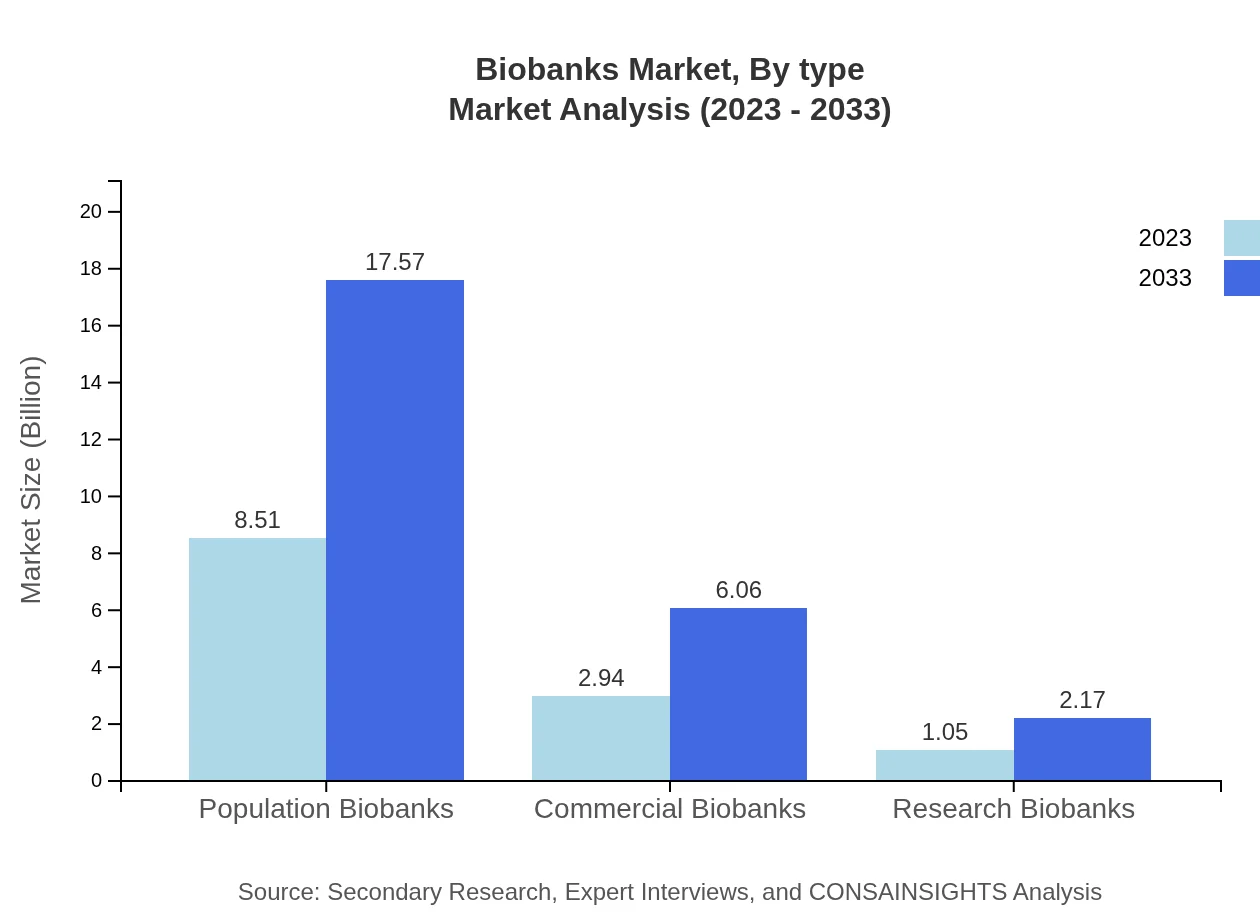
The Biobanks market is primarily segmented into three major types: Population Biobanks, Commercial Biobanks, and Research Biobanks. Population Biobanks account for a significant market share, driven by their crucial role in epidemiological studies and public health research. In 2023, Population Biobanks are valued at $8.51 billion and are expected to grow to $17.57 billion by 2033. Commercial Biobanks represent around $2.94 billion in 2023, likely reaching $6.06 billion by 2033, facilitating drug discovery and development. Research Biobanks, while smaller in size at $1.05 billion in 2023, are projected to grow to $2.17 billion by 2033, supporting academic and research organization needs.
Biobanks Market Analysis By Sample Type
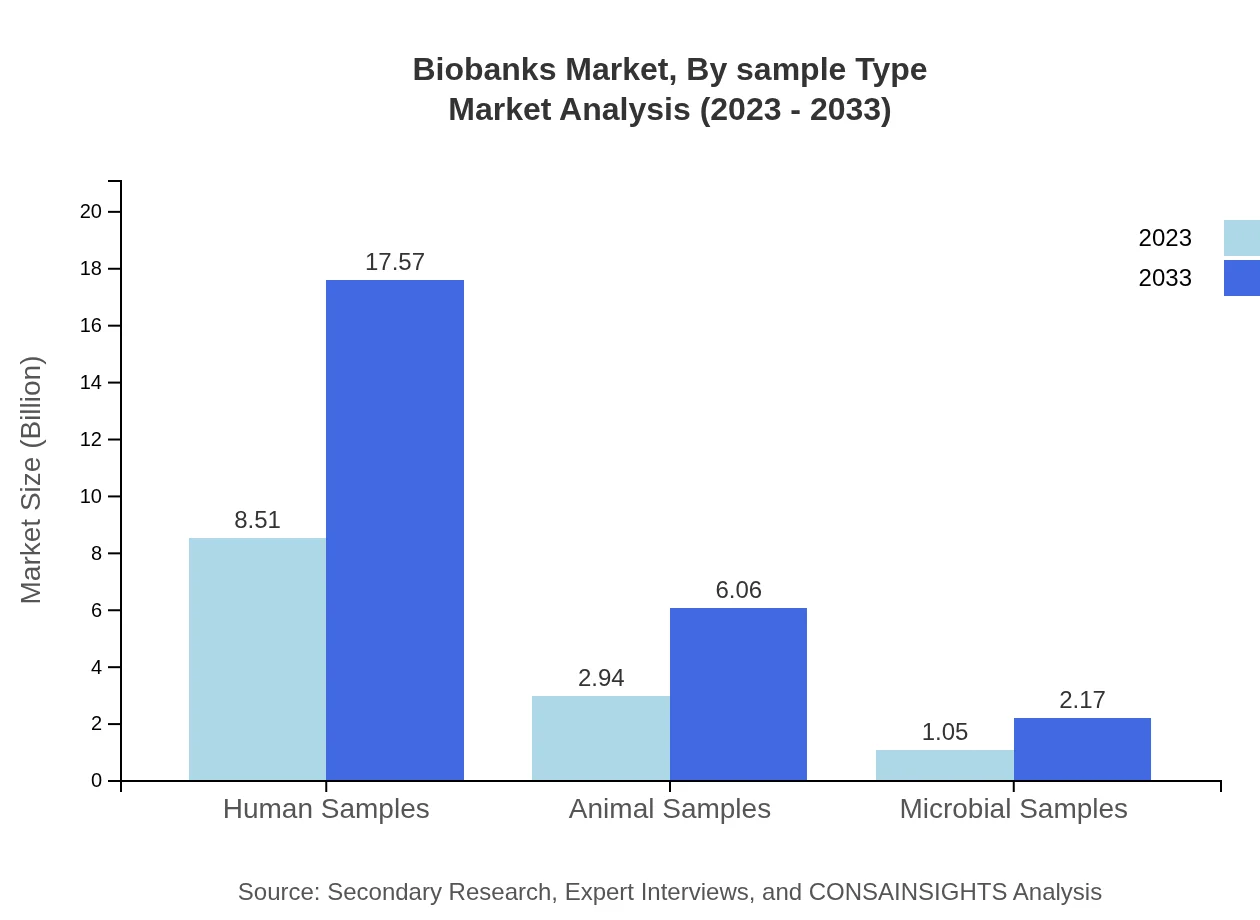
Segments include Human Samples, Animal Samples, and Microbial Samples. Human Samples dominate the market, valued at $8.51 billion in 2023, expected to reach $17.57 billion by 2033. Animal Samples are projected to grow from $2.94 billion to $6.06 billion, while Microbial Samples, valued at $1.05 billion, aim to hit $2.17 billion, indicating a diverse landscape for biobanks catering to varied research needs.
Biobanks Market Analysis By End User
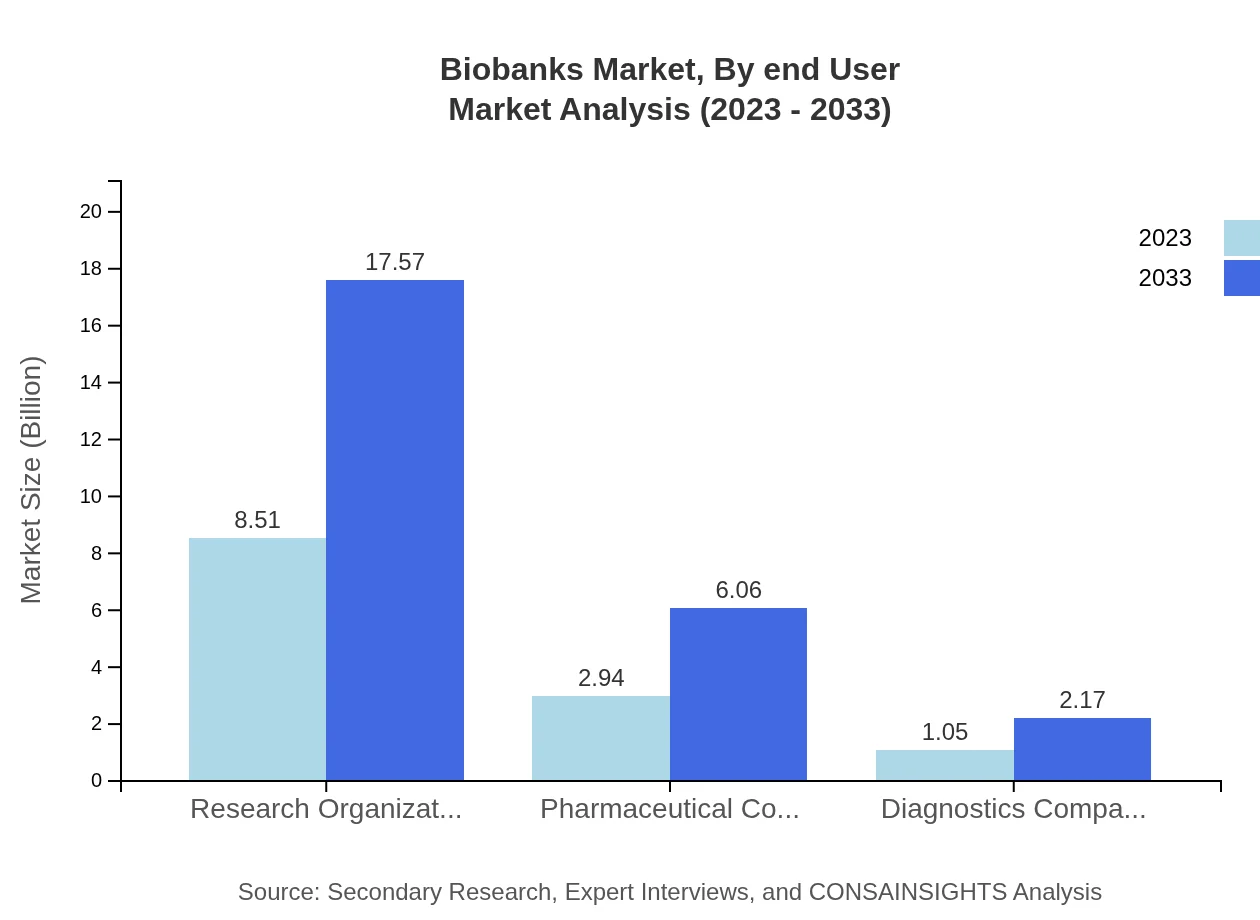
The Biobanks market also segments based on end-users, including Research Organizations, Pharmaceutical Companies, and Diagnostics Companies. Research Organizations are the largest segment, valued at $8.51 billion in 2023, projected to surge to $17.57 billion by 2033. Pharmaceutical Companies are expected to increase from $2.94 billion to $6.06 billion, while Diagnostics Companies grow from $1.05 billion to $2.17 billion, reflecting increasing reliance on biobanks for innovation and product development.
Biobanks Market Analysis By Functionality
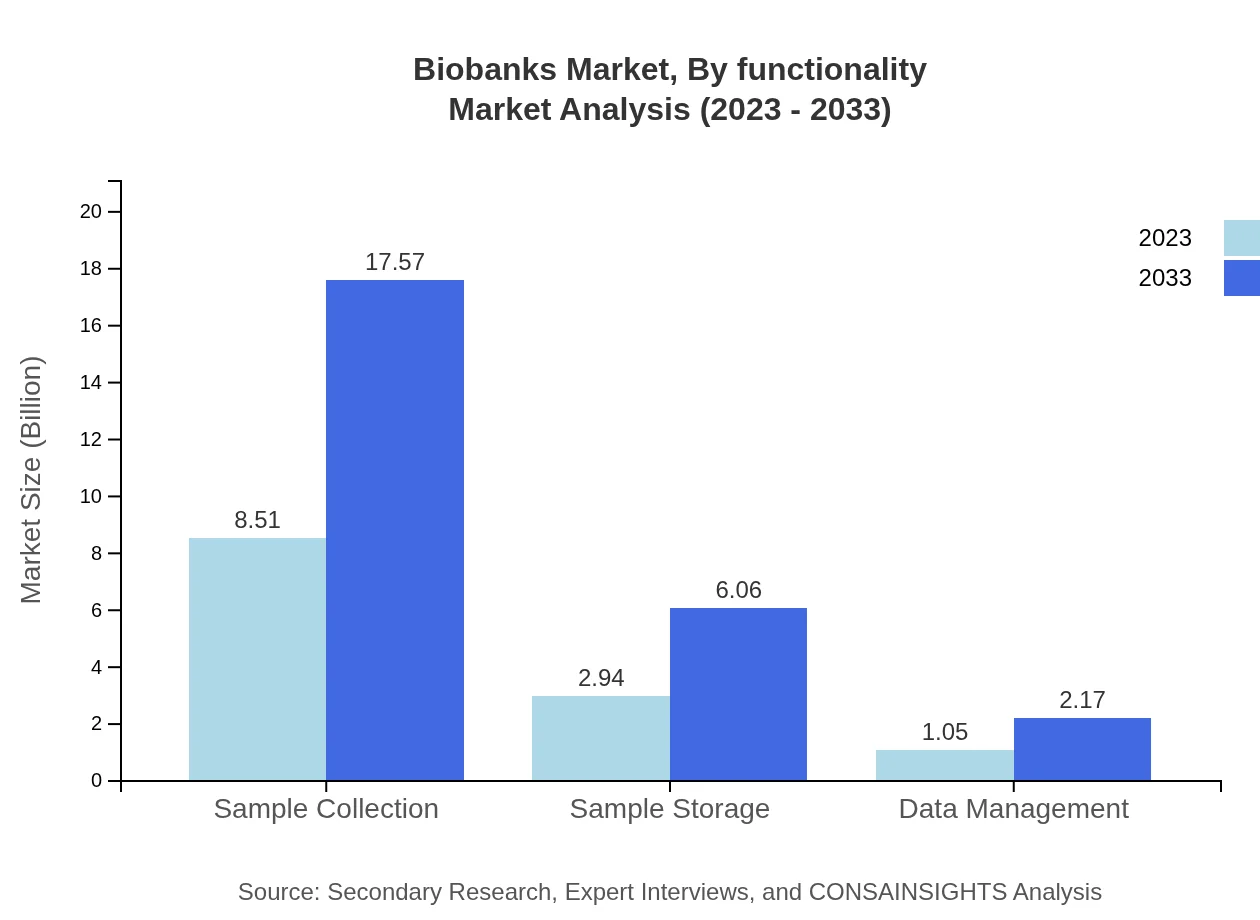
Functional segments in the Biobanks market encompass Sample Collection, Sample Storage, and Data Management. Sample Collection accounts for a significant share at $8.51 billion in 2023, anticipated to rise to $17.57 billion by 2033, central for biobank operations. Sample Storage, with market values of $2.94 billion and projections to $6.06 billion, plays a critical role in ensuring sample integrity. Data Management is also essential, projected to grow from $1.05 billion to $2.17 billion, highlighting the importance of effective data handling in biobanking.
Biobanks Market Analysis By Region
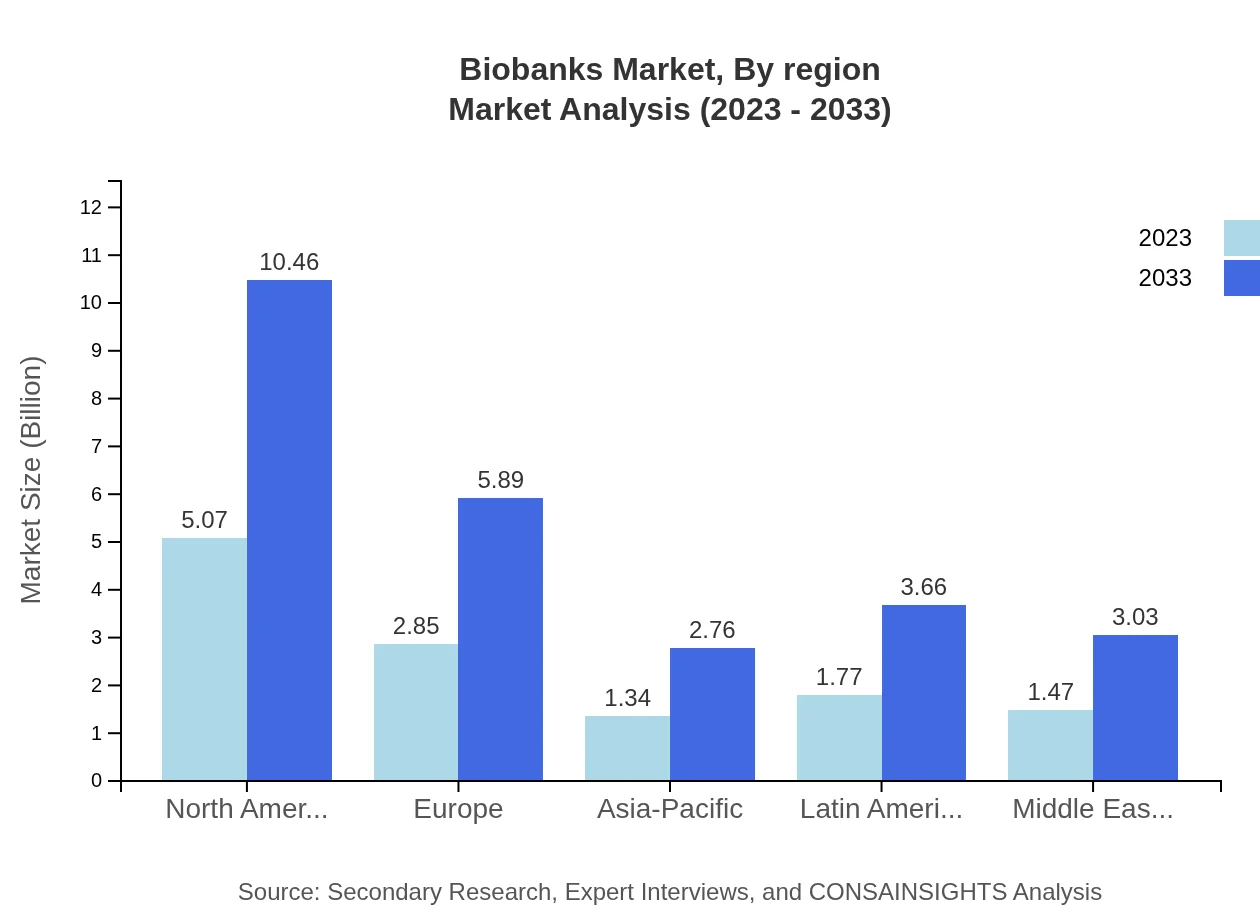
Regional analysis reveals differing dynamics across markets. North America leads with significant investments and a strong framework for biobanks, while Europe follows closely, emphasizing research collaboration. Asia-Pacific is witnessing rapid growth driven by increasing healthcare demands. South America and Middle East & Africa are emerging markets, showing promising growth due to global partnerships fostering biobank establishment.
Biobanks Market Trends and Future Forecast
Tell us your focus area and get a customized research report.
Global Market Leaders and Top Companies in Biobanks Industry
Thermo Fisher Scientific:
A leading company providing a wide range of products and services that support biobanking, including sample storage, data management solutions, and innovative equipment.Qiagen :
A prominent player in the biotech sector, Qiagen specializes in sample preparation and diagnostics, which are critical for biobanking applications.Bristol Myers Squibb:
A global biopharmaceutical company that extensively utilizes biobanks in its R&D processes to enhance drug development and personalized medicine.Luminex Corporation:
Known for its multiplexing technology that enables efficient biobanking practices, Luminex provides solutions that streamline sample analysis.Medpace:
A clinical contract research organization that partners with biobanks to facilitate drug development and clinical trials with a focus on regulatory compliance.We're grateful to work with incredible clients.








FAQs
What is the current market size of the biobanks market?
The market size is $12.50 Billion in 2023 as reported in the input data for this analysis.
How big will the market be in 2033?
The projected market value for 2033 is $25.80 Billion according to the supplied figures for the forecast period.
What is CAGR for the forecast period?
The compound annual growth rate (CAGR) for 2023 to 2033 is 7.3% based on the provided market projections.
Is there a single fastest Growing region in the Biobanks Market Report market?
No single fastest-growing region is stated for the Biobanks Market Report market because the top regional implied CAGR values are within 0.15 percentage points of each other, making the ranking too close to call reliably.
Which companies lead the biobanks sector?
Top companies listed in the input include Thermo Fisher Scientific, Qiagen, Bristol Myers Squibb, Luminex Corporation, and Medpace.
What are common sample types stored by biobanks?
Per the input, sample types include Human Samples, Animal Samples, and Microbial Samples as primary categories.
What functionality segments does the market include?
Functionality segments specified are Sample Collection, Sample Storage, and Data Management in the provided segmentation details.
How are regional trends characterized in the report?
Regional facts show distinct start and end values for each region; the summary notes North America as largest and does not specify a regional market region.