

Calcium Channel Blocker Market Report
First published: 21 October 2024 | Last updated: 25 May 2026 | Report Code: calcium-channel-blocker
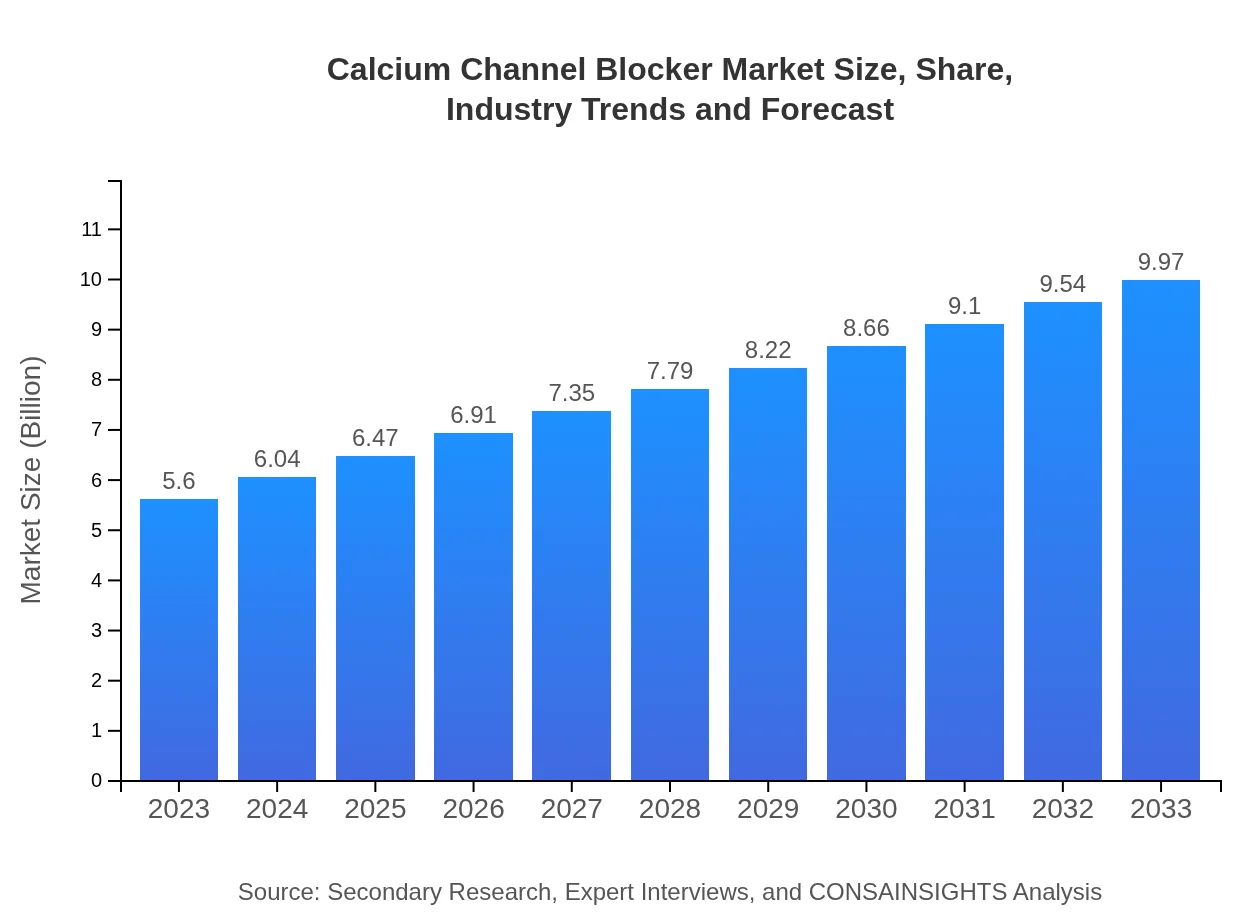
Calcium Channel Blocker Market — USD 5.6 billion in 2023, Growing to USD 9.97B by 2033 at 5.8% CAGR
This report provides an in-depth analysis of the Calcium Channel Blocker market, covering insights on market dynamics, trends, size, segmentation, and forecasts from 2023 to 2033. The analysis includes region-specific performance and key player contributions in the industry.
Key Takeaways
- Global market rises from $5.60 Billion in 2023 to $9.97 Billion in 2033 with a 5.8% CAGR across 2023 to 2033.
- North America is largest regional market, while no single fastest-growing region is stated because regional CAGR differences remain within 0.15 percentage points.
- North America is the largest region, increasing from $1.87 Billion in 2023 to $3.34 Billion in 2033.
- Europe grows from $1.56 Billion in 2023 to $2.78 Billion in 2033; Asia Pacific expands from $1.11 Billion to $1.98 Billion over the same period.
- Top companies include Pfizer Inc., Novartis AG, AstraZeneca plc, Boehringer Ingelheim, and Bristol-Myers Squibb.
- Market segmentation covers types (dihydropyridines, non-dihydropyridines), applications, routes, end-users and distribution channels.
Calcium Channel Blocker Market Report — Executive Summary
North America remains largest market by forecast-period value, while no single fastest-growing region is stated because top regional growth rates are separated by less than 0.15 percentage points. The report presents a structured review of the Calcium Channel Blocker market, tracking growth from $5.60 Billion in 2023 to $9.97 Billion in 2033 at a 5.8% CAGR during 2023 to 2033. Key demand drivers include rising prevalence of cardiovascular disorders, aging populations, and improvements in drug formulations and delivery. The analysis examines segment-level dynamics across type, application, route of administration, end-user and distribution channels, and profiles major players such as Pfizer Inc., Novartis AG, AstraZeneca plc, Boehringer Ingelheim, and Bristol-Myers Squibb. Regional breakdowns highlight North America as the largest market and provide country-level implications for Europe, Asia Pacific, Latin America and Middle East and Africa. The study combines primary interviews and secondary sources to validate trends and support strategic decisions for product development, partnerships, and market entry planning.
Key Growth Drivers
- Increasing incidence of cardiovascular disorders driving sustained demand for calcium channel blockers.
- Advances in drug formulation and delivery enhancing therapeutic efficacy and patient adherence.
- Aging populations contributing to higher prevalence of hypertension and related conditions.
- Regulatory support and growing health awareness encouraging wider adoption and treatment initiation.
- Expanded distribution networks and diversified channels improving product availability to end-users.
| Metric | Value |
|---|---|
| Study Period | 2023 - 2033 |
| 2023 Market Size | $5.60 Billion |
| CAGR (2023-2033) | 5.8% |
| 2033 Market Size | $9.97 Billion |
| Top Companies | Pfizer Inc., Novartis AG, AstraZeneca plc, Boehringer Ingelheim, Bristol-Myers Squibb |
| Published Date | 21 October 2024 |
| Last Modified Date | 25 May 2026 |
Calcium Channel Blocker Market Overview
Customize Calcium Channel Blocker Market Report market research report
- ✔ Get in-depth analysis of Calcium Channel Blocker market size, growth, and forecasts.
- ✔ Understand Calcium Channel Blocker's regional dynamics and industry-specific trends.
- ✔ Identify potential applications, end-user demand, and growth segments in Calcium Channel Blocker
What is the Market Size & CAGR of Calcium Channel Blocker Market Report market in 2023?
Calcium Channel Blocker Industry Analysis
Calcium Channel Blocker Market Segmentation and Scope
Tell us your focus area and get a customized research report.
Calcium Channel Blocker Market Report Market Analysis Report by Region
Europe Calcium Channel Blocker Market Report:
Europe grows from $1.56 Billion in 2023 to $2.78 Billion in 2033. Growth is influenced by aging demographics, established treatment protocols for hypertension and cardiovascular disorders, and ongoing formulation improvements.Asia Pacific Calcium Channel Blocker Market Report:
Asia Pacific grows from $1.11 Billion in 2023 to $1.98 Billion in 2033. Expansion reflects rising disease burden, improving healthcare access, and increasing awareness of cardiovascular disease management.North America Calcium Channel Blocker Market Report:
North America is largest regional market, rising from $1.87 Billion in 2023 to $3.34 Billion in 2033. Regional demand is supported by high prevalence of cardiovascular conditions, advanced healthcare infrastructure, and strong presence of leading industry players.South America Calcium Channel Blocker Market Report:
Latin America grows from $0.28 Billion in 2023 to $0.5 Billion in 2033. Market movement is tied to growing treatment uptake, expanding distribution channels, and increased focus on chronic disease care.Middle East & Africa Calcium Channel Blocker Market Report:
Middle East and Africa grows from $0.77 Billion in 2023 to $1.38 Billion in 2033. Growth drivers include improving healthcare services, greater diagnosis rates of cardiovascular conditions, and heightened adoption of effective drug therapies.Tell us your focus area and get a customized research report.
Research Methodology
Calcium Channel Blocker Market Analysis By Type
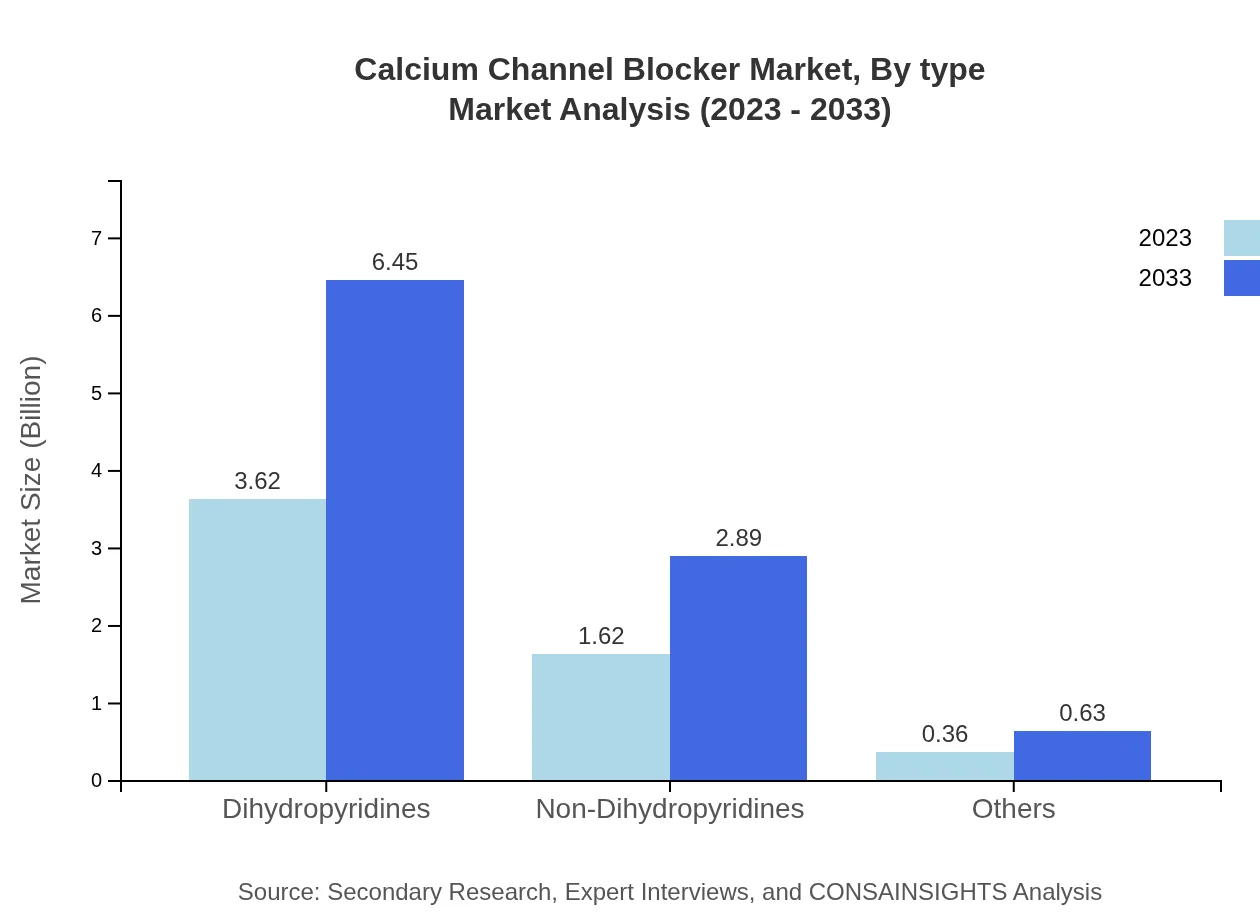
In terms of type, the Calcium Channel Blocker market is dominated by Dihydropyridines, accounting for a market size of $3.62 billion in 2023, projected to grow to $6.45 billion by 2033, holding a consistent market share of 64.71%. Non-Dihydropyridines also show significant growth, expected to rise from $1.62 billion to $2.89 billion with a stable share of 28.95%. Other types contribute modestly, with an anticipated growth from $0.36 billion to $0.63 billion, maintaining a 6.34% share.
Calcium Channel Blocker Market Analysis By Application
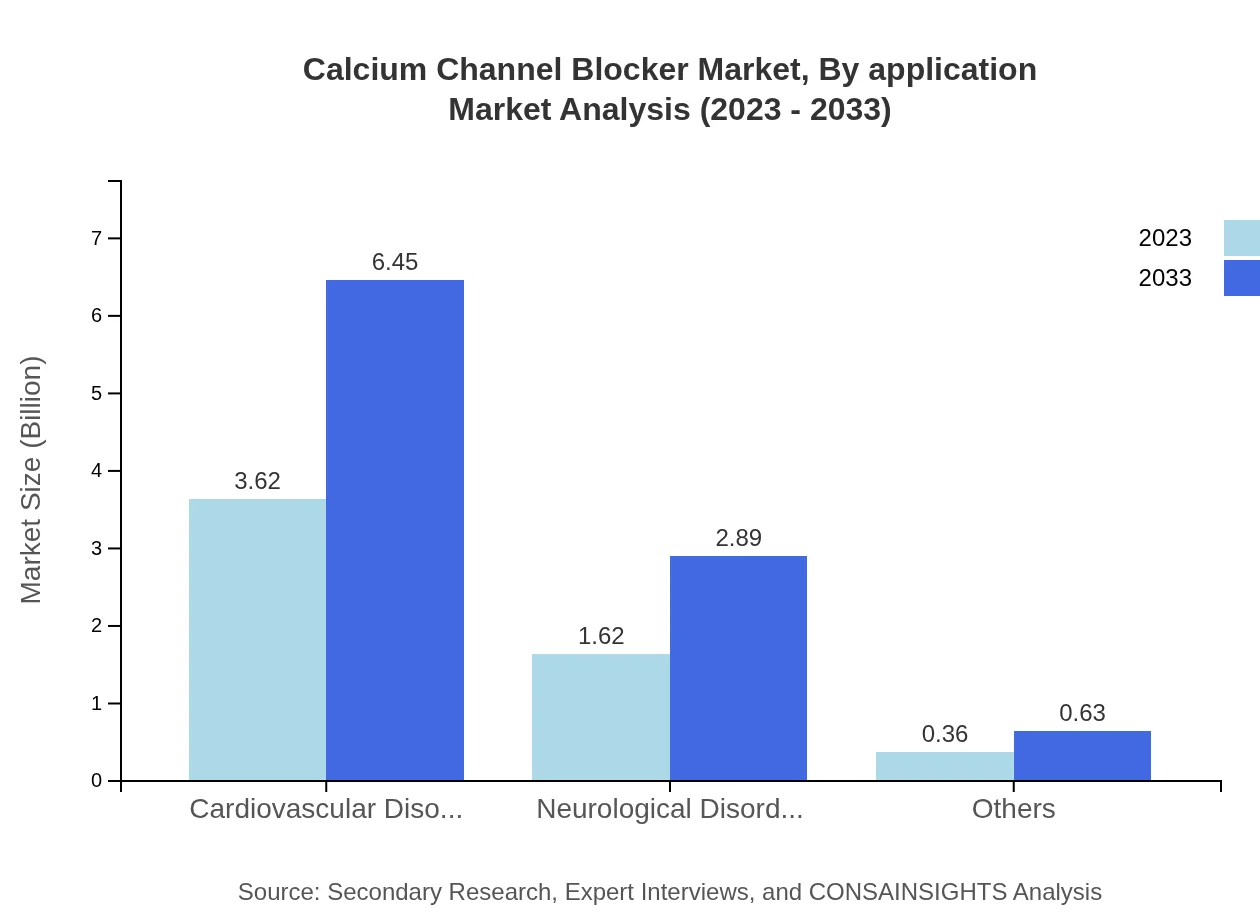
The primary applications for Calcium Channel Blockers include treating Cardiovascular Disorders and Neurological Disorders. The market for cardiovascular applications remains the largest, growing from $3.62 billion in 2023 to $6.45 billion by 2033, sustaining 64.71% of the market share. Neurological disorder applications are also significant, expanding from $1.62 billion to $2.89 billion, retaining a 28.95% share.
Calcium Channel Blocker Market Analysis By Route Of Administration
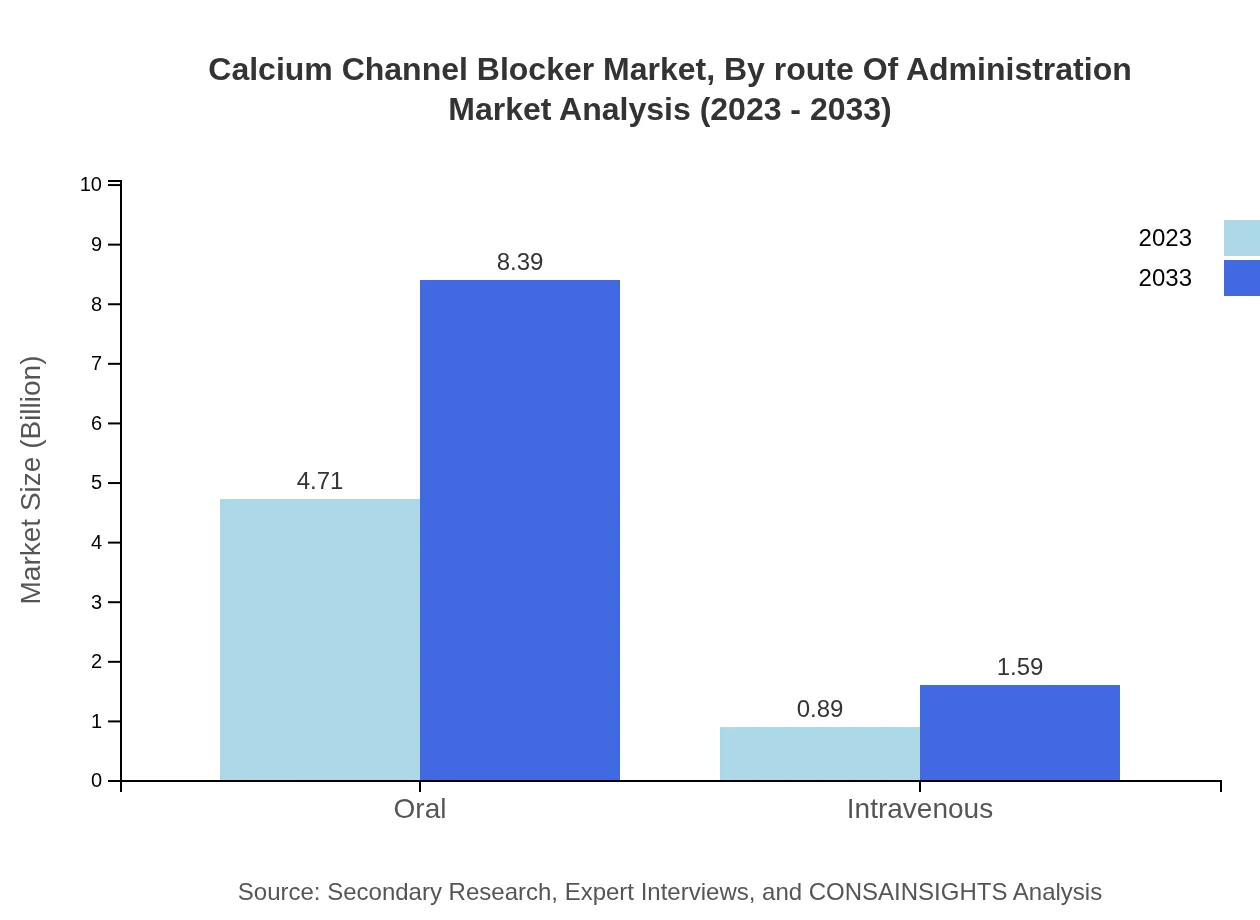
Oral administration dominates the market, with a size of $4.71 billion in 2023, projected to reach $8.39 billion by 2033. Intravenous administration, while smaller, is growing from $0.89 billion to $1.59 billion. Oral forms maintain an 84.08% market share, reflecting convenience and increased patient compliance.
Calcium Channel Blocker Market Analysis By End User
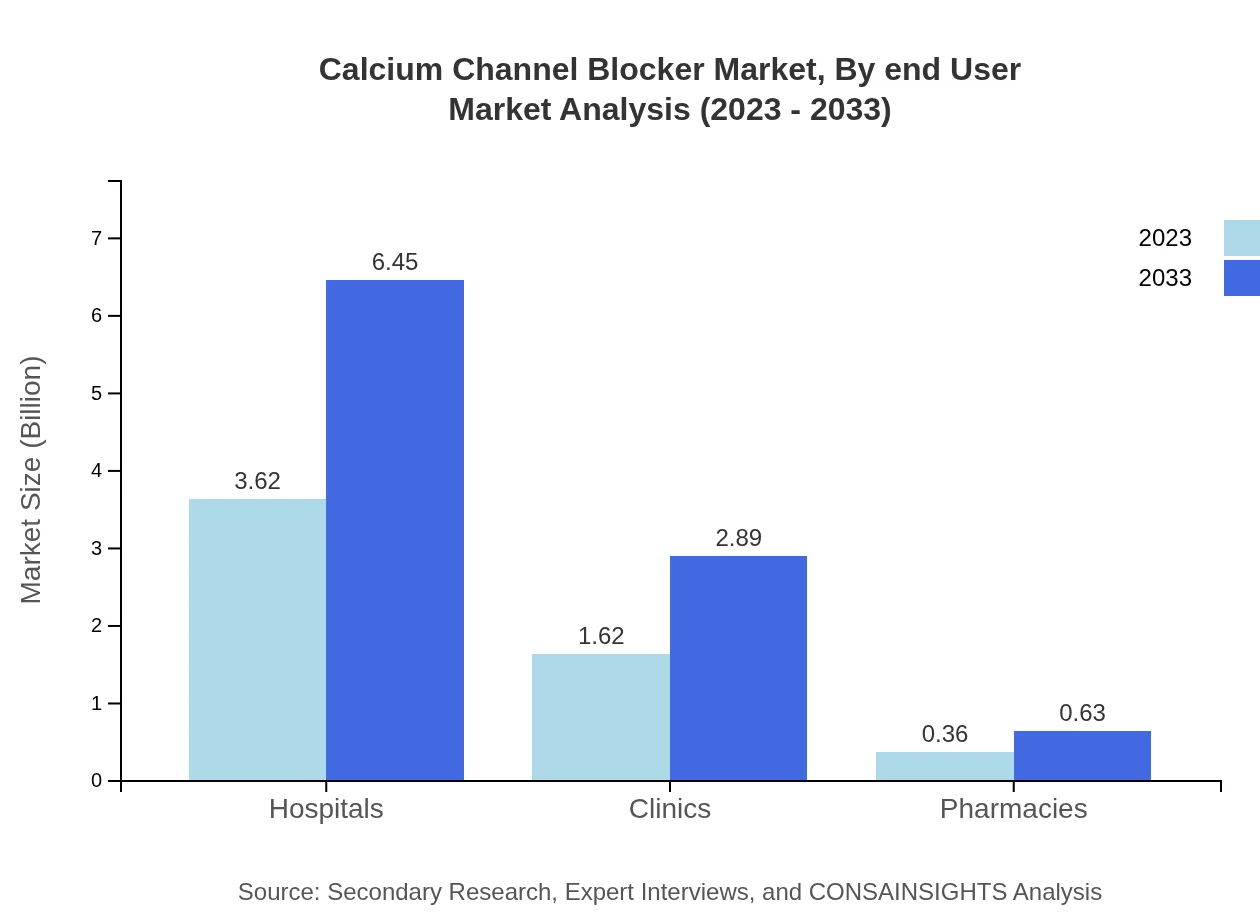
Hospitals remain the primary end-user for Calcium Channel Blockers, with a market size of $3.62 billion in 2023, growing to $6.45 billion by 2033, reflecting a 64.71% market share. Clinics hold a significant market share of 28.95%, increasing from $1.62 billion to $2.89 billion, while pharmacies contribute modestly with a share of 6.34%.
Calcium Channel Blocker Market Analysis By Distribution Channel
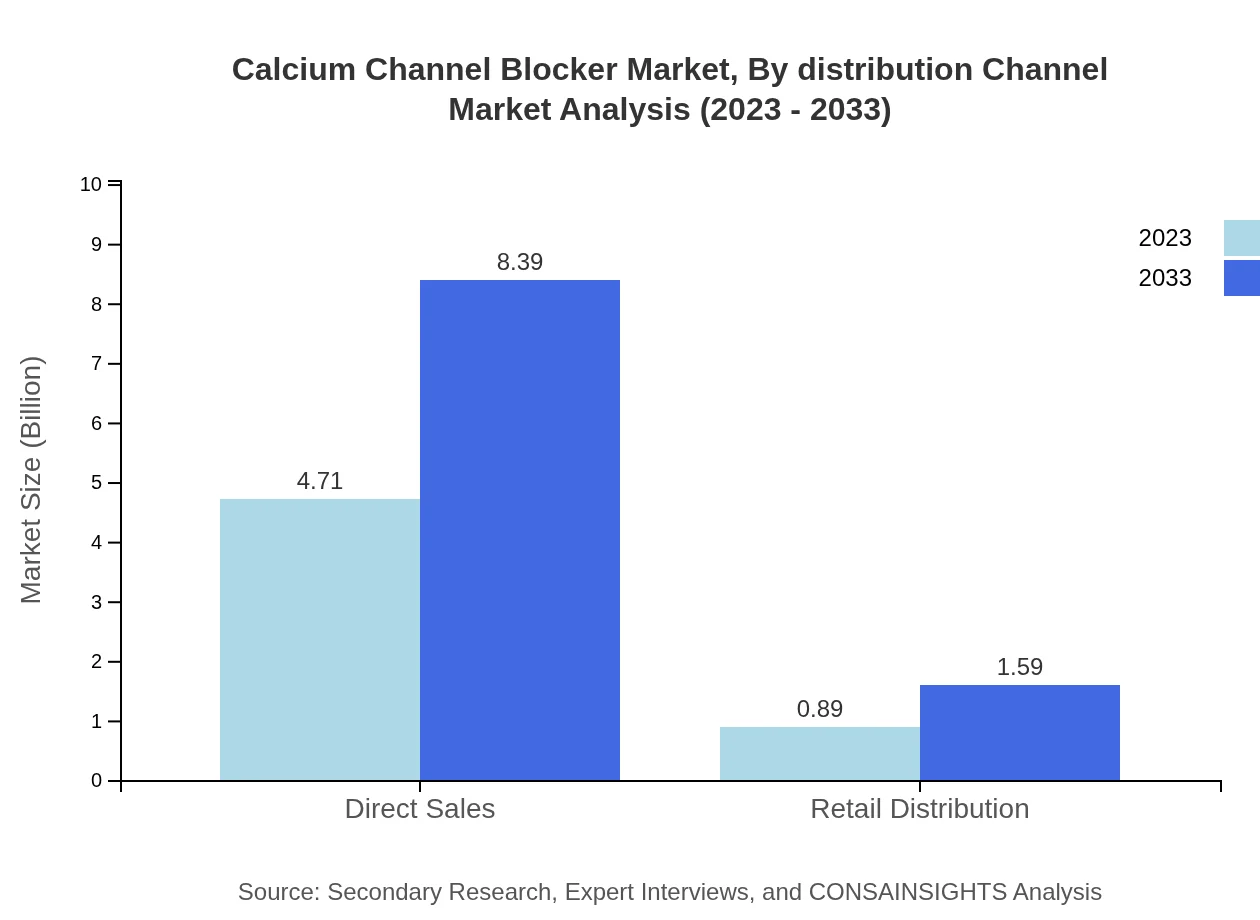
Direct sales are the leading distribution channel for Calcium Channel Blockers, with a market size of $4.71 billion in 2023, projected to reach $8.39 billion by 2033 and constituting 84.08% of the market. Retail distribution is growing from $0.89 billion to $1.59 billion, holding 15.92% of share.
Calcium Channel Blocker Market Trends and Future Forecast
Tell us your focus area and get a customized research report.
Global Market Leaders and Top Companies in Calcium Channel Blocker Industry
Pfizer Inc.:
A leading pharmaceutical company renowned for its innovative drug development and a strong portfolio of Calcium Channel Blockers, providing extensive treatment options for cardiovascular disorders.Novartis AG:
This global healthcare company specializes in patented blockbuster medications, including several Calcium Channel Blockers known for their effectiveness and safety.AstraZeneca plc:
A prominent player in the Cardiovascular market, AstraZeneca develops Calcium Channel Blockers focusing on patient outcomes and medication adherence.Boehringer Ingelheim:
Known for its strong research capabilities, Boehringer Ingelheim offers a range of Calcium Channel Blockers integrated with advanced therapeutic approaches.Bristol-Myers Squibb:
With a focus on life-saving therapies, Bristol-Myers is a key player in the Calcium Channel Blocker market, contributing significantly to cardiovascular treatments.We're grateful to work with incredible clients.








FAQs
What is the market size of the Calcium Channel Blocker market in 2023?
The market size in 2023 is $5.60 Billion as reported for the global Calcium Channel Blocker market.
How big will the market be in 2033?
The market is projected to reach $9.97 Billion by 2033 according to the forecast data provided.
What is CAGR for the forecast period?
The compound annual growth rate (CAGR) for the forecast period 2023 to 2033 is 5.8% as stated in the report.
Is there a single fastest Growing region in the Calcium Channel Blocker Market Report market?
No single fastest-growing region is stated for the Calcium Channel Blocker Market Report market because the top regional implied CAGR values are within 0.15 percentage points of each other, making the ranking too close to call reliably.
Which companies are leading in the market?
Top companies listed include Pfizer Inc., Novartis AG, AstraZeneca plc, Boehringer Ingelheim, and Bristol-Myers Squibb.
Why is the market expected to grow through 2033?
Growth is supported by higher cardiovascular disorder prevalence, improvements in formulations and delivery, aging populations, and increasing regulatory and awareness-driven adoption.
What are the main segments covered in the report?
The report segments the market by type, application, route of administration, end-user and distribution channel, including dihydropyridines and non-dihydropyridines.
How was the research conducted?
The study uses primary interviews with industry experts, secondary research from company reports and publications, data triangulation, and internal validation.