
Reports >
Life Sciences
>
Cancer Tumor Profiling Market Report

Cancer Tumor Profiling Market Report
First published: 08 October 2024 | Last updated: 25 May 2026 | Report Code: cancer-tumor-profiling
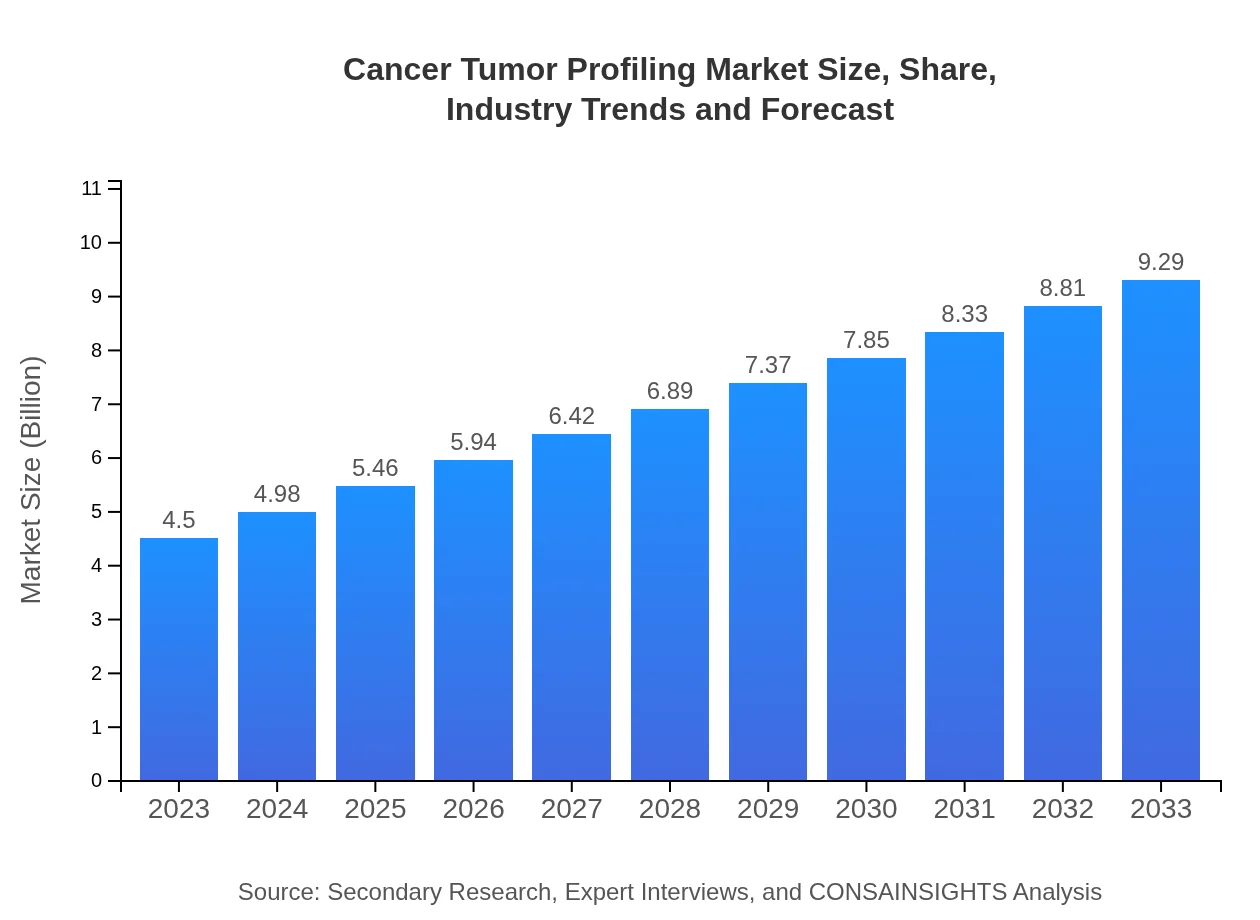
Cancer Tumor Profiling Market — USD $4.5 Billion in 2023, Growing to USD 9.29B by 2033 at 7.3% CAGR
This report provides a comprehensive analysis of the Cancer Tumor Profiling market from 2023 to 2033. It covers market size, trends, segmentation, regional insights, and forecasts, offering valuable data for industry stakeholders and researchers.
Key Takeaways
- Global market expands from $4.50 Billion in 2023 to $9.29 Billion in 2033, reflecting a 7.3% CAGR over 2023 to 2033.
- North America is largest regional market, while no single fastest-growing region is stated because regional CAGR differences remain within 0.15 percentage points.
- Europe grows from $1.33 Billion in 2023 to $2.74 Billion in 2033, supporting expanded clinical and research profiling.
- Asia Pacific increases from $0.8 Billion in 2023 to $1.65 Billion in 2033, driven by rising adoption in hospitals and research institutions.
- Key vendors include Quest Diagnostics, Illumina, Inc., Roche Diagnostics, Foundation Medicine, and Merck KGaA.
Cancer Tumor Profiling Market Report — Executive Summary
North America remains largest market by forecast-period value, while no single fastest-growing region is stated because top regional growth rates are separated by less than 0.15 percentage points. The Cancer Tumor Profiling Market Report presents a detailed view of a market progressing from $4.50 Billion in 2023 to $9.29 Billion in 2033 at a 7.3% CAGR for 2023 to 2033. Growth is underpinned by technological advances in genomic profiling, broader clinical adoption across hospitals and clinics, and increased research investment. Market structure spans reagents, instruments, software, and multiple testing modalities such as genetic and protein testing, with NGS and Sanger sequencing among listed technologies. Regional dynamics show North America as the largest market, with Europe and Asia Pacific also expanding. Major companies named include Quest Diagnostics, Illumina, Inc., Roche Diagnostics, Foundation Medicine, and Merck KGaA. The report outlines demand drivers, segmentation by product and end user, and competitive positioning to inform stakeholders evaluating investment, partnership, or product development opportunities.
Key Growth Drivers
- Advances in genomic sequencing technologies improving diagnostic precision and enabling broader tumor profiling applications.
- Rising clinical adoption within hospitals and clinics increases demand for reagents, instruments, and software solutions.
- Expanded research funding and collaborations accelerate development of new profiling assays and platform integrations.
- Growing emphasis on personalized treatment strategies prompts greater use of genetic and protein testing in clinical workflows.
- Investment by leading diagnostics and life-science firms supports commercialization and scale-up of profiling tools.
| Metric | Value |
|---|---|
| Study Period | 2023 - 2033 |
| 2023 Market Size | $4.50 Billion |
| CAGR (2023-2033) | 7.3% |
| 2033 Market Size | $9.29 Billion |
| Top Companies | Quest Diagnostics, Illumina, Inc., Roche Diagnostics, Foundation Medicine, Merck KGaA |
| Published Date | 08 October 2024 |
| Last Modified Date | 25 May 2026 |
Cancer Tumor Profiling Market Overview
Customize Cancer Tumor Profiling Market Report market research report
- ✔ Get in-depth analysis of Cancer Tumor Profiling market size, growth, and forecasts.
- ✔ Understand Cancer Tumor Profiling's regional dynamics and industry-specific trends.
- ✔ Identify potential applications, end-user demand, and growth segments in Cancer Tumor Profiling
What is the Market Size & CAGR of Cancer Tumor Profiling Market Report market in 2023?
Cancer Tumor Profiling Industry Analysis
Cancer Tumor Profiling Market Segmentation and Scope
Tell us your focus area and get a customized research report.
Cancer Tumor Profiling Market Report Market Analysis Report by Region
Europe Cancer Tumor Profiling Market Report:
Europe grows from $1.33 Billion in 2023 to $2.74 Billion in 2033. Adoption in hospitals and research centers, coupled with regulatory frameworks and collaborations, supports uptake of genomic and protein-based profiling solutions.Asia Pacific Cancer Tumor Profiling Market Report:
Asia Pacific grows from $0.8 Billion in 2023 to $1.65 Billion in 2033. Expansion is driven by growing clinical and research capacity, increased investment in diagnostics, and rising implementation of profiling techniques in healthcare institutions.North America Cancer Tumor Profiling Market Report:
North America is largest regional market, rising from $1.7 Billion in 2023 to $3.51 Billion in 2033. The region’s scale reflects strong clinical adoption, established laboratory infrastructure, and presence of major diagnostic firms supporting commercialization and deployment of profiling platforms.South America Cancer Tumor Profiling Market Report:
Latin America grows from $0.23 Billion in 2023 to $0.47 Billion in 2033. Market development is supported by expanding laboratory services and gradual adoption of profiling tools in clinical and research settings across the region.Middle East & Africa Cancer Tumor Profiling Market Report:
Middle East and Africa grows from $0.44 Billion in 2023 to $0.91 Billion in 2033. Growth reflects increasing investments in healthcare infrastructure and greater utilization of tumor profiling in specialized centers.Tell us your focus area and get a customized research report.
Research Methodology
Cancer Tumor Profiling Market Analysis By Product
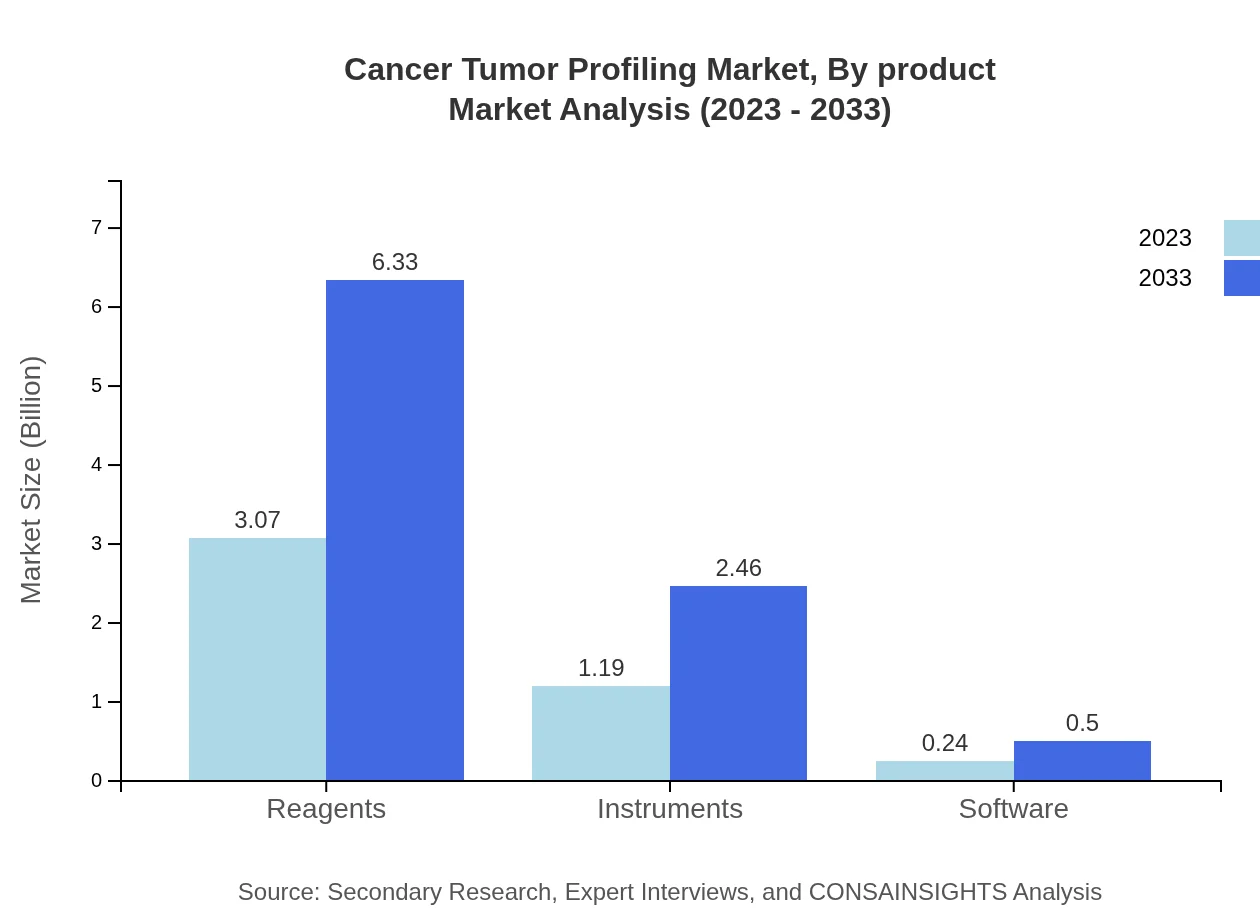
In the Cancer Tumor Profiling Market, the reagent segment dominates with a market size of USD 3.07 billion in 2023, growing to USD 6.33 billion by 2033, accounting for approximately 68.17% market share. Instruments and software also play significant roles, with instruments projected to increase from USD 1.19 billion to USD 2.46 billion during the same period.
Cancer Tumor Profiling Market Analysis By Test Type
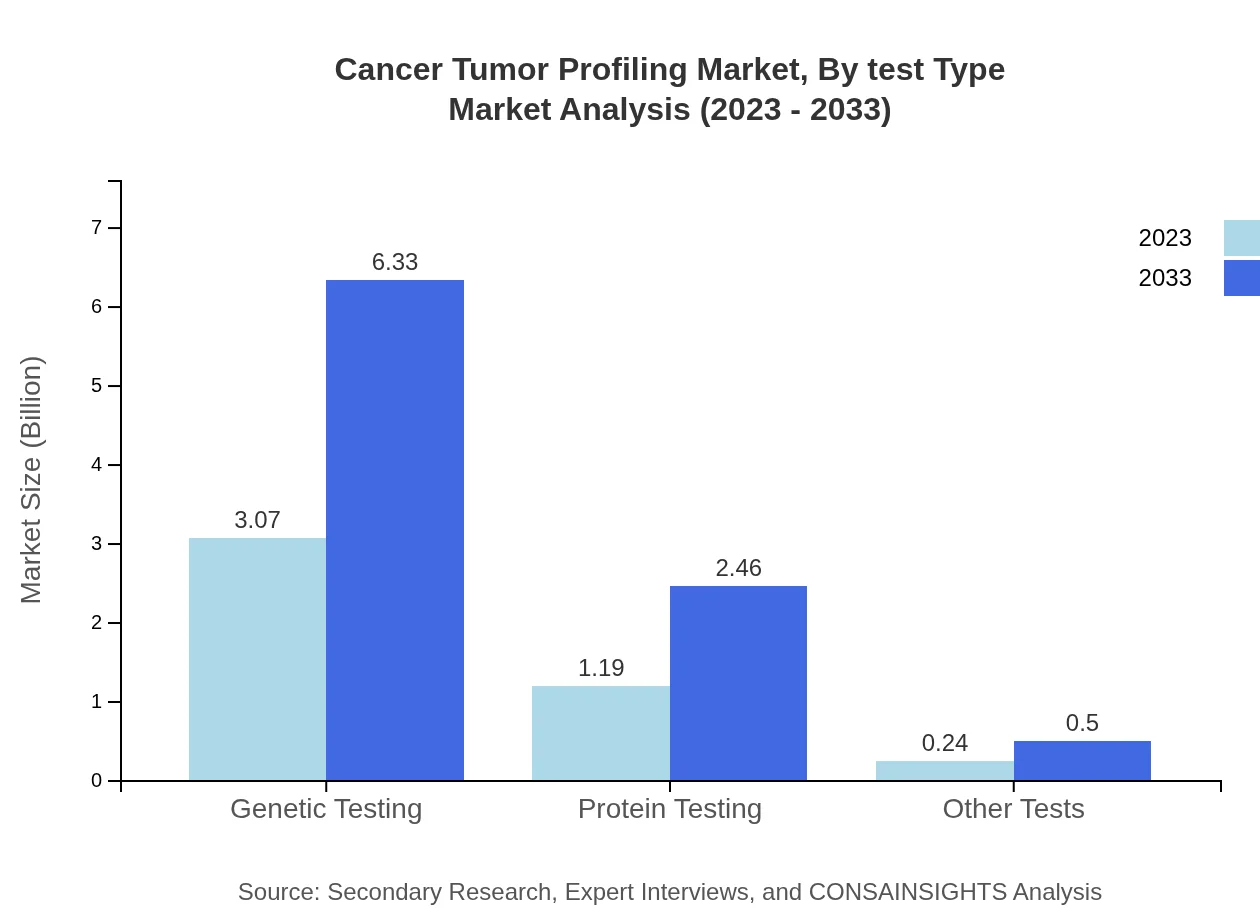
Genetic testing is a key component, representing a substantial market share of 68.17%, with sizes projected to grow from USD 3.07 billion in 2023 to USD 6.33 billion by 2033. In contrast, protein testing and other tests also demonstrate growth potential with increasing demand for comprehensive profiling solutions.
Cancer Tumor Profiling Market Analysis By Technology
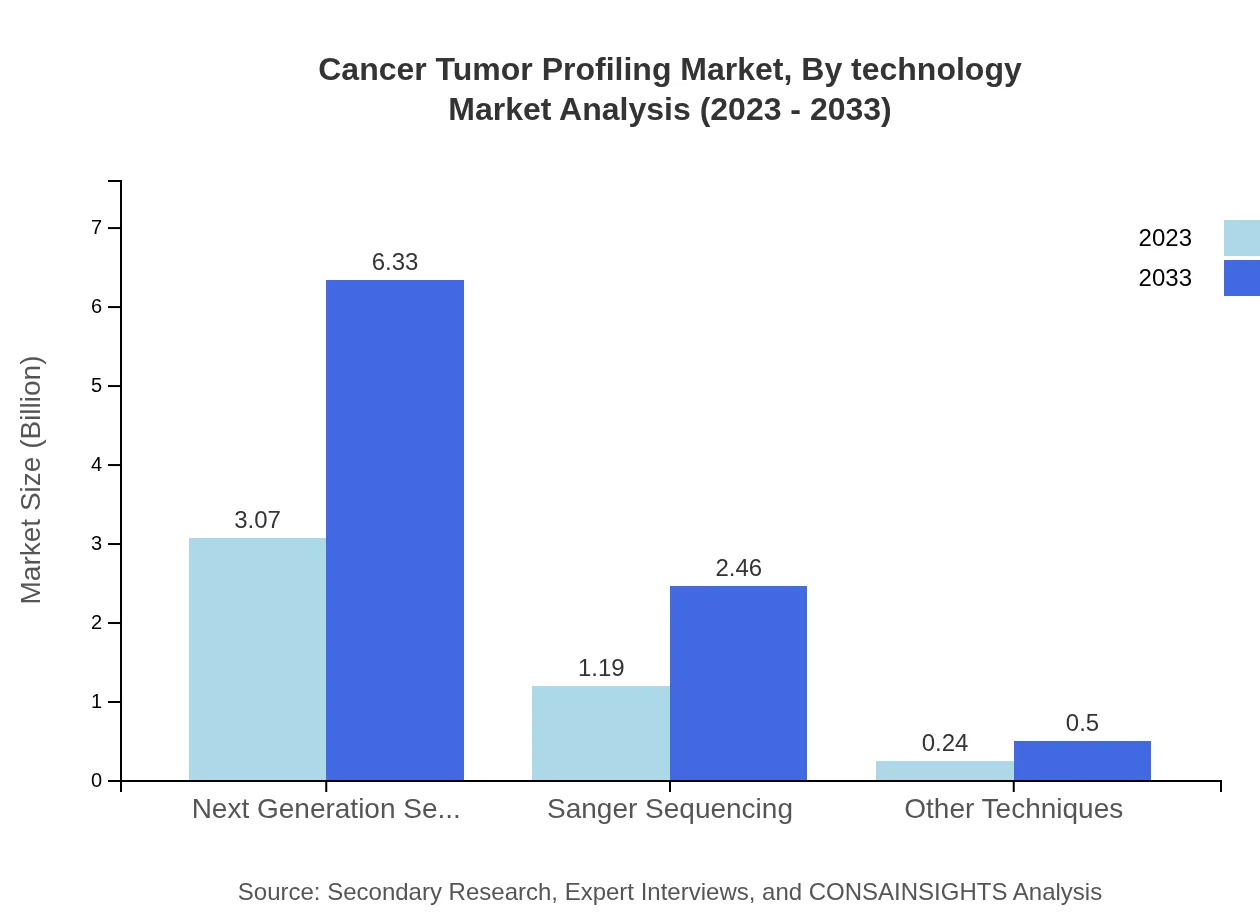
Technologies such as Next Generation Sequencing (NGS) and Sanger Sequencing drive the market dynamics, with NGS expected to rise from USD 3.07 billion to USD 6.33 billion by 2033, maintaining a market share of 68.17%. The adoption of advanced technologies is critical in enhancing diagnostic accuracy.
Cancer Tumor Profiling Market Analysis By Application
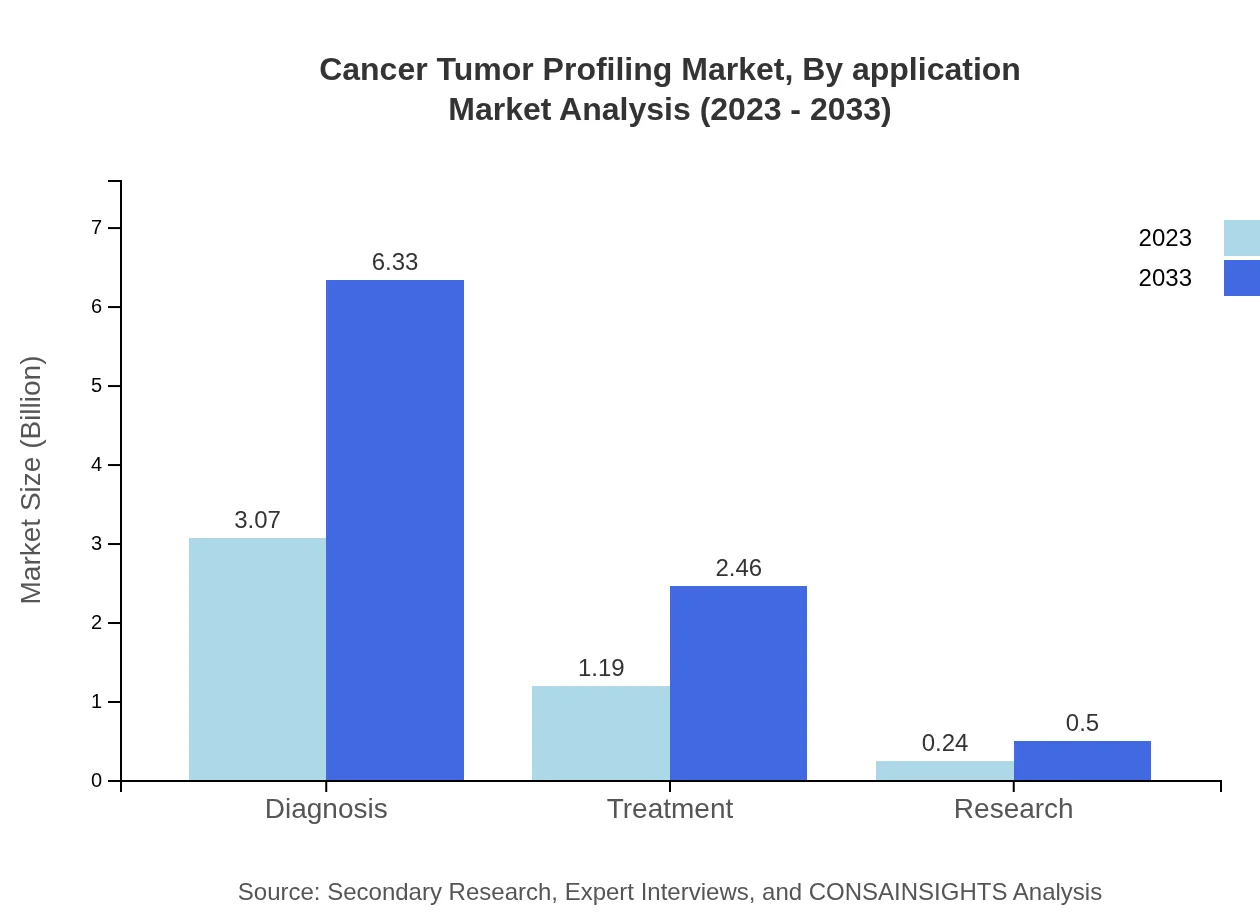
Diagnosis and treatment account for majority applications, with diagnosis growing significantly towards USD 6.33 billion by 2033 from USD 3.07 billion. Treatment applications also hold a substantial share, enhancing personalized therapy approaches tailored to individual patient profiles.
Cancer Tumor Profiling Market Analysis By End User
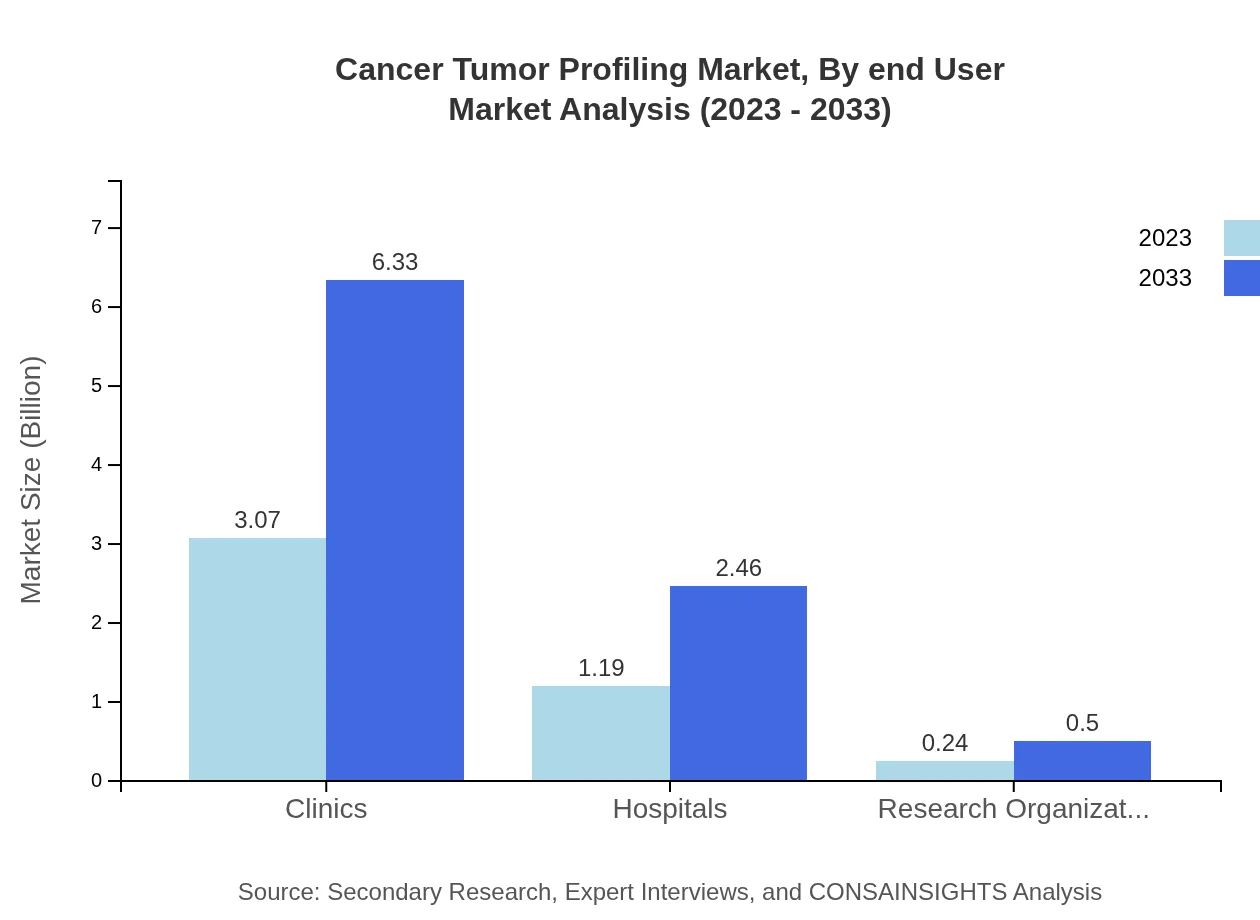
Clinics and hospitals form the largest end-users, with clinics capturing a market size of USD 3.07 billion in 2023, growing to USD 6.33 billion by 2033. Research organizations also contribute meaningfully, fostering advancements through research and development initiatives.
Cancer Tumor Profiling Market Trends and Future Forecast
Tell us your focus area and get a customized research report.
Global Market Leaders and Top Companies in Cancer Tumor Profiling Industry
Quest Diagnostics:
A leader in diagnostic testing, Quest Diagnostics offers comprehensive cancer tumor profiling solutions that aid in accurate diagnoses and personalized treatment planning.Illumina, Inc.:
Illumina is renowned for its advanced sequencing and genotyping technologies, providing essential tools for cancer research and clinical applications in tumor profiling.Roche Diagnostics:
Roche Diagnostics plays a significant role in the oncology market, focusing on innovative solutions for tumor profiling, aiding healthcare professionals in personalizing cancer therapies.Foundation Medicine:
Specializing in comprehensive genomic profiling, Foundation Medicine provides crucial insights into the molecular make-up of cancers, facilitating targeted therapies.Merck KGaA:
Merck KGaA actively invests in cancer research, focusing on innovative solutions for biomarker identification and tumor profiling aimed at enhancing treatment efficacy.We're grateful to work with incredible clients.







FAQs
What is the market size of the Cancer Tumor Profiling Market Report in 2023?
The market size for 2023 is $4.50 Billion as stated in the report, representing the baseline for the ten-year forecast period from 2023 to 2033.
How big will the market be in 2033?
The projected market value for 2033 is $9.29 Billion, reflecting the report’s forecast growth across regions and product segments through 2033.
What is CAGR of the market for the forecast period?
The compound annual growth rate for 2023 to 2033 is 7.3% as reported, summarizing expected expansion across technologies and applications.
Is there a single fastest Growing region in the Cancer Tumor Profiling Market Report market?
No single fastest-growing region is stated for the Cancer Tumor Profiling Market Report market because the top regional implied CAGR values are within 0.15 percentage points of each other, making the ranking too close to call reliably.
Which companies are listed as top players?
Top companies named in the report include Quest Diagnostics, Illumina, Inc., Roche Diagnostics, Foundation Medicine, and Merck KGaA, reflecting active commercial participation.
What product segments are covered in the report?
The report lists by-product categories including reagents, instruments, and software, covering the primary components used in tumor profiling workflows.
How does the report segment testing types?
Testing types in the report include genetic testing, protein testing, and other tests, reflecting multiple analytical approaches used in profiling tumors.
Why are research organizations included as end users?
Research organizations are included because they perform assay development and validation, contributing to technology advancement and clinical translation in tumor profiling.