

Electronic Drug Delivery Systems Market Report
First published: 11 October 2024 | Last updated: 25 May 2026 | Report Code: electronic-drug-delivery-systems
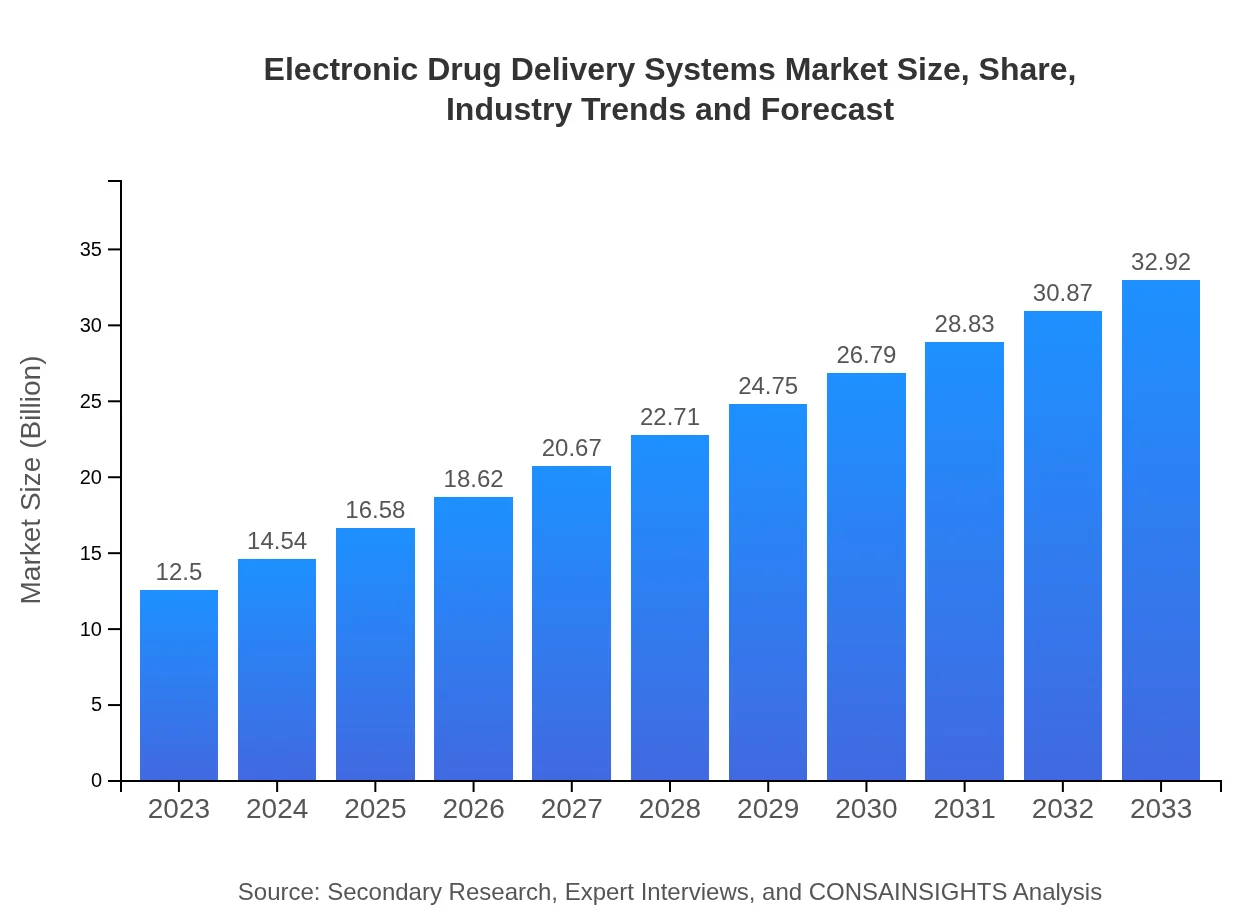
Electronic Drug Delivery Systems Market — USD 12.5 billion in 2023, Growing to USD 32.92B by 2033 at 9.8% CAGR
This report provides a comprehensive analysis of the Electronic Drug Delivery Systems (EDDS) market, focusing on insights, segmentation, regional performance, and future forecasts from 2023 to 2033.
Key Takeaways
- Global market expands from $12.50 Billion in 2023 to $32.92 Billion in 2033, reflecting a 9.8% CAGR over 2023 to 2033.
- North America is largest regional market, while no single fastest-growing region is stated because regional CAGR differences remain within 0.15 percentage points.
- Europe moves from $3.07 Billion in 2023 to $8.08 Billion in 2033, and Asia Pacific rises from $2.48 Billion to $6.54 Billion over the same period.
- Key vendors include Medtronic, Roche, Becton, Dickinson and Company, AstraZeneca and Johnson & Johnson, driving product and technology innovation.
- Segment coverage spans product types, application areas, technology, end-user and regulatory frameworks, reflecting demand for smart and conventional systems.
Electronic Drug Delivery Systems Market Report — Executive Summary
North America remains largest market by forecast-period value, while no single fastest-growing region is stated because top regional growth rates are separated by less than 0.15 percentage points. The Electronic Drug Delivery Systems market is positioned for sustained expansion, with revenues projected to grow from $12.50 Billion in 2023 to $32.92 Billion in 2033 at a 9.8% CAGR for 2023 to 2033. Growth is propelled by rising chronic disease prevalence, greater demand for dosing accuracy, and the integration of electronic and smart delivery technologies. Market structure analysis includes segmentation by product type (inhalers, injectable systems, transdermal systems), technology (smart and conventional systems), application area (diabetes management, autoimmune diseases, cardiovascular therapy), end-users (hospitals, home care, pharmaceutical companies), and regulatory frameworks (FDA regulations, international standards). Regional trajectories show North America as the largest market. Competitive dynamics are influenced by major players such as Medtronic, Roche, Becton, Dickinson and Company, AstraZeneca and Johnson & Johnson, which are investing in R&D and product development to enhance adherence and safety. Regulatory compliance and interoperability remain focal areas for stakeholders adapting to technological advances and personalized medicine trends.
Key Growth Drivers
- Rising incidence of chronic conditions increases demand for precise and user-friendly electronic delivery devices.
- Adoption of connected and smart systems enhances dosage accuracy and remote monitoring capabilities.
- Focus on personalized medicine prompts development of platforms tailored to individual therapeutic needs.
- Regulatory emphasis on safety and efficacy encourages manufacturers to refine device design and validation processes.
- Investment in R&D by leading firms accelerates innovation across inhalers, injectables and transdermal offerings.
| Metric | Value |
|---|---|
| Study Period | 2023 - 2033 |
| 2023 Market Size | $12.50 Billion |
| CAGR (2023-2033) | 9.8% |
| 2033 Market Size | $32.92 Billion |
| Top Companies | Medtronic , Roche, Becton, Dickinson and Company, AstraZeneca, Johnson & Johnson |
| Published Date | 11 October 2024 |
| Last Modified Date | 25 May 2026 |
Electronic Drug Delivery Systems Market Overview
Customize Electronic Drug Delivery Systems Market Report market research report
- ✔ Get in-depth analysis of Electronic Drug Delivery Systems market size, growth, and forecasts.
- ✔ Understand Electronic Drug Delivery Systems's regional dynamics and industry-specific trends.
- ✔ Identify potential applications, end-user demand, and growth segments in Electronic Drug Delivery Systems
What is the Market Size & CAGR of Electronic Drug Delivery Systems Market Report market in 2023?
Electronic Drug Delivery Systems Industry Analysis
Electronic Drug Delivery Systems Market Segmentation and Scope
Tell us your focus area and get a customized research report.
Electronic Drug Delivery Systems Market Report Market Analysis Report by Region
Europe Electronic Drug Delivery Systems Market Report:
Europe grows from $3.07 Billion in 2023 to $8.08 Billion in 2033. Market expansion is underpinned by rising chronic disease burden, regulatory focus on safety and efficacy, and increasing deployment of connected delivery systems.Asia Pacific Electronic Drug Delivery Systems Market Report:
Asia Pacific grows from $2.48 Billion in 2023 to $6.54 Billion in 2033. Growth reflects expanding healthcare access, greater emphasis on chronic disease management, and uptake of both smart and conventional delivery technologies.North America Electronic Drug Delivery Systems Market Report:
North America is largest regional market, rising from $4.02 Billion in 2023 to $10.59 Billion in 2033. Regional growth is supported by high technology adoption, strong healthcare infrastructure, and investment by major device manufacturers.South America Electronic Drug Delivery Systems Market Report:
Latin America grows from $1.24 Billion in 2023 to $3.26 Billion in 2033. Drivers include growing demand for better therapeutic adherence, improving healthcare facilities, and interest in electronic delivery solutions.Middle East & Africa Electronic Drug Delivery Systems Market Report:
Middle East and Africa grows from $1.69 Billion in 2023 to $4.45 Billion in 2033. Regional momentum is supported by increasing attention to chronic care, investment in medical technologies, and adoption of regulated device standards.Tell us your focus area and get a customized research report.
Research Methodology
Electronic Drug Delivery Systems Market Analysis By Product Type
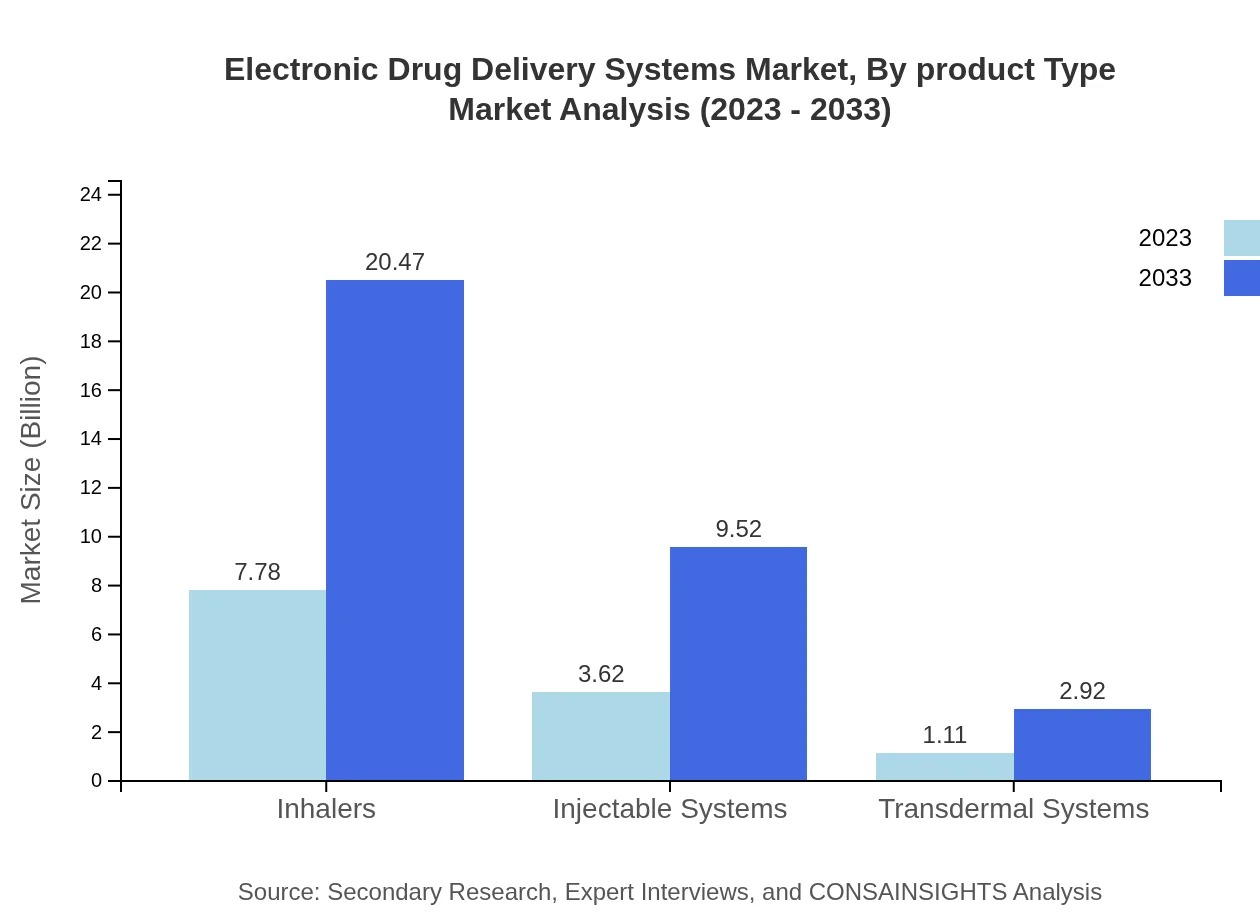
By 2033, smart systems are expected to dominate the market, growing from $10.57 billion in 2023 to $27.83 billion. Inhalers and injected systems collectively maintain a significant share with projections indicating continued growth driven by innovations in device technology. Conventional systems will hold a smaller market presence but remain relevant in specific therapeutic applications.
Electronic Drug Delivery Systems Market Analysis By Application Area
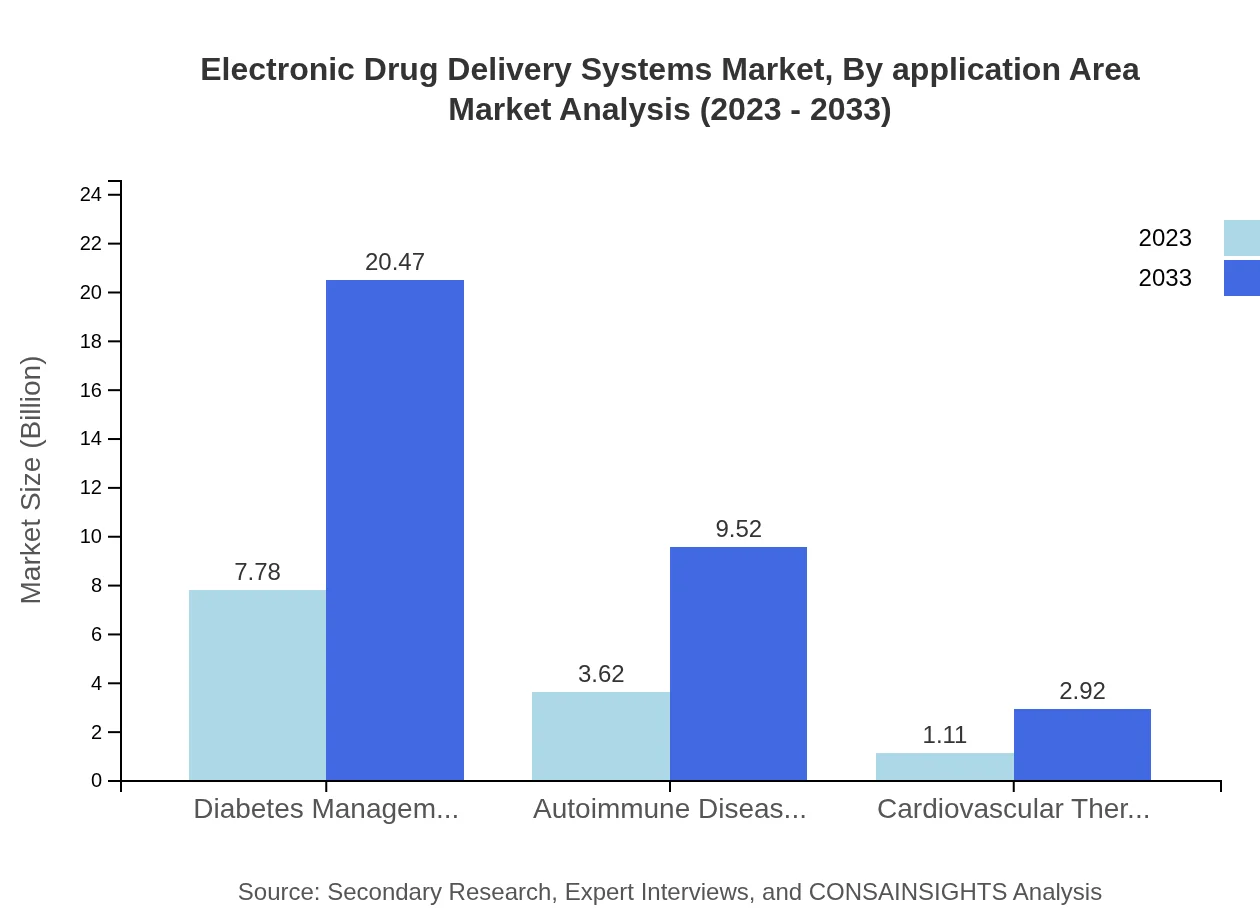
Diabetes management remains a leading application area due to the prevalence of diabetes globally. This segment is expected to grow from $7.78 billion in 2023 to $20.47 billion by 2033, followed closely by areas addressing autoimmune diseases and cardiovascular therapies, which are also experiencing significant growth spurts.
Electronic Drug Delivery Systems Market Analysis By Technology
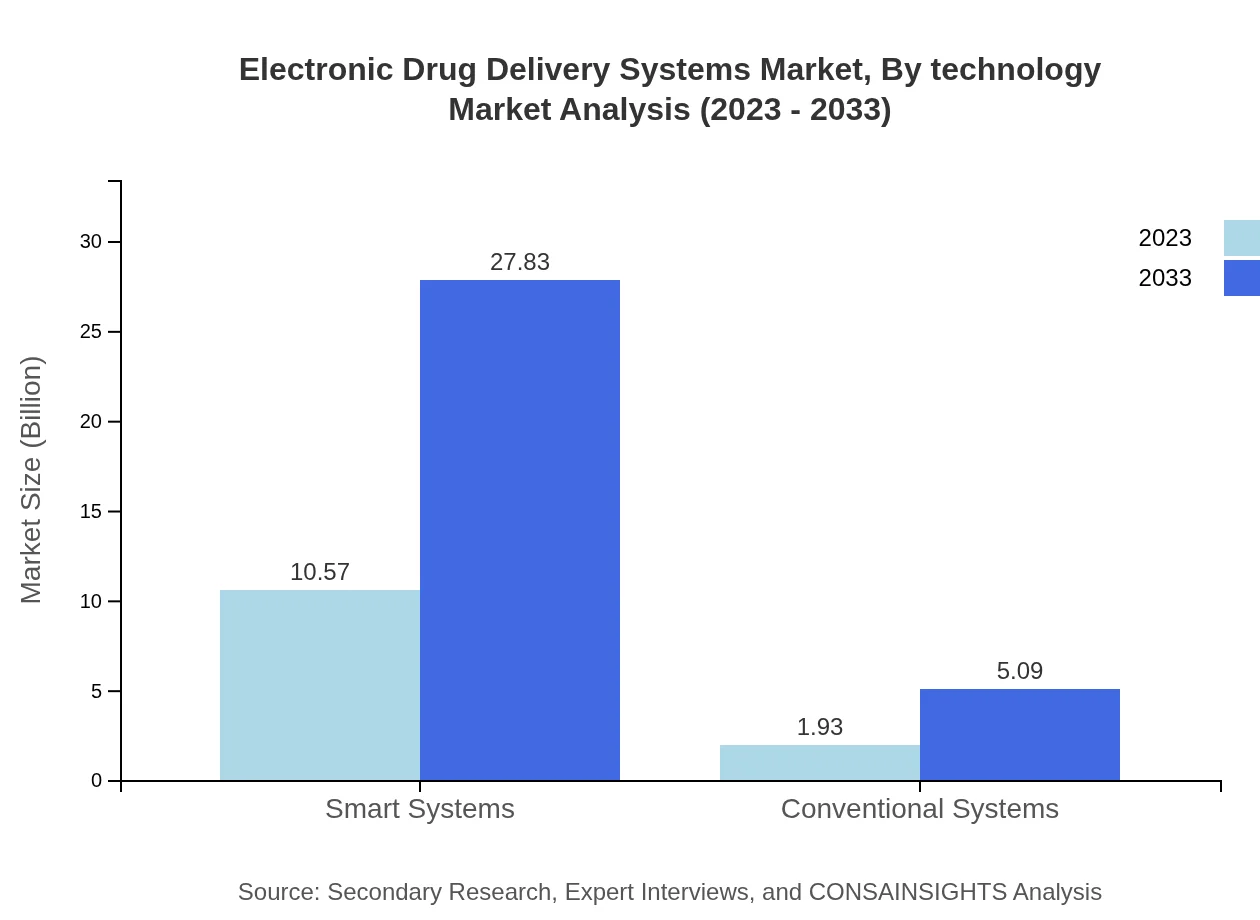
The market is increasingly gravitating towards smart delivery technologies that integrate real-time monitoring and patient feedback systems. This trend is confirmed by the projected growth and enhanced functionalities in device interfaces that cater to user-friendliness and real-time health tracking.
Electronic Drug Delivery Systems Market Analysis By End User
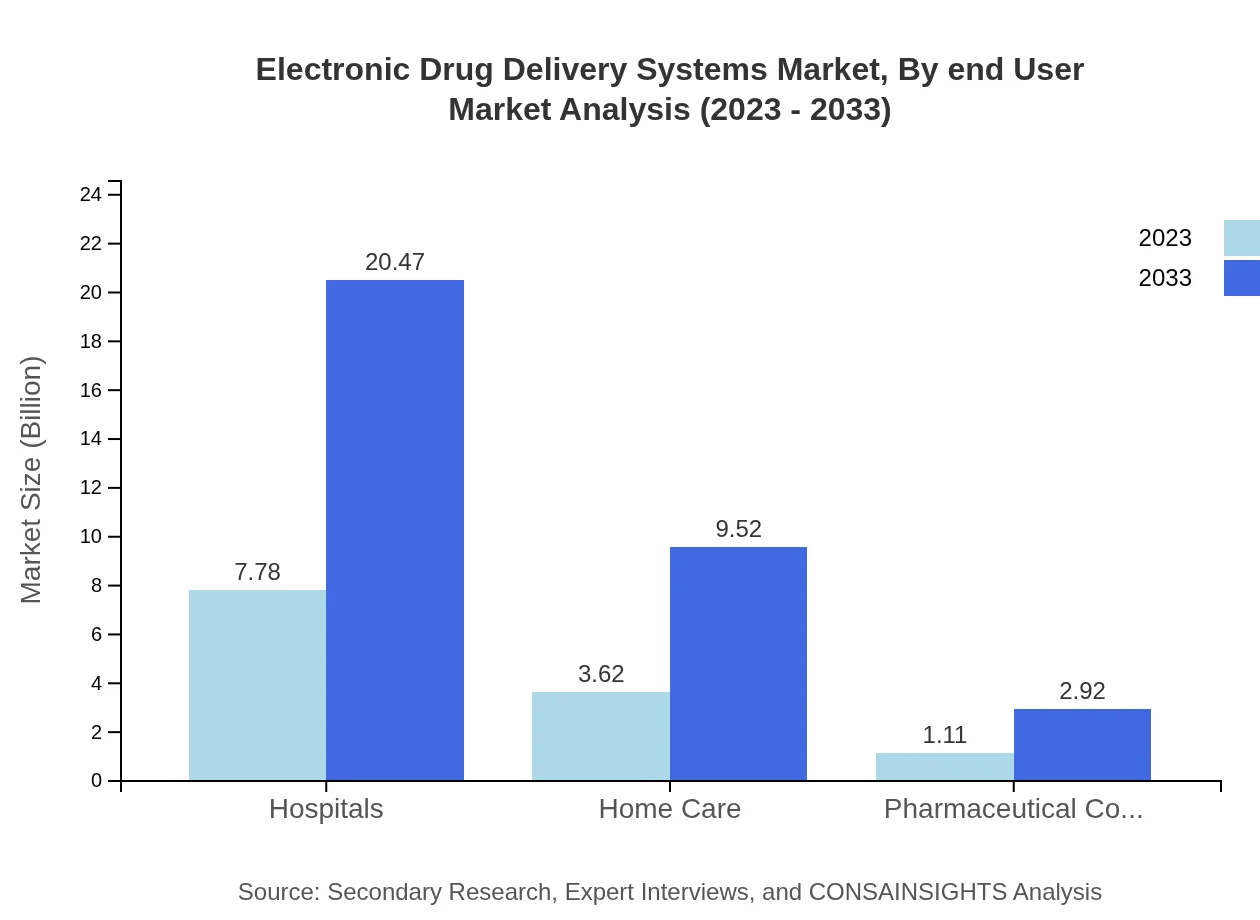
Hospitals constitute the largest end-user segment, retaining a stable share of the market (62.2% in 2023) and increasing in size from $7.78 billion to $20.47 billion by 2033. Home care settings are gaining importance, growing rapidly due to changing patient expectations and technological advancements in remote monitoring.
Electronic Drug Delivery Systems Market Analysis By Regulatory Framework
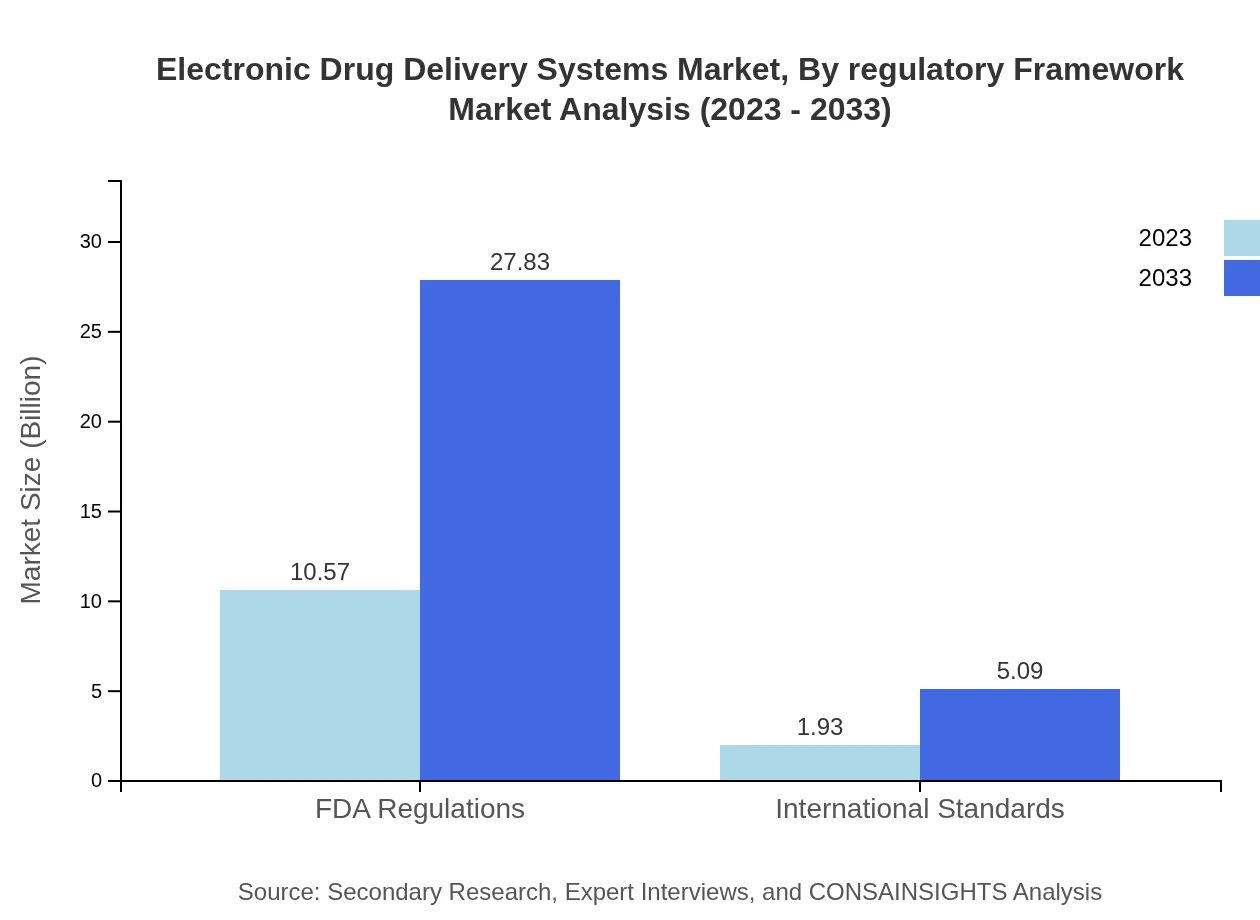
With stringent regulations from bodies like the FDA, the market's adherence to international standards ensures high product integrity and patient safety. Companies focusing on obtaining necessary certifications will gain competitive advantages, adding credibility to their product offerings.
Electronic Drug Delivery Systems Market Trends and Future Forecast
Tell us your focus area and get a customized research report.
Global Market Leaders and Top Companies in Electronic Drug Delivery Systems Industry
Medtronic :
Medtronic is a global leader in medical technology, offering innovative drug delivery devices that enhance patient outcomes, particularly in chronic disease management.Roche:
Roche is renowned for its high-quality drug delivery systems tailored specifically for personalized medicine, driving advancements in diabetic care and oncology treatments.Becton, Dickinson and Company:
BD’s innovative solutions in injection systems exemplify their commitment to improving drug delivery and patient safety.AstraZeneca:
AstraZeneca has pioneered research into smart insulin delivery systems, enhancing patient management through innovative healthcare solutions.Johnson & Johnson:
Johnson & Johnson's commitment to innovation in drug delivery devices is demonstrated through their advancements in infusion management systems.We're grateful to work with incredible clients.









FAQs
What is the market size of the Electronic Drug Delivery Systems Market Report in 2023?
The market size in 2023 is $12.50 Billion as reported for the Electronic Drug Delivery Systems market.
How big is the market expected to be in 2033?
The market is projected to reach $32.92 Billion by 2033 according to the provided forecast data.
What is CAGR for the forecast period?
The Compound Annual Growth Rate (CAGR) for the forecast period 2023 to 2033 is 9.8%.
Is there a single fastest Growing region in the Electronic Drug Delivery Systems Market Report market?
No single fastest-growing region is stated for the Electronic Drug Delivery Systems Market Report market because the top regional implied CAGR values are within 0.15 percentage points of each other, making the ranking too close to call reliably.
Which top companies are active in the market?
Leading companies listed include Medtronic, Roche, Becton, Dickinson and Company, AstraZeneca and Johnson & Johnson.
What are the main product types covered?
Key product types include inhalers, injectable systems and transdermal systems as specified in the market segmentation.
How are technologies categorized in the report?
Technologies are grouped into smart systems and conventional systems to reflect differing device capabilities and connectivity.
Who are the primary end Users identified?
Primary end-users enumerated are hospitals, home care providers and pharmaceutical companies.
What regulatory frameworks are considered?
The report covers FDA regulations and international standards as the main regulatory frameworks.
What research methods were used to compile the report?
Research includes primary interviews with industry experts and secondary review of company reports and publications with data triangulation.