

Engineered T Cells Market Report
First published: 22 October 2024 | Last updated: 25 May 2026 | Report Code: engineered-t-cells
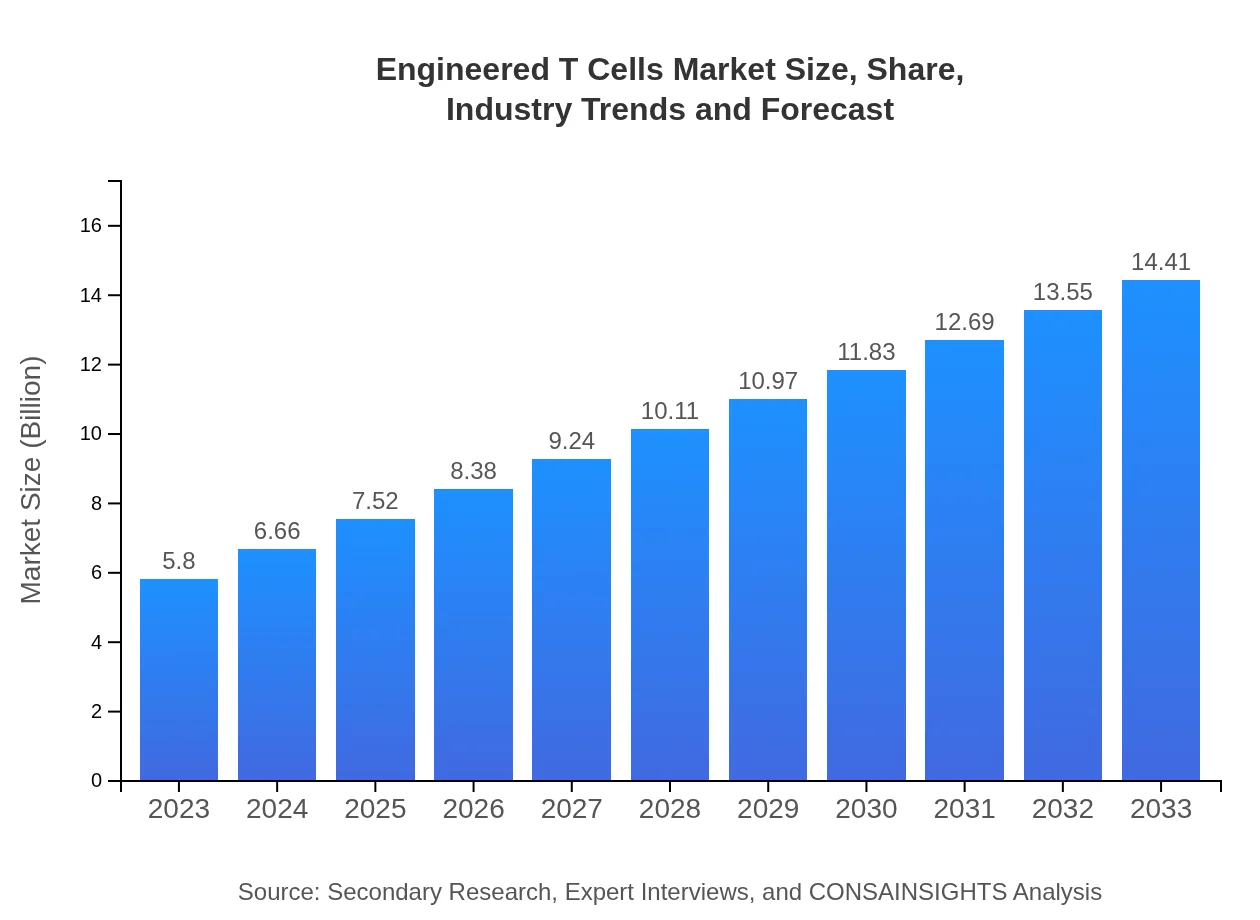
Engineered T Cells Market — USD 5.8 billion in 2023, Growing to USD 14.41B by 2033 at 9.2% CAGR
This report provides a comprehensive analysis of the Engineered T Cells market, including current trends, market size, forecast data for 2023-2033, and insights into regional performances and technological advancements.
Key Takeaways
- Global market expands from $5.80 Billion in 2023 to $14.41 Billion in 2033 at a 9.2% CAGR.
- North America is largest regional market, while no single fastest-growing region is stated because regional CAGR differences remain within 0.15 percentage points.
- North America leads regional demand, rising from $2.15 Billion in 2023 to $5.34 Billion in 2033.
- Europe grows from $1.76 Billion in 2023 to $4.37 Billion in 2033; Asia Pacific increases from $1.10 Billion to $2.72 Billion.
- Major industry players include Novartis, Gilead Sciences, Bristol-Myers Squibb, Amgen, and Regeneron Pharmaceuticals.
- Product and application segmentation highlights CAR-T and TCR-T therapies, hospital and research institute end-users, and cancer therapy focus.
Engineered T Cells Market Report — Executive Summary
North America remains largest market by forecast-period value, while no single fastest-growing region is stated because top regional growth rates are separated by less than 0.15 percentage points. The Engineered T Cells market is undergoing substantial expansion driven by advances in cell engineering, rising clinical activity, and sustained investment from pharmaceutical firms. The market is projected to grow from $5.80 Billion in 2023 to $14.41 Billion in 2033 at a 9.2% CAGR for the 2023 to 2033 forecast period. Key growth stimuli include innovation in CAR-T and TCR-T platforms, increased adoption in oncology, and collaboration among biopharmaceutical companies and research institutions. Regional performance varies: North America is the largest regional market, with notable increases across Europe and Asia Pacific. Market structure covers product types, treatment approaches such as adoptive cell transfer and combination therapies, and end-users including hospitals and research organizations. Competition is concentrated among established pharma firms; strategic partnerships and ongoing clinical programs will shape near-term commercialization. Regulatory progress, manufacturing scale-up, and cost-management efforts are critical themes that will influence adoption and access over the forecast period.
Key Growth Drivers
- Technological improvements in CAR-T and TCR-T engineering enhancing therapeutic precision and efficacy.
- Rising clinical trial activity and regulatory approvals that expand the pipeline and commercialization prospects.
- Investment and partnerships by large biopharmaceutical firms accelerating development and market entry.
- Increased demand for targeted oncology treatments and personalized medicine approaches from healthcare providers.
| Metric | Value |
|---|---|
| Study Period | 2023 - 2033 |
| 2023 Market Size | $5.80 Billion |
| CAGR (2023-2033) | 9.2% |
| 2033 Market Size | $14.41 Billion |
| Top Companies | Novartis, Gilead Sciences, Bristol-Myers Squibb, Amgen, Regeneron Pharmaceuticals |
| Published Date | 22 October 2024 |
| Last Modified Date | 25 May 2026 |
Engineered T Cells Market Overview
Customize Engineered T Cells Market Report market research report
- ✔ Get in-depth analysis of Engineered T Cells market size, growth, and forecasts.
- ✔ Understand Engineered T Cells's regional dynamics and industry-specific trends.
- ✔ Identify potential applications, end-user demand, and growth segments in Engineered T Cells
What is the Market Size & CAGR of Engineered T Cells Market Report market in 2023?
Engineered T Cells Industry Analysis
Engineered T Cells Market Segmentation and Scope
Tell us your focus area and get a customized research report.
Engineered T Cells Market Report Market Analysis Report by Region
Europe Engineered T Cells Market Report:
Europe grows from $1.76 Billion in 2023 to $4.37 Billion in 2033. Expansion reflects increased clinical trials, regulatory engagement on advanced therapies, and rising adoption of engineered T cell treatments across oncology centers and research institutions.Asia Pacific Engineered T Cells Market Report:
Asia Pacific grows from $1.1 Billion in 2023 to $2.72 Billion in 2033. Growth factors include expanding research capabilities, growing healthcare investments, and a rising focus on localized manufacturing and clinical programs for cell therapies.North America Engineered T Cells Market Report:
North America is largest regional market, rising from $2.15 Billion in 2023 to $5.34 Billion in 2033. Regional growth is driven by concentrated R&D activity, strong financing for cell-therapy development, established clinical infrastructure, and active participation by leading biopharma companies.South America Engineered T Cells Market Report:
Latin America grows from $0.12 Billion in 2023 to $0.29 Billion in 2033. Regional advancement is supported by expanding clinical research collaborations, incremental regulatory frameworks for advanced therapies, and growing interest from healthcare providers.Middle East & Africa Engineered T Cells Market Report:
Middle East and Africa grows from $0.68 Billion in 2023 to $1.69 Billion in 2033. Growth is influenced by emerging clinical capabilities, investment in specialized healthcare infrastructure, and partnerships that support access to engineered T cell therapies.Tell us your focus area and get a customized research report.
Research Methodology
Engineered T Cells Market Analysis By Product
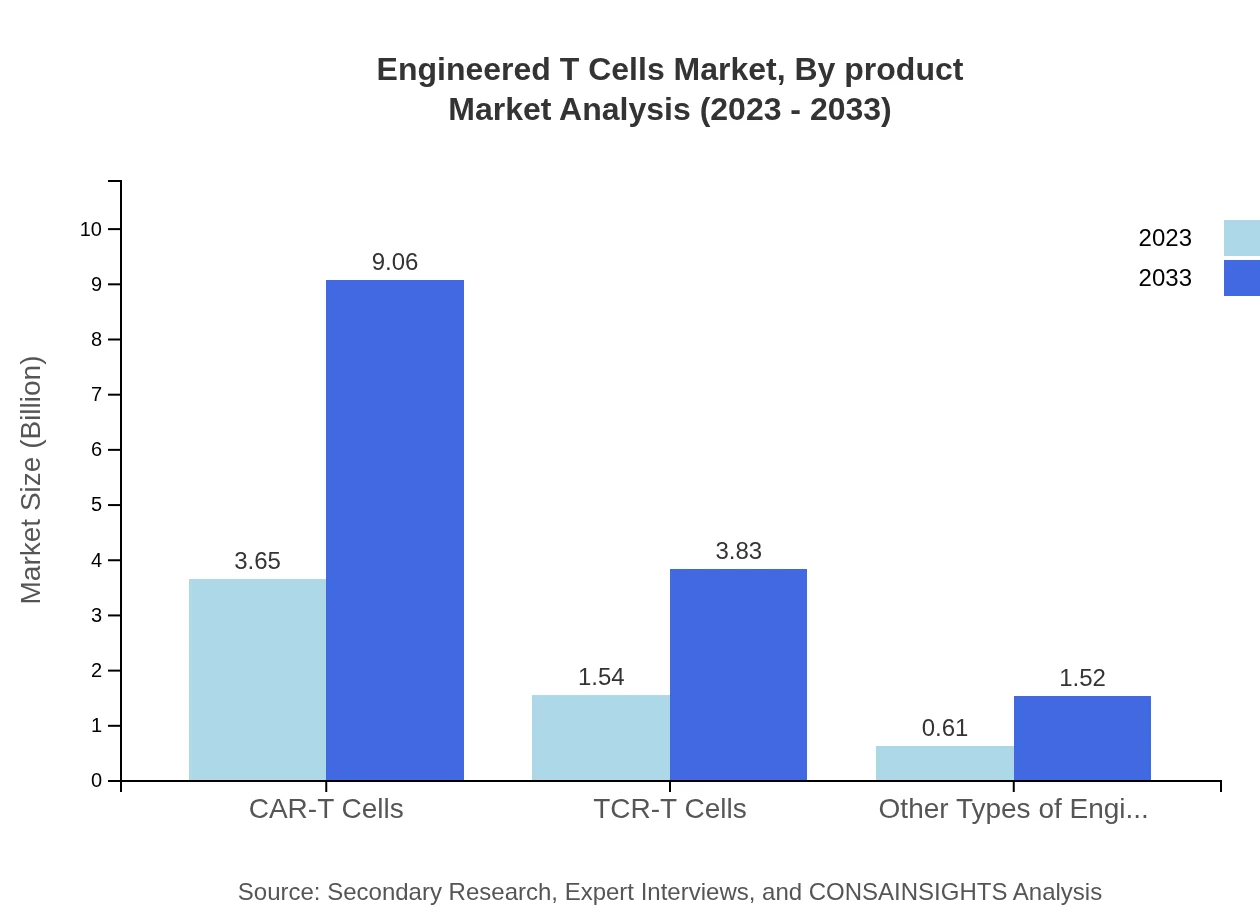
The Engineered T-Cells market is largely driven by CAR-T cells, expected to grow from $3.65 billion in 2023 to $9.06 billion by 2033. CAR-T therapy accounts for 62.87% of the market share, indicating its prominence. TCR-T cells follow, with a size of $1.54 billion in 2023, growing to $3.83 billion by 2033, making up 26.59% of the market. Other engineered T cells represent the remaining share, though they are gaining traction due to their applications in diverse therapeutic areas.
Engineered T Cells Market Analysis By Application
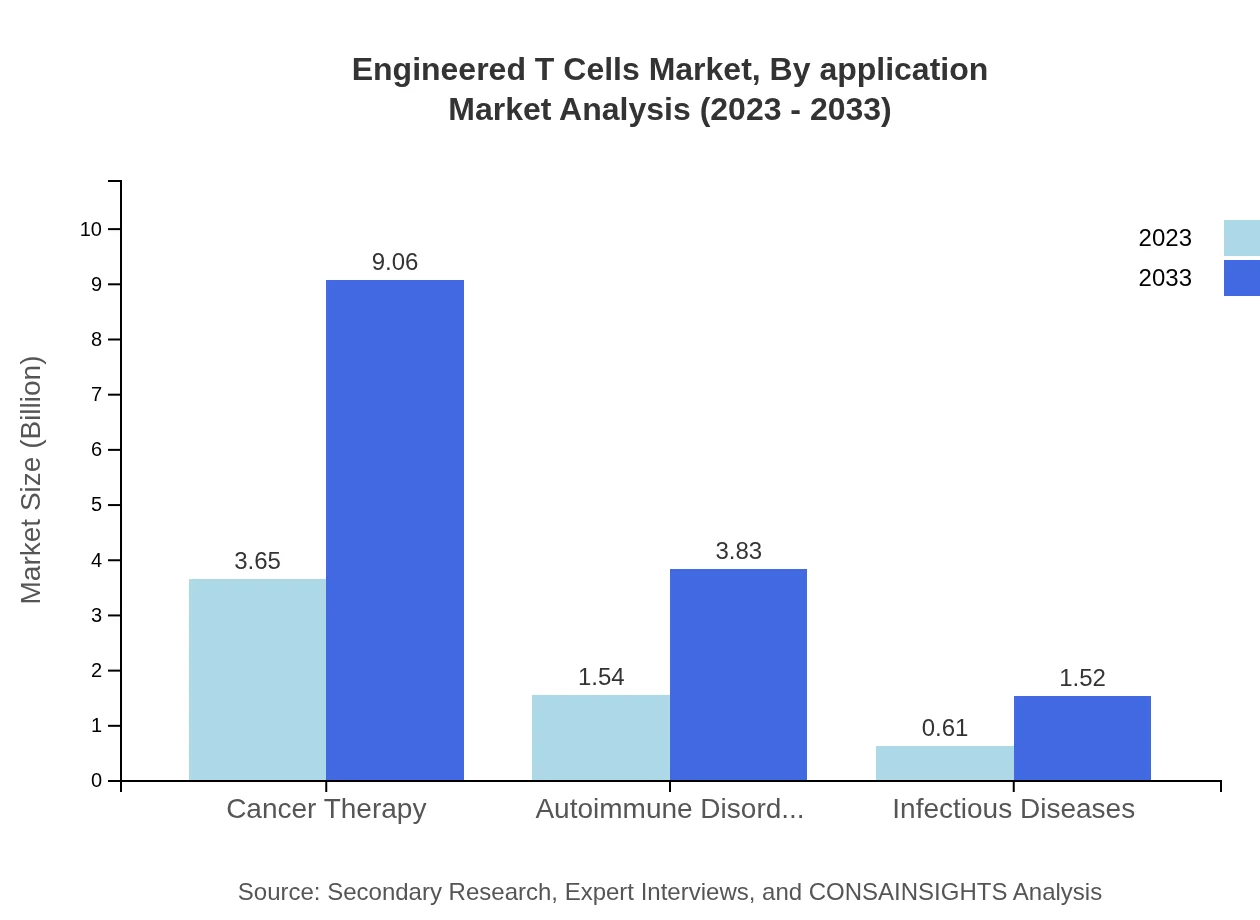
The predominant applications of Engineered T-Cells lie in Cancer Therapy, expected to rise from $3.65 billion in 2023 to $9.06 billion by 2033, representing a 62.87% market share. The treatment of Autoimmune Disorders and Infectious Diseases will grow significantly, from $1.54 billion to $3.83 billion (26.59% share) and from $0.61 billion to $1.52 billion (10.54% share), respectively.
Engineered T Cells Market Analysis By End User
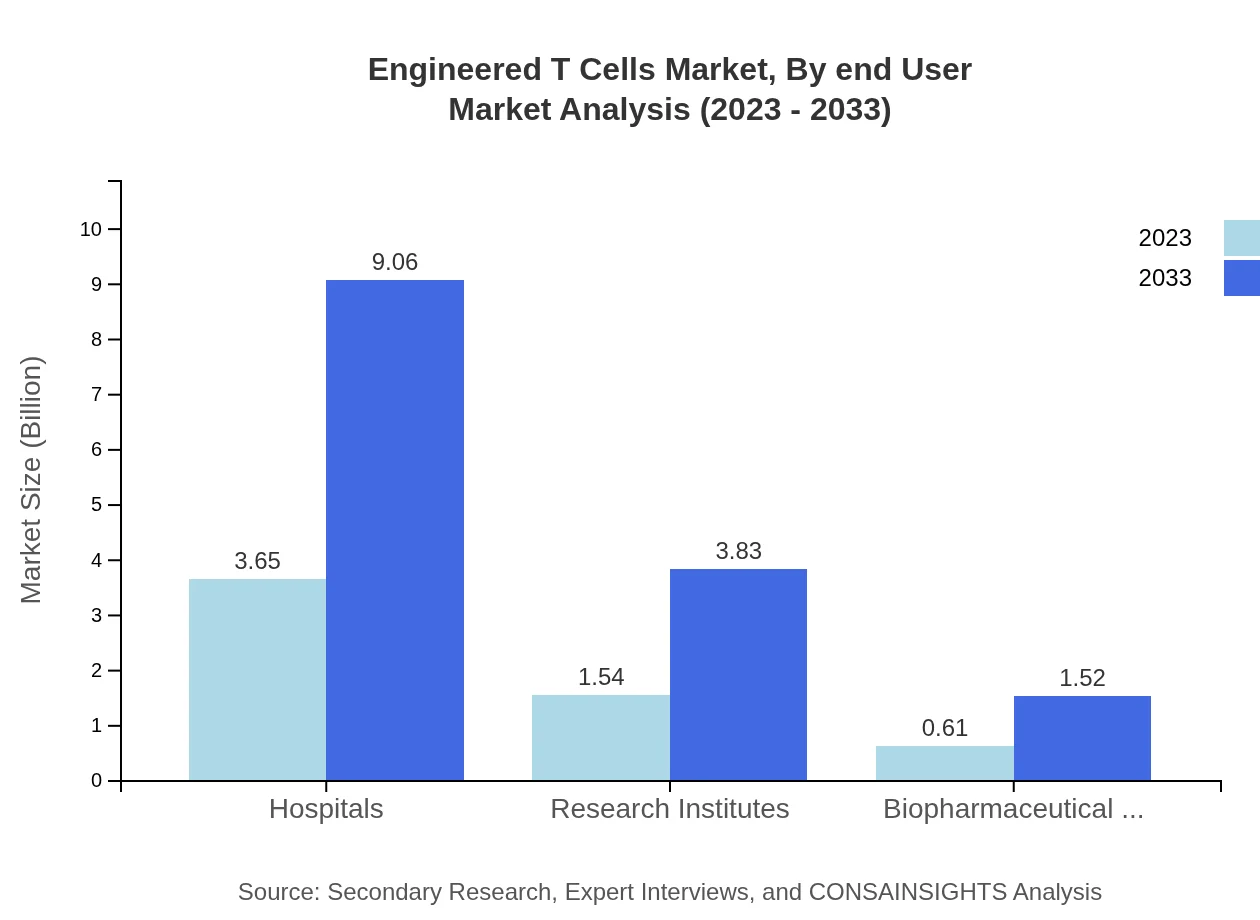
Hospitals are the primary end user of Engineered T-Cells, holding a market size of $3.65 billion in 2023, projected to reach $9.06 billion by 2033. Research institutes and biopharmaceutical companies play essential roles as well, with respective market sizes of $1.54 billion and $0.61 billion in 2023, indicating their contributions to advancing therapy research and development.
Engineered T Cells Market Analysis By Treatment Type
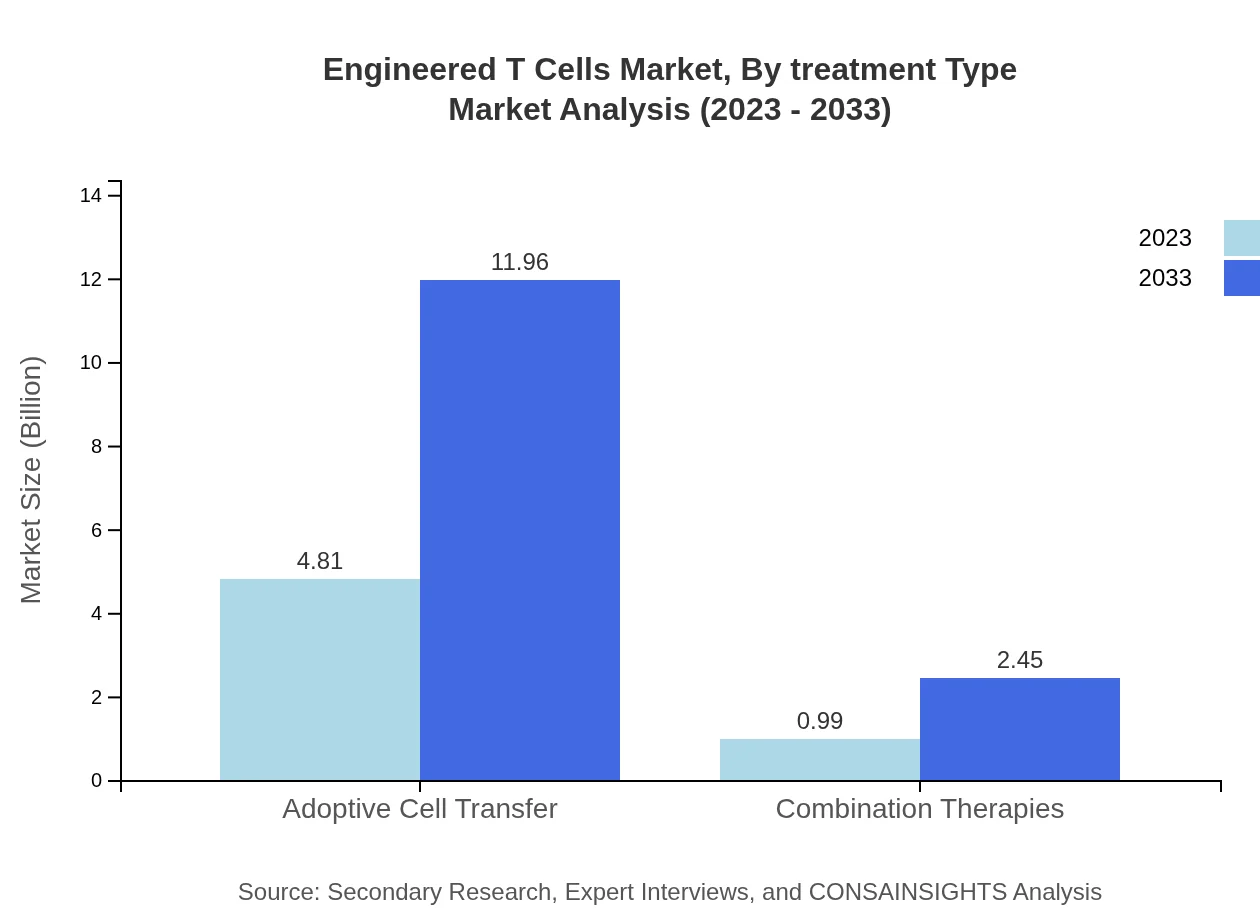
Adoptive Cell Transfer remains the leading treatment type, expanding from $4.81 billion in 2023 to $11.96 billion by 2033 (83% share). Combination Therapies also gain ground, projected to increase from $0.99 billion to $2.45 billion (17% share) as therapeutic strategies continue to evolve.
Engineered T Cells Market Trends and Future Forecast
Tell us your focus area and get a customized research report.
Global Market Leaders and Top Companies in Engineered T Cells Industry
Novartis:
A pioneer in the development of CAR-T cell therapies, Novartis has transformed the treatment landscape for various cancer types, focusing on innovative approaches and global access.Gilead Sciences:
Renowned for its leadership in cell therapy, Gilead Sciences has extensive portfolios in engineered T cells and is dedicated to advancing biopharmaceutical technologies.Bristol-Myers Squibb:
Bristol-Myers Squibb is a major player in immuno-oncology, providing engineered T cell therapies that have received significant research and commercial success.Amgen:
Amgen is committed to the advancement of cell therapies, particularly in oncology and autoimmune disease treatment, backed by substantial research investments.Regeneron Pharmaceuticals:
Regeneron focuses on innovative immunotherapies, bringing engineered T cell therapies to market and promoting global health outreach initiatives.We're grateful to work with incredible clients.








FAQs
What is the market size of the Engineered T Cells market in 2023?
The market size in 2023 is $5.80 Billion, as reported for the Engineered T Cells sector.
How big will the Engineered T Cells market be in 2033?
By 2033 the market is projected to reach $14.41 Billion, based on the provided forecast figures.
What is CAGR of the Engineered T Cells market for 2023 to 2033?
The reported compound annual growth rate for 2023 to 2033 is 9.2%.
Is there a single fastest Growing region in the Engineered T Cells Market Report market?
No single fastest-growing region is stated for the Engineered T Cells Market Report market because the top regional implied CAGR values are within 0.15 percentage points of each other, making the ranking too close to call reliably.
Which companies are listed as top players in the market?
Top companies named include Novartis, Gilead Sciences, Bristol-Myers Squibb, Amgen, and Regeneron Pharmaceuticals.
What are the main product segments in this market?
Product segments include CAR-T Cells, TCR-T Cells, and other engineered T-cell types as listed in the report.
Who are the primary end Users of engineered T cell therapies?
Primary end-users noted are hospitals, research institutes, and biopharmaceutical companies.
What applications drive demand for engineered T cells?
Key applications include cancer therapy, autoimmune disorders, and infectious disease treatments.