

Gout Therapeutics Market Report
First published: 15 October 2024 | Last updated: 25 May 2026 | Report Code: gout-therapeutics
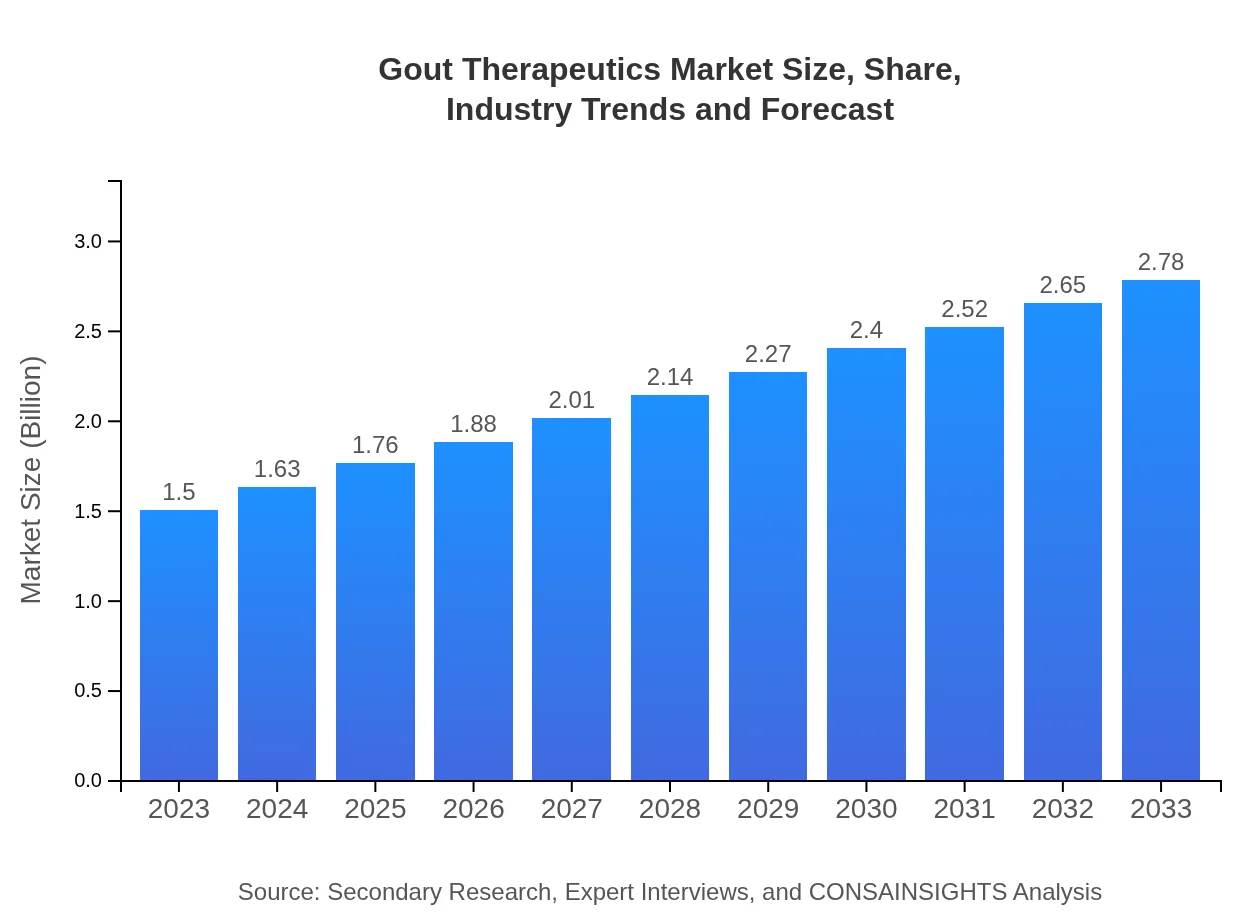
Gout Therapeutics Market — USD $1.5 Billion in 2023, Growing to USD 2.78null by 2033 at 6.2% CAGR
This report provides a comprehensive analysis of the Gout Therapeutics market, focusing on size, trends, market share, and forecast projections from 2023 to 2033. It includes insights into regional and global market conditions, technological advancements, and key players in the industry.
Key Takeaways
- Global market expands from $1.50 Billion in 2023 to $2.78 Billion in 2033 at a 6.2% CAGR, reflecting steady demand for gout treatments.
- North America is largest regional market, while no single fastest-growing region is stated because regional CAGR differences remain within 0.15 percentage points.
- Europe increases from $0.43 Billion to $0.79 Billion between 2023 and 2033, supported by established healthcare infrastructure.
- Asia Pacific grows from $0.29 Billion to $0.54 Billion from 2023 to 2033, driven by rising patient awareness and access to therapies.
- Key therapeutic classes noted include Uric Acid Lowering Agents and Anti-inflammatory Drugs; leading companies include Novartis, Hikma Pharmaceuticals, Teva Pharmaceutical Industries, and UCB S.A.
Gout Therapeutics Market Report — Executive Summary
North America remains largest market by forecast-period value, while no single fastest-growing region is stated because top regional growth rates are separated by less than 0.15 percentage points. This report examines the Gout Therapeutics market, which records a baseline value of $1.50 Billion in 2023 and is projected to reach $2.78 Billion by 2033 at a 6.2% CAGR. Market expansion is supported by demand for uric acid-lowering agents and anti-inflammatory drugs, alongside growing awareness of gout management and demographic shifts that increase prevalence. Regional data show North America as the largest market with a 2023 value of $0.55 Billion and an expected 2033 value of $1.02 Billion. The study evaluates segmentation across drug class, therapy type, distribution channel, route of administration, and end users, and profiles competitive activity by players such as Novartis, Hikma Pharmaceuticals, Teva Pharmaceutical Industries, and UCB S.A. Methodology combines primary expert interviews with secondary sources, data triangulation, and internal validation to deliver trend insights and market structure analysis for stakeholders and decision-makers.
Key Growth Drivers
- Rising demand for uric acid-lowering agents as primary long-term management options expands treatment uptake.
- Increased use of anti-inflammatory drugs for acute flare management supports short-term market consumption.
- Growing patient awareness and improved diagnostic access lead to earlier treatment initiation and sustained therapy adherence.
- Demographic shifts with an aging population raise overall prevalence and long-term demand for gout therapeutics.
- Expansion of distribution channels, including hospital and online pharmacies, improves treatment accessibility.
| Metric | Value |
|---|---|
| Study Period | 2023 - 2033 |
| 2023 Market Size | $1.50 Billion |
| CAGR (2023-2033) | 6.2% |
| 2033 Market Size | $2.78 Billion |
| Top Companies | Novartis, Hikma Pharmaceuticals, Teva Pharmaceutical Industries, UCB S.A. |
| Published Date | 15 October 2024 |
| Last Modified Date | 25 May 2026 |
Gout Therapeutics Market Overview
Customize Gout Therapeutics Market Report market research report
- ✔ Get in-depth analysis of Gout Therapeutics market size, growth, and forecasts.
- ✔ Understand Gout Therapeutics's regional dynamics and industry-specific trends.
- ✔ Identify potential applications, end-user demand, and growth segments in Gout Therapeutics
What is the Market Size & CAGR of Gout Therapeutics Market Report market in 2023?
Gout Therapeutics Industry Analysis
Gout Therapeutics Market Segmentation and Scope
Tell us your focus area and get a customized research report.
Gout Therapeutics Market Report Market Analysis Report by Region
Europe Gout Therapeutics Market Report:
Europe grows from $0.43 Billion in 2023 to $0.79 Billion in 2033. Market dynamics in the region reflect strong healthcare infrastructure, sustained use of uric acid-lowering agents and anti-inflammatory drugs, and ongoing efforts to improve disease management.Asia Pacific Gout Therapeutics Market Report:
Asia Pacific grows from $0.29 Billion in 2023 to $0.54 Billion in 2033. Growth is supported by rising awareness of gout management, expanding healthcare access, and greater adoption of established therapeutic options across diverse markets.North America Gout Therapeutics Market Report:
North America is largest regional market, rising from $0.55 Billion in 2023 to $1.02 Billion in 2033. Regional expansion is driven by established treatment pathways, availability of advanced therapeutics, and broad access to healthcare delivery systems.South America Gout Therapeutics Market Report:
Latin America grows from $0.15 Billion in 2023 to $0.27 Billion in 2033. Regional growth is influenced by improving diagnostic services, increased treatment uptake, and broader availability of distribution channels such as retail and hospital pharmacies.Middle East & Africa Gout Therapeutics Market Report:
Middle East and Africa grows from $0.09 Billion in 2023 to $0.16 Billion in 2033. Market progression stems from gradual improvements in healthcare access, growing clinical awareness, and expanding availability of standard gout therapies.Tell us your focus area and get a customized research report.
Research Methodology
Gout Therapeutics Market Analysis By Drug Class
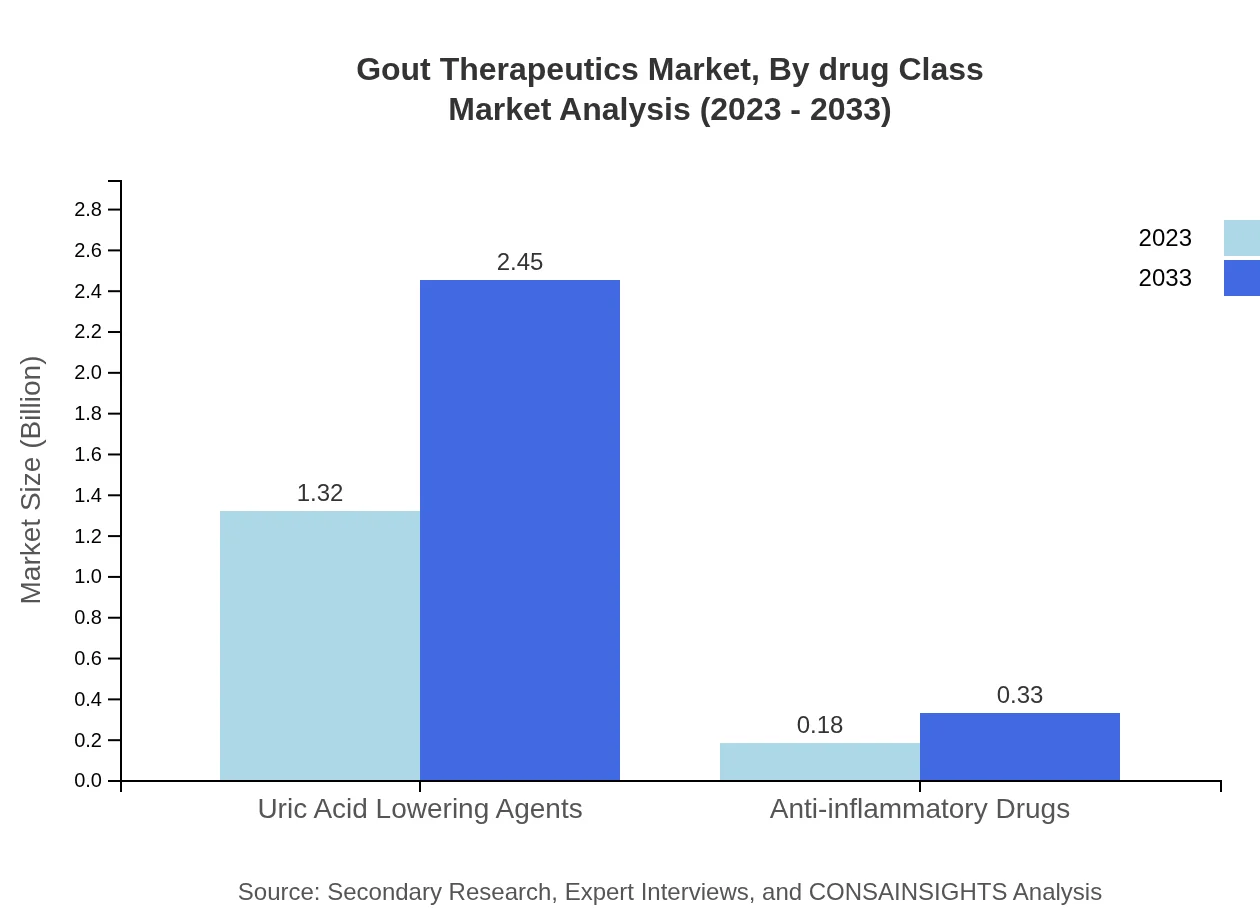
The Gout Therapeutics market by drug class is primarily driven by uric acid-lowering agents, which accounted for 88.25% share in 2023, valued at $1.32 billion, and expected to reach $2.45 billion by 2033. Anti-inflammatory drugs constitute a smaller segment, holding 11.75% market share, with growth anticipated as awareness around alternative therapies increases.
Gout Therapeutics Market Analysis By Route Of Administration
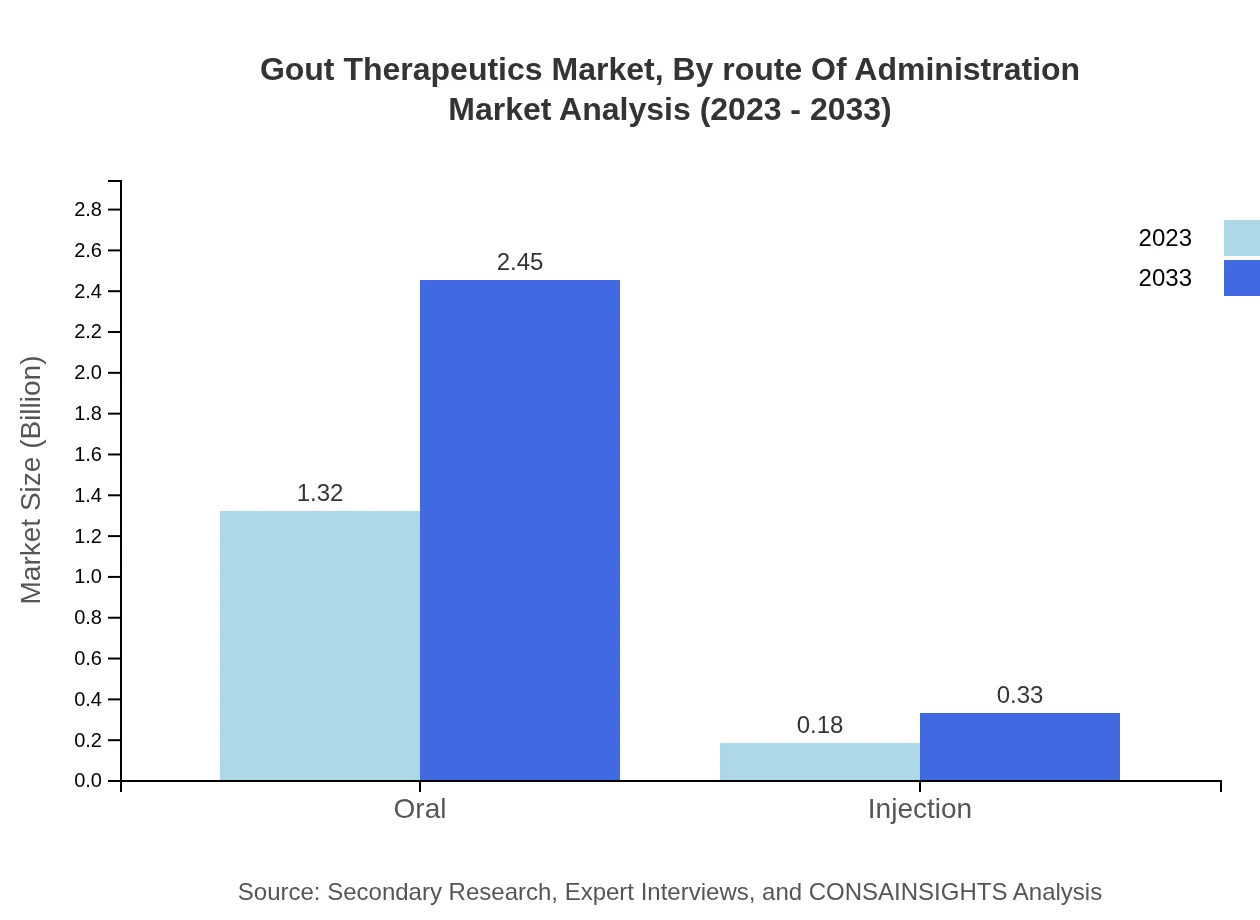
The oral route remains dominant in the Gout Therapeutics market, representing 88.25% in 2023 and expected to reach $2.45 billion by 2033, while injection therapies, which account for 11.75%, are also crucial but less favored due to the convenience and compliance associated with oral medications.
Gout Therapeutics Market Analysis By End User
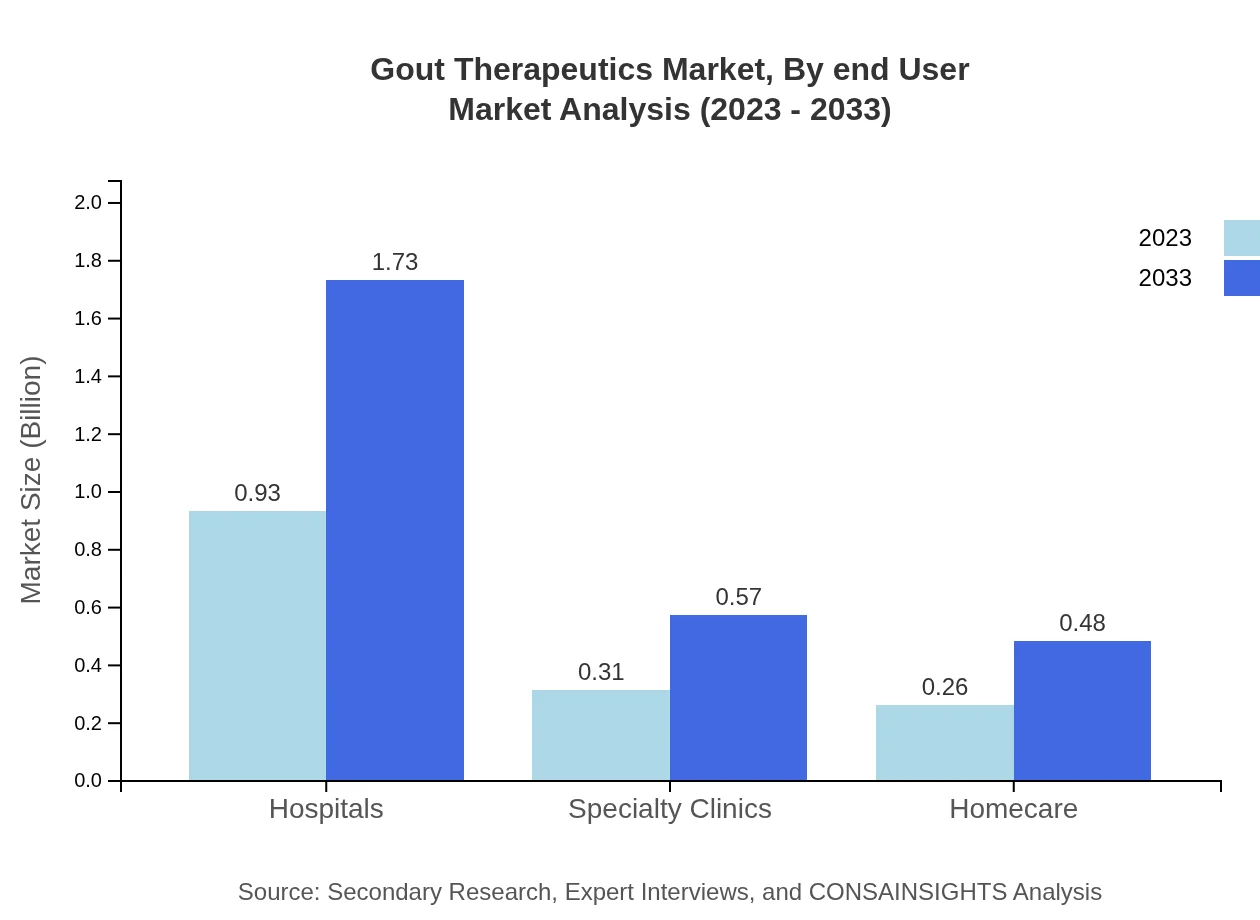
The market by end-user reveals that hospitals account for 62.28% of the market share in 2023, with a size of $0.93 billion expected to grow to $1.73 billion by 2033. Specialty clinics and homecare services are also notable, reflecting the broader trends of personalized and outpatient care.
Gout Therapeutics Market Analysis By Distribution Channel
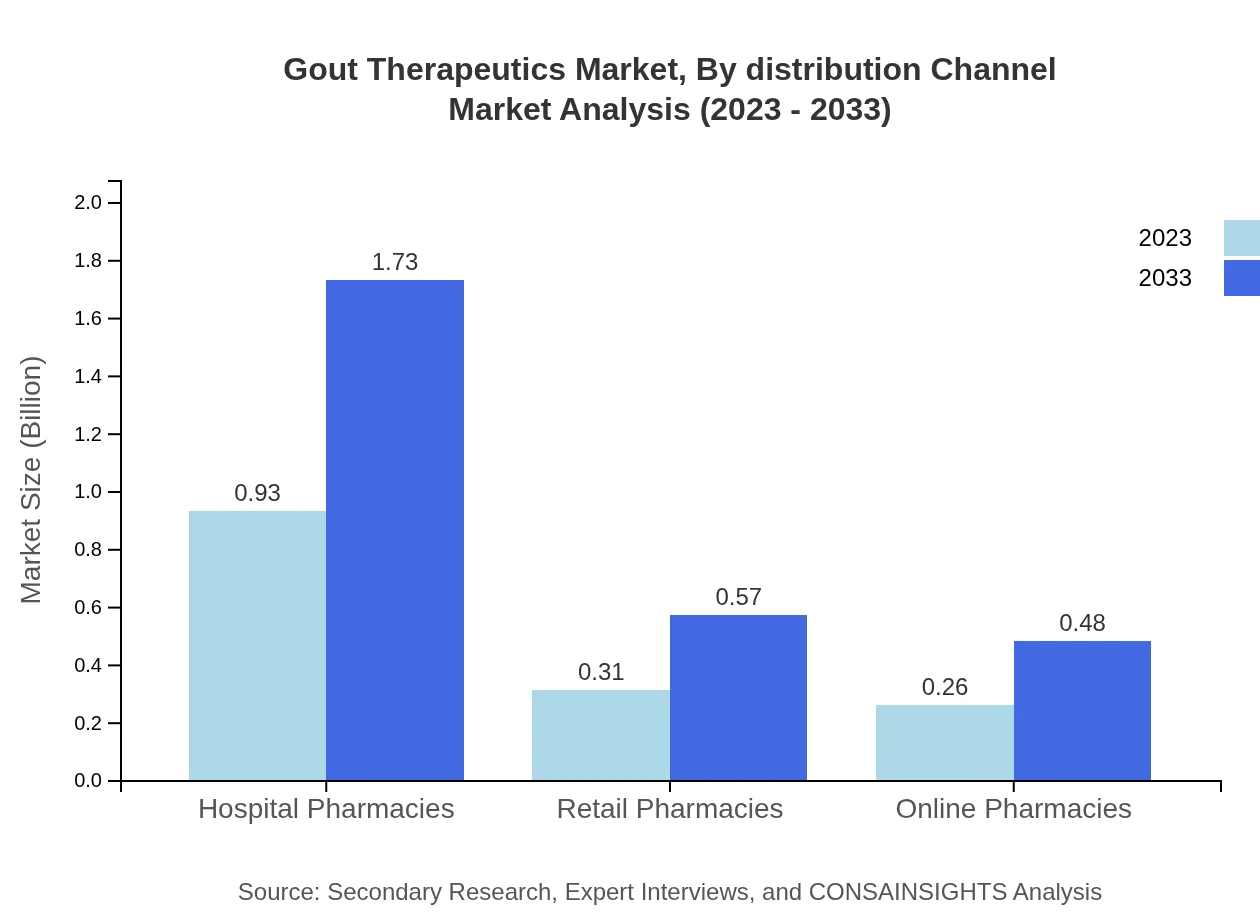
In terms of distribution channels, hospital pharmacies hold the highest market share of 62.28%, transitioning from $0.93 billion in 2023 to $1.73 billion by 2033. Retail and online pharmacies also hold significant shares, driven by the increasing consumer preference for home delivery and convenience.
Gout Therapeutics Market Analysis By Therapy Type
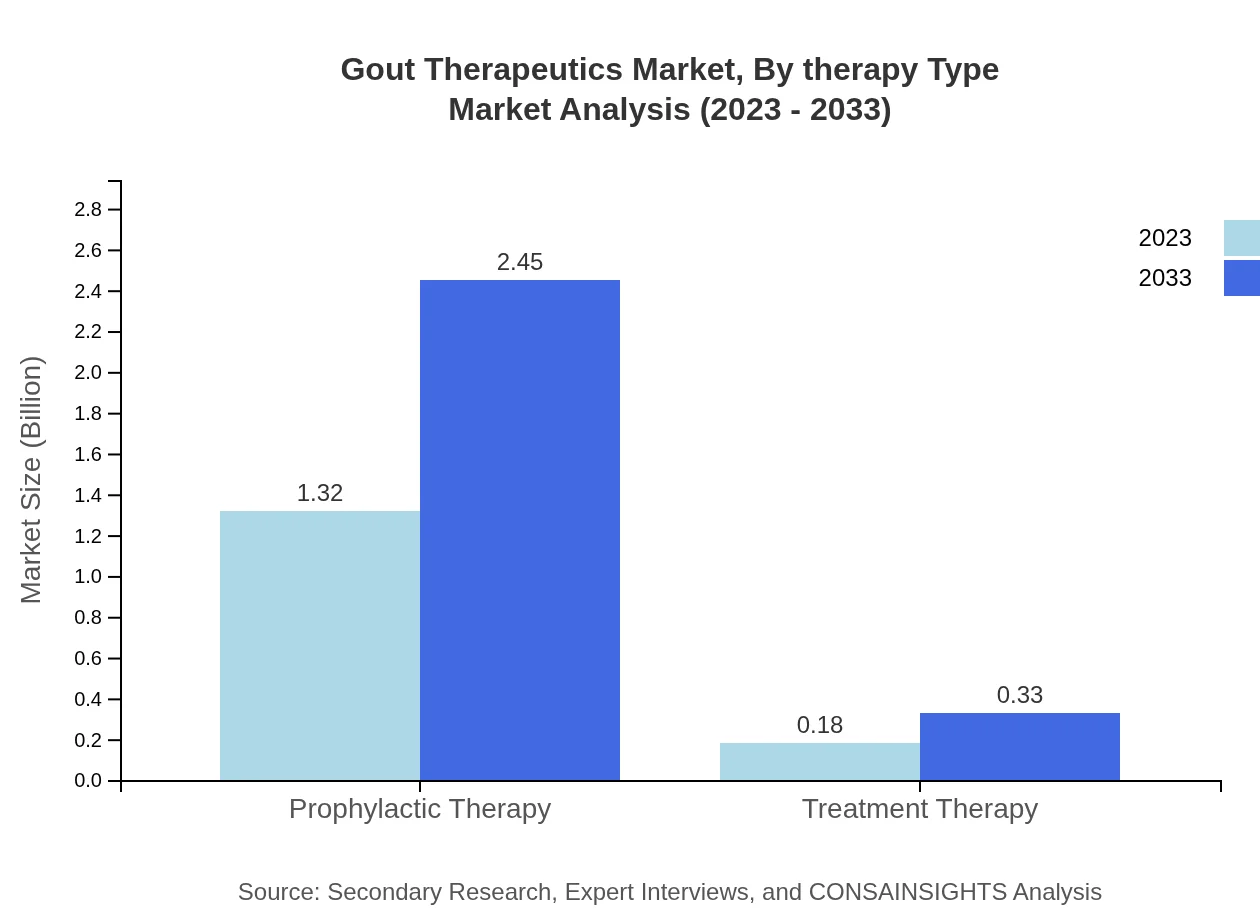
The market demands for prophylactic therapy are substantial, garnering 88.25% market share in 2023 valued at $1.32 billion. In contrast, treatment therapies, which comprise 11.75%, reflect a shift towards comprehensive disease management strategies and more sustained treatment plans.
Gout Therapeutics Market Trends and Future Forecast
Tell us your focus area and get a customized research report.
Global Market Leaders and Top Companies in Gout Therapeutics Industry
Novartis:
Novartis is a global healthcare company that provides innovative medicines and has a significant portfolio of gout therapeutics focusing on uric acid-lowering treatments.Hikma Pharmaceuticals:
Hikma Pharmaceuticals specializes in generic and branded medication development, contributing to accessible treatments for gout patients.Teva Pharmaceutical Industries:
Teva is a leader in generic medications worldwide and is invested in the gout therapeutic space, actively developing and marketing effective treatments.UCB S.A.:
UCB is dedicated to improving the lives of patients with complex diseases and is involved in the development of novel therapies for managing gout.We're grateful to work with incredible clients.





FAQs
What is the market size of the Gout Therapeutics Market Report in 2023?
The market size in 2023 is $1.50 Billion as reported. This baseline figure forms the starting point for the 2023 to 2033 forecast and comparative regional analysis.
How big will the Gout Therapeutics market be in 2033?
The market is projected to reach $2.78 Billion by 2033 under the 2023 to 2033 forecast period, reflecting the cumulative growth captured in the report.
What is CAGR for the forecast period?
The compound annual growth rate for the 2023 to 2033 forecast period is 6.2%, which underpins the market expansion from $1.50 Billion to $2.78 Billion.
Is there a single fastest Growing region in the Gout Therapeutics Market Report market?
No single fastest-growing region is stated for the Gout Therapeutics Market Report market because the top regional implied CAGR values are within 0.15 percentage points of each other, making the ranking too close to call reliably.
Which drug classes are highlighted in the report?
The report lists Uric Acid Lowering Agents and Anti-inflammatory Drugs as primary drug classes influencing market activity and treatment pathways.
Who are the top companies in the Gout Therapeutics market?
Top companies identified in the study include Novartis, Hikma Pharmaceuticals, Teva Pharmaceutical Industries, and UCB S.A., each noted for product presence or market participation.
What end users are covered in the segmentation?
End-user segments include Hospitals, Specialty Clinics, and Homecare as specified sub segments, reflecting sites where gout therapeutics are deployed.
How are distribution channels represented in the report?
Distribution channels evaluated include Hospital Pharmacies, Retail Pharmacies, and Online Pharmacies, highlighting multiple pathways for product delivery.
What therapy types are included in the analysis?
Therapy-type segmentation includes Prophylactic Therapy and Treatment Therapy, addressing both preventive and acute management approaches.