

Healthcare Operational Analytics Market Report
First published: 11 October 2024 | Last updated: 25 May 2026 | Report Code: healthcare-operational-analytics
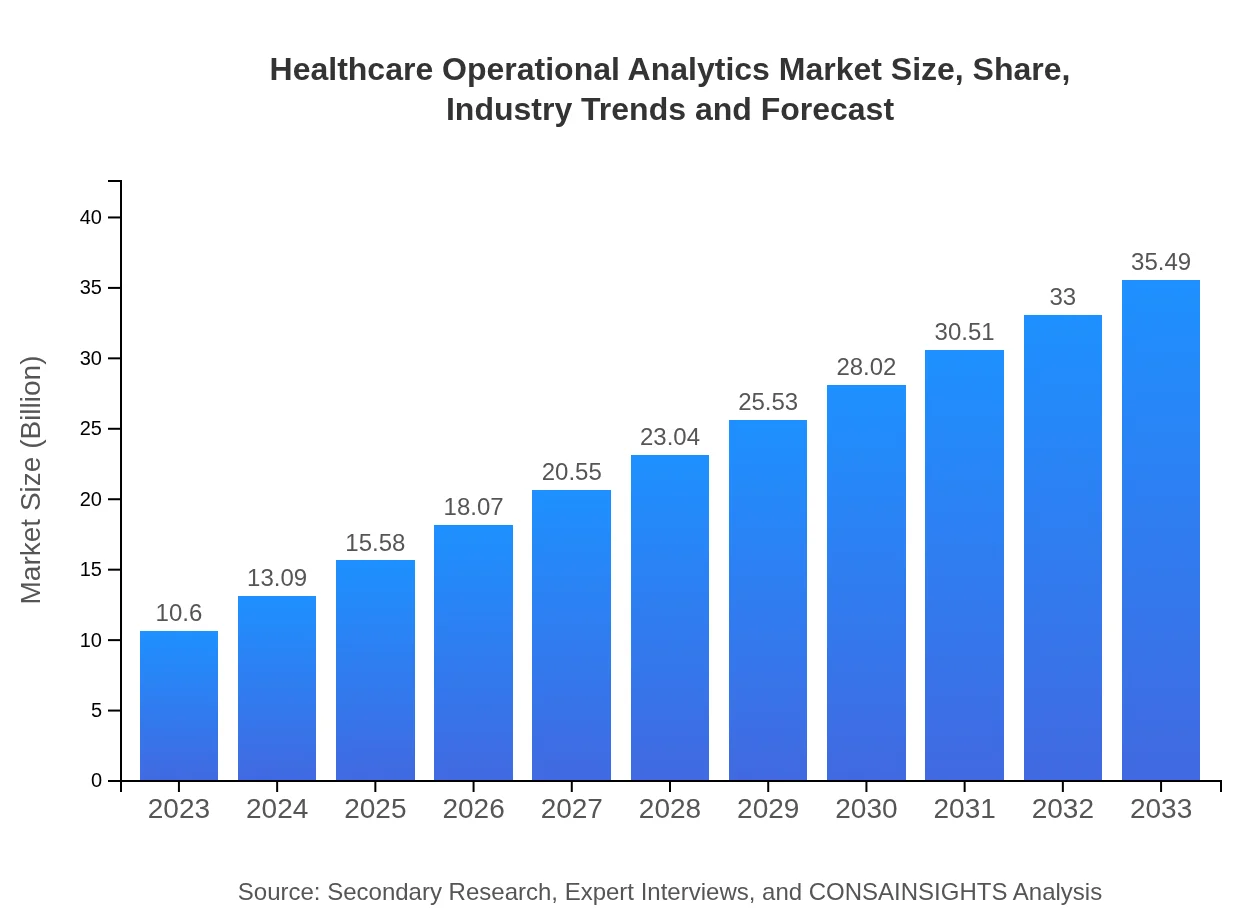
Healthcare Operational Analytics Market — USD 10.6 billion in 2023, Growing to USD 35.49B by 2033 at 12.3% CAGR
This report provides an in-depth analysis of the Healthcare Operational Analytics market, focusing on insights and forecasts for the period from 2023 to 2033. It explores market dynamics, segmentation, regional insights, and key trends shaping the future of the industry.
Key Takeaways
- Global market expands from $10.60 Billion in 2023 to $35.49 Billion in 2033, reflecting a 12.3% CAGR across 2023 to 2033.
- North America is largest regional market, while no single fastest-growing region is stated because regional CAGR differences remain within 0.15 percentage points.
- North America is the largest region, increasing from $3.94 Billion in 2023 to $13.2 Billion in 2033.
- Europe’s market moves from $3.23 Billion in 2023 to $10.81 Billion in 2033, highlighting sustained regional demand.
- Asia Pacific rises from $1.85 Billion in 2023 to $6.21 Billion in 2033, driven by broader adoption of analytics solutions.
- Top vendors include IBM Watson Health, Oracle Health Sciences, SAP SE, SAS Institute, and Tableau Software.
Healthcare Operational Analytics Market Report — Executive Summary
North America remains largest market by forecast-period value, while no single fastest-growing region is stated because top regional growth rates are separated by less than 0.15 percentage points. This report presents a structured view of the Healthcare Operational Analytics market, showing growth from $10.60 Billion in 2023 to $35.49 Billion in 2033 at a 12.3% CAGR for 2023 to 2033. Key forces include expanding use of analytics across hospitals, payers, and pharmaceutical firms, technological progress in analytics platforms, and regulatory and cost pressures that prioritize operational efficiency. Coverage spans technology types, deployment modes, analytics categories, and end-user segments, and profiles major vendors such as IBM Watson Health, Oracle Health Sciences, SAP SE, SAS Institute, and Tableau Software. The analysis blends trend assessment, segment-level descriptions, and regional trajectories to inform strategy and investment decisions within the life-sciences industry.
Key Growth Drivers
- Rising implementation of analytics in hospitals and payer organizations to improve workflow and resource allocation.
- Advances in analytics technologies and platform capabilities enabling more sophisticated operational insights.
- Regulatory and cost-containment pressures motivating healthcare providers to optimize processes and reduce inefficiencies.
- Increasing demand from pharmaceutical companies for data-driven operational planning and supply-chain visibility.
- Shift toward cloud deployment models that facilitate broader access to analytics tools across organizations.
| Metric | Value |
|---|---|
| Study Period | 2023 - 2033 |
| 2023 Market Size | $10.60 Billion |
| CAGR (2023-2033) | 12.3% |
| 2033 Market Size | $35.49 Billion |
| Top Companies | IBM Watson Health, Oracle Health Sciences, SAP SE, SAS Institute, Tableau Software |
| Published Date | 11 October 2024 |
| Last Modified Date | 25 May 2026 |
Healthcare Operational Analytics Market Overview
Customize Healthcare Operational Analytics Market Report market research report
- ✔ Get in-depth analysis of Healthcare Operational Analytics market size, growth, and forecasts.
- ✔ Understand Healthcare Operational Analytics's regional dynamics and industry-specific trends.
- ✔ Identify potential applications, end-user demand, and growth segments in Healthcare Operational Analytics
What is the Market Size & CAGR of Healthcare Operational Analytics Market Report market in 2023?
Healthcare Operational Analytics Industry Analysis
Healthcare Operational Analytics Market Segmentation and Scope
Tell us your focus area and get a customized research report.
Healthcare Operational Analytics Market Report Market Analysis Report by Region
Europe Healthcare Operational Analytics Market Report:
Europe grows from $3.23 Billion in 2023 to $10.81 Billion in 2033. 23 Billion in 2023 to $10.81 Billion in 2033, reflecting steady uptake across healthcare providers and payers. Drivers include regulatory emphasis on efficiency and increased deployment of analytics solutions by care institutions.Asia Pacific Healthcare Operational Analytics Market Report:
Asia Pacific grows from $1.85 Billion in 2023 to $6.21 Billion in 2033. 85 Billion in 2023 to $6.21 Billion in 2033 as providers and pharmaceutical firms expand analytics usage. Local growth reflects broader technology adoption and rising focus on operational performance.North America Healthcare Operational Analytics Market Report:
North America is largest regional market, rising from $3.94 Billion in 2023 to $13.2 Billion in 2033. Regional demand is shaped by extensive analytics adoption among hospitals and payer organizations, advanced vendor presence, and investments in platform capabilities.South America Healthcare Operational Analytics Market Report:
Latin America grows from $0.25 Billion in 2023 to $0.84 Billion in 2033. 25 Billion in 2023 to $0.84 Billion in 2033, with uptake led by healthcare organizations seeking process improvements and efficiency gains through analytics deployment.Middle East & Africa Healthcare Operational Analytics Market Report:
Middle East and Africa grows from $1.32 Billion in 2023 to $4.43 Billion in 2033. 32 Billion in 2023 to $4.43 Billion in 2033 as public and private health systems invest in analytics tools to improve resource utilization and patient-care workflows.Tell us your focus area and get a customized research report.
Research Methodology
Healthcare Operational Analytics Market Analysis By Analytics Type
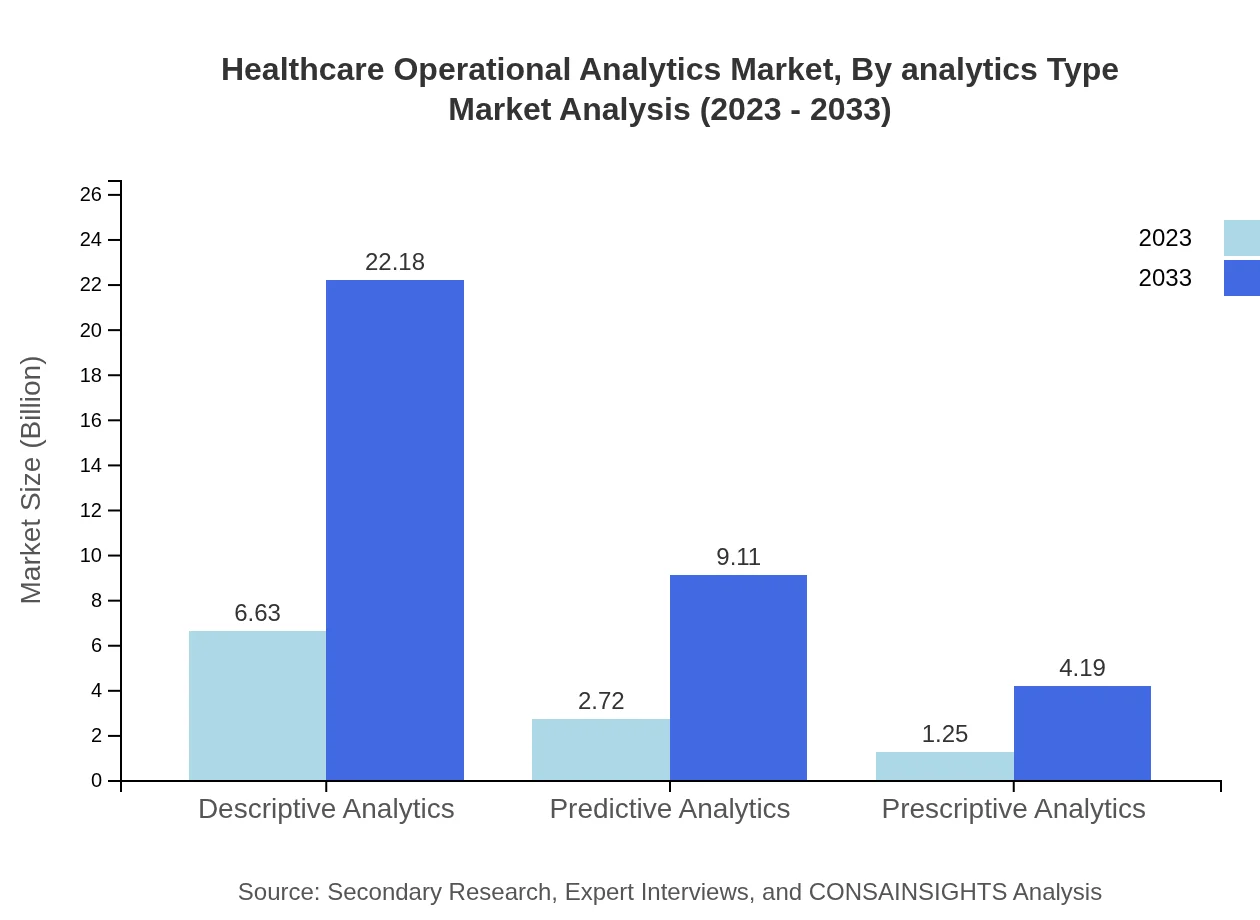
The market segmentation by analytics type shows that Descriptive Analytics accounts for a significant market size of $6.63 billion in 2023, projected to increase to $22.18 billion by 2033, representing a 62.51% market share. Predictive and Prescriptive Analytics follow, with respective market forecasts of $2.72 billion (25.67% share) and $1.25 billion (11.82% share) in 2023, both expected to grow significantly in the coming years.
Healthcare Operational Analytics Market Analysis By Deployment Mode
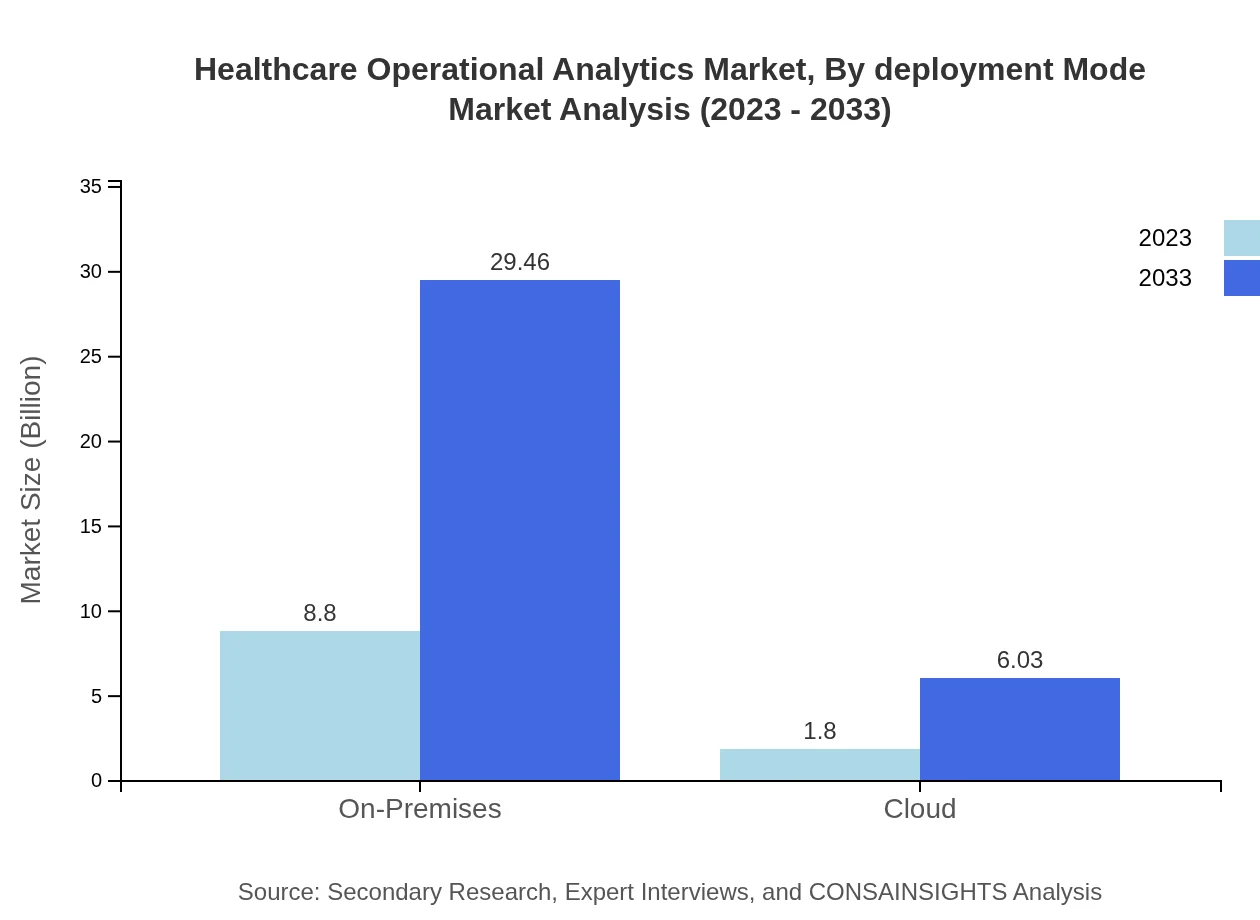
Market analysis by deployment mode indicates that traditional technologies dominate, with a market size of $8.80 billion in 2023 and expected growth to $29.46 billion by 2033, maintaining an 83.02% market share. Cloud-based solutions, while smaller at $1.80 billion (16.98% share), are anticipated to witness substantial growth driven by the increasing adoption of cloud services in healthcare settings.
Healthcare Operational Analytics Market Analysis By End User
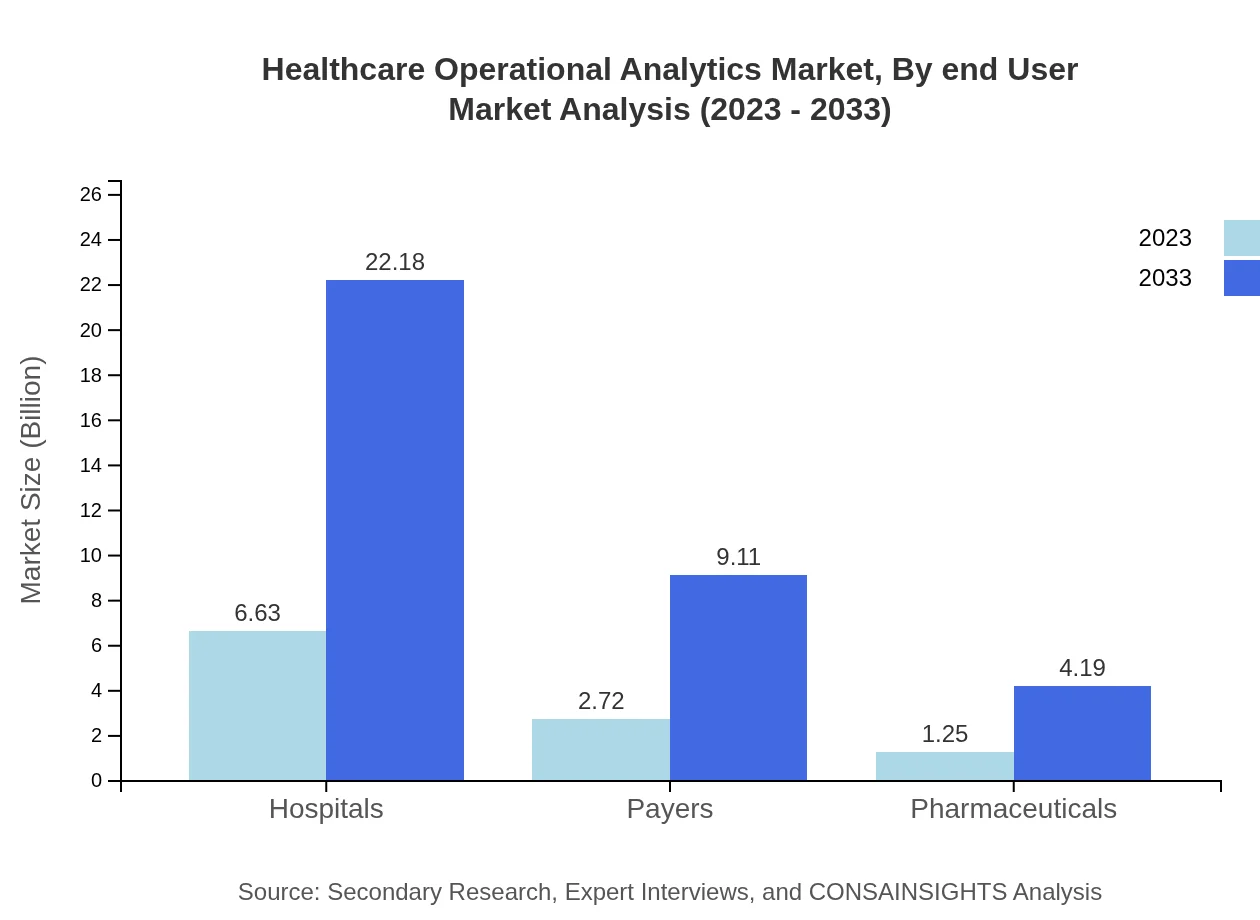
In terms of end-users, hospitals are the leading segment with a market size of $6.63 billion in 2023, increasing to $22.18 billion by 2033, capturing 62.51% share of the market. Payers and pharmaceuticals follow, with respective market sizes of $2.72 billion (25.67% share) and $1.25 billion (11.82% share), both set for robust growth as analytics solutions become increasingly essential in managing operational efficiencies.
Healthcare Operational Analytics Market Analysis By Technology
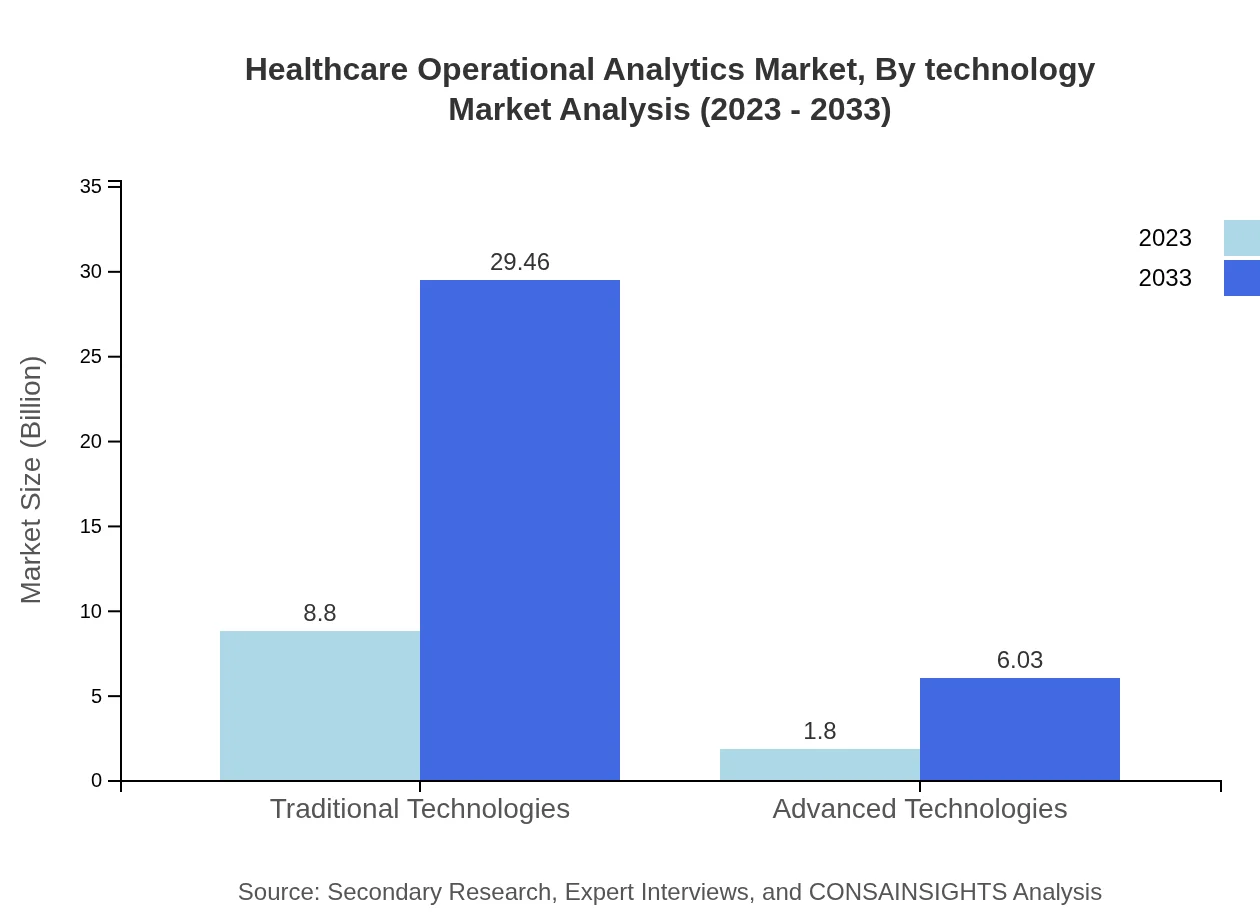
The segment analysis by technology illustrates that traditional technologies remain predominant, valued at $8.80 billion in 2023, while advancing to $29.46 billion by 2033. Advanced technologies, which are gaining traction, start at $1.80 billion (16.98% share) in 2023 and show promising growth potential as organizations transition towards more innovative data solutions.
Healthcare Operational Analytics Market Analysis By Application
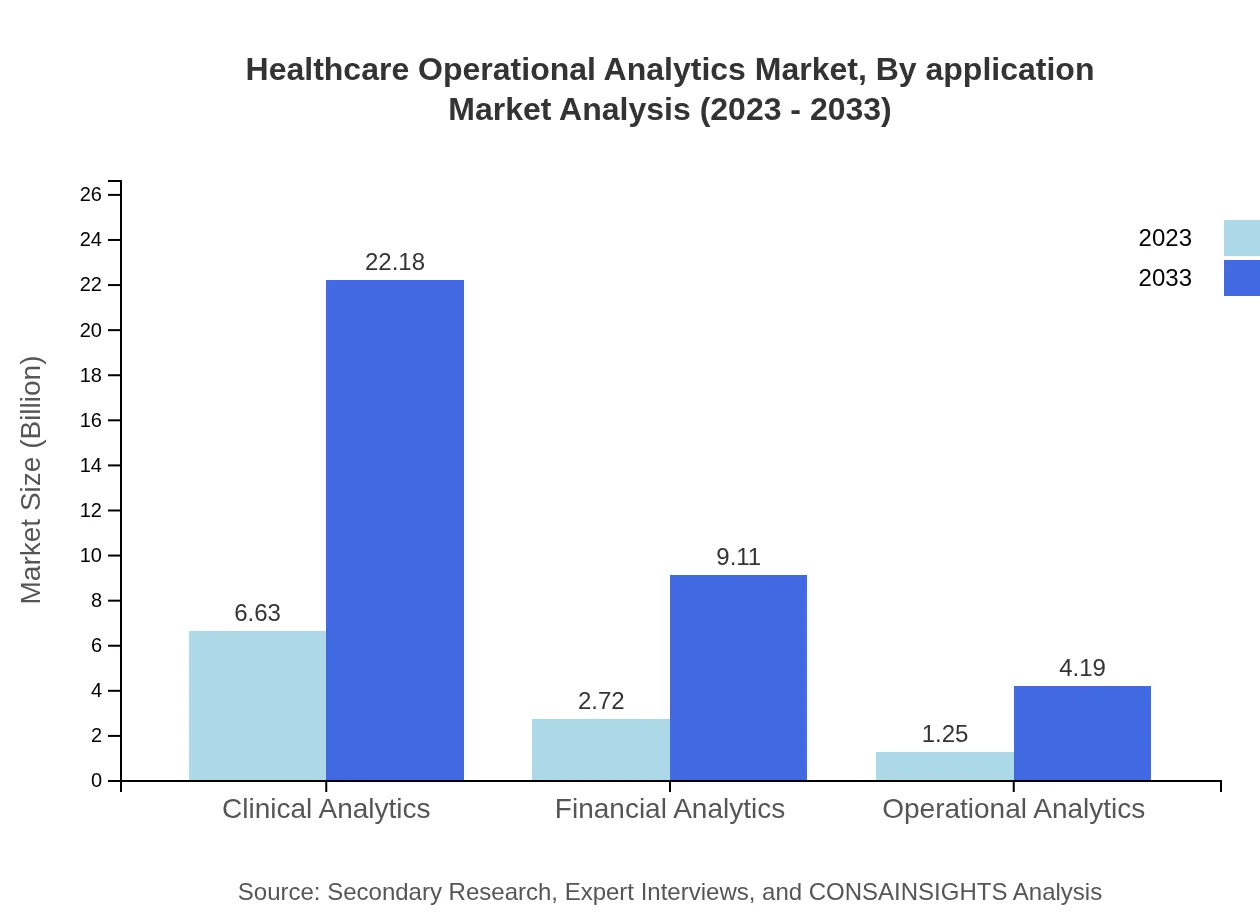
Healthcare operational analytics applications are broad and include clinical analytics, financial analytics, and operational analytics. Clinical analytics remains the most substantial segment, with a market size of $6.63 billion in 2023, expected to rise to $22.18 billion by 2033, reflecting its critical role in enhancing patient care and operational efficiencies in healthcare settings.
Healthcare Operational Analytics Market Trends and Future Forecast
Tell us your focus area and get a customized research report.
Global Market Leaders and Top Companies in Healthcare Operational Analytics Industry
IBM Watson Health:
IBM Watson Health is a leader in data analytics and cognitive computing, offering healthcare organizations advanced operational analytics solutions to improve patient care and operational efficiency.Oracle Health Sciences:
Oracle provides a comprehensive suite of healthcare analytics solutions focusing on optimization and insights for operational management across various healthcare segments.SAP SE:
SAP offers integrated analytics and data management solutions for healthcare providers, focusing on improving operational processes and facilitating data-driven decision-making.SAS Institute:
SAS specializes in analytics software and solutions, revolutionizing how healthcare organizations utilize data to enhance patient outcomes and streamline operations.Tableau Software:
Tableau emphasizes visual analytics, enabling healthcare entities to gain actionable insights from their data efficiently, driving informed decisions and operational improvements.We're grateful to work with incredible clients.








FAQs
What is the market size of the Healthcare Operational Analytics Market Report in 2023?
The market size in 2023 is $10.60 Billion, as reported for the Healthcare Operational Analytics Market Report.
How big will the market be in 2033?
The market is projected to reach $35.49 Billion by 2033 according to the provided forecast.
What is CAGR for the forecast period?
The forecasted compound annual growth rate is 12.3% for the period 2023 to 2033.
Is there a single fastest Growing region in the Healthcare Operational Analytics Market Report market?
No single fastest-growing region is stated for the Healthcare Operational Analytics Market Report market because the top regional implied CAGR values are within 0.15 percentage points of each other, making the ranking too close to call reliably.
Which companies are noted as key players?
Top companies listed include IBM Watson Health, Oracle Health Sciences, SAP SE, SAS Institute, and Tableau Software.
What end users drive demand for operational analytics?
Hospitals, payers, and pharmaceutical companies are primary end users driving demand for operational analytics solutions.
How do deployment modes vary in the market?
Deployment modes include On-Premises and Cloud options, each supporting different organizational requirements and adoption preferences.
What types of analytics are included in the market?
Analytics types covered include Descriptive Analytics, Predictive Analytics, and Prescriptive Analytics for operational decision-making.
What is the forecast period for this report?
The forecast period specified for the report is 2023 to 2033.
Who contributed to the research methodology?
Research included primary interviews with industry experts and secondary research from company reports and publications.