
Reports >
Life Sciences
>
Hemophilia Management Market Report

Hemophilia Management Market Report
First published: 20 October 2024 | Last updated: 25 May 2026 | Report Code: hemophilia-management
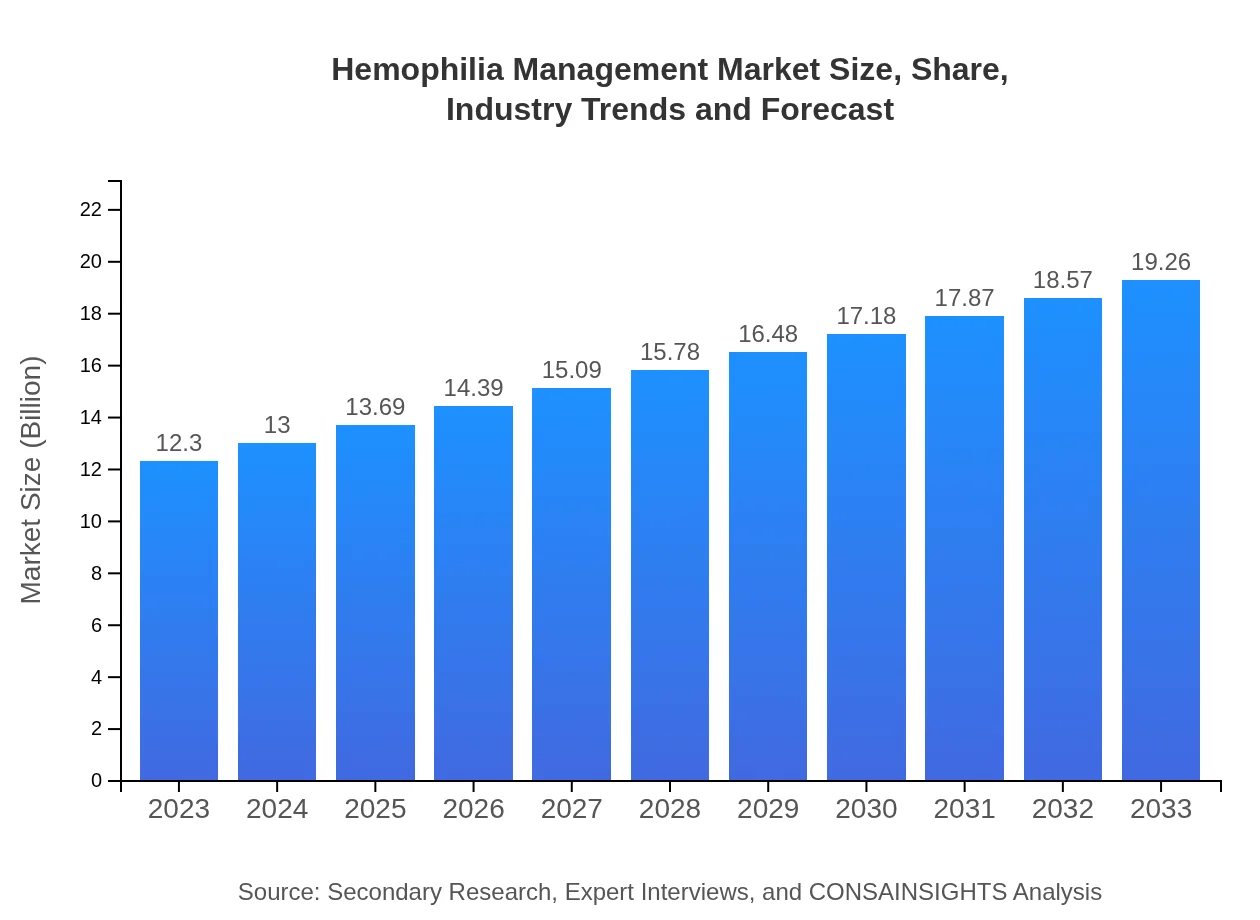
Hemophilia Management Market — USD 12.3 billion in 2023, Growing to USD 19.26B by 2033 at 4.5% CAGR
This report provides a comprehensive analysis of the Hemophilia Management market, encompassing market size, trends, and forecasts for the period 2023-2033. It delves into industry analysis, market segmentation, regional insights, and profiles of leading market players.
Key Takeaways
- Global market expands from $12.30 Billion in 2023 to $19.26 Billion by 2033, reflecting a 4.5% CAGR over the forecast period.
- North America is largest regional market, while no single fastest-growing region is stated because regional CAGR differences remain within 0.15 percentage points.
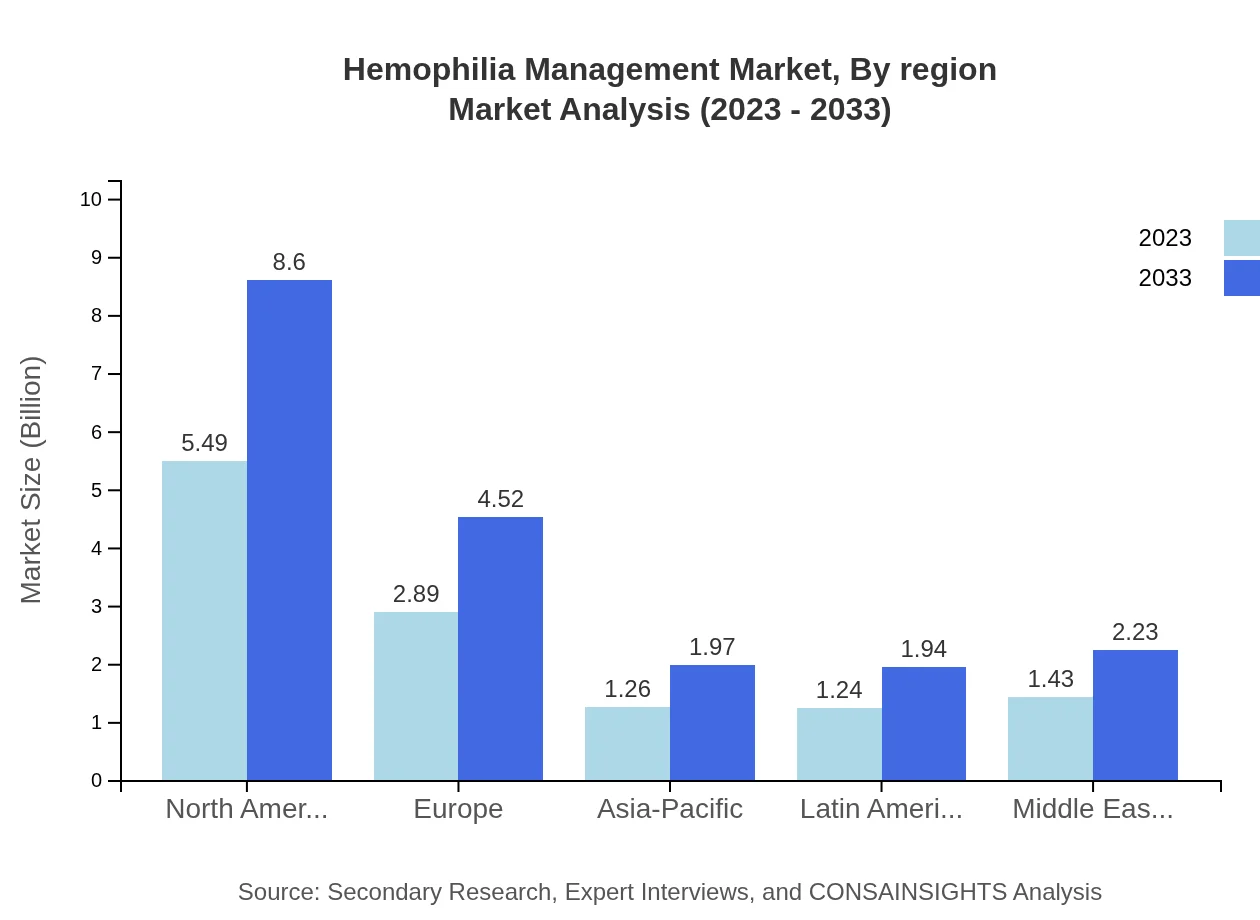
- North America leads regional revenue, increasing from $4.59 Billion in 2023 to $7.18 Billion in 2033.
- Europe’s market moves from $3.33 Billion to $5.22 Billion between 2023 and 2033, highlighting strong regional demand.
- Asia Pacific grows from $2.38 Billion in 2023 to $3.73 Billion in 2033, driven by improving access and treatment adoption.
- Primary industry participants include Baxter International Inc., Roche, CSL Behring, and Novo Nordisk.
- Treatment innovation and rising diagnosis awareness are central growth influences across regions.
Hemophilia Management Market Report — Executive Summary
North America remains largest market by forecast-period value, while no single fastest-growing region is stated because top regional growth rates are separated by less than 0.15 percentage points. This report provides a focused review of the Hemophilia Management market, documenting a rise from $12.30 Billion in 2023 to $19.26 Billion by 2033 at a 4.5% CAGR. Growth is supported by technological advances in therapies, greater diagnostic reach, and expanding treatment options including replacement and non-replacement approaches. The analysis covers market structure by region, end-user, patient type, treatment approach, and distribution pathway. Regional chapters detail North America, Europe, Asia Pacific, Latin America, and Middle East and Africa with explicit 2023–2033 value trajectories. Competitive profiling highlights Baxter International Inc., Roche, CSL Behring, and Novo Nordisk and their roles in product development and distribution. The report also examines drivers, prevailing trends, and regulatory considerations shaping investment and innovation in hemophilia care.
Key Growth Drivers
- Improved therapeutic technologies and treatment modalities enhancing clinical outcomes and expanding patient eligibility.
- Increased diagnosis and awareness raising demand for comprehensive hemophilia care and long-term management solutions.
- Rising R&D investments by pharmaceutical firms facilitating new product introductions and advanced treatment options.
- Wider adoption of varied distribution channels, including hospital and online pharmacies, improving treatment accessibility.
- Ongoing collaborations and strategic partnerships enabling faster commercialization of novel therapies.
| Metric | Value |
|---|---|
| Study Period | 2023 - 2033 |
| 2023 Market Size | $12.30 Billion |
| CAGR (2023-2033) | 4.5% |
| 2033 Market Size | $19.26 Billion |
| Top Companies | Baxter International Inc., Roche, CSL Behring, Novo Nordisk |
| Published Date | 20 October 2024 |
| Last Modified Date | 25 May 2026 |
Hemophilia Management Market Overview
Customize Hemophilia Management Market Report market research report
- ✔ Get in-depth analysis of Hemophilia Management market size, growth, and forecasts.
- ✔ Understand Hemophilia Management's regional dynamics and industry-specific trends.
- ✔ Identify potential applications, end-user demand, and growth segments in Hemophilia Management
What is the Market Size & CAGR of Hemophilia Management Market Report market in 2023?
Hemophilia Management Industry Analysis
Hemophilia Management Market Segmentation and Scope
Tell us your focus area and get a customized research report.
Hemophilia Management Market Report Market Analysis Report by Region
Europe Hemophilia Management Market Report:
Europe grows from $3.33 Billion in 2023 to $5.22 Billion in 2033. Regional expansion is driven by improved access to advanced therapies, growing diagnostic capacity, and regulatory frameworks that support treatment availability.Asia Pacific Hemophilia Management Market Report:
Asia Pacific grows from $2.38 Billion in 2023 to $3.73 Billion in 2033. Growth factors include expanding healthcare services, rising awareness of hemophilia, and increased investment in treatment access and local delivery channels.North America Hemophilia Management Market Report:
North America is largest regional market, rising from $4.59 Billion in 2023 to $7.18 Billion in 2033. This region is identified as the largest market, reflecting strong clinical adoption, established healthcare infrastructure, and active participation by major companies in product development and distribution.South America Hemophilia Management Market Report:
Latin America grows from $0.79 Billion in 2023 to $1.24 Billion in 2033. Market gains are influenced by incremental improvements in diagnosis, expanding treatment programs, and broader availability through hospital and retail pharmacies.Middle East & Africa Hemophilia Management Market Report:
Middle East and Africa grows from $1.21 Billion in 2023 to $1.89 Billion in 2033. Regional progress is linked to growing healthcare investments, enhanced disease awareness, and gradual adoption of newer therapeutic approaches.Tell us your focus area and get a customized research report.
Research Methodology
Hemophilia Management Market Analysis By Treatment Type
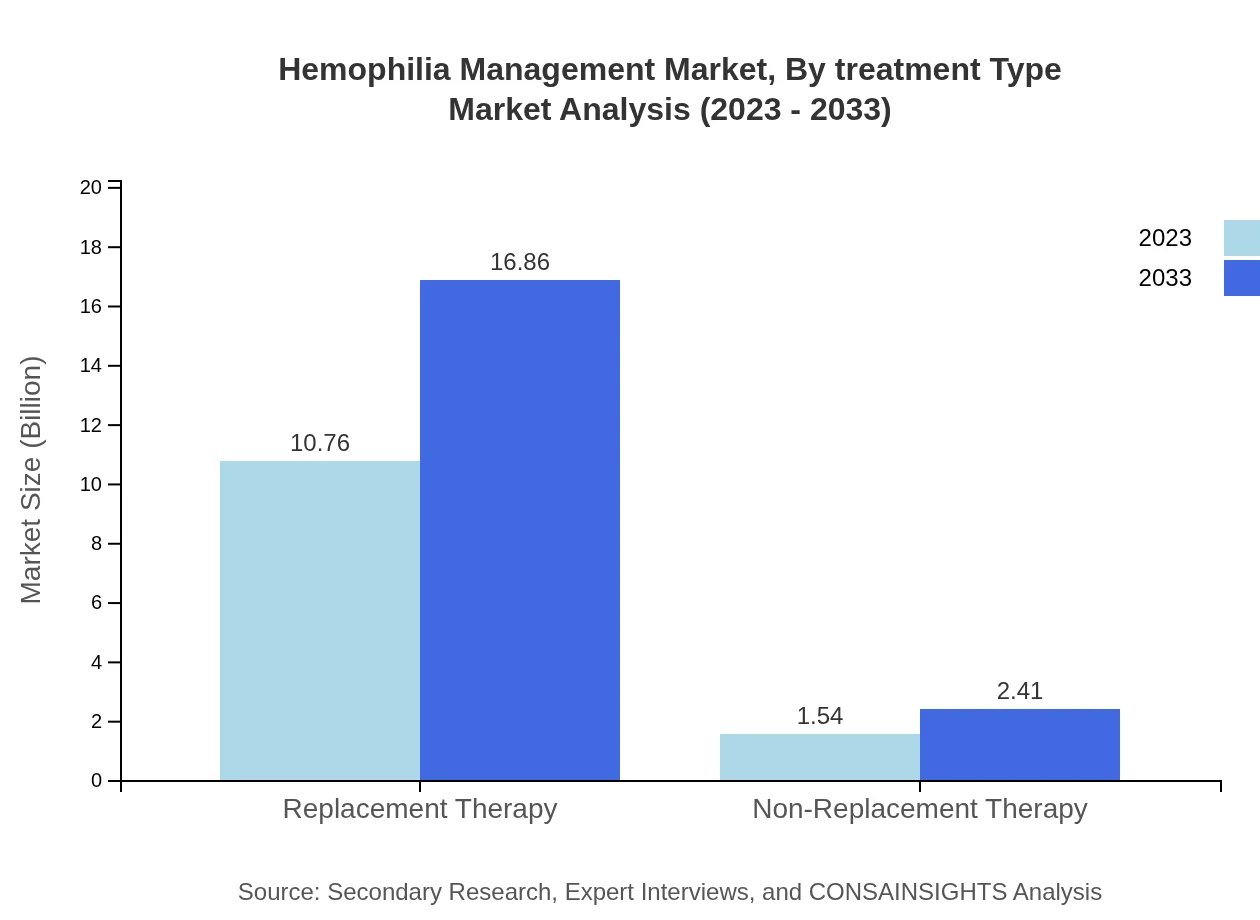
In the Hemophilia Management market by treatment type, replacement therapy is the leading segment, accounting for approximately 87.5% of the market share in 2023, valued at $10.76 billion, and it is expected to remain dominant through 2033. Non-replacement therapy, while smaller, is witnessing growth, with sales projected to reach $2.41 billion by 2033.
Hemophilia Management Market Analysis By Patient Type
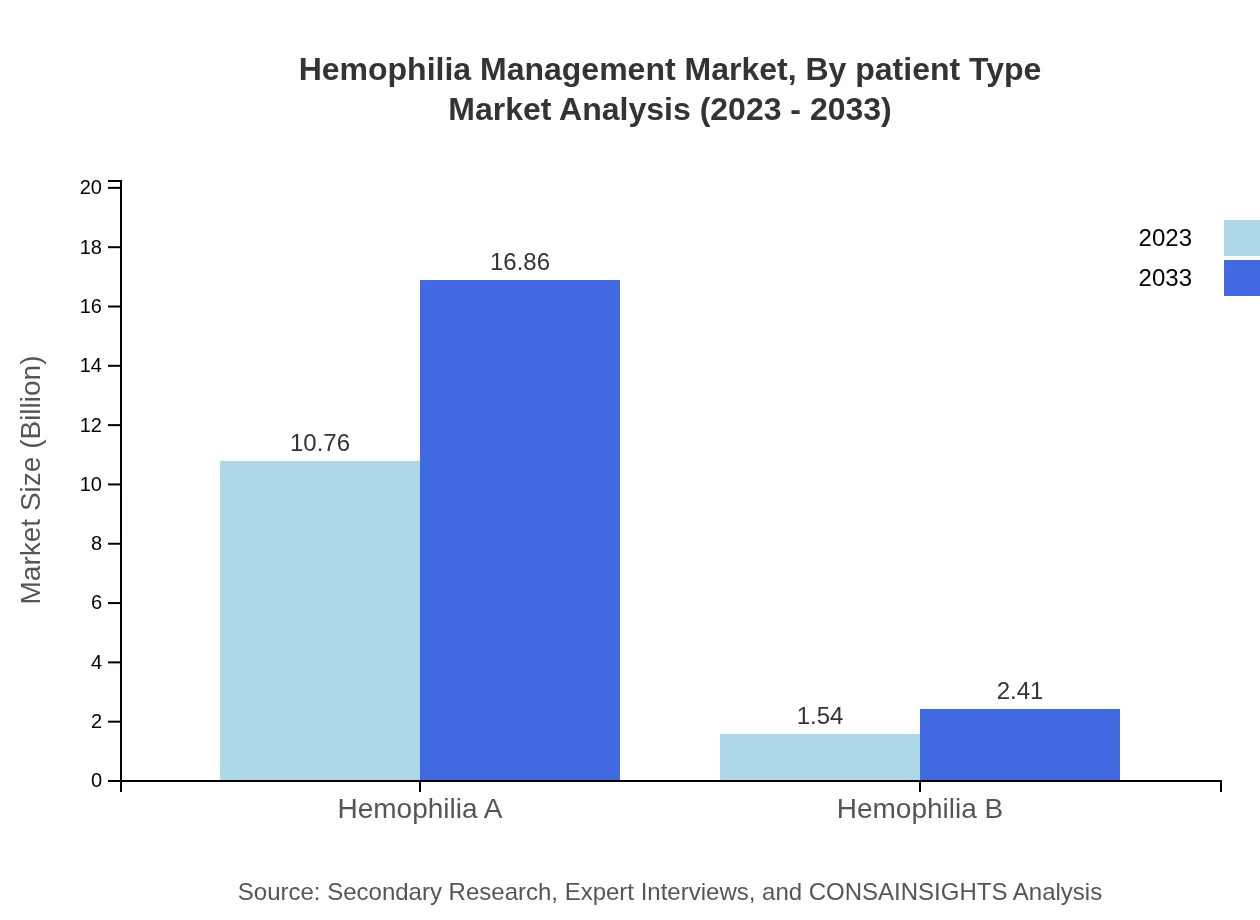
The patient type segmentation shows that Hemophilia A constitutes about 87.5% of the overall market in 2023, emphasizing the need for targeted therapies for this group. On the other hand, Hemophilia B, though smaller at 12.5%, is gaining attention from drug developers, especially due to emerging therapies that could address unmet needs.
Hemophilia Management Market Analysis By Distribution Channel
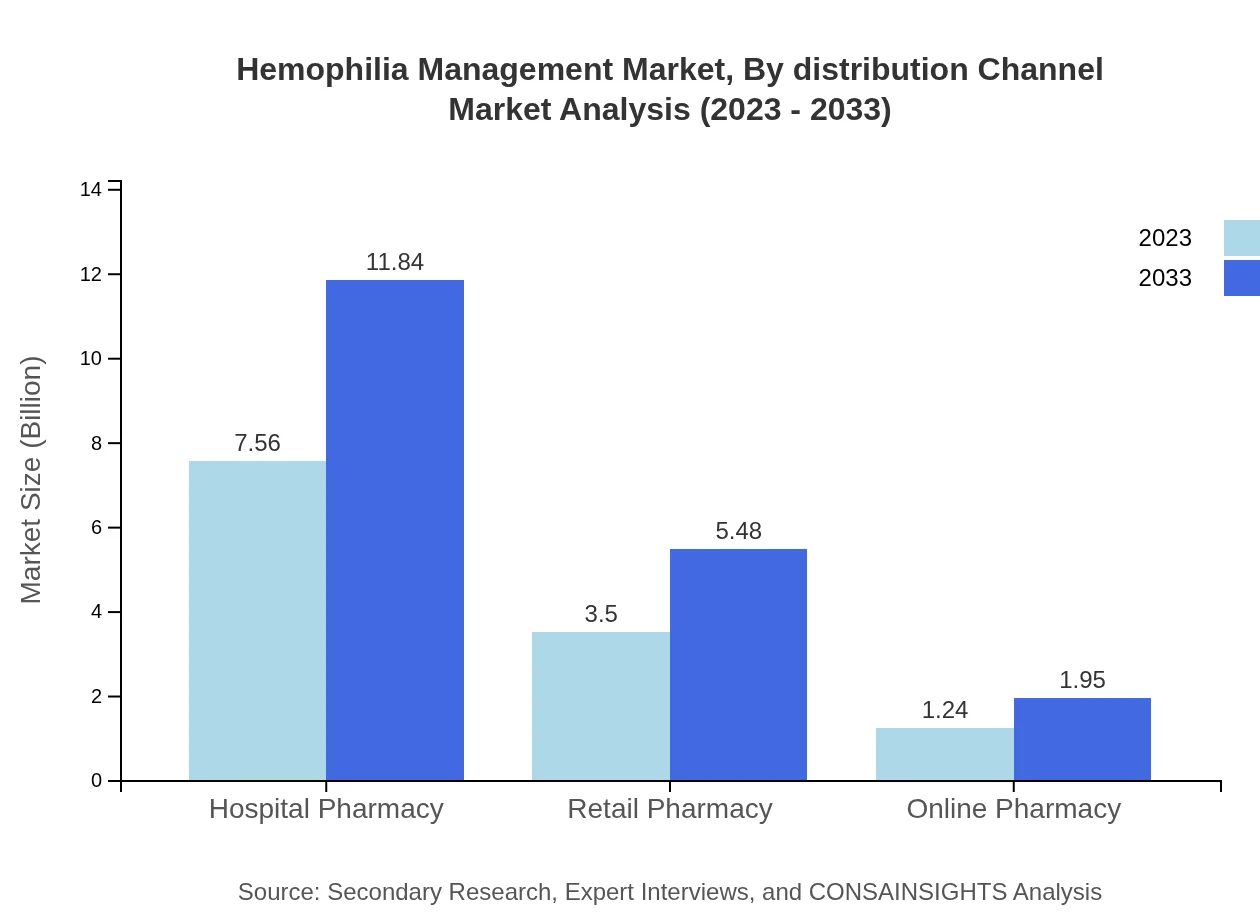
Hospital pharmacies hold a significant share of the distribution channels at 61.45% of the market in 2023, translating to a size of $7.56 billion. Retail pharmacies and online pharmacies also contribute, portraying a trend towards home care management of hemophilia therapies.
Hemophilia Management Market Analysis By End User
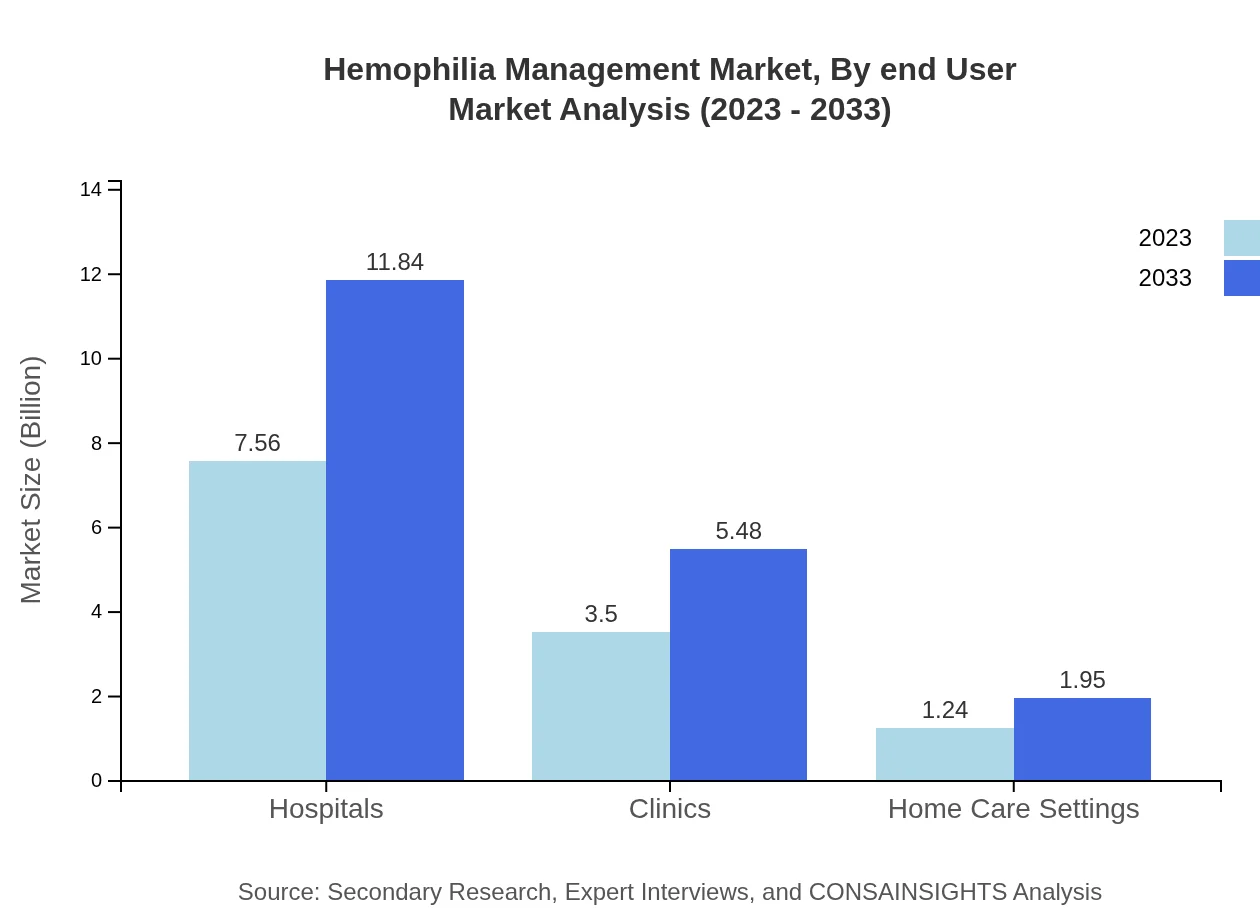
Hospitals dominate the end-user segments, accounting for 61.45% of the market in 2023. However, there is growing demand in clinics and home care settings, reflecting changing patient attitudes towards treatment delivery.
Hemophilia Management Market Trends and Future Forecast
Tell us your focus area and get a customized research report.
Global Market Leaders and Top Companies in Hemophilia Management Industry
Baxter International Inc.:
A leader in hemophilia therapies, Baxter focuses on developing hemophilia A and B treatments, leveraging extensive R&D capabilities.Roche:
Known for innovative therapeutic options, Roche actively contributes to hemophilia management through groundbreaking gene therapy solutions.CSL Behring:
CSL Behring specializes in replacement therapies for hemophilia and advocates for improved patient outcomes through continuous innovation.Novo Nordisk:
This pharmaceutical giant enhances hemophilia care by providing effective treatments and is deeply involved in early diagnosis initiatives and patient education.We're grateful to work with incredible clients.








FAQs
What is the market size of the Hemophilia Management market in 2023?
The market size in 2023 is $12.30 Billion, as stated in the report’s base year valuation for the global Hemophilia Management market.
How big will the market be in 2033?
The projected market value for 2033 is $19.26 Billion, reflecting the report’s end-period estimate for the Hemophilia Management sector.
What is CAGR of the market during the forecast period?
The compound annual growth rate specified for 2023 to 2033 is 4.5% for the Hemophilia Management market.
Is there a single fastest Growing region in the Hemophilia Management Market Report market?
No single fastest-growing region is stated for the Hemophilia Management Market Report market because the top regional implied CAGR values are within 0.15 percentage points of each other, making the ranking too close to call reliably.
Which firms are profiled as leading companies?
Top companies listed in the report include Baxter International Inc., Roche, CSL Behring, and Novo Nordisk as key industry participants.
What are the main treatment categories covered?
The report covers treatment categories including Replacement Therapy and Non-Replacement Therapy as primary treatment-type segments.
How are distribution channels represented in the study?
Distribution pathways analyzed include Hospital Pharmacy, Retail Pharmacy, and Online Pharmacy to reflect how therapies reach patients.
What patient types are included in segmentation?
Patient-type segments include Hemophilia A and Hemophilia B to capture clinical distinctions in disorder prevalence and treatment needs.
What regional coverage does the report provide?
Regional scope covers North America, Europe, Asia Pacific, Latin America, and Middle East and Africa with 2023 and 2033 market values supplied for each region.
Why does the report emphasize treatment innovation?
Treatment innovation is highlighted because advancements in therapies and precision approaches are driving market expansion and R&D focus across the industry.