

Indoor-5g
First published: 15 January 2026 | Last updated: 31 January 2026 | Report Code: indoor-5g
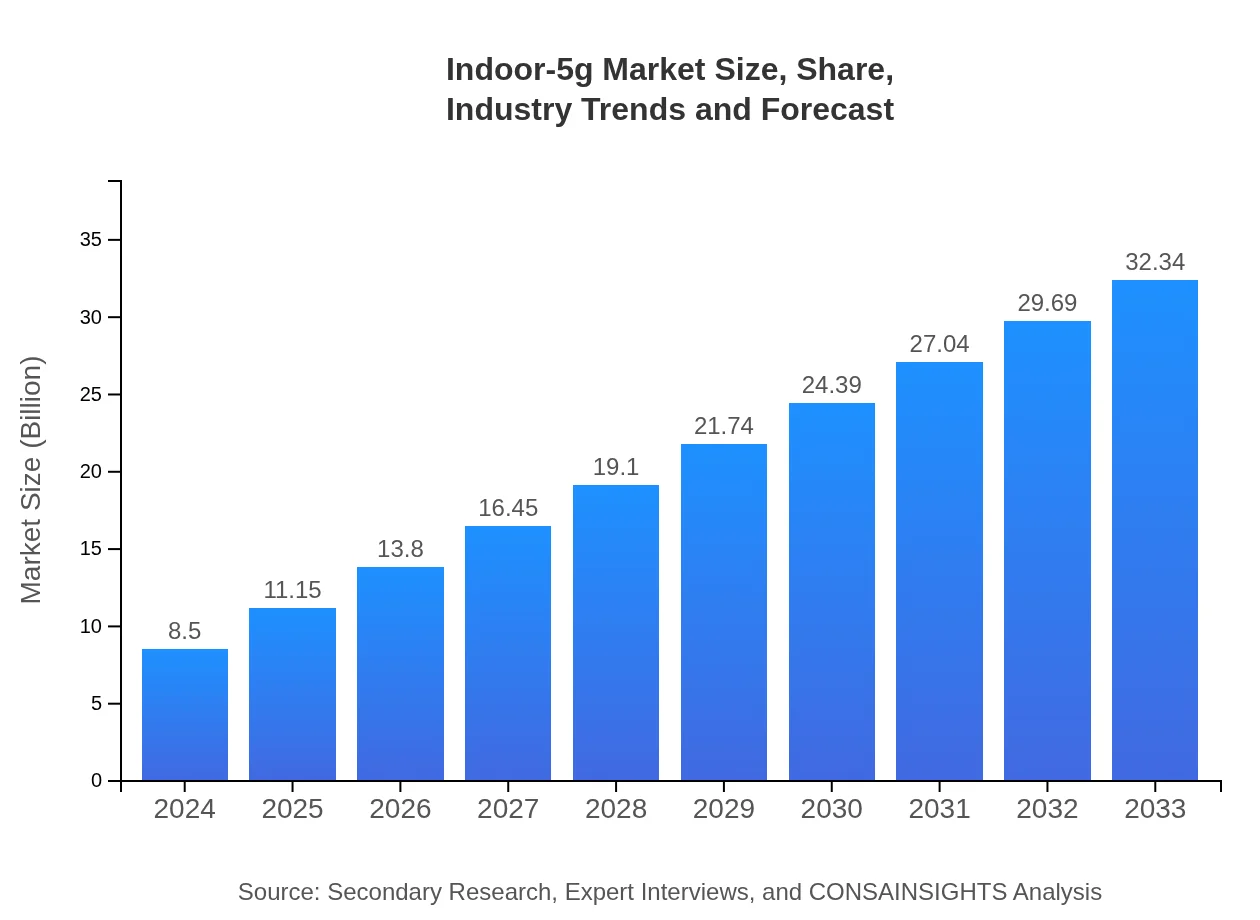
Indoor-5g Market — USD $8.5 Billion in 2024, Growing to USD 32.34 by 2033 at 15.2% CAGR
This report provides a comprehensive analysis of the Indoor-5g market, detailing market size, growth rates, regional assessments, segmentation, and industry trends. It covers detailed insights and forecasts for the period 2024 to 2033, enabling stakeholders to understand current conditions, future opportunities, and emerging technologies in the Indoor-5g ecosystem.
| Metric | Value |
|---|---|
| Study Period | 2024 - 2033 |
| 2024 Market Size | $8.50 Billion |
| CAGR (2024-2033) | 15.2% |
| 2033 Market Size | $32.34 Billion |
| Top Companies | Innovative Connect Inc., NextGen Networks, UltraLink Systems |
| Published Date | 15 January 2026 |
| Last Modified Date | 31 January 2026 |
Indoor-5g Market Overview
Customize Indoor-5g market research report
- ✔ Get in-depth analysis of Indoor-5g market size, growth, and forecasts.
- ✔ Understand Indoor-5g's regional dynamics and industry-specific trends.
- ✔ Identify potential applications, end-user demand, and growth segments in Indoor-5g
What is the Market Size & CAGR of Indoor-5g market in 2024?
Indoor-5g Industry Analysis
Indoor-5g Market Segmentation and Scope
Tell us your focus area and get a customized research report.
Indoor-5g Market Analysis Report by Region
Europe Indoor-5g:
Europe’s Indoor-5g market exhibits promising growth, with market size estimates at 2.28 units in 2024 and projections reaching 8.68 units by 2033. Regulatory support, a high penetration of advanced communication technologies, and a focus on sustainability and digital innovation contribute to the steadily rising market figures across diverse industrial segments.Asia Pacific Indoor-5g:
The Asia Pacific region is emerging as a significant contributor to the Indoor-5g market. With a 2024 market size of approximately 1.63 units and projected growth to 6.19 units by 2033, aggressive investments in technological infrastructure, rapid urbanization, and a surge in consumer electronics are driving market expansions. Local policies that encourage digital transformation and smart city initiatives further bolster market prospects.North America Indoor-5g:
North America stands as one of the most mature markets within the Indoor-5g domain, starting at 3.00 units in 2024 and climbing to an anticipated 11.43 units by 2033. The region benefits from robust technological advancements, substantial R&D funding, and widespread adoption of smart technologies across commercial and residential sectors.South America Indoor-5g:
South America presents a steadily growing market, with initial figures around 0.74 units in 2024 rising to 2.81 units by 2033. Although the market faces challenges related to economic fluctuations and infrastructure limitations, focused investments in urban connectivity projects and increased demand for wireless technologies are expected to stimulate growth.Middle East & Africa Indoor-5g:
In the Middle East and Africa, the Indoor-5g market is anticipated to evolve from 0.85 units in 2024 to 3.23 units by 2033. This growth is driven by strategic infrastructural developments, increasing investment in digital transformation, and the region’s focus on enhancing indoor connectivity to support burgeoning commercial and residential markets.Tell us your focus area and get a customized research report.
Indoor-5g Market Analysis By Technology Type
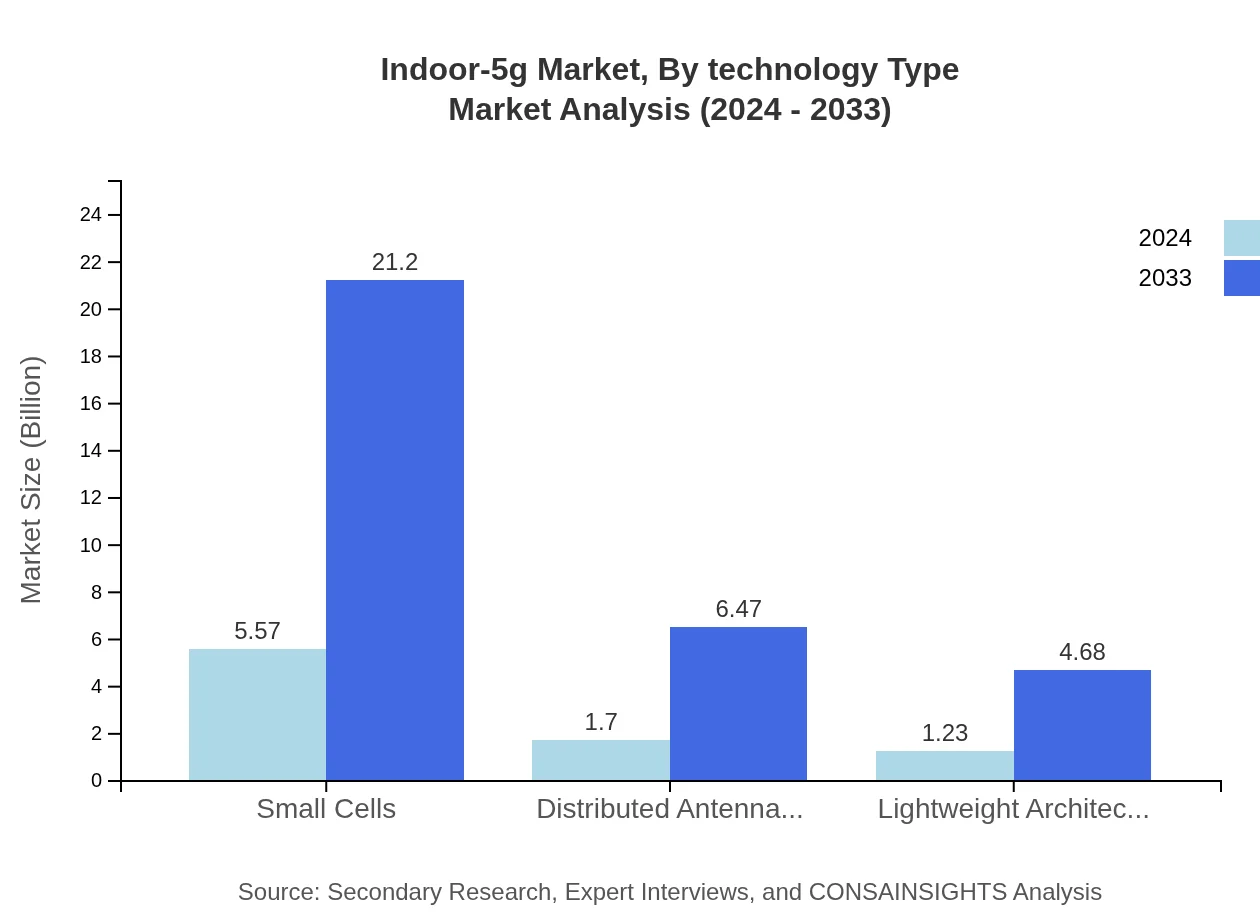
The technology type segmentation focuses on Service solutions such as Installation and Integration Services and Maintenance and Support Services. These segments are essential due to their rapid scalability and technological advancements, which enable efficient network deployments in confined spaces. Robust growth in these areas is reflected in capacity expansions and enhanced operational efficiencies.
Indoor-5g Market Analysis By End User
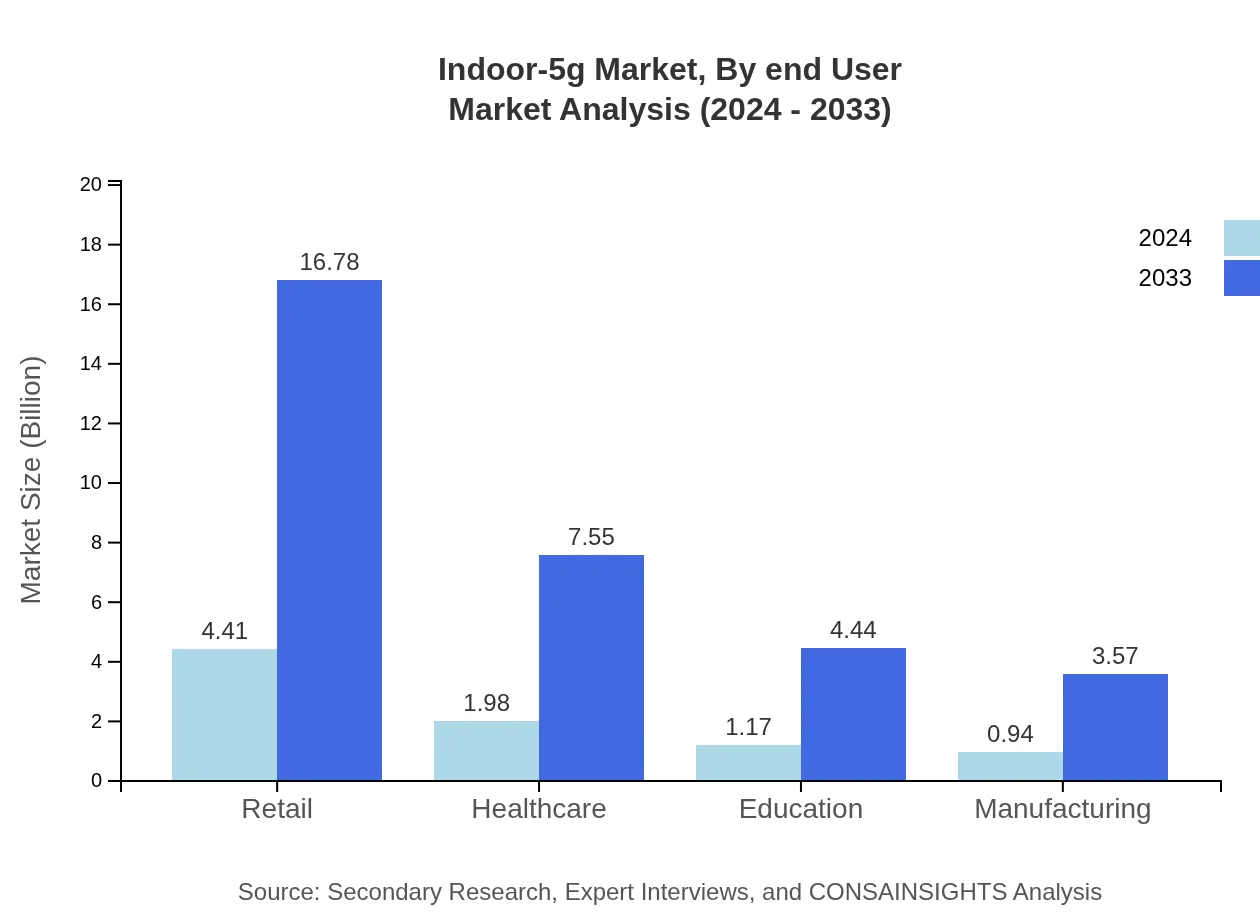
End-users span multiple sectors including Residential, Commercial, Healthcare, Education, Manufacturing, and Transportation. The increasing integration of smart indoor solutions in these industries supports improved connectivity, safety, and operational insights, making them key drivers of market demand and innovation.
Indoor-5g Market Analysis By Deployment Type
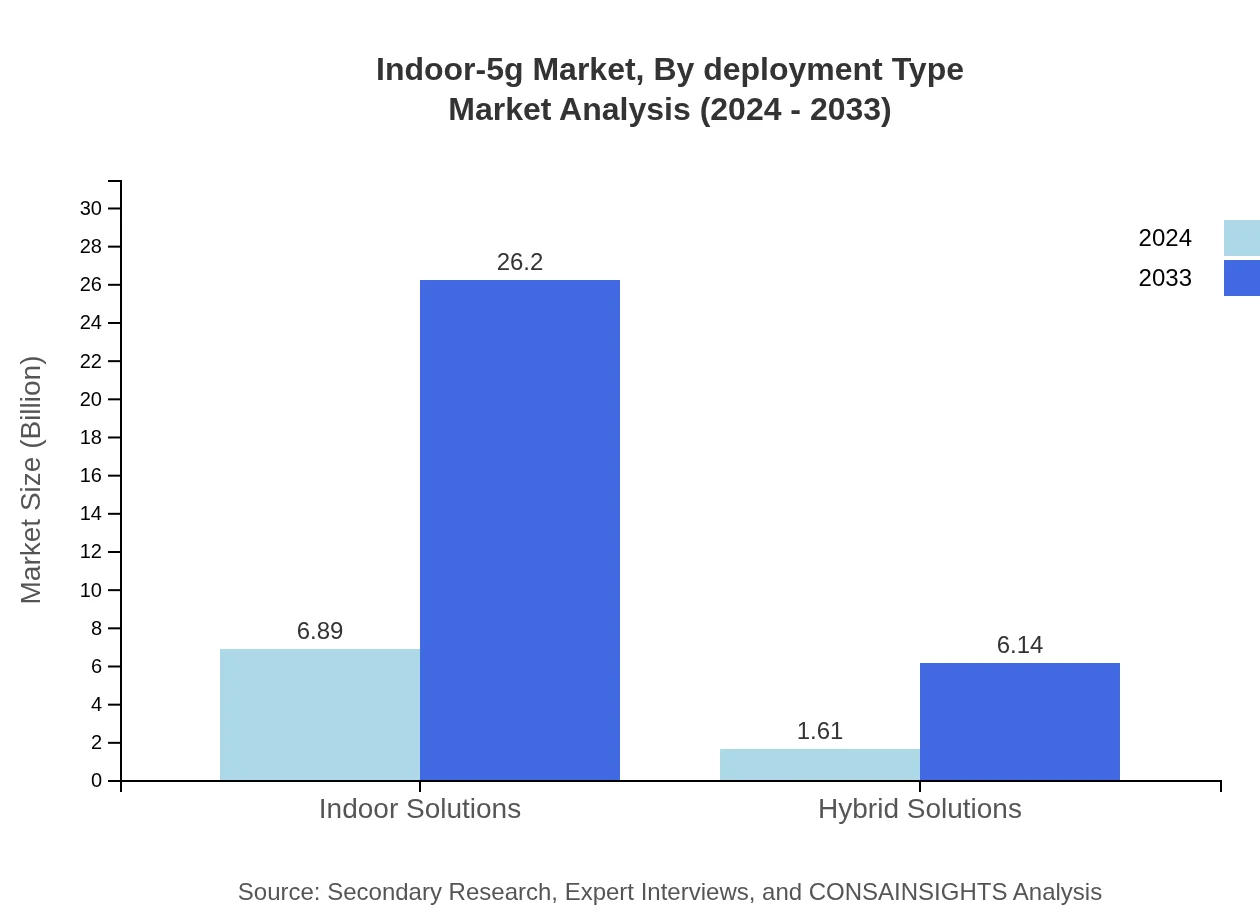
Deployment types are generally categorized into Indoor Solutions and Hybrid Solutions. Indoor Solutions dominate the market with advanced integration capabilities, while Hybrid Solutions offer flexible deployments balancing between indoor and outdoor network needs to deliver optimized performance in varied environments.
Indoor-5g Market Analysis By Service
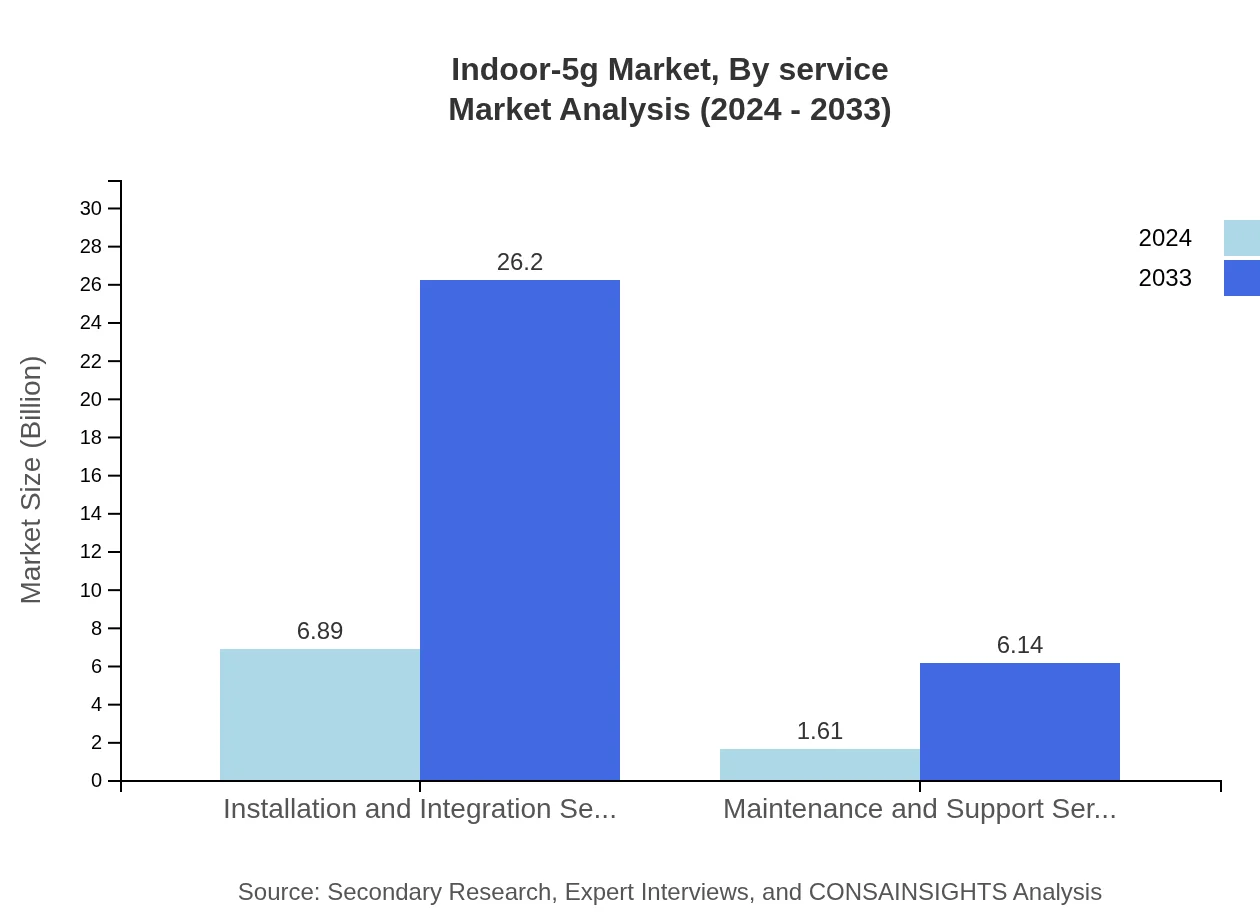
Service segmentation involves Small Cells, Distributed Antenna Systems (DAS), and Lightweight Architecture. These service models are critical in boosting network capacity and signal reliability, especially in complex indoor settings. Their performance improvements are closely linked with consumer demand and technological innovation.
Indoor-5g Market Analysis By Verticals
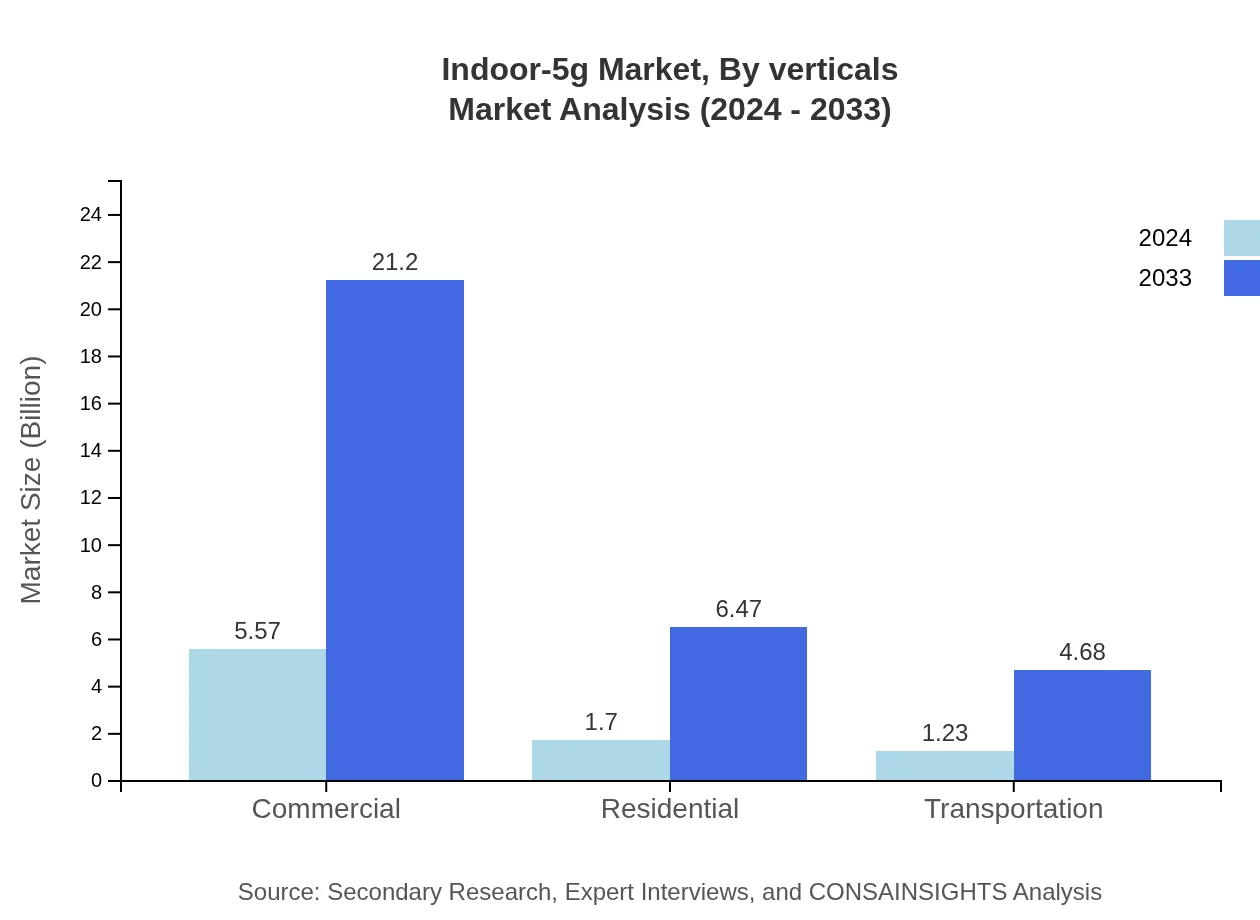
Vertical segmentation covers Retail, Healthcare, Education, and other industries. Each vertical harnesses the benefits of Indoor-5g to enhance operational efficacy through improved data connectivity, energy management, and smart automation across diverse applications.
Indoor-5g Market Trends and Future Forecast
Tell us your focus area and get a customized research report.
Global Market Leaders and Top Companies in Indoor-5g Industry
Innovative Connect Inc.:
A pioneer in Indoor-5g solutions, Innovative Connect Inc. leads the market through cutting-edge technology deployments and strategic partnerships. They are well-known for their robust R&D initiatives and comprehensive service offerings tailored for diverse verticals.NextGen Networks:
NextGen Networks is a technology leader recognized for its innovative network strategies and seamless integration services. Their focus on sustainable and scalable Indoor-5g solutions has earned them a prominent position in the highly competitive market landscape.UltraLink Systems:
UltraLink Systems stands out with its advanced indoor connectivity platforms, which cater to both commercial and residential sectors. Their commitment to quality performance and continuous technological upgrades sets a benchmark in the industry.We're grateful to work with incredible clients.









FAQs
How can the indoor-5g report help align our marketing strategy with customer adoption trends?
The indoor-5G market is projected to grow from $8.5 billion in 2024 to significant heights by 2033, with a CAGR of 15.2%. Understanding this trend helps tailor marketing strategies to meet evolving customer needs, ensuring alignment with rapidly adopting technologies.
What product features are in highest demand according to the indoor-5g trends?
Currently, features such as installation and integration services dominate demand, projected to grow to $26.2 billion by 2033. Other high-demand areas include small cells and distributed antenna systems, indicating a focus on robust connectivity solutions for indoor environments.
Which regions offer the best market entry and expansion opportunities in the indoor-5g industry?
North America shows the highest market potential, expected to reach $11.43 billion by 2033, followed by Europe at $8.68 billion. Asia Pacific and Latin America also offer growth opportunities, with projected increases in market size over the coming years.
What emerging technologies and innovations are shaping the indoor-5g market?
Innovations in small cell technology and distributed antenna systems significantly influence the indoor-5G landscape, providing enhanced connectivity. These technologies will see substantial growth, with solutions expected to redefine how indoor connectivity is achieved and implemented.
Does the report include competitive landscape and market share analysis?
Yes, the indoor-5G report encompasses a detailed competitive landscape analysis, highlighting key players and their respective market shares. This provides insights that are crucial for organizations planning to invest or establish a foothold in this rapidly evolving sector.
How can executives use the report to evaluate investment risks and ROI?
Executives can leverage market size data and projected growth rates to evaluate potential ROI in the indoor-5G sector. With insights into market trends, regional opportunities, and customer adoption, they can make informed investment decisions.
What is the market size of indoor-5g?
The indoor-5G market is valued at $8.5 billion in 2024, with a projected CAGR of 15.2%, indicating significant growth potential through 2033, as businesses increasingly adopt advanced connectivity solutions.
What are the segment data insights for indoor-5g?
Segments like installation and integration services lead with $6.89 billion in 2024, projected to grow to $26.2 billion by 2033. Small cells, retail, and indoor solutions also represent strong segments with considerable shares and growth forecasts.