
Reports >
Life Sciences
>
Insulin Infusion Pumps Market Report

Insulin Infusion Pumps Market Report
First published: 22 October 2024 | Last updated: 25 May 2026 | Report Code: insulin-infusion-pumps
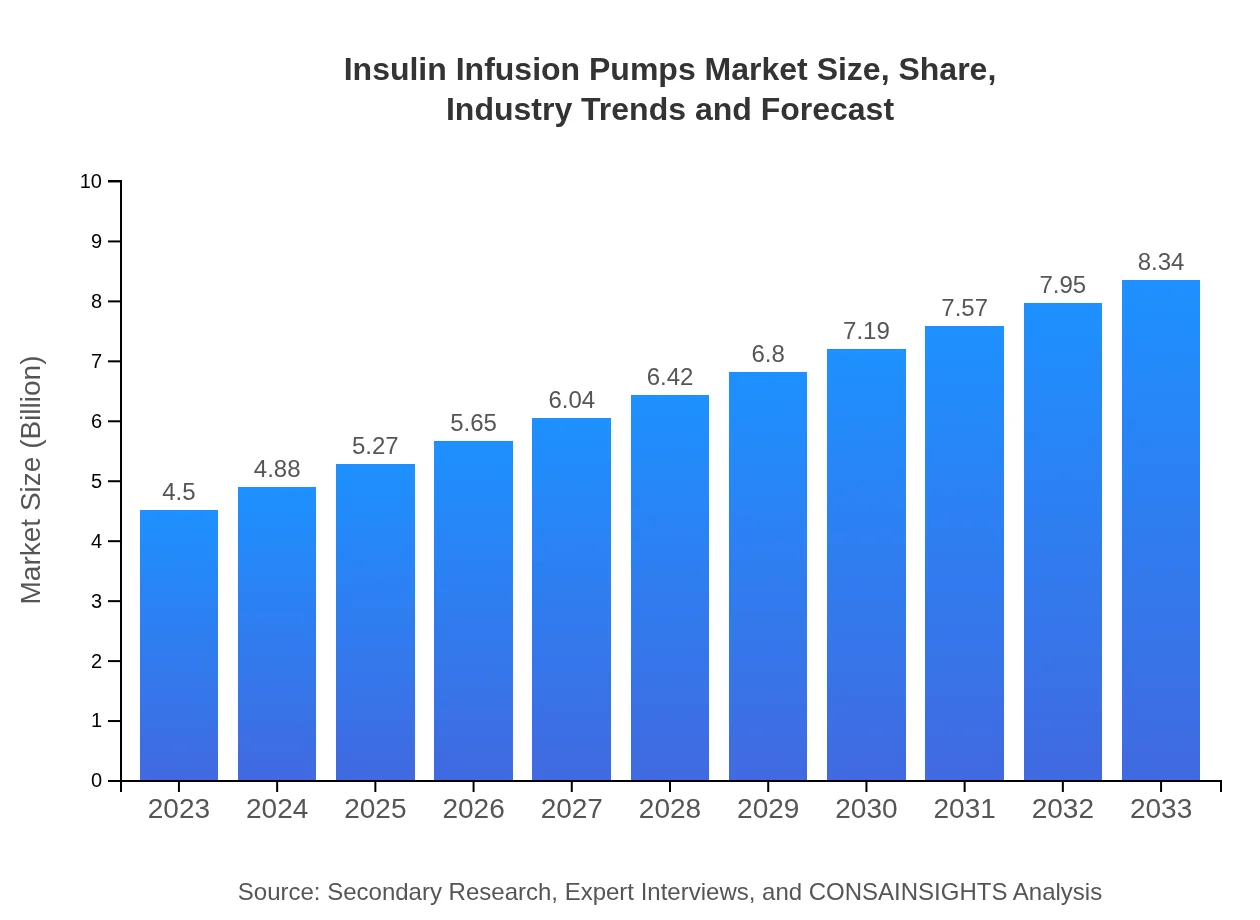
Insulin Infusion Pumps Market — USD $4.5 Billion in 2023, Growing to USD 8.34null by 2033 at 6.2% CAGR
This report provides an extensive analysis of the insulin infusion pumps market, encompassing key insights, market size estimates, growth forecasts, and trends from 2023 to 2033.
Key Takeaways
- Global market expands from $4.50 Billion in 2023 to $8.34 Billion in 2033 at a 6.2% CAGR, reflecting steady demand for insulin delivery systems.
- Europe is largest regional market, while no single fastest-growing region is stated because regional CAGR differences remain within 0.15 percentage points.
- Europe is the largest region, increasing from $1.52 Billion in 2023 to $2.82 Billion in 2033, highlighting strong regional adoption.
- North America grows from $1.51 Billion to $2.80 Billion across the forecast, indicating sustained market investment.
- Innovation in automated delivery and mobile integration drives product differentiation and industry competition among Medtronic, Tandem Diabetes Care, Insulet Corporation, Roche, and Ypsomed.
Insulin Infusion Pumps Market Report — Executive Summary
Europe remains largest market by forecast-period value, while no single fastest-growing region is stated because top regional growth rates are separated by less than 0.15 percentage points. Demand for insulin infusion pumps is supported by rising diabetes prevalence and expanding adoption of advanced delivery systems. Market size increases from $4.50 Billion in 2023 to $8.34 Billion by 2033, at a 6.2% CAGR across 2023 to 2033. Key trends include growth in automated delivery technology, tighter integration with mobile platforms, and emphasis on personalized dosing. Europe stands out as the largest regional market, while other markets show meaningful gains. Leading manufacturers such as Medtronic, Tandem Diabetes Care, Insulet Corporation, Roche and Ypsomed remain active in product launches and distribution strategies. The report examines segmentation by device type, technology, end user, application and distribution channel, and assesses regulatory and reimbursement dynamics. Findings draw on expert interviews, company literature and cross-validated secondary sources to provide actionable insights for product development, market entry and investment decisions.
Key Growth Drivers
- Rising global diabetes prevalence increasing demand for continuous insulin delivery solutions.
- Technological advances in automated delivery and device miniaturization improving usability and compliance.
- Greater integration with mobile health platforms enabling remote monitoring and personalized therapy adjustments.
- Supportive reimbursement policies in established healthcare systems facilitating wider hospital and homecare adoption.
| Metric | Value |
|---|---|
| Study Period | 2023 - 2033 |
| 2023 Market Size | $4.50 Billion |
| CAGR (2023-2033) | 6.2% |
| 2033 Market Size | $8.34 Billion |
| Top Companies | Medtronic , Tandem Diabetes Care, Insulet Corporation, Roche, Ypsomed |
| Published Date | 22 October 2024 |
| Last Modified Date | 25 May 2026 |
Insulin Infusion Pumps Market Overview
Customize Insulin Infusion Pumps Market Report market research report
- ✔ Get in-depth analysis of Insulin Infusion Pumps market size, growth, and forecasts.
- ✔ Understand Insulin Infusion Pumps's regional dynamics and industry-specific trends.
- ✔ Identify potential applications, end-user demand, and growth segments in Insulin Infusion Pumps
What is the Market Size & CAGR of Insulin Infusion Pumps Market Report market in 2023?
Insulin Infusion Pumps Industry Analysis
Insulin Infusion Pumps Market Segmentation and Scope
Tell us your focus area and get a customized research report.
Insulin Infusion Pumps Market Report Market Analysis Report by Region
Europe Insulin Infusion Pumps Market Report:
Europe is largest regional market, rising from $1.52 Billion in 2023 to $2.82 Billion in 2033. Growth is supported by established clinical pathways, reimbursement frameworks and uptake of next-generation pumps across hospital and homecare settings.Asia Pacific Insulin Infusion Pumps Market Report:
Asia Pacific grows from $0.8 Billion in 2023 to $1.47 Billion in 2033. 8 Billion in 2023 to $1.47 Billion in 2033, driven by increasing diabetes incidence, expanding healthcare access and rising awareness of insulin pump benefits, alongside gradual technology adoption.North America Insulin Infusion Pumps Market Report:
North America grows from $1.51 Billion in 2023 to $2.8 Billion in 2033. Regional demand reflects advanced healthcare infrastructure, reimbursement support and strong clinical adoption of automated delivery systems and connected device solutions.South America Insulin Infusion Pumps Market Report:
Latin America grows from $0.29 Billion in 2023 to $0.53 Billion in 2033. Market expansion is linked to growing demand for diabetes management solutions, improving healthcare services and increasing product availability in urban centers.Middle East & Africa Insulin Infusion Pumps Market Report:
Middle East and Africa grows from $0.38 Billion in 2023 to $0.71 Billion in 2033. Growth factors include rising diabetes rates, enhanced healthcare provision and gradual adoption of advanced insulin delivery systems.Tell us your focus area and get a customized research report.
Research Methodology
Insulin Infusion Pumps Market Analysis By Type
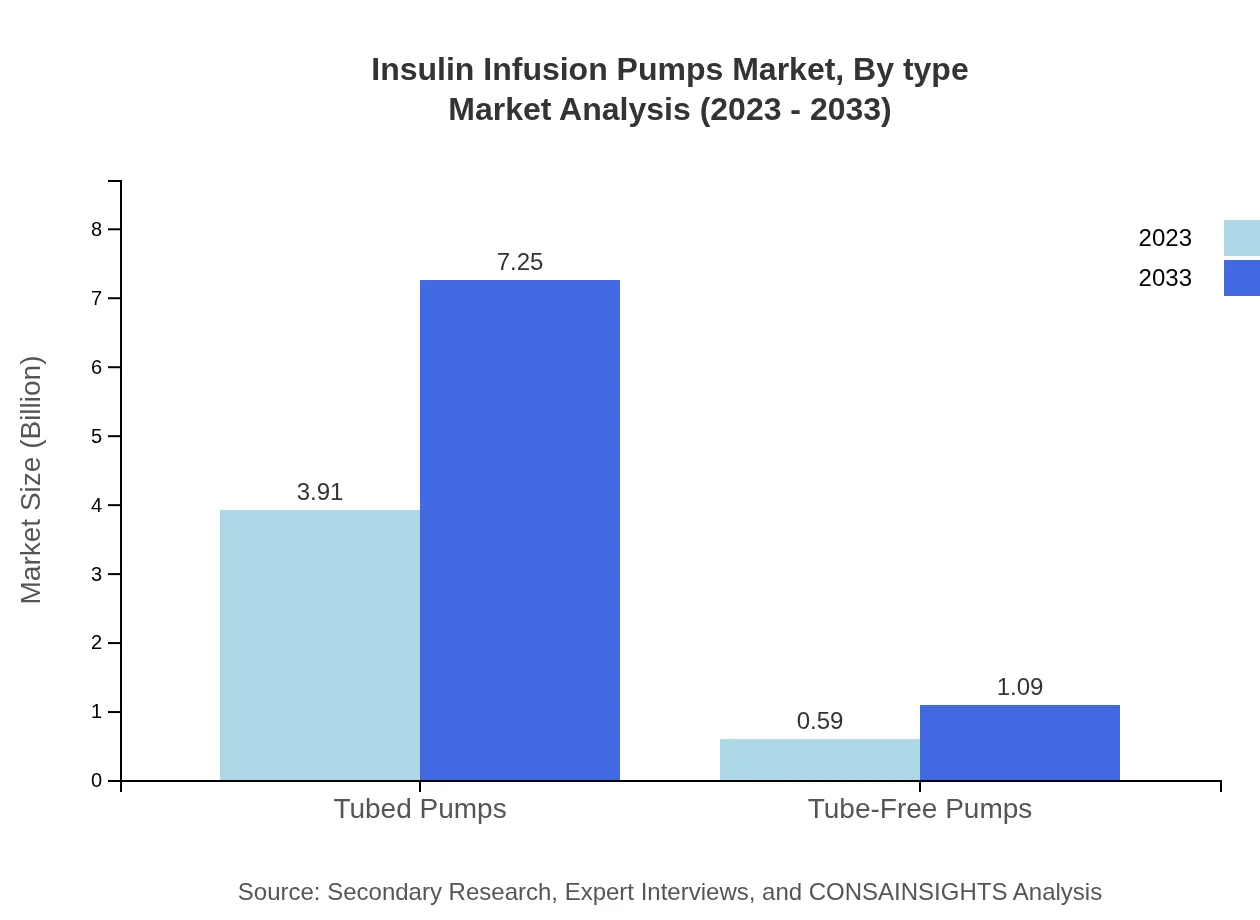
The segment analysis shows that Tubed Pumps dominate the market, projected to grow from USD 3.91 billion in 2023 to USD 7.25 billion by 2033. They represent approximately 86.95% of the market share, with their capability for efficient insulin delivery being a major contributor to their popularity. Tube-Free Pumps, while smaller in market size, are gaining traction with a projected growth from USD 0.59 billion in 2023 to USD 1.09 billion by 2033, accounting for 13.05% of the market share.
Insulin Infusion Pumps Market Analysis By Technology
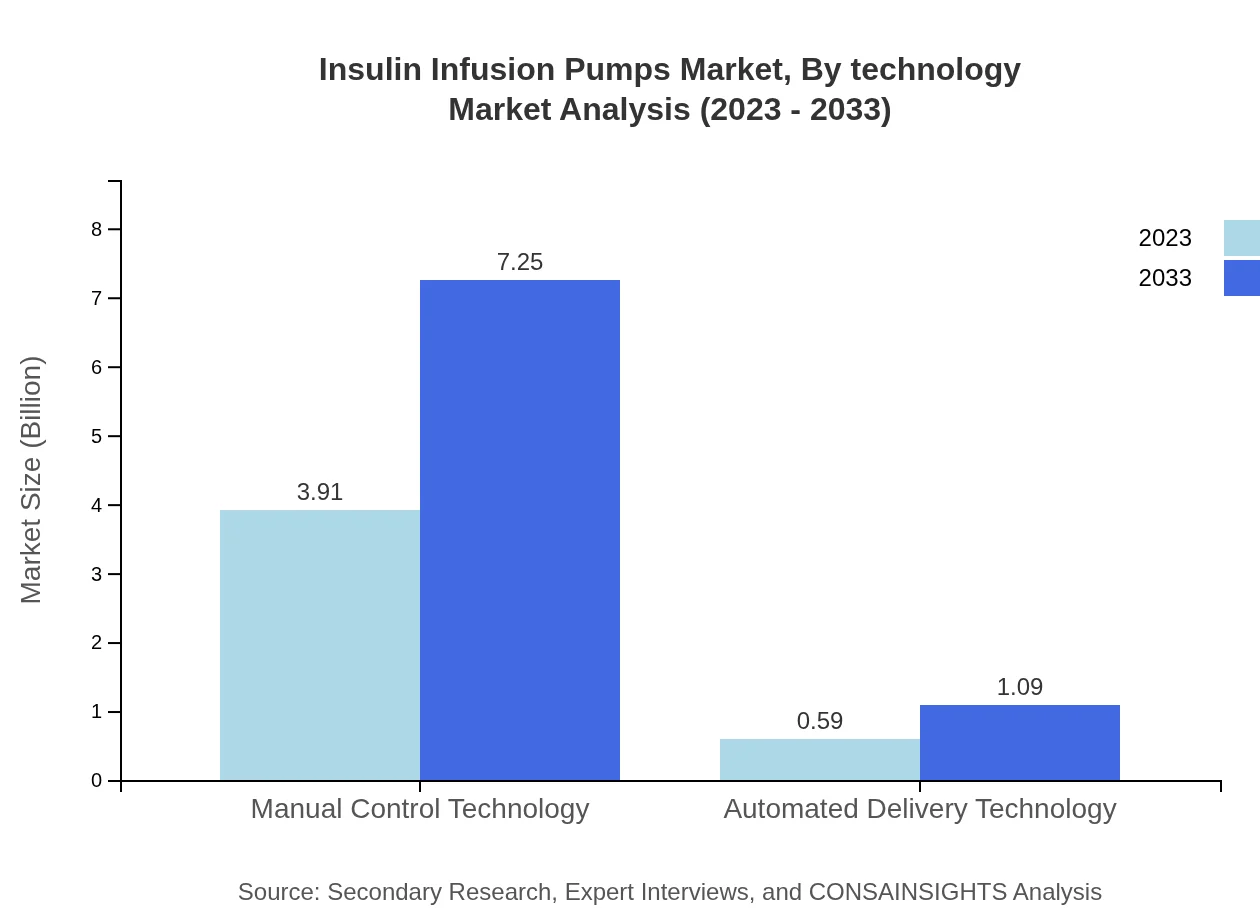
The technology utilized in insulin pumps is categorized into Manual Control Technology and Automated Delivery Technology. Manual Control Technology dominates the market with a current size of USD 3.91 billion, expected to grow at a consistent rate to USD 7.25 billion by 2033. In contrast, Automated Delivery Technology is rapidly emerging with a size expected to reach USD 1.09 billion by 2033 from USD 0.59 billion in 2023, highlighting innovations in diabetes management.
Insulin Infusion Pumps Market Analysis By Application
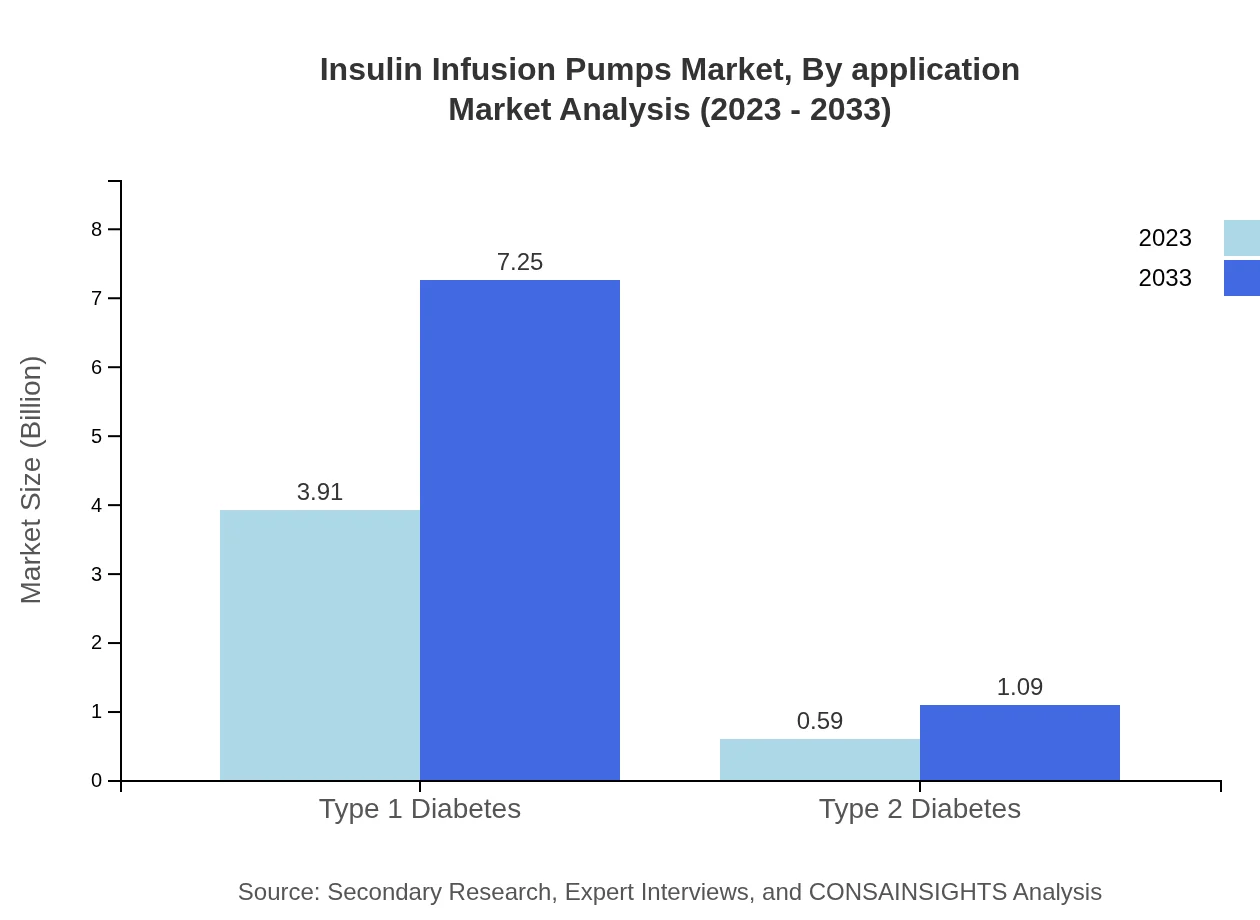
The analysis shows that Type 1 Diabetes applications dominate the sector, contributing USD 3.91 billion in 2023, forecasted to grow to USD 7.25 billion by 2033. Conversely, Type 2 Diabetes applications remain a secondary focus, expanding from USD 0.59 billion to USD 1.09 billion during the same period, reflecting the market's response to the growing Type 2 Diabetic population.
Insulin Infusion Pumps Market Analysis By End User
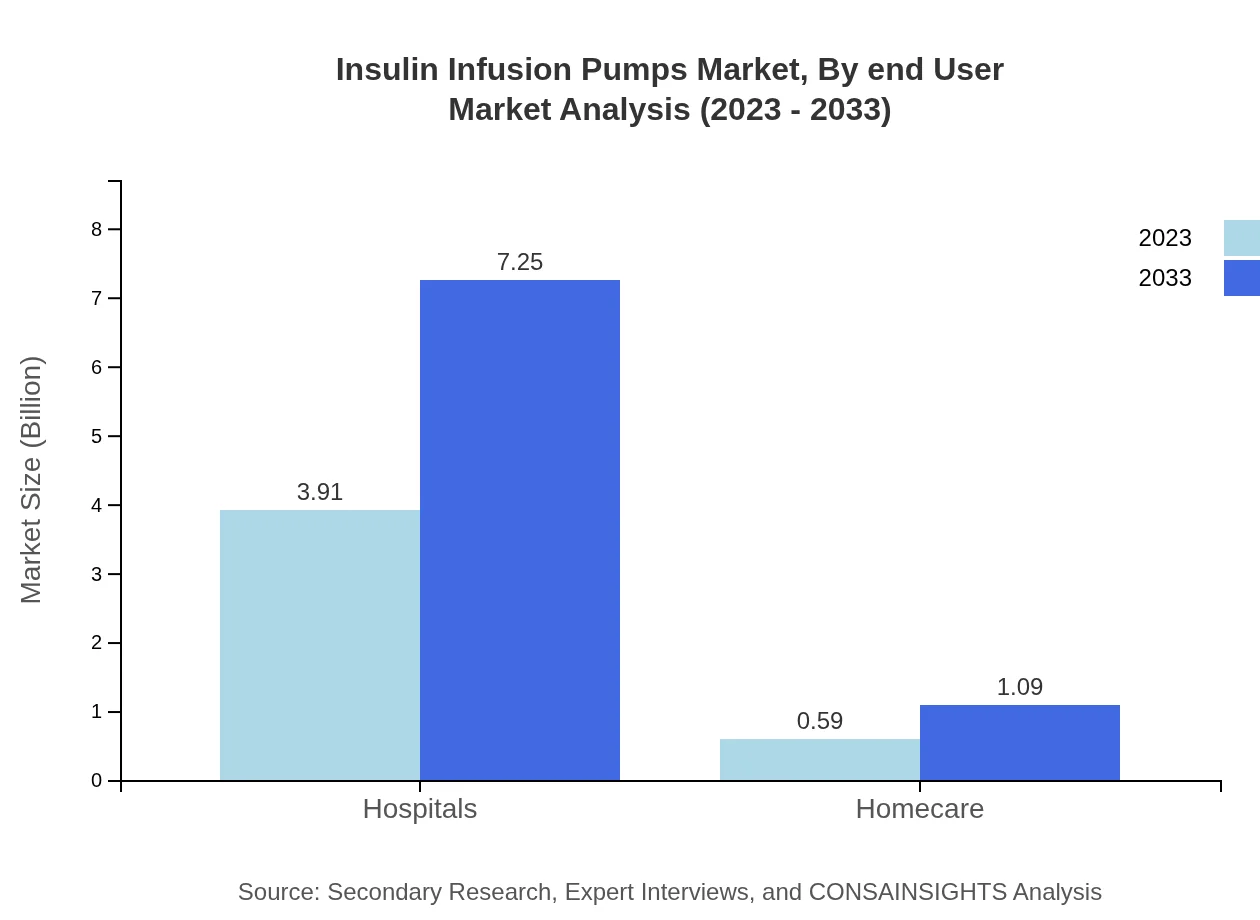
The healthcare segment, particularly Hospitals, dominates the insulin infusion pumps market, with an expected increase from USD 3.91 billion in 2023 to USD 7.25 billion by 2033. In Homecare settings, the market is expected to grow from USD 0.59 billion to USD 1.09 billion over the next decade, indicating a shift towards self-management of diabetes at home.
Insulin Infusion Pumps Market Analysis By Distribution Channel
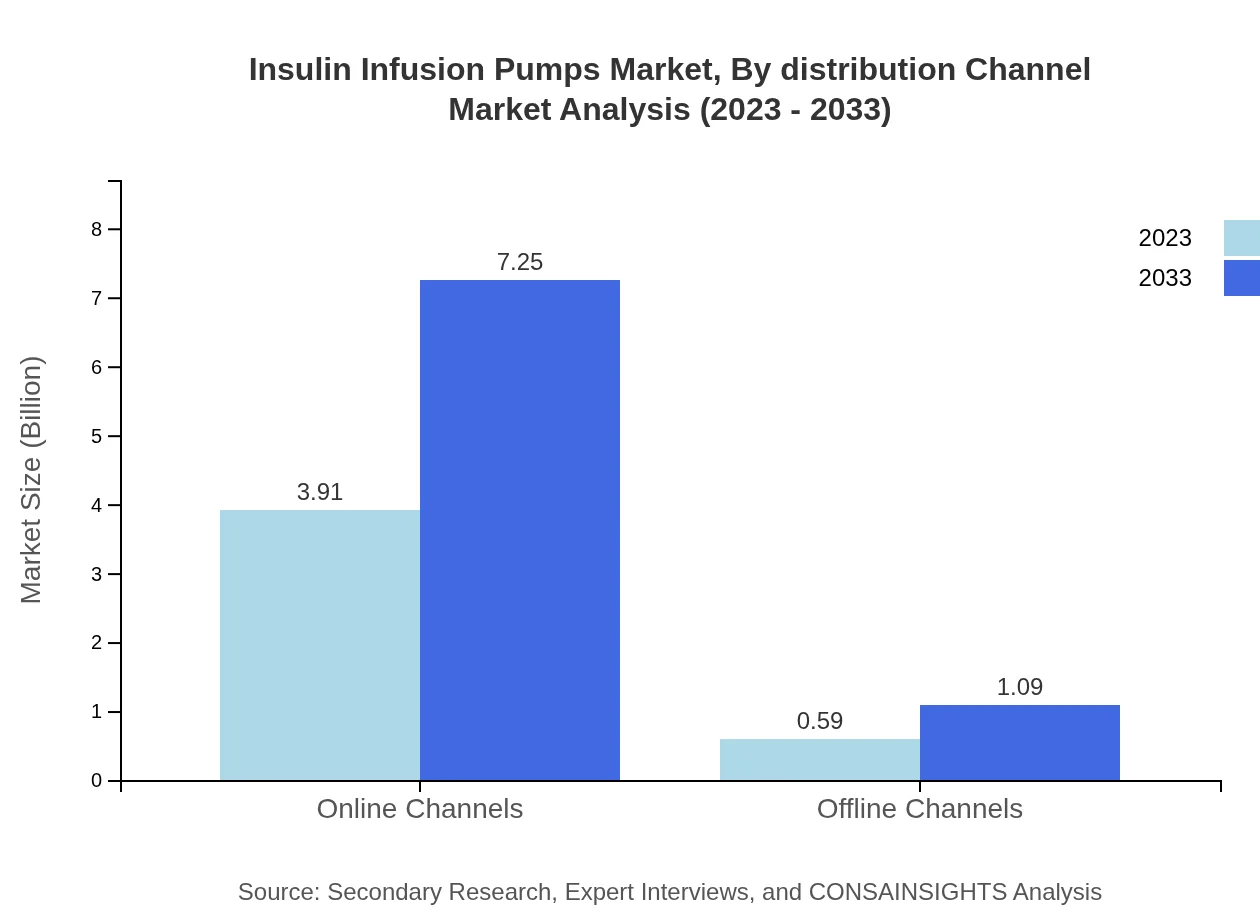
Online distribution channels dominate, with a market size of USD 3.91 billion anticipated to reach USD 7.25 billion by 2033. Offline channels comprise USD 0.59 billion in market size, increasing to USD 1.09 billion, showcasing the diverse approaches to market outreach and consumer accessibility.
Insulin Infusion Pumps Market Trends and Future Forecast
Tell us your focus area and get a customized research report.
Global Market Leaders and Top Companies in Insulin Infusion Pumps Industry
Medtronic :
Medtronic is a leader in diabetes management solutions, known for its innovative insulin delivery systems such as the MiniMed product line that integrates continuous glucose monitoring with insulin pumps.Tandem Diabetes Care:
Tandem is recognized for its t:slim X2 insulin pump, which features a touch screen and Bluetooth capabilities, enhancing user engagement and insulin management.Insulet Corporation:
Insulet manufactures the OmniPod Insulin Management System, a tubeless insulin pump that offers flexibility and convenience for users in managing their diabetes.Roche:
Roche is involved in developing integrated diabetes management systems that complement insulin pumps with blood sugar monitoring technologies.Ypsomed:
Ypsomed specializes in developing advanced injection systems, including insulin pumps that focus on ease of use and patient autonomy.We're grateful to work with incredible clients.








FAQs
What is the market size of insulin infusion pumps in 2023?
The market size for insulin infusion pumps in 2023 is $4.50 Billion, based on the provided market estimates for that year.
How big will the market be in 2033?
By 2033 the market is reported to reach $8.34 Billion, reflecting projected expansion over the ten-year forecast period.
What is CAGR for the forecast period?
The compound annual growth rate for the forecast period 2023 to 2033 is 6.2%, as specified in the provided data.
Is there a single fastest Growing region in the Insulin Infusion Pumps Market Report market?
No single fastest-growing region is stated for the Insulin Infusion Pumps Market Report market because the top regional implied CAGR values are within 0.15 percentage points of each other, making the ranking too close to call reliably.
Which companies lead the insulin infusion pumps market?
Top companies listed include Medtronic, Tandem Diabetes Care, Insulet Corporation, Roche and Ypsomed, noted for product development and market presence.
What are common deployment settings for these pumps?
Deployment settings include hospitals and homecare, reflecting use across clinical and patient-managed environments as indicated in the segmentation facts.
How do technology trends affect the market?
Advances such as automated delivery technology and improved device integration drive product differentiation, enhance adherence and expand clinical use cases.
What research methods supported the report findings?
Research relied on primary interviews with industry experts, secondary company reports and publications, plus data triangulation and internal validation.