

Positron Emission Tomography Market Report
First published: 22 October 2024 | Last updated: 25 May 2026 | Report Code: positron-emission-tomography
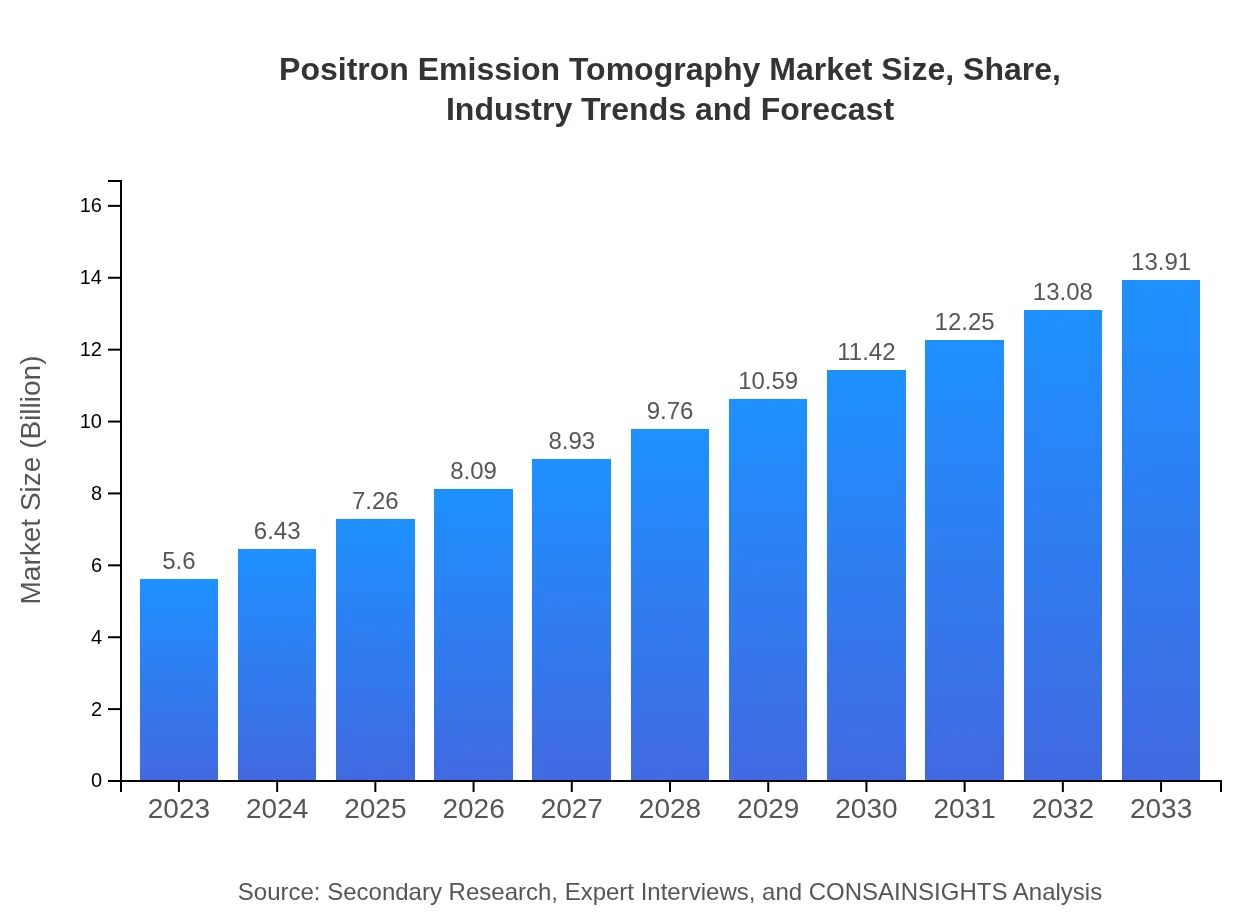
Positron Emission Tomography Market — USD 5.6 billion in 2023, Growing to USD 13.91B by 2033 at 9.2% CAGR
This report provides a comprehensive analysis of the Positron Emission Tomography (PET) market, covering market size, growth trends, regional insights, and advancements in technology from 2023 to 2033.
Key Takeaways
- Global market expands from $5.60 Billion in 2023 to $13.91 Billion in 2033 at a 9.2% CAGR.
- North America is largest regional market, while no single fastest-growing region is stated because regional CAGR differences remain within 0.15 percentage points.
- Europe and Asia Pacific show notable gains, with Europe rising from $1.38 Billion to $3.42 Billion and Asia Pacific from $1.09 Billion to $2.70 Billion.
- Leading vendors include Siemens Healthineers, General Electric (GE) Healthcare, Philips Healthcare, Canon Medical Systems, and Elekta AB.
- Adoption is driven by clinical demand in oncology and neurology, advances in imaging technology, and expanding radiopharmaceutical development.
Positron Emission Tomography Market Report — Executive Summary
North America remains largest market by forecast-period value, while no single fastest-growing region is stated because top regional growth rates are separated by less than 0.15 percentage points. The Positron Emission Tomography market is projected to grow from $5.60 Billion in 2023 to $13.91 Billion by 2033, registering a 9.2% CAGR between 2023 and 2033. Demand is supported by rising diagnostic use in oncology, neurology, and cardiology, alongside improvements in scanner technology and radiopharmaceuticals. Investments in healthcare infrastructure and aging populations contribute to uptake across regions. North America is the largest regional market, with its value increasing from $2.08 Billion in 2023 to $5.16 Billion in 2033. Major suppliers such as Siemens Healthineers, General Electric (GE) Healthcare, Philips Healthcare, Canon Medical Systems, and Elekta AB shape competitive dynamics. Market growth is tempered in some areas by reimbursement constraints and capital costs for imaging systems. The report addresses segmentation across product, technology, application, end user, and distribution channels, and relies on expert interviews and secondary sources to validate findings and trends.
Key Growth Drivers
- Rising clinical demand for PET imaging in oncology, neurology, and cardiology increases equipment and radiotracer use.
- Technological improvements in digital PET systems and radiopharmaceuticals enhance diagnostic precision and operational efficiency.
- Expanding healthcare infrastructure and investments support wider deployment of PET scanners in hospitals and diagnostic centers.
- Aging populations and higher prevalence of chronic diseases drive long-term demand for advanced imaging services.
- Research spending and development of new tracers expand clinical applications and improve scan sensitivity.
| Metric | Value |
|---|---|
| Study Period | 2023 - 2033 |
| 2023 Market Size | $5.60 Billion |
| CAGR (2023-2033) | 9.2% |
| 2033 Market Size | $13.91 Billion |
| Top Companies | Siemens Healthineers, General Electric (GE) Healthcare, Philips Healthcare, Canon Medical Systems, Elekta AB |
| Published Date | 22 October 2024 |
| Last Modified Date | 25 May 2026 |
Positron Emission Tomography Market Overview
Customize Positron Emission Tomography Market Report market research report
- ✔ Get in-depth analysis of Positron Emission Tomography market size, growth, and forecasts.
- ✔ Understand Positron Emission Tomography's regional dynamics and industry-specific trends.
- ✔ Identify potential applications, end-user demand, and growth segments in Positron Emission Tomography
What is the Market Size & CAGR of Positron Emission Tomography Market Report market in 2023?
Positron Emission Tomography Industry Analysis
Positron Emission Tomography Market Segmentation and Scope
Tell us your focus area and get a customized research report.
Positron Emission Tomography Market Report Market Analysis Report by Region
Europe Positron Emission Tomography Market Report:
Europe grows from $1.38 Billion in 2023 to $3.42 Billion in 2033. Expansion is supported by growing use of PET in oncology and neurology, ongoing investments in imaging technology, and enhanced diagnostic capabilities at hospitals and centers.Asia Pacific Positron Emission Tomography Market Report:
Asia Pacific grows from $1.09 Billion in 2023 to $2.7 Billion in 2033. Demand is driven by expanding healthcare capacity, rising incidence of chronic diseases, and gradual adoption of advanced imaging systems and radiotracers.North America Positron Emission Tomography Market Report:
North America is largest regional market, rising from $2.08 Billion in 2023 to $5.16 Billion in 2033. Regional growth is propelled by widespread clinical adoption, established healthcare infrastructure, and investments in advanced PET scanners and radiopharmaceutical research.South America Positron Emission Tomography Market Report:
Latin America grows from $0.39 Billion in 2023 to $0.96 Billion in 2033. Market advancement reflects growing medical infrastructure, increasing diagnostic service availability, and uptake of PET imaging in regional hospitals and diagnostic centers.Middle East & Africa Positron Emission Tomography Market Report:
Middle East and Africa grows from $0.68 Billion in 2023 to $1.68 Billion in 2033. Progress is supported by investments in healthcare facilities, introduction of advanced imaging technologies, and increased focus on diagnostic services.Tell us your focus area and get a customized research report.
Research Methodology
Positron Emission Tomography Market Analysis By Product
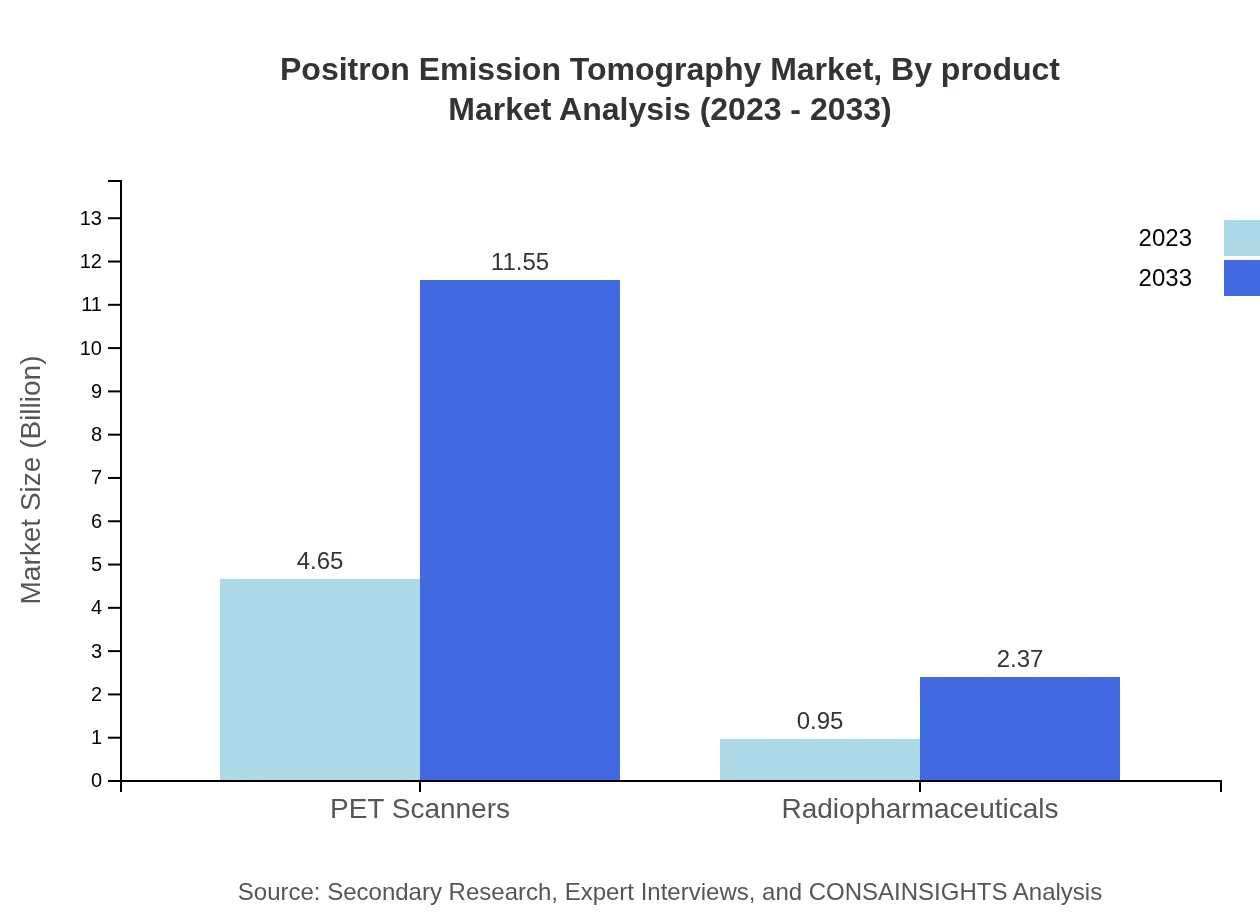
In the product segment, PET scanners dominate with a market size of $4.65 billion in 2023, projected to reach $11.55 billion by 2033. Radiopharmaceuticals, earning $0.95 billion in 2023, are expected to grow to $2.37 billion in the same timeframe, indicating significant reliance on both technology types for effective imaging.
Positron Emission Tomography Market Analysis By Application
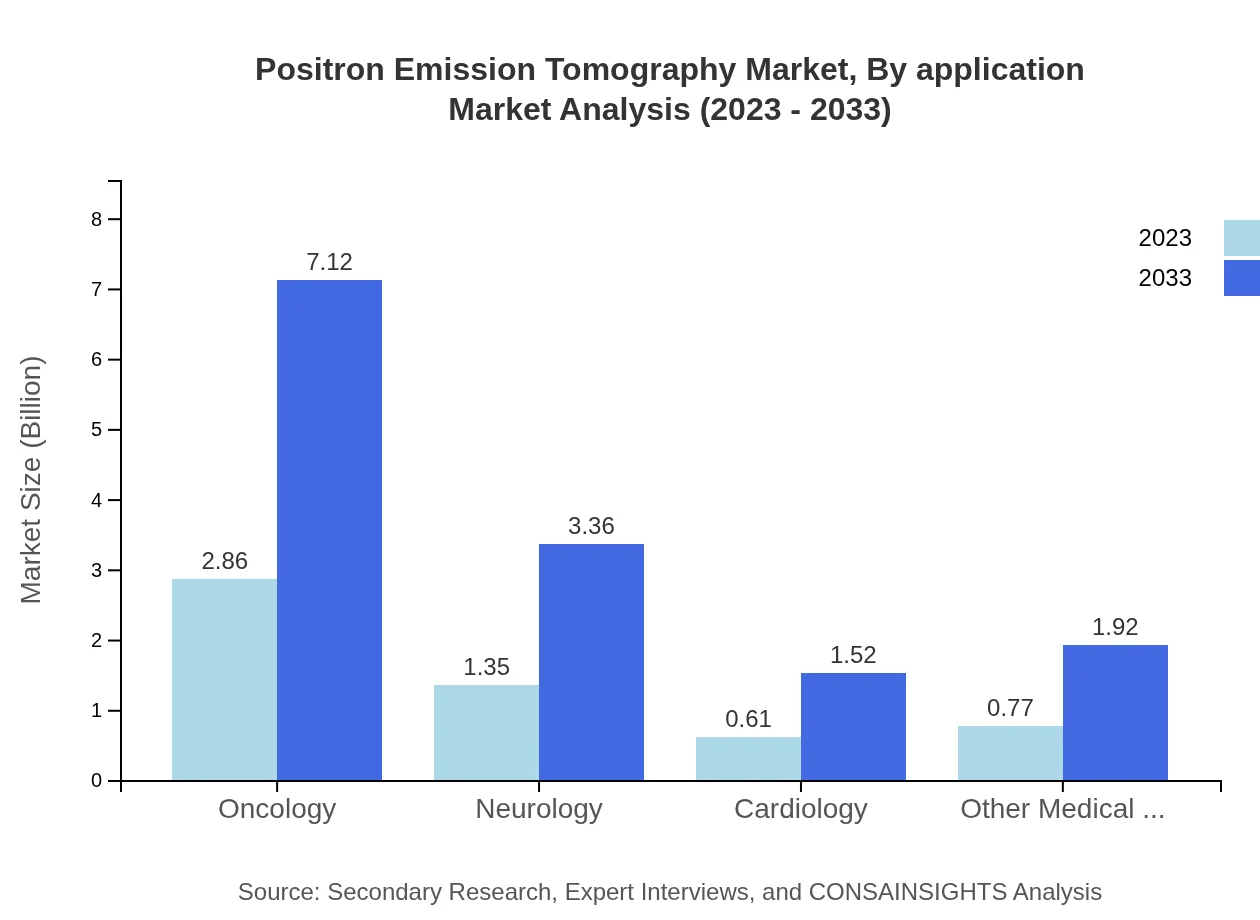
The application segment is led by oncology, which represented $2.86 billion in 2023 and is expected to reach $7.12 billion by 2033. Neurology follows with a market size of $1.35 billion, growing to $3.36 billion, reflecting the current trends in diagnostic imaging towards cancer and neurological diseases.
Positron Emission Tomography Market Analysis By End User
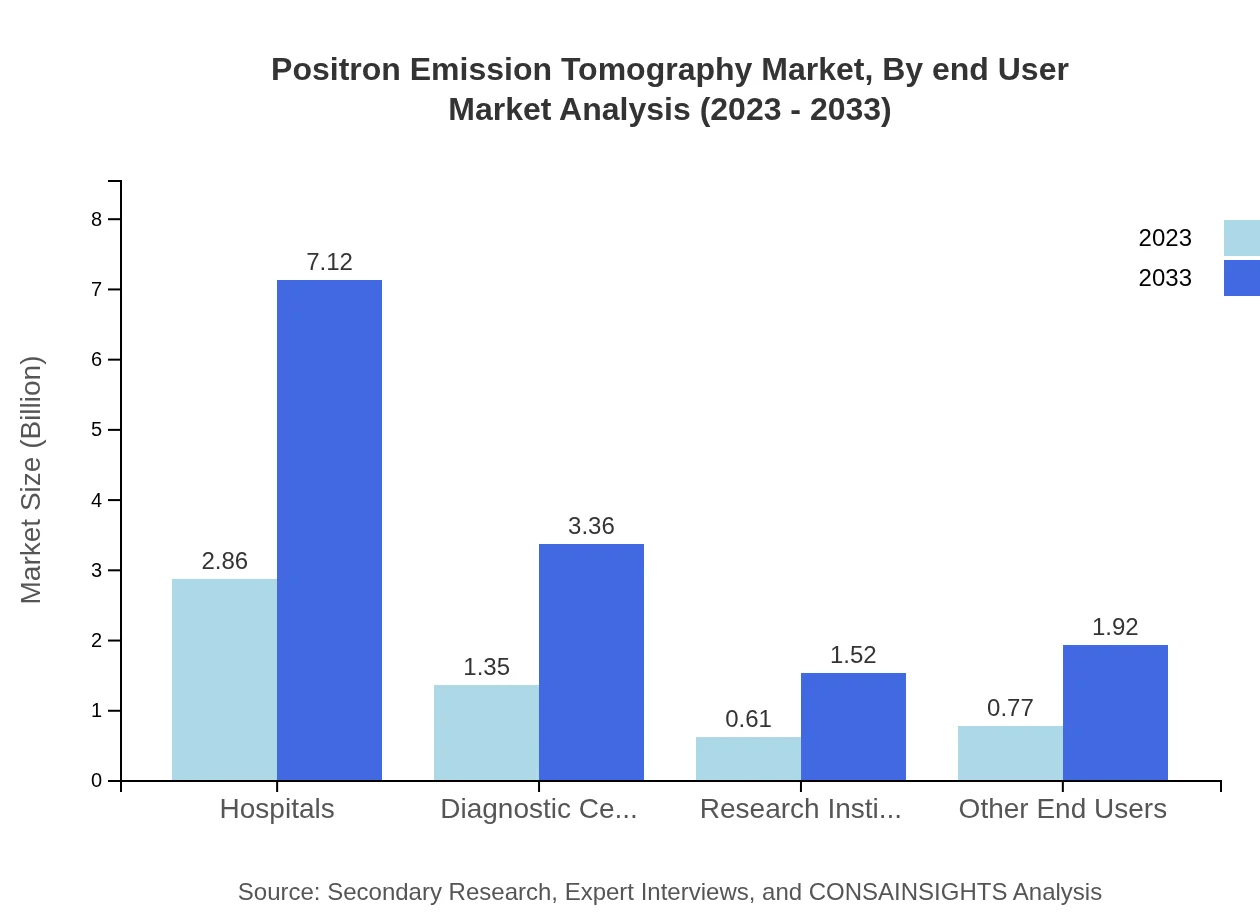
Hospitals hold a significant share in the end-user segment with a market size of $2.86 billion in 2023, anticipated to grow to $7.12 billion by 2033. Diagnostic centers also remain vital, showing growth from $1.35 billion to $3.36 billion, underlining their importance in providing accessible imaging solutions.
Positron Emission Tomography Market Analysis By Technology
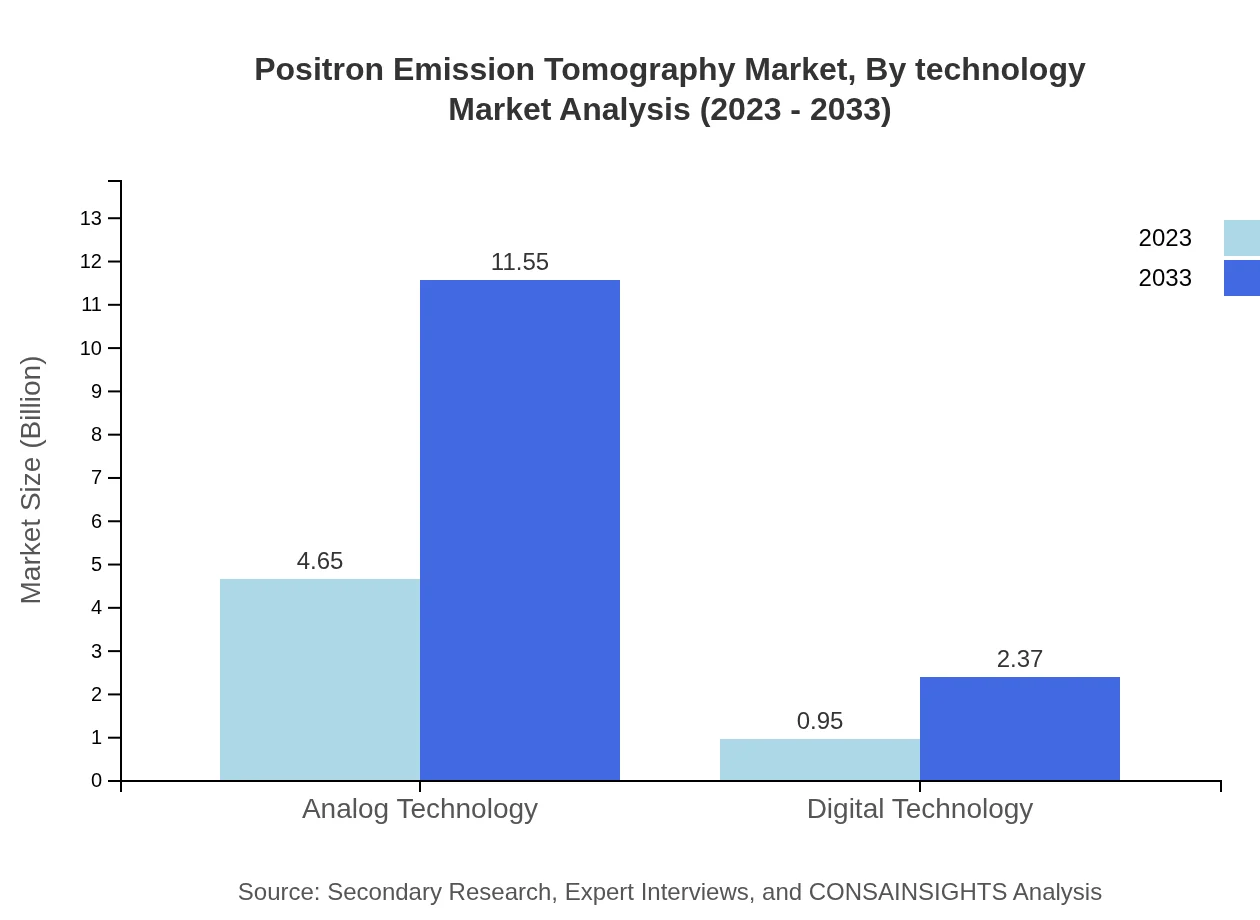
Digital technology within the PET market represents $0.95 billion, expected to grow to $2.37 billion by 2033, highlighting the shift towards advanced imaging technologies. Conversely, analog technology retains a consistent market share reflecting ongoing reliance on established systems.
Positron Emission Tomography Market Analysis By Distribution Channel
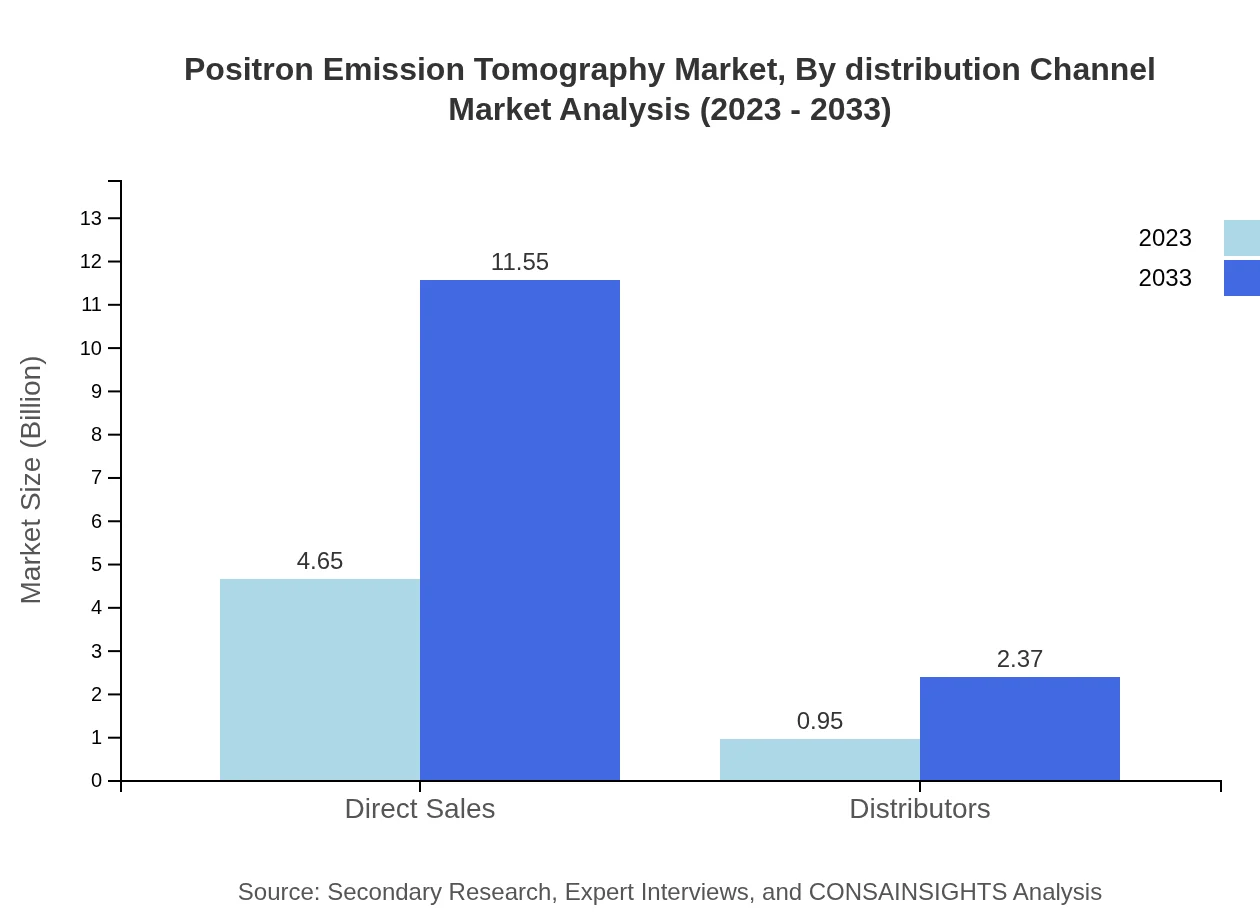
Direct sales dominate the distribution channel segment, with a market size of $4.65 billion in 2023, forecasted to reach $11.55 billion by 2033. Distributors also play a significant role, projected to grow from $0.95 billion to $2.37 billion, ensuring reach into various healthcare facilities.
Positron Emission Tomography Market Trends and Future Forecast
Tell us your focus area and get a customized research report.
Global Market Leaders and Top Companies in Positron Emission Tomography Industry
Siemens Healthineers:
Siemens Healthineers is a leading developer of medical imaging equipment, known for its innovative PET/CT systems that enhance image quality and diagnostic capabilities.General Electric (GE) Healthcare:
GE Healthcare specializes in medical technologies including PET systems, focusing on improving patient outcomes through state-of-the-art imaging solutions.Philips Healthcare:
Philips Healthcare is renowned for its advanced imaging technologies, including PET systems, significantly contributing to non-invasive diagnostic imaging.Canon Medical Systems:
Canon Medical Systems develops comprehensive imaging solutions, and their PET systems are pivotal in advancing diagnostic capabilities within the healthcare sector.Elekta AB:
Elekta focuses on providing innovative solutions in medical technology, enhancing the PET market's growth through advanced imaging capabilities.We're grateful to work with incredible clients.









FAQs
What is the market size of the Positron Emission Tomography market in 2023?
The market size in 2023 is $5.60 Billion as reported for the Positron Emission Tomography market.
How big will the market be in 2033?
By 2033 the market is projected to reach $13.91 Billion according to the provided forecast.
What is CAGR of the market for the forecast period?
The compound annual growth rate for 2023 to 2033 is 9.2% for the Positron Emission Tomography market.
Is there a single fastest Growing region in the Positron Emission Tomography Market Report market?
No single fastest-growing region is stated for the Positron Emission Tomography Market Report market because the top regional implied CAGR values are within 0.15 percentage points of each other, making the ranking too close to call reliably.
Which companies lead the Positron Emission Tomography market?
Top companies include Siemens Healthineers, General Electric (GE) Healthcare, Philips Healthcare, Canon Medical Systems, and Elekta AB.
What are primary growth drivers for the market?
Key drivers include increased use in oncology and neurology, imaging technology advances, radiopharmaceutical development, and expanding healthcare capacity.
How are segmentation categories defined in the report?
Segmentation covers product, technology, application, end user, and distribution channels with detailed subsegments for each category.
Who contributed to the research methodology?
Research included primary interviews with industry experts and secondary analysis of company reports and publications, followed by data triangulation.