

Myeloproliferative Disorders Mpd Treatment Market Report
First published: 15 October 2024 | Last updated: 25 May 2026 | Report Code: myeloproliferative-disorders-mpd-treatment
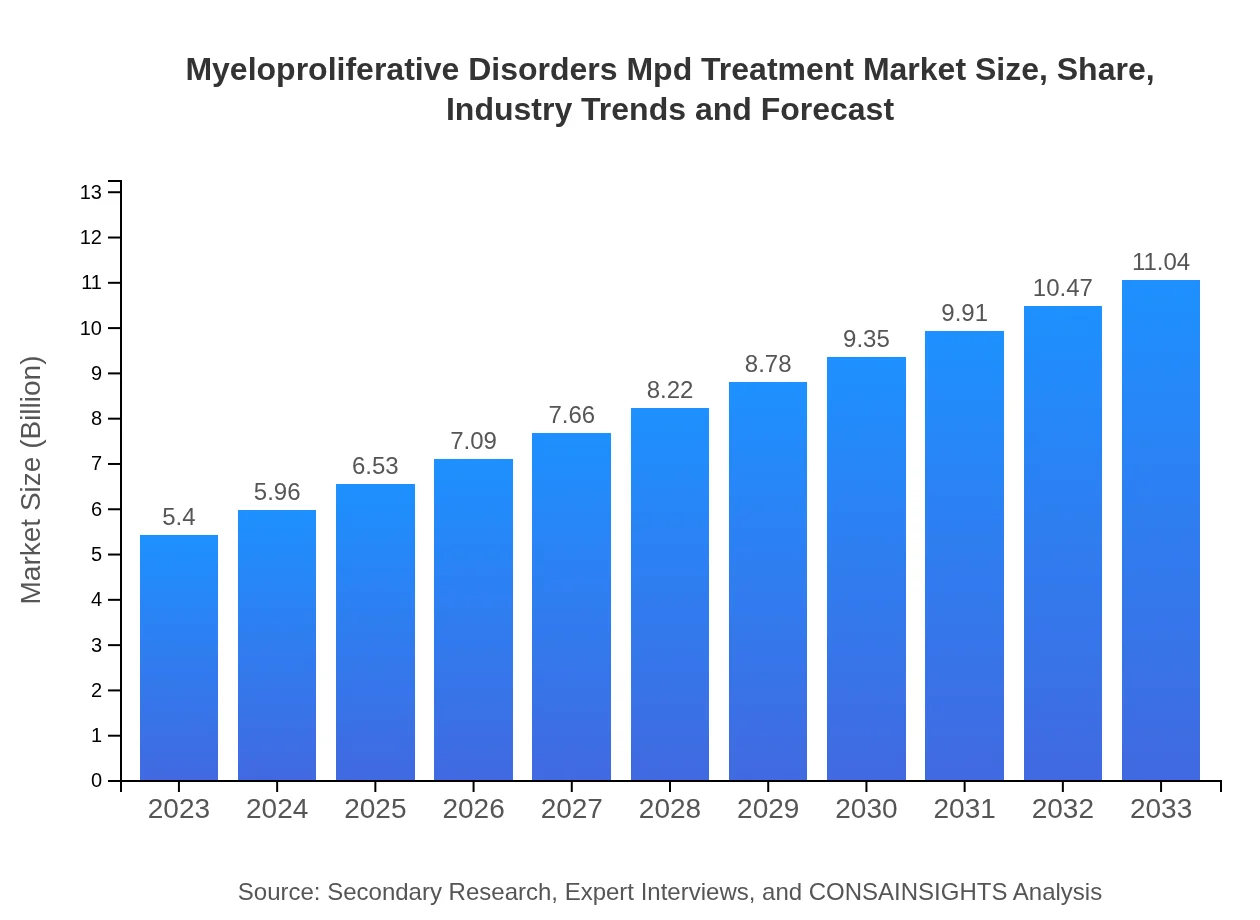
Myeloproliferative Disorders Mpd Treatment Market — USD 5.4 billion in 2023, Growing to USD 11.04B by 2033 at 7.2% CAGR
This report provides an in-depth analysis of the Myeloproliferative Disorders (MPD) treatment market, covering market trends, size, forecasts, and region-specific insights from 2023 to 2033.
Key Takeaways
- Global market expands from $5.40 Billion in 2023 to $11.04 Billion in 2033 at a 7.2% CAGR.
- North America is largest regional market, while no single fastest-growing region is stated because regional CAGR differences remain within 0.15 percentage points.
- North America is the largest region, rising from $2.05 Billion to $4.18 Billion over the forecast period.
- Regional growth is supported by advances in targeted therapies and improved diagnostic practices.
- Leading industry participants include Roche, Novartis, Bristol-Myers Squibb, Celgene, and Amgen.
- Treatment mix covers medications and therapeutic procedures with multiple administration routes and end-user settings.
Myeloproliferative Disorders Mpd Treatment Market Report — Executive Summary
North America remains largest market by forecast-period value, while no single fastest-growing region is stated because top regional growth rates are separated by less than 0.15 percentage points. The Myeloproliferative Disorders Mpd Treatment Market Report outlines steady expansion driven by improved detection, demographic shifts, and therapeutic innovation. Market value increases from $5.40 Billion in 2023 to $11.04 Billion by 2033, reflecting a 7.2% CAGR for 2023 to 2033. Demand growth is shaped by development of targeted treatments, investment from major biopharma firms such as Roche and Novartis, and broader access to care across hospitals, clinics, and home settings. The report covers segmentation by therapy, disease type, administration route, and end user, and evaluates regional dynamics with North America as the largest market. Methodology integrates expert interviews, company reports, and triangulated data to validate findings and highlight near-term trends and strategic considerations for stakeholders.
Key Growth Drivers
- Improved diagnostic capabilities leading to earlier detection and increased treatment uptake.
- Ongoing development of targeted therapies and biologics by major pharmaceutical companies.
- Rising prevalence of age-related hematologic conditions supporting long-term demand.
- Expansion of care delivery channels including hospitals, clinics, and home care models.
- Investment in clinical research and trial activity accelerating new therapy introductions.
| Metric | Value |
|---|---|
| Study Period | 2023 - 2033 |
| 2023 Market Size | $5.40 Billion |
| CAGR (2023-2033) | 7.2% |
| 2033 Market Size | $11.04 Billion |
| Top Companies | Roche, Novartis, Bristol-Myers Squibb, Celgene, Amgen |
| Published Date | 15 October 2024 |
| Last Modified Date | 25 May 2026 |
Myeloproliferative Disorders Mpd Treatment Market Overview
Customize Myeloproliferative Disorders Mpd Treatment Market Report market research report
- ✔ Get in-depth analysis of Myeloproliferative Disorders Mpd Treatment market size, growth, and forecasts.
- ✔ Understand Myeloproliferative Disorders Mpd Treatment's regional dynamics and industry-specific trends.
- ✔ Identify potential applications, end-user demand, and growth segments in Myeloproliferative Disorders Mpd Treatment
What is the Market Size & CAGR of Myeloproliferative Disorders Mpd Treatment Market Report market in 2023?
Myeloproliferative Disorders Mpd Treatment Industry Analysis
Myeloproliferative Disorders Mpd Treatment Market Segmentation and Scope
Tell us your focus area and get a customized research report.
Myeloproliferative Disorders Mpd Treatment Market Report Market Analysis Report by Region
Europe Myeloproliferative Disorders Mpd Treatment Market Report:
Europe grows from $1.32 Billion in 2023 to $2.69 Billion in 2033. Regional momentum is underpinned by widening diagnostic capacity, cross-border clinical collaborations, and regulatory pathways that support new therapy approvals.Asia Pacific Myeloproliferative Disorders Mpd Treatment Market Report:
Asia Pacific grows from $1.03 Billion in 2023 to $2.11 Billion in 2033. Growth drivers include improving healthcare access, increasing diagnostic reach, and rising investment in biopharma research and localized treatment delivery.North America Myeloproliferative Disorders Mpd Treatment Market Report:
North America is largest regional market, rising from $2.05 Billion in 2023 to $4.18 Billion in 2033. This expansion reflects strong clinical infrastructure, significant R&D activity by major firms, and higher adoption rates for advanced treatments.South America Myeloproliferative Disorders Mpd Treatment Market Report:
Latin America grows from $0.38 Billion in 2023 to $0.77 Billion in 2033. Market progress is tied to gradual enhancements in healthcare infrastructure, expanded access to specialty care, and growing awareness of hematologic conditions.Middle East & Africa Myeloproliferative Disorders Mpd Treatment Market Report:
Middle East and Africa grows from $0.63 Billion in 2023 to $1.29 Billion in 2033. Regional expansion is supported by improving medical services, targeted investments in diagnostics, and partnerships to broaden treatment availability.Tell us your focus area and get a customized research report.
Research Methodology
Myeloproliferative Disorders Mpd Treatment Market Analysis By Therapy
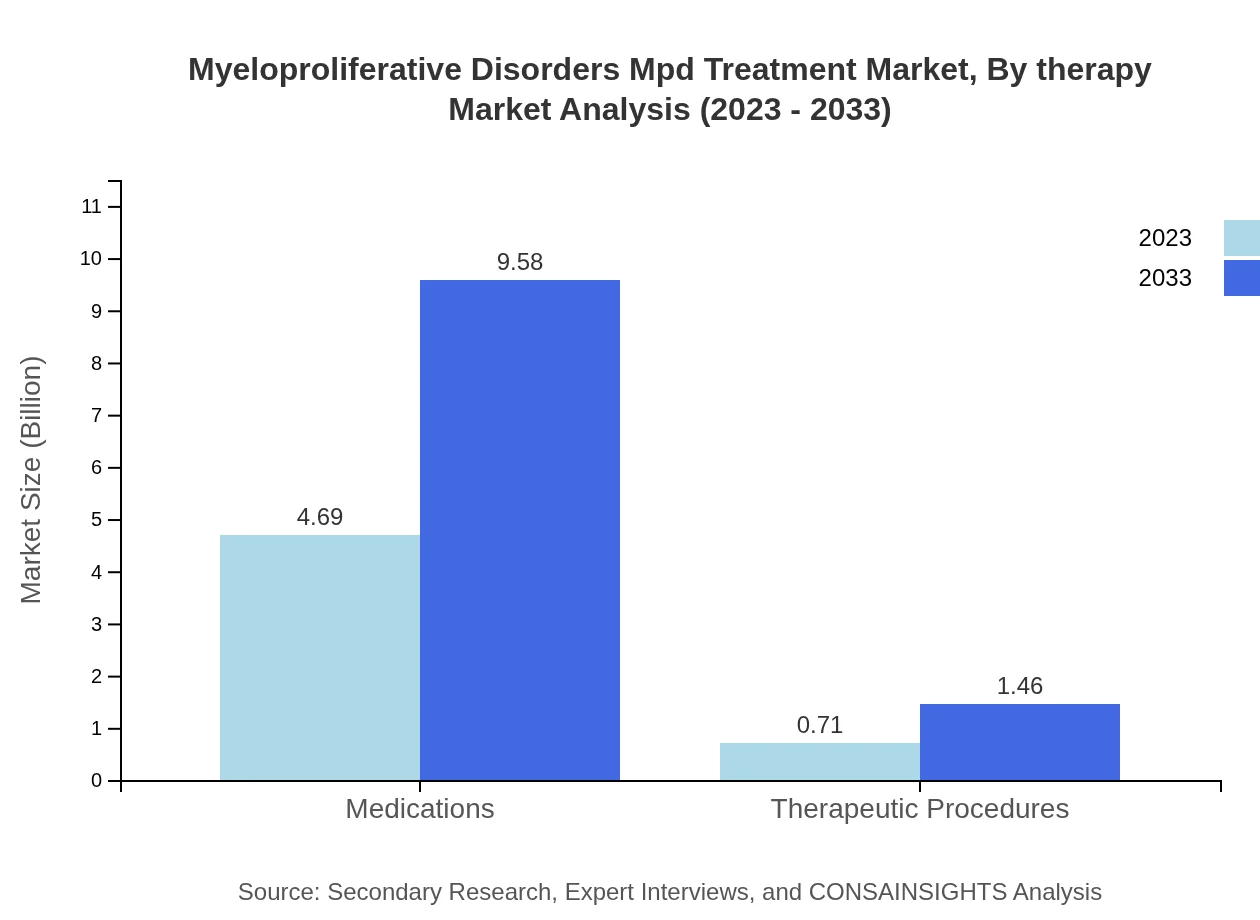
The MPD treatment market is primarily dominated by medications, constituting approximately $4.69 billion of the market in 2023, with projections of reaching $9.58 billion by 2033. Medications account for 86.76% of the market share, emphasizing the reliance on pharmacological treatment options. Therapeutic procedures hold a smaller market size of $0.71 billion in 2023, expected to grow to $1.46 billion by 2033, accounting for 13.24% of the market share.
Myeloproliferative Disorders Mpd Treatment Market Analysis By Disease Type
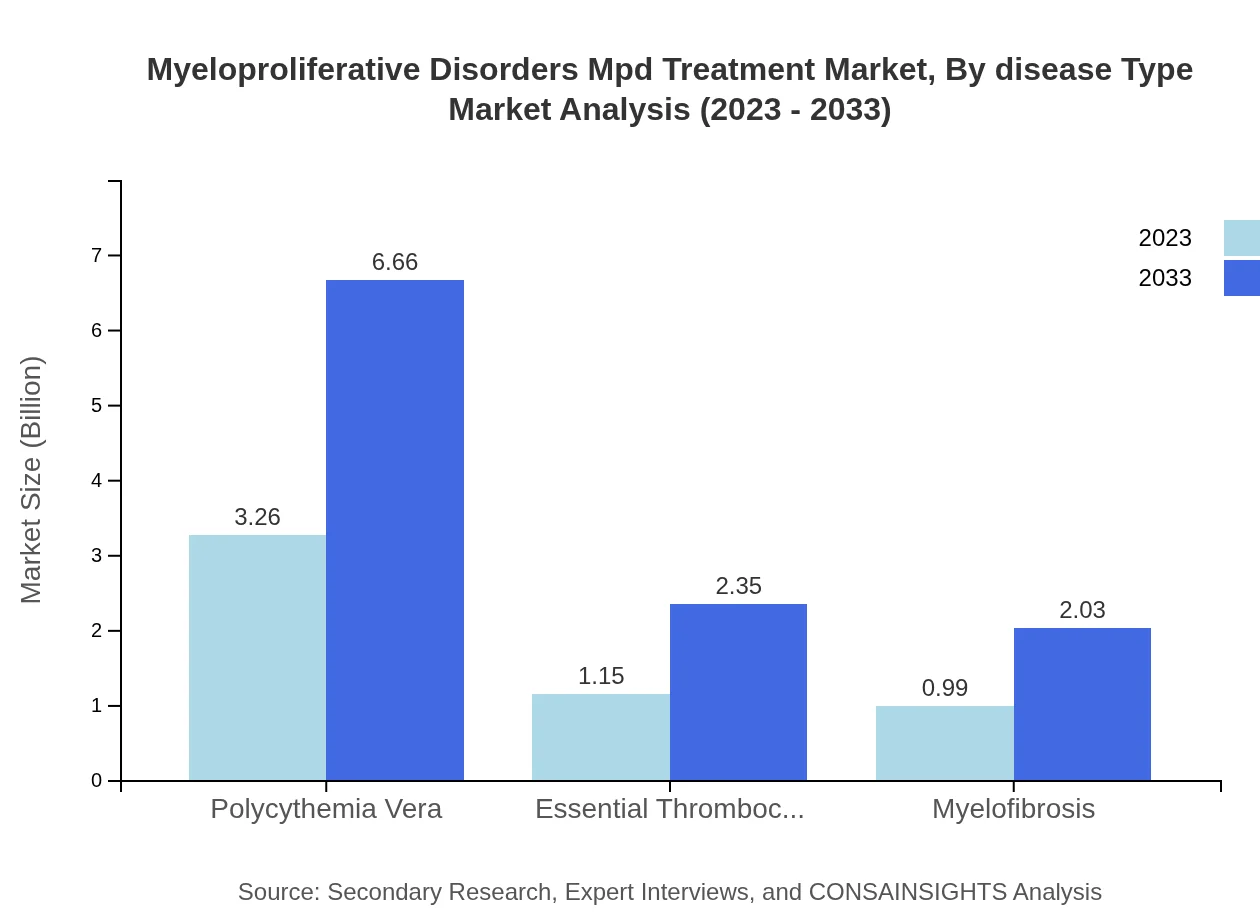
The market segmentation by disease type reveals that Polycythemia Vera leads with a market size of $3.26 billion in 2023, likely to grow to $6.66 billion by 2033, covering 60.37% of the segment share. Essential Thrombocythemia and Myelofibrosis represent $1.15 billion and $0.99 billion respectively in 2023, both showcasing steady growth patterns, indicating an enhanced focus on less common MPDs in the future.
Myeloproliferative Disorders Mpd Treatment Market Analysis By Route Of Administration
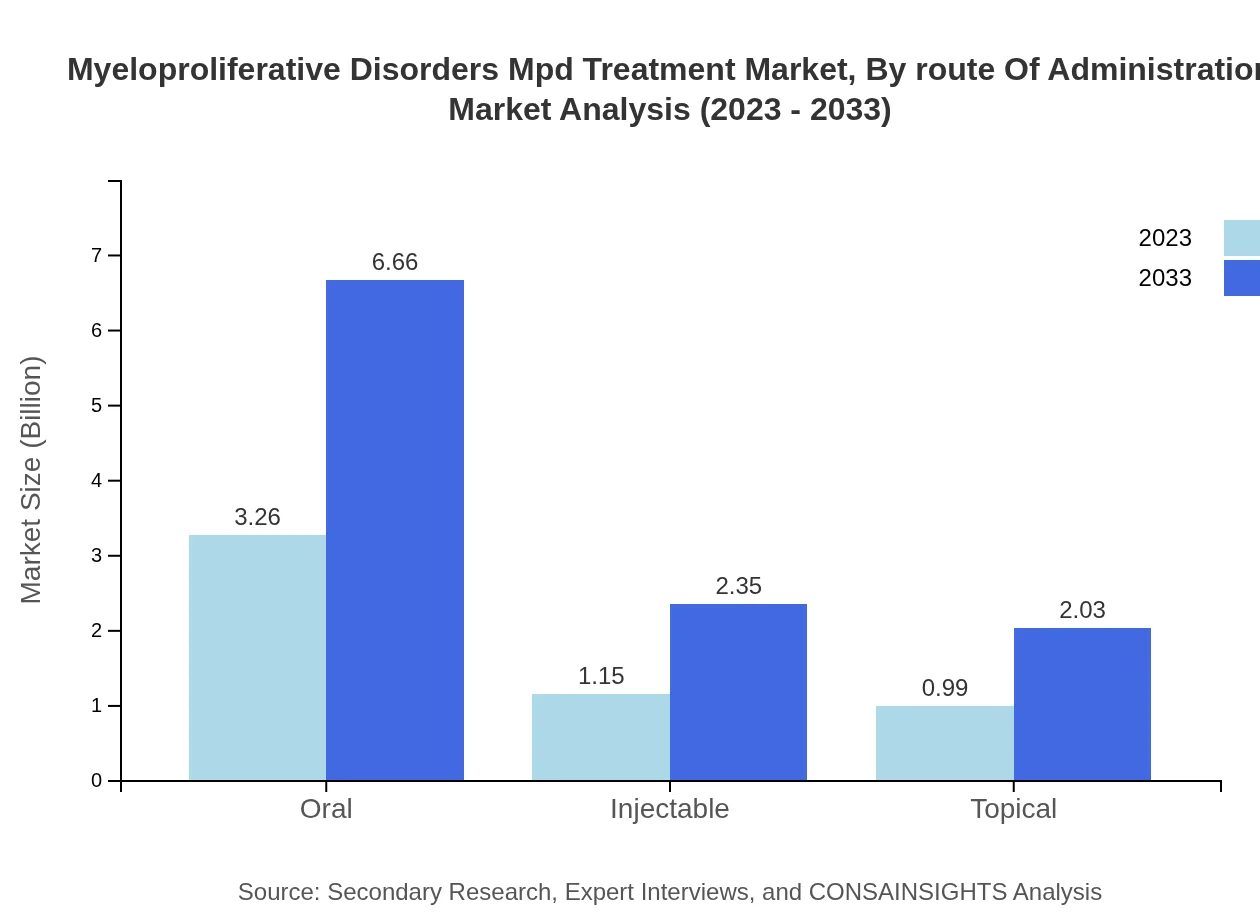
Oral administration dominates the market with a size of $3.26 billion in 2023, retaining 60.37% of the share. Injectable routes follow with $1.15 billion and topical options at $0.99 billion. The trends indicate a preference for oral medications due to convenience, alongside a growing acceptance of biologics administered via injection.
Myeloproliferative Disorders Mpd Treatment Market Analysis By End User
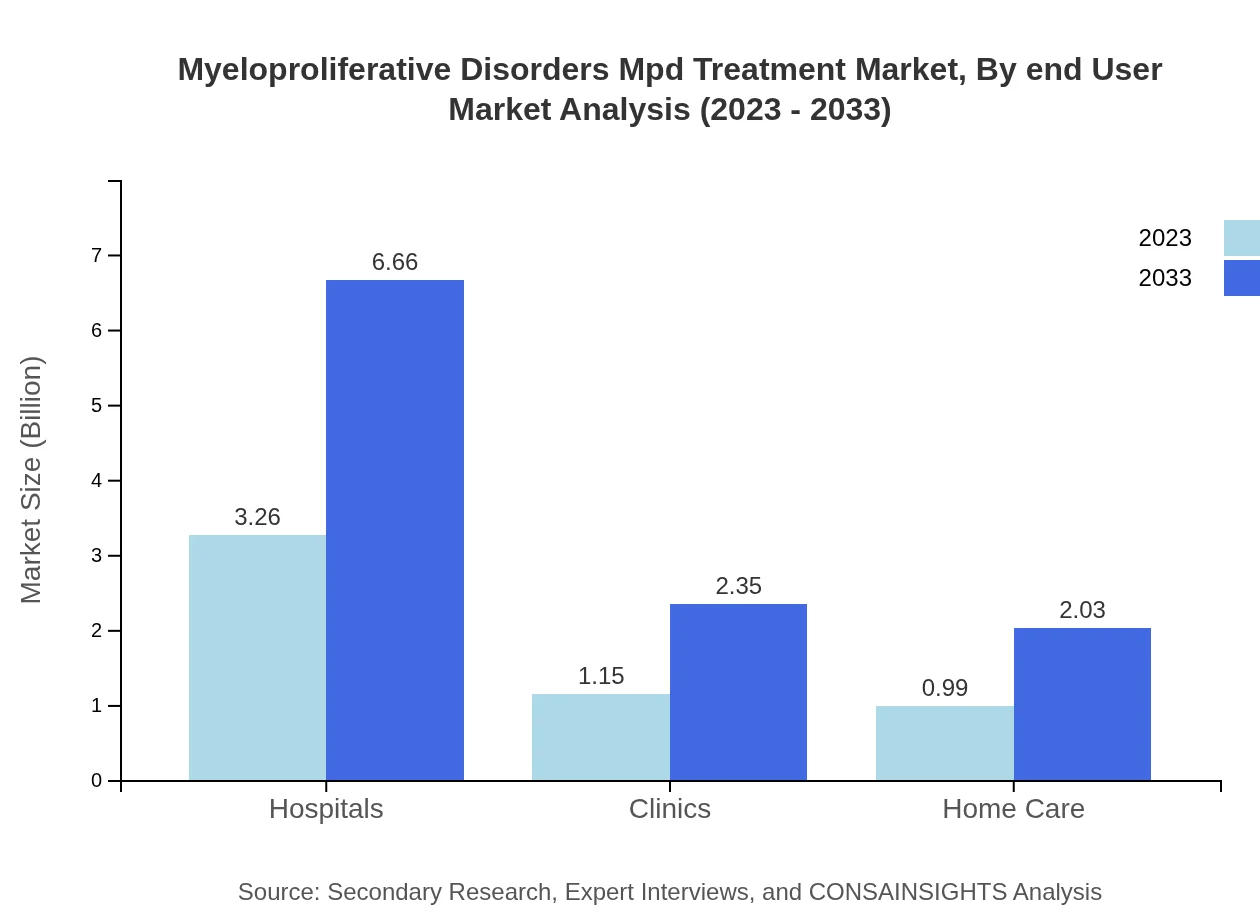
Hospitals are the primary end-users, holding a substantial market size of $3.26 billion in 2023, which is projected to grow to $6.66 billion by 2033, accounting for 60.37% of the share. Clinics and home care settings account for $1.15 billion and $0.99 billion respectively, reflecting the evolving landscape of care where outpatient services and at-home treatment uptake are becoming increasingly important.
Myeloproliferative Disorders Mpd Treatment Market Trends and Future Forecast
Tell us your focus area and get a customized research report.
Global Market Leaders and Top Companies in Myeloproliferative Disorders Mpd Treatment Industry
Roche:
Roche is a leading healthcare company specializing in innovative medicines and diagnostics. Their focus on targeted therapies for MPDs has positioned them as a prominent player in this market.Novartis:
Novartis is known for its extensive research in hematology, offering groundbreaking treatments for MPDs. Their commitment to improving patient outcomes through advanced therapies makes them a key contributor in this sector.Bristol-Myers Squibb:
Bristol-Myers Squibb has made significant strides in developing new therapies for blood-related disorders, solidifying its role as a critical player in the MPD space.Celgene:
Celgene focuses on novel treatments that target the underlying causes of MPDs, leveraging its expertise in immuno-oncology and hematology.Amgen:
Amgen's research and advancements in biologics contribute significantly to the MPD treatment market, enhancing therapeutic options available to patients.We're grateful to work with incredible clients.








FAQs
What is the market size in 2023?
The market size in 2023 is $5.40 Billion, based on the report's baseline valuation for the Myeloproliferative Disorders MPD treatment market in that year.
How big will the market be in 2033?
The market is projected to reach $11.04 Billion by 2033 according to the forecast provided for the Myeloproliferative Disorders MPD treatment sector.
What is CAGR for the forecast period?
The compound annual growth rate for the 2023 to 2033 forecast period is 7.2%, reflecting steady expansion over the decade.
Is there a single fastest Growing region in the Myeloproliferative Disorders Mpd Treatment Market Report market?
No single fastest-growing region is stated for the Myeloproliferative Disorders Mpd Treatment Market Report market because the top regional implied CAGR values are within 0.15 percentage points of each other, making the ranking too close to call reliably.
Which companies are leading the market?
Top companies named in the report include Roche, Novartis, Bristol-Myers Squibb, Celgene, and Amgen as key participants influencing product development and commercialization.
What are the primary treatment segments covered?
The study covers therapy types including medications and therapeutic procedures, multiple administration routes such as oral and injectable, and end users like hospitals, clinics, and home care.
How are regional dynamics addressed?
Regional analysis provides start and end values for each market and discusses local drivers such as diagnostic adoption, regulatory environment, and access to specialized treatments.
What research methods were used?
Research combined primary interviews with industry experts, secondary sources from company reports and publications, plus data triangulation and internal validation to ensure accuracy.