

Next Generation Antibody Therapeutics Market Report
First published: 07 October 2024 | Last updated: 25 May 2026 | Report Code: next-generation-antibody-therapeutics
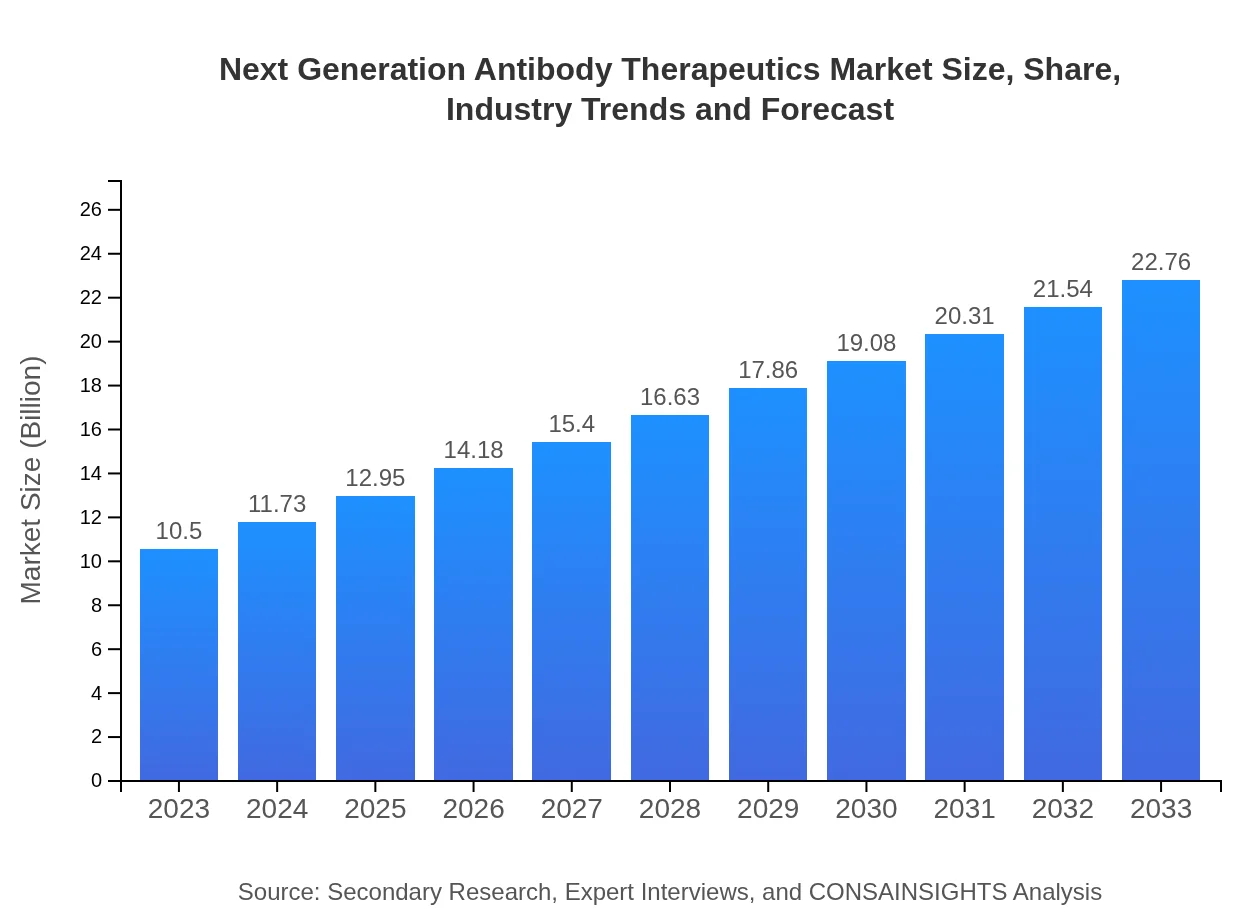
Next Generation Antibody Therapeutics Market — USD 10.5 billion in 2023, Growing to USD 22.76B by 2033 at 7.8% CAGR
This report provides a comprehensive analysis of the Next Generation Antibody Therapeutics market from 2023 to 2033, covering market sizing, regional insights, technology trends, and industry leadership dynamics.
Key Takeaways
- Global market grows from $10.50 Billion in 2023 to $22.76 Billion by 2033 at a 7.8% CAGR.
- North America is largest regional market, while no single fastest-growing region is stated because regional CAGR differences remain within 0.15 percentage points.
- Europe expands from $3.56 Billion to $7.72 Billion between 2023 and 2033, reflecting strong adoption of advanced therapeutics.
- Top industry players include Roche, Amgen, AbbVie, Bristol-Myers Squibb and Johnson & Johnson driving innovation and collaboration.
- Key technology areas include monoclonal and bispecific antibodies and antibody-drug conjugates supporting targeted therapies.
Next Generation Antibody Therapeutics Market Report — Executive Summary
North America remains largest market by forecast-period value, while no single fastest-growing region is stated because top regional growth rates are separated by less than 0.15 percentage points. The market for next generation antibody therapeutics is projected to double in size from $10.50 Billion in 2023 to $22.76 Billion by 2033, propelled by a 7.8% CAGR during 2023 to 2033. Growth is driven by intensified R&D investment, technological advancements in antibody engineering and increasing application in oncology, autoimmune and infectious disease treatment. Monoclonal antibodies, bispecific constructs and antibody-drug conjugates are central to product pipelines and clinical adoption. Collaboration among pharmaceutical companies, biotechnology firms and research institutions accelerates development and commercialization. Regional dynamics show North America as the largest market, supported by strong innovation ecosystems and reimbursement frameworks. Market participants face high development costs and regulatory complexity, but continued scientific progress and strategic partnerships are enabling broader market access and diversified therapeutic portfolios.
Key Growth Drivers
- Rising R&D spending and private-public collaborations accelerating antibody discovery and clinical development.
- Technological progress in antibody engineering enabling bispecific formats and antibody-drug conjugates with improved specificity.
- Greater prevalence of oncology and autoimmune diseases increasing demand for targeted biologic therapies.
- Expanded manufacturing capabilities and recombinant technologies supporting scalable production.
- Supportive regulatory pathways for biologics facilitating faster approvals and market entry.
| Metric | Value |
|---|---|
| Study Period | 2023 - 2033 |
| 2023 Market Size | $10.50 Billion |
| CAGR (2023-2033) | 7.8% |
| 2033 Market Size | $22.76 Billion |
| Top Companies | Roche, Amgen, AbbVie, Bristol-Myers Squibb, Johnson & Johnson |
| Published Date | 07 October 2024 |
| Last Modified Date | 25 May 2026 |
Next Generation Antibody Therapeutics Market Overview
Customize Next Generation Antibody Therapeutics Market Report market research report
- ✔ Get in-depth analysis of Next Generation Antibody Therapeutics market size, growth, and forecasts.
- ✔ Understand Next Generation Antibody Therapeutics's regional dynamics and industry-specific trends.
- ✔ Identify potential applications, end-user demand, and growth segments in Next Generation Antibody Therapeutics
What is the Market Size & CAGR of Next Generation Antibody Therapeutics Market Report market in 2023?
Next Generation Antibody Therapeutics Industry Analysis
Next Generation Antibody Therapeutics Market Segmentation and Scope
Tell us your focus area and get a customized research report.
Next Generation Antibody Therapeutics Market Report Market Analysis Report by Region
Europe Next Generation Antibody Therapeutics Market Report:
Europe grows from $3.56 Billion in 2023 to $7.72 Billion in 2033. Growth is underpinned by strong clinical research networks, regulatory frameworks enabling biologics access and collaborations between pharmaceutical firms and academic institutions.Asia Pacific Next Generation Antibody Therapeutics Market Report:
Asia Pacific grows from $1.82 Billion in 2023 to $3.94 Billion in 2033. Regional momentum is driven by growing biopharma R&D activity, expanding clinical trial capacity and rising healthcare investment supporting advanced therapeutic uptake.North America Next Generation Antibody Therapeutics Market Report:
North America is largest regional market, rising from $3.6 Billion in 2023 to $7.81 Billion in 2033. Local strengths include concentrated biotech clusters, significant R&D investment and supportive commercial and reimbursement environments that foster adoption of advanced antibody therapies.South America Next Generation Antibody Therapeutics Market Report:
Latin America grows from $0.75 Billion in 2023 to $1.62 Billion in 2033. Market expansion is supported by increasing awareness of biologic treatments, expanding healthcare infrastructure and partnerships that enhance local development and access.Middle East & Africa Next Generation Antibody Therapeutics Market Report:
Middle East and Africa grows from $0.77 Billion in 2023 to $1.67 Billion in 2033. Growth factors include improving healthcare systems, targeted investments in biotech capabilities and collaborations that improve availability of next-generation antibody therapeutics.Tell us your focus area and get a customized research report.
Research Methodology
Next Generation Antibody Therapeutics Market Analysis By Class
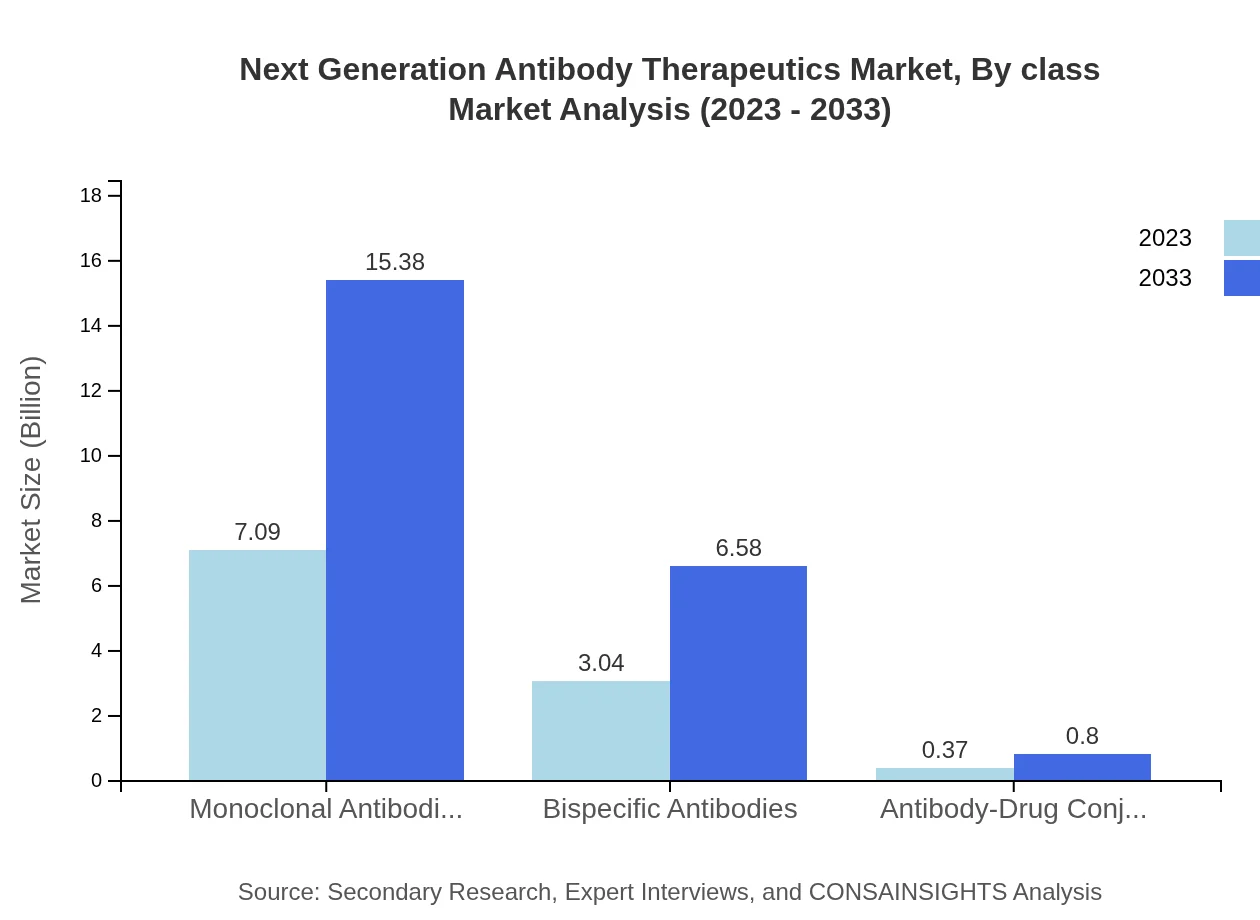
The classification of antibody therapeutics indicates a significant presence of monoclonal antibodies in the marketplace, valued at about $7.09 billion in 2023 and expected to reach $15.38 billion by 2033. Monoclonal antibodies capture approximately 67.56% of the market share, retained through their critical role in oncology therapies. Bispecific antibodies are also making headway due to their ability to target multiple antigens simultaneously, with a market size forecasted from $3.04 billion to $6.58 billion over the same period, holding a significant 28.91% market share.
Next Generation Antibody Therapeutics Market Analysis By Therapeutic Area
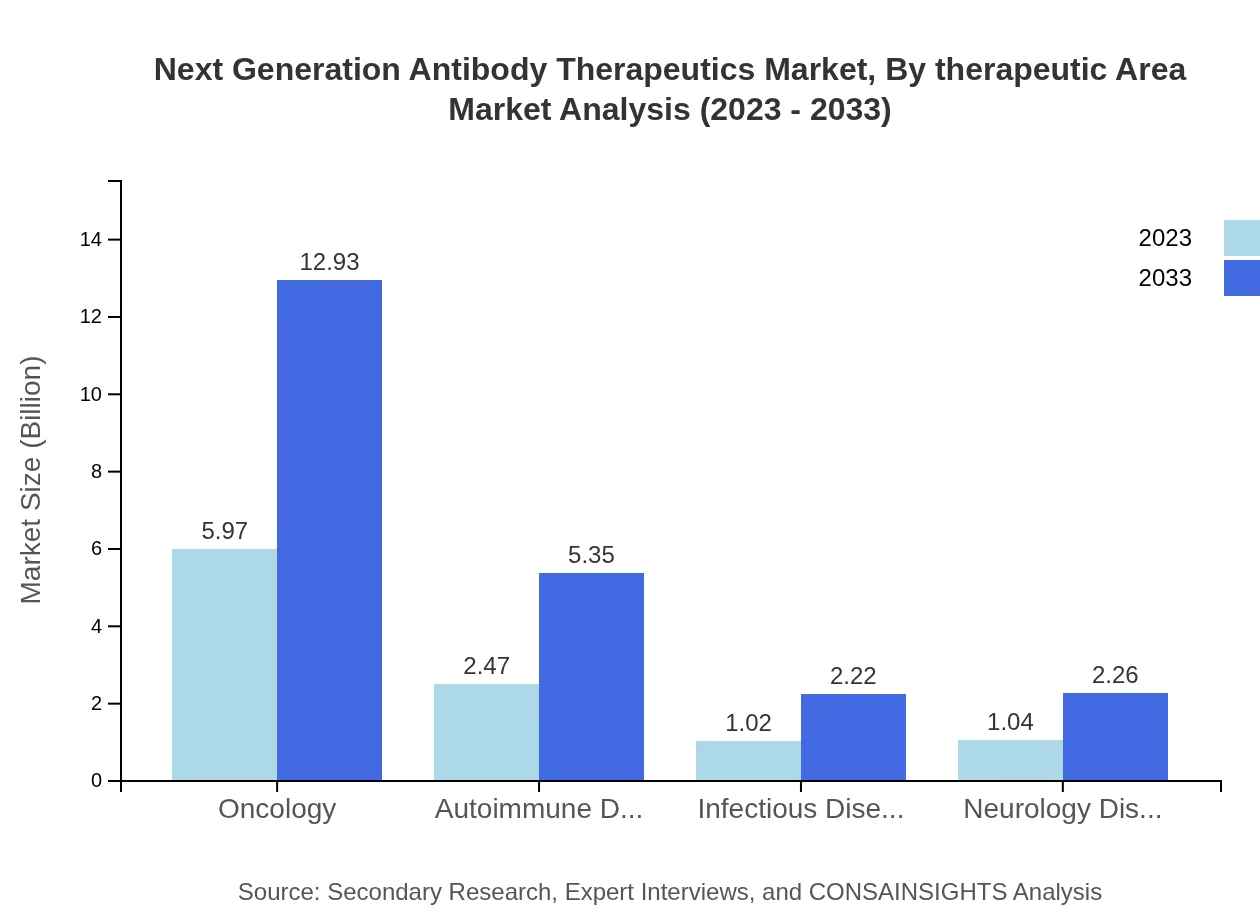
Oncology remains the leading therapeutic area for next-generation antibody therapeutics, projected to grow from $5.97 billion in 2023 to $12.93 billion by 2033, maintaining a 56.82% market share. Autoimmune disorder therapeutics will follow, increasing from $2.47 billion to $5.35 billion, while infectious disease therapeutics, although demonstrating slower growth, will also gain traction, projected to rise to $2.22 billion.
Next Generation Antibody Therapeutics Market Analysis By Route Of Administration
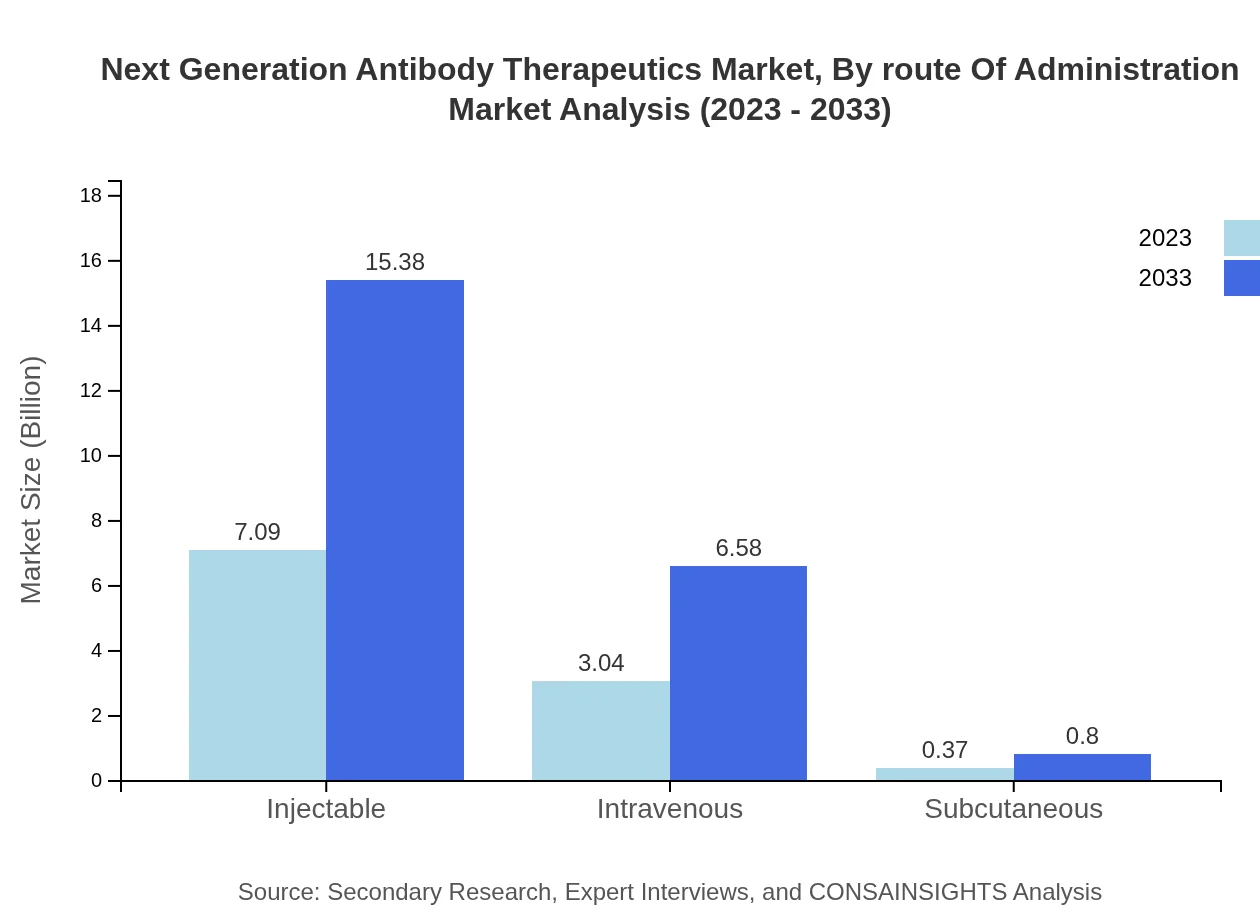
The routes of administration for next-generation antibodies primarily include injectable (estimated to grow from $7.09 billion to $15.38 billion), intravenous (expected to expand from $3.04 billion to $6.58 billion), and subcutaneous routes (forecasted growth from $0.37 billion to $0.80 billion). Injectable forms dominate due to their adoption in clinical settings, whilst intravenous methods remain significant for high-volume therapies.
Next Generation Antibody Therapeutics Market Analysis By Manufacturing Technique
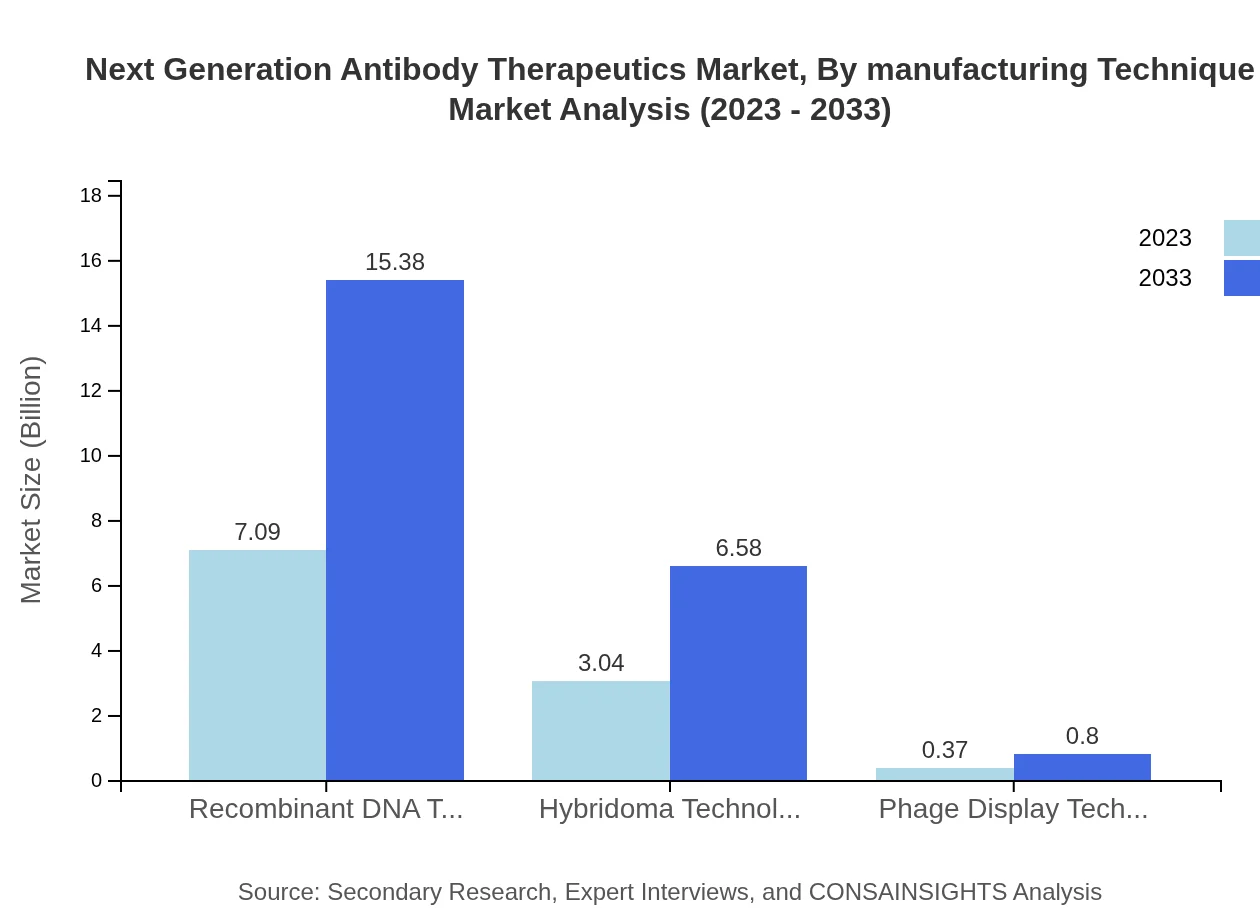
Manufacturing techniques aim to optimize yield and efficiency in producing antibody drugs. Recombinant DNA technology holds about 67.56% market share, expected to grow to 15.38 billion by 2033 as the dominant tech across the market. Hybridoma technology, while older, still plays a crucial role in some products, demonstrating stability in its share and growth from 3.04 billion to 6.58 billion.
Next Generation Antibody Therapeutics Market Analysis By End User
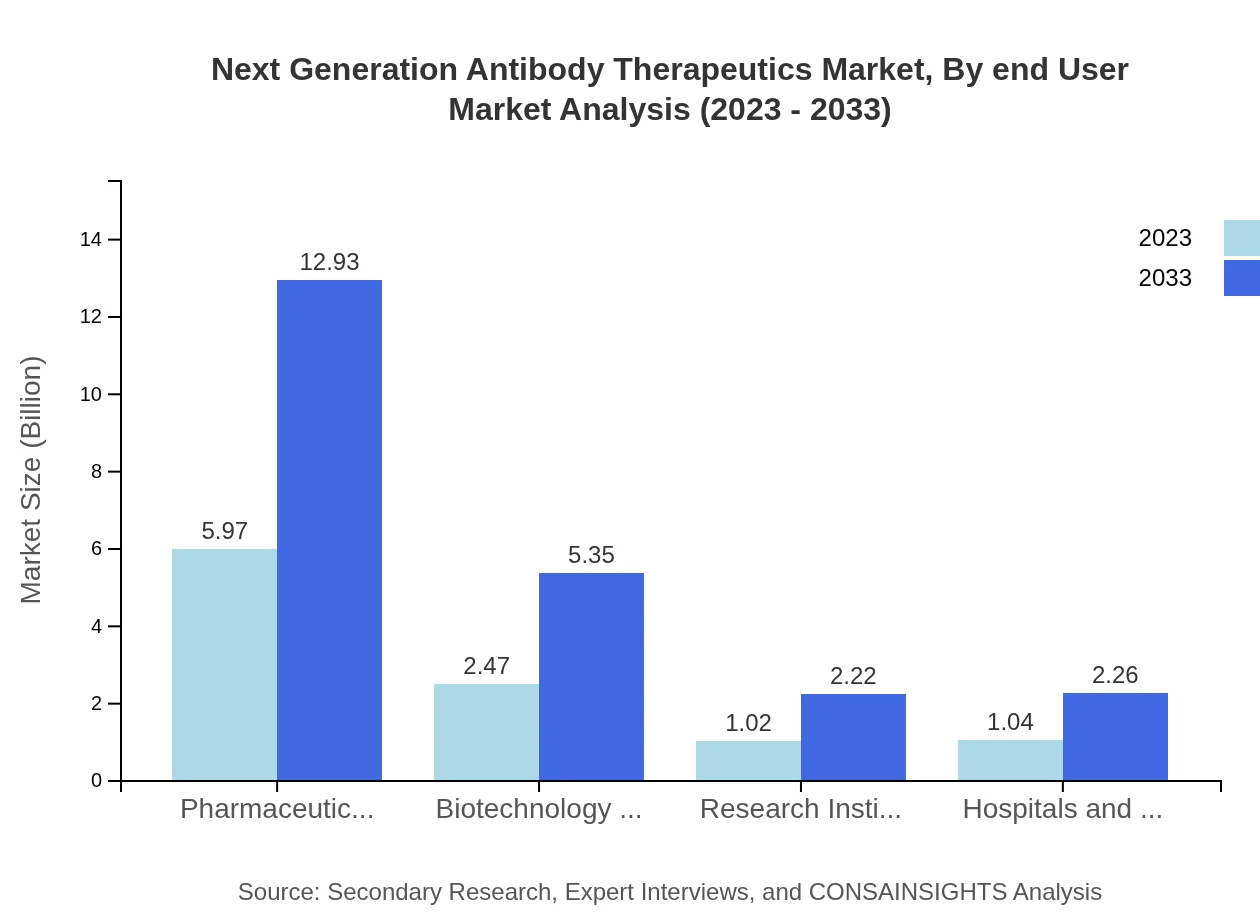
The end-user segment comprises pharmaceutical companies, biotechnology firms, research institutes, and hospitals/clinics. Pharmaceutical companies dominate, increasing their market share from $5.97 billion in 2023 to $12.93 billion by 2033. Biotechnology firms also contribute significantly, growing from $2.47 billion to $5.35 billion, emphasizing the collaborative nature of modern drug development.
Next Generation Antibody Therapeutics Market Trends and Future Forecast
Tell us your focus area and get a customized research report.
Global Market Leaders and Top Companies in Next Generation Antibody Therapeutics Industry
Roche:
A pioneer in the field of biotechnology, Roche is a leader in developing monoclonal antibodies, including Herceptin and Avastin that have significantly changed cancer therapy standards.Amgen:
Known for its innovative approach to monoclonal antibodies and biotechnology, Amgen’s therapies such as Enbrel have transformed the treatment landscape for autoimmune disorders.AbbVie:
AbbVie specializes in biologic therapies and has a robust portfolio of antibody therapeutics including Humira, driving substantial revenues in the antibody therapeutic market.Bristol-Myers Squibb:
Bristol-Myers Squibb focuses on immunotherapy and has engaged in pioneering studies on bispecific antibodies and ADCs, significantly impacting oncology treatments.Johnson & Johnson:
This conglomerate has a diversified portfolio, including a strong line of antibody therapies across oncological and autoimmune indications.We're grateful to work with incredible clients.



FAQs
What is the market size in 2023?
The market size in 2023 is $10.50 Billion as reported for the Next Generation Antibody Therapeutics market.
How big will the market be in 2033?
By 2033 the market is projected to reach $22.76 Billion according to the provided forecast for the period 2023 to 2033.
What is CAGR for the forecast period?
The reported compound annual growth rate (CAGR) for 2023 to 2033 is 7.8%.
Is there a single fastest Growing region in the Next Generation Antibody Therapeutics Market Report market?
No single fastest-growing region is stated for the Next Generation Antibody Therapeutics Market Report market because the top regional implied CAGR values are within 0.15 percentage points of each other, making the ranking too close to call reliably.
Which companies lead the market?
Top companies identified include Roche, Amgen, AbbVie, Bristol-Myers Squibb and Johnson & Johnson.
What are the major therapeutic focuses?
Major therapeutic areas include oncology, autoimmune disorders, infectious diseases and neurology disorders as primary application targets.
Who are the primary end users?
Primary end users comprise pharmaceutical companies, biotechnology firms, research institutes and hospitals and clinics.
What manufacturing techniques are used?
Common manufacturing approaches include recombinant DNA technology, hybridoma technology and phage display technology.