

Oncology Molecular Diagnostics Market Report
First published: 15 October 2024 | Last updated: 25 May 2026 | Report Code: oncology-molecular-diagnostics
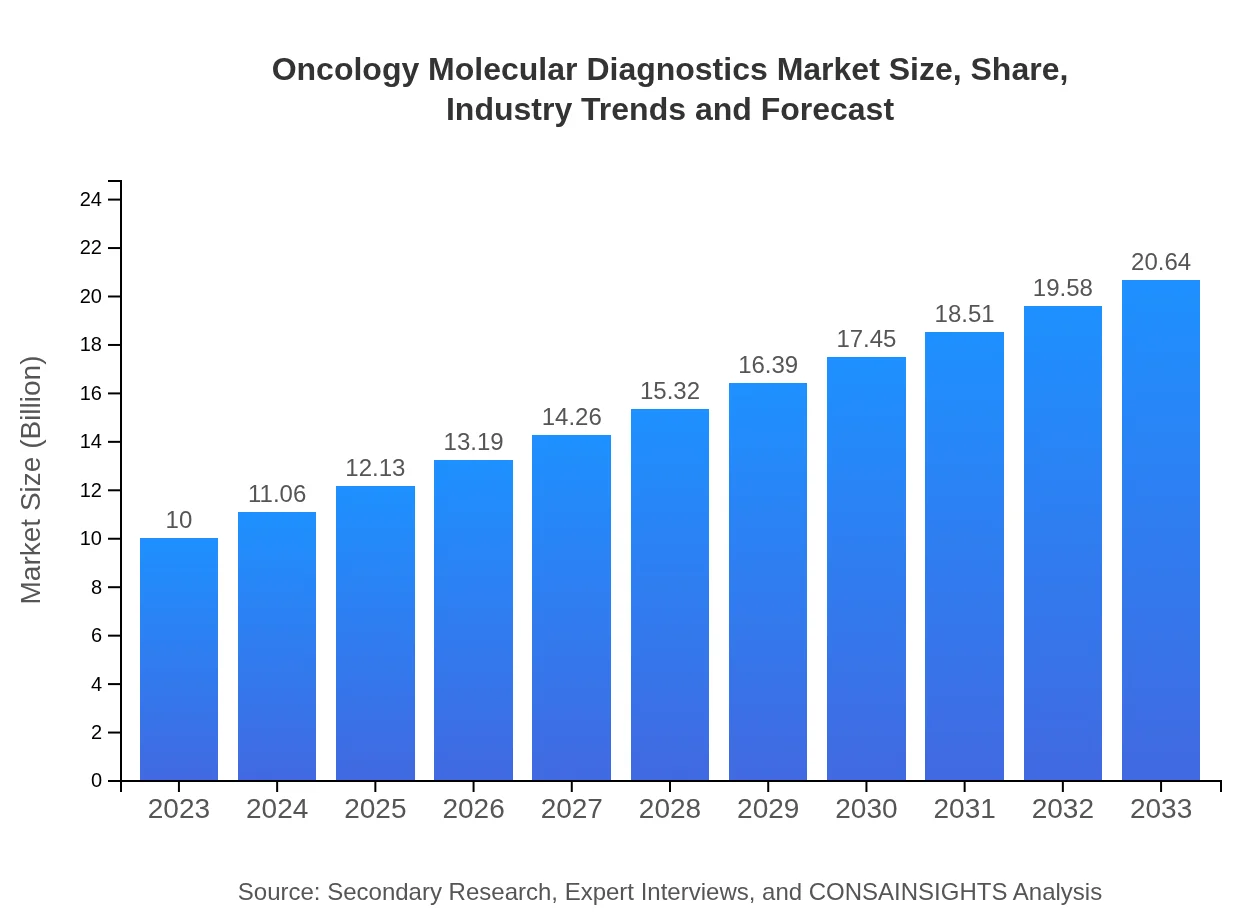
Oncology Molecular Diagnostics Market — USD 10 billion in 2023, Growing to USD 20.64B by 2033 at 7.3% CAGR
This report analyzes the Oncology Molecular Diagnostics market, providing insights into market dynamics, size forecasts, regional analyses, and trends from 2023 to 2033.
Key Takeaways
- Global market value rises from $10.00 Billion in 2023 to $20.64 Billion in 2033 at a 7.3% CAGR.
- North America is largest regional market, while no single fastest-growing region is stated because regional CAGR differences remain within 0.15 percentage points.
- Europe grows from $2.8 Billion in 2023 to $5.79 Billion in 2033; Asia Pacific increases from $1.92 Billion to $3.97 Billion.
- Market participants include Roche Diagnostics, Abbott Laboratories, Qiagen, Thermo Fisher Scientific and Illumina.
- Key trends include expanded biomarker testing, rising adoption of molecular assays, and increased investment in diagnostic R&D.
Oncology Molecular Diagnostics Market Report — Executive Summary
North America remains largest market by forecast-period value, while no single fastest-growing region is stated because top regional growth rates are separated by less than 0.15 percentage points. The Oncology Molecular Diagnostics Market Report outlines a decade of steady expansion driven by demand for precise cancer detection and personalized therapies. The market is projected to grow from $10.00 Billion in 2023 to $20.64 Billion by 2033 at a 7.3% CAGR. Growth is supported by advances in molecular techniques such as sequencing and PCR, broader biomarker discovery, and heightened clinical adoption in hospitals, laboratories and biotechnology firms. Regional performance varies, with North America identified as the largest regional market. Leading firms—Roche Diagnostics, Abbott Laboratories, Qiagen, Thermo Fisher Scientific and Illumina—are investing in test diversification and faster workflows. The report structure covers market sizing, segmentation by test type, technology and end user, and a regional breakdown. Regulatory oversight and continued R&D funding are expected to shape product introductions and clinical uptake through the forecast period.
Key Growth Drivers
- Rising prevalence of cancer and the need for earlier, more precise diagnostics increases demand for molecular tests.
- Advances in sequencing and PCR technologies improve test accuracy and lower per-test turnaround times.
- Expansion of biomarker identification enables more targeted treatment selection and monitoring approaches.
- Hospitals, laboratories and biotechnology companies are increasing adoption through clinical integration and partnerships.
- Sustained R&D investment and regulatory clearances support commercialization of novel diagnostic assays.
| Metric | Value |
|---|---|
| Study Period | 2023 - 2033 |
| 2023 Market Size | $10.00 Billion |
| CAGR (2023-2033) | 7.3% |
| 2033 Market Size | $20.64 Billion |
| Top Companies | Roche Diagnostics, Abbott Laboratories, Qiagen , Thermo Fisher Scientific, Illumina |
| Published Date | 15 October 2024 |
| Last Modified Date | 25 May 2026 |
Oncology Molecular Diagnostics Market Overview
Customize Oncology Molecular Diagnostics Market Report market research report
- ✔ Get in-depth analysis of Oncology Molecular Diagnostics market size, growth, and forecasts.
- ✔ Understand Oncology Molecular Diagnostics's regional dynamics and industry-specific trends.
- ✔ Identify potential applications, end-user demand, and growth segments in Oncology Molecular Diagnostics
What is the Market Size & CAGR of Oncology Molecular Diagnostics Market Report market in 2023?
Oncology Molecular Diagnostics Industry Analysis
Oncology Molecular Diagnostics Market Segmentation and Scope
Tell us your focus area and get a customized research report.
Oncology Molecular Diagnostics Market Report Market Analysis Report by Region
Europe Oncology Molecular Diagnostics Market Report:
Europe grows from $2.8 Billion in 2023 to $5.79 Billion in 2033. Growth is driven by increased biomarker testing, regulatory clearances for novel diagnostics, and adoption of molecular assays across academic and clinical institutions.Asia Pacific Oncology Molecular Diagnostics Market Report:
Asia Pacific grows from $1.92 Billion in 2023 to $3.97 Billion in 2033. Market advances are supported by growing diagnostic infrastructure, rising cancer awareness, and expanding use of molecular technologies in clinical settings.North America Oncology Molecular Diagnostics Market Report:
North America is largest regional market, rising from $3.42 Billion in 2023 to $7.05 Billion in 2033. Regional momentum reflects broad clinical adoption in hospitals and laboratories, significant R&D activity, and strong presence of major firms investing in advanced sequencing and assay development.South America Oncology Molecular Diagnostics Market Report:
Latin America grows from $0.48 Billion in 2023 to $0.99 Billion in 2033. Expansion reflects gradual uptake of molecular diagnostics, increased laboratory capacity, and collaborations with global diagnostic firms.Middle East & Africa Oncology Molecular Diagnostics Market Report:
Middle East and Africa grows from $1.38 Billion in 2023 to $2.84 Billion in 2033. Drivers include investments in healthcare infrastructure, growing access to advanced testing, and heightened focus on early cancer detection and monitoring.Tell us your focus area and get a customized research report.
Research Methodology
Oncology Molecular Diagnostics Market Analysis By Test Type
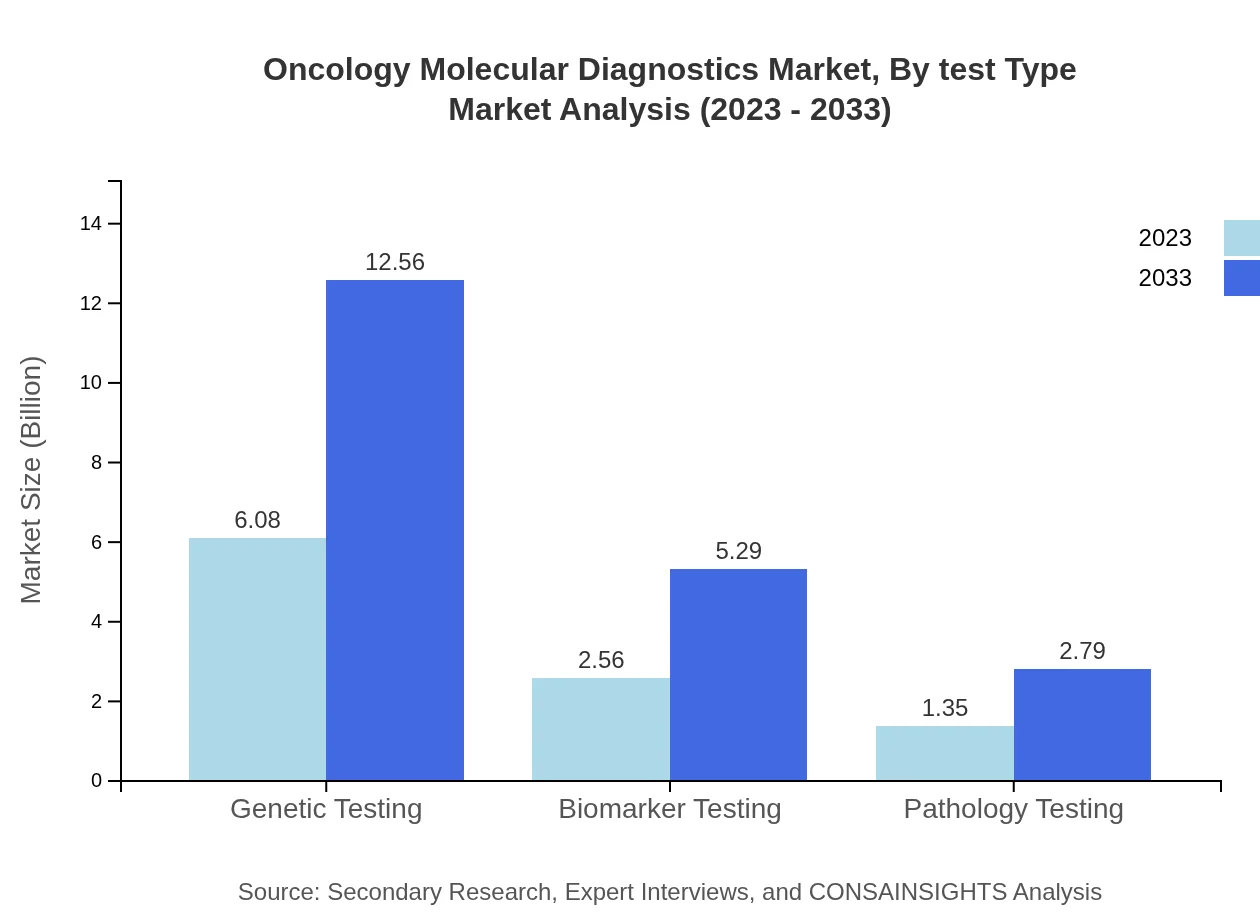
An in-depth analysis indicates that Genetic Testing comprises the majority of the market share at 60.83% in 2023, set to remain constant through 2033, valued at approximately $12.56 billion. Biomarker Testing follows, holding 25.64% of the market share with a projected growth to $5.29 billion. Pathology Testing, while smaller at 13.53% now, is expected to enhance its market presence with persistent advancements in diagnostic techniques.
Oncology Molecular Diagnostics Market Analysis By Application
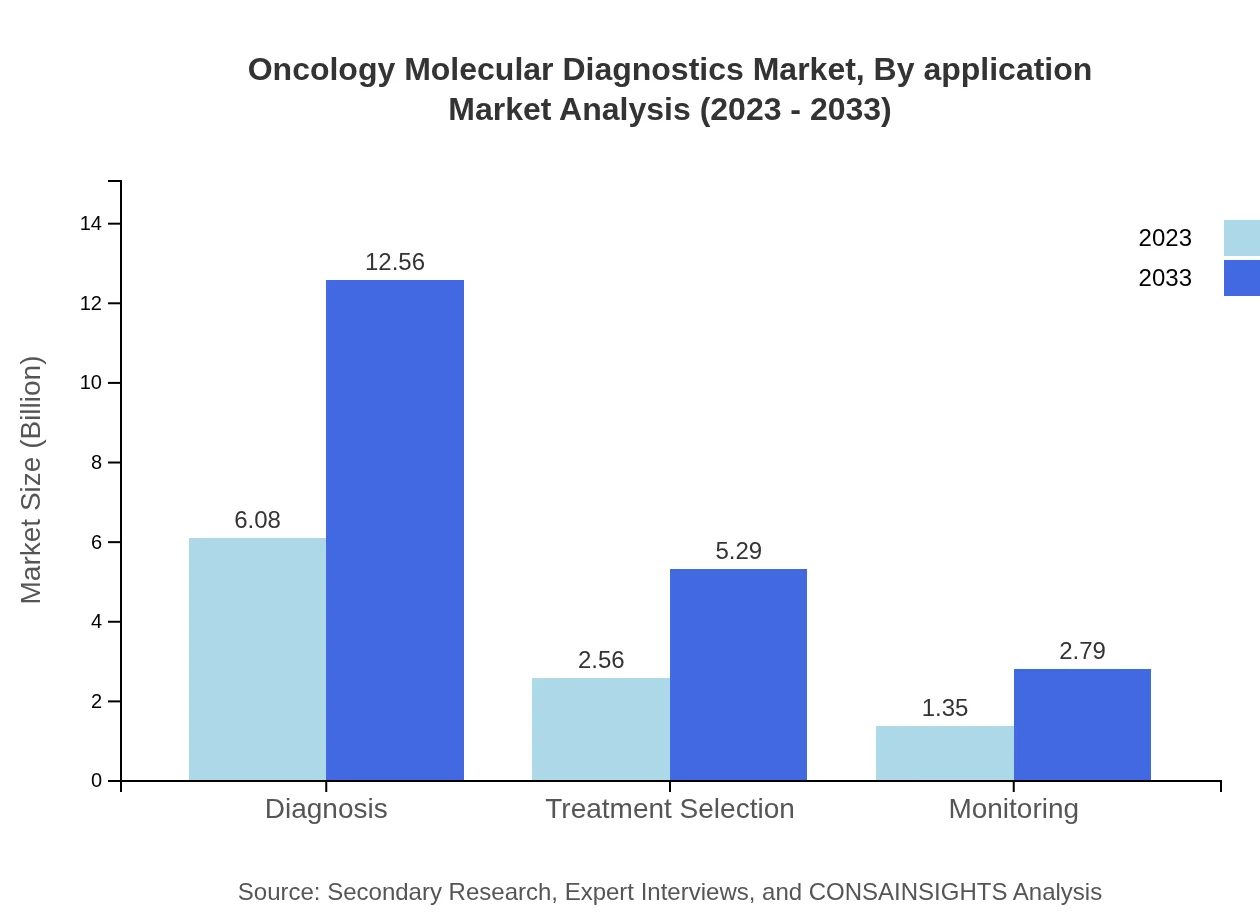
The prominent application areas include Diagnosis, Treatment Selection, and Monitoring, with Diagnosis taking the lead at 60.83% market share in 2023, forecasting similar levels through 2033. Treatment Selection comprises 25.64% and is gaining traction as personalized medicine becomes more prevalent, while Monitoring holds a steady 13.53% of the application segment.
Oncology Molecular Diagnostics Market Analysis By Technology
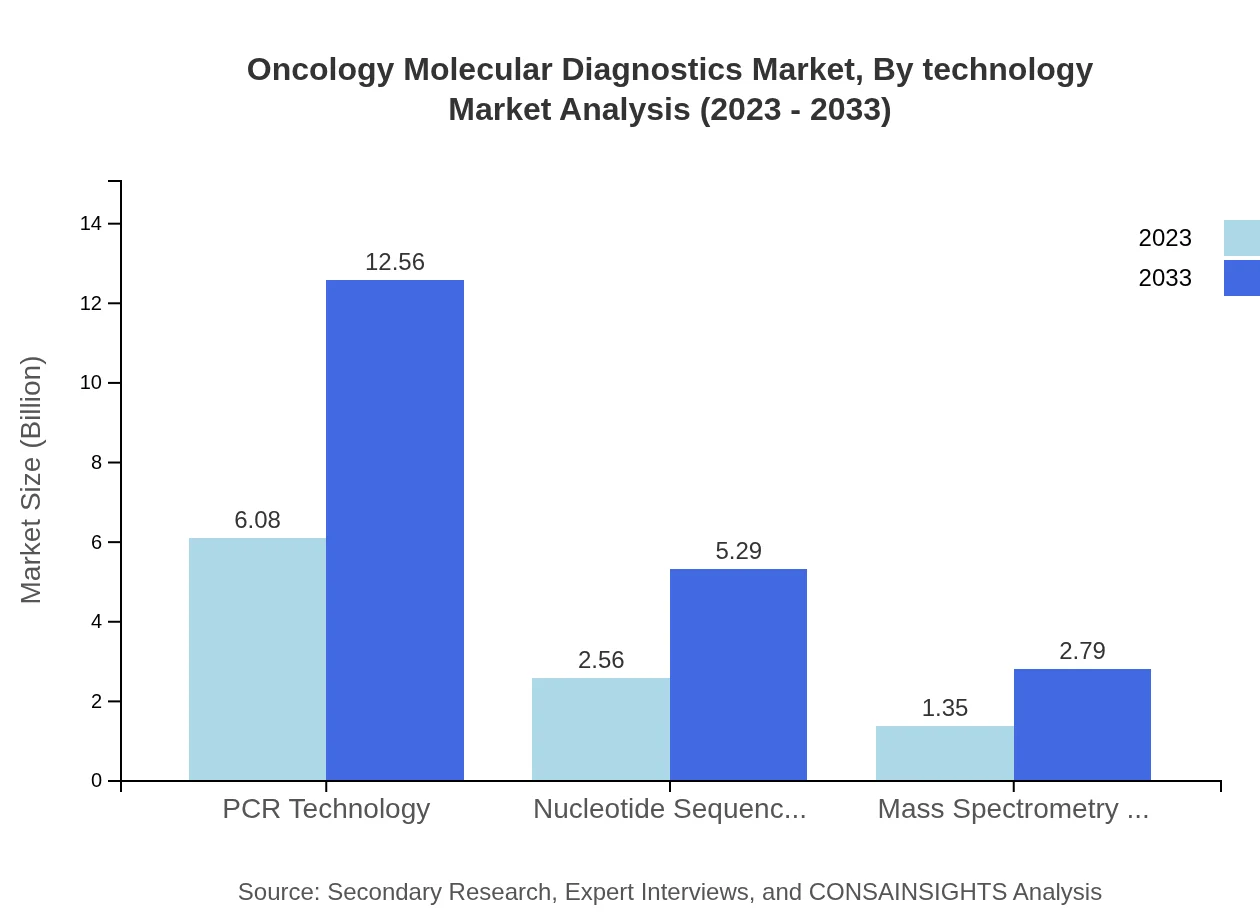
PCR Technology leads the Oncology Molecular Diagnostics market at a share of 60.83% in 2023, expected to sustain this level through 2033. Nucleotide Sequencing Technology holds a promising 25.64%, showing strong growth potential, while Mass Spectrometry Technology retains a traditional but important role with 13.53% market share.
Oncology Molecular Diagnostics Market Analysis By End User
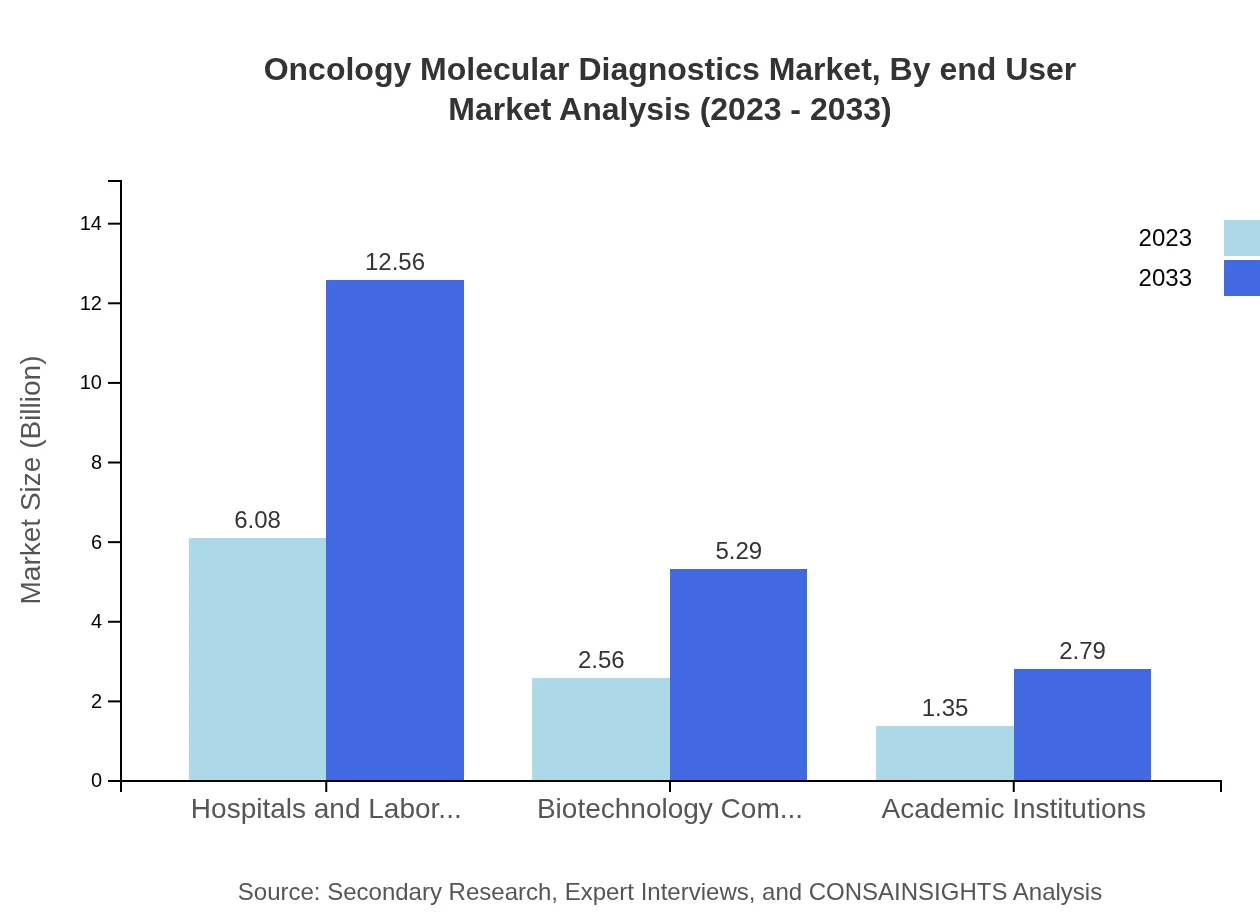
Hospitals and Laboratories capture a substantial market share at 60.83%, with forecasts suggesting continued leadership through 2033. Biotechnology Companies account for 25.64%, reflecting their crucial role in driving innovations, while Academic Institutions encompass 13.53% of the market, focusing on research and development in molecular diagnostics.
Oncology Molecular Diagnostics Market Analysis By Region
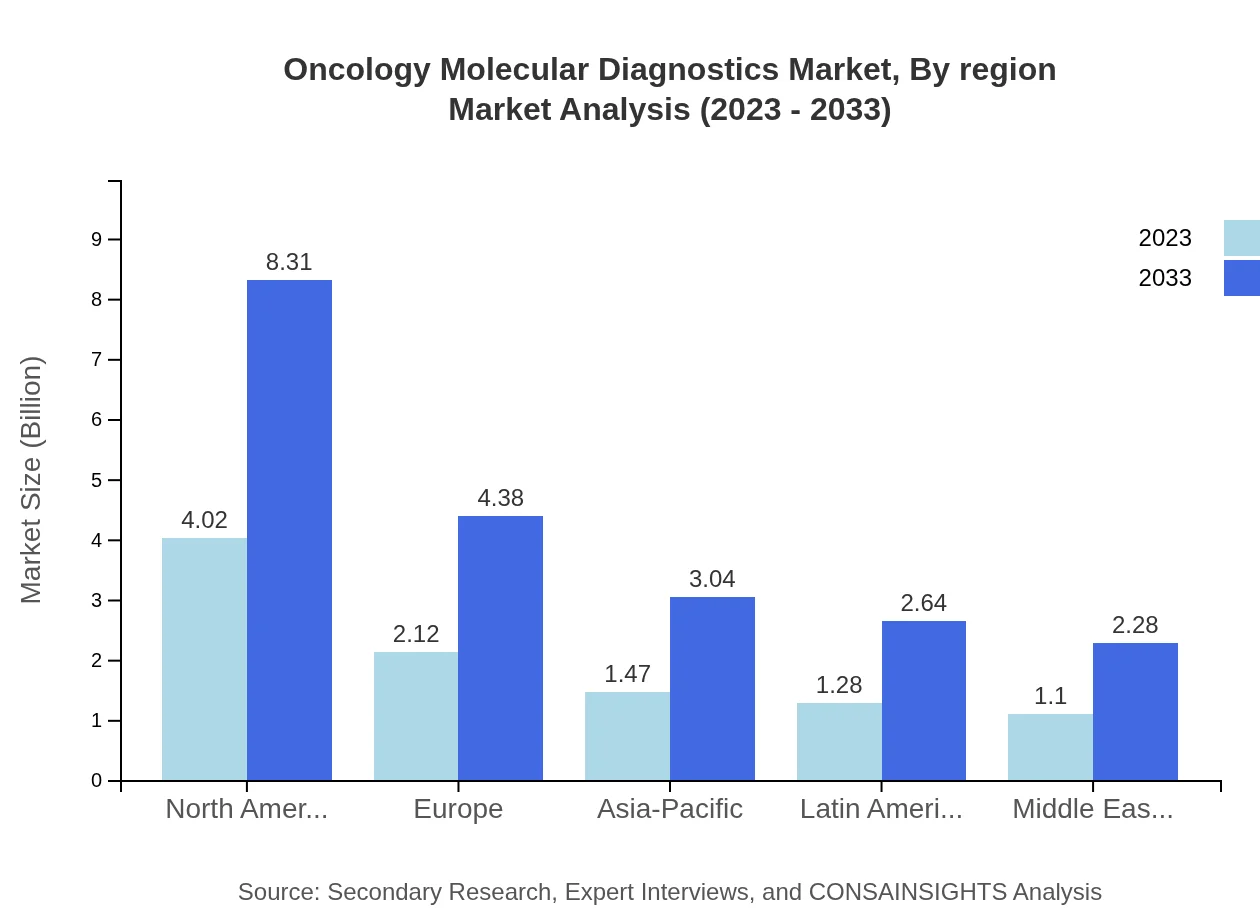
Regionally, North America leads with a significant market size of $4.02 billion in 2023, further expanding to $8.31 billion by 2033, and maintaining a consistent share of 40.24% across the forecast period. Europe and Asia-Pacific contribute to 21.22% and 14.72% share respectively, showcasing robust growth trajectories in the same period.
Oncology Molecular Diagnostics Market Trends and Future Forecast
Tell us your focus area and get a customized research report.
Global Market Leaders and Top Companies in Oncology Molecular Diagnostics Industry
Roche Diagnostics:
A leader in the field, Roche specializes in the development of molecular diagnostics and has a significant portfolio of innovative products that address various cancers.Abbott Laboratories:
Abbott is known for its advanced diagnostic solutions, providing high-quality molecular diagnostic tests for cancer detection and management.Qiagen :
Qiagen focuses on providing sample and assay technologies, enabling molecular diagnostics and personalized medicine approaches.Thermo Fisher Scientific:
Thermo Fisher offers a comprehensive range of molecular diagnostic solutions, playing a pivotal role in enhancing precision medicine and cancer management.Illumina:
Illumina is a leader in genomics, particularly known for its high-throughput sequencing technologies that significantly impact oncology diagnostics.We're grateful to work with incredible clients.







FAQs
What is the market size of the Oncology Molecular Diagnostics Market Report in 2023?
The market size in 2023 is $10.00 Billion, as stated in the report data for the 2023 baseline year.
How big will the market be in 2033?
The market is projected to reach $20.64 Billion in 2033 according to the provided forecast figures.
What is CAGR of the market for the forecast period?
The compound annual growth rate (CAGR) for the 2023 to 2033 forecast period is 7.3%, per the report data.
Is there a single fastest Growing region in the Oncology Molecular Diagnostics Market Report market?
No single fastest-growing region is stated for the Oncology Molecular Diagnostics Market Report market because the top regional implied CAGR values are within 0.15 percentage points of each other, making the ranking too close to call reliably.
Who are the top companies operating in this market?
Key companies listed include Roche Diagnostics, Abbott Laboratories, Qiagen, Thermo Fisher Scientific and Illumina.
What are common end users for oncology molecular diagnostics?
Primary end users noted are hospitals and laboratories, biotechnology companies, and academic institutions as listed in segmentation.
Why is molecular diagnostics important for oncology?
Molecular diagnostics enable detection of cancer biomarkers and support treatment selection and monitoring, driving clinical decision-making and personalized therapies.
How is market research conducted for this report?
Research combines primary interviews with industry experts, secondary company reports and publications, and internal data triangulation and validation.
What test types are covered in the segmentation?
The report includes genetic testing, biomarker testing and pathology testing as key test-type sub segments.
Which technologies are prominent in the report?
Highlighted technologies include PCR Technology, Nucleotide Sequencing Technology and Mass Spectrometry Technology.