

Pediatric Neuroblastoma Treatment Market Report
First published: 20 October 2024 | Last updated: 28 May 2026 | Report Code: pediatric-neuroblastoma-treatment
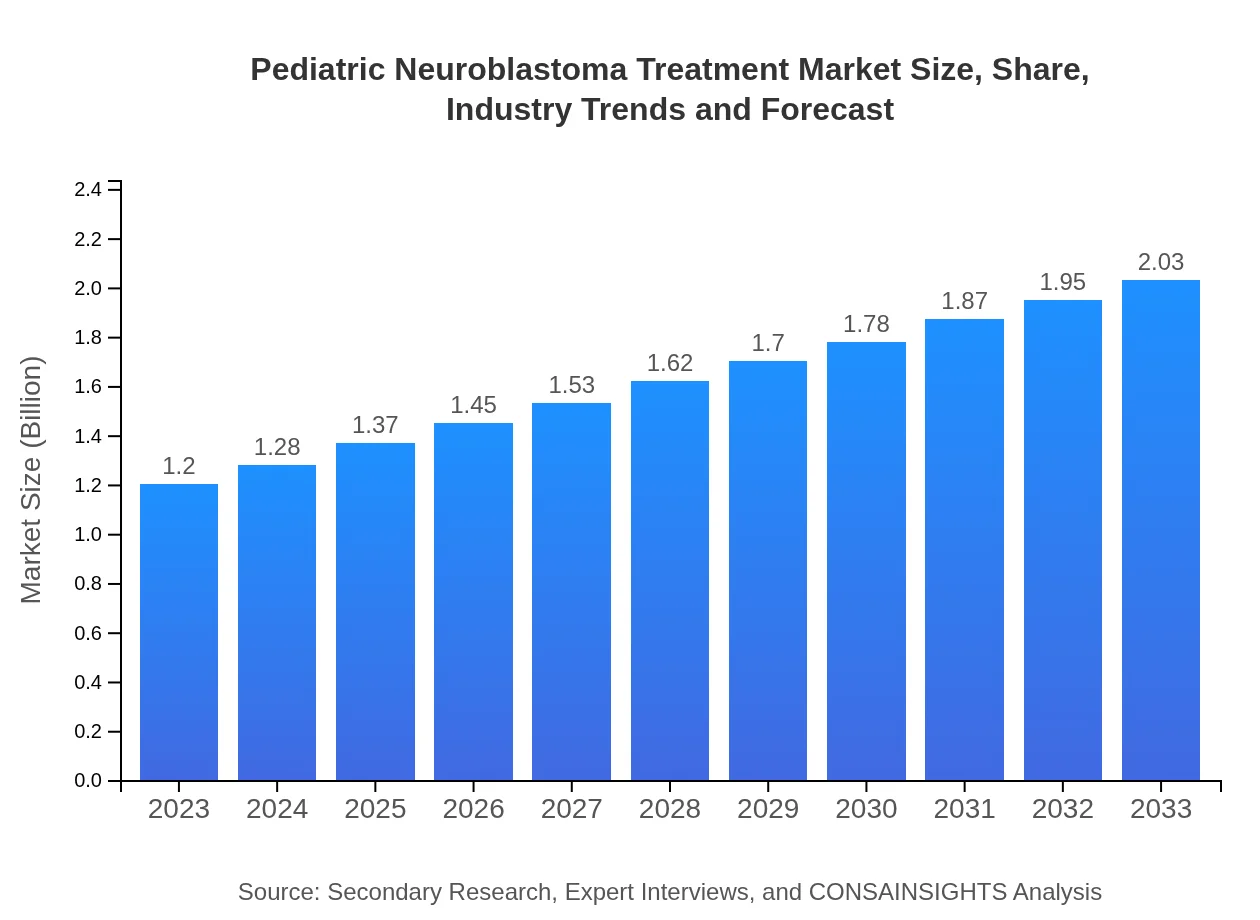
Pediatric Neuroblastoma Treatment Market — USD 1.2 billion in 2023, Growing to USD 2.03B by 2033 at 5.3% CAGR
This report provides a comprehensive analysis of the Pediatric Neuroblastoma Treatment market, offering insights into market size, growth projections, segmentation, and industry dynamics. The forecast period spans from 2023 to 2033.
Key Takeaways
- Global market expands from $1.20 Billion in 2023 to $2.03 Billion in 2033 at a 5.3% CAGR.
- North America is largest regional market; Latin America is regional market region based on implied CAGR across 2023 to 2033.
- Latin America is the regional market region at an implied 5.62% CAGR, rising from $0.11 Billion to $0.19 Billion between 2023 and 2033.
- Therapeutic mix includes surgery, chemotherapy, radiotherapy, immunotherapy and targeted therapies; key players include Novartis AG, Roche Holding AG, and Sanofi.
- Investment in novel approaches and growing clinical activity underpin long-term market expansion.
Pediatric Neuroblastoma Treatment Market Report — Executive Summary
Regional analysis shows North America as largest market and Latin America as fastest-growing region by implied CAGR. The Pediatric Neuroblastoma Treatment market is projected to grow from $1.20 Billion in 2023 to $2.03 Billion by 2033 at a 5.3% CAGR. Growth is supported by advancements in targeted therapies, expanding immunotherapy research and heightened investment in pediatric oncology. Treatment modalities span surgery, chemotherapy, radiotherapy and immunotherapy with increasing focus on personalized and novel approaches. Regional dynamics show North America as the largest market, while Latin America posts the highest implied growth rate. Leading pharmaceutical companies such as Novartis AG, Roche Holding AG, Bristol Myers Squibb Co., Eli Lilly and Company and Sanofi play active roles in therapeutic development. Market participants are responding to rising clinical activity, improved diagnostic capability and collaborative R&D, while regulatory and access challenges remain important considerations for adoption and commercialization strategies.
Key Growth Drivers
- Rising clinical research and development in targeted therapies and immunotherapy for pediatric neuroblastoma.
- Increased investment from major pharmaceutical companies supporting novel treatment pipelines and clinical trials.
- Enhanced diagnostic capabilities and early detection improving treatment planning and uptake of advanced therapies.
- Growing collaboration among industry, academic institutions and research organizations to accelerate therapeutic innovation.
- Greater awareness and advocacy in pediatric oncology driving demand for improved treatment options.
| Metric | Value |
|---|---|
| Study Period | 2023 - 2033 |
| 2023 Market Size | $1.20 Billion |
| CAGR (2023-2033) | 5.3% |
| 2033 Market Size | $2.03 Billion |
| Top Companies | Novartis AG, Roche Holding AG, Bristol Myers Squibb Co., Eli Lilly and Company, Sanofi |
| Published Date | 20 October 2024 |
| Last Modified Date | 28 May 2026 |
Pediatric Neuroblastoma Treatment Market Overview
Customize Pediatric Neuroblastoma Treatment Market Report market research report
- ✔ Get in-depth analysis of Pediatric Neuroblastoma Treatment market size, growth, and forecasts.
- ✔ Understand Pediatric Neuroblastoma Treatment's regional dynamics and industry-specific trends.
- ✔ Identify potential applications, end-user demand, and growth segments in Pediatric Neuroblastoma Treatment
What is the Market Size & CAGR of Pediatric Neuroblastoma Treatment Market Report market in 2023?
Pediatric Neuroblastoma Treatment Industry Analysis
Pediatric Neuroblastoma Treatment Market Segmentation and Scope
Tell us your focus area and get a customized research report.
Pediatric Neuroblastoma Treatment Market Report Market Analysis Report by Region
Europe Pediatric Neuroblastoma Treatment Market Report:
Europe grows from $0.37 Billion in 2023 to $0.62 Billion in 2033. Expansion is linked to increasing clinical activity, regulatory support for pediatric oncology trials and collaborative research across academic and industry players driving therapeutic adoption.Asia Pacific Pediatric Neuroblastoma Treatment Market Report:
Asia Pacific grows from $0.23 Billion in 2023 to $0.39 Billion in 2033. Growth is driven by rising healthcare investment, expanding diagnostic capability, and growing participation in clinical studies that support access to innovative treatment modalities.North America Pediatric Neuroblastoma Treatment Market Report:
North America is largest regional market, rising from $0.43 Billion in 2023 to $0.72 Billion in 2033. Regional strength reflects concentrated clinical research, established oncology centers and significant industry investment supporting access to advanced therapies and trials.South America Pediatric Neuroblastoma Treatment Market Report:
Latin America is fastest-growing region by implied CAGR, increasing from $0.11 Billion in 2023 to $0.19 Billion in 2033. 11 Billion in 2023 to $0.19 Billion in 2033 and is noted as the regional growth market at an implied 5.62% CAGR. Market momentum stems from expanding clinical infrastructure and increasing focus on pediatric oncology initiatives.Middle East & Africa Pediatric Neuroblastoma Treatment Market Report:
Middle East and Africa grows from $0.07 Billion in 2023 to $0.11 Billion in 2033. Development is supported by gradual improvements in healthcare delivery, targeted investments in oncology services and growing regional awareness of pediatric cancer care.Tell us your focus area and get a customized research report.
Research Methodology
Pediatric Neuroblastoma Treatment Market Analysis By Treatment Type
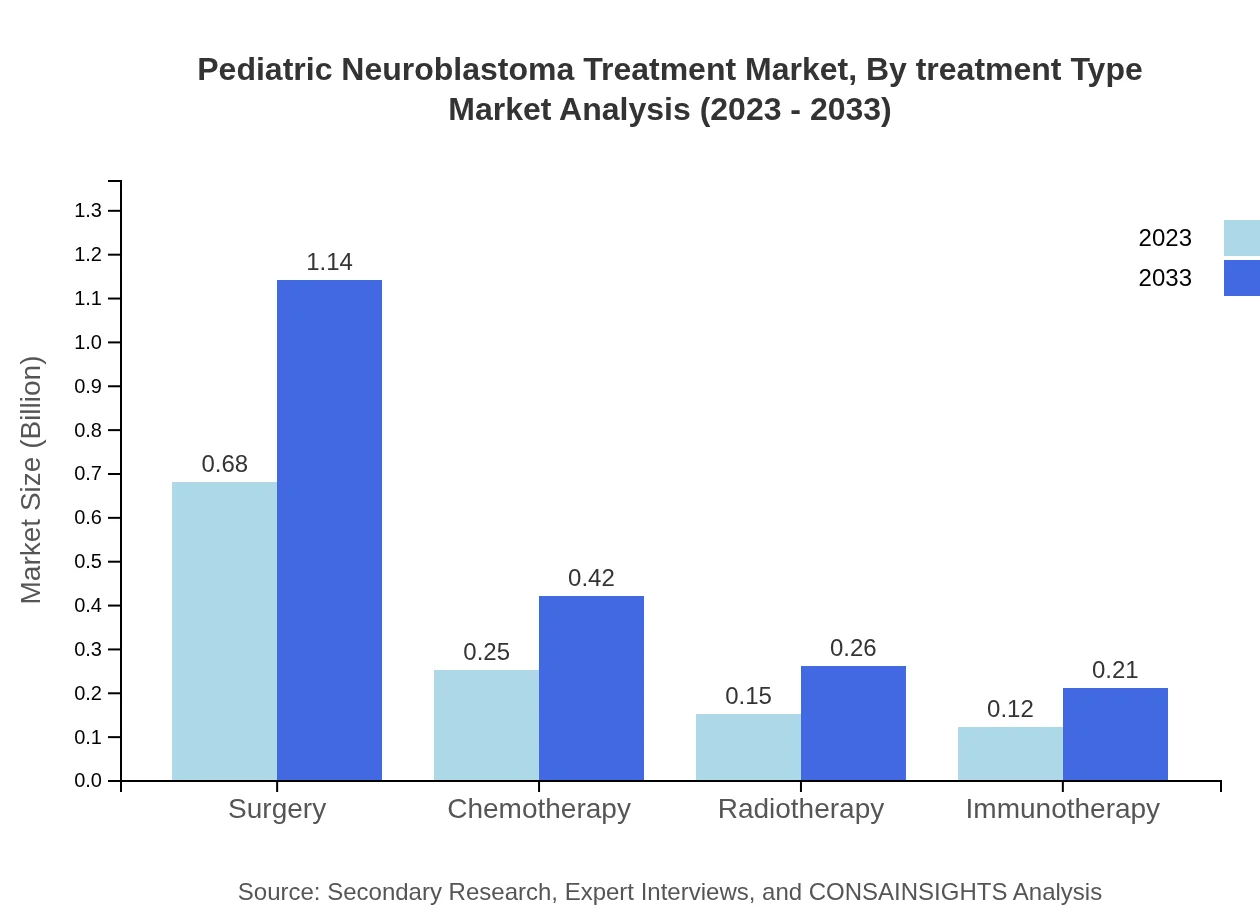
In terms of treatment types, cytotoxic drugs are predominant in the market, accounting for 65.52% of the share in 2023, projected to remain stable until 2033, rising concurrently in market size from 0.79 billion USD to 1.33 billion USD. Targeted therapy contributes significantly with 20.55% share, showing growth from 0.25 billion USD to 0.42 billion USD. Supportive care comprises 13.93% of the market size, with figures raising from 0.17 to 0.28 billion USD over the same period.
Pediatric Neuroblastoma Treatment Market Analysis By Stage
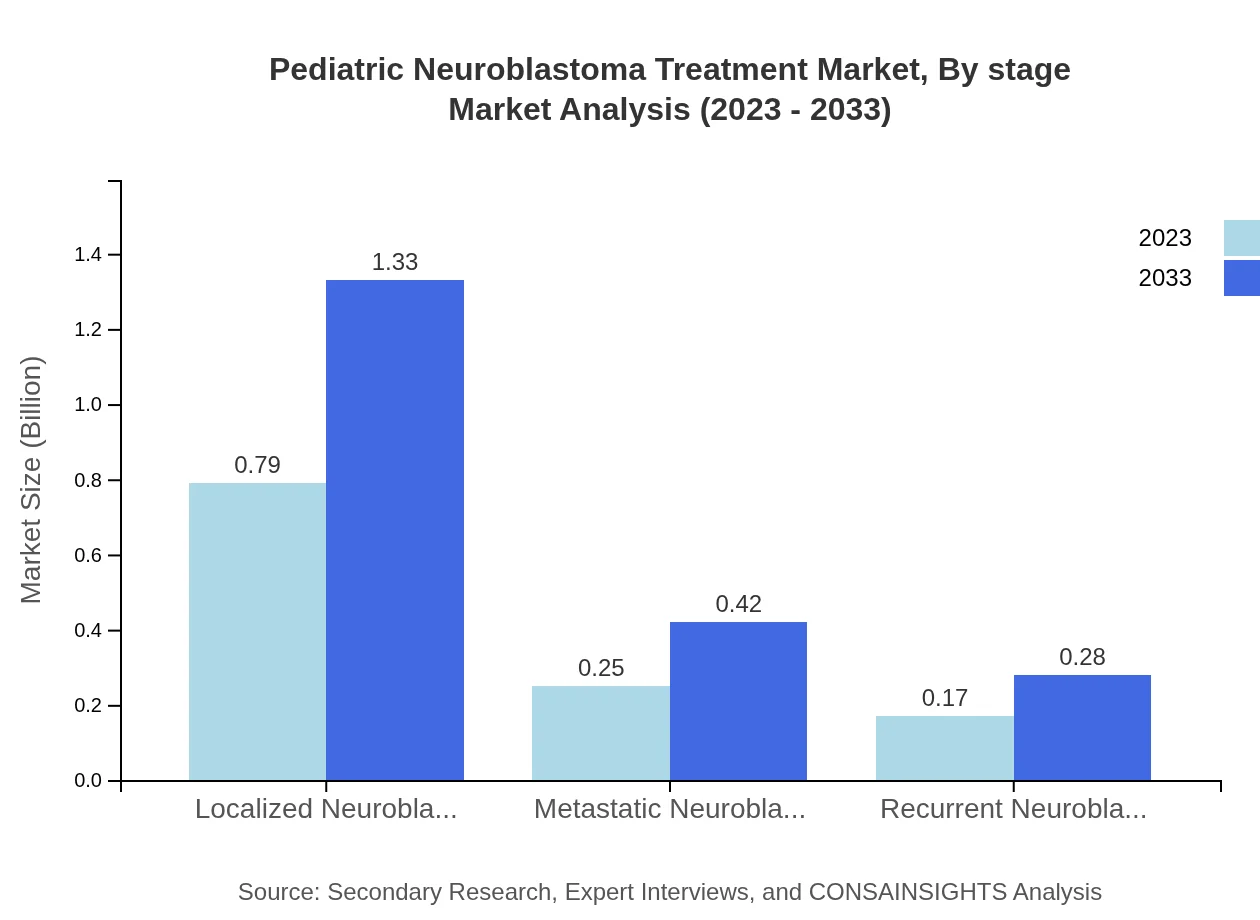
The market analysis by disease stage highlights that localized neuroblastoma dominates the segment, comprising 65.52% of the market share in 2023 and projected to expand to 1.33 billion USD by 2033. Metastatic neuroblastoma holds 20.55% market share, increasing from 0.25 billion to 0.42 billion USD, while recurrent neuroblastoma contributes 13.93% with growth from 0.17 billion to 0.28 billion USD by 2033.
Pediatric Neuroblastoma Treatment Market Analysis By End User
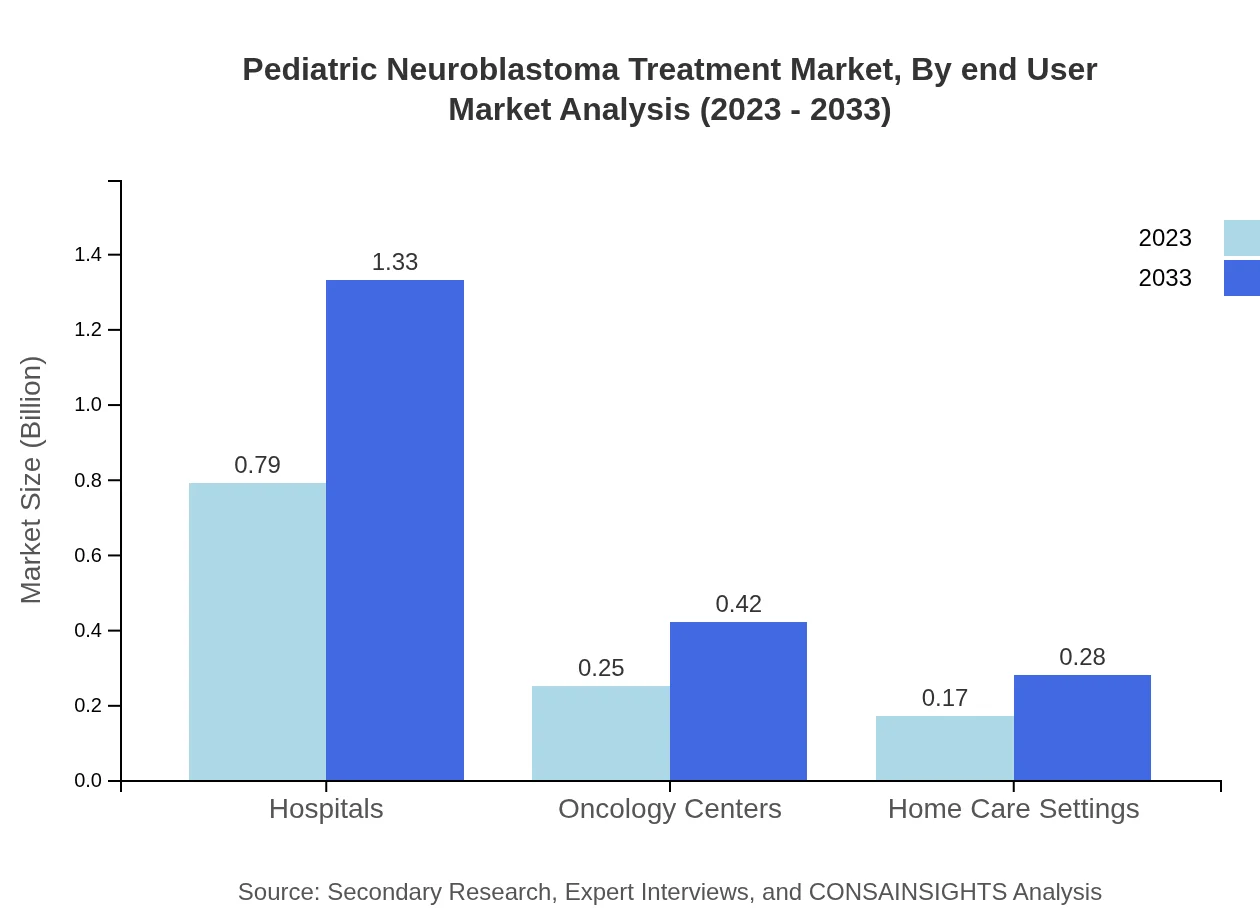
The end-user segmentation reveals that hospitals lead with a market share of 65.52% in 2023, projected to ascend from 0.79 billion to 1.33 billion USD by 2033. Oncology centers represent 20.55% share, with growth from 0.25 billion to 0.42 billion USD, and home care settings account for 13.93%, increasing from 0.17 billion to 0.28 billion USD over the forecast period.
Pediatric Neuroblastoma Treatment Market Analysis By Drug Type
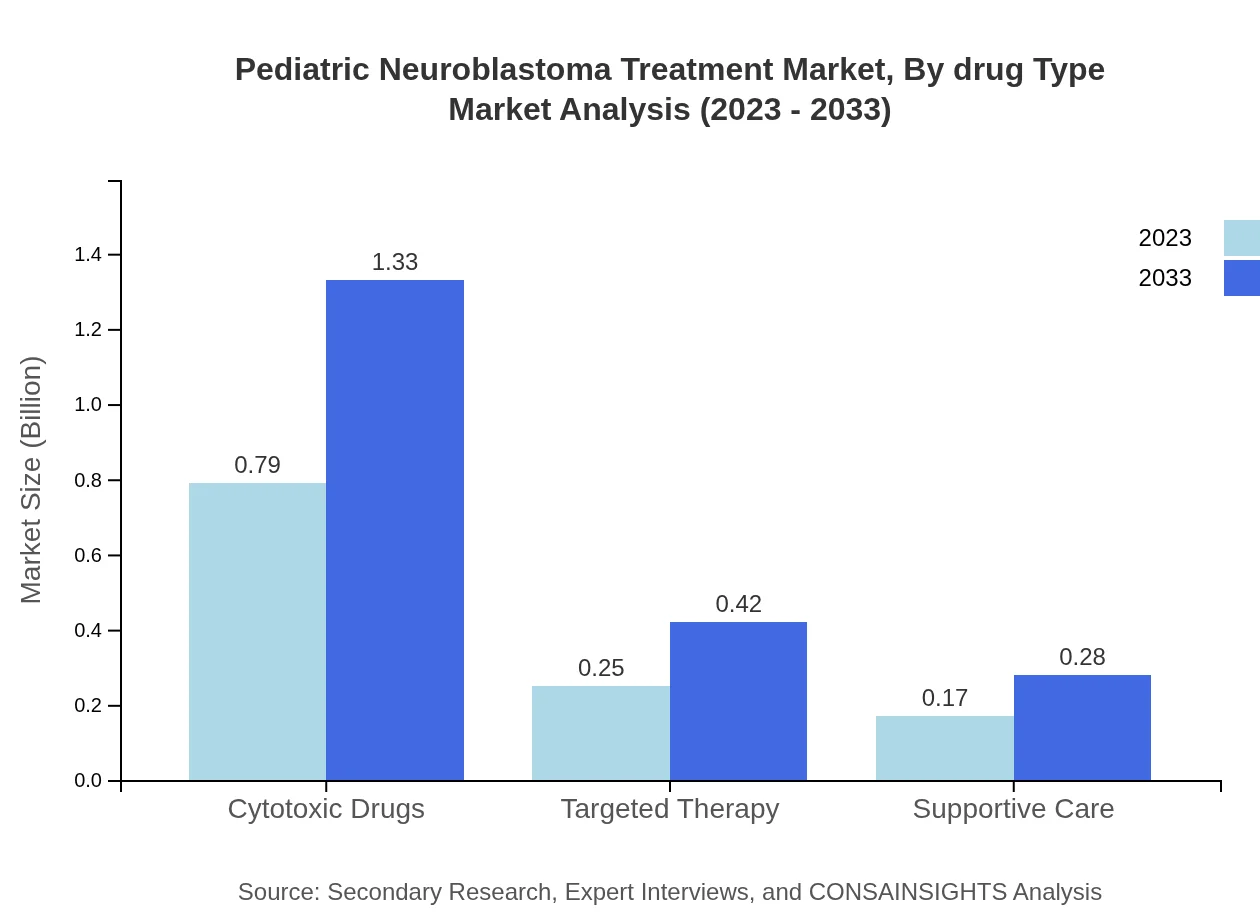
The drug type segmentation outlines cytotoxic drugs as the leading category, comprising 65.52% share in 2023, with a growth trajectory projected from 0.79 billion to 1.33 billion USD by 2033. Targeted therapy follows at 20.55%, increasing from 0.25 billion to 0.42 billion USD, while supportive care drugs hold a 13.93% share, expected to rise from 0.17 billion to 0.28 billion USD.
Pediatric Neuroblastoma Treatment Market Analysis By Therapy Approach
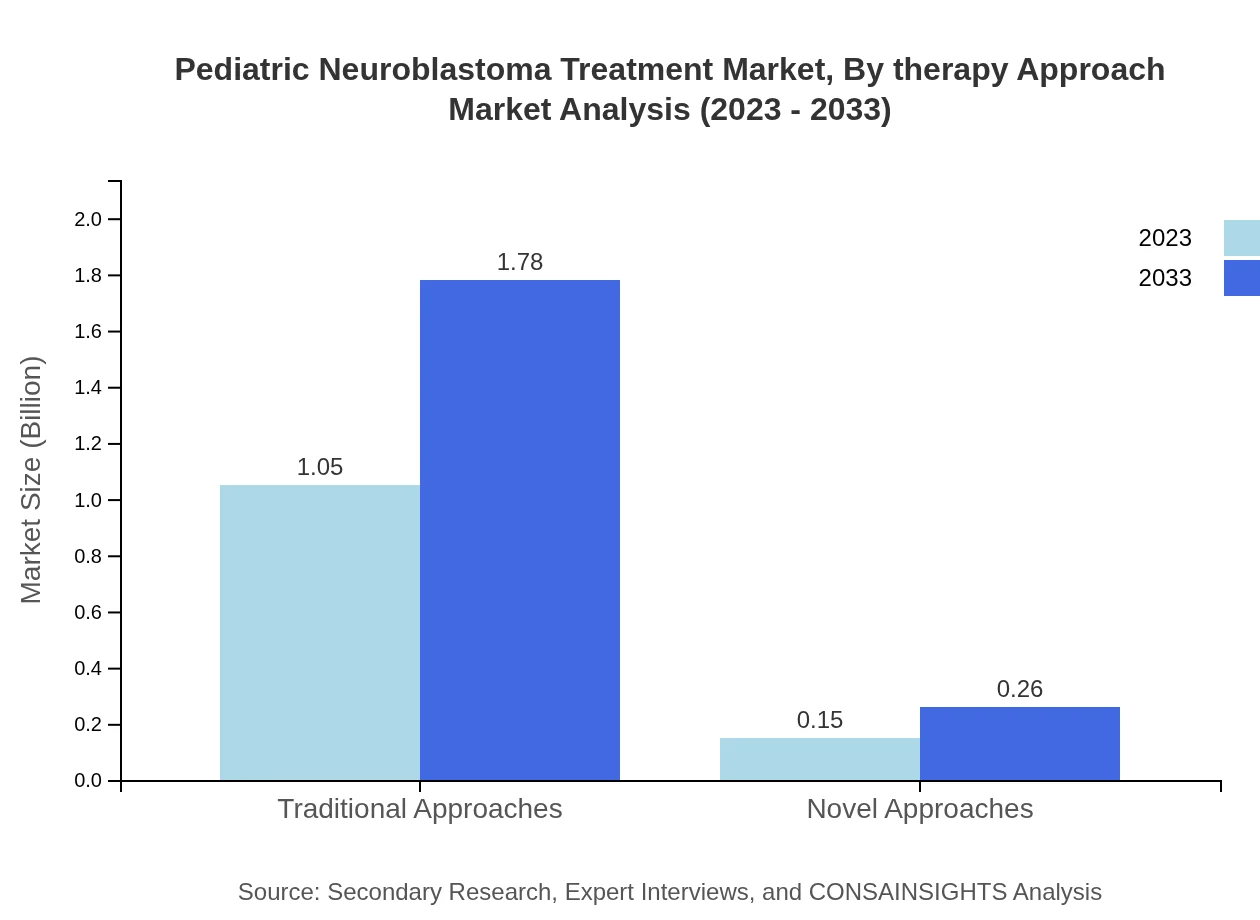
A breakdown by therapy approach indicates traditional therapies dominate with an 87.36% market share, growing from 1.05 billion USD to 1.78 billion USD. Novel approaches are gaining traction, representing 12.64% of the market, moving from 0.15 billion to 0.26 billion USD throughout the forecast period.
Pediatric Neuroblastoma Treatment Market Trends and Future Forecast
Tell us your focus area and get a customized research report.
Global Market Leaders and Top Companies in Pediatric Neuroblastoma Treatment Industry
Novartis AG:
A leading global healthcare company, Novartis specializes in innovative medicines, including oncology therapy solutions for pediatric neuroblastoma. Their commitment to research has positioned them as a key player in the field.Roche Holding AG:
Roche focuses on personalized healthcare and provides a range of treatments for neuroblastoma, leveraging advanced research methodologies. Their initiatives in immunotherapy showcase their dedication to improving survival rates in pediatric patients.Bristol Myers Squibb Co.:
Bristol Myers Squibb develops and delivers innovative medicines for various diseases, including neuroblastoma, focusing heavily on combination therapies and novel drug development.Eli Lilly and Company:
Eli Lilly’s efforts in pediatric oncology include new drug development for neuroblastoma treatments, merging both traditional and novel approaches to enhance patient outcomes.Sanofi:
Sanofi is committed to addressing unmet medical needs in oncology, including pediatric neuroblastoma, by investing in R&D and improving access to advanced treatment options.We're grateful to work with incredible clients.




FAQs
What is the current market size of the Pediatric Neuroblastoma Treatment market?
The market size for Pediatric Neuroblastoma Treatment was $1.20 Billion in 2023, based on the provided data for the global market during the stated baseline year.
How big will the market be in 2033?
According to the provided figures, the Pediatric Neuroblastoma Treatment market is projected to reach $2.03 Billion by 2033 under the specified forecast assumptions.
What is CAGR of the market for the forecast period?
The reported compound annual growth rate (CAGR) for the Pediatric Neuroblastoma Treatment market over 2023 to 2033 is 5.3% as stated in the input data.
Which region is the fastest Growing in the Pediatric Neuroblastoma Treatment Market Report market?
Latin America is the fastest-growing region, projected to expand from $0.11 Billion in 2023 to $0.19 Billion in 2033, reflecting an implied 5.62% CAGR over the forecast period.
Which region is the fastest Growing?
Latin America is specified as the regional market region at an implied 5.62% CAGR, rising from $0.11 Billion in 2023 to $0.19 Billion in 2033.
What are the main treatment categories covered in the report?
The report covers treatment types including surgery, chemotherapy, radiotherapy and immunotherapy, plus targeted and supportive care therapies as outlined in the segmentation facts.
Who are the top companies operating in this market?
Top companies listed in the input data include Novartis AG, Roche Holding AG, Bristol Myers Squibb Co., Eli Lilly and Company and Sanofi.
What drives long Term market growth?
Long-term growth is driven by novel therapeutic development, increased clinical trials, improved diagnostics and greater investment in pediatric oncology research and collaborations.