

Posterior Segment Eye Disorders Market Report
First published: 11 October 2024 | Last updated: 25 May 2026 | Report Code: posterior-segment-eye-disorders
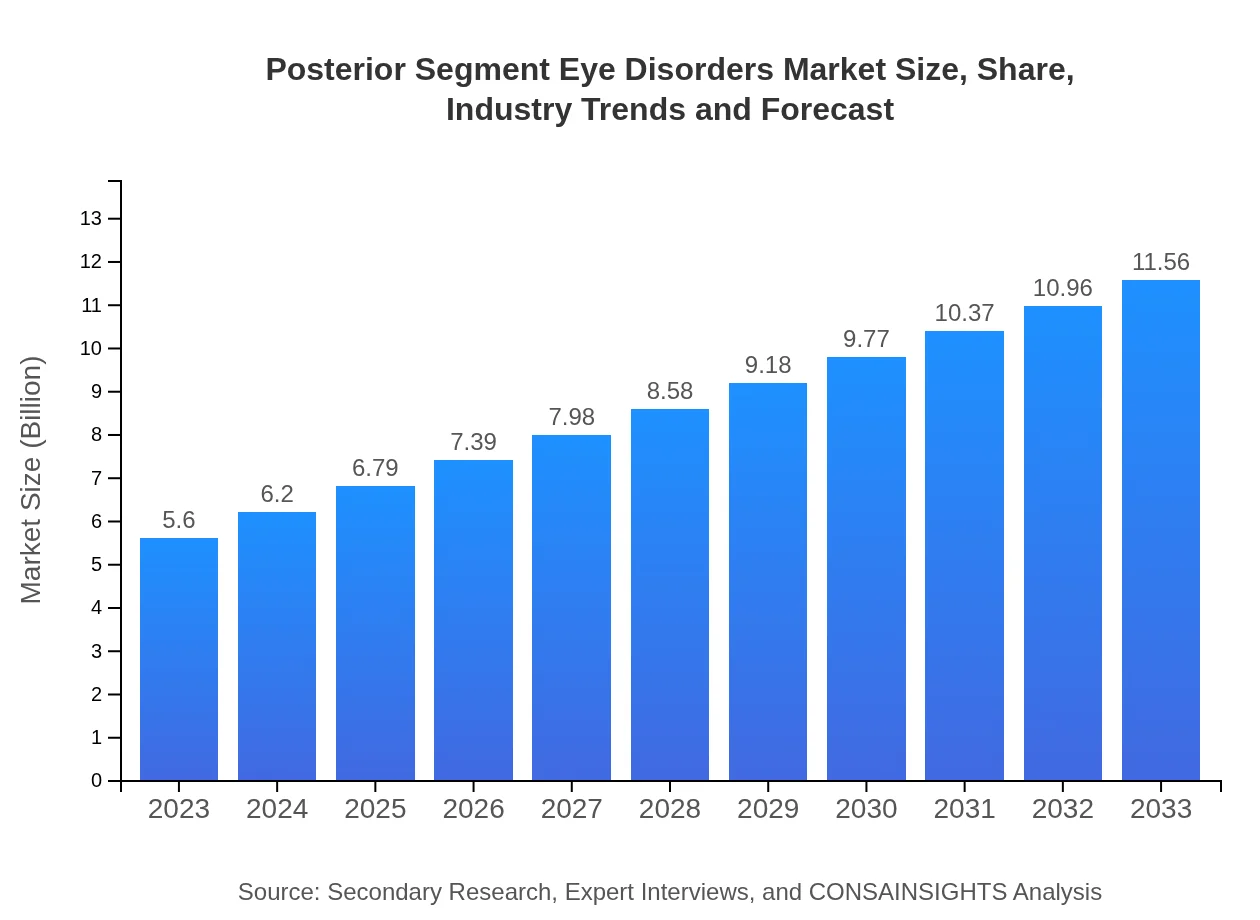
Posterior Segment Eye Disorders Market — USD 5.6 billion in 2023, Growing to USD 11.56B by 2033 at 7.3% CAGR
This report provides a comprehensive analysis of the posterior segment eye disorders market, covering market size, trends, regional insights, and future forecasts from 2023 to 2033.
Key Takeaways
- Global market value rises from $5.60 Billion in 2023 to $11.56 Billion in 2033, reflecting a 7.3% CAGR.
- North America is largest regional market, while no single fastest-growing region is stated because regional CAGR differences remain within 0.15 percentage points.
- Europe and Asia Pacific show notable expansions: Europe from $1.62 Billion to $3.34 Billion; Asia Pacific from $1.09 Billion to $2.24 Billion.
- Pharmacological and surgical therapies remain central to care, with hospitals, retail, and online pharmacies as key distribution channels.
- Major industry participants include Novartis AG, Regeneron Pharmaceuticals, Inc., Bayer AG, Alcon Inc., and Allergan plc.
Posterior Segment Eye Disorders Market Report — Executive Summary
North America remains largest market by forecast-period value, while no single fastest-growing region is stated because top regional growth rates are separated by less than 0.15 percentage points. The posterior segment eye disorders market is projected to more than double from $5.60 Billion in 2023 to $11.56 Billion by 2033 at a 7.3% CAGR. Growth is supported by increasing prevalence of retinal conditions, demographic shifts, and expanded diagnostic and therapeutic capabilities. Market structure spans pharmacological treatments, surgical interventions, and adjunct therapies, distributed through hospital pharmacies, retail outlets, and online channels. Regional trajectories vary: North America leads in absolute value, while Europe, Asia Pacific, Latin America, and Middle East & Africa register steady gains. Competitive activity centers on clinical development, product launches, and partnerships, with established players such as Novartis AG, Regeneron Pharmaceuticals, Inc., Bayer AG, Alcon Inc., and Allergan plc active across segments. Ongoing investments in research and improvements in access and technology are key considerations for stakeholders evaluating market entry, product strategy, and regional prioritization.
Key Growth Drivers
- Rising incidence and diagnosis of posterior segment conditions increasing demand for therapeutic and surgical solutions.
- Advances in pharmacological treatments and surgical techniques expanding treatment options and patient eligibility.
- Greater healthcare spending and improved access to eye care services supporting broader treatment uptake.
- Investment in research and development accelerating novel therapies and diagnostic technologies.
- Growth in outpatient and minimally invasive procedures shifting care delivery toward higher-volume settings.
| Metric | Value |
|---|---|
| Study Period | 2023 - 2033 |
| 2023 Market Size | $5.60 Billion |
| CAGR (2023-2033) | 7.3% |
| 2033 Market Size | $11.56 Billion |
| Top Companies | Novartis AG, Regeneron Pharmaceuticals, Inc., Bayer AG, Alcon Inc., Allergan plc |
| Published Date | 11 October 2024 |
| Last Modified Date | 25 May 2026 |
Posterior Segment Eye Disorders Market Overview
Customize Posterior Segment Eye Disorders Market Report market research report
- ✔ Get in-depth analysis of Posterior Segment Eye Disorders market size, growth, and forecasts.
- ✔ Understand Posterior Segment Eye Disorders's regional dynamics and industry-specific trends.
- ✔ Identify potential applications, end-user demand, and growth segments in Posterior Segment Eye Disorders
What is the Market Size & CAGR of Posterior Segment Eye Disorders Market Report market in 2023?
Posterior Segment Eye Disorders Industry Analysis
Posterior Segment Eye Disorders Market Segmentation and Scope
Tell us your focus area and get a customized research report.
Posterior Segment Eye Disorders Market Report Market Analysis Report by Region
Europe Posterior Segment Eye Disorders Market Report:
Europe grows from $1.62 Billion in 2023 to $3.34 Billion in 2033. Expansion is supported by increased diagnosis rates, access to specialized care, and adoption of evolving therapeutic approaches across national health systems.Asia Pacific Posterior Segment Eye Disorders Market Report:
Asia Pacific grows from $1.09 Billion in 2023 to $2.24 Billion in 2033. Growth is linked to greater healthcare access, rising awareness of retinal diseases, and expanding availability of pharmacological and surgical interventions.North America Posterior Segment Eye Disorders Market Report:
North America is largest regional market, rising from $1.99 Billion in 2023 to $4.1 Billion in 2033. This trajectory reflects substantial demand for advanced diagnostics and pharmacological and surgical treatments, supported by strong healthcare infrastructure and investment.South America Posterior Segment Eye Disorders Market Report:
Latin America grows from $0.44 Billion in 2023 to $0.9 Billion in 2033. Market progress is associated with improving eye care services, enhanced diagnosis, and gradual expansion of treatment options in regional centers.Middle East & Africa Posterior Segment Eye Disorders Market Report:
Middle East and Africa grows from $0.47 Billion in 2023 to $0.98 Billion in 2033. The increase reflects wider access to eye care, investments in clinical capabilities, and growing focus on managing posterior segment disorders.Tell us your focus area and get a customized research report.
Research Methodology
Posterior Segment Eye Disorders Market Analysis By Disorder Type
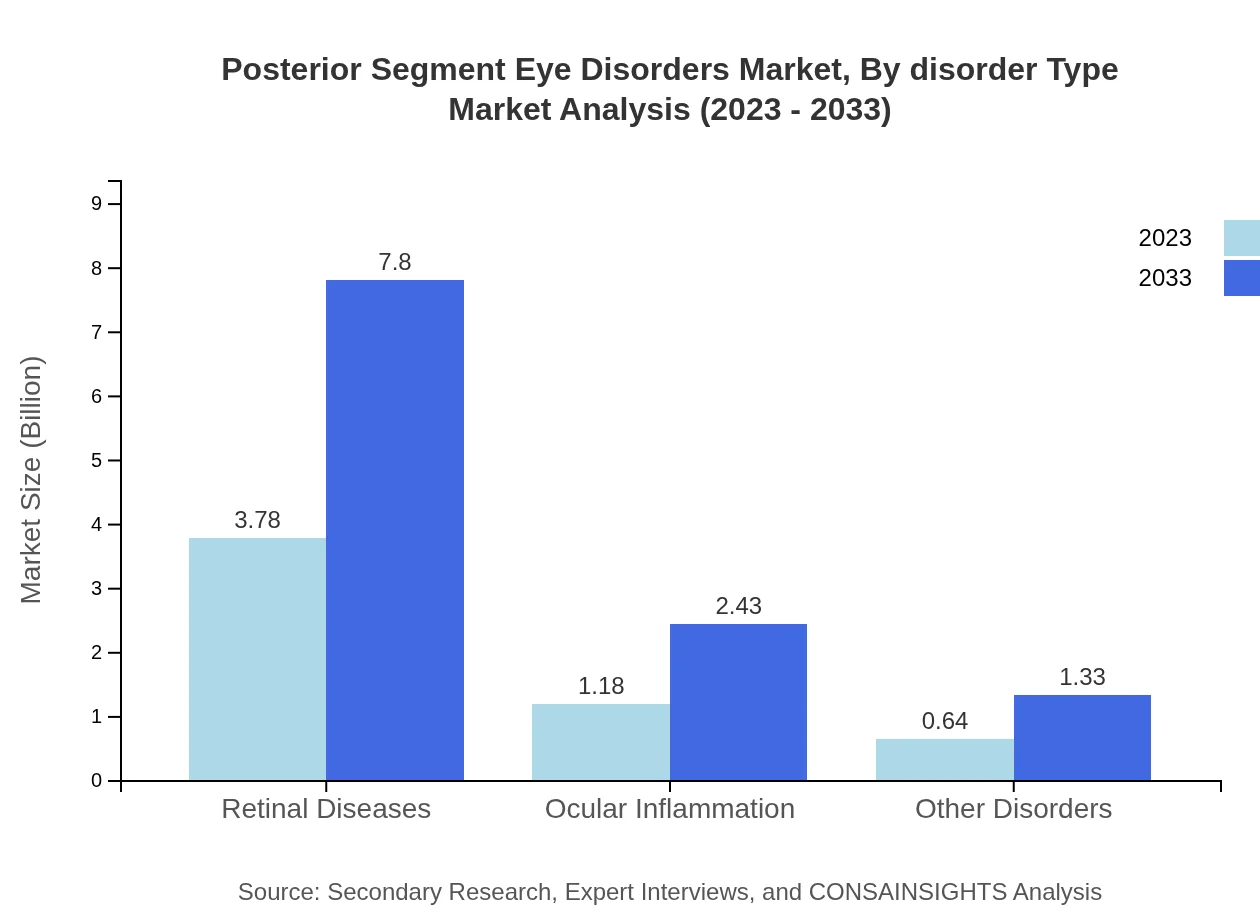
The market segmented by disorder type includes retinal diseases, ocular inflammation, and other disorders. Retinal diseases dominate the market with an estimated size of $3.78 billion in 2023, expanding to $7.80 billion by 2033, highlighting a significant growth trajectory due to rising numbers of patients. Ocular inflammation and other disorders also contribute, with expected market sizes of $1.18 billion and $0.64 billion respectively in 2023.
Posterior Segment Eye Disorders Market Analysis By Therapy Type
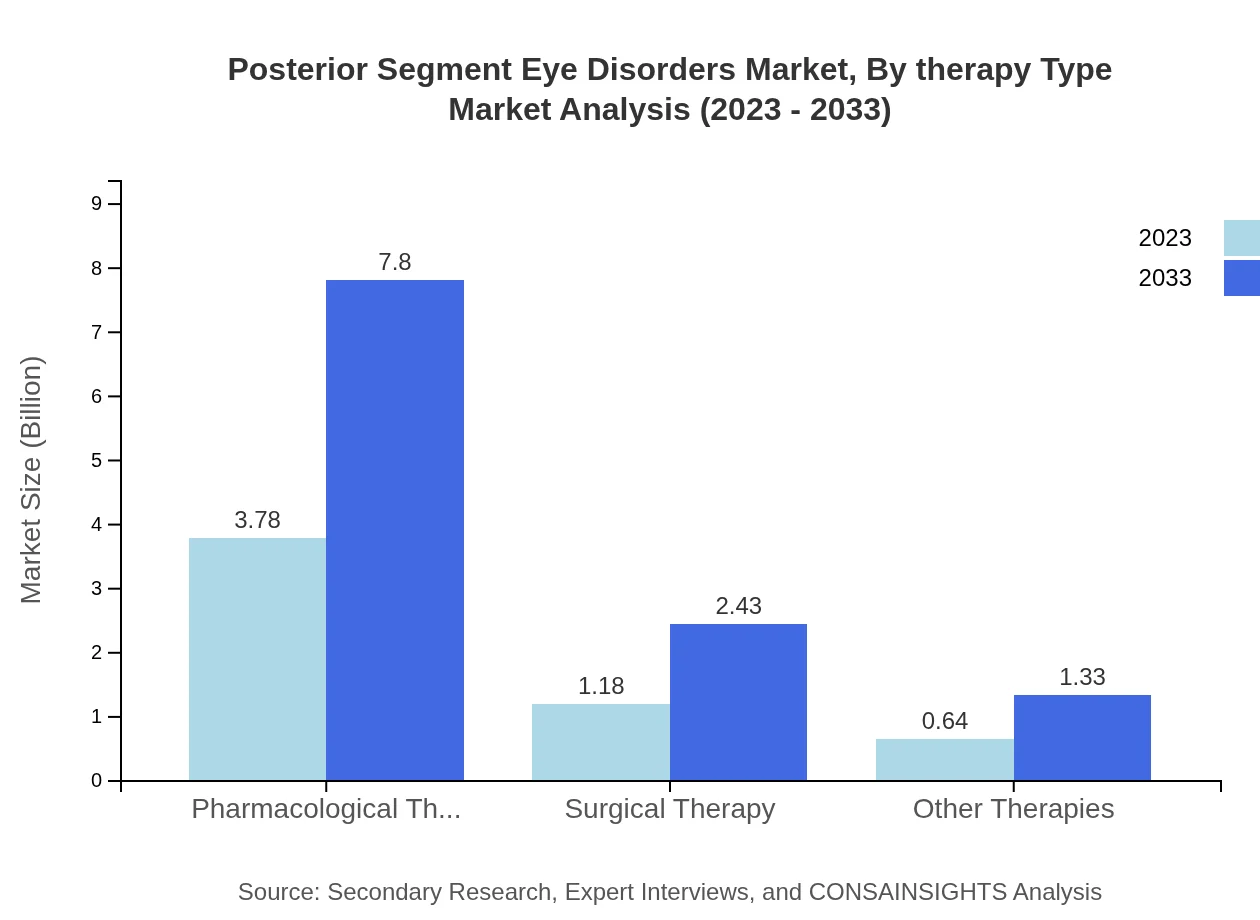
In terms of therapy type, the market includes pharmacological therapy, surgical therapy, and other therapies. Pharmacological therapy is the largest segment, accounting for approximately $3.78 billion in 2023 and is projected to maintain this leading position with substantial growth expected through innovative therapeutics. Surgical therapy, valued at $1.18 billion in 2023, is also poised for growth as surgical interventions become more efficient and less invasive.
Posterior Segment Eye Disorders Market Analysis By Distribution Channel
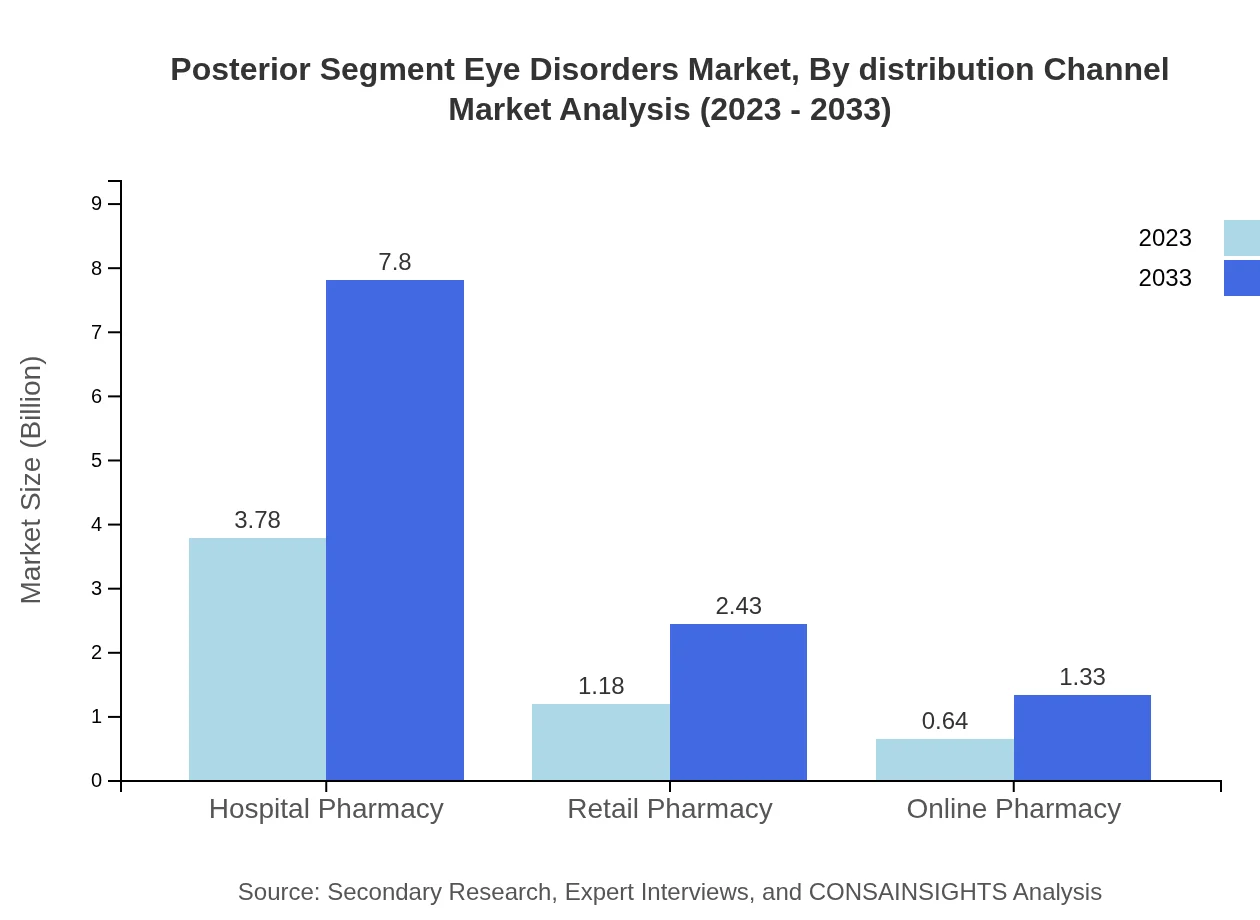
Analyzed by distribution channel, the market covers hospital pharmacies, retail pharmacies, and online pharmacies. Hospital pharmacies lead, capturing a market share of $3.78 billion in 2023, while retail channels hold a significant share of $1.18 billion, reflecting patient preferences. Growth in online pharmacies, currently at $0.64 billion, is accelerating due to the pandemic-driven shift to digital health solutions.
Posterior Segment Eye Disorders Market Analysis By Patient Type
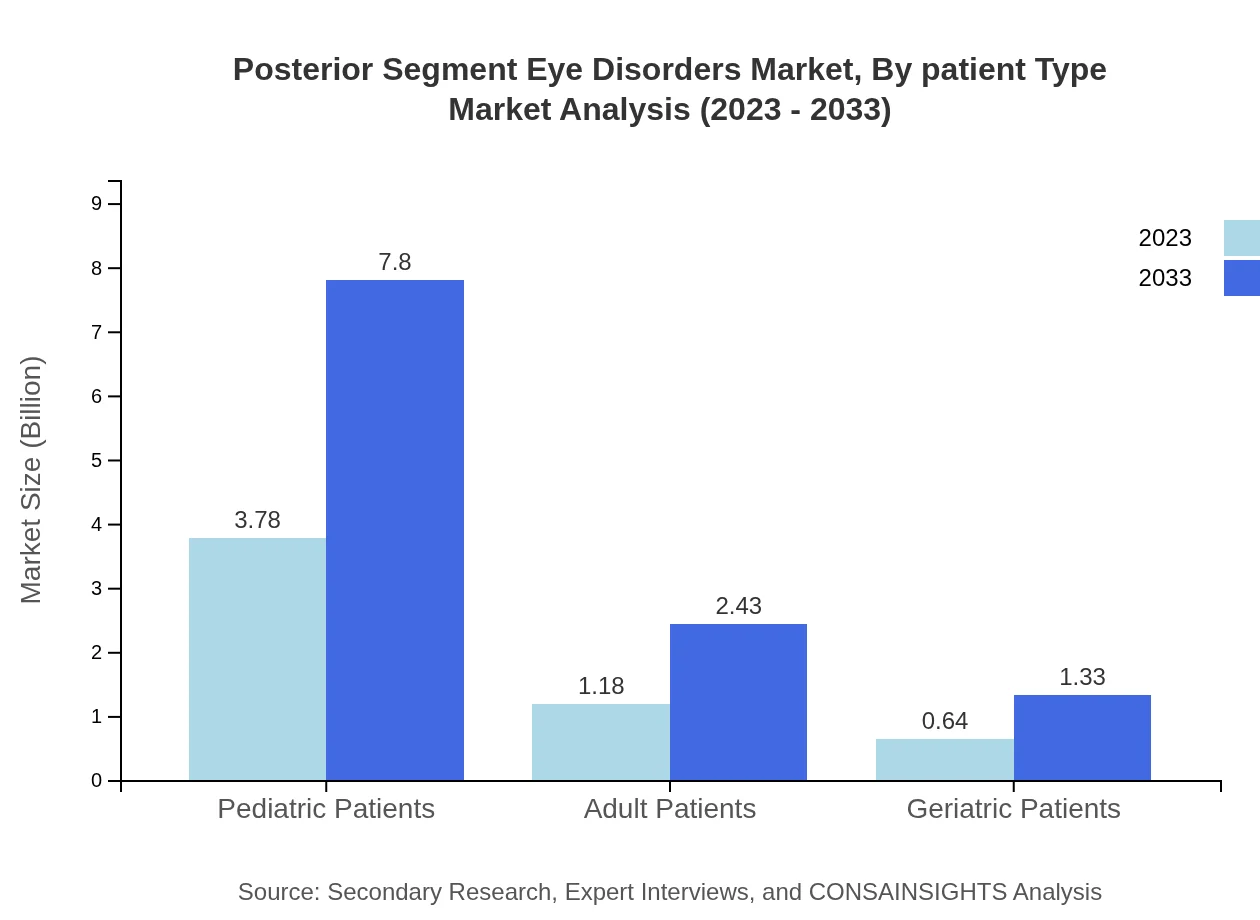
The market segmented by patient type comprises pediatric patients, adult patients, and geriatric patients. Pediatric patients hold the largest segment at $3.78 billion in 2023, indicating intense demand for pediatric-specific therapies, while adult and geriatric segments account for $1.18 billion and $0.64 billion respectively. The consistent growth across all patient types signifies the rising need for specialized care in eye health.
Posterior Segment Eye Disorders Market Trends and Future Forecast
Tell us your focus area and get a customized research report.
Global Market Leaders and Top Companies in Posterior Segment Eye Disorders Industry
Novartis AG:
Leading the market with a diverse portfolio of therapeutic solutions in eye care, Novartis focuses on innovative treatments for retinal diseases, significantly impacting market advancements.Regeneron Pharmaceuticals, Inc.:
Regeneron is renowned for its development of eye medications, particularly in managing retinal diseases, making it a key player in shaping the future of ocular therapeutics.Bayer AG:
Bayer's extensive research and development in ophthalmology have led to breakthroughs in treatments for posterior segment disorders, contributing to overall market growth.Alcon Inc.:
As a leader in eye care products, Alcon offers innovative solutions for surgical interventions, thereby enhancing treatment efficacy within the posterior segment disorders market.Allergan plc:
Allergan's strong presence in ocular health, particularly with its pharmacologic therapies aimed at retinal conditions, has positioned it as a vital contributor to the industry.We're grateful to work with incredible clients.









FAQs
What is the current market size of the posterior segment eye disorders market?
The market size for 2023 is $5.60 Billion, as stated in the report data for the 2023 base year.
How big will the market be in 2033?
The market is projected to reach $11.56 Billion by 2033 according to the provided forecast figures.
What is CAGR for the forecast period?
The compound annual growth rate for 2023 to 2033 is 7.3%, per the reported projection.
Is there a single fastest Growing region in the Posterior Segment Eye Disorders Market Report market?
No single fastest-growing region is stated for the Posterior Segment Eye Disorders Market Report market because the top regional implied CAGR values are within 0.15 percentage points of each other, making the ranking too close to call reliably.
Which companies lead the market?
Top companies listed include Novartis AG, Regeneron Pharmaceuticals, Inc., Bayer AG, Alcon Inc., and Allergan plc.
What are the primary treatment categories covered?
The market includes pharmacological therapy, surgical therapy, and other adjunct therapies as the main treatment categories.
How are products typically distributed?
Key distribution channels include hospital pharmacy, retail pharmacy, and online pharmacy networks supporting product availability.
What research methods support the report findings?
The study is based on primary interviews with industry experts and secondary sources, with data triangulation and expert-led trend analysis.