

Pulmonary Drug Delivery Devices Market Report
First published: 21 October 2024 | Last updated: 25 May 2026 | Report Code: pulmonary-drug-delivery-devices
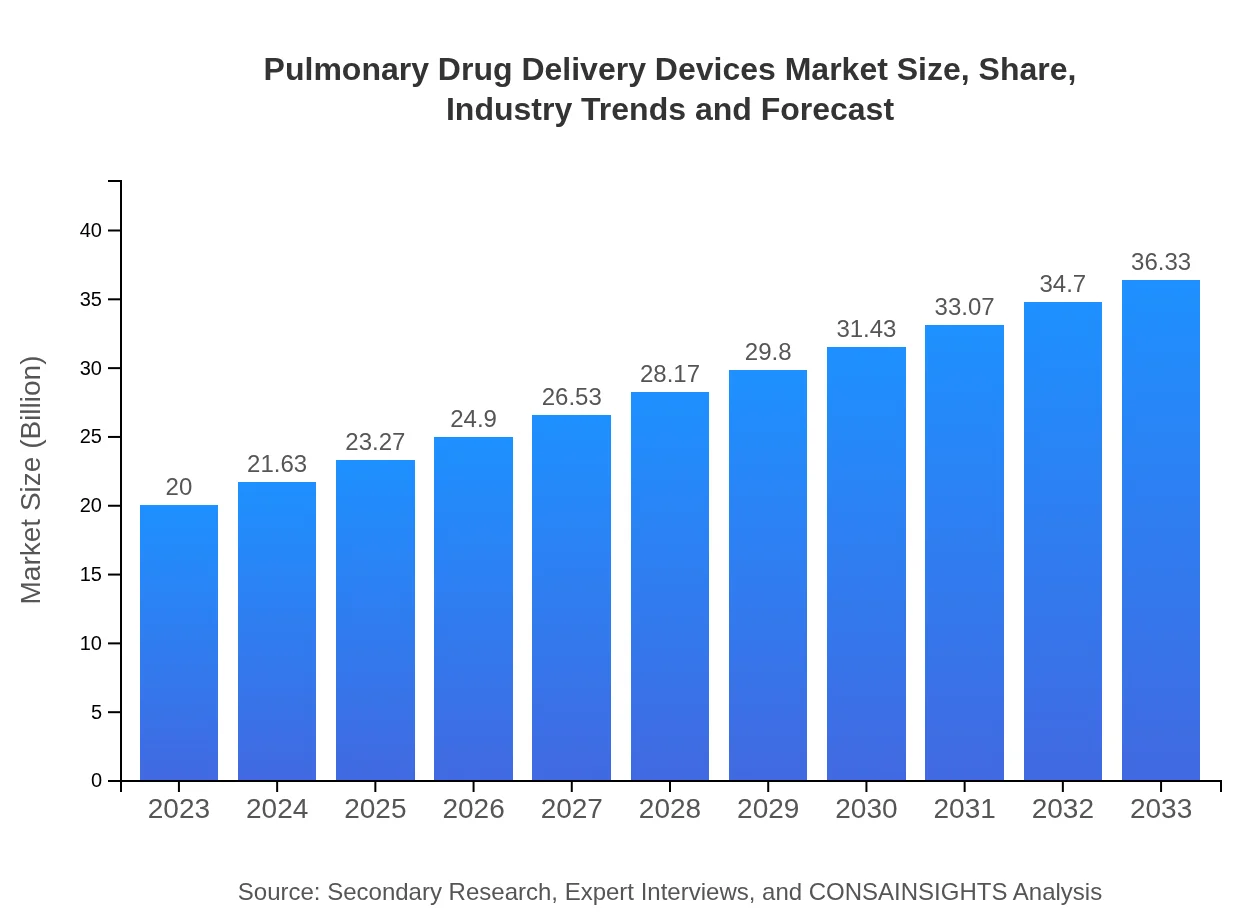
Pulmonary Drug Delivery Devices Market — USD 20 billion in 2023, Growing to USD 36.33B by 2033 at 6% CAGR
This report provides a comprehensive analysis of the Pulmonary Drug Delivery Devices market, covering insights into market size, trends, technology, and growth forecasts for the period 2023-2033.
Key Takeaways
- Global market expands from $20.00 Billion in 2023 to $36.33 Billion in 2033 at a 6% CAGR.
- North America is largest regional market, while no single fastest-growing region is stated because regional CAGR differences remain within 0.15 percentage points.
- Device types such as inhalers and nebulizers remain central amid demand for patient-friendly delivery.
- Top companies include AstraZeneca, Boehringer Ingelheim, GlaxoSmithKline, and Teva Pharmaceuticals.
Pulmonary Drug Delivery Devices Market Report — Executive Summary
North America remains largest market by forecast-period value, while no single fastest-growing region is stated because top regional growth rates are separated by less than 0.15 percentage points. This report assesses factors fueling expansion in pulmonary drug delivery devices, including increasing respiratory disease burden and a shift toward user-friendly administration methods. Technological developments in inhalers and nebulizers, together with enhanced drug formulations, support adoption across hospitals, clinics, and homecare settings. Market participants are investing in research and development to refine device performance and compliance. Regulatory engagement and streamlined approvals influence time-to-market for new products. Segmentation covers device type, therapeutic area, patient type, distribution channel, and end-user, offering a structured view for stakeholders. Regional breakdowns quantify market movement, with firm-level profiles of leading companies to guide strategic planning and partnership decisions.
Key Growth Drivers
- Rising incidence of respiratory conditions driving demand for effective pulmonary delivery methods.
- Patient preference for convenient, home-compatible devices expanding adoption outside hospital settings.
- Innovation in inhaler and nebulizer technology improving therapeutic delivery and adherence.
- Increased R&D investment by major pharmaceutical and device manufacturers to differentiate offerings.
- Regulatory pathways that support clinical evaluation and approval for new delivery platforms.
| Metric | Value |
|---|---|
| Study Period | 2023 - 2033 |
| 2023 Market Size | $20.00 Billion |
| CAGR (2023-2033) | 6% |
| 2033 Market Size | $36.33 Billion |
| Top Companies | AstraZeneca, Boehringer Ingelheim, GlaxoSmithKline, Teva Pharmaceuticals |
| Published Date | 21 October 2024 |
| Last Modified Date | 25 May 2026 |
Pulmonary Drug Delivery Devices Market Overview
Customize Pulmonary Drug Delivery Devices Market Report market research report
- ✔ Get in-depth analysis of Pulmonary Drug Delivery Devices market size, growth, and forecasts.
- ✔ Understand Pulmonary Drug Delivery Devices's regional dynamics and industry-specific trends.
- ✔ Identify potential applications, end-user demand, and growth segments in Pulmonary Drug Delivery Devices
What is the Market Size & CAGR of Pulmonary Drug Delivery Devices Market Report market in 2023?
Pulmonary Drug Delivery Devices Industry Analysis
Pulmonary Drug Delivery Devices Market Segmentation and Scope
Tell us your focus area and get a customized research report.
Pulmonary Drug Delivery Devices Market Report Market Analysis Report by Region
Europe Pulmonary Drug Delivery Devices Market Report:
Europe grows from $5.51 Billion in 2023 to $10.01 Billion in 2033. 51 Billion in 2023 to $10.01 Billion in 2033, driven by demand for advanced inhalation therapies and supportive regulatory frameworks that facilitate clinical evaluation and commercialization in multiple national markets.Asia Pacific Pulmonary Drug Delivery Devices Market Report:
Asia Pacific grows from $3.97 Billion in 2023 to $7.22 Billion in 2033. 97 Billion in 2023 to $7.22 Billion in 2033, reflecting rising disease prevalence, increased healthcare investment, and growing adoption of homecare-compatible pulmonary devices across diverse patient populations.North America Pulmonary Drug Delivery Devices Market Report:
North America is largest regional market, rising from $6.98 Billion in 2023 to $12.67 Billion in 2033. Regional strength reflects established healthcare systems, extensive R&D activity, and a strong presence of leading firms supporting device adoption across care settings.South America Pulmonary Drug Delivery Devices Market Report:
Latin America grows from $1.84 Billion in 2023 to $3.35 Billion in 2033. 84 Billion in 2023 to $3.35 Billion in 2033, with market movement shaped by improving healthcare infrastructure, greater awareness of respiratory conditions, and expanding distribution through pharmacies and clinics.Middle East & Africa Pulmonary Drug Delivery Devices Market Report:
Middle East and Africa grows from $1.7 Billion in 2023 to $3.08 Billion in 2033. Growth is supported by expanding access to medical devices, rising attention to respiratory health, and gradual strengthening of healthcare delivery networks.Tell us your focus area and get a customized research report.
Research Methodology
Pulmonary Drug Delivery Devices Market Analysis By Device Type
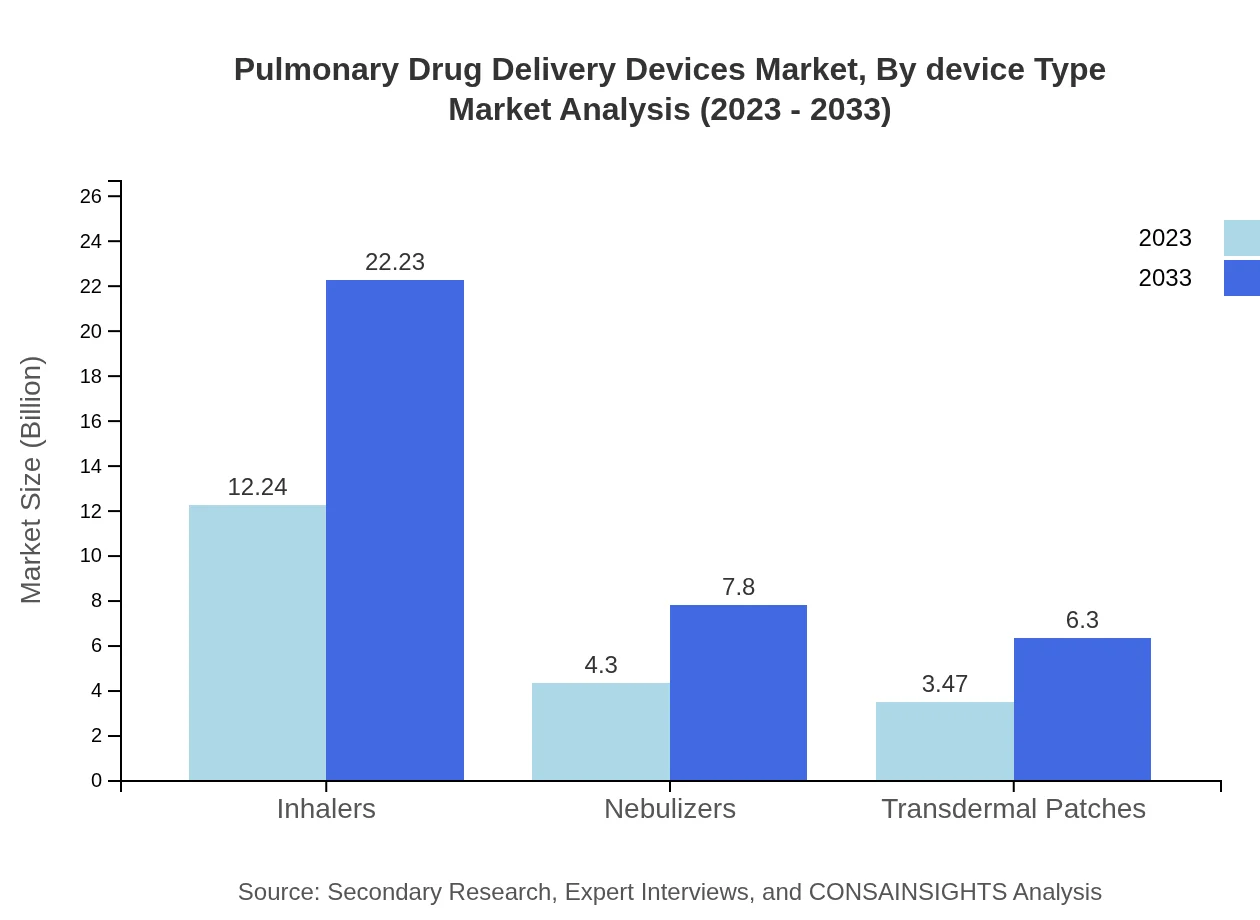
In 2023, inhalers account for a notable market share, valued at $12.24 billion and expected to grow to $22.23 billion by 2033. This segment leads the market due to its convenience and widespread acceptance among users. Following inhalers are nebulizers, with a size of $4.30 billion in 2023, expected to reach $7.80 billion by 2033. Transdermal patches, while smaller, show promise, with a projected increase from $3.47 billion in 2023 to $6.30 billion by 2033.
Pulmonary Drug Delivery Devices Market Analysis By Therapeutic Area
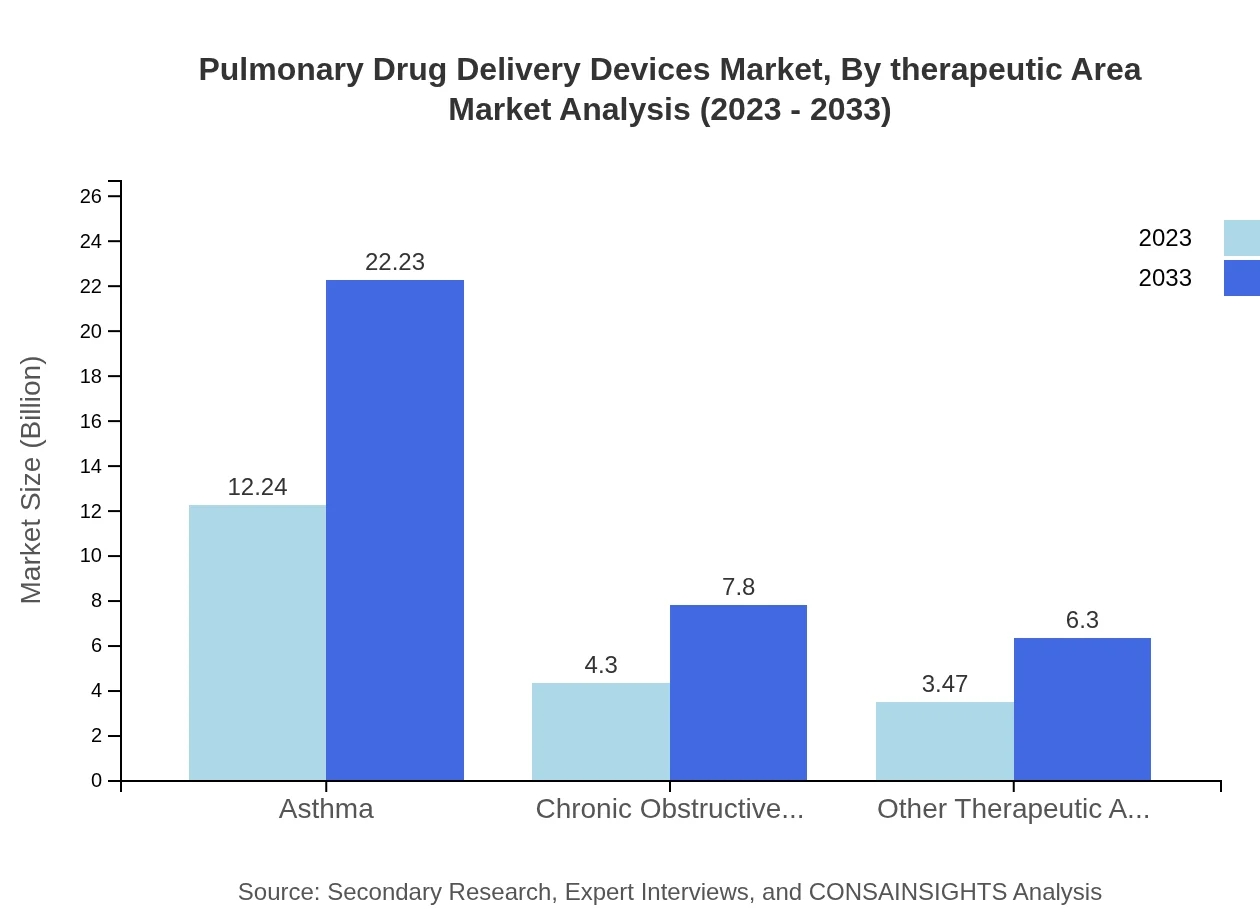
Asthma remains the leading therapeutic area for pulmonary drug delivery, with a market size of $12.24 billion in 2023 and anticipated growth to $22.23 billion by 2033. Chronic Obstructive Pulmonary Disease (COPD) follows, with an increase from $4.30 billion to $7.80 billion in the same period. Other therapeutic areas, including various pulmonary health concerns, highlight the increasing diversification in patient treatment options.
Pulmonary Drug Delivery Devices Market Analysis By Patient Type
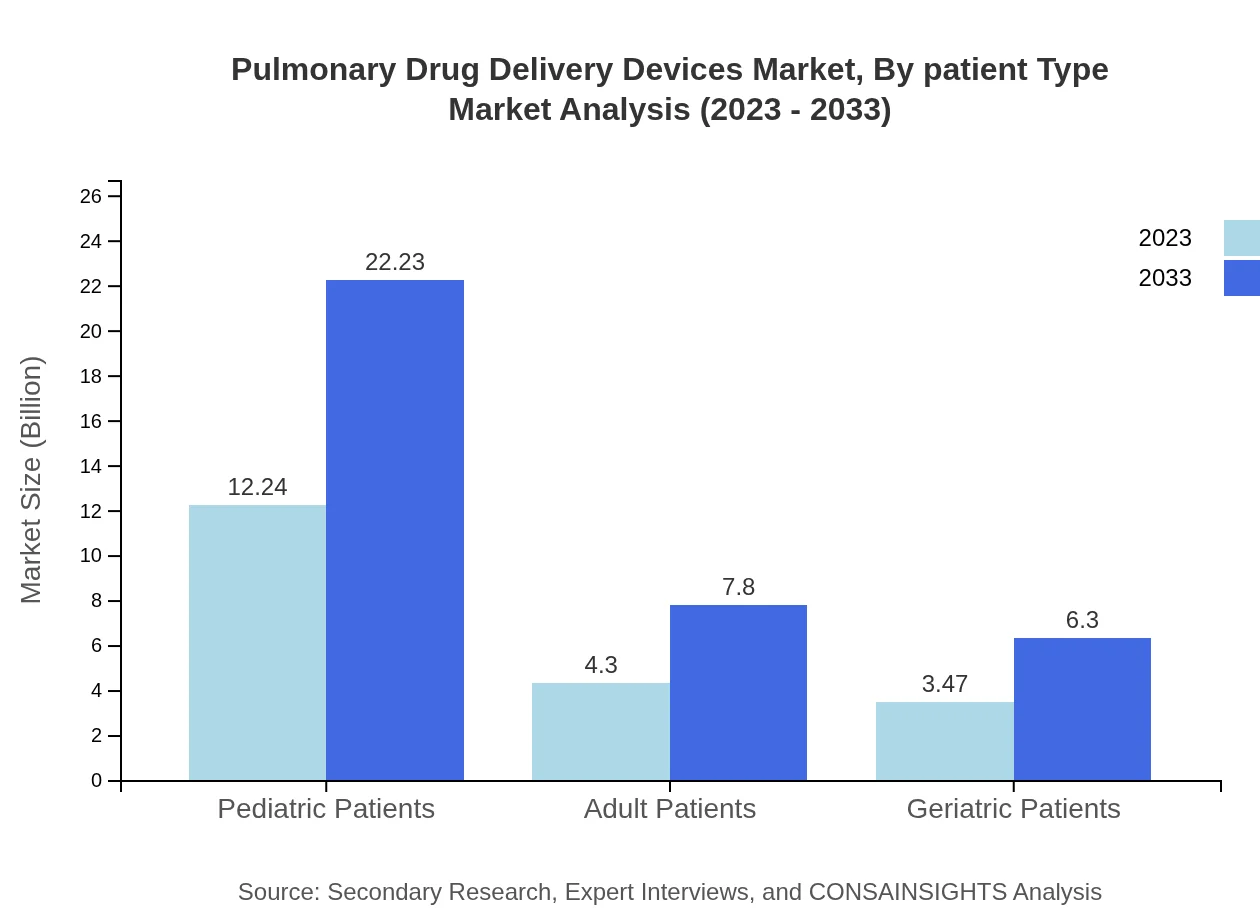
The market for pulmonary drug delivery devices emphasizes pediatric patients, representing a significant share with a size of $12.24 billion in 2023 and predicted to reach $22.23 billion by 2033. Adult patients constitute a smaller segment, growing from $4.30 billion to $7.80 billion, followed by geriatric patients showing steady growth from $3.47 billion to $6.30 billion.
Pulmonary Drug Delivery Devices Market Analysis By Distribution Channel
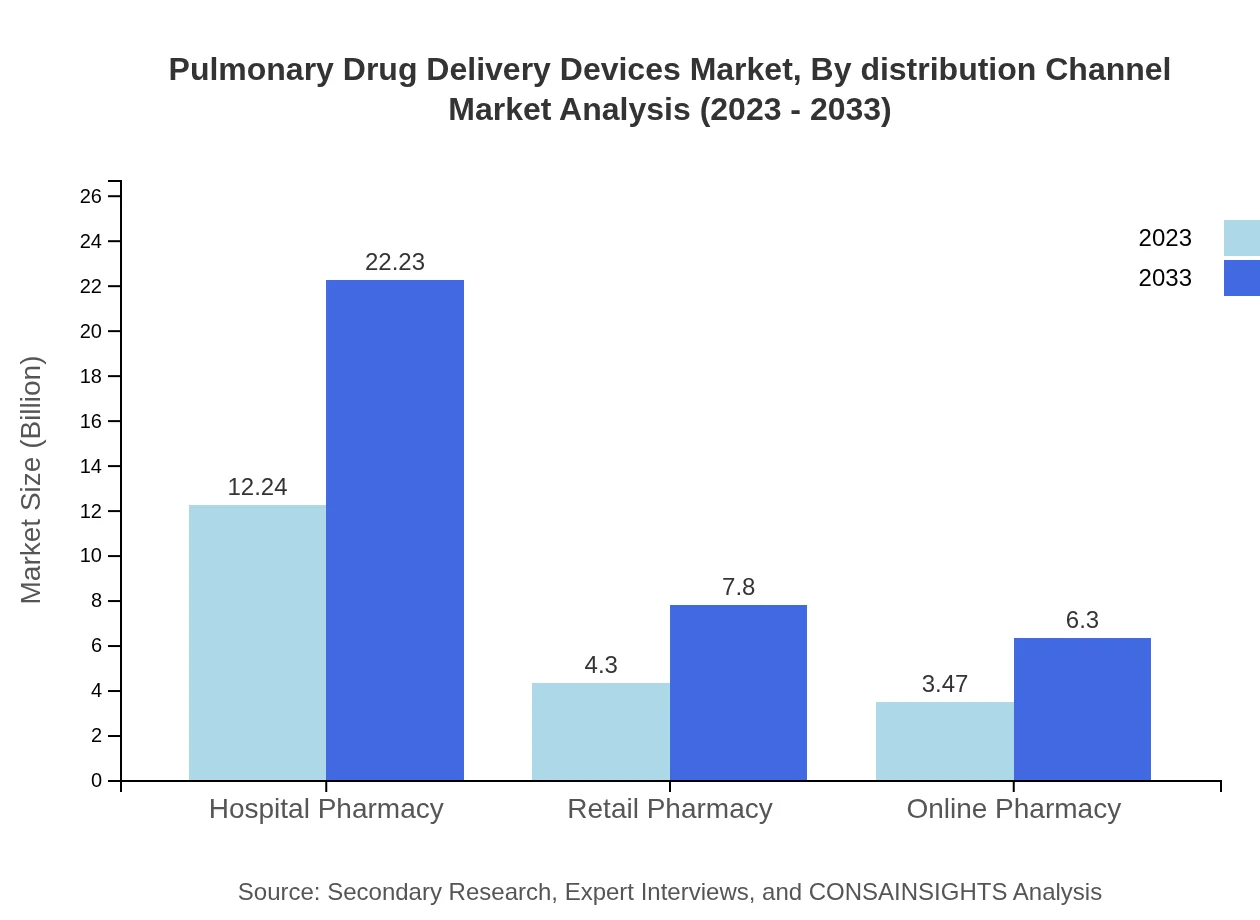
Hospital pharmacies represent the largest distribution channel, valued at $12.24 billion in 2023, set to increase to $22.23 billion by 2033. Retail pharmacies hold a substantial market share, growing from $4.30 billion to $7.80 billion, while online pharmacies are emerging as a competitive channel with expected growth from $3.47 billion to $6.30 billion.
Pulmonary Drug Delivery Devices Market Analysis By End User
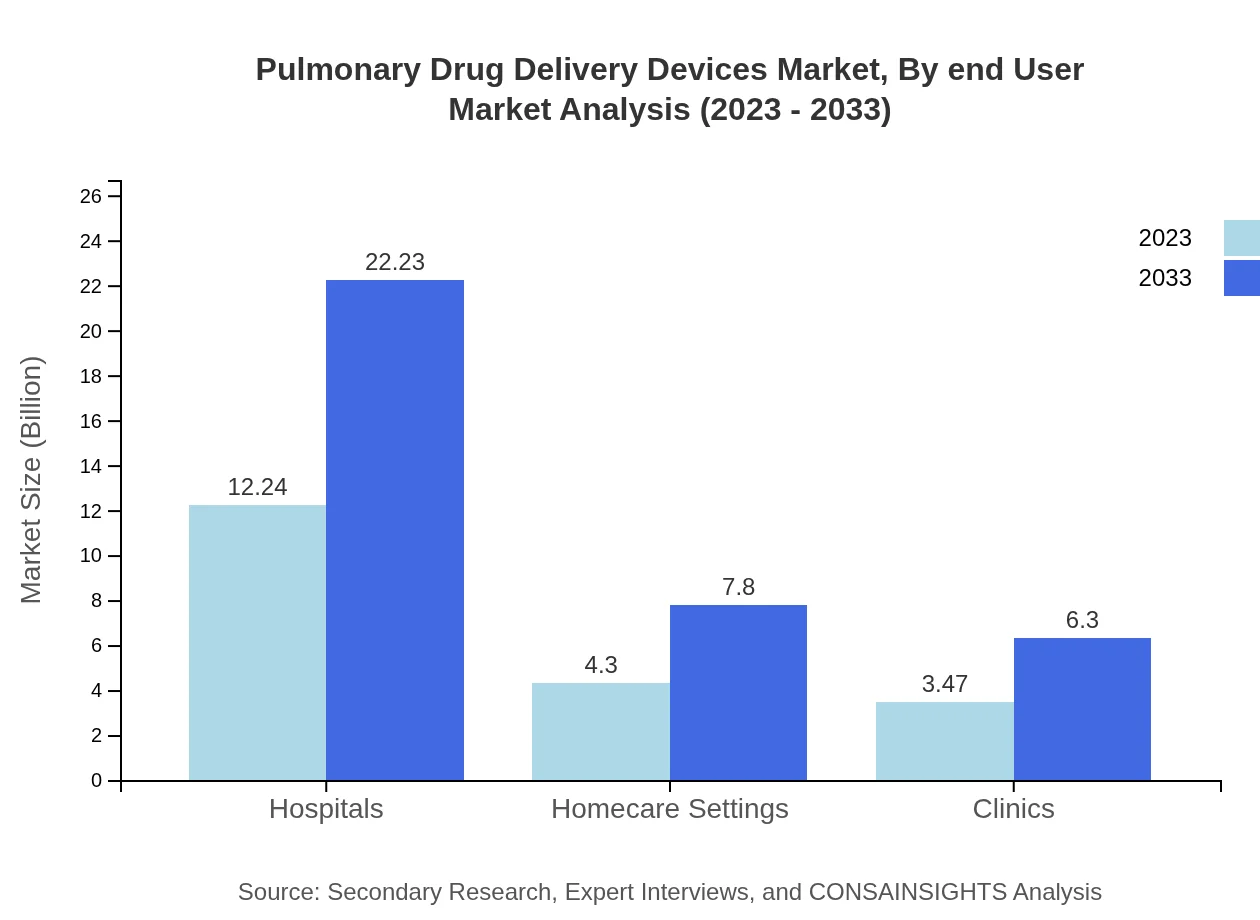
Demand for pulmonary drug delivery devices is seeing growth across various end-users, particularly in hospitals, which hold the largest market share expected to reach $22.23 billion by 2033 from $12.24 billion in 2023. Clinics and homecare settings diversify the market, with respective projections of growth reflecting the growing preference for outpatient care.
Pulmonary Drug Delivery Devices Market Trends and Future Forecast
Tell us your focus area and get a customized research report.
Global Market Leaders and Top Companies in Pulmonary Drug Delivery Devices Industry
AstraZeneca:
AstraZeneca is a leading global biopharmaceutical company known for its advanced development of inhalers for asthma and COPD, significantly contributing to the pulmonary drug delivery devices market.Boehringer Ingelheim:
Boehringer Ingelheim specializes in respiratory treatment solutions, with its portfolio of nebulizers and inhalers aimed at improving patient outcomes in lung health.GlaxoSmithKline:
GlaxoSmithKline is a prominent player in the pulmonary drug delivery market, known for its innovative inhalation therapies that address a wide range of respiratory diseases.Teva Pharmaceuticals:
Teva is a leading generic pharmaceuticals company that offers a variety of inhalation devices and medications targeted at both COPD and asthma management.We're grateful to work with incredible clients.








FAQs
What is the market size of the Pulmonary Drug Delivery Devices Market Report in 2023?
The market size in 2023 is $20.00 Billion according to the report, serving as the baseline for the forecast period running from 2023 to 2033.
How big will the market be in 2033?
By 2033 the market is projected to reach $36.33 Billion, reflecting growth across device types, distribution channels, and regional markets during the 2023 to 2033 forecast window.
What is CAGR for the forecast period?
The projected compound annual growth rate (CAGR) for the 2023 to 2033 forecast period is 6%, representing steady expansion driven by clinical and technological factors.
Is there a single fastest Growing region in the Pulmonary Drug Delivery Devices Market Report market?
No single fastest-growing region is stated for the Pulmonary Drug Delivery Devices Market Report market because the top regional implied CAGR values are within 0.15 percentage points of each other, making the ranking too close to call reliably.
Which companies are profiled in the report?
The report includes leading companies such as AstraZeneca, Boehringer Ingelheim, GlaxoSmithKline, and Teva Pharmaceuticals among key industry participants.
What are common device types covered?
Device types covered include inhalers, nebulizers, and transdermal patches, reflecting the primary modalities used for pulmonary drug delivery across different patient needs.
Who are the main end Users in the market?
End-users identified include hospitals, homecare settings, and clinics, each playing a role in device adoption and distribution across treatment environments.
How was the research conducted?
Research combined primary interviews with industry experts and secondary sources such as company reports, with data triangulation and internal validation to support trend analysis.