

Smart Home Appliances Market Report
First published: 23 October 2024 | Last updated: 24 June 2026 | Report Code: smart-home-appliances
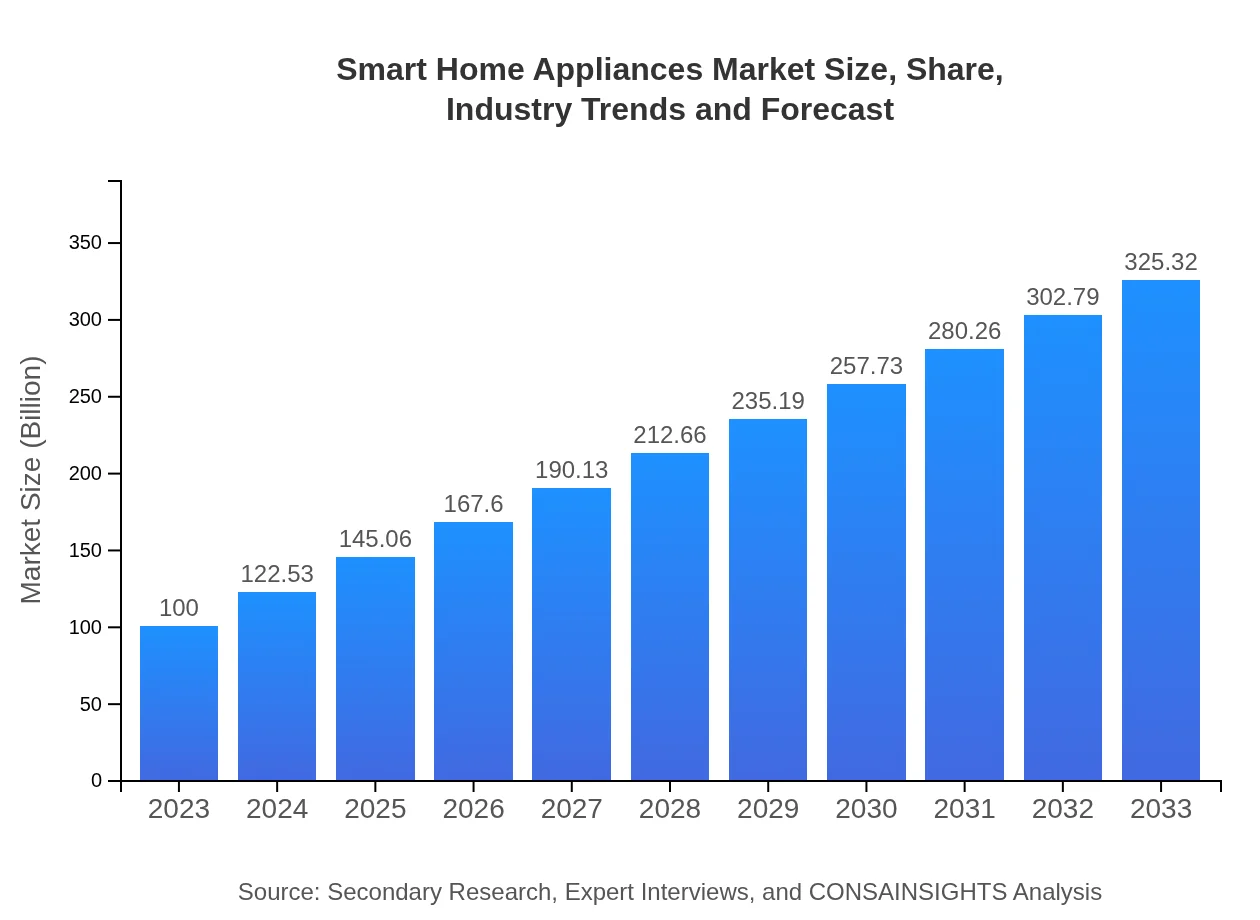
Smart Home Appliances Market — USD 100 billion in 2023, Growing to USD 325.32B by 2033 at 12% CAGR
This report offers a comprehensive analysis of the Smart Home Appliances market from 2023 to 2033, covering market size, segmentation, regional insights, industry trends, and forecasts. Expect actionable insights for stakeholders looking to navigate the evolving landscape in this innovative sector.
Key Takeaways
- Global market growth from $100.00 Billion in 2023 to $325.32 Billion in 2033 at a 12% CAGR during 2023 to 2033.
- North America is largest regional market, while no single fastest-growing region is stated because regional CAGR differences remain within 0.15 percentage points.
- Europe grows from $29.73 Billion to $96.72 Billion between 2023 and 2033, reflecting strong demand for connected appliances.
- Asia Pacific increases from $19.17 Billion to $62.36 Billion from 2023 to 2033, driven by rising smart device adoption and interoperability.
- Top industry players include Amazon, Nest Labs (Google), Samsung Electronics, Apple Inc., and LG Electronics, shaping product innovation and distribution.
Smart Home Appliances Market Report — Executive Summary
North America remains largest market by forecast-period value, while no single fastest-growing region is stated because top regional growth rates are separated by less than 0.15 percentage points. The report outlines a robust expansion of smart home appliances, with the global market rising from $100.00 Billion in 2023 to $325.32 Billion by 2033 at a 12% CAGR for 2023 to 2033. Growth is supported by broader IoT implementation, increased consumer demand for convenience and energy-efficient products, and enhanced interoperability across devices. Product categories span kitchen, living room and bathroom appliances, while distribution mixes include online and offline retail. Technology adoption includes Wi‑Fi, Bluetooth, Z‑Wave and Zigbee standards. Competitive activity is led by major manufacturers and platform providers such as Amazon, Nest Labs (Google), Samsung Electronics, Apple Inc., and LG Electronics. The study integrates primary interviews and secondary sources to identify market dynamics, regional performance and segment-level developments relevant for strategic planning.
Key Growth Drivers
- Rising consumer preference for connected, convenience-enhancing appliances fuels replacement and new-purchase cycles.
- Wider IoT and device interconnectivity encourages integration of smart refrigerators, thermostats and home systems into ecosystems.
- Energy-efficiency priorities and regulatory focus increase demand for appliances that reduce consumption and offer monitoring capabilities.
- Collaborations between technology firms and appliance manufacturers accelerate feature-rich product introductions and platform compatibility.
- Expansion of e-commerce channels improves availability of smart appliances across price ranges and product types.
| Metric | Value |
|---|---|
| Study Period | 2023 - 2033 |
| 2023 Market Size | $100.00 Billion |
| CAGR (2023-2033) | 12% |
| 2033 Market Size | $325.32 Billion |
| Top Companies | Amazon , Nest Labs (Google), Samsung Electronics, Apple Inc., LG Electronics |
| Published Date | 23 October 2024 |
| Last Modified Date | 24 June 2026 |
Smart Home Appliances Market Overview
Customize Smart Home Appliances Market Report market research report
- ✔ Get in-depth analysis of Smart Home Appliances market size, growth, and forecasts.
- ✔ Understand Smart Home Appliances's regional dynamics and industry-specific trends.
- ✔ Identify potential applications, end-user demand, and growth segments in Smart Home Appliances
What is the Market Size & CAGR of Smart Home Appliances Market Report market in 2023?
Smart Home Appliances Industry Analysis
Smart Home Appliances Market Segmentation and Scope
Tell us your focus area and get a customized research report.
Smart Home Appliances Market Report Market Analysis Report by Region
Europe Smart Home Appliances Market Report:
Europe grows from $29.73 Billion in 2023 to $96.72 Billion in 2033. Demand in this region is shaped by interest in energy-efficient appliances, growing smart home integrations and regulatory emphasis on sustainability that encourages connected, efficient products.Asia Pacific Smart Home Appliances Market Report:
Asia Pacific grows from $19.17 Billion in 2023 to $62.36 Billion in 2033. Growth reflects increasing consumer adoption of smart devices, rising internet and mobile penetration, and manufacturers introducing interoperable appliance offerings for diverse markets.North America Smart Home Appliances Market Report:
North America is largest regional market, rising from $34.7 Billion in 2023 to $112.89 Billion in 2033. Regional expansion is supported by strong consumer uptake of connected devices, established retail and technology ecosystems, and active participation from major suppliers listed in the report.South America Smart Home Appliances Market Report:
Latin America grows from $3.28 Billion in 2023 to $10.67 Billion in 2033. Market gains are influenced by greater awareness of smart solutions, expanding online retail channels, and gradual adoption of connected appliance technologies across urban centers.Middle East & Africa Smart Home Appliances Market Report:
Middle East and Africa grows from $13.12 Billion in 2023 to $42.68 Billion in 2033. Regional demand is driven by adoption of smart home systems, investments in modern housing and energy-conscious appliance choices in select markets.Tell us your focus area and get a customized research report.
Research Methodology
Smart Home Appliances Market Analysis By Product Type
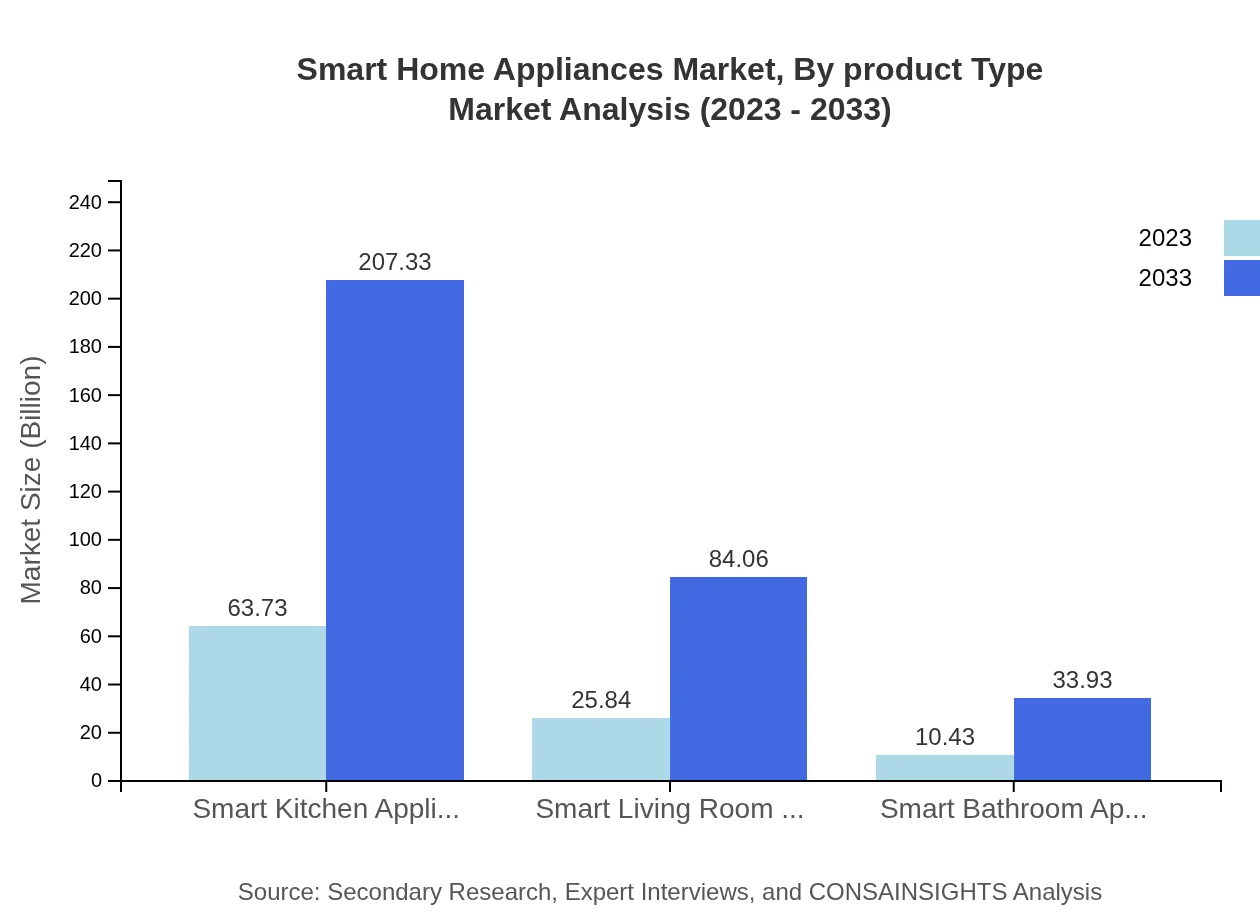
The Smart Kitchen Appliances segment leads the market, with a size of $63.73 billion in 2023, expected to reach $207.33 billion by 2033. Following closely are Smart Living Room and Bathroom Appliances segments, valued at $25.84 billion and $10.43 billion respectively in 2023. Together, these segments form the backbone of consumer-centric smart home solutions, driven by a growing preference for comfort and efficiency.
Smart Home Appliances Market Analysis By Technology
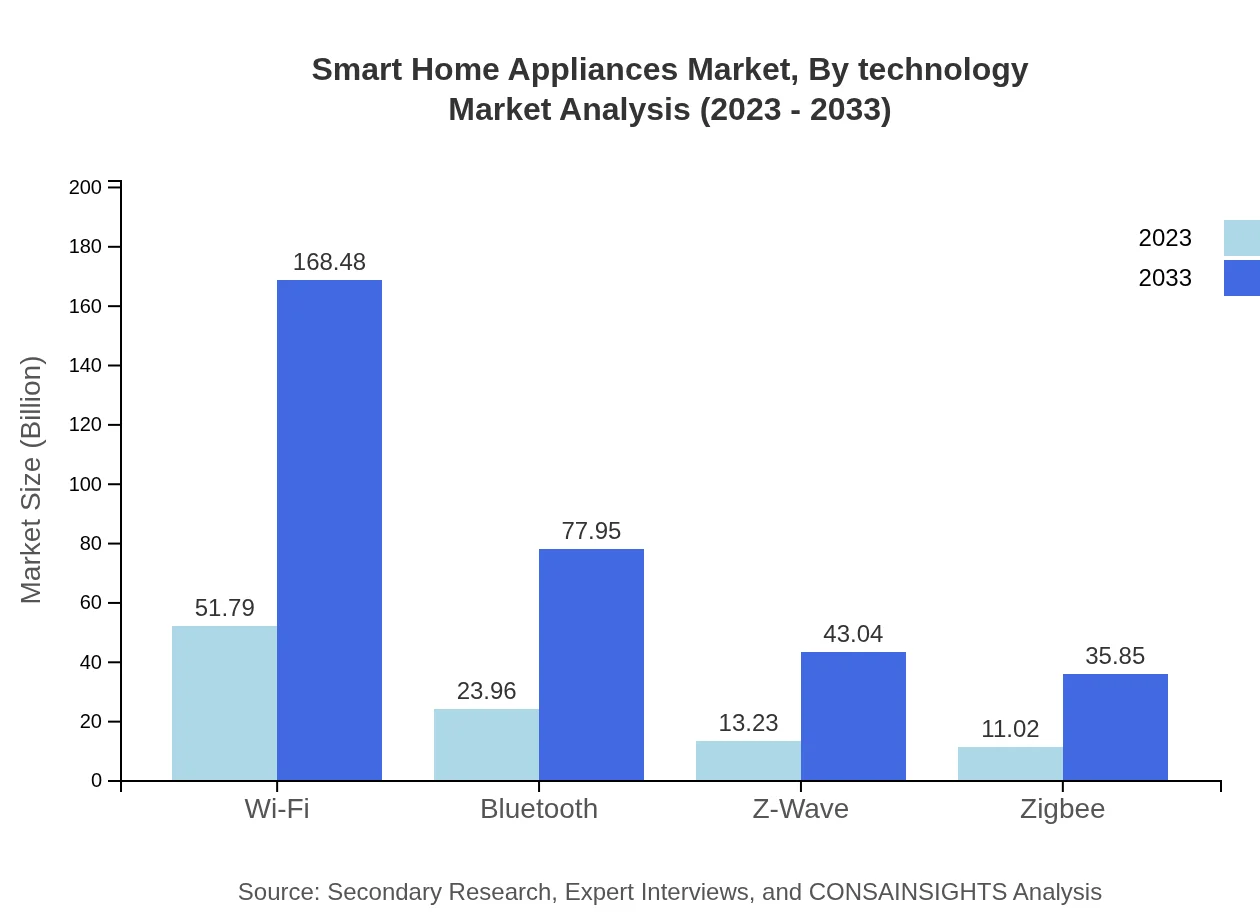
Wi-Fi technology dominates the Smart Home Appliances sector, standing at a market size of $51.79 billion in 2023 and expected to grow to $168.48 billion by 2033. Bluetooth technology follows with significant adoption, with a share of $23.96 billion in 2023. Innovations in Z-Wave and Zigbee technologies also present strong growth, driven by increased demand for connected devices.
Smart Home Appliances Market Analysis By End User
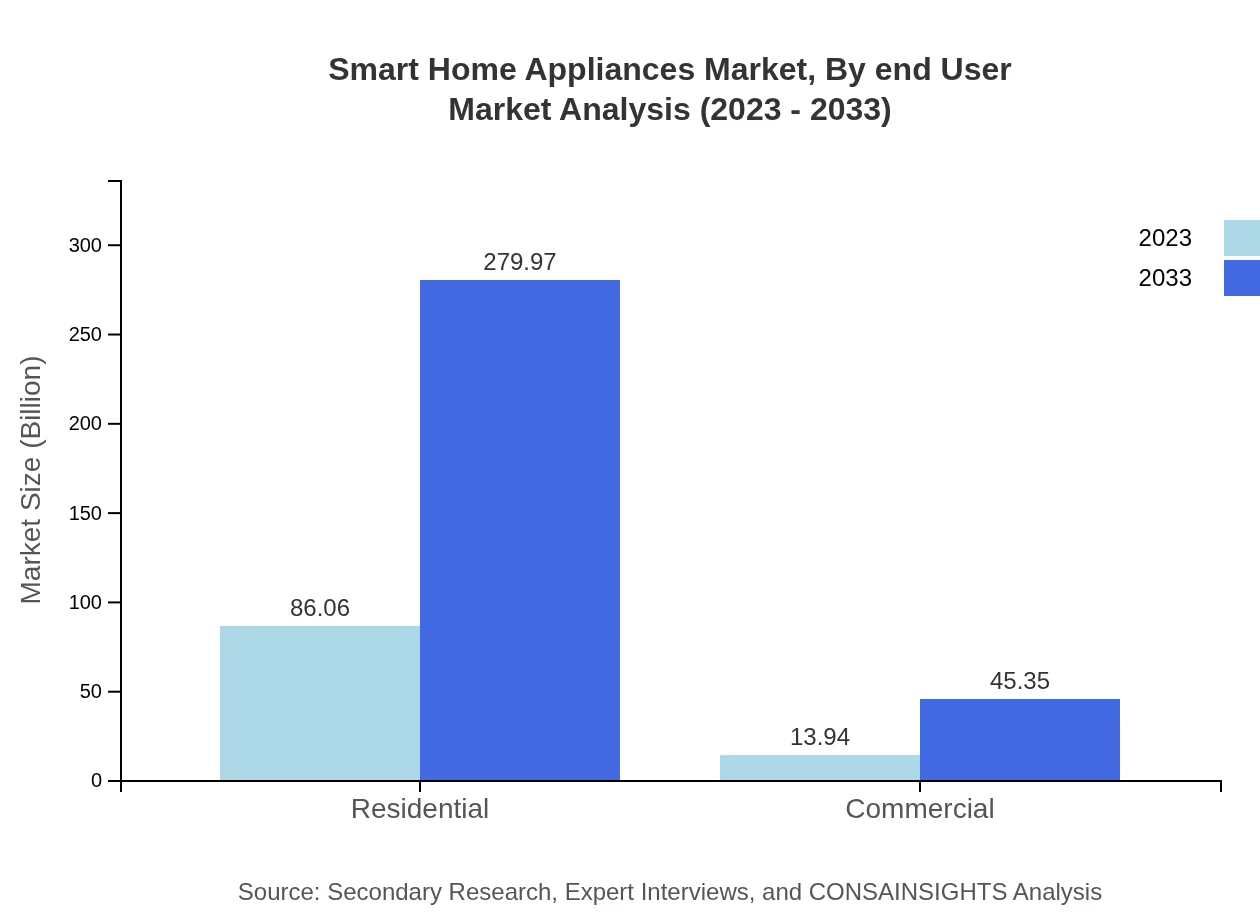
The residential end-user segment holds a remarkable market size of $86.06 billion in 2023, and is projected to reach $279.97 billion by 2033. Commercial applications, though smaller, are also growing, with an expected increase to $45.35 billion by 2033 from $13.94 billion in 2023, driven by increased applications in hospitality and business sectors.
Smart Home Appliances Market Analysis By Distribution Channel
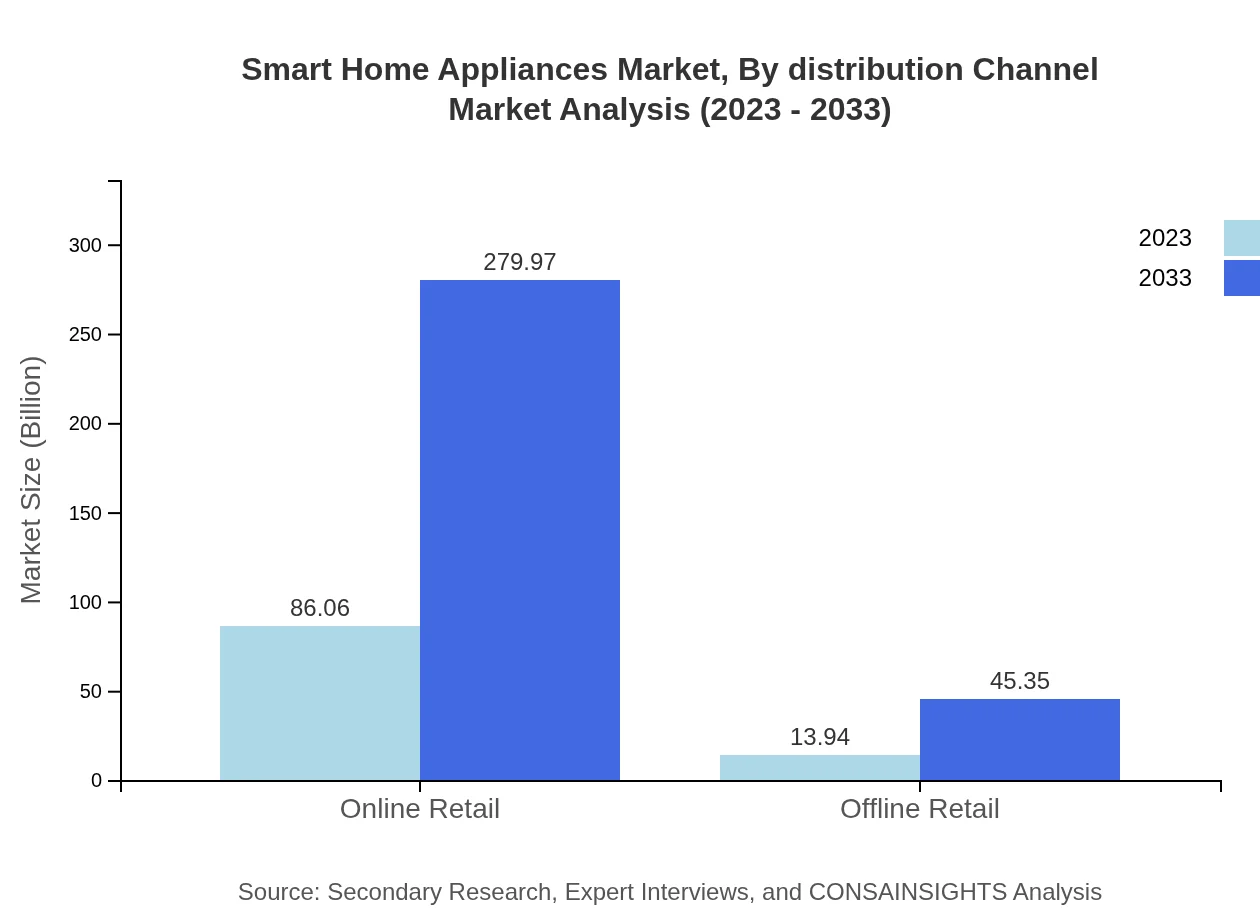
Online retail is becoming increasingly dominant, boasting a market size of $86.06 billion in 2023 and expected to expand to $279.97 billion in 2033. Offline retail channels continue to be relevant, with growth projected to $45.35 billion from $13.94 billion, although their share is declining as e-commerce rapidly accelerates.
Smart Home Appliances Market Analysis By Price Range
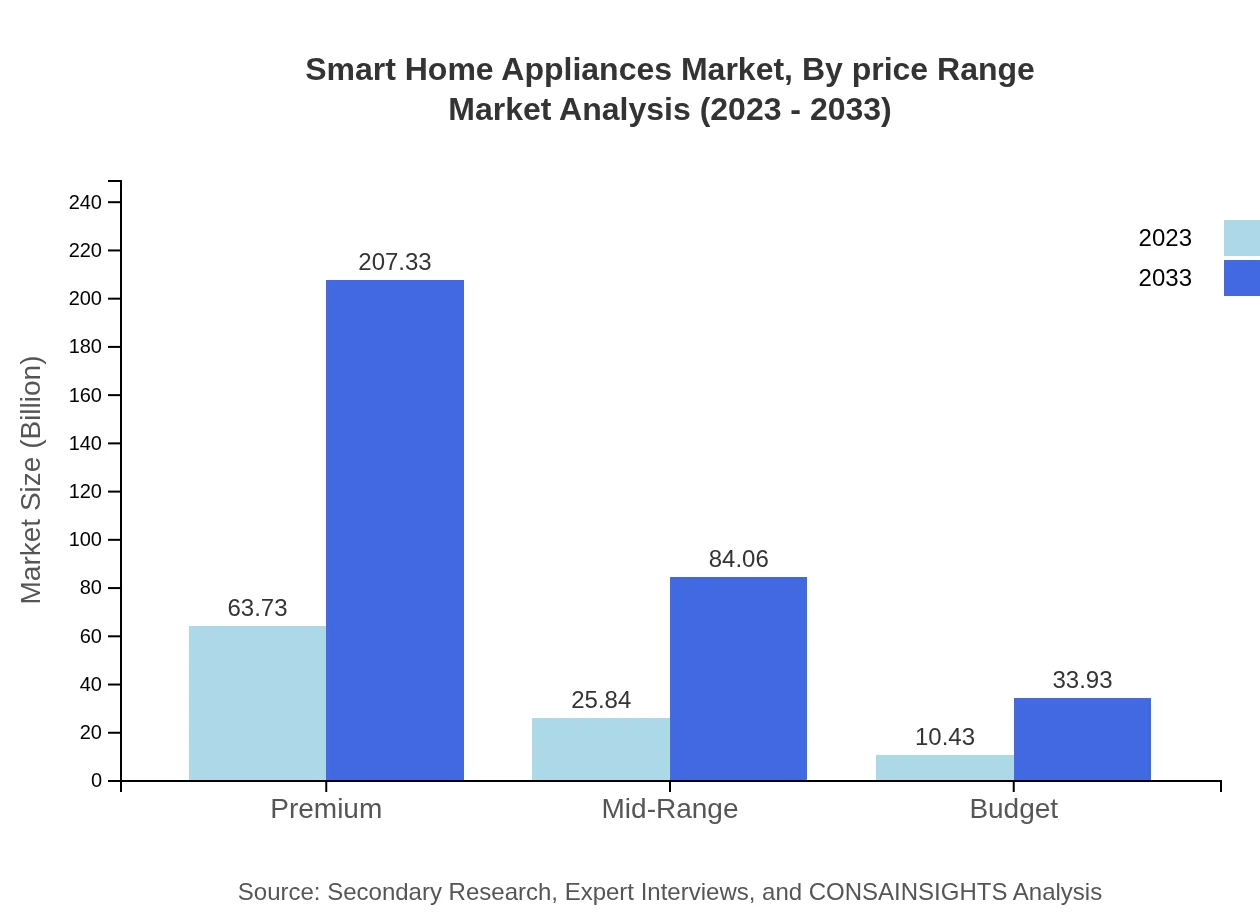
Premium products dominate the market, accounting for $63.73 billion in 2023 and moving to $207.33 billion by 2033. Mid-range products are also seeing growth, moving to $84.06 billion from $25.84 billion, while budget products will also increase but remain the smallest segment, growing from $10.43 billion to $33.93 billion.
Smart Home Appliances Market Trends and Future Forecast
Tell us your focus area and get a customized research report.
Global Market Leaders and Top Companies in Smart Home Appliances Industry
Amazon :
Amazon is a leader in the smart home space with its Echo smart speakers, providing robust AI-powered voice control and integration with numerous smart devices.Nest Labs (Google):
Nest, part of Google, concentrates on energy-efficient thermostats and security systems, leveraging IoT for smart home functionalities.Samsung Electronics:
Samsung offers a range of smart appliances, from refrigerators to washing machines, that integrate seamlessly into its SmartThings platform, emphasizing home connectivity.Apple Inc.:
Apple's HomeKit technology allows seamless integration of smart appliances with their ecosystem, focusing on user privacy and superior design.LG Electronics:
LG focuses on AI technology within home appliances, emphasizing user interactivity and efficiency to enhance daily living.We're grateful to work with incredible clients.









FAQs
What is the market size of smart home appliances in 2023?
The market size in 2023 is $100.00 Billion, as stated for the global smart home appliances market in the provided data.
How big is the market projected to be in 2033?
The market is projected to reach $325.32 Billion by 2033 according to the supplied forecast figures.
What is the CAGR for the forecast period 2023 to 2033?
The Compound Annual Growth Rate (CAGR) for 2023 to 2033 is 12% as specified in the input data.
Is there a single fastest Growing region in the Smart Home Appliances Market Report market?
No single fastest-growing region is stated for the Smart Home Appliances Market Report market because the top regional implied CAGR values are within 0.15 percentage points of each other, making the ranking too close to call reliably.
Why are smart appliances gaining market traction?
Smart appliances gain traction due to increased device connectivity, consumer demand for convenience, and emphasis on energy-efficient features highlighted in the context.
Who are the leading companies in the market?
Top companies listed include Amazon, Nest Labs (Google), Samsung Electronics, Apple Inc., and LG Electronics as provided in the input.
Which product types are included in the segmentation?
Product-type segments include Smart Kitchen Appliances, Smart Living Room Appliances, and Smart Bathroom Appliances as specified in the data.
How are smart appliances typically distributed?
Distribution channels noted are Online Retail and Offline Retail, reflecting the dual retail pathways included in the report data.