
Reports >
Life Sciences
>
Ubiquitin Proteasome Market Report

Ubiquitin Proteasome Market Report
First published: 12 October 2024 | Last updated: 28 May 2026 | Report Code: ubiquitin-proteasome
Ubiquitin Proteasome Market — USD 5.2 billion in 2023, Growing to USD 10.22B by 2033 at 6.8% CAGR
This report provides an in-depth analysis of the Ubiquitin Proteasome market, focusing on critical insights and data from 2023 to 2033. It encompasses market size, growth trends, regional analyses, and comprehensive assessments of key segments and players in the industry.
Key Takeaways
- Global market value rises from $5.20 Billion in 2023 to $10.22 Billion in 2033 at a 6.8% CAGR.
- North America is largest regional market, while no single fastest-growing region is stated because regional CAGR differences remain within 0.15 percentage points.
- Europe and Asia Pacific show substantial expansion: Europe from $1.25 Billion to $2.45 Billion, Asia Pacific from $1.11 Billion to $2.18 Billion.
- Segment coverage includes products, end users, applications, formulations, and research types supporting therapeutic and research pipelines.
- Leading companies noted include Amgen Inc., Bristol-Myers Squibb, Novartis, Roche, and Takeda Pharmaceutical Company.
Ubiquitin Proteasome Market Report — Executive Summary
North America remains largest market by forecast-period value, while no single fastest-growing region is stated because top regional growth rates are separated by less than 0.15 percentage points. The Ubiquitin Proteasome Market Report presents a detailed assessment of a market projected to expand from $5.20 Billion in 2023 to $10.22 Billion by 2033 at a 6.8% CAGR. Growth is underpinned by increasing research into disease mechanisms, higher investment in proteasome-targeted drug discovery, and collaborations between industry and academia. The report examines product and research segments, formulations, and end-user categories such as pharmaceuticals, biotechnology firms, and academic institutions. Regional data highlight North America as the largest market, with Europe, Asia Pacific, Latin America, and Middle East and Africa showing meaningful increases. The analysis also profiles major industry players including Amgen Inc., Bristol-Myers Squibb, Novartis, Roche, and Takeda Pharmaceutical Company and outlines trends influencing therapeutic development, combination therapies, and cross-sector research partnerships.
Key Growth Drivers
- Rising research activity into proteasome biology and related disease pathways increases demand for related products and services.
- Greater funding and collaborations between biotechnology firms and academic institutions accelerate translational research and clinical programs.
- Expanded drug discovery efforts targeting proteasome mechanisms support growth in therapeutics and research reagent markets.
- Broader application focus across cancer, neurological, immunology, and cardiovascular research diversifies market opportunities.
- Adoption of varied formulations and research types supports product innovation and wider use in both basic and clinical settings.
| Metric | Value |
|---|---|
| Study Period | 2023 - 2033 |
| 2023 Market Size | $5.20 Billion |
| CAGR (2023-2033) | 6.8% |
| 2033 Market Size | $10.22 Billion |
| Top Companies | Amgen Inc., Bristol-Myers Squibb, Novartis, Roche, Takeda Pharmaceutical Company |
| Published Date | 12 October 2024 |
| Last Modified Date | 28 May 2026 |
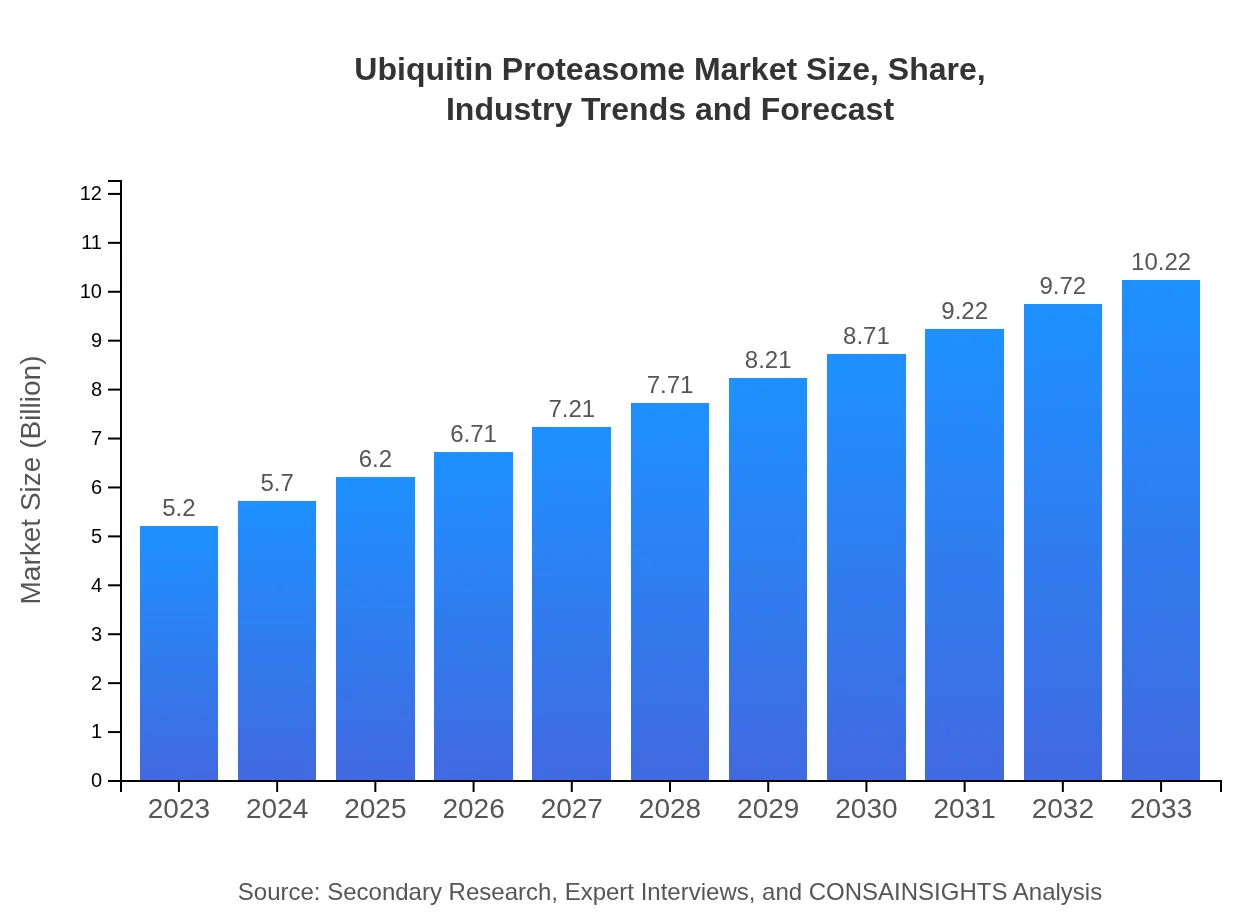
Ubiquitin Proteasome Market Overview
Customize Ubiquitin Proteasome Market Report market research report
- ✔ Get in-depth analysis of Ubiquitin Proteasome market size, growth, and forecasts.
- ✔ Understand Ubiquitin Proteasome's regional dynamics and industry-specific trends.
- ✔ Identify potential applications, end-user demand, and growth segments in Ubiquitin Proteasome
What is the Market Size & CAGR of Ubiquitin Proteasome Market Report market in 2023?
Ubiquitin Proteasome Industry Analysis
Ubiquitin Proteasome Market Segmentation and Scope
Tell us your focus area and get a customized research report.
Ubiquitin Proteasome Market Report Market Analysis Report by Region
Europe Ubiquitin Proteasome Market Report:
Europe grows from $1.25 Billion in 2023 to $2.45 Billion in 2033. Expansion is supported by active academic-industry collaborations, expanding clinical programs, and funding for research into cancer and neurodegenerative disease mechanisms.Asia Pacific Ubiquitin Proteasome Market Report:
Asia Pacific grows from $1.11 Billion in 2023 to $2.18 Billion in 2033. Regional growth is driven by expanding research infrastructure, rising biotech investment, and broader adoption of proteasome-targeted drug discovery initiatives.North America Ubiquitin Proteasome Market Report:
North America is largest regional market, rising from $1.75 Billion in 2023 to $3.44 Billion in 2033. Growth reflects concentrated biopharmaceutical investment, extensive clinical research activity, and a strong presence of industry leaders and research institutions.South America Ubiquitin Proteasome Market Report:
Latin America grows from $0.4 Billion in 2023 to $0.79 Billion in 2033. Market momentum is tied to growing research activities, increasing collaboration with global partners, and emerging biotechnology capabilities.Middle East & Africa Ubiquitin Proteasome Market Report:
Middle East and Africa grows from $0.69 Billion in 2023 to $1.36 Billion in 2033. Growth is influenced by developing research ecosystems, increasing health research investments, and partnerships supporting translational research.Tell us your focus area and get a customized research report.
Research Methodology
Ubiquitin Proteasome Market Analysis By Product
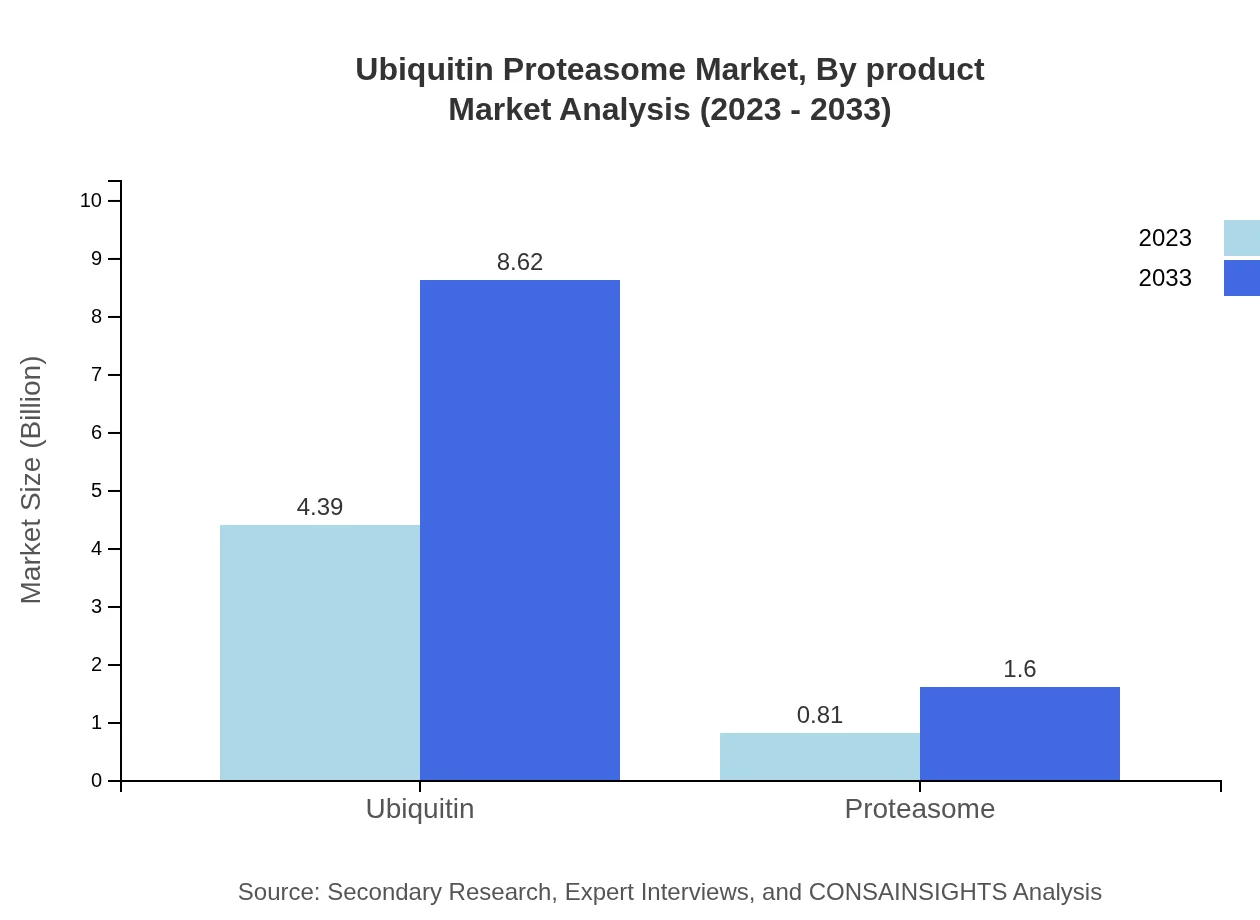
The Ubiquitin Proteasome market is primarily driven by the dominance of ubquitin and proteasome products. In 2023, Ubiquitin's market size is approximately $4.39 billion with a projected increase to $8.62 billion by 2033, maintaining an impressive 84.35% market share. In contrast, proteasome products show a smaller footprint, growing from $0.81 billion to $1.60 billion, comprising around 15.65% of the market.
Ubiquitin Proteasome Market Analysis By Application
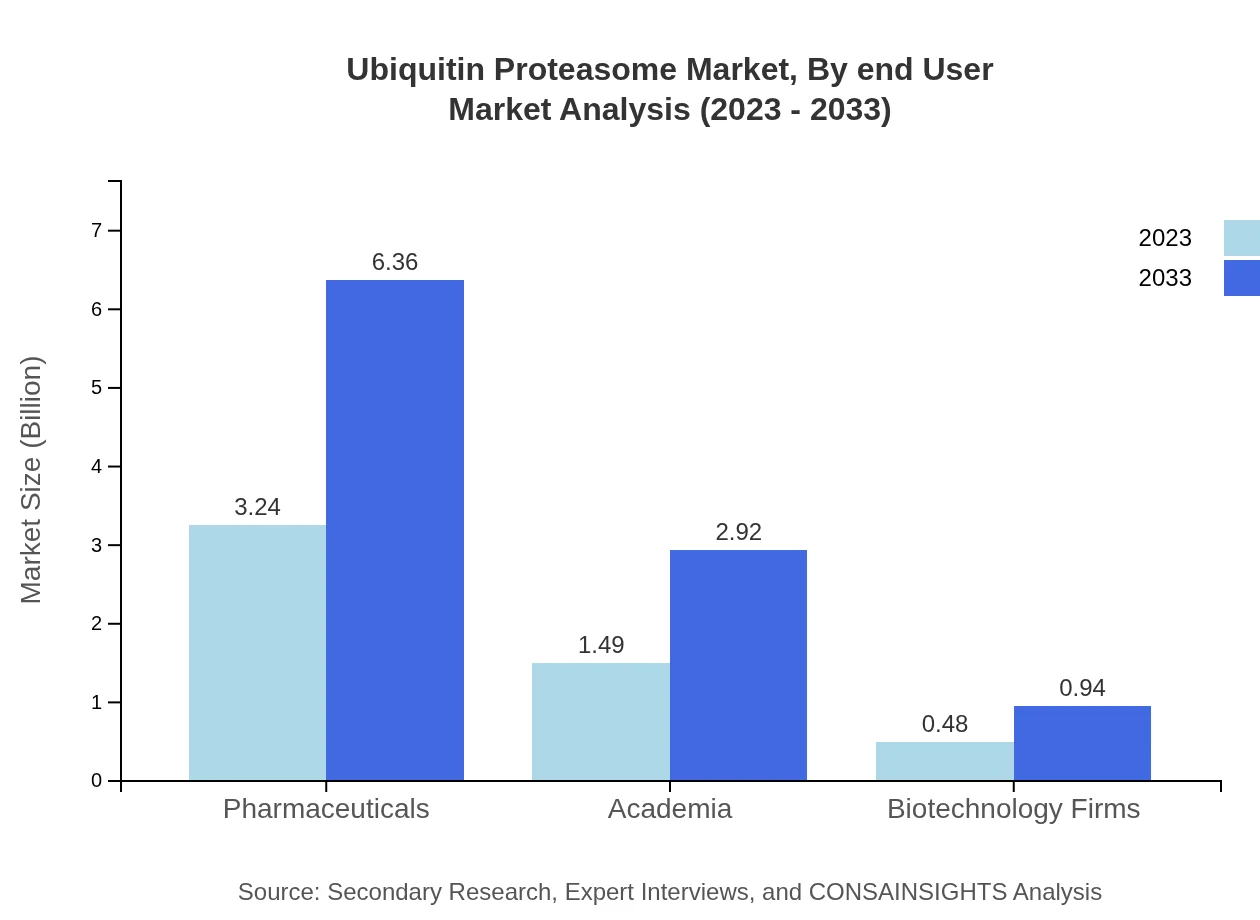
Different applications concerning Ubiquitin Proteasome include pharmaceuticals, academia, and various therapeutic sectors. Pharmaceuticals represent a substantial market share with a projected size increase from $3.24 billion in 2023 to $6.36 billion by 2033, marking a consistent 62.27% share across the forecast period. Academia also contributes significantly, expanding from $1.49 billion to $2.92 billion, with a steady 28.58% market share.
Ubiquitin Proteasome Market Analysis By End User
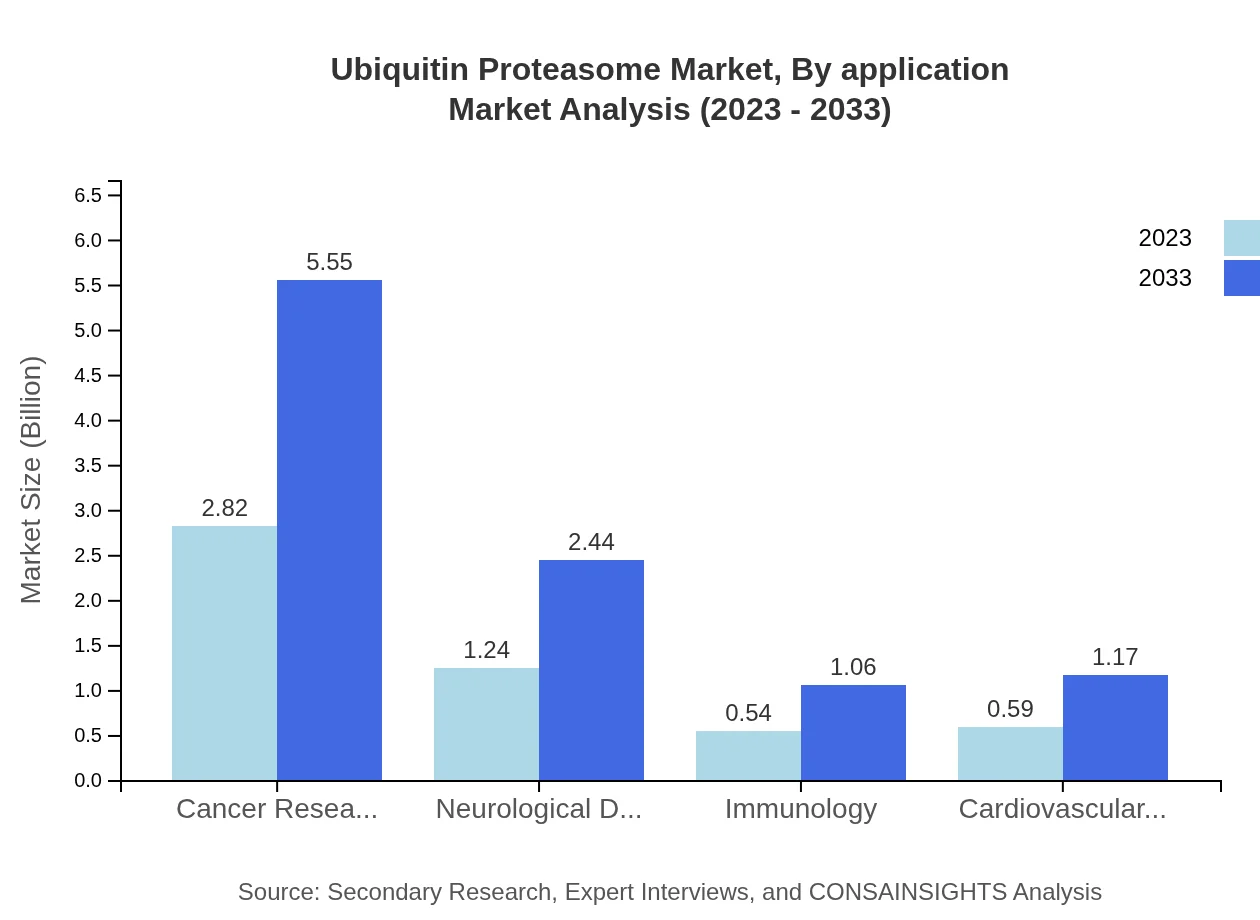
The end-user segment encompasses cancer research, neurological disorders, and immunology among others. Cancer research leads the segment with a market size of $2.82 billion in 2023 expected to reach $5.55 billion by 2033, holding a share of 54.28% throughout the period. Neurological disorders and immunology are also critical, reflecting market sizes of $1.24 billion to $2.44 billion and $0.54 billion to $1.06 billion, respectively.
Ubiquitin Proteasome Market Analysis By Research Type
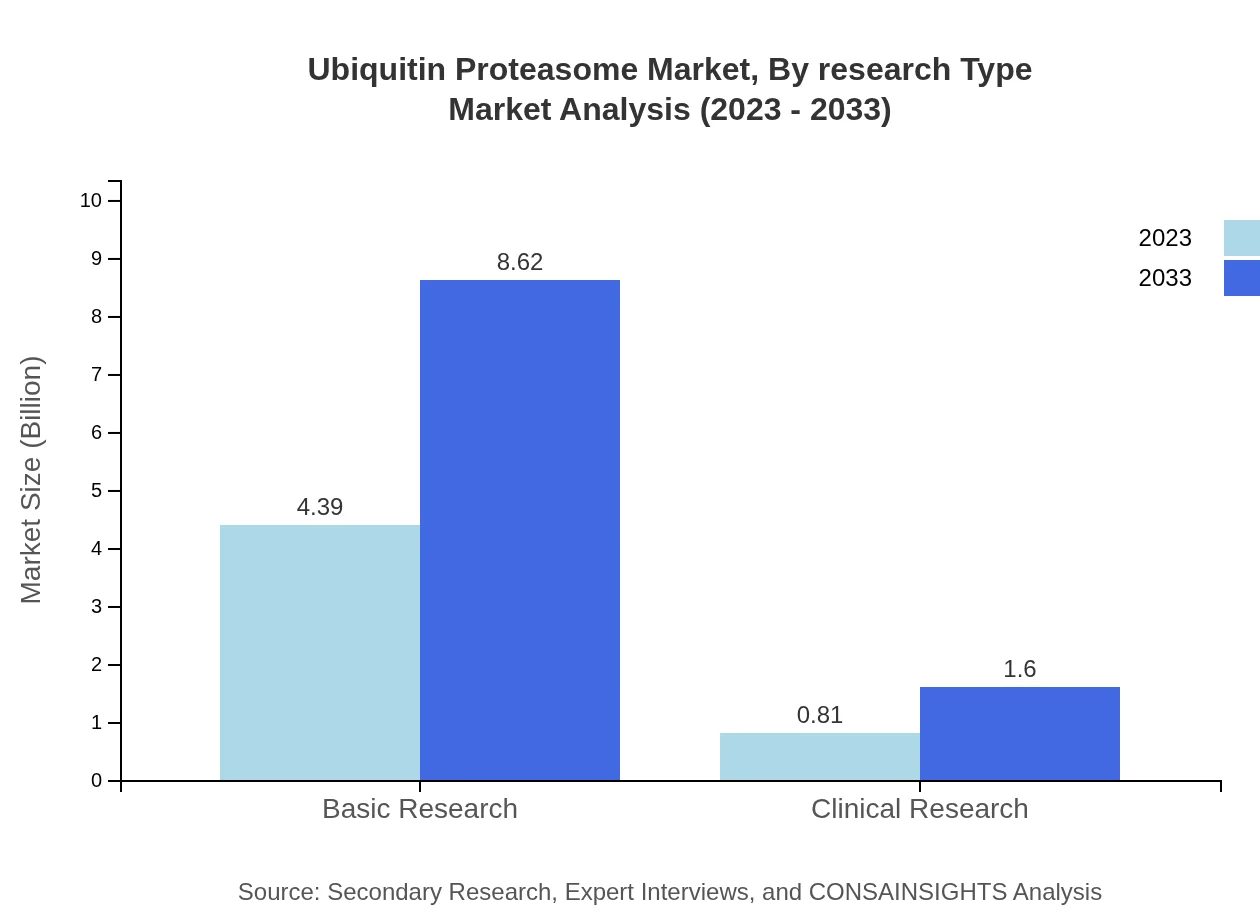
The market exhibits strong application in both basic and clinical research. Basic research leads with a market increase from $4.39 billion in 2023 to $8.62 billion in 2033, maintaining an impressive share of 84.35%. Clinical research, while smaller, grows from $0.81 billion to $1.60 billion, holding a 15.65% share.
Ubiquitin Proteasome Market Analysis By Formulation
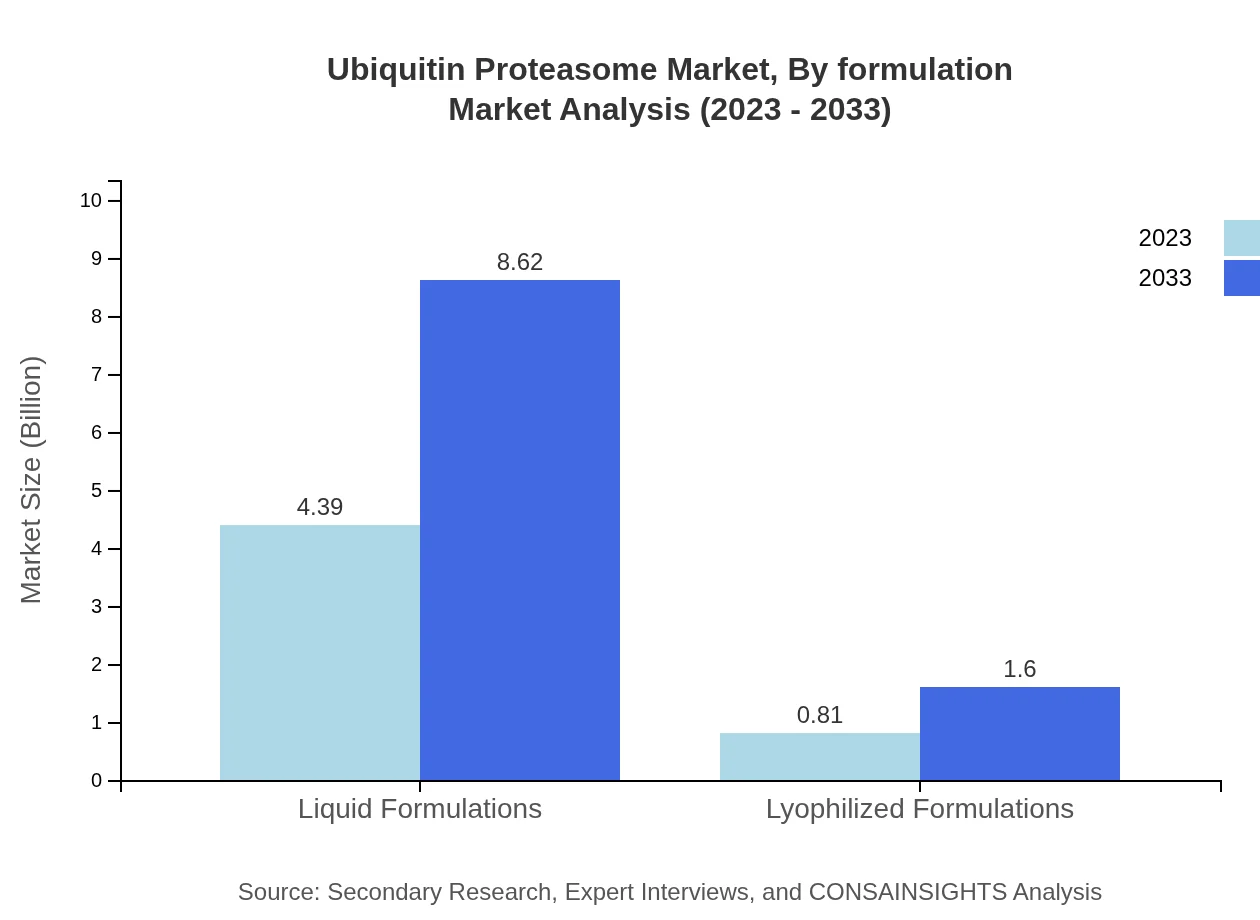
Formulation types in this market include liquid and lyophilized formulations. Liquid formulations dominate the market, projected to grow from $4.39 billion to $8.62 billion, while lyophilized formulations are expected to expand modestly from $0.81 billion to $1.60 billion, indicating their specialized but important role in research and therapeutic applications.
Ubiquitin Proteasome Market Trends and Future Forecast
Tell us your focus area and get a customized research report.
Global Market Leaders and Top Companies in Ubiquitin Proteasome Industry
Amgen Inc.:
A leading biotechnology company known for its innovative approaches to drug development, particularly in the cell signaling domain, including the ubiquitin-proteasome system.Bristol-Myers Squibb:
A global biopharmaceutical company that has made significant advancements in developing therapies targeting the ubiquitin-proteasome pathway, particularly for oncology.Novartis:
A major player in pharmaceuticals with a focus on innovative treatments including proteasome inhibitors that play a crucial role in cancer therapy.Roche:
A leader in pharmaceuticals and diagnostics, engaged in research driven by proteasome biology to enhance cancer treatment methodologies.Takeda Pharmaceutical Company:
A key contributor to advancing cancer therapies based on targeting the proteasome, focusing on improving treatment outcomes and novel drug development.We're grateful to work with incredible clients.








FAQs
What is the market size of the Ubiquitin Proteasome market in 2023?
The market size for 2023 is $5.20 Billion according to the report, reflecting the baseline for the 2023 to 2033 forecast period.
How big will the market be in 2033?
By 2033 the market is projected to reach $10.22 Billion, based on the report's forecast for the 2023 to 2033 period.
What is CAGR of the market?
The report specifies a compound annual growth rate (CAGR) of 6.8% for the 2023 to 2033 forecast timeframe.
Is there a single fastest Growing region in the Ubiquitin Proteasome Market Report market?
No single fastest-growing region is stated for the Ubiquitin Proteasome Market Report market because the top regional implied CAGR values are within 0.15 percentage points of each other, making the ranking too close to call reliably.
Which companies are listed as leading players?
Top companies mentioned include Amgen Inc., Bristol-Myers Squibb, Novartis, Roche, and Takeda Pharmaceutical Company.
What main applications drive demand?
Key applications include cancer research, neurological disorders, immunology, and cardiovascular disorders, which collectively expand demand across research and therapeutic development.
How are market segments organized in the report?
Segments cover by-product, end-user, application, formulation, and research type, detailing products, users, and research categories in both basic and clinical contexts.
What regional growth information is provided?
The report supplies start and end values for regions, such as Europe from $1.25 Billion to $2.45 Billion and Asia Pacific from $1.11 Billion to $2.18 Billion.
What research types are covered?
Research types included are Basic Research and Clinical Research, reflecting both foundational science and translational/clinical activities.
Who are typical end users in this market?
End users include Pharmaceuticals, Academia, and Biotechnology Firms, each consuming products and services for research and development purposes.