

Vial Adaptors For Reconstitution Drug Market Report
First published: 11 October 2024 | Last updated: 28 May 2026 | Report Code: vial-adaptors-for-reconstitution-drug
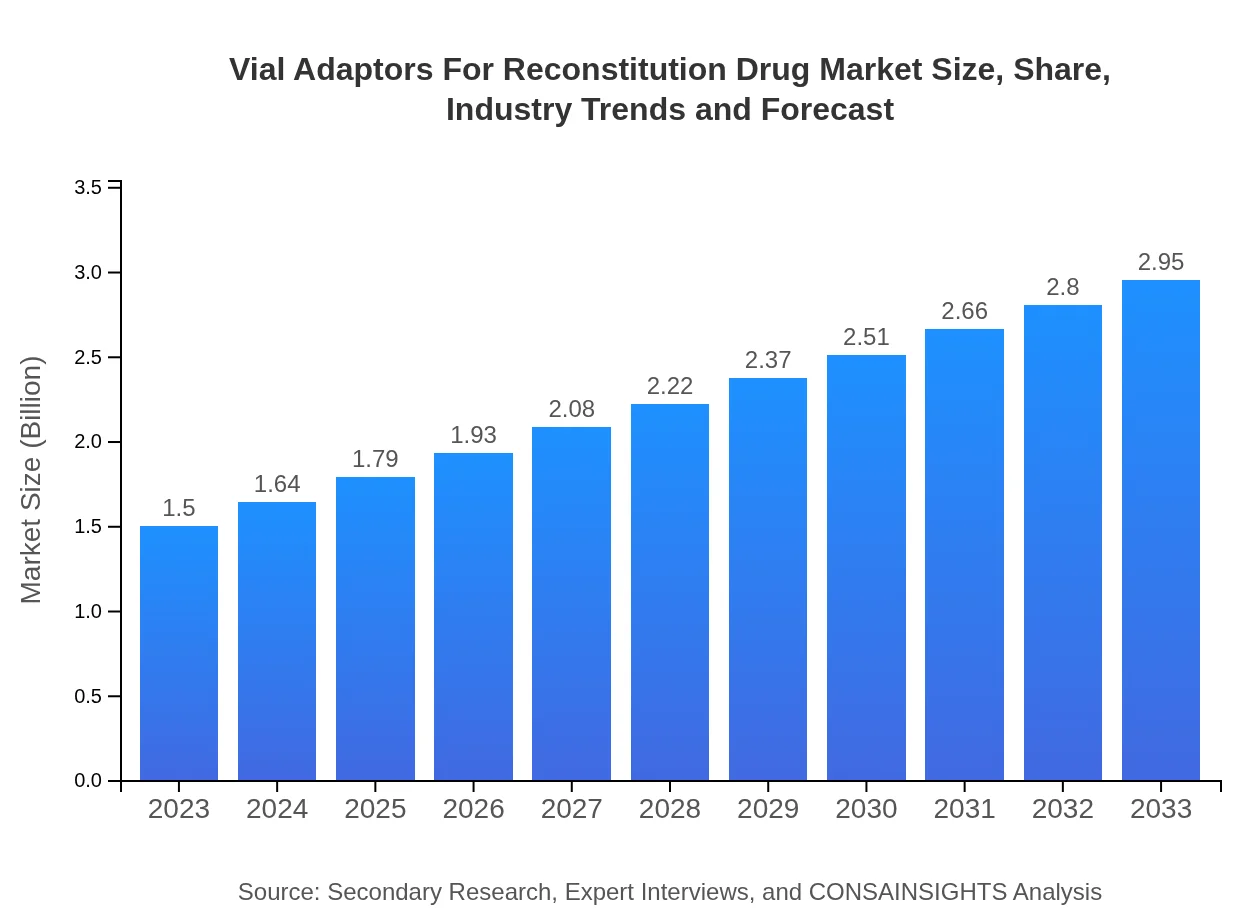
Vial Adaptors For Reconstitution Drug Market — USD 1.5 billion in 2023, Growing to USD 2.95B by 2033 at 6.8% CAGR
This report provides an in-depth analysis of the Vial Adaptors for Reconstitution Drug market from 2023 to 2033, highlighting market size, growth trends, key players, and regional insights.
Key Takeaways
- Global market expands from $1.50 Billion in 2023 to $2.95 Billion in 2033 at a 6.8% CAGR.
- Europe is largest regional market, while no single fastest-growing region is stated because regional CAGR differences remain within 0.15 percentage points.
- Europe is identified as the largest region, rising from $0.57 Billion in 2023 to $1.11 Billion in 2033.
- North America moves from $0.48 Billion in 2023 to $0.94 Billion in 2033, reflecting sustained demand.
- Regional growth tied to biologics, vaccine rollouts, regulatory emphasis on safety, and product innovation.
- Top vendors include Baxter International, Becton, Dickinson and Company (BD), Terumo Corporation, and Medline Industries.
Vial Adaptors For Reconstitution Drug Market Report — Executive Summary
Europe remains largest market by forecast-period value, while no single fastest-growing region is stated because top regional growth rates are separated by less than 0.15 percentage points. The Vial Adaptors For Reconstitution Drug Market Report covers the market trajectory from $1.50 Billion in 2023 to $2.95 Billion in 2033 at a 6.8% CAGR for 2023 to 2033. Expansion is driven by increased use of biologic therapies and vaccines, rising regulatory focus on safe reconstitution, and innovations in adaptor design and materials. Europe is the largest regional market, supported by adoption in hospitals and clinics. Key product and distribution segments include standard and specialized adaptors, plastic and metal materials, direct sales and distributor channels, and end users spanning hospitals, clinics, pharmacies and home care services. Competitive dynamics feature established medical suppliers such as Baxter International, Becton, Dickinson and Company (BD), Terumo Corporation, and Medline Industries. The report addresses market structure, segment performance, regional patterns, and strategic considerations for manufacturers and suppliers adapting to evolving regulatory and clinical requirements.
Key Growth Drivers
- Rising adoption of biologic drugs and vaccines increases demand for secure reconstitution devices.
- Regulatory emphasis on aseptic handling and patient safety encourages wider use of adaptors.
- Material innovation and specialized adaptor designs expand applications across therapeutic areas.
- Growing hospital and clinic procurement for safe medication preparation supports sustained market uptake.
| Metric | Value |
|---|---|
| Study Period | 2023 - 2033 |
| 2023 Market Size | $1.50 Billion |
| CAGR (2023-2033) | 6.8% |
| 2033 Market Size | $2.95 Billion |
| Top Companies | Baxter International, Becton, Dickinson and Company (BD), Terumo Corporation, Medline Industries |
| Published Date | 11 October 2024 |
| Last Modified Date | 28 May 2026 |
Vial Adaptors For Reconstitution Drug Market Overview
Customize Vial Adaptors For Reconstitution Drug Market Report market research report
- ✔ Get in-depth analysis of Vial Adaptors For Reconstitution Drug market size, growth, and forecasts.
- ✔ Understand Vial Adaptors For Reconstitution Drug's regional dynamics and industry-specific trends.
- ✔ Identify potential applications, end-user demand, and growth segments in Vial Adaptors For Reconstitution Drug
What is the Market Size & CAGR of Vial Adaptors For Reconstitution Drug Market Report market in 2023?
Vial Adaptors For Reconstitution Drug Industry Analysis
Vial Adaptors For Reconstitution Drug Market Segmentation and Scope
Tell us your focus area and get a customized research report.
Vial Adaptors For Reconstitution Drug Market Report Market Analysis Report by Region
Europe Vial Adaptors For Reconstitution Drug Market Report:
Europe is largest regional market, rising from $0.57 Billion in 2023 to $1.11 Billion in 2033. 57 Billion in 2023 to $1.11 Billion in 2033 and is identified as the largest region by end-period value. Growth reflects strong uptake in hospitals and clinics, regulatory emphasis on safety, and investments in specialty drug delivery technologies.Asia Pacific Vial Adaptors For Reconstitution Drug Market Report:
Asia Pacific grows from $0.24 Billion in 2023 to $0.47 Billion in 2033. The region’s advancement is linked to rising biologic and vaccine use, expanding healthcare infrastructure, and increasing adoption of standardized reconstitution practices.North America Vial Adaptors For Reconstitution Drug Market Report:
North America grows from $0.48 Billion in 2023 to $0.94 Billion in 2033. 48 Billion in 2023 and grows to $0.94 Billion in 2033. Regional demand is shaped by established hospital procurement, broad clinical adoption, and a steady need for safe reconstitution devices in medical and outpatient settings.South America Vial Adaptors For Reconstitution Drug Market Report:
Latin America grows from $0.03 Billion in 2023 to $0.05 Billion in 2033. Progress is driven by gradual healthcare capacity enhancements, growing pharmaceutical distribution, and incremental adoption of safer preparation devices.Middle East & Africa Vial Adaptors For Reconstitution Drug Market Report:
Middle East and Africa grows from $0.19 Billion in 2023 to $0.36 Billion in 2033. Regional drivers include expanding clinical services, rising focus on patient safety standards, and uptake of standardized reconstitution solutions.Tell us your focus area and get a customized research report.
Research Methodology
Vial Adaptors For Reconstitution Drug Market Analysis By Product
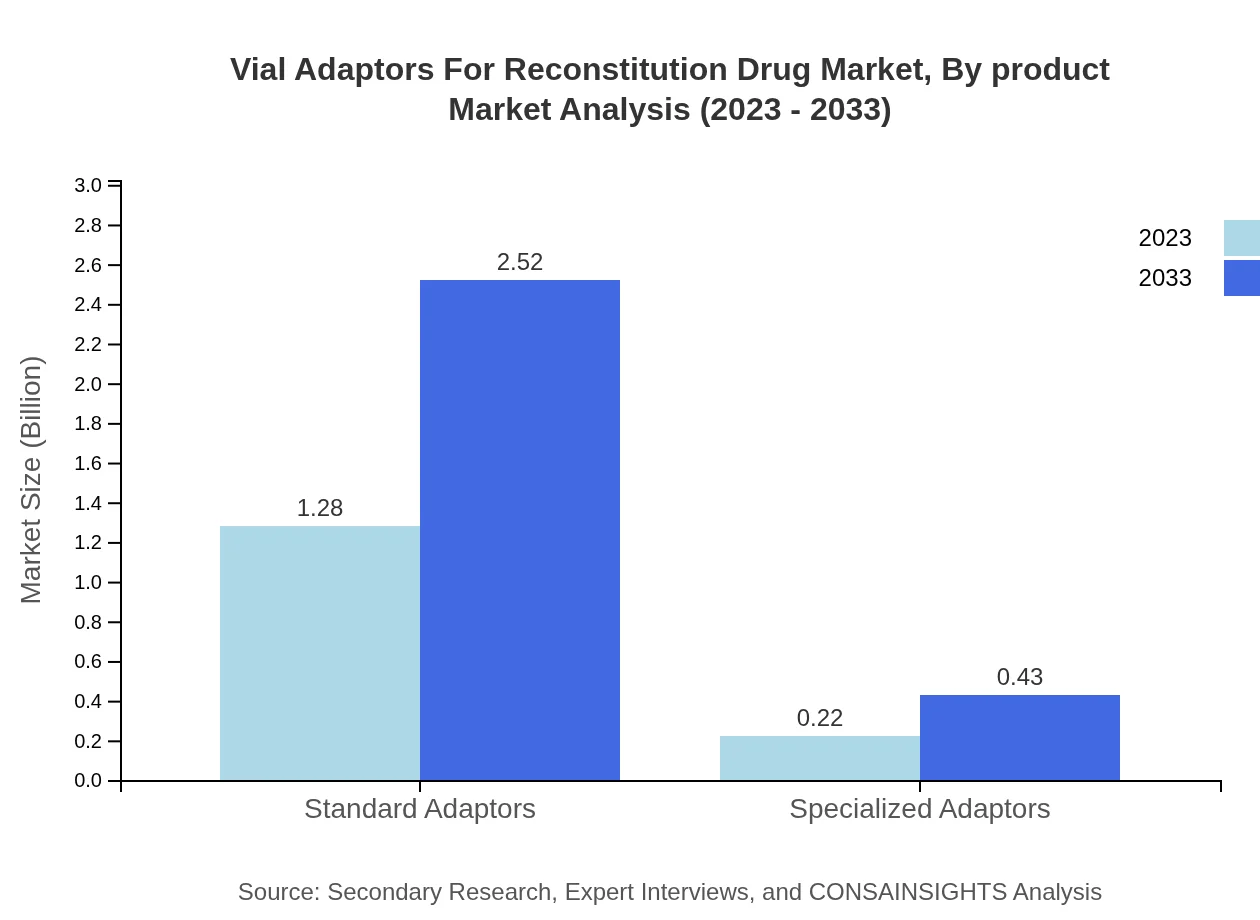
The market is dominated by Standard Adaptors, projected to grow from 1.28 million in 2023 to 2.52 million by 2033, representing 85.5% market share. In contrast, Specialized Adaptors, while smaller, are set to grow from 0.22 million to 0.43 million, marking a crucial area of innovation.
Vial Adaptors For Reconstitution Drug Market Analysis By Application
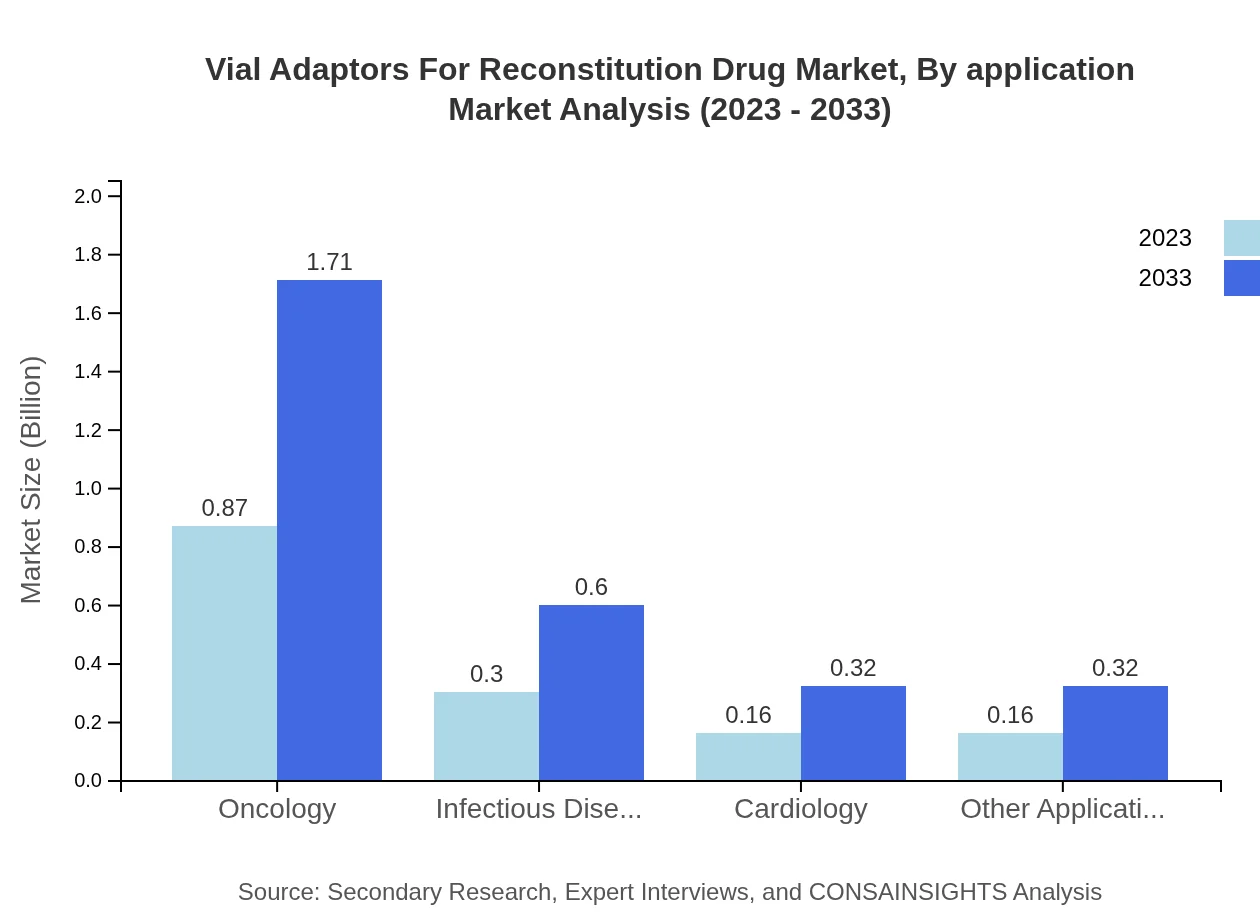
Hospitals represent the largest application segment, with sizes moving from 0.87 million in 2023 to 1.71 million in 2033. Clinics and pharmacies also contribute significantly, focusing on increasing patient access to biologic therapies.
Vial Adaptors For Reconstitution Drug Market Analysis By End User
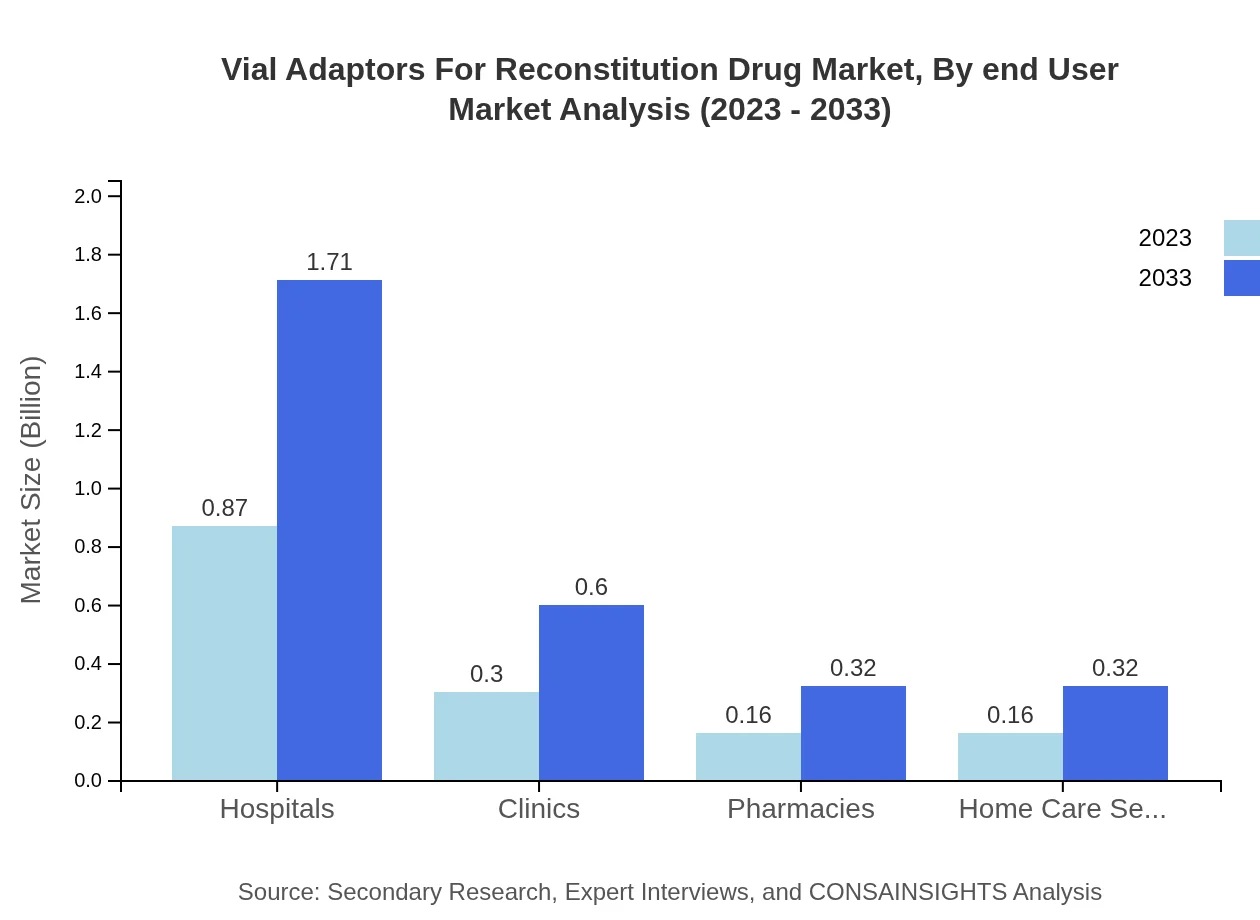
End-users for the Vial Adaptors include hospitals, clinics, pharmacies, and home care services. Hospitals dominate with 57.89% market share, while home care services are projected to evolve, showing the importance of accessibility to specialized treatments.
Vial Adaptors For Reconstitution Drug Market Analysis By Material
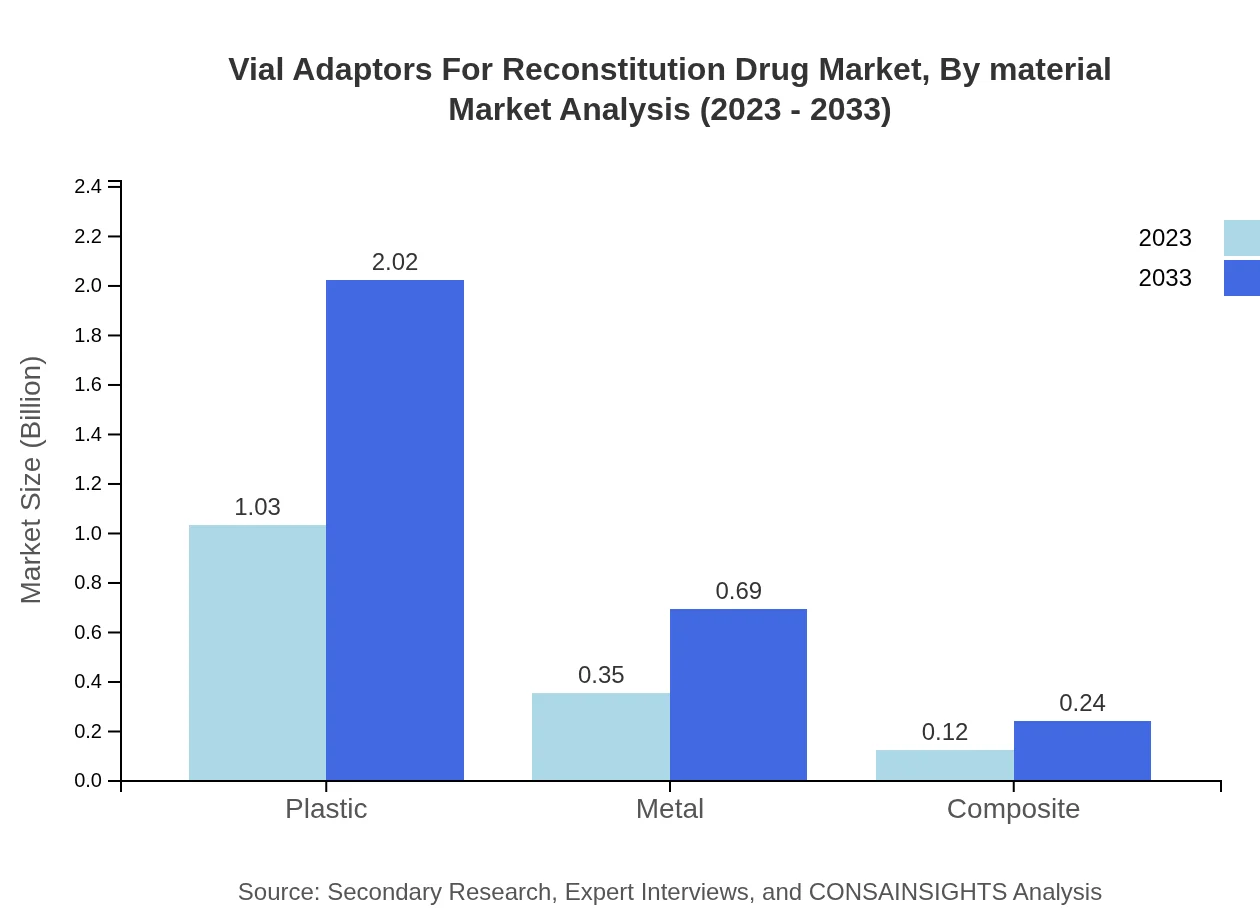
Plastic adaptors lead the market with anticipated growth from 1.03 million to 2.02 million by 2033, holding a significant share of 68.43%. Metal and composite materials also play essential roles, emphasizing advancements in innovation.
Vial Adaptors For Reconstitution Drug Market Analysis By Distribution Channel
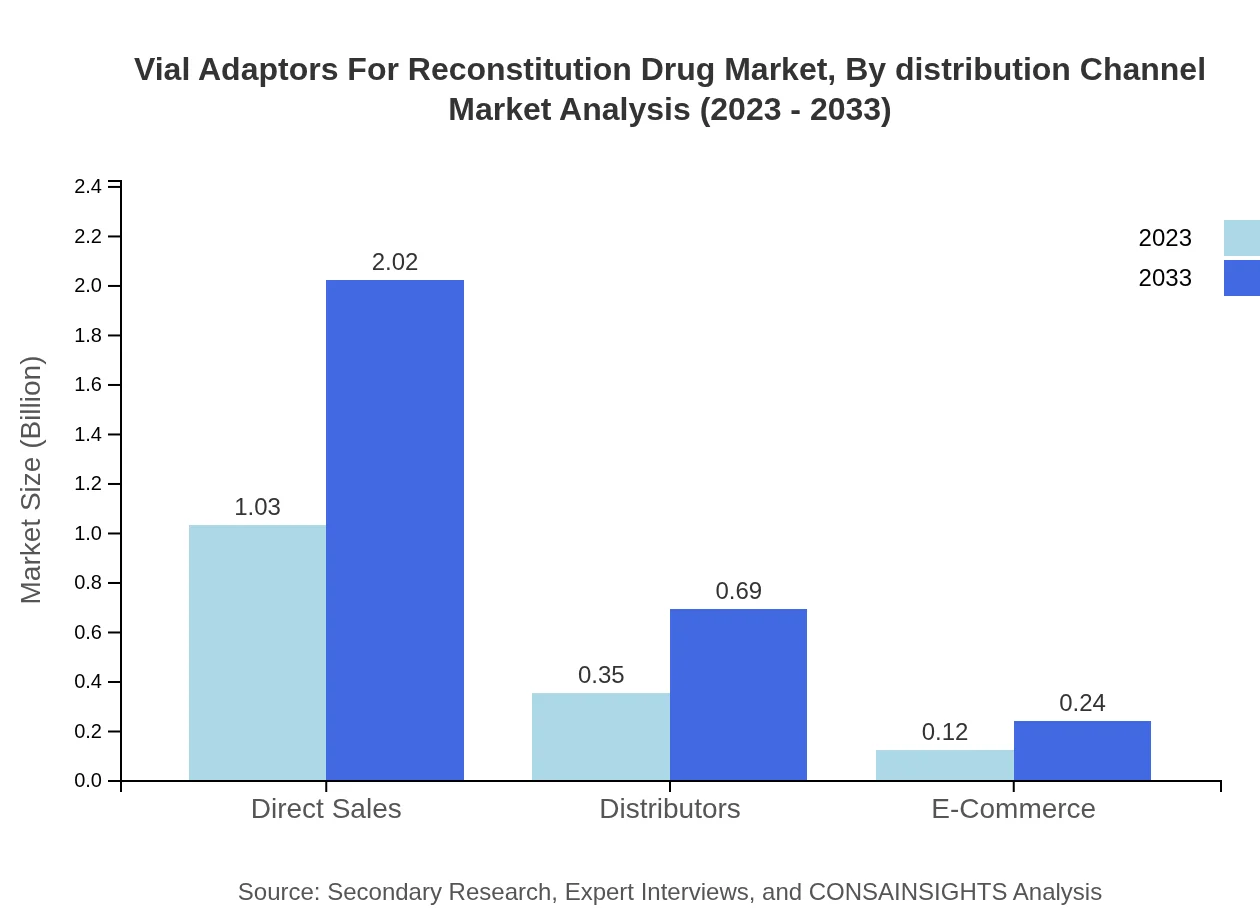
Direct sales remain the dominant distribution channel, expected to retain a share of 68.43% with a market move from 1.03 million to 2.02 million by 2033, highlighting a significant focus on streamlined market access and supply chain efficiency.
Vial Adaptors For Reconstitution Drug Market Trends and Future Forecast
Tell us your focus area and get a customized research report.
Global Market Leaders and Top Companies in Vial Adaptors For Reconstitution Drug Industry
Baxter International:
A leader in healthcare, Baxter provides a wide range of solutions, including IV therapy and Vial Adaptors, enhancing patient safety and operational efficiency.Becton, Dickinson and Company (BD):
BD is a significant player known for its innovative medical technology and devices, including advanced vial adaptors for safe drug reconstitution.Terumo Corporation:
Terumo specializes in medical devices and offers a range of vial adaptors that ensure efficacy in drug reconstitution processes in various medical applications.Medline Industries:
Medline provides an extensive range of healthcare products and is recognized for its contributions to the Vial Adaptors market through its focus on quality and innovation.We're grateful to work with incredible clients.








FAQs
What is the market size of the Vial Adaptors For Reconstitution Drug Market Report in 2023?
The market size in 2023 is $1.50 Billion, as stated in the report. This figure reflects reported industry valuation at the start of the forecast period.
What is the market size projected for 2033?
The market is projected to reach $2.95 Billion by 2033 according to the forecast, reflecting growth across regions and expanding applications in drug reconstitution.
What is CAGR for the forecast period?
The forecast period 2023 to 2033 features a CAGR of 6.8%, representing the compounded annual growth rate used to project market expansion to 2033.
Is there a single fastest Growing region in the Vial Adaptors For Reconstitution Drug Market Report market?
No single fastest-growing region is stated for the Vial Adaptors For Reconstitution Drug Market Report market because the top regional implied CAGR values are within 0.15 percentage points of each other, making the ranking too close to call reliably.
Which companies are named as top players?
Top companies listed include Baxter International, Becton, Dickinson and Company (BD), Terumo Corporation, and Medline Industries as key suppliers in the market.
Why is demand rising for vial adaptors?
Demand increases due to wider use of biologics and vaccines, stricter safety regulations for reconstitution, and a push for device innovations that improve handling and reduce contamination risks.
Who are the primary end users for these adaptors?
Primary end users include hospitals, clinics, pharmacies, and home care services, which procure adaptors for safe medication reconstitution across therapeutic settings.
How big is the North America market in 2023 and 2033?
North America is reported at $0.48 Billion in 2023 and increases to $0.94 Billion in 2033, reflecting ongoing clinical and institutional demand.