

Aminophylline Market Report
First published: 11 October 2024 | Last updated: 25 May 2026 | Report Code: aminophylline
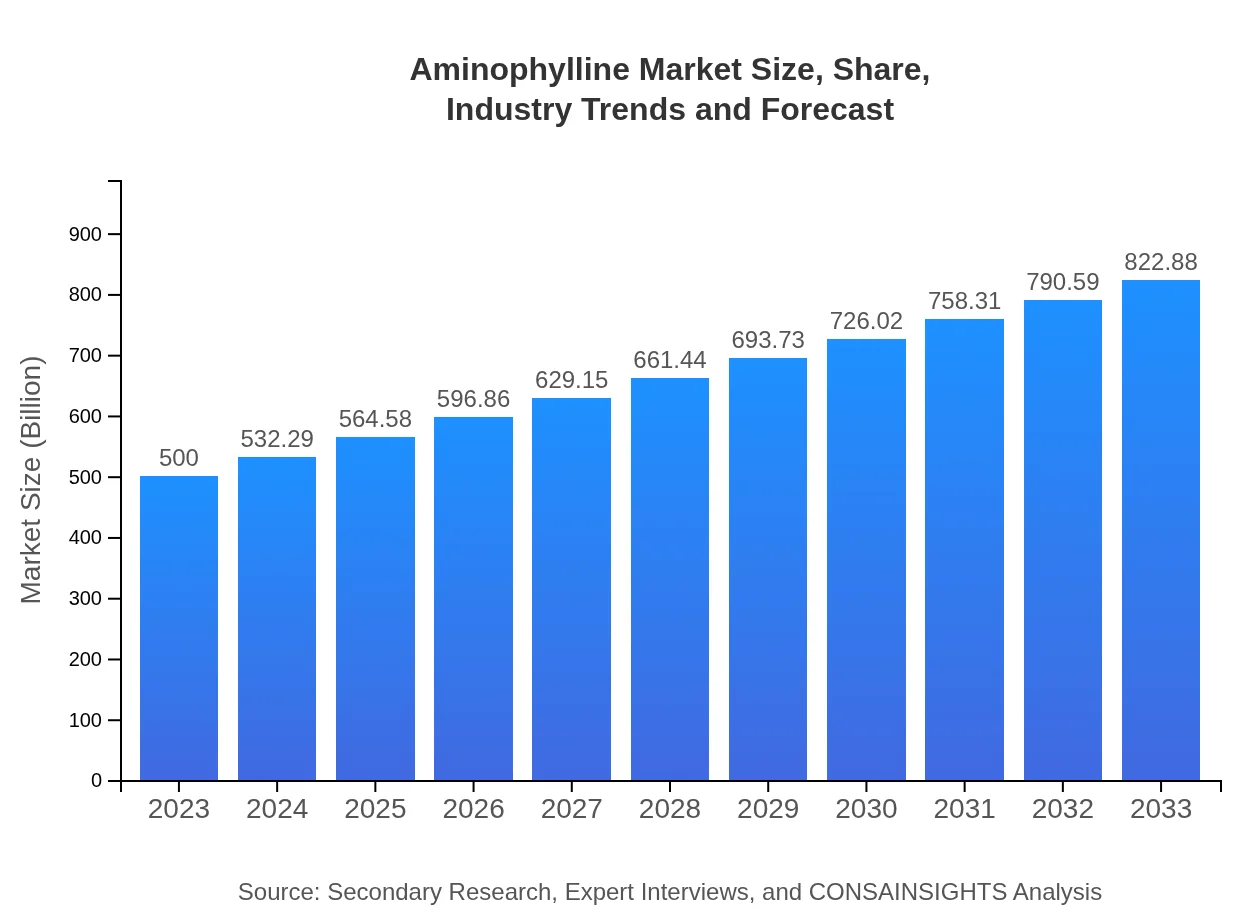
Aminophylline Market — USD 500 million in 2023, Growing to USD 822.88M by 2033 at 5% CAGR
This report provides a comprehensive analysis of the Aminophylline market, highlighting key trends, growth prospects, and detailed insights from 2023 to 2033, including market size, segmentation, regional performance, and notable leaders in the industry.
Key Takeaways
- Global market expands from $500.00 Billion in 2023 to $822.88 Billion by 2033, reflecting a 5% CAGR over the forecast period.
- North America is largest regional market, while no single fastest-growing region is stated because regional CAGR differences remain within 0.15 percentage points.
- Europe grows from $157.6 Billion in 2023 to $259.37 Billion in 2033, driven by advanced healthcare infrastructure.
- Asia Pacific moves from $92.6 Billion in 2023 to $152.4 Billion in 2033 as access to treatments and distribution channels broaden.
Aminophylline Market Report — Executive Summary
North America remains largest market by forecast-period value, while no single fastest-growing region is stated because top regional growth rates are separated by less than 0.15 percentage points. The report outlines market expansion from $500.00 Billion in 2023 to $822.88 Billion by 2033 at a 5% CAGR. Primary growth drivers include rising respiratory disease prevalence, increased demand for bronchodilators, and broader healthcare access. Product segmentation highlights tablets, injections, and liquid formulations, while distribution channels span hospitals, retail pharmacies, and online pharmacies. Key competitive players listed include Teva Pharmaceuticals, Mylan N.V., Sandoz International GmbH, Pfizer Inc., and AbbVie Inc. Research and development in formulations and distribution innovations support continued uptake. The analysis combines primary expert interviews with secondary company reports and data validation to present actionable market insights across regions and end-users.
Key Growth Drivers
- Higher incidence of respiratory conditions increasing demand for bronchodilator therapies.
- Expansion of healthcare infrastructure and improved access to clinical care in multiple regions.
- Portfolio extensions and formulation innovation by established pharmaceutical firms.
- Wider adoption of diverse distribution channels including hospitals, retail and online pharmacies.
| Metric | Value |
|---|---|
| Study Period | 2023 - 2033 |
| 2023 Market Size | $500.00 Million |
| CAGR (2023-2033) | 5% |
| 2033 Market Size | $822.88 Million |
| Top Companies | Teva Pharmaceuticals, Mylan N.V., Sandoz International GmbH, Pfizer Inc., AbbVie Inc. |
| Published Date | 11 October 2024 |
| Last Modified Date | 25 May 2026 |
Aminophylline Market Overview
Customize Aminophylline Market Report market research report
- ✔ Get in-depth analysis of Aminophylline market size, growth, and forecasts.
- ✔ Understand Aminophylline's regional dynamics and industry-specific trends.
- ✔ Identify potential applications, end-user demand, and growth segments in Aminophylline
What is the Market Size & CAGR of Aminophylline Market Report market in 2023?
Aminophylline Industry Analysis
Aminophylline Market Segmentation and Scope
Tell us your focus area and get a customized research report.
Aminophylline Market Report Market Analysis Report by Region
Europe Aminophylline Market Report:
Europe grows from $157.6 Billion in 2023 to $259.37 Billion in 2033. Regional momentum is tied to established clinical care systems, growing demand for respiratory therapies, and investments in therapeutic development.Asia Pacific Aminophylline Market Report:
Asia Pacific grows from $92.6 Billion in 2023 to $152.4 Billion in 2033. Expansion reflects broader access to care, growing patient populations needing bronchodilators, and enhanced distribution capabilities across markets.North America Aminophylline Market Report:
North America is largest regional market, rising from $177.25 Billion in 2023 to $291.71 Billion in 2033. Growth here is attributed to advanced healthcare infrastructure, high treatment access, and active participation by major pharmaceutical companies.South America Aminophylline Market Report:
Latin America grows from $6.3 Billion in 2023 to $10.37 Billion in 2033. Market changes are supported by improving healthcare delivery and wider availability of pharmaceutical treatments and channels.Middle East & Africa Aminophylline Market Report:
Middle East and Africa grows from $66.25 Billion in 2023 to $109.03 Billion in 2033. Drivers include growing healthcare investments, increased diagnosis and treatment of respiratory conditions, and expanded supply through hospitals and pharmacies.Tell us your focus area and get a customized research report.
Research Methodology
Aminophylline Market Analysis By Forms
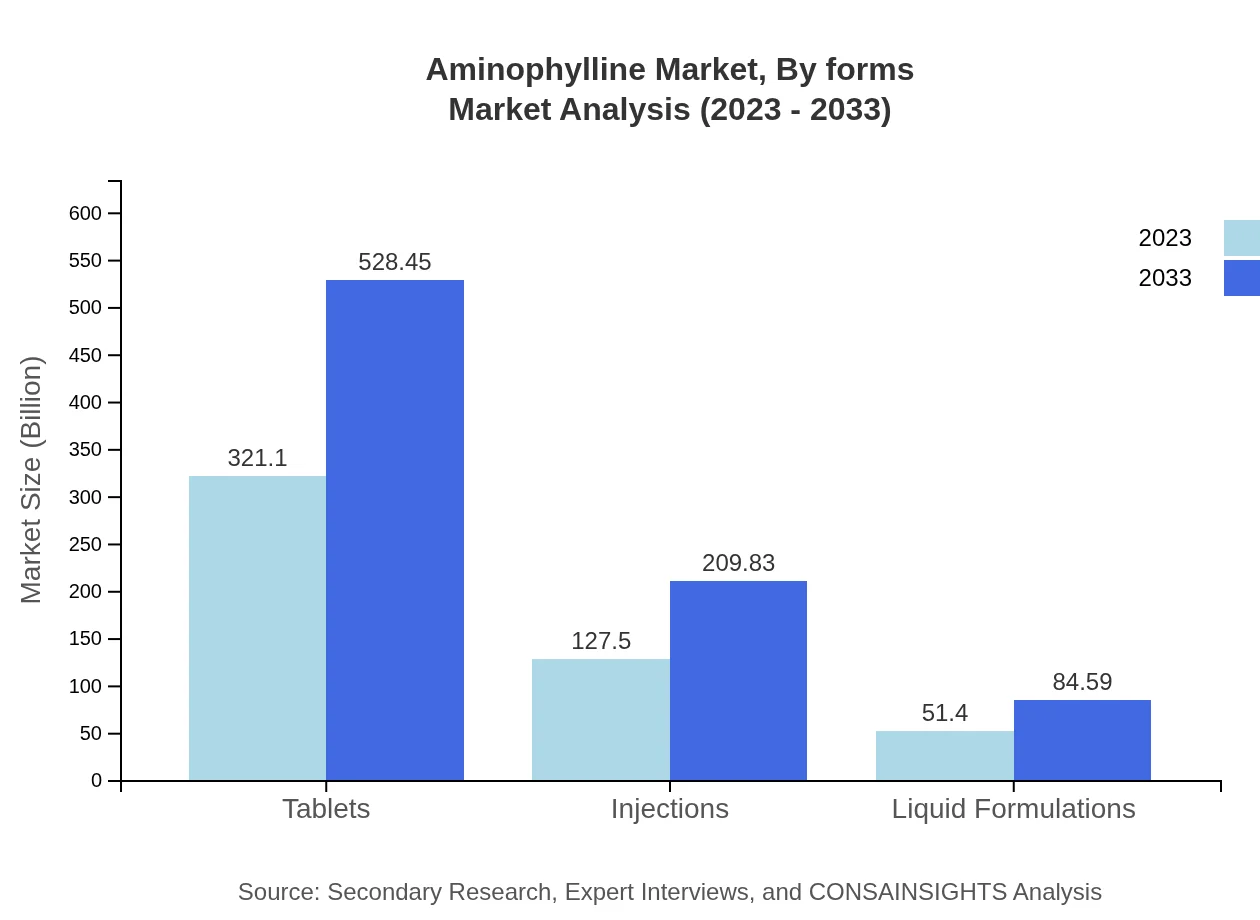
In terms of forms, the Aminophylline market is expected to continue growing, with Tablets projected to increase in size from 321.10 million USD in 2023 to 528.45 million USD by 2033, holding a share of approximately 64.22%. Injections are another notable form, estimating to rise from 127.50 million USD to 209.83 million USD, making up about 25.5% of the market share. Liquid formulations are anticipated to contribute 51.40 million USD to 84.59 million USD, securing 10.28% market share by 2033. This diverse segmentation allows consumers to choose a form best suited to treatment needs.
Aminophylline Market Analysis By Application
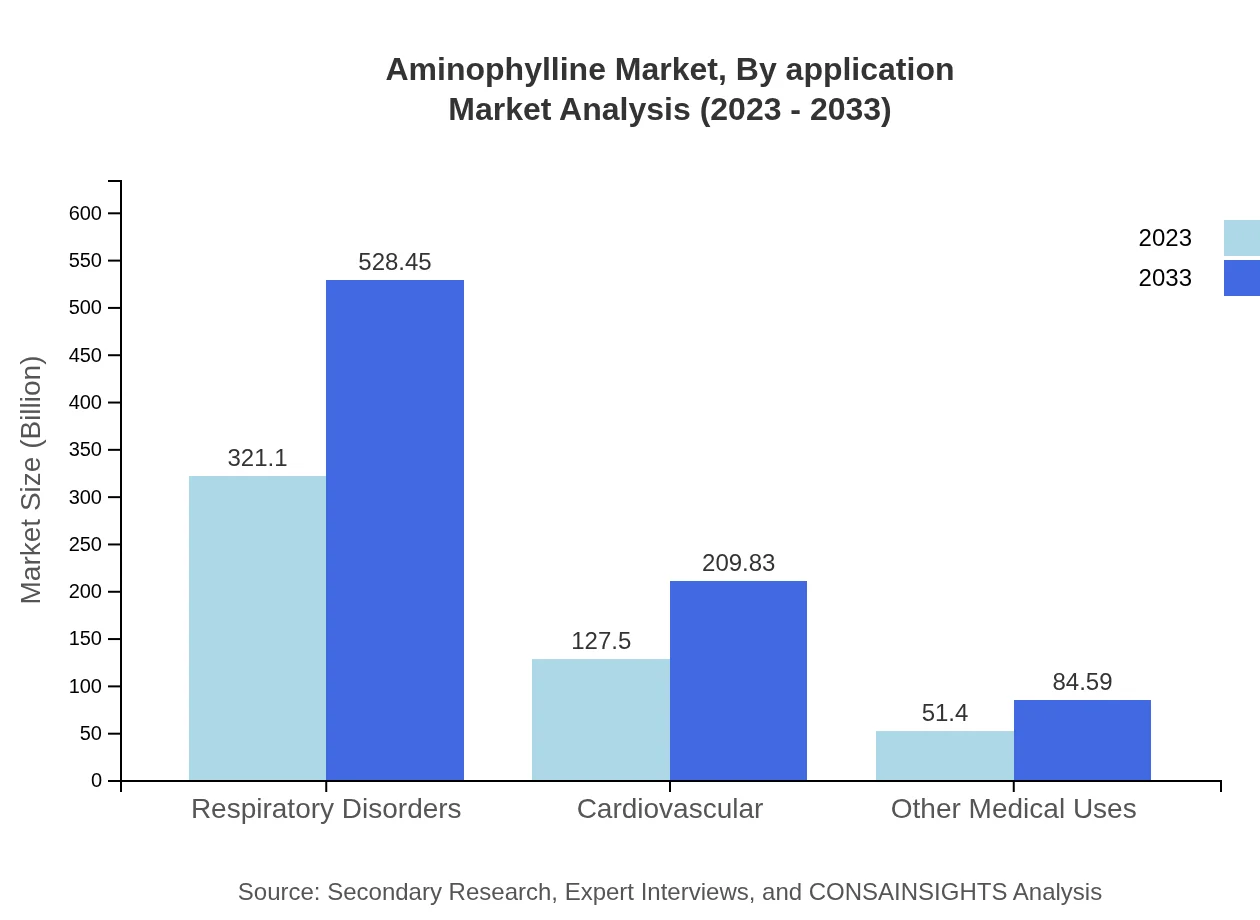
The market segments by application reveal critical insights into the dominant uses of Aminophylline. Respiratory disorders remain the leading application, poised to grow from 321.10 million USD to 528.45 million USD by 2033, while cardiovascular applications are also significant, projected to increase from 127.50 million USD to 209.83 million USD. The other medicinal applications, including various treatment avenues, will also see growth from 51.40 million USD to 84.59 million USD, further reinforcing the versatility of Aminophylline in diverse medical contexts.
Aminophylline Market Analysis By Distribution Channel
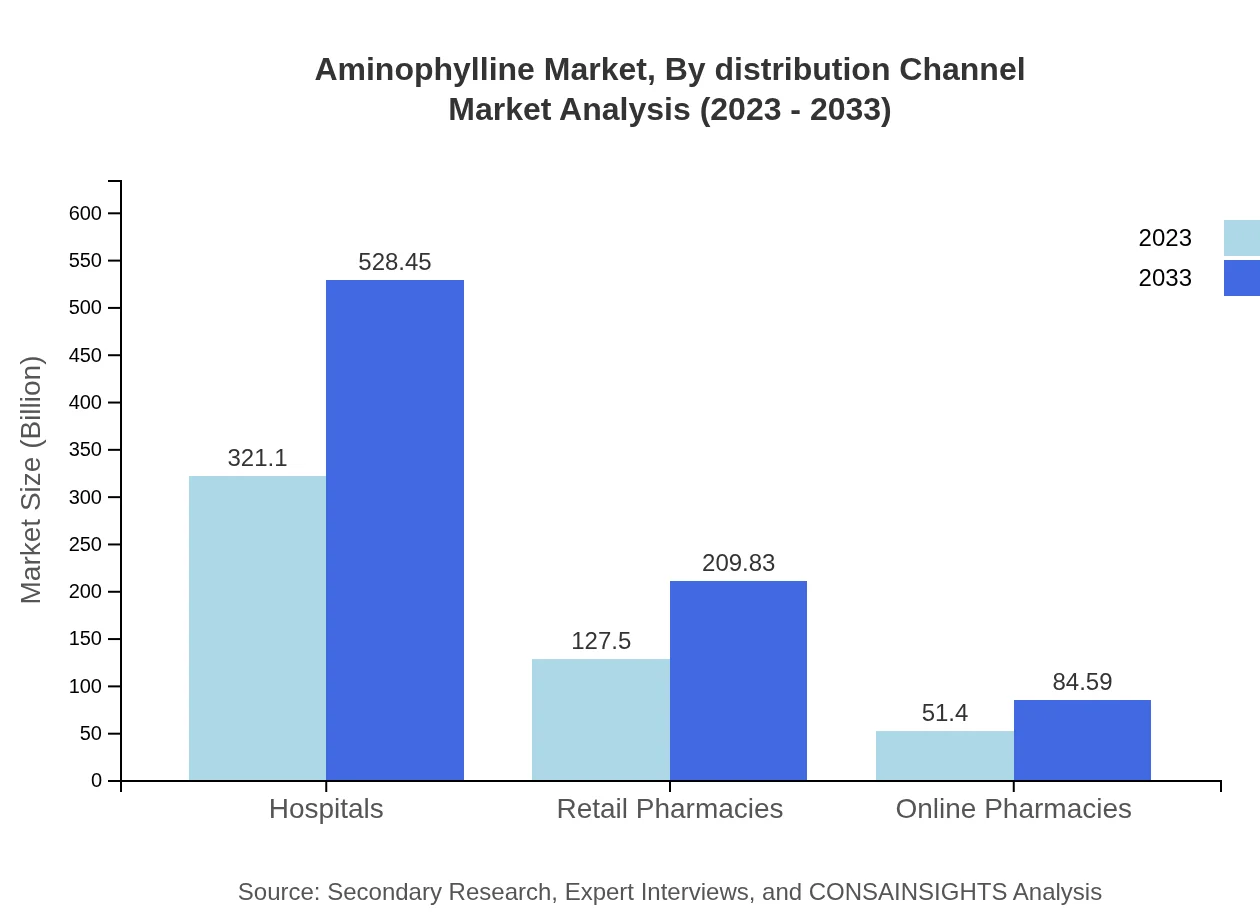
Distribution channels are poised to play a critical role in the Aminophylline market. Hospitals and clinics represent the primary distribution channel, commanding a significant size increase forecasted from 321.10 million USD to 528.45 million USD by 2033. Retail pharmacies will also see steady growth, expected to elevate from 127.50 million USD to 209.83 million USD, highlighting the increasing accessibility of Aminophylline. Meanwhile, online pharmacies, while smaller at 51.40 million USD in 2023, will grow to 84.59 million USD, showcasing a shift towards digital health solutions.
Aminophylline Market Analysis By End User
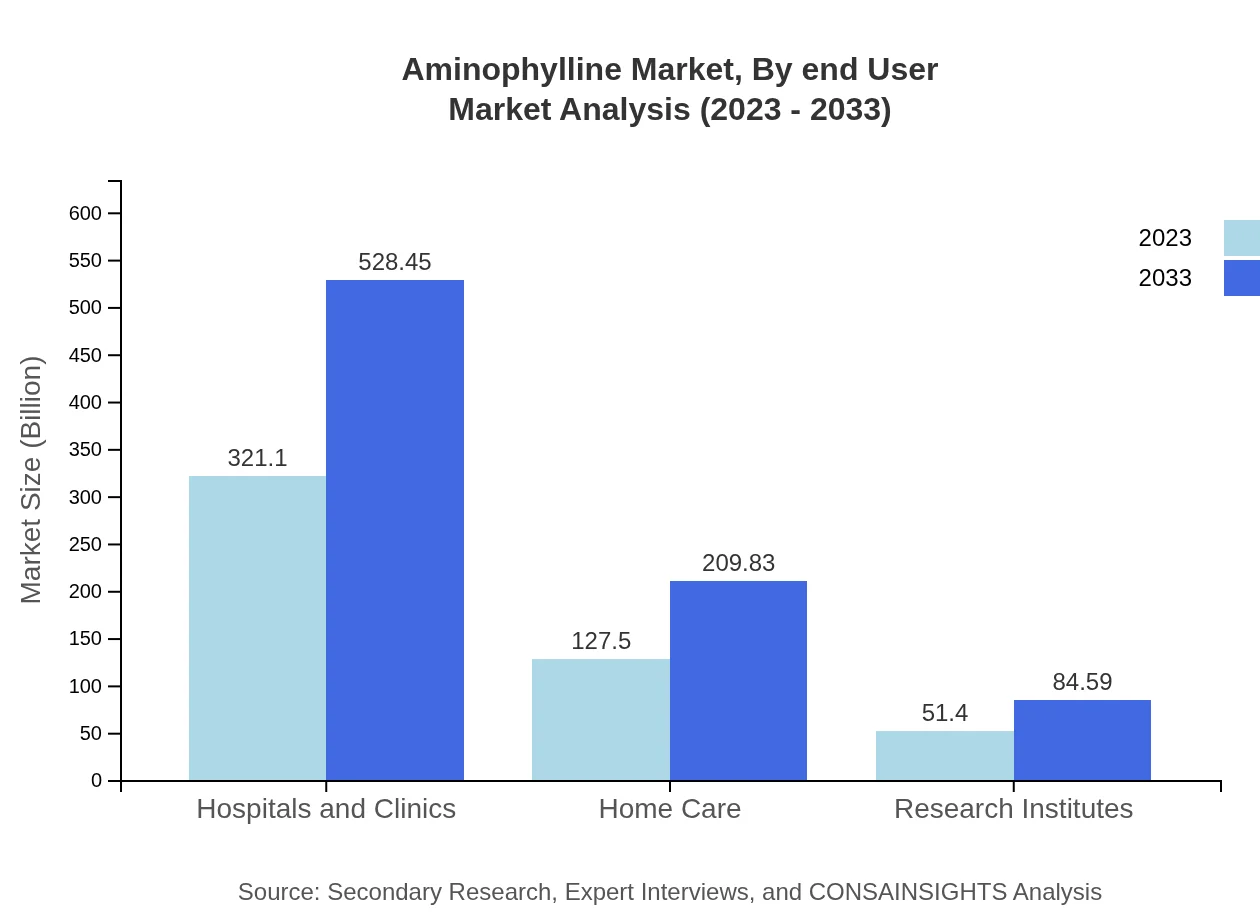
End-user analysis indicates that hospitals will continue to dominate the market, growing from 321.10 million USD in 2023 to 528.45 million USD by 2033, driven by the demand for acute care and advanced treatment options. The home care segment, although lower at 127.50 million USD, is expected to rise to 209.83 million USD, reflecting a trend towards patient-centered care. Research institutes, expected to contribute from 51.40 million USD to 84.59 million USD, highlight the importance of ongoing clinical studies for Aminophylline.
Aminophylline Market Trends and Future Forecast
Tell us your focus area and get a customized research report.
Global Market Leaders and Top Companies in Aminophylline Industry
Teva Pharmaceuticals:
Teva is a leading global generic pharmaceutical company, offering a comprehensive range of healthcare solutions. Their extensive portfolio includes formulations of Aminophylline that cater to both acute and chronic conditions.Mylan N.V.:
Mylan is renowned for its commitment to providing access to high-quality medicines. The company manufactures various formulations of Aminophylline, focusing on affordability and availability across global markets.Sandoz International GmbH:
A division of Novartis, Sandoz specializes in generic pharmaceuticals. Their product range includes effective Aminophylline formulations supporting healthcare systems worldwide.Pfizer Inc.:
As a major healthcare player, Pfizer offers a vast array of pharmaceutical products. The company's developments in Aminophylline formulations are integral to their respiratory health portfolio.AbbVie Inc.:
AbbVie is a pharmaceuticals leader focused on innovative therapies. Their work in developing Aminophylline is essential for addressing various degrees of respiratory and cardiovascular conditions.We're grateful to work with incredible clients.








FAQs
What is the market size of Aminophylline in 2023?
The market size for Aminophylline in 2023 is $500.00 Billion as specified in the report data for the base year.
How big will the Aminophylline market be in 2033?
By 2033 the Aminophylline market is projected to reach $822.88 Billion according to the provided forecast figures.
What is CAGR of the Aminophylline market for 2023 to 2033?
The Aminophylline market is shown with a 5% compound annual growth rate for the forecast period 2023 to 2033.
Is there a single fastest Growing region in the Aminophylline Market Report market?
No single fastest-growing region is stated for the Aminophylline Market Report market because the top regional implied CAGR values are within 0.15 percentage points of each other, making the ranking too close to call reliably.
Which companies are identified as top players?
Top companies listed in the report include Teva Pharmaceuticals, Mylan N.V., Sandoz International GmbH, Pfizer Inc., and AbbVie Inc.
Who contributed to the research methodology?
Research relied on primary interviews with industry experts along with secondary company reports, publications, and internal data validation processes.
How big is the Asia Pacific market in 2023 and 2033?
Asia Pacific is reported at $92.6 Billion in 2023 and grows to $152.4 Billion in 2033 per the regional facts supplied.
What are the main product forms covered?
The report covers primary forms including Tablets, Injections, and Liquid Formulations as the stated subsegments.
What distribution channels are included?
Distribution channels specified are Hospitals, Retail Pharmacies, and Online Pharmacies in the segment facts.
Why might market accessibility improve?
Accessibility is expected to benefit from regulatory support for generics, broader distribution channels, and formulation innovations noted in the contextual drivers.