

Viral Vector And Plasmid Dna Manufacturing Market Report
First published: 12 October 2024 | Last updated: 28 May 2026 | Report Code: viral-vector-and-plasmid-dna-manufacturing
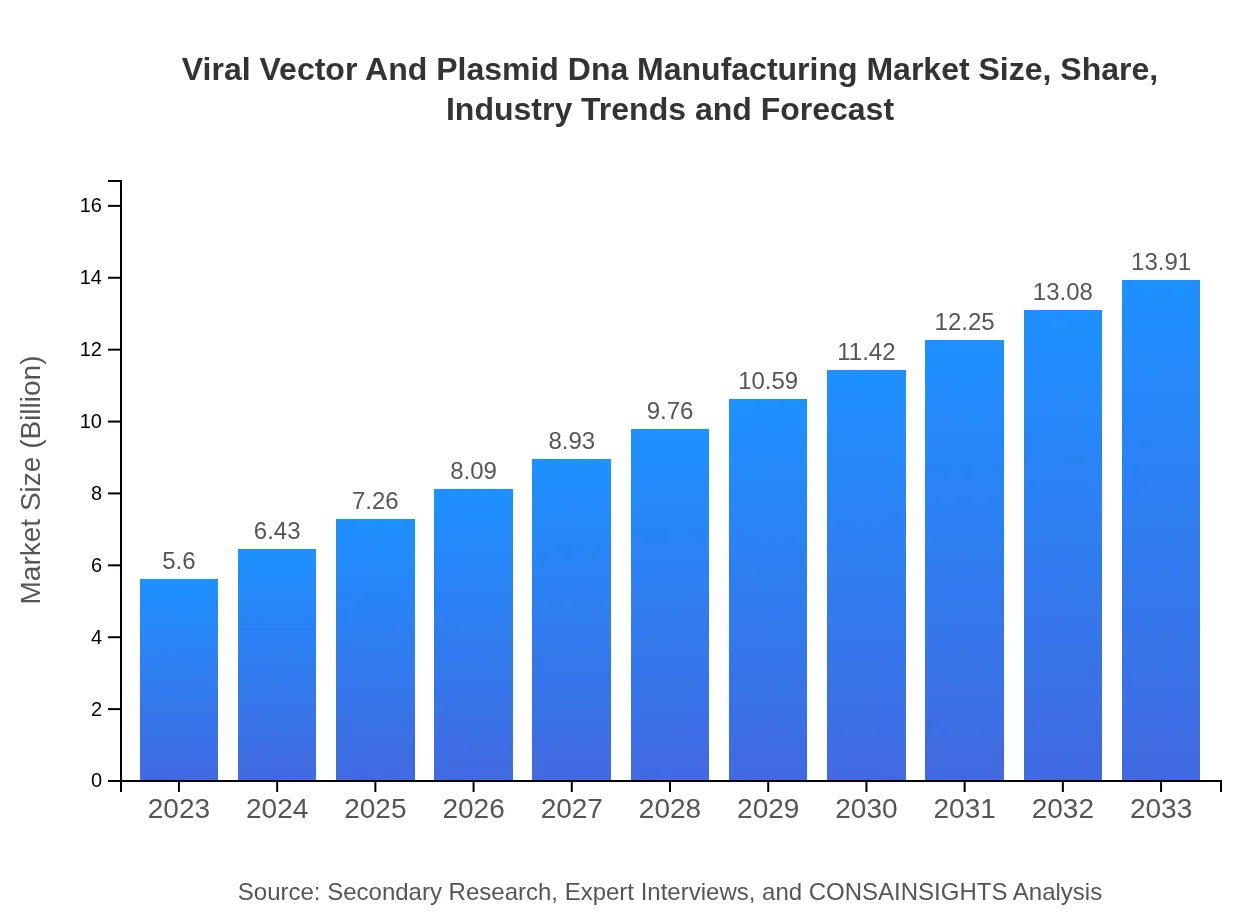
Viral Vector And Plasmid Dna Manufacturing Market — USD 5.6 billion in 2023, Growing to USD 13.91B by 2033 at 9.2% CAGR
This report provides an in-depth analysis of the Viral Vector and Plasmid DNA Manufacturing market for the forecast period 2023-2033. It covers market size, growth trends, segmentation, and key industry leaders, offering valuable insights for stakeholders.
Key Takeaways
- Global market expands from $5.60 Billion in 2023 to $13.91 Billion in 2033 at a 9.2% CAGR.
- Europe is largest regional market, while no single fastest-growing region is stated because regional CAGR differences remain within 0.15 percentage points.
- North America rises from $1.82 Billion in 2023 to $4.52 Billion in 2033, reflecting sustained demand.
- Asia Pacific grows from $1.01 Billion in 2023 to $2.52 Billion in 2033 amid rising biotech activity.
- Top industry players include Novartis, Lonza Group, GW Pharmaceuticals, Roche, and Sangamo Therapeutics.
Viral Vector And Plasmid Dna Manufacturing Market Report — Executive Summary
Europe remains largest market by forecast-period value, while no single fastest-growing region is stated because top regional growth rates are separated by less than 0.15 percentage points. The Viral Vector And Plasmid Dna Manufacturing Market Report outlines sustained growth driven by greater demand for gene therapies, vaccine development, and scalable production solutions. The market is projected to grow from $5.60 Billion in 2023 to $13.91 Billion by 2033 with a 9.2% CAGR during 2023 to 2033. Key forces include rising investments in research and development, adoption of contract manufacturing, and regulatory pathways that support advanced therapies. Regional dynamics vary: Europe leads in absolute market size, while North America and Asia Pacific register notable increases in absolute value. Product and service segmentation covers viral vectors and plasmid DNA, in-house and contract manufacturing, and applications across gene therapy, vaccines, and cellular research. Major companies such as Novartis, Lonza Group, GW Pharmaceuticals, Roche, and Sangamo Therapeutics are active in capacity expansion and partnerships. The report synthesizes primary interviews, company disclosures, and secondary sources to present a validated market perspective and actionable insights for stakeholders seeking to navigate manufacturing, supply, and commercialization challenges.
Key Growth Drivers
- Rising investment in gene therapy and vaccine research increasing demand for viral vectors and plasmid DNA production.
- Greater use of contract manufacturing organizations reducing time-to-market and enabling scalable output.
- Regulatory support and approvals for advanced biologics encouraging expanded manufacturing capacity.
- Technological advances in vector development and production improving yields and lowering unit costs.
- Growing pipeline of personalized and cell-based therapies requiring specialized manufacturing solutions.
| Metric | Value |
|---|---|
| Study Period | 2023 - 2033 |
| 2023 Market Size | $5.60 Billion |
| CAGR (2023-2033) | 9.2% |
| 2033 Market Size | $13.91 Billion |
| Top Companies | Novartis, Lonza Group, GW Pharmaceuticals, Roche, Sangamo Therapeutics |
| Published Date | 12 October 2024 |
| Last Modified Date | 28 May 2026 |
Viral Vector And Plasmid Dna Manufacturing Market Overview
Customize Viral Vector And Plasmid Dna Manufacturing Market Report market research report
- ✔ Get in-depth analysis of Viral Vector And Plasmid Dna Manufacturing market size, growth, and forecasts.
- ✔ Understand Viral Vector And Plasmid Dna Manufacturing's regional dynamics and industry-specific trends.
- ✔ Identify potential applications, end-user demand, and growth segments in Viral Vector And Plasmid Dna Manufacturing
What is the Market Size & CAGR of Viral Vector And Plasmid Dna Manufacturing Market Report market in 2023?
Viral Vector And Plasmid Dna Manufacturing Industry Analysis
Viral Vector And Plasmid Dna Manufacturing Market Segmentation and Scope
Tell us your focus area and get a customized research report.
Viral Vector And Plasmid Dna Manufacturing Market Report Market Analysis Report by Region
Europe Viral Vector And Plasmid Dna Manufacturing Market Report:
Europe is largest regional market, rising from $2.06 Billion in 2023 to $5.12 Billion in 2033. Europe is the largest regional market, driven by robust clinical pipelines, manufacturing capacity expansion, and supportive regulatory frameworks for gene and cell therapies.Asia Pacific Viral Vector And Plasmid Dna Manufacturing Market Report:
Asia Pacific grows from $1.01 Billion in 2023 to $2.52 Billion in 2033. Growth is underpinned by expanding biotech ecosystems, rising clinical research, and increasing adoption of contract manufacturing to meet regional demand.North America Viral Vector And Plasmid Dna Manufacturing Market Report:
North America grows from $1.82 Billion in 2023 to $4.52 Billion in 2033. The region’s growth reflects strong biotech and pharmaceutical activity, significant R&D investment, and established manufacturing infrastructure supporting advanced therapy production.South America Viral Vector And Plasmid Dna Manufacturing Market Report:
Latin America grows from $0.22 Billion in 2023 to $0.54 Billion in 2033. Regional momentum is supported by growing research initiatives and partnerships that aim to develop local manufacturing capabilities for advanced biologics.Middle East & Africa Viral Vector And Plasmid Dna Manufacturing Market Report:
Middle East and Africa grows from $0.49 Billion in 2023 to $1.21 Billion in 2033. Development is driven by rising investments in healthcare infrastructure and increased interest in local production of vaccines and gene-based treatments.Tell us your focus area and get a customized research report.
Research Methodology
Viral Vector And Plasmid Dna Manufacturing Market Analysis By Product Type
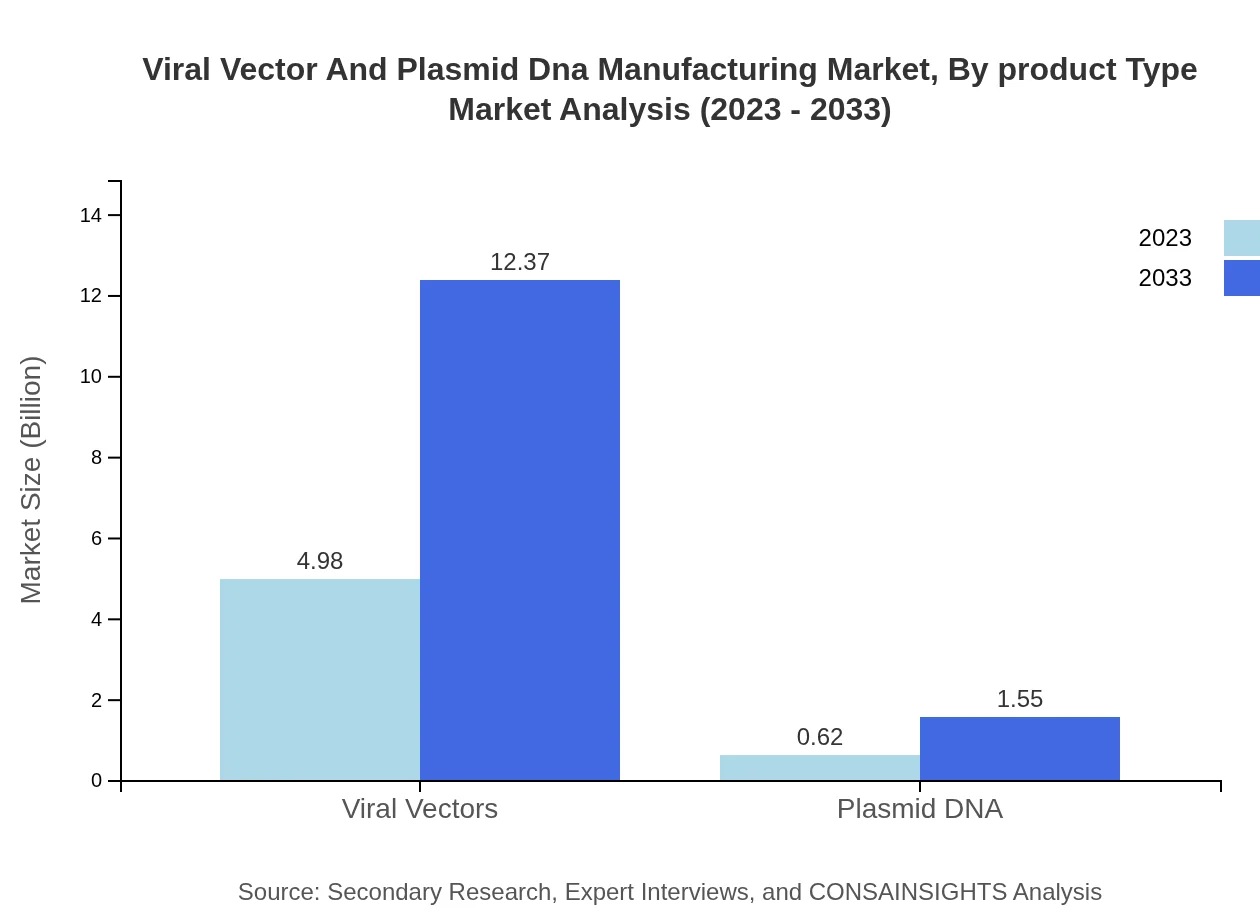
In 2023, the Viral Vectors segment dominates the market with a value of USD 4.98 billion and is projected to grow to USD 12.37 billion by 2033, capturing 88.88% share. The Plasmid DNA segment, in contrast, holds a much smaller portion at USD 0.62 billion, expanding to USD 1.55 billion, translating to an 11.12% share.
Viral Vector And Plasmid Dna Manufacturing Market Analysis By Application
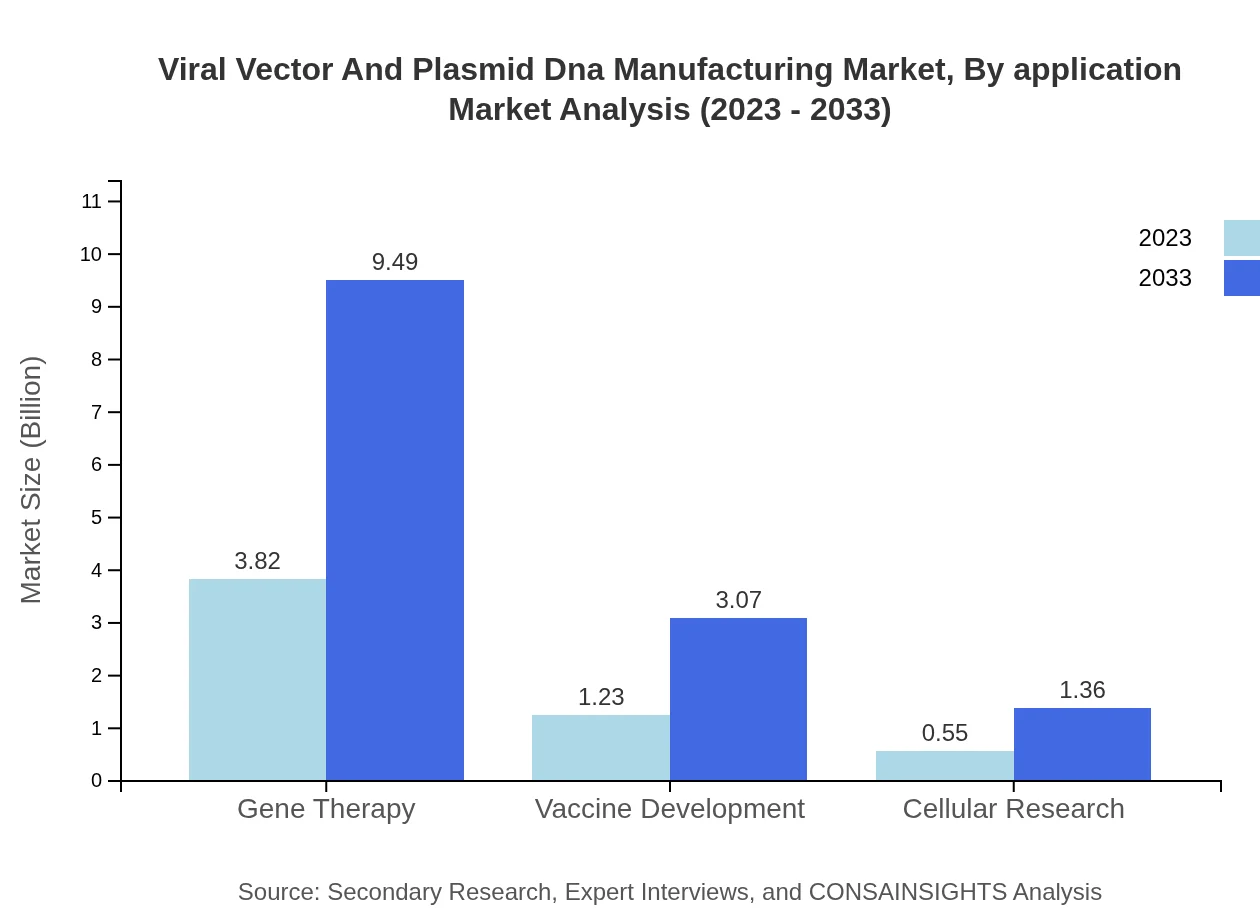
The market is segmented by application into Gene Therapy, Vaccine Development, and Cellular Research. Gene Therapy leads the market with a share of 68.23%, projected to rise from USD 3.82 billion in 2023 to USD 9.49 billion by 2033. Vaccine Development and Cellular Research represent 22.03% and 9.74% segments respectively, growing steadily in value and share.
Viral Vector And Plasmid Dna Manufacturing Market Analysis By End User
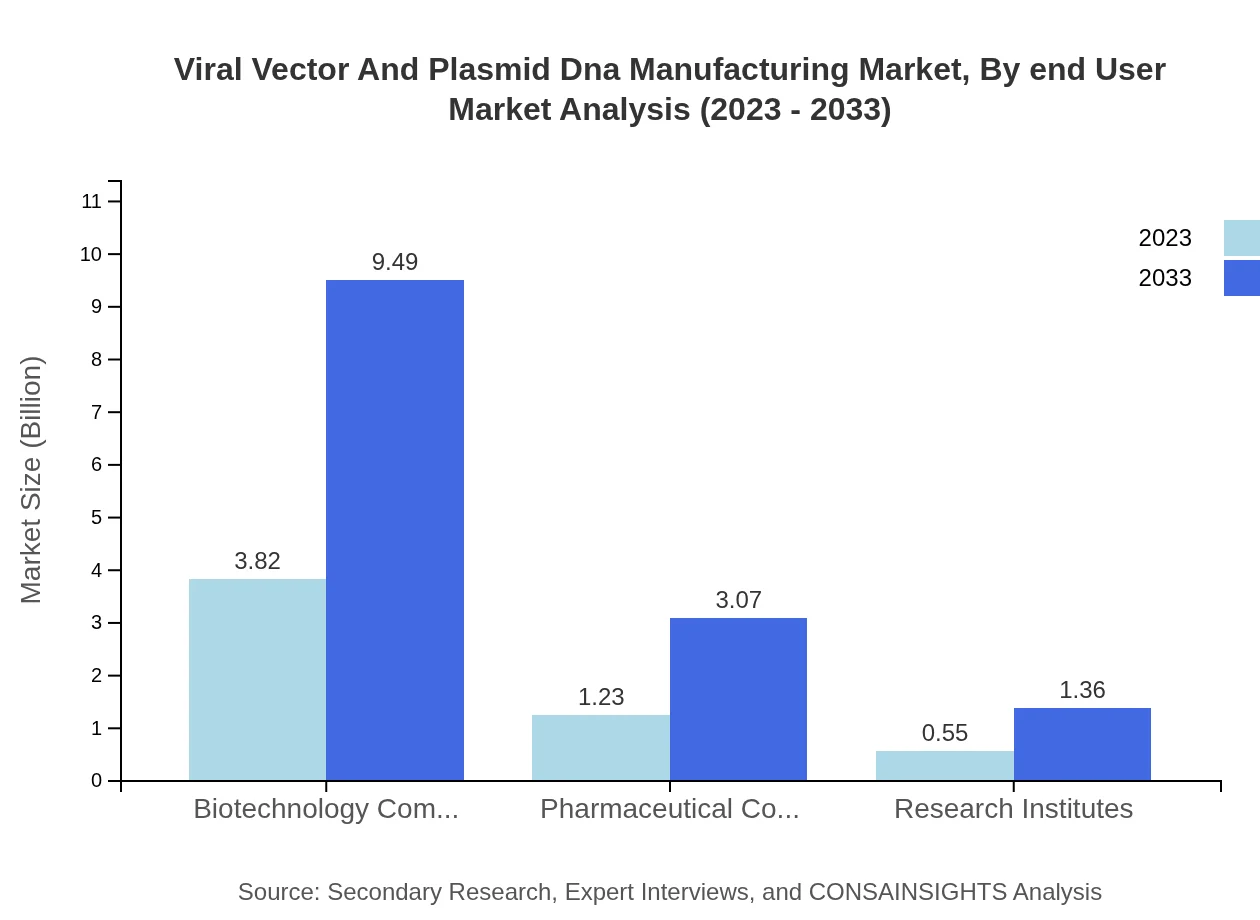
The key stakeholders in this market include Biotechnology Companies, Pharmaceutical Companies, and Research Institutes. Biotechnology Companies occupy the largest share at 68.23% (USD 3.82 billion to USD 9.49 billion), followed by Pharmaceutical Companies at 22.03% (from USD 1.23 billion to USD 3.07 billion) and Research Institutes at 9.74% (from USD 0.55 billion to USD 1.36 billion).
Viral Vector And Plasmid Dna Manufacturing Market Analysis By Manufacturing Type
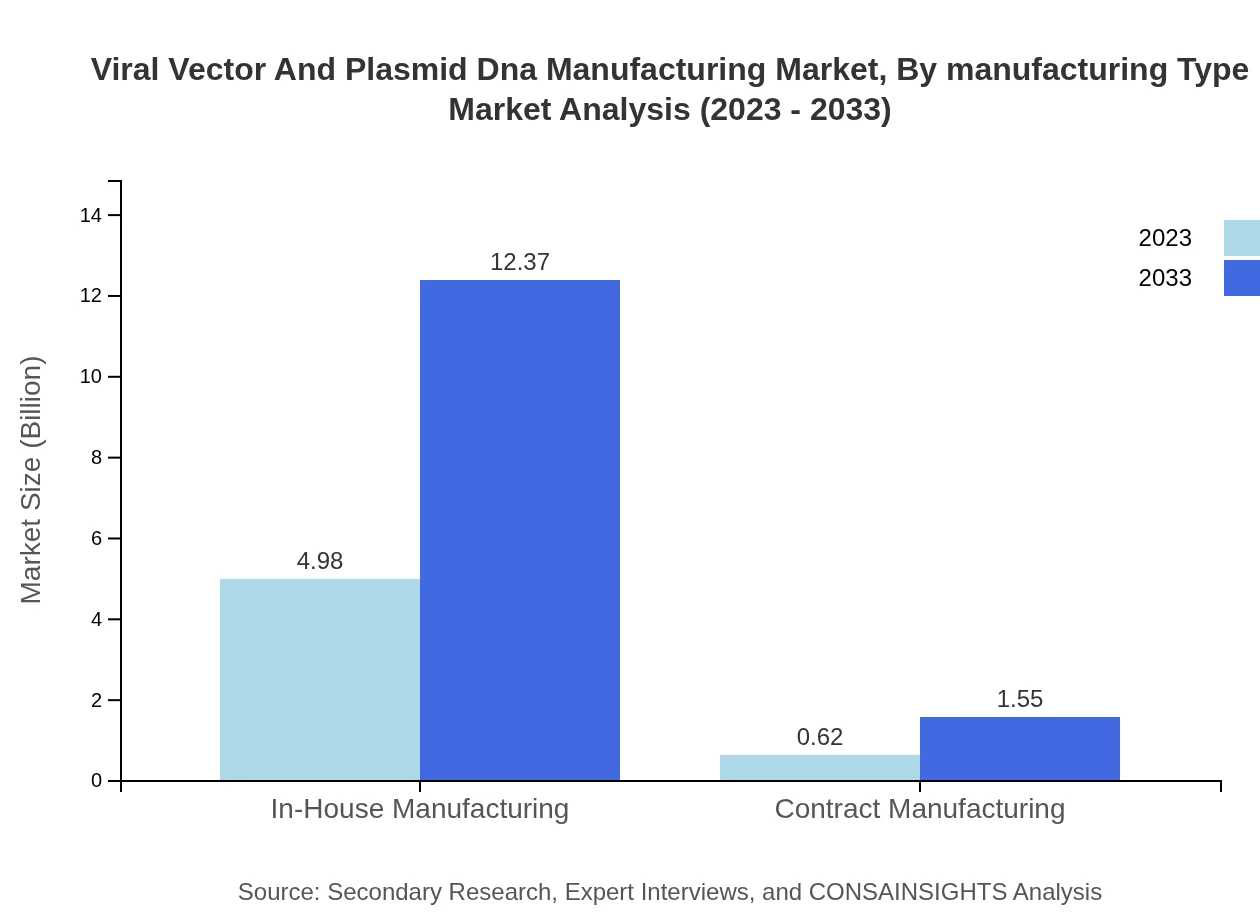
The manufacturing segment comprises In-House Manufacturing and Contract Manufacturing. In-House Manufacturing accounts for 88.88% of the market share, moving from USD 4.98 billion in 2023 to USD 12.37 billion in 2033, while Contract Manufacturing captures 11.12%, evolving from USD 0.62 billion to USD 1.55 billion.
Viral Vector And Plasmid Dna Manufacturing Market Analysis By Scale
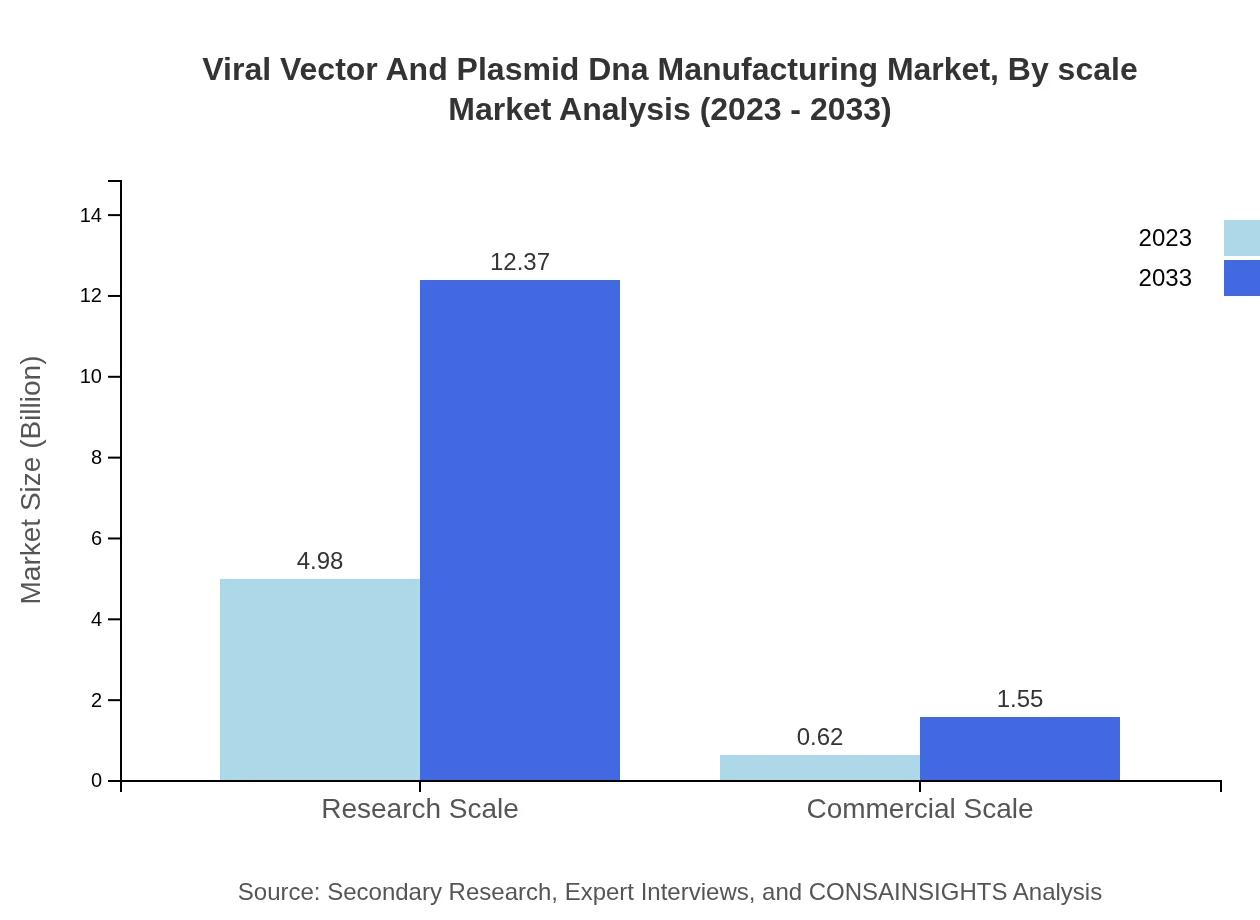
The market is distinguished by scale, with Research Scale leading with a size of USD 4.98 billion in 2023, predicted to increase to USD 12.37 billion by 2033 with a 88.88% market share. Contrarily, the Commercial Scale segment will escalate from USD 0.62 billion to USD 1.55 billion, capturing an 11.12% share.
Viral Vector And Plasmid Dna Manufacturing Market Trends and Future Forecast
Tell us your focus area and get a customized research report.
Global Market Leaders and Top Companies in the Viral Vector And Plasmid Dna Manufacturing Industry
Novartis:
Novartis is a global healthcare company based in Switzerland that focuses on innovative medicines. They actively invest in gene therapy programs and possess robust manufacturing capabilities for viral vectors.Lonza Group:
Lonza is a leading integrated solutions provider for the pharmaceutical, biotech, and specialty ingredients markets. They offer comprehensive services in viral vector production and have established a prominent position in the CMOs sector.GW Pharmaceuticals:
GW Pharmaceuticals specializes in discovering, developing, and commercializing cannabinoid-based medicines and utilizes viral vectors to enhance treatment approaches in genetically influenced diseases.Roche:
Roche is a pioneering research-focused healthcare company that has developed comprehensive R&D programs, including platforms that utilize plasmid DNA for advanced therapies.Sangamo Therapeutics:
Sangamo Therapeutics focuses on genomic therapies to treat rare diseases. The company engages extensively in viral vector research and manufacturing, sustaining a competitive edge in the therapeutic landscape.We're grateful to work with incredible clients.









FAQs
What is the market size in 2023?
The market size in 2023 is $5.60 Billion, as stated in the report, reflecting the industry baseline for the 2023 to 2033 forecast period.
How big will the market be in 2033?
The market is projected to reach $13.91 Billion in 2033 according to the provided forecast figures for the 2023 to 2033 period.
What is CAGR for the forecast period?
The compound annual growth rate (CAGR) for the 2023 to 2033 forecast period is 9.2% as specified in the input data.
Is there a single fastest Growing region in the Viral Vector And Plasmid Dna Manufacturing Market Report market?
No single fastest-growing region is stated for the Viral Vector And Plasmid Dna Manufacturing Market Report market because the top regional implied CAGR values are within 0.15 percentage points of each other, making the ranking too close to call reliably.
Which companies are prominent in the market?
Top companies listed include Novartis, Lonza Group, GW Pharmaceuticals, Roche, and Sangamo Therapeutics, noted for manufacturing and development activities.
What are primary applications driving demand?
Key applications include gene therapy, vaccine development, and cellular research, which are central to demand for viral vectors and plasmid DNA manufacturing.
How does contract manufacturing impact the sector?
Contract manufacturing enables flexible scaling, reduces capital expenditure for developers, and supports quicker production ramp-up for advanced therapeutics.
Who are key end Users for manufacturing services?
Primary end-users comprise biotechnology companies, pharmaceutical companies, and research institutes that require specialized vector and plasmid DNA production services.