
Reports >
Life Sciences
>
Whole Exome Sequencing Market Report

Whole Exome Sequencing Market Report
First published: 21 October 2024 | Last updated: 28 May 2026 | Report Code: whole-exome-sequencing
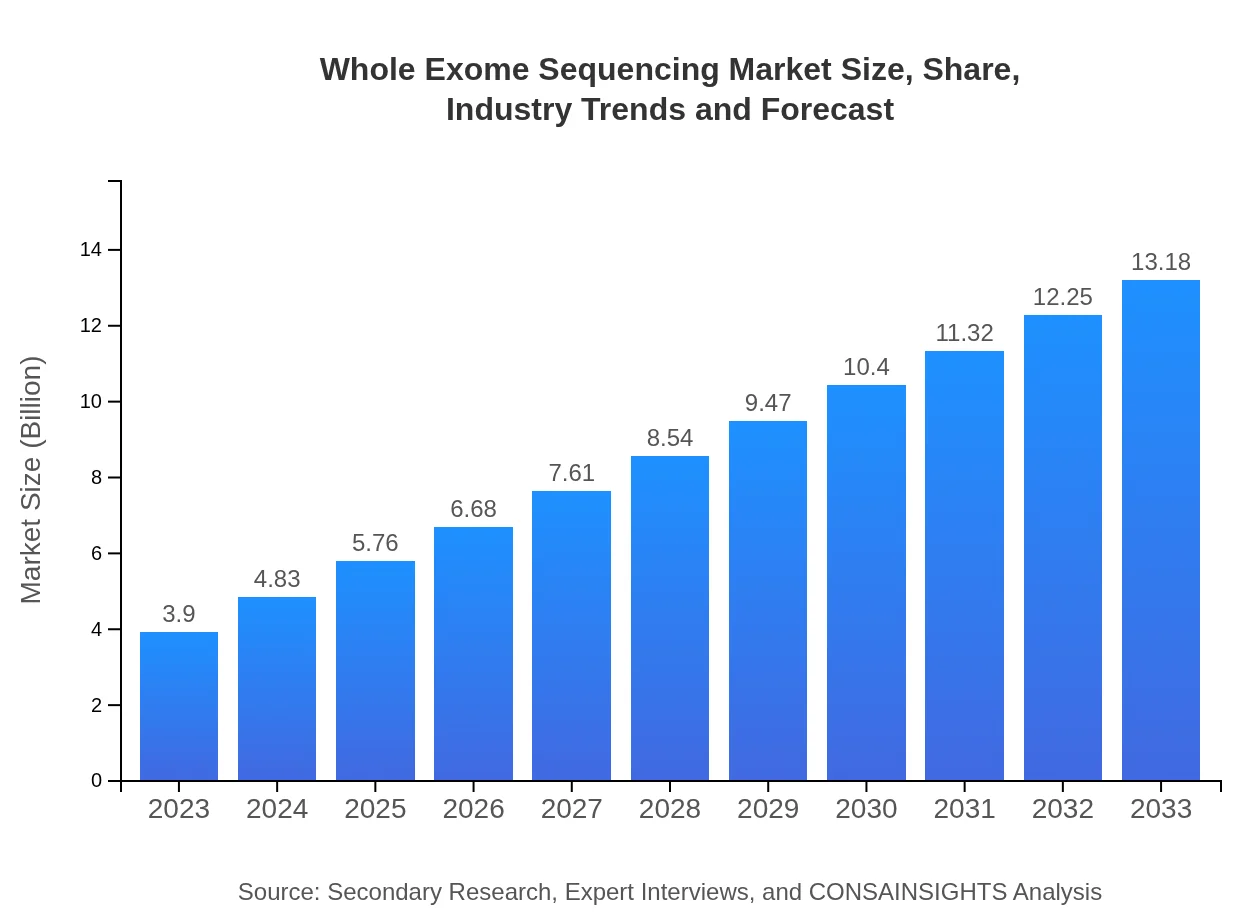
Whole Exome Sequencing Market — USD 3.9 billion in 2023, Growing to USD 13.18B by 2033 at 12.4% CAGR
This report provides an in-depth analysis of the Whole Exome Sequencing (WES) market, including market size, segmentation, regional insights, technological advancements, and forecasts from 2023 to 2033.
Key Takeaways
- Global market expands from $3.90 Billion in 2023 to $13.18 Billion in 2033 at a 12.4% CAGR.
- North America is largest regional market; Latin America is regional market region based on implied CAGR across 2023 to 2033.
- Latin America is identified as the regional market region, increasing from $0.04 Billion in 2023 to $0.14 Billion in 2033.
- Europe and Asia Pacific show notable growth: Europe from $1.23 Billion to $4.17 Billion, Asia Pacific from $0.6 Billion to $2.03 Billion.
- Key vendors include Illumina, Inc., Thermo Fisher Scientific, Roche Sequencing Solutions, Pacific Biosciences, and BGI Genomics.
Whole Exome Sequencing Market Report — Executive Summary
Regional analysis shows North America as largest market and Latin America as fastest-growing region by implied CAGR. The Whole Exome Sequencing market is forecast to grow from $3.90 Billion in 2023 to $13.18 Billion by 2033, reflecting a 12.4% CAGR over the 2023 to 2033 forecast period. Expansion is fueled by improvements in sequencing platforms, wider clinical and research adoption, and demand for more precise genetic diagnostics. North America holds the largest regional share with a rise from $1.49 Billion to $5.02 Billion, while Latin America is identified as the regional market region, expanding from $0.04 Billion to $0.14 Billion. Market activity centers on product innovation across sequencing kits, instruments, and consumables, and growing applications in clinical diagnostics, personalized medicine, and drug discovery. Leading suppliers named in this report include Illumina, Inc., Thermo Fisher Scientific, Roche Sequencing Solutions, Pacific Biosciences, and BGI Genomics. The analysis combines primary expert interviews and secondary company data to present actionable insights for stakeholders seeking to navigate technological advances and evolving end-user demand.
Key Growth Drivers
- Advances in sequencing technology that enhance throughput and reduce per-sample costs, enabling broader clinical use.
- Rising application of genomic insights in clinical diagnostics and personalized medicine, increasing demand for exome analysis.
- Growing research investments from hospitals, academic institutions, and pharmaceutical companies expanding study volumes.
- Development of more efficient sequencing kits, instruments, and data analysis pipelines improving overall workflow adoption.
- Increasing availability of sequencing services and enhanced bioinformatics capabilities supporting interpretation of exome data.
| Metric | Value |
|---|---|
| Study Period | 2023 - 2033 |
| 2023 Market Size | $3.90 Billion |
| CAGR (2023-2033) | 12.4% |
| 2033 Market Size | $13.18 Billion |
| Top Companies | Illumina, Inc., Thermo Fisher Scientific, Roche Sequencing Solutions, Pacific Biosciences, BGI Genomics |
| Published Date | 21 October 2024 |
| Last Modified Date | 28 May 2026 |
Whole Exome Sequencing Market Overview
Customize Whole Exome Sequencing Market Report market research report
- ✔ Get in-depth analysis of Whole Exome Sequencing market size, growth, and forecasts.
- ✔ Understand Whole Exome Sequencing's regional dynamics and industry-specific trends.
- ✔ Identify potential applications, end-user demand, and growth segments in Whole Exome Sequencing
What is the Market Size & CAGR of Whole Exome Sequencing Market Report market in 2023?
Whole Exome Sequencing Industry Analysis
Whole Exome Sequencing Market Segmentation and Scope
Tell us your focus area and get a customized research report.
Whole Exome Sequencing Market Report Market Analysis Report by Region
Europe Whole Exome Sequencing Market Report:
Europe grows from $1.23 Billion in 2023 to $4.17 Billion in 2033. Regional momentum is supported by rising clinical genetics services, research funding, and adoption of sequencing kits and instruments across healthcare and academic settings.Asia Pacific Whole Exome Sequencing Market Report:
Asia Pacific grows from $0.6 Billion in 2023 to $2.03 Billion in 2033. Growth reflects increasing investment in genomic research, expanding diagnostic services, and greater access to sequencing technologies in medical and research centers.North America Whole Exome Sequencing Market Report:
North America is largest regional market, rising from $1.49 Billion in 2023 to $5.02 Billion in 2033. Expansion is tied to advanced genomics infrastructure, broad clinical integration, and significant activity from research institutions and commercial sequencing providers.South America Whole Exome Sequencing Market Report:
Latin America is fastest-growing region by implied CAGR, increasing from $0.04 Billion in 2023 to $0.14 Billion in 2033. 04 Billion in 2023 to $0.14 Billion in 2033 and is noted as the regional growth market at an implied 13.35% CAGR. This growth is associated with growing research activity, emerging diagnostic applications, and incremental adoption of sequencing platforms.Middle East & Africa Whole Exome Sequencing Market Report:
Middle East and Africa grows from $0.54 Billion in 2023 to $1.82 Billion in 2033. Progress is linked to expanding clinical genomics awareness, investments in laboratory capabilities, and adoption of sequencing consumables and services.Tell us your focus area and get a customized research report.
Research Methodology
Whole Exome Sequencing Market Analysis By Product
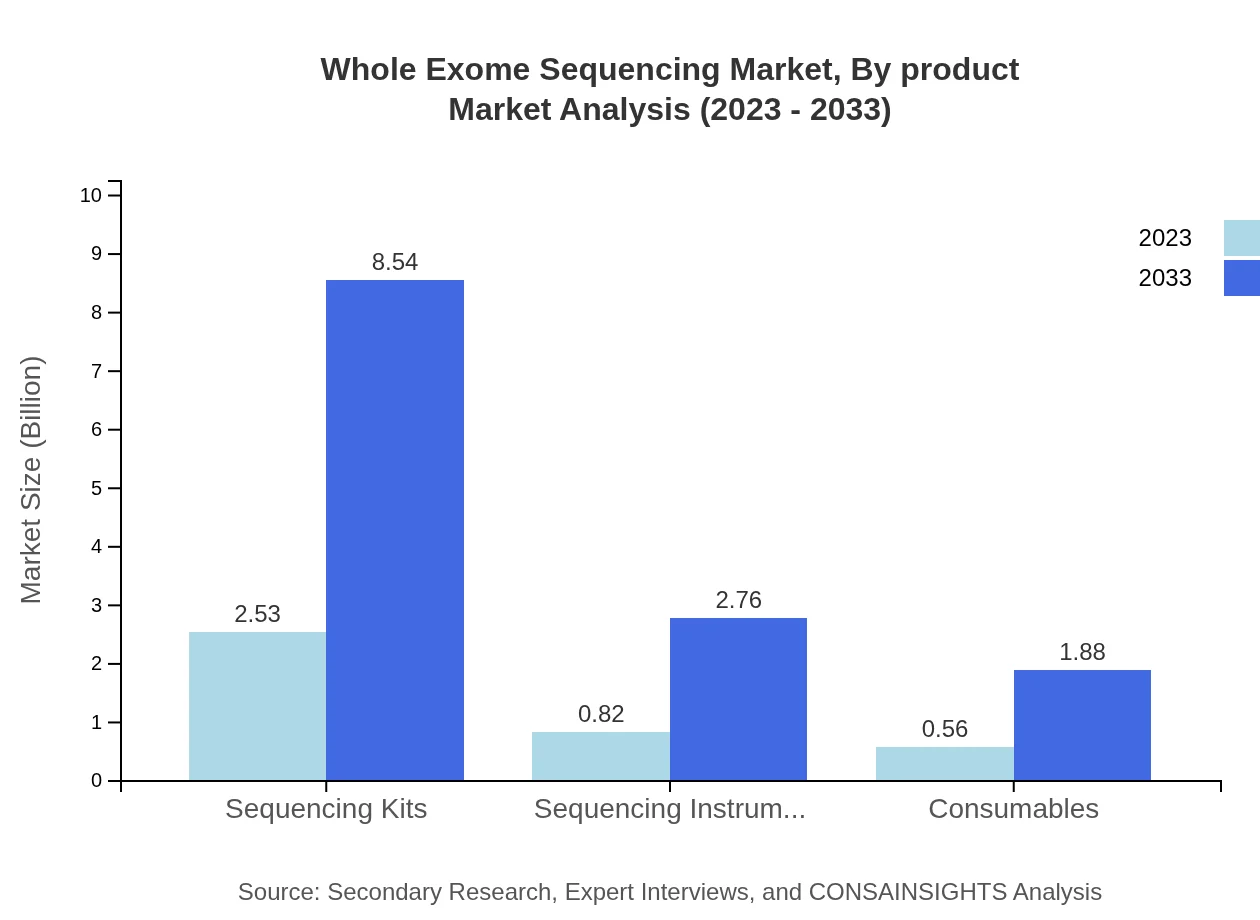
The Whole Exome Sequencing market by product reveals a diverse range of offerings. Key product types include Sequencing Kits, which are expected to grow from $2.53 billion in 2023 to $8.54 billion by 2033, and Sequencing Instruments, poised to increase from $0.82 billion in 2023 to $2.76 billion by 2033. The prominence of these products is driven by the requirement for advanced tools in genomic research.
Whole Exome Sequencing Market Analysis By Application
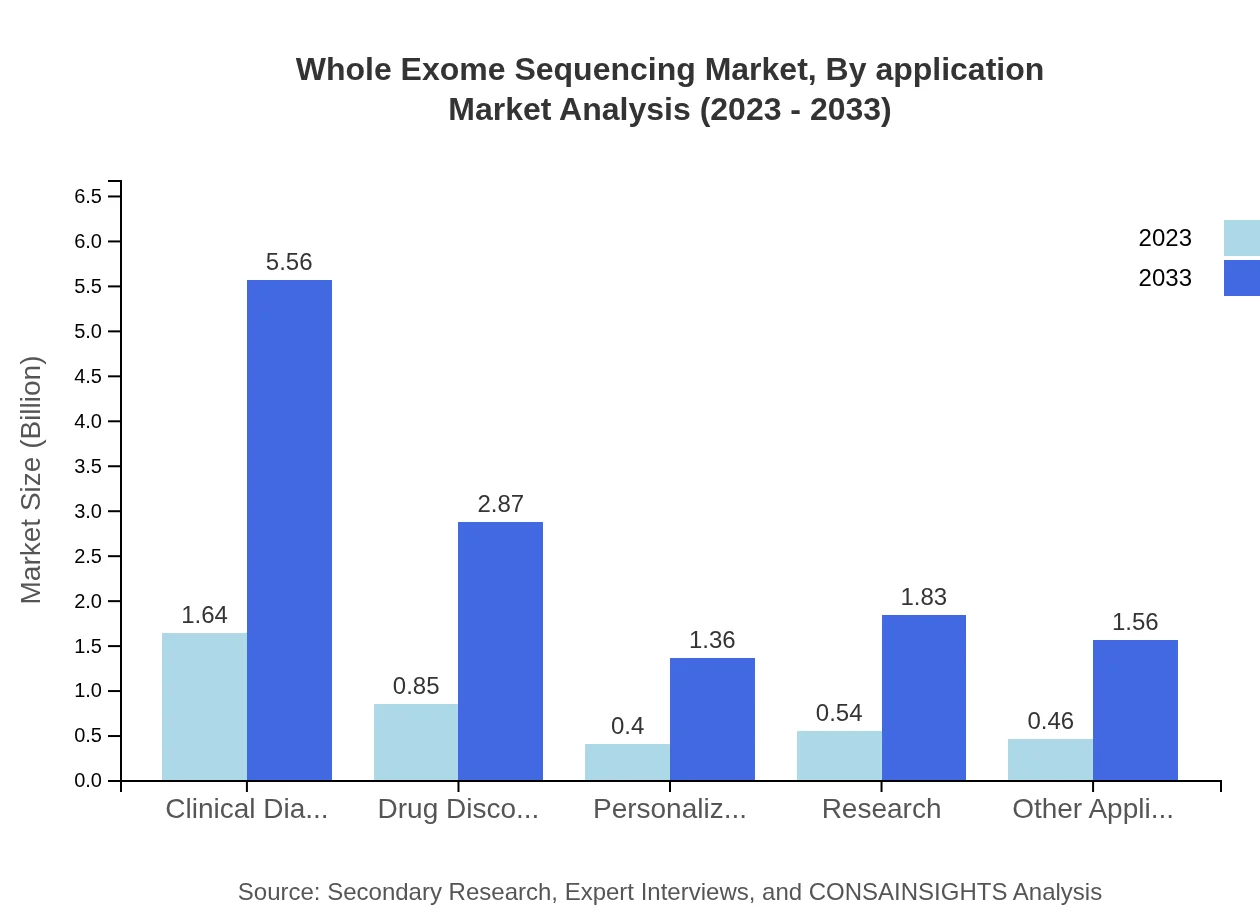
Applications of Whole Exome Sequencing include Clinical Diagnostics, which reflects a significant market share. This application is projected to grow from $1.64 billion in 2023 to $5.56 billion by 2033. The focus on personalized medicine drives the demand within clinical diagnostics, as practitioners increasingly rely on genomic data for treatment decisions.
Whole Exome Sequencing Market Analysis By End User
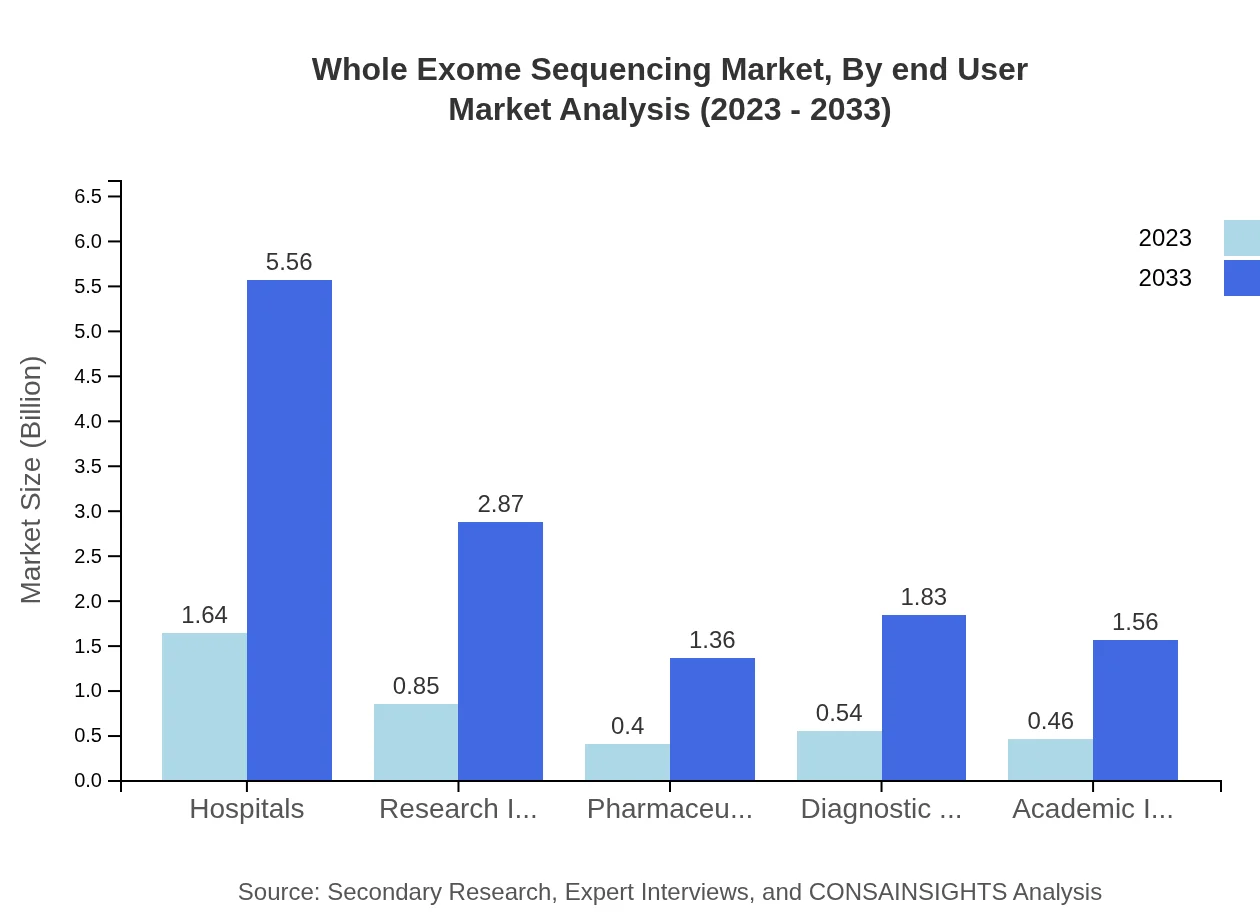
In terms of end-users, Hospitals and Research Institutes lead the market. Hospitals are anticipated to grow from $1.64 billion in 2023 to $5.56 billion by 2033, accounting for a substantial share due to the increasing adoption of genomic testing. Research Institutes are also expected to see significant growth as they leverage WES in various initiatives.
Whole Exome Sequencing Market Analysis By Region
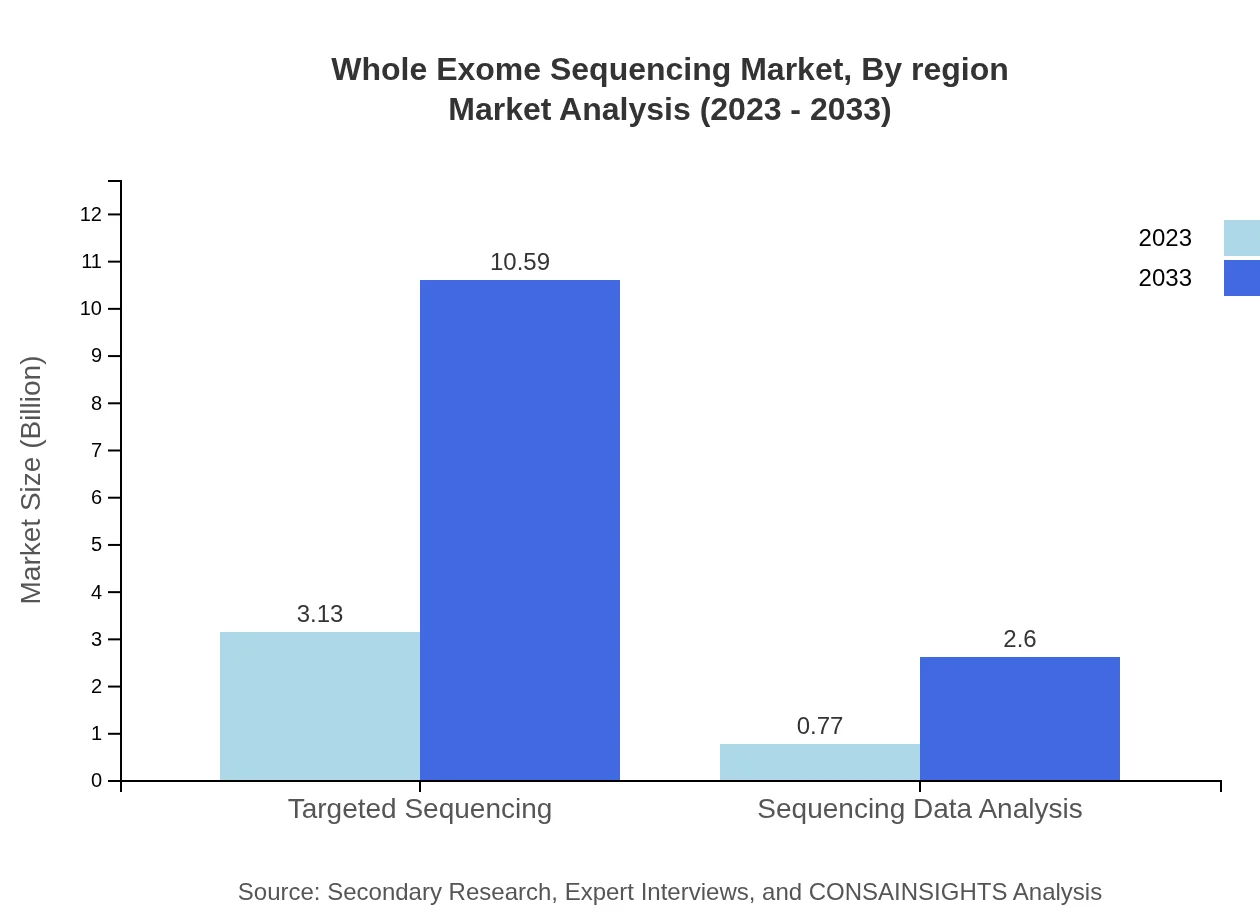
When analyzing by technology, Paired-End Sequencing dominates the market. This technology is expected to grow from $3.13 billion in 2023 to $10.59 billion by 2033, capturing a significant share at 80.31%. Single-End Sequencing is also noted, although it holds a smaller market share.
Whole Exome Sequencing Market Analysis By Method
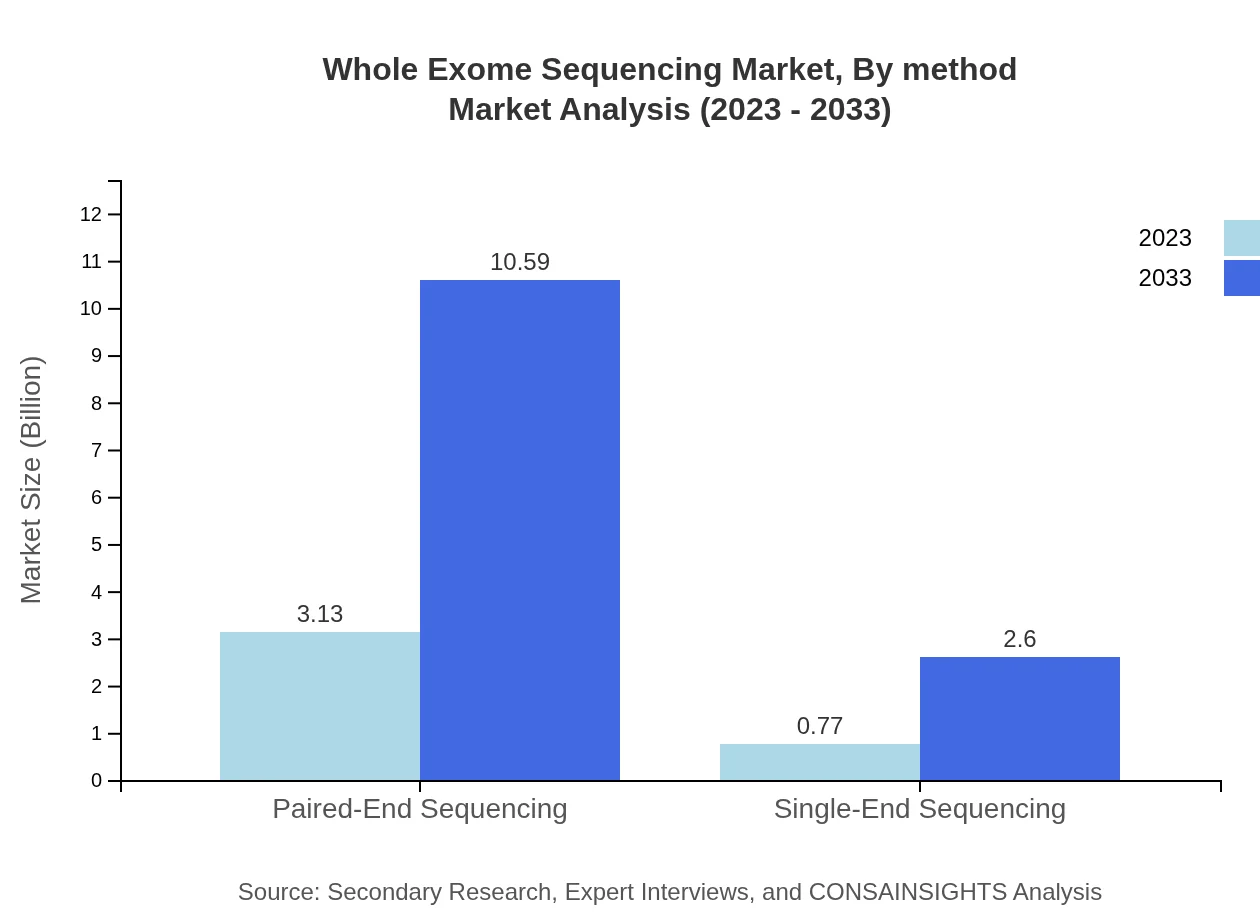
The market reflects diverse methodologies with Sequencing Data Analysis growth projected from $0.77 billion to $2.60 billion between 2023 and 2033. The focus on data interpretation within the WES workflow supports the proliferation of dedicated analytics solutions.
Whole Exome Sequencing Market Trends and Future Forecast
Tell us your focus area and get a customized research report.
Global Market Leaders and Top Companies in Whole Exome Sequencing Industry
Illumina, Inc.:
Illumina is a leader in genomic sequencing and array-based solutions and plays a crucial role in advancing WES technologies, making genetic insights more accessible.Thermo Fisher Scientific:
Thermo Fisher Scientific offers robust whole exome sequencing kits and instruments, leading the development of innovative solutions for genomics research.Roche Sequencing Solutions:
Roche provides comprehensive sequencing solutions that include whole exome sequencing, enhancing accuracy in diagnostics and research.Pacific Biosciences:
Pacific Biosciences focuses on providing advanced sequencing platforms that support long-read capabilities, complementing traditional WES methods.BGI Genomics:
BGI Genomics is known for its cost-effective sequencing services and extensive library preparation methods, catering to diverse research demands.We're grateful to work with incredible clients.









FAQs
What is the market size of the Whole Exome Sequencing Market Report in 2023?
The market size for 2023 is $3.90 Billion as stated in the report, reflecting baseline industry revenues for the start of the 2023 to 2033 forecast period.
How big will the Whole Exome Sequencing market be in 2033?
The market is projected to reach $13.18 Billion by 2033 according to the report's forecast for the 2023 to 2033 period.
What is CAGR for the forecast period?
The reported compound annual growth rate (CAGR) for 2023 to 2033 is 12.4% for the Whole Exome Sequencing market.
Which region is the fastest Growing in the Whole Exome Sequencing Market Report market?
Latin America is the fastest-growing region, projected to expand from $0.04 Billion in 2023 to $0.14 Billion in 2033, reflecting an implied 13.35% CAGR over the forecast period.
Which region is the fastest Growing?
Latin America is identified as the regional market region, expanding from $0.04 Billion in 2023 to $0.14 Billion in 2033 at an implied 13.35% CAGR.
Who are the top companies in the market?
Top companies listed include Illumina, Inc., Thermo Fisher Scientific, Roche Sequencing Solutions, Pacific Biosciences, and BGI Genomics.
What are common end users of whole exome sequencing?
Primary end users named include hospitals, research institutes, pharmaceutical companies, diagnostic laboratories, and academic institutions.
How is market data compiled in this report?
The report relies on primary interviews, secondary company reports and publications, data triangulation, internal validation, and expert-led trend analysis.
What product categories are covered?
Product coverage includes sequencing kits, sequencing instruments, and consumables as specified among report subsegments.
Why is exome sequencing important for diagnostics?
Exome sequencing targets coding regions associated with many disease-linked variants, supporting cost-effective diagnostic insights and therapeutic decision-making.