
Reports >
Life Sciences
>
Ai In Personalized Medicine

Ai In Personalized Medicine
First published: 20 May 2025 | Last updated: 25 May 2026 | Report Code: ai-in-personalized-medicine
Ai In Personalized Medicine Market — USD $3.4 Billion in 2024, Growing to USD 6.82null by 2033 at 7.8% CAGR
This report provides a comprehensive analysis of the Ai In Personalized Medicine market, offering detailed insights into market trends, segmentation, regional performance, technological advances, and key players. Covering the forecast period from 2024 to 2033, the study outlines market size, growth trajectories, and dynamic factors influencing personalized healthcare through AI integration.
Key Takeaways
- Global market increases from $3.40 Billion in 2024 to $6.82 Billion in 2033 at a 7.8% CAGR.
- North America is largest regional market, while no single fastest-growing region is stated because regional CAGR differences remain within 0.15 percentage points.
- North America is the largest region, rising from $1.2 Billion in 2024 to $2.41 Billion in 2033.
- Europe expands from $1.03 Billion in 2024 to $2.06 Billion in 2033, reflecting steady uptake of genomic and clinical data solutions.
- Machine Learning, NLP, and Deep Learning are core technology segments supporting diagnostics, drug discovery, and treatment planning.
- Hospitals, research institutions, and pharmaceutical companies are primary end users driving implementation and investment.
Ai In Personalized Medicine — Executive Summary
North America remains largest market by forecast-period value, while no single fastest-growing region is stated because top regional growth rates are separated by less than 0.15 percentage points. The Ai In Personalized Medicine market is undergoing structured expansion driven by richer genomic datasets, improved clinical data management, and advanced analytic techniques. Market value grows from $3.40 Billion in 2024 to $6.82 Billion by 2033 at a 7.8% CAGR. Hospitals, research institutions, and pharmaceutical companies are key adopters, applying machine learning, deep learning, and natural language processing to diagnostics, drug discovery, and treatment personalization. North America is the largest regional market, supported by established healthcare infrastructure and data ecosystems. Europe, Asia Pacific, Latin America, and Middle East and Africa also show expansion as genomic interpretation and AI-assisted clinical workflows diffuse. Regulatory considerations, compliance, and ethical standards shape implementation pathways. Prominent vendors such as MedTech Innovators and BioPersonal Solutions are active in product development and commercialization. This report synthesizes primary interviews, company publications, and internal validation to present a market view useful for strategy, investment, and partnership decisions.
Key Growth Drivers
- Expansion of genomic and clinical datasets enabling more precise AI models for individualized treatment plans.
- Rising deployment of machine learning and deep learning tools in diagnostics and drug discovery workflows.
- Increased adoption by hospitals, research institutions, and pharmaceutical companies seeking efficiency and personalized outcomes.
- Regulatory focus on compliance and ethics shaping standardized approaches and accelerating validated solutions.
- Improvements in clinical data management that allow scalable integration of AI-driven decision support.
| Metric | Value |
|---|---|
| Study Period | 2024 - 2033 |
| 2024 Market Size | $3.40 Billion |
| CAGR (2024-2033) | 7.8% |
| 2033 Market Size | $6.82 Billion |
| Top Companies | MedTech Innovators, BioPersonal Solutions |
| Published Date | 20 May 2025 |
| Last Modified Date | 25 May 2026 |
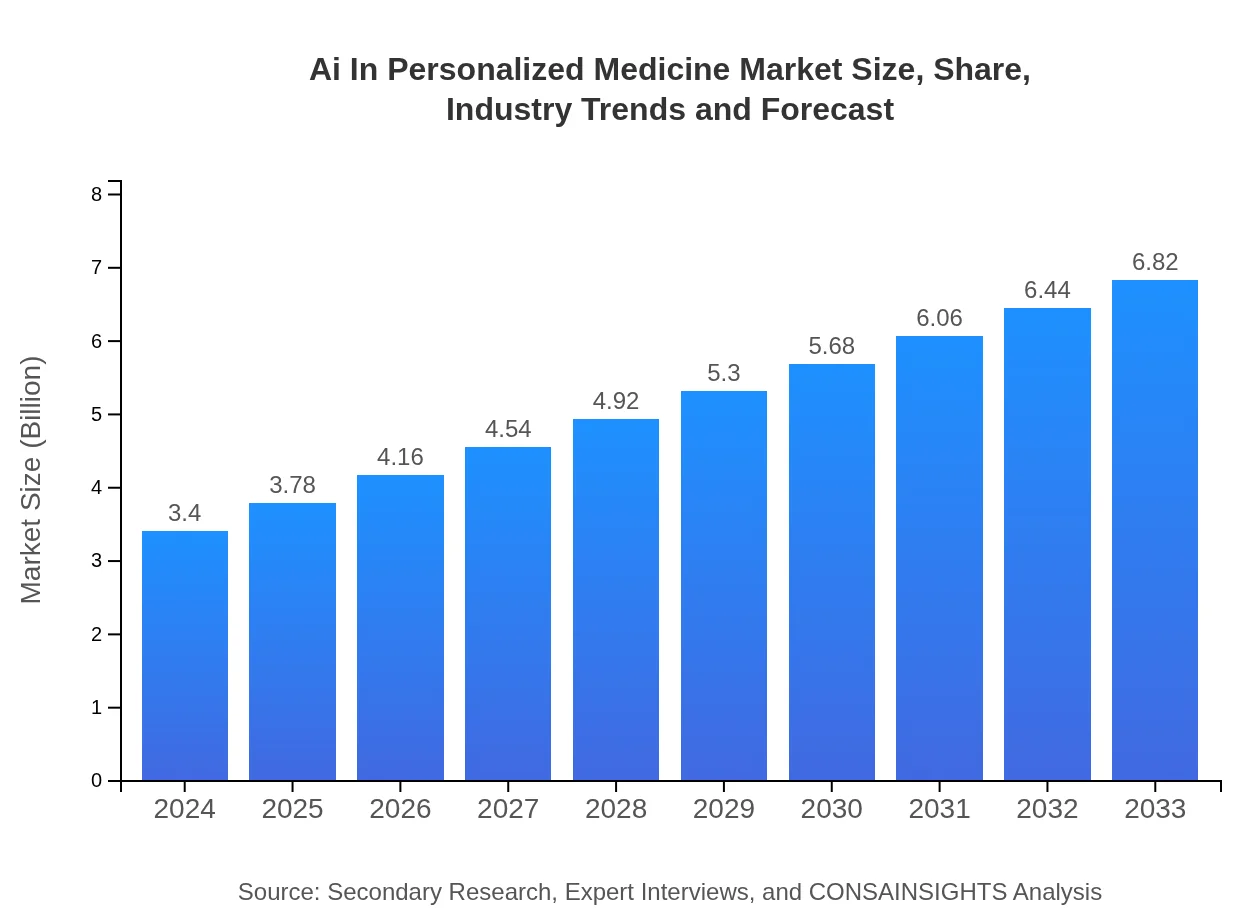
Ai In Personalized Medicine Market Overview
Customize Ai In Personalized Medicine market research report
- ✔ Get in-depth analysis of Ai In Personalized Medicine market size, growth, and forecasts.
- ✔ Understand Ai In Personalized Medicine's regional dynamics and industry-specific trends.
- ✔ Identify potential applications, end-user demand, and growth segments in Ai In Personalized Medicine
What is the Market Size & CAGR of Ai In Personalized Medicine market in 2024?
Ai In Personalized Medicine Industry Analysis
Ai In Personalized Medicine Market Segmentation and Scope
Tell us your focus area and get a customized research report.
Ai In Personalized Medicine Market Analysis Report by Region
Europe Ai In Personalized Medicine:
Europe grows from $1.03 Billion in 2024 to $2.06 Billion in 2033. Broader use of genomic interpretation and clinical data platforms, along with regulatory attention to compliance and ethics, supports adoption across healthcare and research settings.Asia Pacific Ai In Personalized Medicine:
Asia Pacific grows from $0.65 Billion in 2024 to $1.31 Billion in 2033. Increasing investment in digital health, rising research activity, and growing integration of AI tools in diagnostics and treatment planning are key local drivers.North America Ai In Personalized Medicine:
North America is largest regional market, rising from $1.2 Billion in 2024 to $2.41 Billion in 2033. Expansion reflects robust healthcare data infrastructure, investment in AI research, and strong adoption across hospitals, research institutions, and pharmaceutical companies.South America Ai In Personalized Medicine:
Latin America grows from $0.26 Billion in 2024 to $0.52 Billion in 2033. Gradual adoption of data-driven healthcare practices, expanding research collaborations, and interest from pharmaceutical firms contribute to market growth.Middle East & Africa Ai In Personalized Medicine:
Middle East and Africa grows from $0.26 Billion in 2024 to $0.53 Billion in 2033. Market movement is shaped by investments in healthcare digitization, expanding clinical data capabilities, and regional research initiatives.Tell us your focus area and get a customized research report.
Research Methodology
Ai In Personalized Medicine Market Analysis By Technology
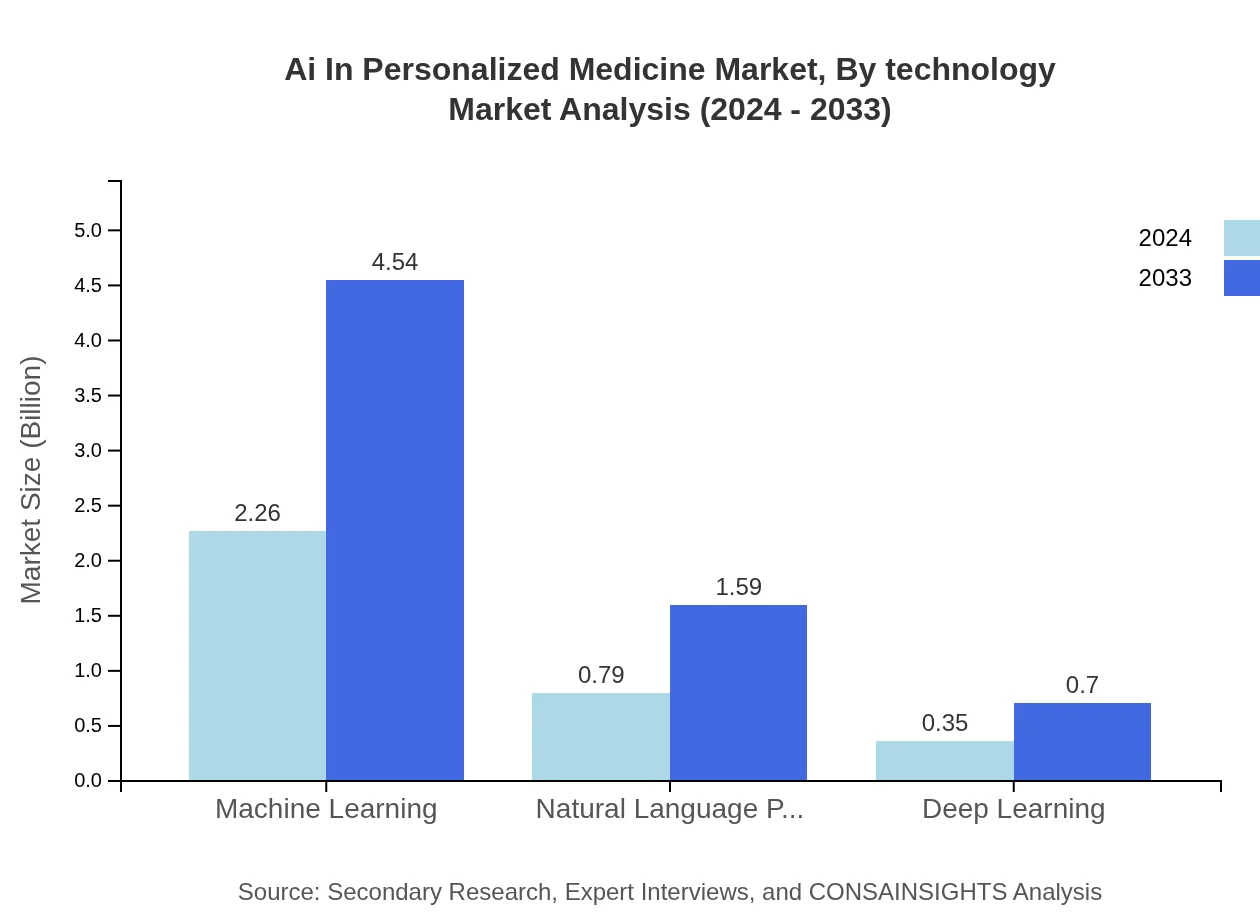
Advanced technologies such as machine learning, natural language processing, and deep learning are at the forefront of the AI revolution in personalized medicine. These tools process vast amounts of clinical data with high accuracy, facilitating superior diagnostics and efficient treatment planning. Their continuous evolution drives patient care innovation and creates scalable clinical applications.
Ai In Personalized Medicine Market Analysis By Application Area
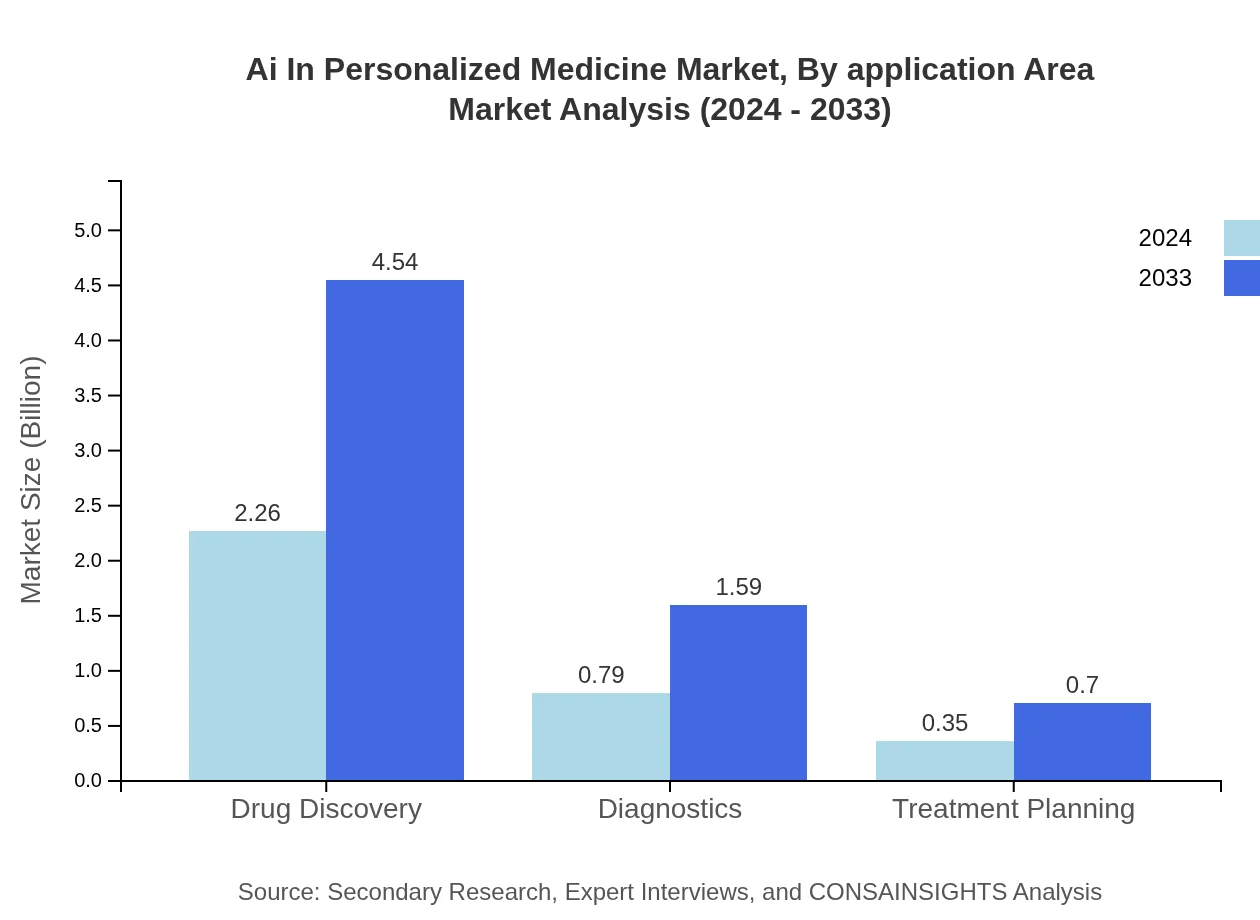
The application area of AI spans diagnostics, drug discovery, and treatment planning. AI tools enable rapid analysis of genomic data, optimize therapy selection, and identify novel biomarkers. This segmentation reveals how AI advances support targeted interventions and improve patient-specific outcomes while reducing operational costs and enhancing clinical decision-making.
Ai In Personalized Medicine Market Analysis By End User
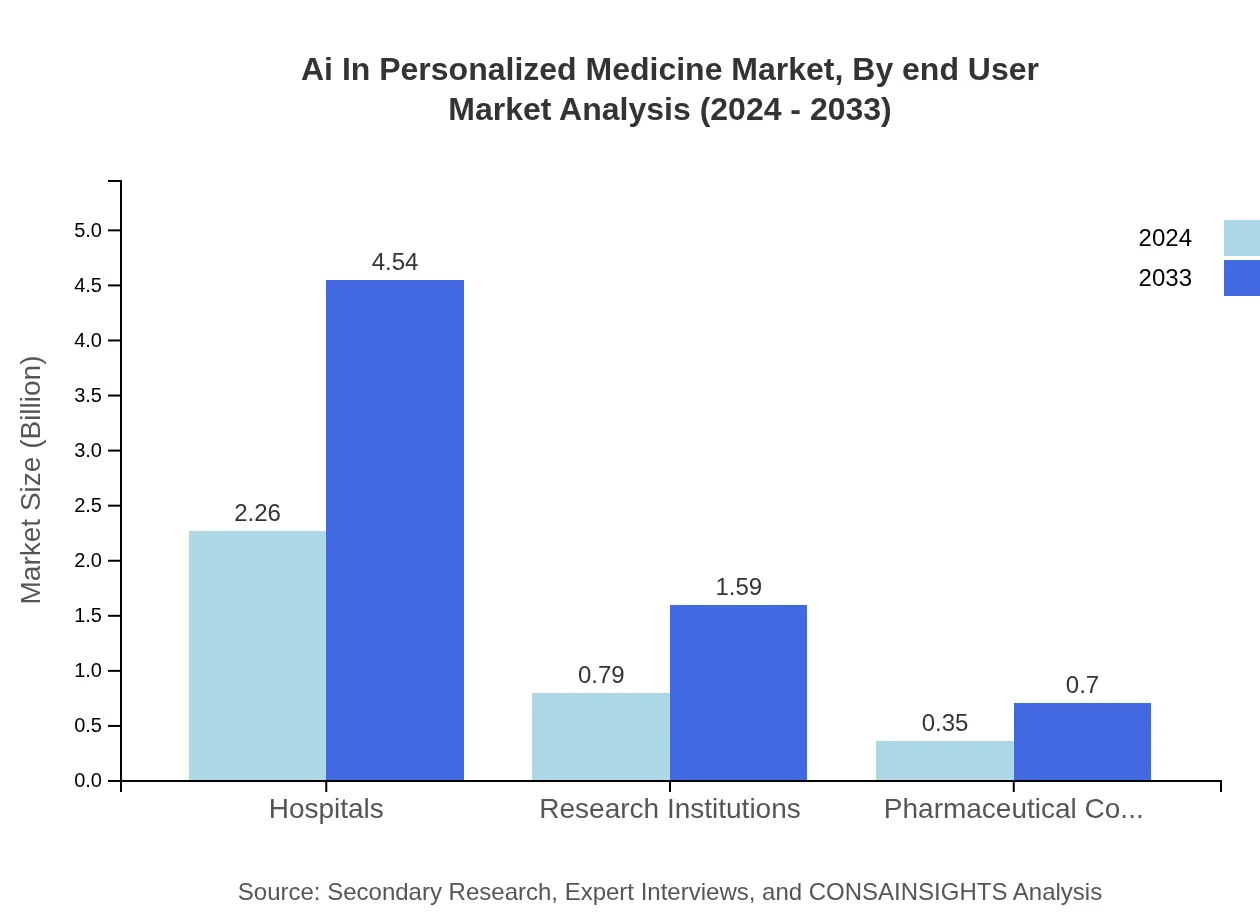
Hospitals, research institutions, and pharmaceutical companies represent key end-users of AI solutions in personalized medicine. Hospitals benefit from improved workflow and diagnostic precision, while research institutions leverage AI for breakthrough studies. Pharmaceutical companies utilize AI to streamline drug development processes, thereby fostering innovation across multiple healthcare sectors.
Ai In Personalized Medicine Market Analysis By Data Source
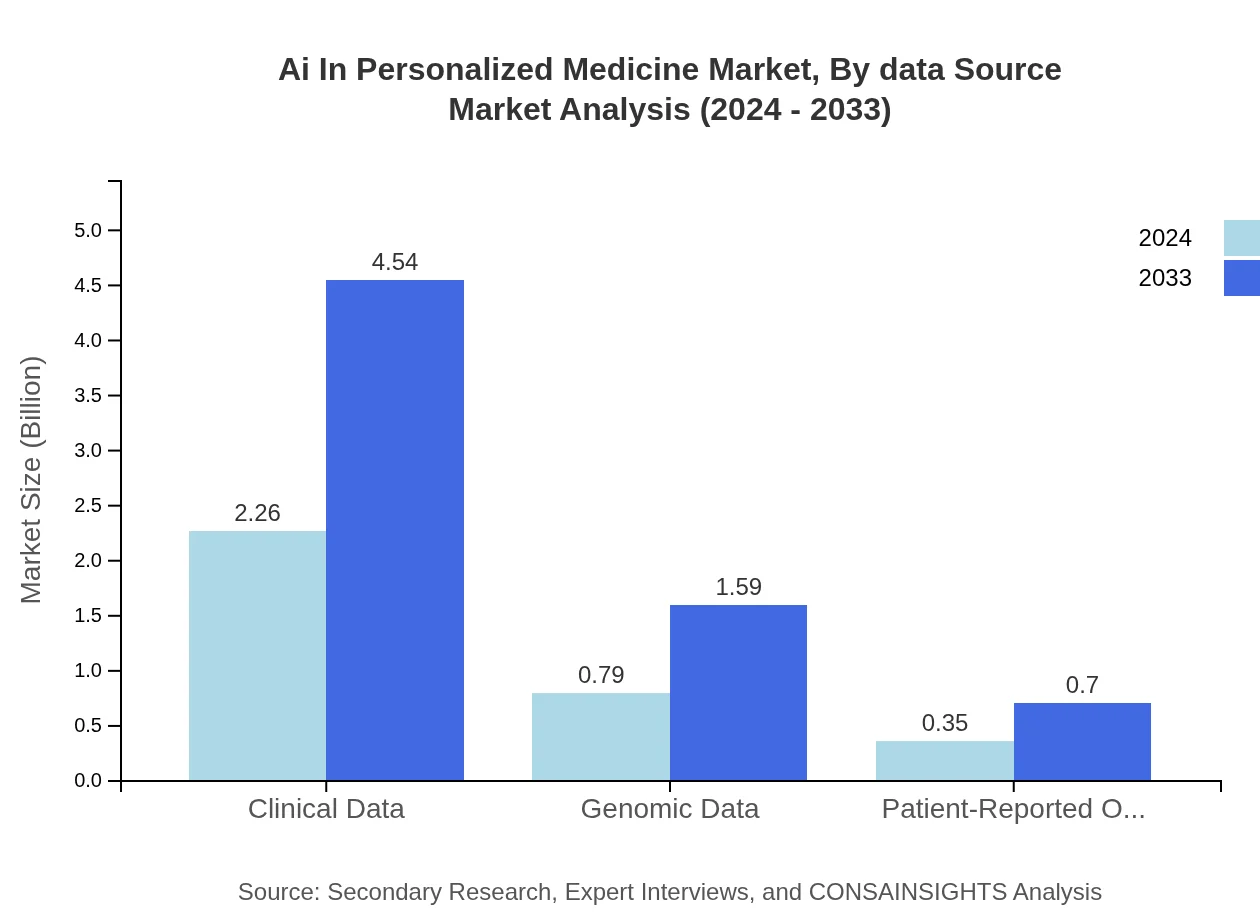
Data sources such as clinical records, genomic data, and patient-reported outcomes are critical to the success of AI implementations. High-quality data enriches algorithms and drives precise patient stratification. This segmentation emphasizes the importance of integrating diverse data streams to support comprehensive and accurate healthcare analytics.
Ai In Personalized Medicine Market Analysis By Region And Regulatory Factors
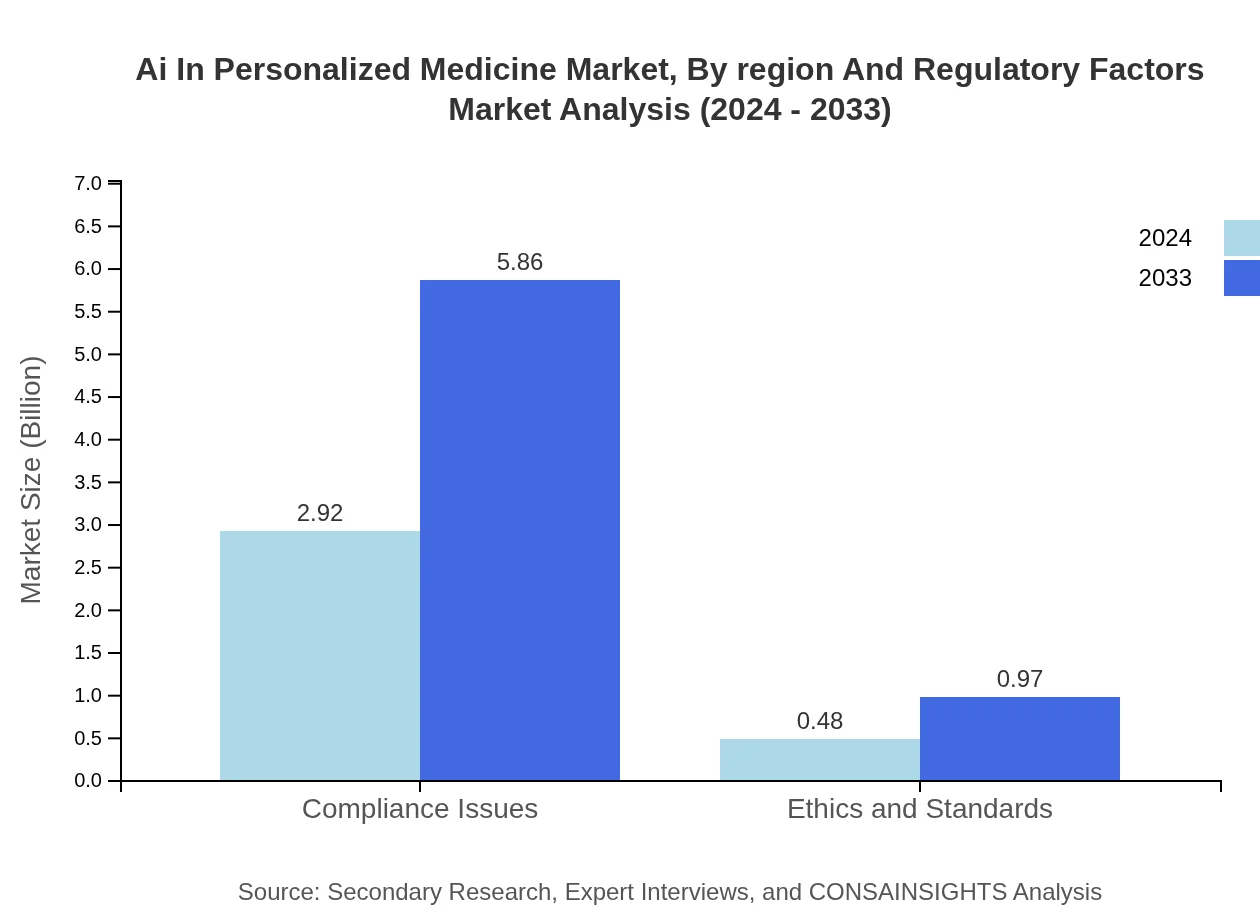
Regulatory factors, including compliance issues and ethical standards, play a crucial role in the adoption of AI technologies in healthcare. Strategies to ensure data security and maintain patient privacy are central to market growth. This segment analyzes how emerging global standards and localized regulations shape technology integration and market acceptance.
Ai In Personalized Medicine Market Trends and Future Forecast
Tell us your focus area and get a customized research report.
Global Market Leaders and Top Companies in Ai In Personalized Medicine Industry
MedTech Innovators:
MedTech Innovators is a pioneering force in integrating AI-driven solutions into personalized healthcare. Their cutting-edge research in machine learning and digital diagnostics has redefined treatment planning and patient care. Through strategic partnerships and continuous innovation, they consistently set industry benchmarks in quality and efficiency.BioPersonal Solutions:
BioPersonal Solutions leads the way in deploying advanced AI methodologies for personalized medicine. The company focuses on leveraging genomic data and clinical insights to tailor patient treatments. Renowned for its commitment to ethical standards and innovation, BioPersonal Solutions collaborates with global healthcare providers to optimize outcomes and drive market expansion.We're grateful to work with incredible clients.








FAQs
What is the market size of Ai In Personalized Medicine in 2024?
The market size for Ai In Personalized Medicine in 2024 is $3.40 Billion, as reported for the start of the forecast period.
How big will the market be in 2033?
By 2033 the market is projected to reach $6.82 Billion based on the stated forecast figures covering 2024 to 2033.
What is CAGR for the forecast period?
The compound annual growth rate (CAGR) for the market during 2024 to 2033 is reported as 7.8%.
Is there a single fastest Growing region in the Ai In Personalized Medicine market?
No single fastest-growing region is stated for the Ai In Personalized Medicine market because the top regional implied CAGR values are within 0.15 percentage points of each other, making the ranking too close to call reliably.
Which end users are the primary adopters?
Primary end users include hospitals, research institutions, and pharmaceutical companies, which are listed as core segments driving deployment.
What technologies underpin the market?
Key technology categories noted are Machine Learning, Natural Language Processing, and Deep Learning supporting diagnostics and treatment planning.
Who are some leading companies in the sector?
Top companies identified in the report include MedTech Innovators and BioPersonal Solutions among active market participants.
How is data sourced in the research?
Research relied on primary interviews with industry experts and secondary sources such as company reports, plus data triangulation and validation.