

Beta Agonist Feed Additive Market Report
First published: 11 October 2024 | Last updated: 28 May 2026 | Report Code: beta-agonist-feed-additive
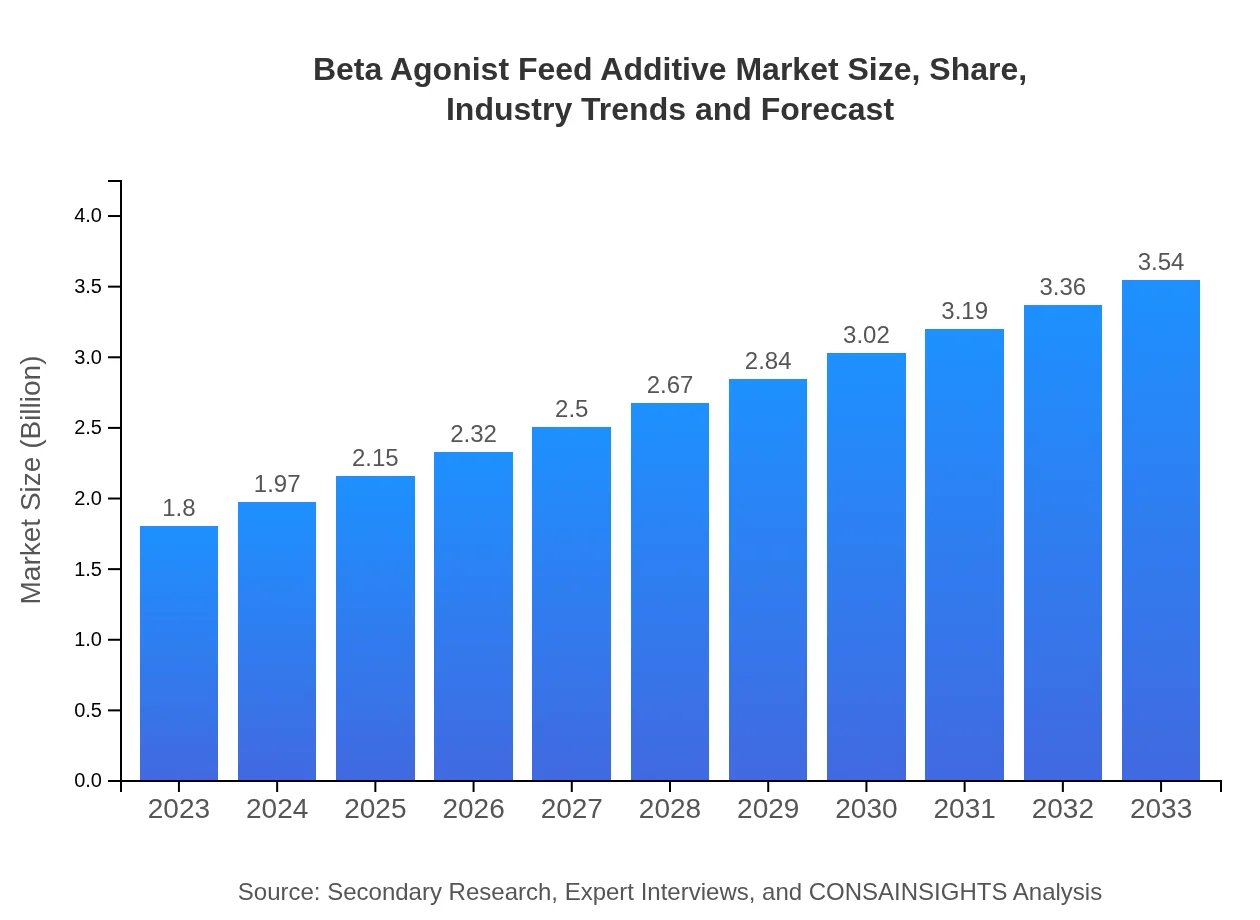
Beta Agonist Feed Additive Market — USD $1.8 Billion in 2023, Growing to USD 3.54null by 2033 at 6.8% CAGR
This report provides detailed insights into the Beta Agonist Feed Additive market from 2023 to 2033, including market size, growth forecasts, industry trends, and competitive landscape analysis.
Key Takeaways
- Global market expands from $1.80 Billion in 2023 to $3.54 Billion in 2033 at a 6.8% CAGR.
- North America is identified as the largest region, increasing from $0.63 Billion to $1.24 Billion between 2023 and 2033.
- North America is largest regional market; Middle East and Africa is regional market region based on implied CAGR across 2023 to 2033.
- Regional growth is supported by demand for feed efficiency and protein-rich animal products.
- Top industry players include Elanco Animal Health, Zenoaq, Boehringer Ingelheim and Merck Animal Health.
Beta Agonist Feed Additive Market Report — Executive Summary
Regional analysis shows North America as largest market and Middle East and Africa as fastest-growing region by implied CAGR. The report details market dynamics for beta agonist feed additives between 2023 and 2033, with a global value increase from $1.80 Billion to $3.54 Billion and a 6.8% CAGR. Growth is driven by the need for improved feed conversion and higher protein yields in livestock. Key trends include adoption of branded beta agonists such as ractopamine and zilpaterol, regulatory scrutiny in select markets, and ongoing formulation innovations. The market is segmented by product, animal type, application, formulation and distribution channel. Major competitors listed are Elanco Animal Health, Zenoaq, Boehringer Ingelheim and Merck Animal Health. The analysis highlights regional distribution and policy impacts, with North America noted as the largest regional market and Middle East and Africa identified as the regional market region.
Key Growth Drivers
- Rising global demand for meat and dairy prompting producers to optimize feed efficiency.
- Adoption of ractopamine and zilpaterol formulations to accelerate growth rates in target livestock.
- Innovations in feed formulation and production methods enhancing additive effectiveness.
- Focus on production efficiency amid cost pressures in animal agriculture driving additive use.
- Distribution expansion through online and offline channels increasing market reach.
| Metric | Value |
|---|---|
| Study Period | 2023 - 2033 |
| 2023 Market Size | $1.80 Billion |
| CAGR (2023-2033) | 6.8% |
| 2033 Market Size | $3.54 Billion |
| Top Companies | Elanco Animal Health, Zenoaq, Boehringer Ingelheim, Merck Animal Health |
| Published Date | 11 October 2024 |
| Last Modified Date | 28 May 2026 |
Beta Agonist Feed Additive Market Overview
Customize Beta Agonist Feed Additive Market Report market research report
- ✔ Get in-depth analysis of Beta Agonist Feed Additive market size, growth, and forecasts.
- ✔ Understand Beta Agonist Feed Additive's regional dynamics and industry-specific trends.
- ✔ Identify potential applications, end-user demand, and growth segments in Beta Agonist Feed Additive
What is the Market Size & CAGR of Beta Agonist Feed Additive Market Report market in 2023?
Beta Agonist Feed Additive Industry Analysis
Beta Agonist Feed Additive Market Segmentation and Scope
Tell us your focus area and get a customized research report.
Beta Agonist Feed Additive Market Report Market Analysis Report by Region
Europe Beta Agonist Feed Additive Market Report:
Europe grows from $0.57 Billion in 2023 to $1.12 Billion in 2033. Market movement reflects producers’ focus on yield improvements and evolving formulation strategies amid regulatory considerations.Asia Pacific Beta Agonist Feed Additive Market Report:
Asia Pacific grows from $0.33 Billion in 2023 to $0.65 Billion in 2033. Growth drivers include expanding protein consumption and efforts to improve feed conversion ratios among livestock operations.North America Beta Agonist Feed Additive Market Report:
North America is largest regional market, rising from $0.63 Billion in 2023 to $1.24 Billion in 2033. Regional expansion is tied to demand for efficient meat and dairy production and established distribution networks supporting additive adoption.South America Beta Agonist Feed Additive Market Report:
Latin America grows from $0.16 Billion in 2023 to $0.32 Billion in 2033. Demand for productivity gains in animal agriculture and broader adoption of additives support regional market growth.Middle East & Africa Beta Agonist Feed Additive Market Report:
Middle East and Africa is fastest-growing region by implied CAGR, increasing from $0.1 Billion in 2023 to $0.21 Billion in 2033. 1 Billion in 2023 to $0.21 Billion in 2033 and is identified as the regional growth market at an implied 7.70% CAGR, propelled by rising protein demand and improvements in livestock production efficiency.Tell us your focus area and get a customized research report.
Research Methodology
Beta Agonist Feed Additive Market Analysis By Product
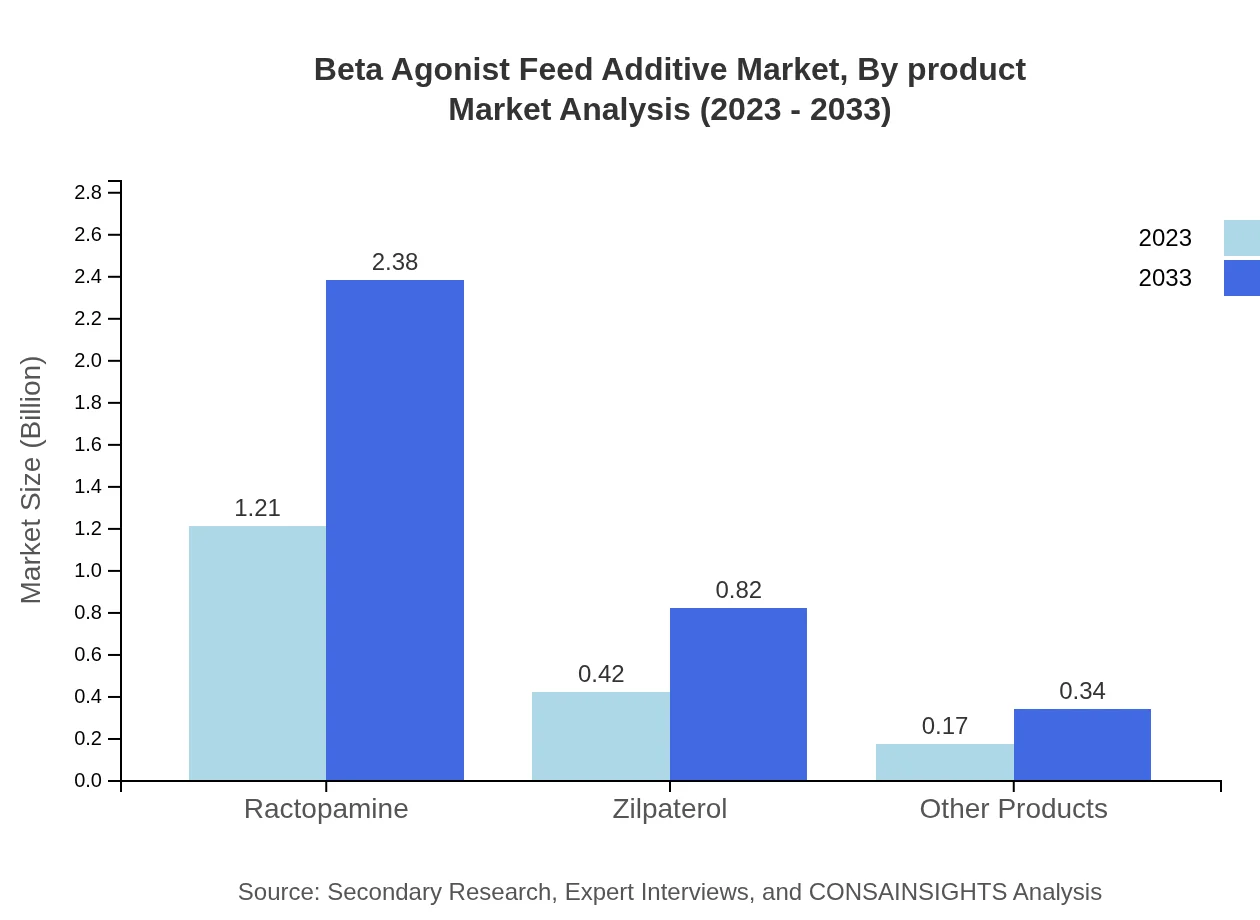
The primary products in the Beta Agonist Feed Additive market include Ractopamine and Zilpaterol. Ractopamine holds a substantial share, with market sizes projected to grow from $1.21 billion in 2023 to $2.38 billion in 2033, capturing 67.28% of the market. Zilpaterol, although smaller, is expected to increase from $0.42 billion to $0.82 billion, maintaining a 23.15% market share.
Beta Agonist Feed Additive Market Analysis By Animal Type
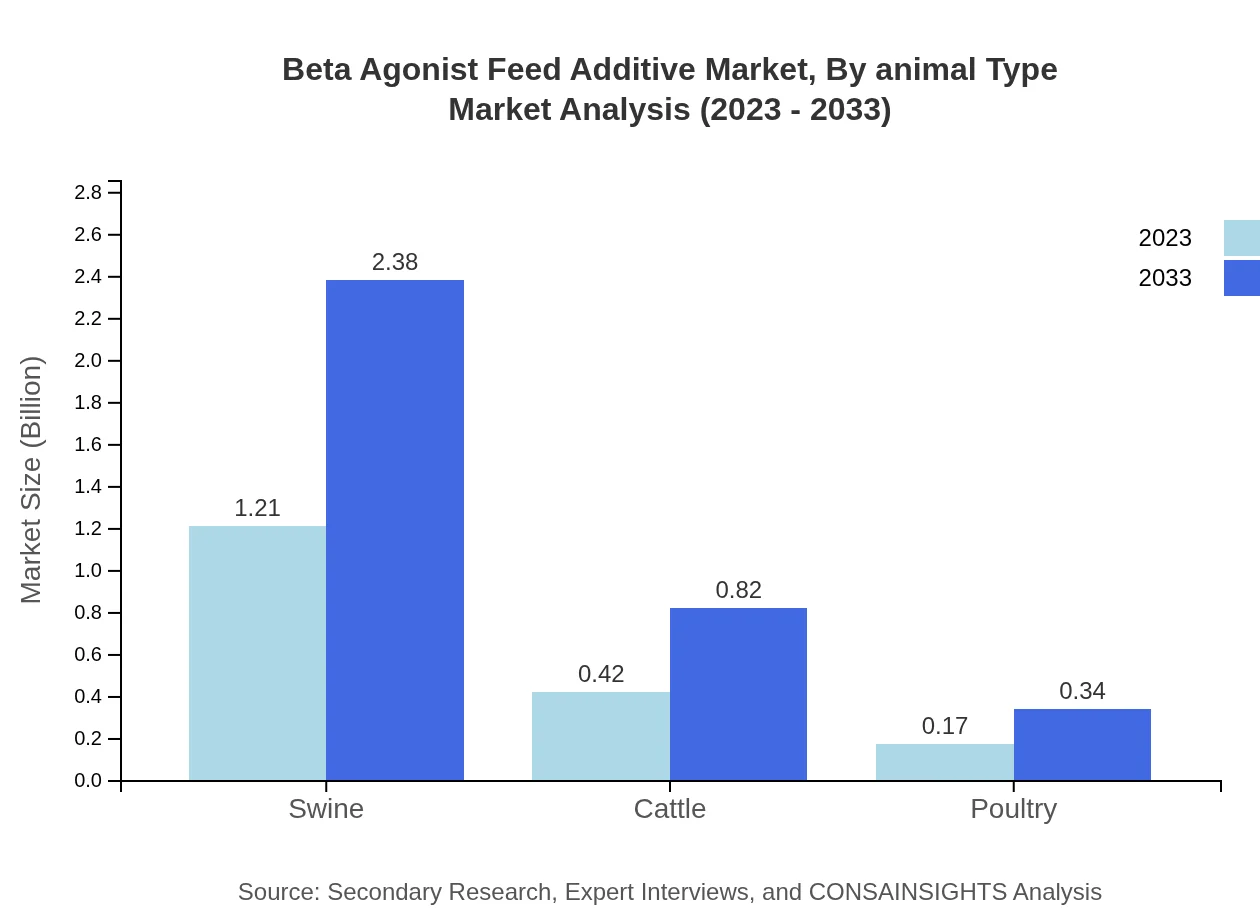
Ractopamine is predominantly used in swine, accounting for a market size of $1.21 billion in 2023, increasing to $2.38 billion by 2033. Cattle production utilizes Zilpaterol with anticipated growth from $0.42 billion to $0.82 billion by 2033, reflecting a persistent demand for protein-rich feed formulations.
Beta Agonist Feed Additive Market Analysis By Application
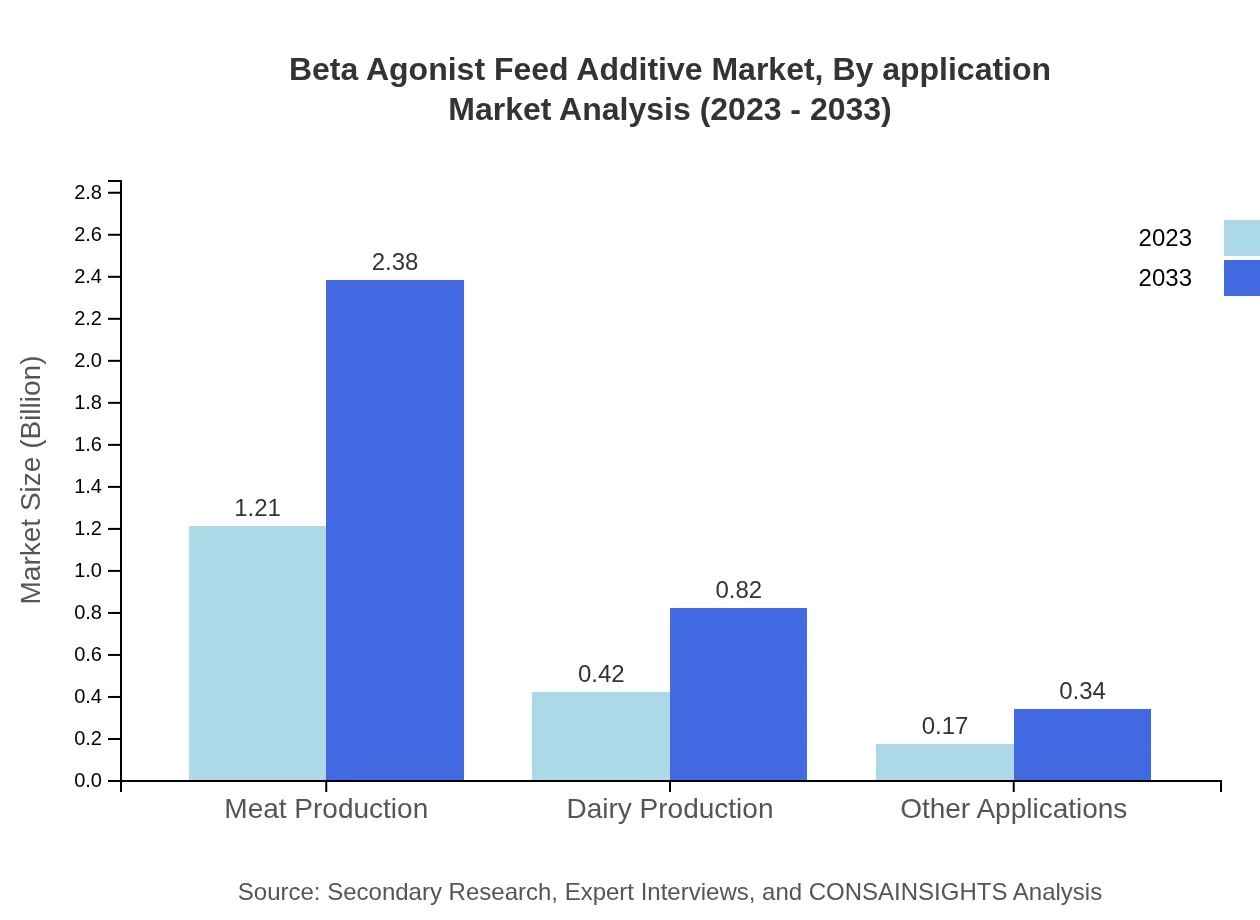
In terms of applications, meat and dairy production represent the largest segments. For meat production, the market is projected to grow from $1.21 billion in 2023 to $2.38 billion by 2033, while dairy applications are expected to grow from $0.42 billion to $0.82 billion over the same period.
Beta Agonist Feed Additive Market Analysis By Formulation
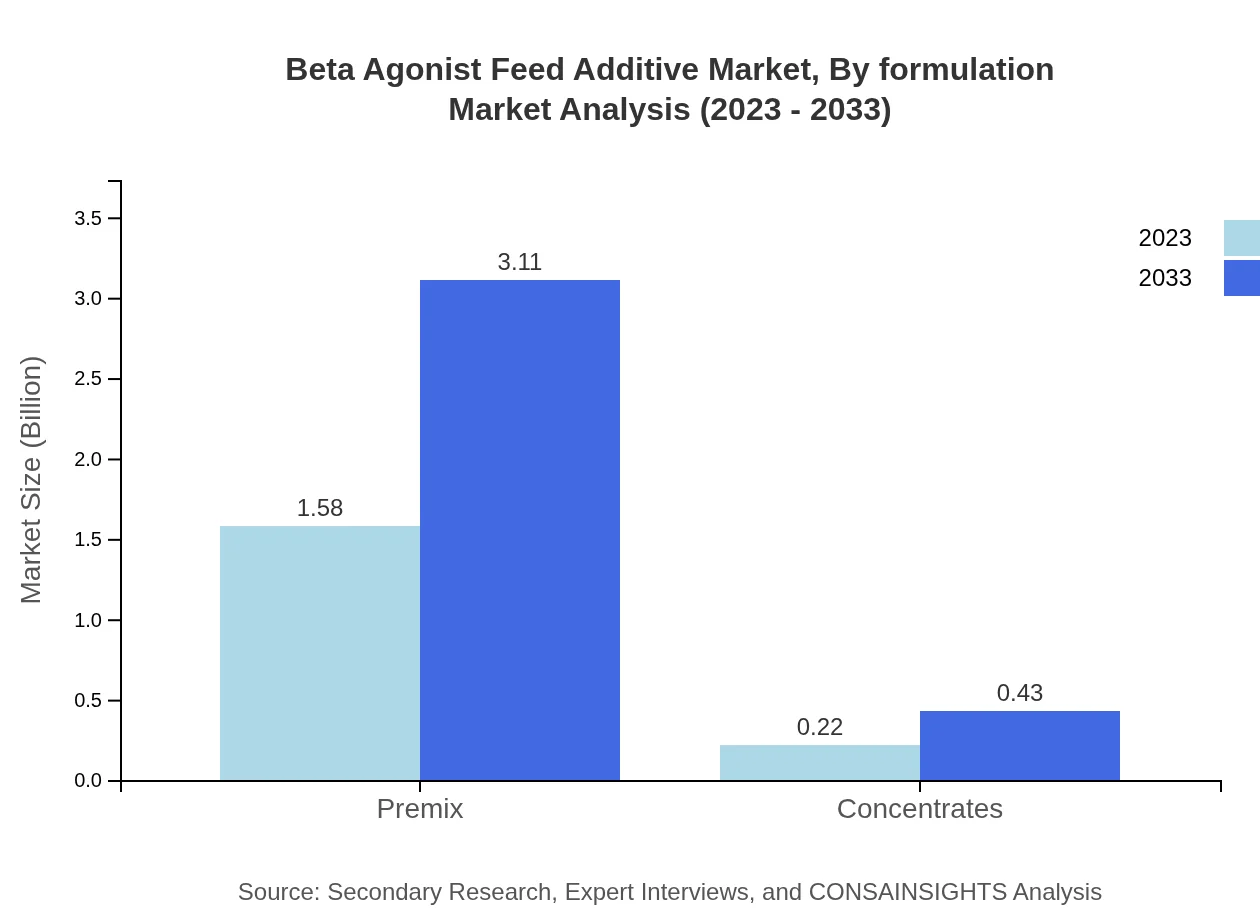
Premix formulations dominate the market, reaching $1.58 billion in 2023 with a forecast rise to $3.11 billion by 2033. Concentrates, while smaller, will also see growth from $0.22 billion to $0.43 billion. This indicates a substantial market preference for premixed feeds, facilitating ease of use for producers.
Beta Agonist Feed Additive Market Analysis By Distribution Channel
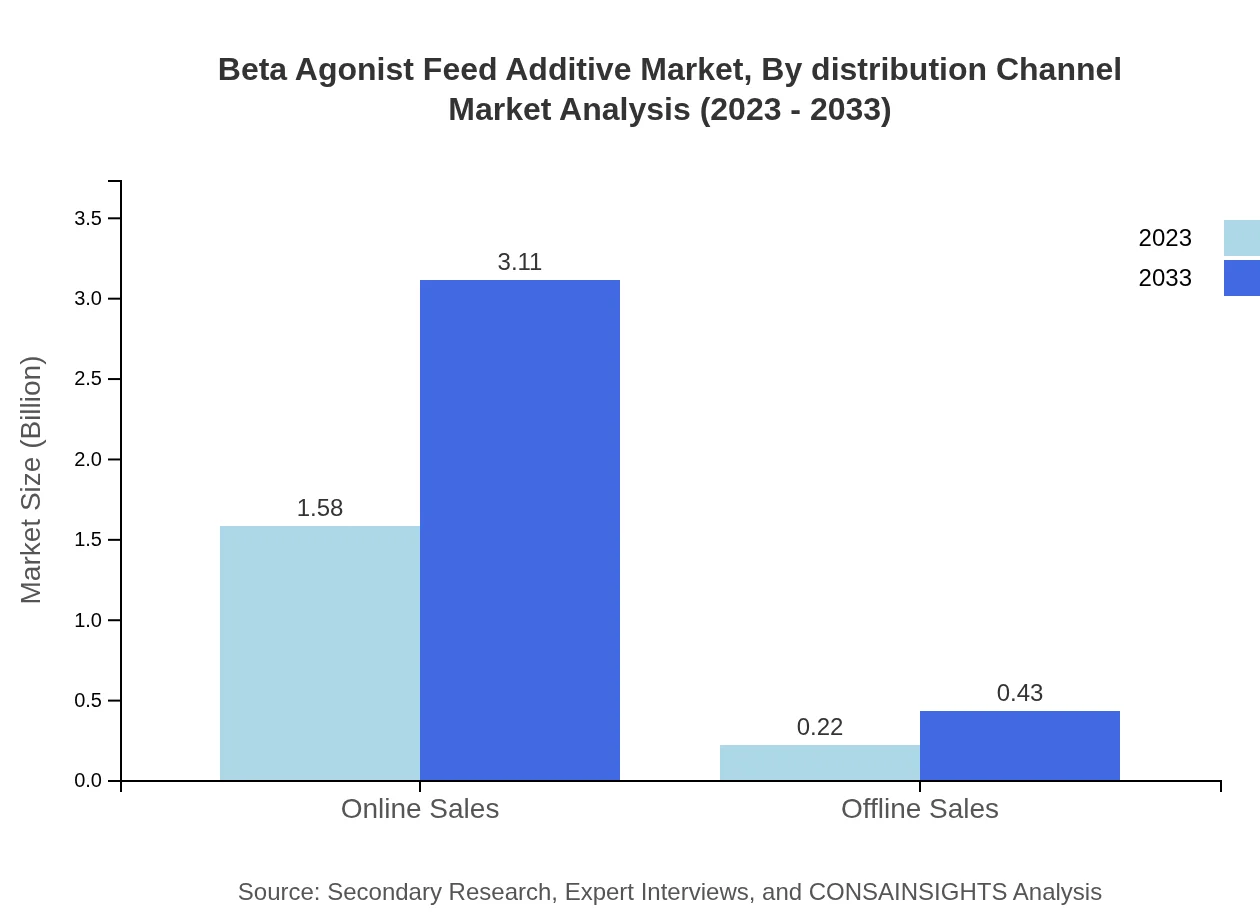
The distribution channels for Beta Agonist Feed Additives are predominantly online, projected to grow from $1.58 billion in 2023 to $3.11 billion by 2033. Offline sales account for a smaller market size but are also expected to increase from $0.22 billion to $0.43 billion, reflecting diverse purchasing preferences.
Beta Agonist Feed Additive Market Trends and Future Forecast
Tell us your focus area and get a customized research report.
Global Market Leaders and Top Companies in Beta Agonist Feed Additive Industry
Elanco Animal Health:
A leading company in animal health that focuses on innovative solutions, including beta agonist feed additives aimed at improving livestock growth and health.Zenoaq:
Specializes in veterinary pharmaceuticals and feed additives, contributing significantly to the global supply of beta agonists for animal feed.Boehringer Ingelheim:
Global pharmaceutical company with a strong focus on animal health products, including beta agonists that enhance the productivity of livestock.Merck Animal Health:
A major player in the animal health sector, providing various beta agonist feed additives along with a comprehensive range of veterinary services.We're grateful to work with incredible clients.


FAQs
What is the market size in 2023?
The global beta agonist feed additive market size in 2023 is $1.80 Billion, as stated for the base year of the forecast period spanning 2023 to 2033.
How big will the market be in 2033?
By 2033 the market is projected to reach $3.54 Billion according to the forecast provided for the period 2023 to 2033.
What is CAGR of the market?
The reported compound annual growth rate for the forecast period 2023 to 2033 is 6.8% for the global market.
Which region is the fastest Growing in the Beta Agonist Feed Additive Market Report market?
Middle East and Africa is the fastest-growing region, projected to expand from $0.1 Billion in 2023 to $0.21 Billion in 2033, reflecting an implied 7.70% CAGR over the forecast period.
Which region is fastest Growing?
The Middle East and Africa is noted as the regional market region with an implied 7.70% CAGR, increasing from $0.1 Billion in 2023 to $0.21 Billion in 2033.
Who are the top companies in the market?
Top companies named in the report include Elanco Animal Health, Zenoaq, Boehringer Ingelheim and Merck Animal Health.
What product subsegments are included?
Product subsegments listed include Ractopamine, Zilpaterol and Other Products, reflecting the primary beta agonist formulations referenced in the data.
Which animal types are covered?
Animal-type subsegments specified are Swine, Cattle and Poultry, indicating the market focus areas for beta agonist applications.
What applications are addressed?
Application subsegments include Meat Production, Dairy Production and Other Applications as the primary use cases cited.
How was the research conducted?
Research combined primary interviews with industry experts, secondary company reports and publications, plus data triangulation and internal validation.