

Biologic Response Modifiers Market Report
First published: 12 October 2024 | Last updated: 25 May 2026 | Report Code: biologic-response-modifiers
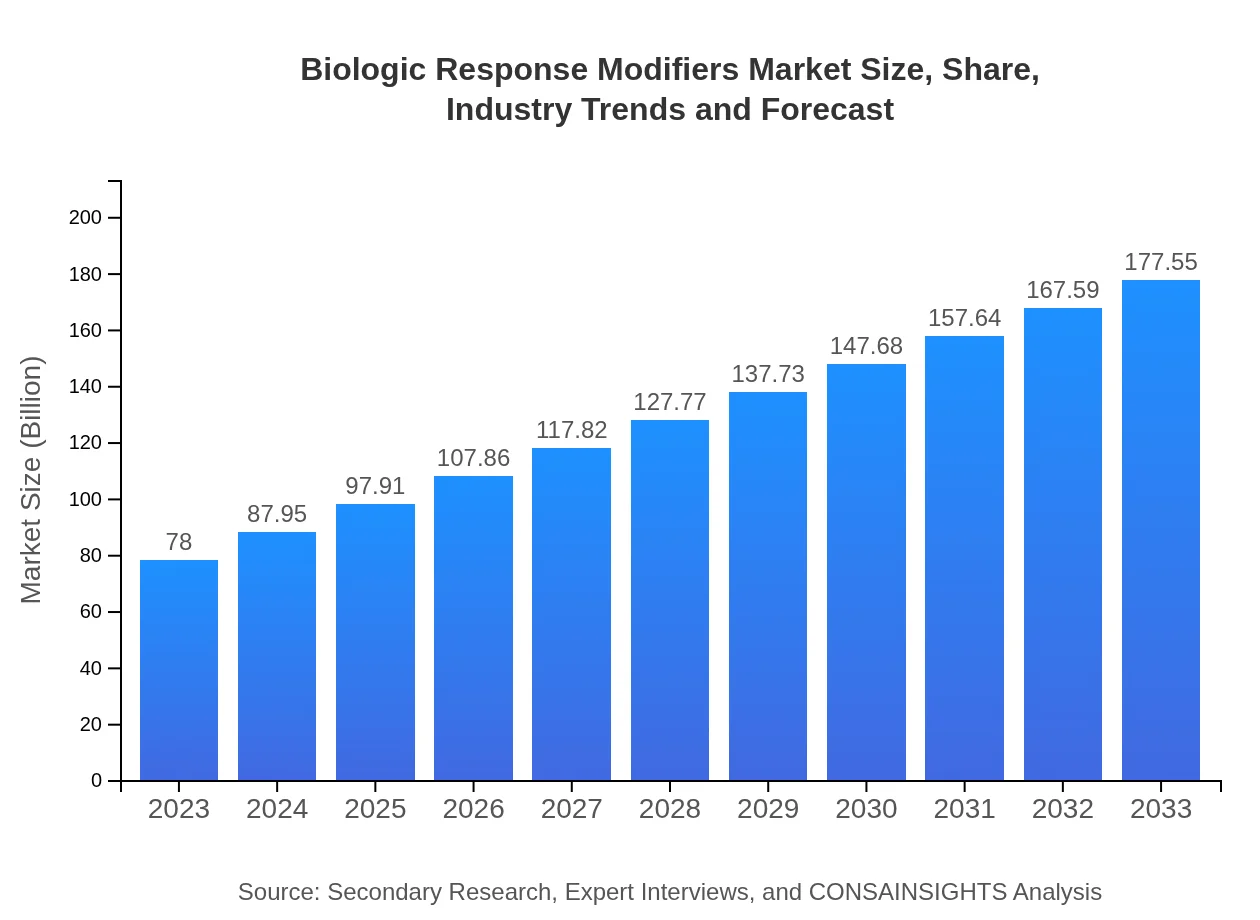
Biologic Response Modifiers Market — USD $78 Billion in 2023, Growing to USD 177.55null by 2033 at 8.3% CAGR
This report covers comprehensive insights into the Biologic Response Modifiers market, examining market dynamics, trends, forecasts (2023-2033), and detailed analyses by region, segment, and leading players in the industry.
Key Takeaways
- Global market expands from $78.00 Billion in 2023 to $177.55 Billion by 2033 at an 8.3% CAGR.
- North America is largest regional market, while no single fastest-growing region is stated because regional CAGR differences remain within 0.15 percentage points.
- Major product categories include monoclonal antibodies, cytokines, and growth factors across hospitals, clinics, and research institutes.
- Growth is supported by rising chronic disease prevalence, biopharmaceutical innovation, and ageing populations.
- Top companies in the space include Roche Holding AG, Amgen Inc., AbbVie Inc., Johnson & Johnson, and Novartis AG.
Biologic Response Modifiers Market Report — Executive Summary
North America remains largest market by forecast-period value, while no single fastest-growing region is stated because top regional growth rates are separated by less than 0.15 percentage points. The report examines biologic response modifiers, driven by increasing chronic disease burdens, technological progress in biopharmaceuticals, and demographic shifts. Key segments include monoclonal antibodies, cytokines, and growth factors, with primary end-users comprising hospitals, clinics, and research institutes. North America remains largest market by forecast-period value, while no single fastest-growing region is stated because top regional growth rates are separated by less than 0.15 percentage points. Competitive activity centers on research, product approvals, and collaborations among leading firms such as Roche Holding AG, Amgen Inc., AbbVie Inc., Johnson & Johnson, and Novartis AG. Regulatory complexity and therapy costs remain constraints, while trends point to personalized approaches and continued R&D emphasis. The study combines primary interviews, secondary sources, and data validation to map opportunities through 2033.
Key Growth Drivers
- Rising incidence of chronic diseases increasing demand for targeted biologic therapies.
- Advances in biopharmaceutical research enabling novel monoclonal antibodies and growth factor products.
- Ageing populations expanding the addressable patient base for immune-modulating treatments.
- Greater investment and collaborations between biotech firms and research institutes accelerating product pipelines.
| Metric | Value |
|---|---|
| Study Period | 2023 - 2033 |
| 2023 Market Size | $78.00 Billion |
| CAGR (2023-2033) | 8.3% |
| 2033 Market Size | $177.55 Billion |
| Top Companies | Roche Holding AG, Amgen Inc., AbbVie Inc., Johnson & Johnson, Novartis AG |
| Published Date | 12 October 2024 |
| Last Modified Date | 25 May 2026 |
Biologic Response Modifiers Market Overview
Customize Biologic Response Modifiers Market Report market research report
- ✔ Get in-depth analysis of Biologic Response Modifiers market size, growth, and forecasts.
- ✔ Understand Biologic Response Modifiers's regional dynamics and industry-specific trends.
- ✔ Identify potential applications, end-user demand, and growth segments in Biologic Response Modifiers
What is the Market Size & CAGR of Biologic Response Modifiers Market Report market in 2023?
Biologic Response Modifiers Industry Analysis
Biologic Response Modifiers Market Segmentation and Scope
Tell us your focus area and get a customized research report.
Biologic Response Modifiers Market Report Market Analysis Report by Region
Europe Biologic Response Modifiers Market Report:
Europe grows from $19.46 Billion in 2023 to $44.3 Billion in 2033. Regional expansion is driven by increasing chronic disease incidence, established healthcare systems, and ongoing approvals and commercialization of novel biologic therapies.Asia Pacific Biologic Response Modifiers Market Report:
Asia Pacific grows from $15.8 Billion in 2023 to $35.97 Billion in 2033. Growth reflects expanding healthcare access, rising demand for advanced therapeutics, and intensified clinical development activity across the region.North America Biologic Response Modifiers Market Report:
North America is largest regional market, rising from $27.99 Billion in 2023 to $63.7 Billion in 2033. Local drivers include strong clinical research infrastructure, high adoption of advanced biologics, and substantial R&D investment that support market uptake.South America Biologic Response Modifiers Market Report:
Latin America grows from $7.01 Billion in 2023 to $15.96 Billion in 2033. Market progress is supported by growing healthcare investment, broader treatment availability, and increased focus on biopharmaceutical adoption.Middle East & Africa Biologic Response Modifiers Market Report:
Middle East and Africa grows from $7.74 Billion in 2023 to $17.61 Billion in 2033. Drivers include expanding healthcare infrastructure, greater access to specialty therapies, and increasing attention to chronic disease management.Tell us your focus area and get a customized research report.
Research Methodology
Biologic Response Modifiers Market Analysis By Type
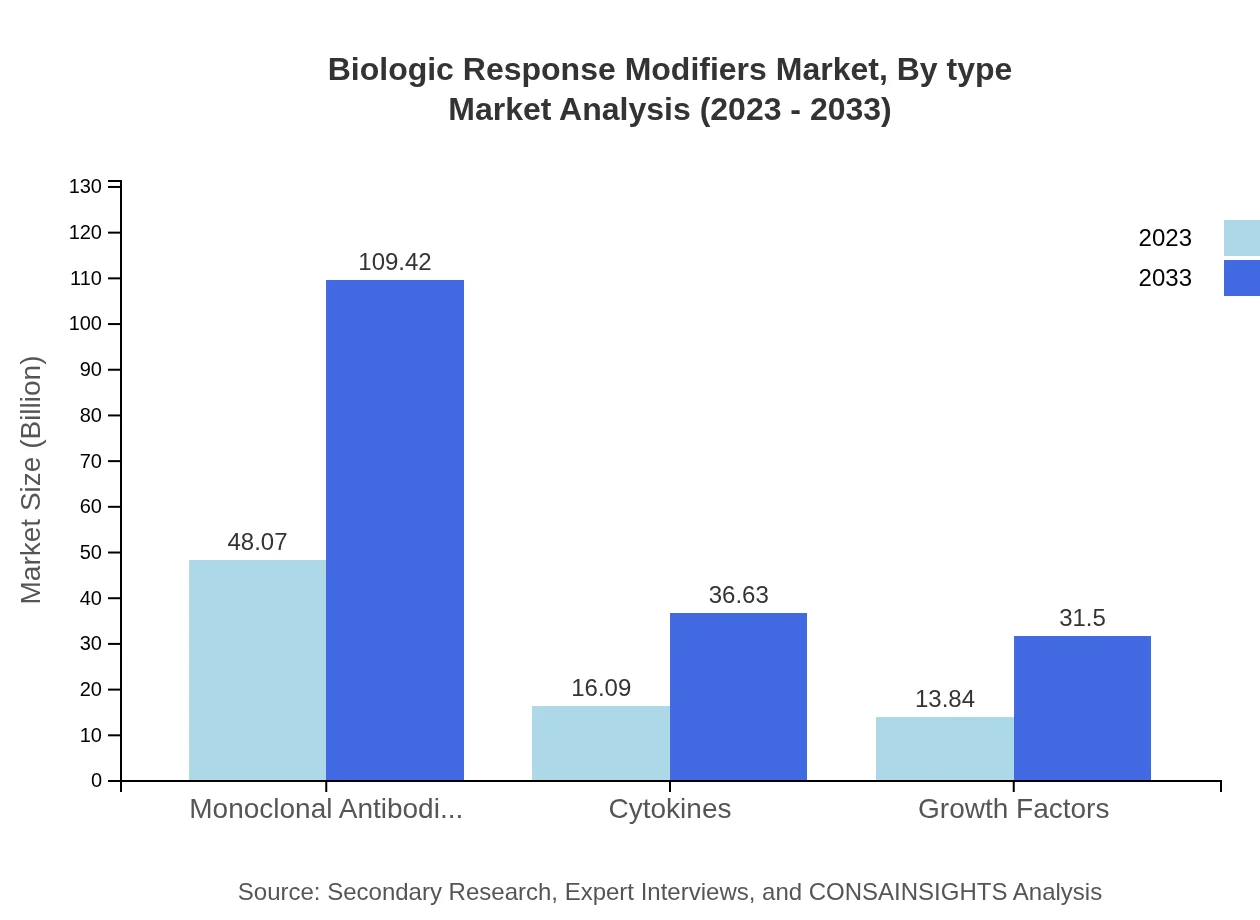
The market is segmented into monoclonal antibodies, cytokines, and growth factors. Monoclonal antibodies dominate the market due to their application in cancer treatment, growing from $48.07 billion in 2023 to $109.42 billion by 2033, holding a major share of 61.63%. Cytokines are expected to grow from $16.09 billion to $36.63 billion, with a share of 20.63%, while growth factors increase from $13.84 billion to $31.50 billion, representing 17.74% market share.
Biologic Response Modifiers Market Analysis By Application
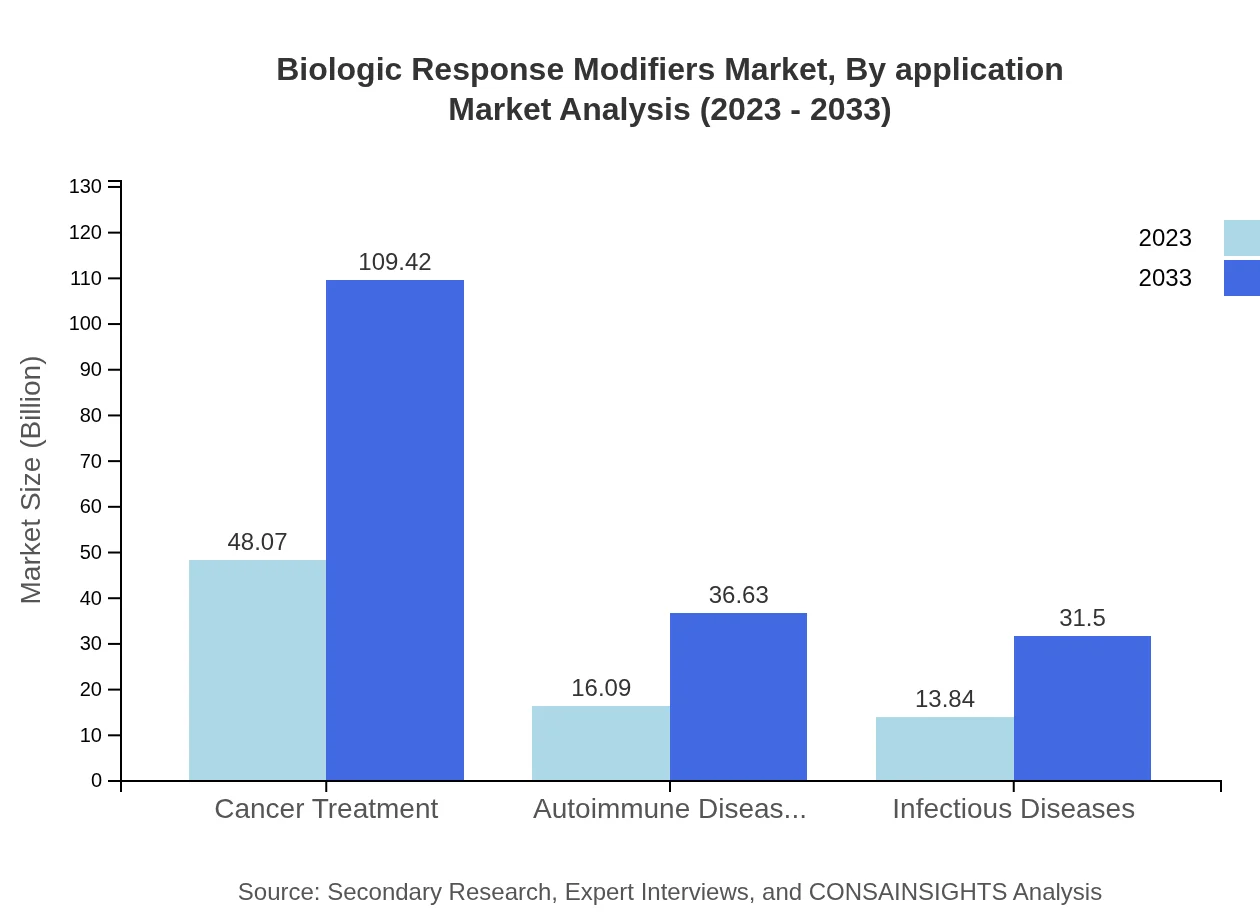
This segment highlights key applications in cancer treatment, autoimmune diseases, and infectious diseases. Cancer treatment accounts for the largest market share and is projected to grow from $48.07 billion to $109.42 billion. Autoimmune diseases will see growth from $16.09 billion to $36.63 billion, while infectious diseases will grow from $13.84 billion to $31.50 billion.
Biologic Response Modifiers Market Analysis By End User
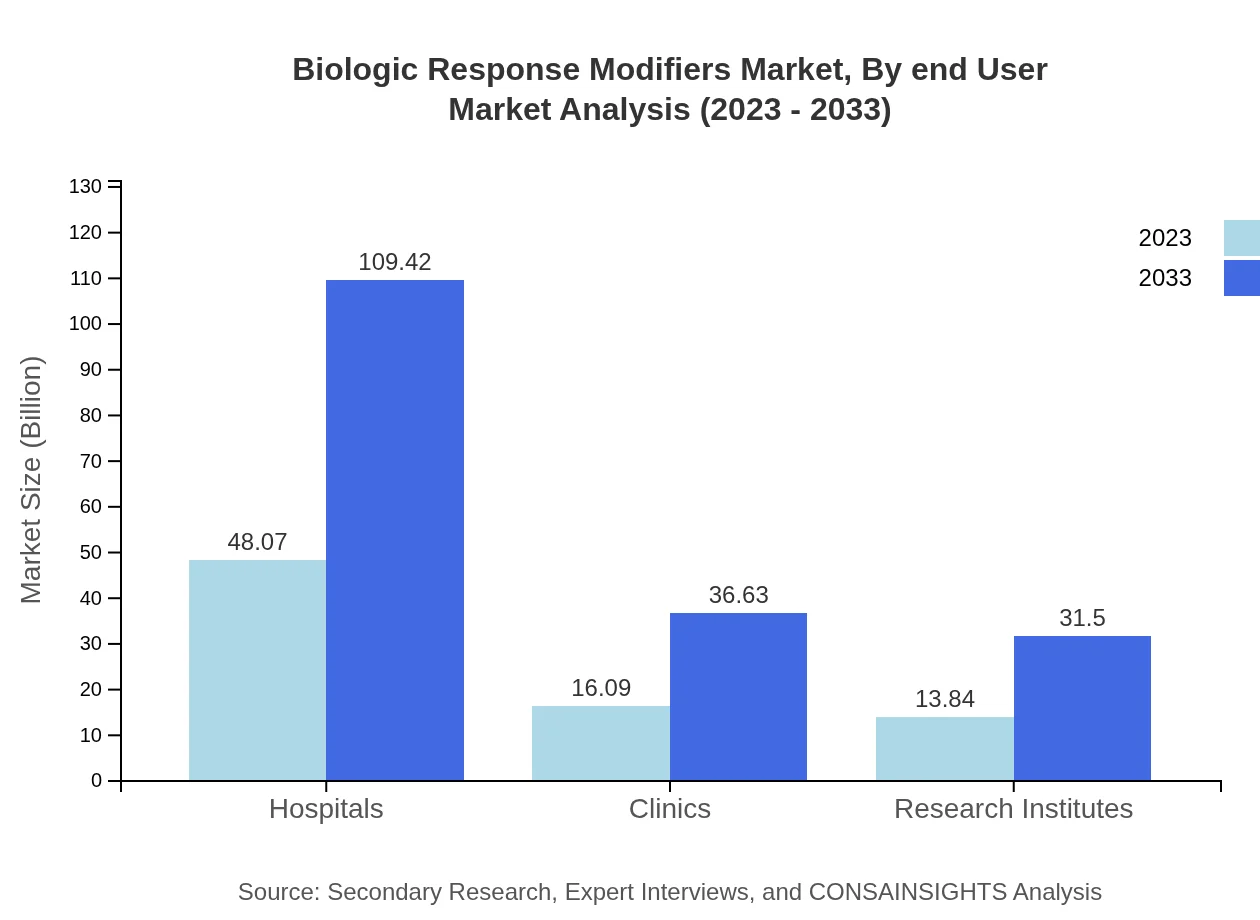
End-users include hospitals, clinics, and research institutes. Hospitals lead with a market size of $48.07 billion in 2023, growing to $109.42 billion. Clinics are projected to expand from $16.09 billion to $36.63 billion and research institutes from $13.84 billion to $31.50 billion, reflecting increased research and clinical practices.
Biologic Response Modifiers Market Analysis By Route Of Administration
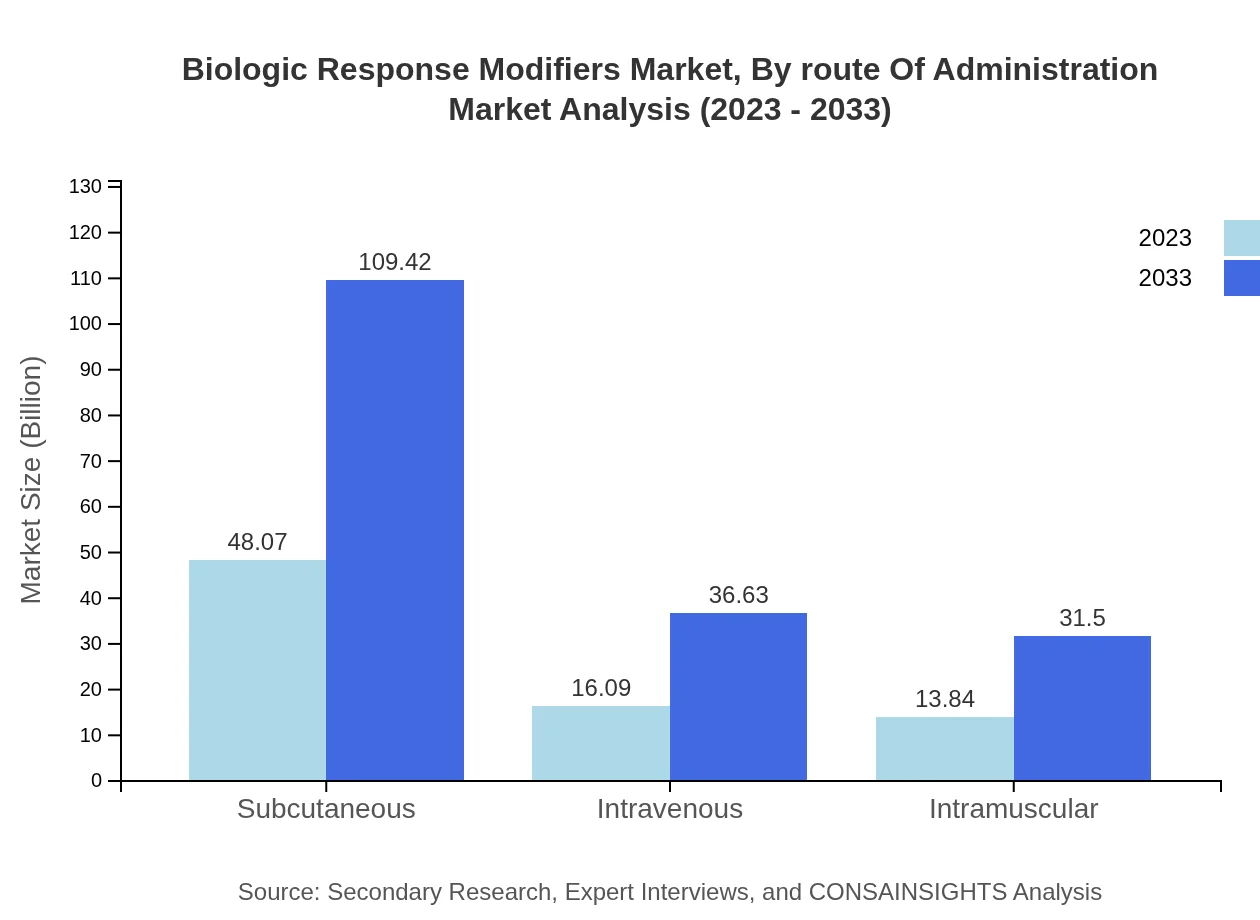
The route of administration is segmented into subcutaneous, intravenous, and intramuscular. Subcutaneous methods dominate with $48.07 billion in 2023, reaching $109.42 billion. Intravenous routes will grow from $16.09 billion to $36.63 billion, while intramuscular options will see an increase from $13.84 billion to $31.50 billion.
Biologic Response Modifiers Market Trends and Future Forecast
Tell us your focus area and get a customized research report.
Global Market Leaders and Top Companies in Biologic Response Modifiers Industry
Roche Holding AG:
A leading player in the biotech sector, Roche has been pivotal in developing innovative monoclonal antibody therapies, focusing on oncology and immunology.Amgen Inc.:
Known for its biotechnology innovations, Amgen specializes in developing therapeutic proteins and monoclonal antibodies for serious diseases.AbbVie Inc.:
AbbVie is a key market player with a strong portfolio of immunology and oncology drugs, focusing on biologic therapies that enhance patient outcomes.Johnson & Johnson:
With a robust pipeline in immunology and oncology, Johnson & Johnson is committed to expanding its biologic portfolio through innovation.Novartis AG:
This company plays a crucial role in the biologic response modifiers market, focusing on treatments for various chronic and autoimmune diseases.We're grateful to work with incredible clients.









FAQs
What is the market size of biologic response modifiers in 2023?
The market size for biologic response modifiers in 2023 is reported as $78.00 Billion, reflecting baseline industry value used for the 2023 to 2033 forecast period.
How big will the market be in 2033?
The forecasted market value for 2033 is $177.55 Billion, representing the end-point projection for the 2023 to 2033 analysis period.
What is CAGR for the forecast period?
The compound annual growth rate (CAGR) for the 2023 to 2033 forecast period is 8.3%, reflecting the annualized growth rate applied to market projections.
Is there a single fastest Growing region in the Biologic Response Modifiers Market Report market?
No single fastest-growing region is stated for the Biologic Response Modifiers Market Report market because the top regional implied CAGR values are within 0.15 percentage points of each other, making the ranking too close to call reliably.
Which companies lead the biologic response modifiers market?
Top companies listed include Roche Holding AG, Amgen Inc., AbbVie Inc., Johnson & Johnson, and Novartis AG, representing major industry participants and innovators.
What are the main application areas for these biologics?
Primary applications include cancer treatment, autoimmune diseases, and infectious diseases, reflecting therapeutic focus areas addressed by monoclonal antibodies, cytokines, and growth factors.
How are end Users categorized in the report?
End-users are categorized as hospitals, clinics, and research institutes, covering principal settings where biologic response modifiers are administered and developed.
What research methods supported the report findings?
The analysis is based on primary interviews with industry experts, secondary research from company reports and publications, data triangulation, internal validation, and expert-led trend analysis.