
Reports >
Life Sciences
>
Combined Hormonal Contraceptives

Combined Hormonal Contraceptives
First published: 19 December 2024 | Last updated: 28 May 2026 | Report Code: combined-hormonal-contraceptives
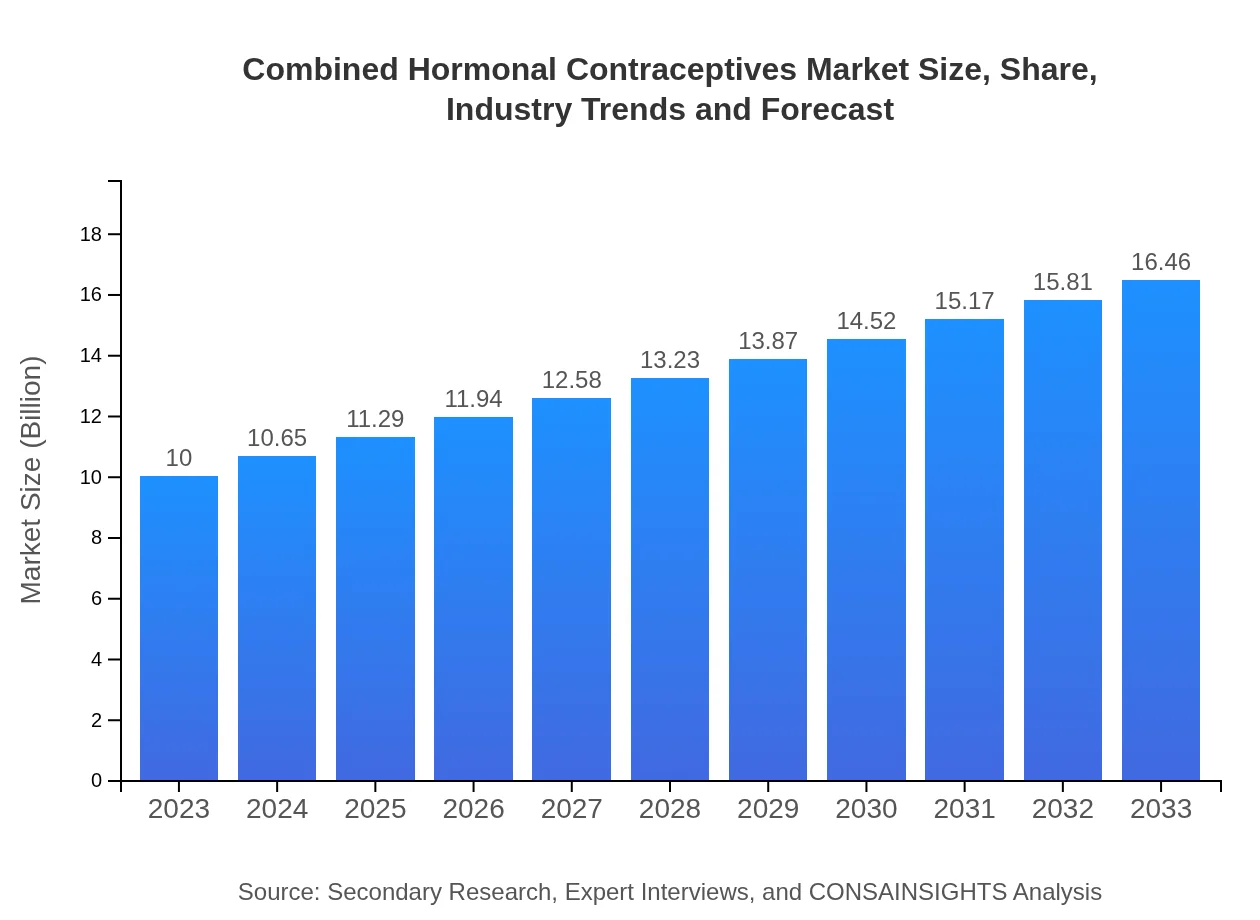
Combined Hormonal Contraceptives Market — USD 10 billion in 2023, Growing to USD 16.46B by 2033 at 5% CAGR
This report provides an in-depth analysis of the Combined Hormonal Contraceptives market from 2023 to 2033, offering insights into market trends, size, regional growth, product performance, and major industry players.
Key Takeaways
- Global market expands from $10.00 Billion in 2023 to $16.46 Billion by 2033 at a 5% CAGR.
- North America is largest regional market; Latin America is regional market region based on implied CAGR across 2023 to 2033.
- Latin America is identified as the regional market region, moving from $0.31 Billion to $0.52 Billion between 2023 and 2033.
- European demand grows from $3.2 Billion in 2023 to $5.26 Billion in 2033, reflecting expanding access and awareness.
- Key product formats include pills, patches, and injections; major companies include Bayer AG, Johnson & Johnson, Merck & Co., and Pfizer Inc.
Combined Hormonal Contraceptives — Executive Summary
Regional analysis shows North America as largest market and Latin America as fastest-growing region by implied CAGR. The Combined Hormonal Contraceptives market is forecast to grow from $10.00 Billion in 2023 to $16.46 Billion by 2033 at a 5% CAGR (2023 to 2033). Growth is supported by greater family-planning awareness, formulation advances, and initiatives focused on women's health. Product diversity—pills, patches, and injections—addresses different user preferences and supports broader adoption. Regional performance varies: North America holds the largest market value, while Latin America records the highest implied growth rate. Companies such as Bayer AG, Johnson & Johnson, Merck & Co., and Pfizer Inc. remain influential through innovation and distribution strategies. Ongoing trends include personalized contraceptive approaches, longer-acting options, and enhanced access through digital health and telemedicine channels. Regulatory considerations and affordability remain central to market development, shaping product development and commercialization tactics across regions.
Key Growth Drivers
- Increased awareness and uptake of family-planning services expanding addressable markets.
- Advances in contraceptive formulations improving efficacy and tolerability for diverse users.
- Broader availability of multiple product forms—pills, patches, injections—meeting varied preferences.
- Public and private initiatives focused on women's health enhancing access and acceptance.
- Digital health and telemedicine facilitating access to contraceptive counseling and prescriptions.
| Metric | Value |
|---|---|
| Study Period | 2023 - 2033 |
| 2023 Market Size | $10.00 Billion |
| CAGR (2023-2033) | 5% |
| 2033 Market Size | $16.46 Billion |
| Top Companies | Bayer AG, Johnson & Johnson, Merck & Co., Pfizer Inc. |
| Published Date | 19 December 2024 |
| Last Modified Date | 28 May 2026 |
Combined Hormonal Contraceptives Market Overview
Customize Combined Hormonal Contraceptives market research report
- ✔ Get in-depth analysis of Combined Hormonal Contraceptives market size, growth, and forecasts.
- ✔ Understand Combined Hormonal Contraceptives's regional dynamics and industry-specific trends.
- ✔ Identify potential applications, end-user demand, and growth segments in Combined Hormonal Contraceptives
What is the Market Size & CAGR of Combined Hormonal Contraceptives market in 2023?
Combined Hormonal Contraceptives Industry Analysis
Combined Hormonal Contraceptives Market Segmentation and Scope
Tell us your focus area and get a customized research report.
Combined Hormonal Contraceptives Market Analysis Report by Region
Europe Combined Hormonal Contraceptives:
Europe grows from $3.2 Billion in 2023 to $5.26 Billion in 2033. Expansion is supported by heightened awareness of reproductive health, regulatory pathways for product approvals, and demand for varied contraceptive options.Asia Pacific Combined Hormonal Contraceptives:
Asia Pacific grows from $1.88 Billion in 2023 to $3.09 Billion in 2033. Market progress is influenced by increasing family-planning programs, improving healthcare access, and greater availability of diverse contraceptive formats.North America Combined Hormonal Contraceptives:
North America is largest regional market, rising from $3.5 Billion in 2023 to $5.76 Billion in 2033. The region benefits from established healthcare infrastructure, broad access to multiple product formats, and active participation by major companies.South America Combined Hormonal Contraceptives:
Latin America is fastest-growing region by implied CAGR, increasing from $0.31 Billion in 2023 to $0.52 Billion in 2033. The region is noted as the fastest-growing area with an implied 5.31% CAGR, reflecting expanding access and uptake of contraceptive products.Middle East & Africa Combined Hormonal Contraceptives:
Middle East and Africa grows from $1.11 Billion in 2023 to $1.83 Billion in 2033. Growth is shaped by initiatives to improve women's health services and increasing availability of established contraceptive types.Tell us your focus area and get a customized research report.
Research Methodology
Combined Hormonal Contraceptives Market Analysis By End User
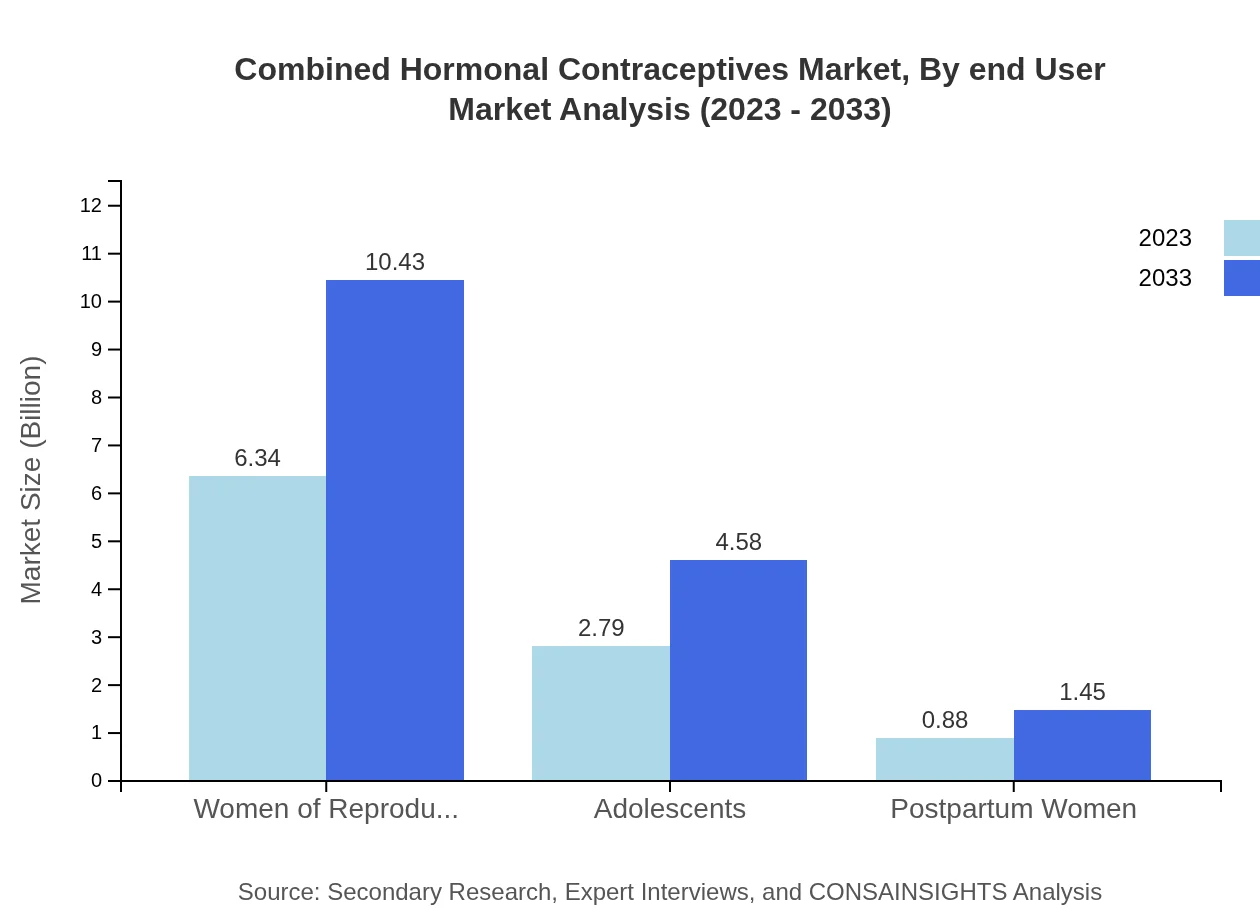
In terms of end-users, women of reproductive age dominate the market with a size of $6.34 billion in 2023, projected to increase to $10.43 billion by 2033. Adolescents comprise a critical segment with a market size of $2.79 billion in 2023, forecasted to grow to $4.58 billion. Postpartum women, while smaller, also show growth from $0.88 billion to $1.45 billion, illustrating the expanding niche for targeted contraceptive solutions.
Combined Hormonal Contraceptives Market Analysis By Ingredient
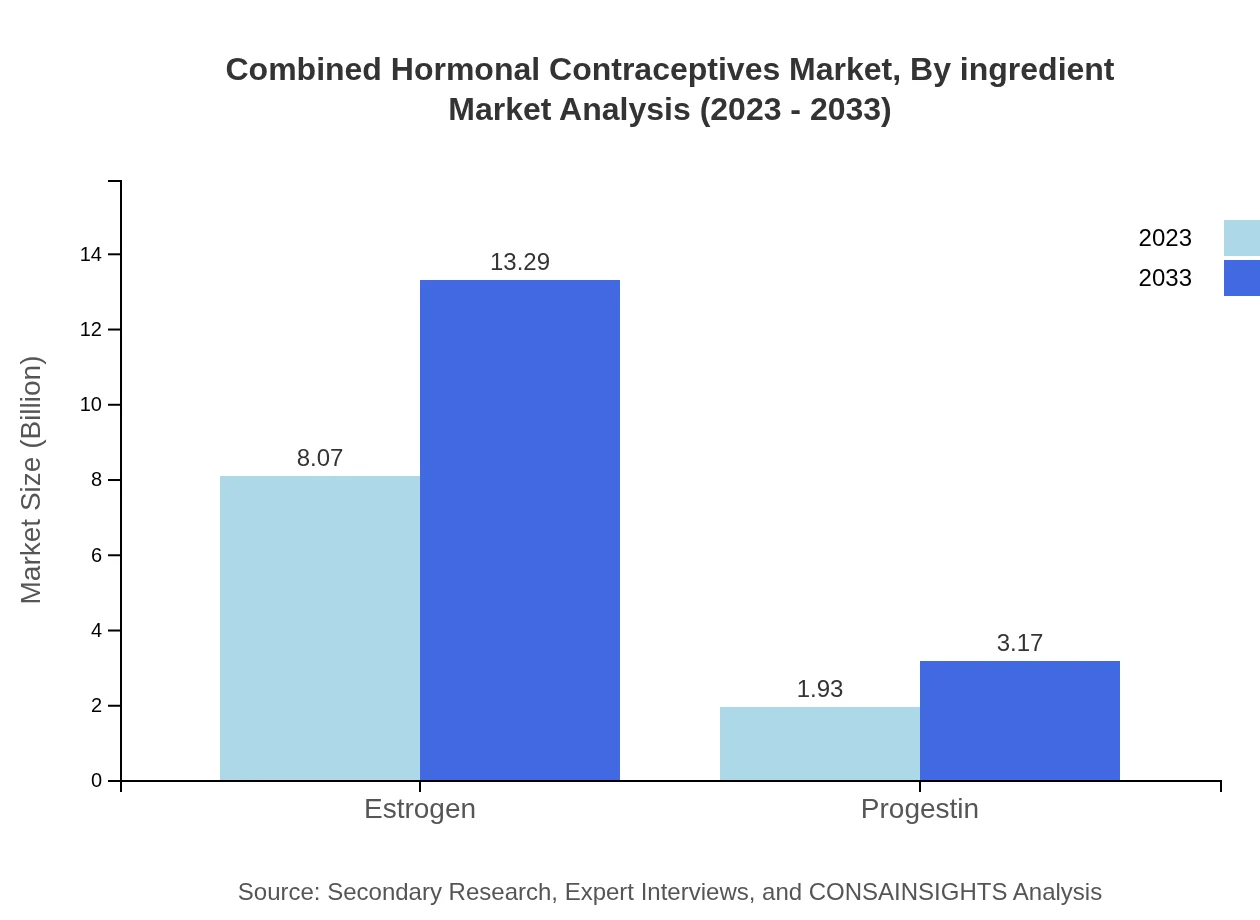
The active ingredient segment is notably influenced by the dominance of Estrogen, which commands a market size of $8.07 billion and is projected to reach $13.29 billion by 2033. Progestin, on the other hand, is smaller, starting at $1.93 billion in 2023 and expected to grow to $3.17 billion. This reflects a strong preference for products combining these hormones for enhanced efficacy.
Combined Hormonal Contraceptives Market Analysis By Product Form
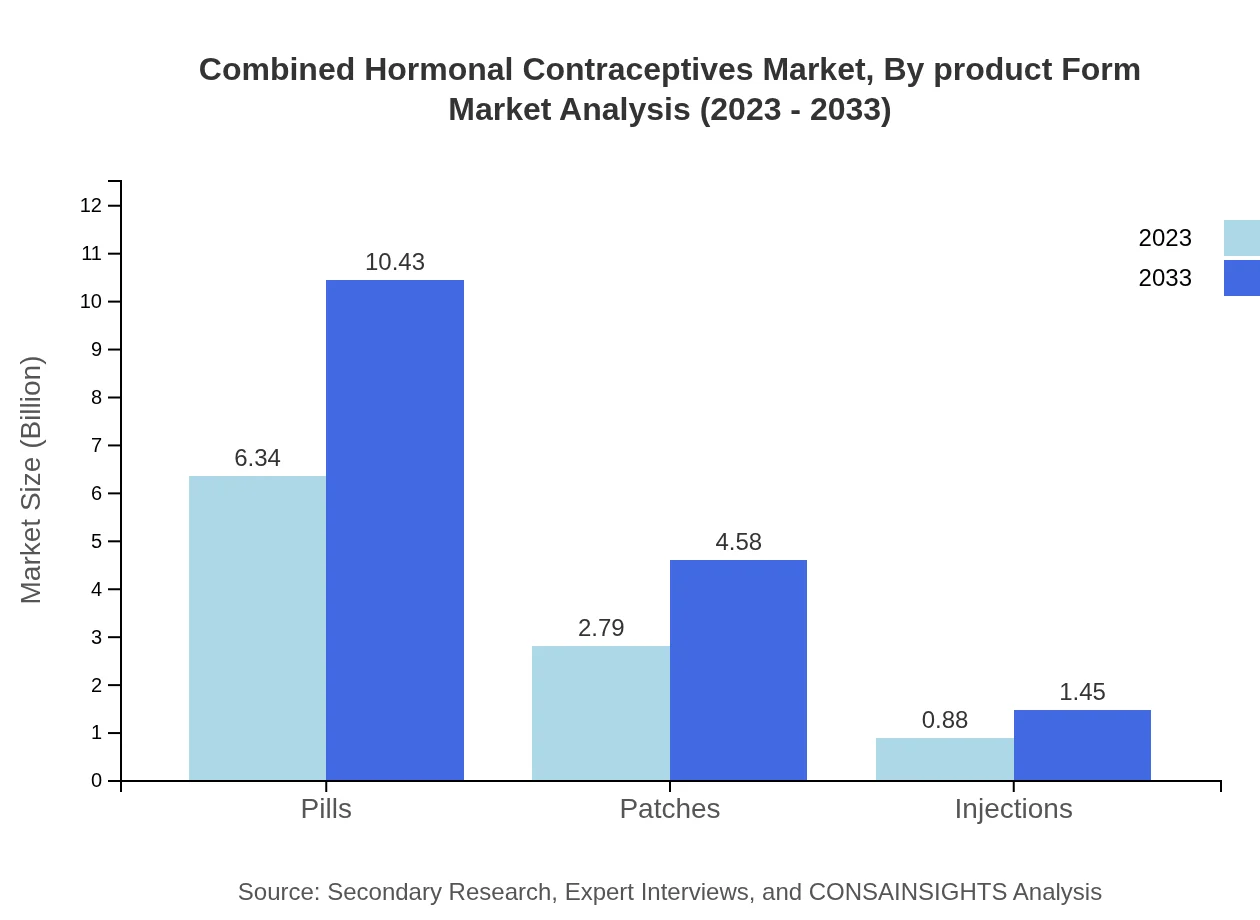
The product form segment reveals that pills are the most widely used, accounting for a market size of $6.34 billion in 2023 and growing to $10.43 billion. Patches follow with $2.79 billion projected to reach $4.58 billion. Injections, while smaller at $0.88 billion, show significant promise for growth with a size of $1.45 billion expected by 2033.
Combined Hormonal Contraceptives Market Analysis By Distribution Channel
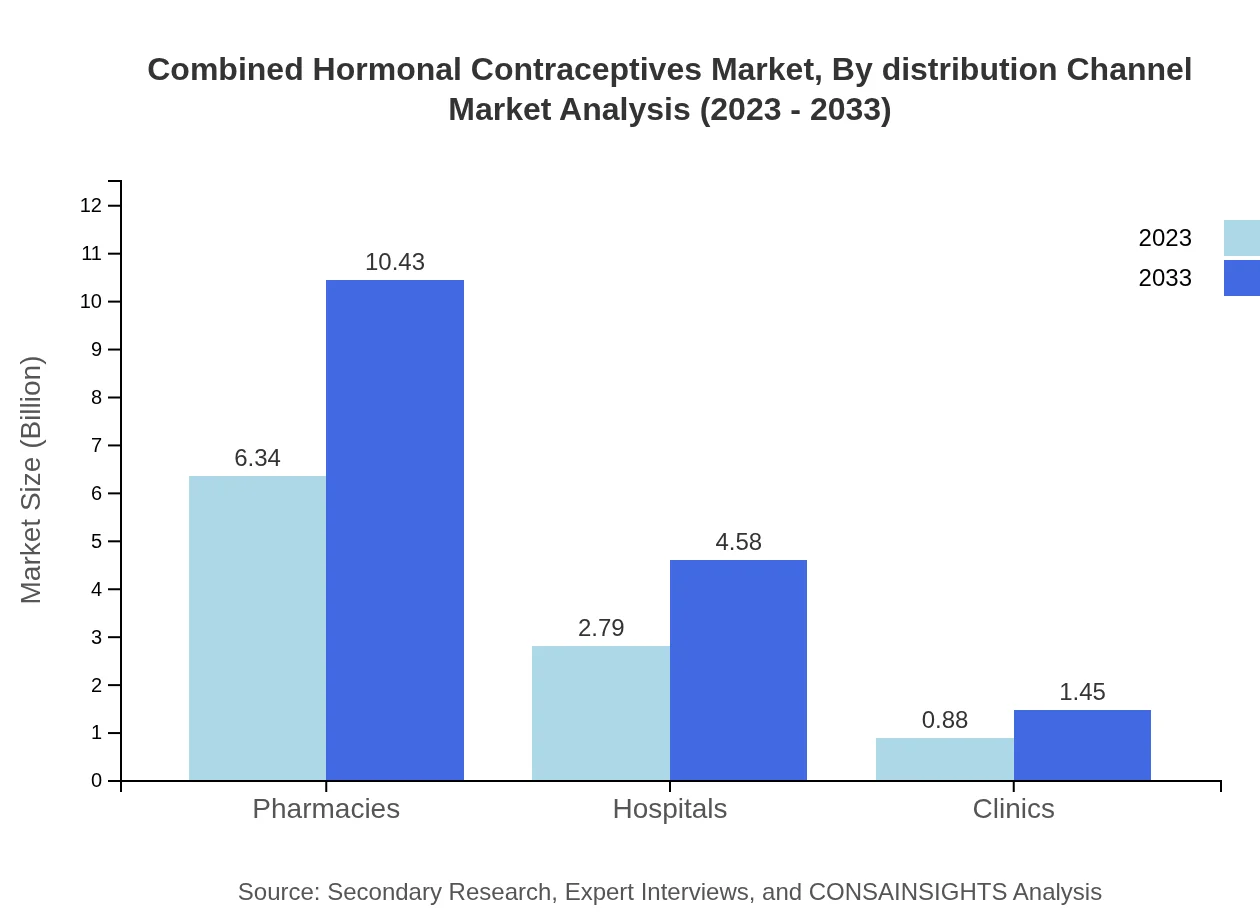
Distribution channels indicate that pharmacies remain the primary source for Combined Hormonal Contraceptives, holding a significant market share of $6.34 billion in 2023 and growing to $10.43 billion. Hospitals and clinics play vital roles as well, with hospitals starting at $2.79 billion and expected to grow to $4.58 billion, while clinics will increase from $0.88 billion to $1.45 billion.
Combined Hormonal Contraceptives Market Trends and Future Forecast
Tell us your focus area and get a customized research report.
Global Market Leaders and Top Companies in Combined Hormonal Contraceptives Industry
Bayer AG:
Bayer AG is a global leader in pharmaceuticals and healthcare with a strong portfolio in contraceptives, noted for its innovative products and commitment to women's health.Johnson & Johnson:
Johnson & Johnson is renowned for its wide range of healthcare products, including hormonal contraceptives, contributing significantly to market growth through research and development.Merck & Co.:
Merck & Co. is a pharmaceutical giant delivering a diverse set of reproductive health solutions, well recognized for its extensive product range and market penetration.Pfizer Inc.:
Pfizer Inc. offers a variety of hormonal contraceptive products backed by rigorous clinical studies and a strong focus on providing quality healthcare solutions.We're grateful to work with incredible clients.








FAQs
What is the market size of Combined Hormonal Contraceptives in 2023?
The market size for Combined Hormonal Contraceptives in 2023 is $10.00 Billion, based on reported valuation for that year.
How big will the Combined Hormonal Contraceptives market be in 2033?
The market is projected to reach $16.46 Billion by 2033, reflecting the forecasted endpoint for the 2023 to 2033 period.
What is CAGR of the Combined Hormonal Contraceptives market for 2023 to 2033?
The Compound Annual Growth Rate for the market during 2023 to 2033 is 5% as stated in the forecast.
Which region is the fastest Growing in the Combined Hormonal Contraceptives market?
Latin America is the fastest-growing region, projected to expand from $0.31 Billion in 2023 to $0.52 Billion in 2033, reflecting an implied 5.31% CAGR over the forecast period.
Which region is the fastest Growing in the forecast?
Latin America is identified as the regional market region with an implied 5.31% CAGR, rising from $0.31 Billion in 2023 to $0.52 Billion in 2033.
Who are the leading companies in this market?
Top companies mentioned include Bayer AG, Johnson & Johnson, Merck & Co., and Pfizer Inc., which influence product development and distribution.
What product formats drive adoption in this market?
Common product formats supporting adoption include pills, patches, and injections, catering to different user needs and adherence considerations.
How is market growth supported by healthcare initiatives?
Growth is supported by women's health initiatives and increased access to family-planning services, which together improve availability and utilization of contraceptives.