

Fetal Activity Monitor Market Report
First published: 11 October 2024 | Last updated: 25 May 2026 | Report Code: fetal-activity-monitor
Fetal Activity Monitor Market — USD 500 million in 2023, Growing to USD 954.16M by 2033 at 6.5% CAGR
This report provides a comprehensive analysis of the Fetal Activity Monitor market, including market size, trends, and forecasts up to 2033. It aims to present valuable insights into market dynamics, segmentation, technology advancements, regional performance, and competitive landscape.
Key Takeaways
- Global market expands from $500.00 Billion in 2023 to $954.16 Billion in 2033 at a 6.5% CAGR.
- North America is largest regional market, while no single fastest-growing region is stated because regional CAGR differences remain within 0.15 percentage points.
- Europe grows from $165.15 Billion in 2023 to $315.16 Billion in 2033, reflecting sustained demand.
- Asia Pacific increases from $84.45 Billion in 2023 to $161.16 Billion in 2033, driven by technology adoption.
- Key vendors include Philips Healthcare, GE Healthcare, Natus Medical Incorporated and Medtronic.
Fetal Activity Monitor Market Report — Executive Summary
North America remains largest market by forecast-period value, while no single fastest-growing region is stated because top regional growth rates are separated by less than 0.15 percentage points. This report outlines market dynamics, structural segmentation and competitive positioning across the fetal activity monitor sector. Market growth is supported by rising prenatal care awareness, adoption of wireless and mobile-enabled monitors, and continuous device innovation. The analysis covers product types such as portable and non-portable monitors plus mobile applications, distribution channels spanning online, retail and hospital pharmacies, and end users including obstetricians, gynecologists, pregnant women and healthcare providers. Regional performance is assessed with detailed 2023 and 2033 values for North America, Europe, Asia Pacific, Latin America and Middle East and Africa. Leading companies profiled include Philips Healthcare, GE Healthcare, Natus Medical Incorporated and Medtronic. The report emphasizes regulatory alignment, clinician acceptance and interoperability as ongoing influences on market expansion through 2033.
Key Growth Drivers
- Increasing prenatal care awareness that elevates demand for routine fetal monitoring in clinical and home settings.
- Technological improvements such as wireless connectivity and mobile applications enhancing usability and remote monitoring.
- Collaboration between manufacturers and healthcare providers promoting device integration into maternal health workflows.
- Rising prevalence of pregnancy-related complications driving demand for comprehensive monitoring solutions.
- Expansion of digital distribution channels enabling wider access through online platforms and medical equipment distributors.
| Metric | Value |
|---|---|
| Study Period | 2023 - 2033 |
| 2023 Market Size | $500.00 Million |
| CAGR (2023-2033) | 6.5% |
| 2033 Market Size | $954.16 Million |
| Top Companies | Philips Healthcare, GE Healthcare, Natus Medical Incorporated, Medtronic |
| Published Date | 11 October 2024 |
| Last Modified Date | 25 May 2026 |
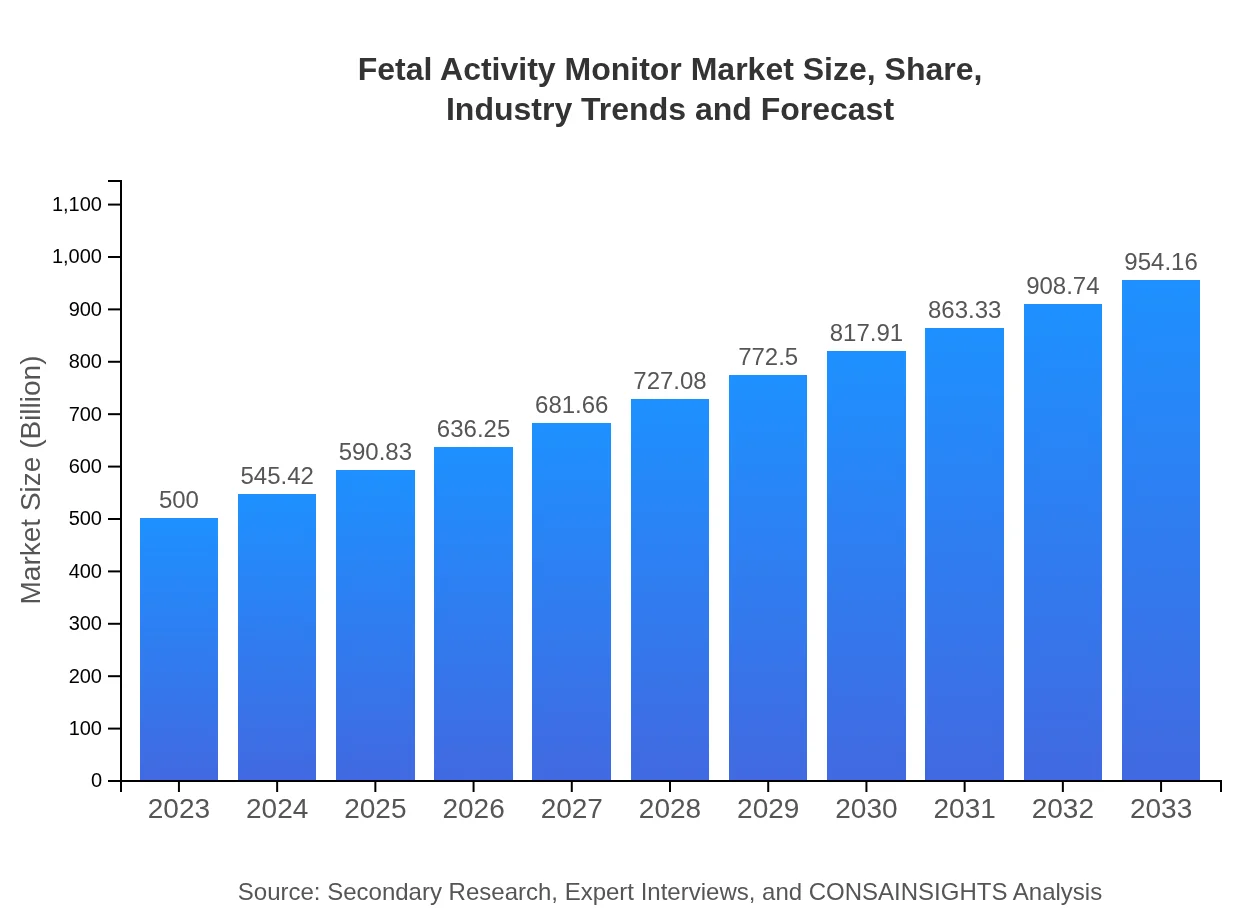
Fetal Activity Monitor Market Overview
Customize Fetal Activity Monitor Market Report market research report
- ✔ Get in-depth analysis of Fetal Activity Monitor market size, growth, and forecasts.
- ✔ Understand Fetal Activity Monitor's regional dynamics and industry-specific trends.
- ✔ Identify potential applications, end-user demand, and growth segments in Fetal Activity Monitor
What is the Market Size & CAGR of Fetal Activity Monitor Market Report market in 2023?
Fetal Activity Monitor Industry Analysis
Fetal Activity Monitor Market Segmentation and Scope
Tell us your focus area and get a customized research report.
Fetal Activity Monitor Market Report Market Analysis Report by Region
Europe Fetal Activity Monitor Market Report:
Europe grows from $165.15 Billion in 2023 to $315.16 Billion in 2033. Regional expansion is supported by increasing prenatal care initiatives, integration of digital monitoring tools in clinical practice, and collaborative efforts between providers and device manufacturers.Asia Pacific Fetal Activity Monitor Market Report:
Asia Pacific grows from $84.45 Billion in 2023 to $161.16 Billion in 2033. Adoption is driven by rising awareness of maternal health, improving access to healthcare technology, and growing use of portable and mobile monitoring devices in both clinics and home care.North America Fetal Activity Monitor Market Report:
North America is largest regional market, rising from $180.2 Billion in 2023 to $343.88 Billion in 2033. Growth is underpinned by strong clinical adoption, established healthcare infrastructure, and uptake of advanced wireless and mobile monitoring solutions across hospitals and home-care settings.South America Fetal Activity Monitor Market Report:
Latin America grows from $4.35 Billion in 2023 to $8.3 Billion in 2033. Market movement reflects expanding prenatal services, greater availability of monitoring devices through distributors and online channels, and increased emphasis on maternal-fetal health.Middle East & Africa Fetal Activity Monitor Market Report:
Middle East and Africa grows from $65.85 Billion in 2023 to $125.66 Billion in 2033. Drivers include enhanced prenatal care programs, growing investments in healthcare infrastructure, and gradual uptake of portable monitoring technologies across diverse care settings.Tell us your focus area and get a customized research report.
Research Methodology
Fetal Activity Monitor Market Analysis By Product Type
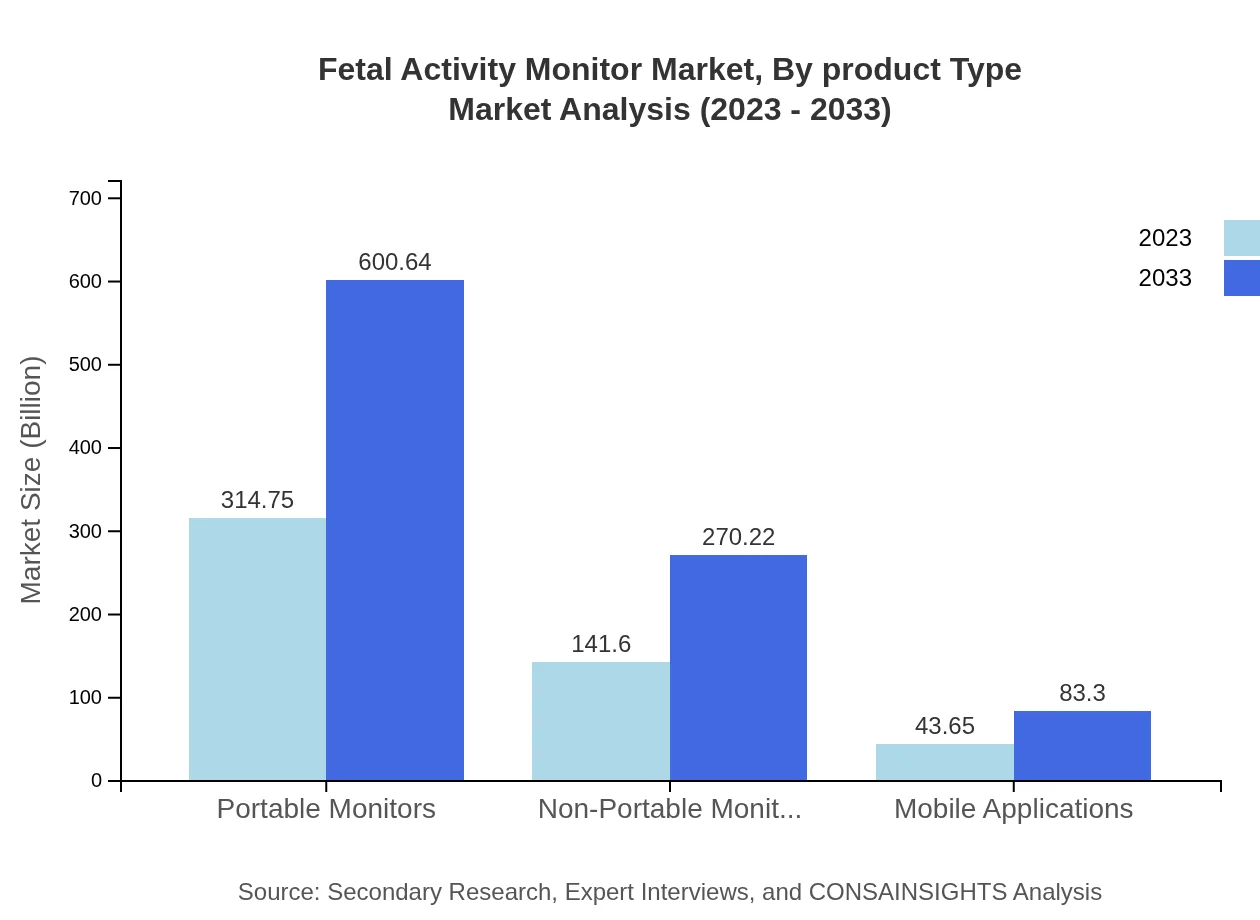
Portable monitors dominate the market due to their ease of use and affordability, accounting for a substantial share of about 62.95% in 2023. Non-portable monitors, while less preferred, are pivotal in clinical settings, holding about 28.32%. The trend towards portable devices is anticipated to shape the market dynamics significantly over the coming years.
Fetal Activity Monitor Market Analysis By Technology
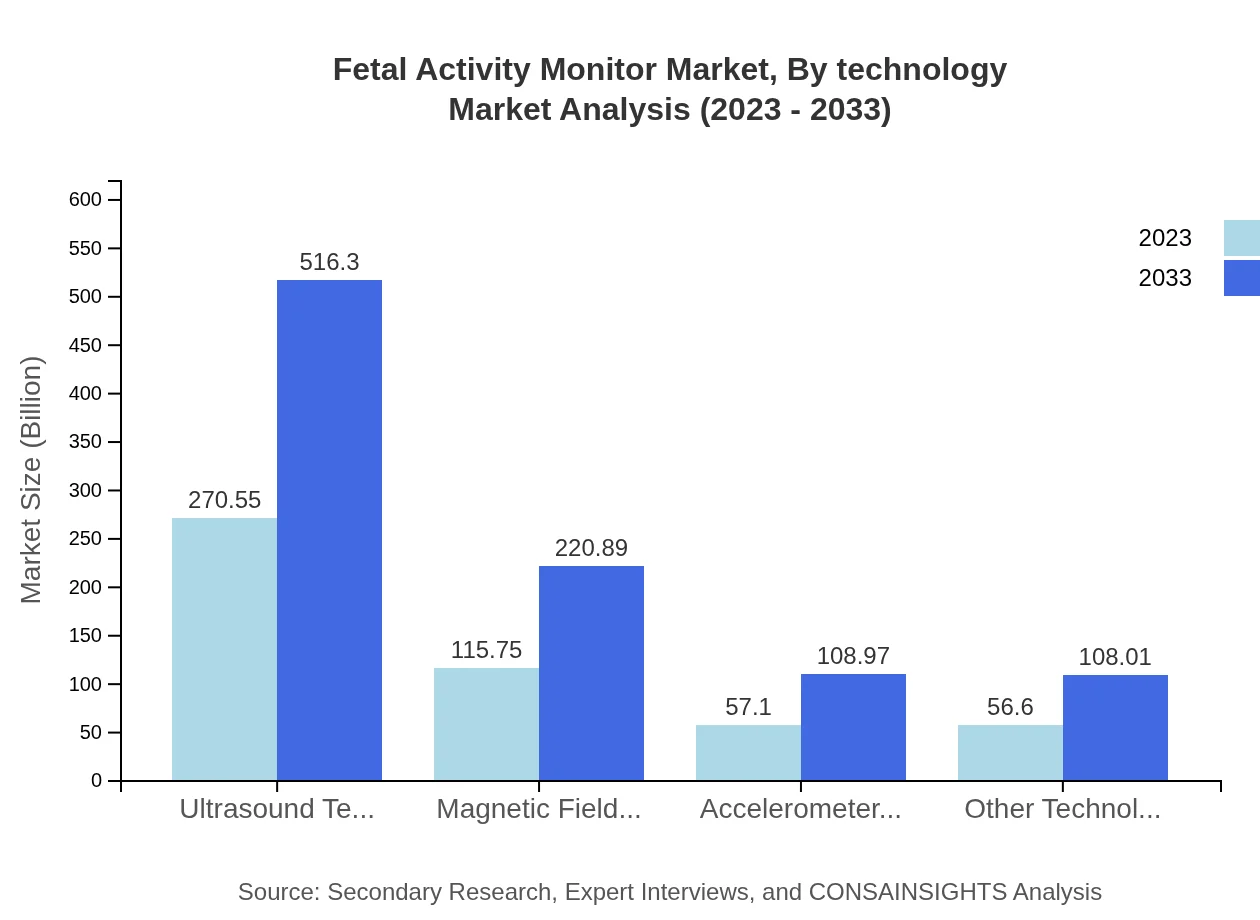
Ultrasound technology remains the leading segment, reflecting a robust market size of $270.55 million in 2023, while Magnetic Field Technology and Accelerometer Technology also show considerable growth. Innovations in ultrasound techniques alongside the integration of AI and real-time monitoring capabilities are expected to create increased demand for these technologies.
Fetal Activity Monitor Market Analysis By Application
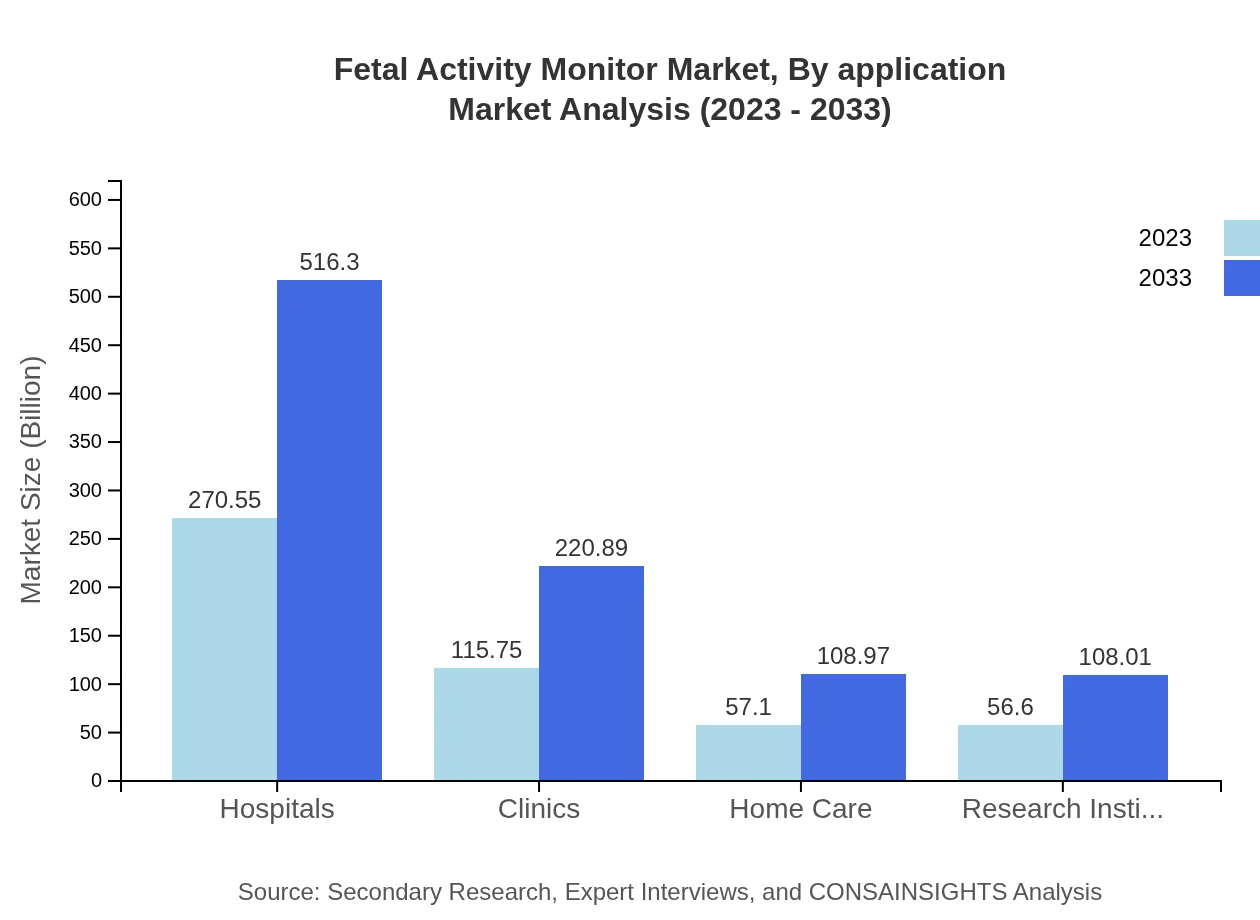
Hospitals are the primary end-user for fetal activity monitors, comprising about 54.11% market share in 2023. Clinics and home care settings are also significant users, reflecting a growing trend towards outpatient monitoring solutions. The demand for user-friendly home monitoring devices is expected to accelerate growth in the home care segment.
Fetal Activity Monitor Market Analysis By End User
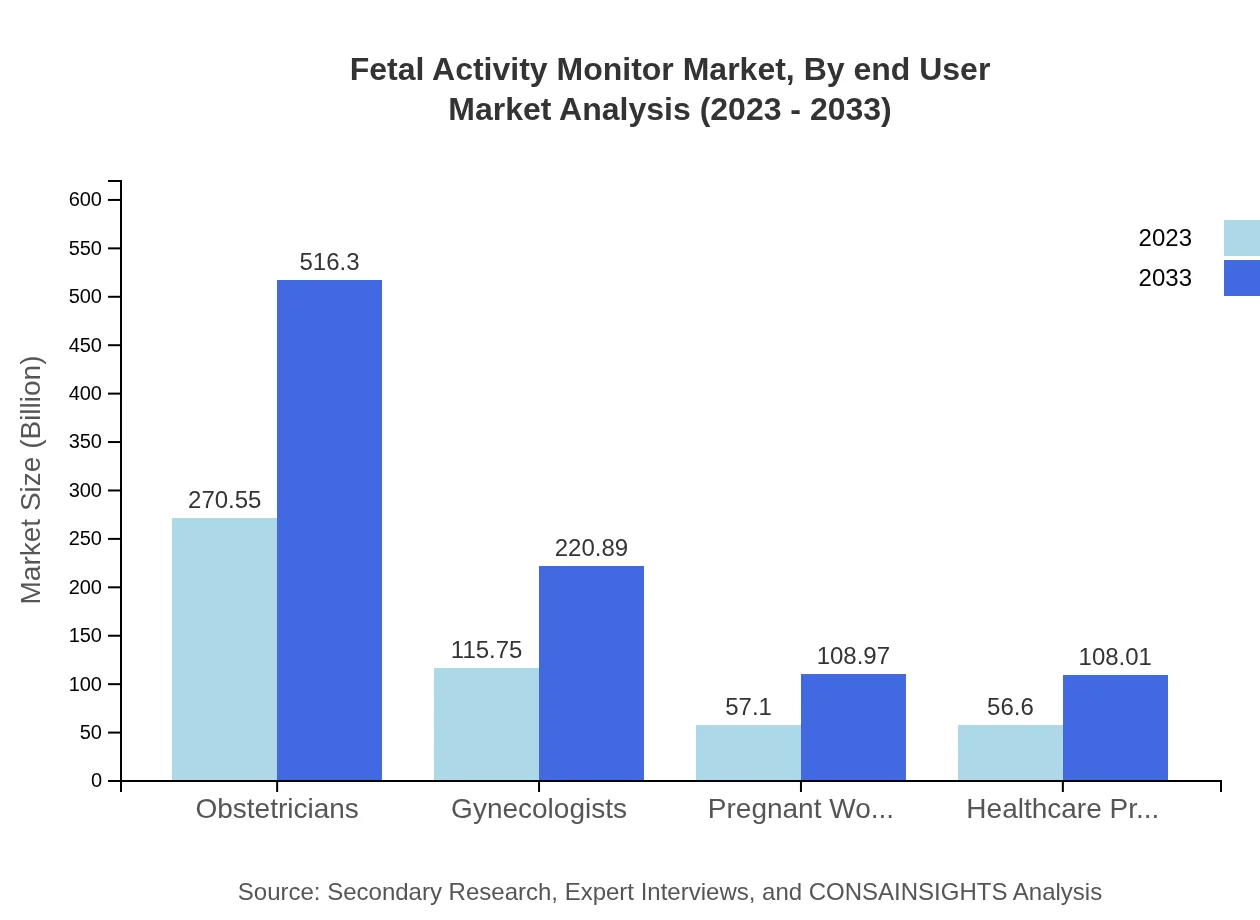
Obstetricians and Gynecologists are key end-users, driven by the need for continuous monitoring during prenatal visits. Obstetricians hold a sizeable market share of 54.11% in 2023, while Gynecologists represent a significant segment with 23.15%. The increasing number of pregnant women globally also fosters a broader use of fetal activity monitors among healthcare providers.
Fetal Activity Monitor Market Analysis By Distribution Channel
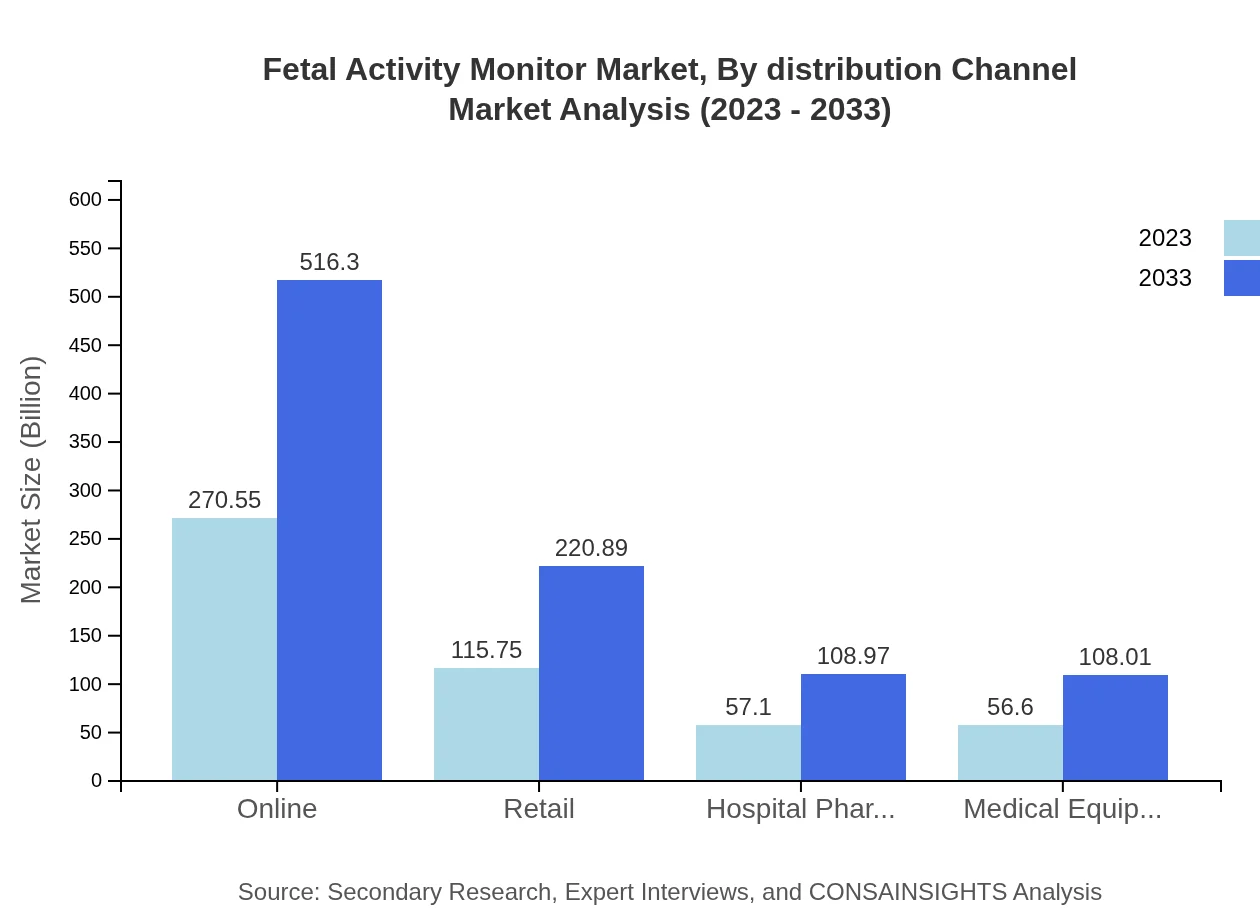
Online distribution channels have seen substantial growth, reflecting consumer preference for convenience and accessibility, accounting for about 54.11% of the market in 2023. Retail and Hospital Pharmacies also contribute significantly. The rise of e-commerce and telehealth solutions is further encouraging shifts towards online purchasing.
Fetal Activity Monitor Market Trends and Future Forecast
Tell us your focus area and get a customized research report.
Global Market Leaders and Top Companies in Fetal Activity Monitor Industry
Philips Healthcare:
Philips Healthcare offers a range of advanced fetal monitoring solutions that integrate cutting-edge technology with user-friendly designs, catering to hospitals and home care settings alike.GE Healthcare:
GE Healthcare provides innovative imaging and monitoring services, focusing on maternal and fetal health, which leads to enhanced pregnancy outcomes through data-driven insights.Natus Medical Incorporated:
Natus Medical is recognized for its focus on newborn and fetal health, providing high-quality monitoring systems that help clinicians make informed decisions based on comprehensive analytics.Medtronic :
Medtronic designs technologies to bring better health outcomes to mothers and babies through a diverse range of fetal and maternal monitoring devices.We're grateful to work with incredible clients.









FAQs
What is the market size in 2023?
The market size in 2023 is $500.00 Billion according to the report's stated 2023 value and baseline for the 2023 to 2033 forecast period.
How big will the market be in 2033?
The market is projected to reach $954.16 Billion by 2033, reflecting growth tracked through the 2023 to 2033 forecast window.
What is CAGR?
The compound annual growth rate (CAGR) for the forecast period 2023 to 2033 is 6.5% as specified in the report data.
Is there a single fastest Growing region in the Fetal Activity Monitor Market Report market?
No single fastest-growing region is stated for the Fetal Activity Monitor Market Report market because the top regional implied CAGR values are within 0.15 percentage points of each other, making the ranking too close to call reliably.
Who are the top companies?
Top companies listed include Philips Healthcare, GE Healthcare, Natus Medical Incorporated and Medtronic as primary market participants.
Why is market growth occurring?
Growth is driven by greater prenatal care awareness, adoption of mobile and wireless monitoring, and increased demand for reliable fetal health assessment tools.
What are common product types?
Product types specified include Portable Monitors, Non-Portable Monitors and Mobile Applications used across clinical and home care settings.
How are products distributed?
Distribution channels include Online sales, Retail outlets, Hospital Pharmacies and Medical Equipment Distributors as noted in the segmentation data.