

Healthcare Workwear Market Report
First published: 11 October 2024 | Last updated: 25 May 2026 | Report Code: healthcare-workwear
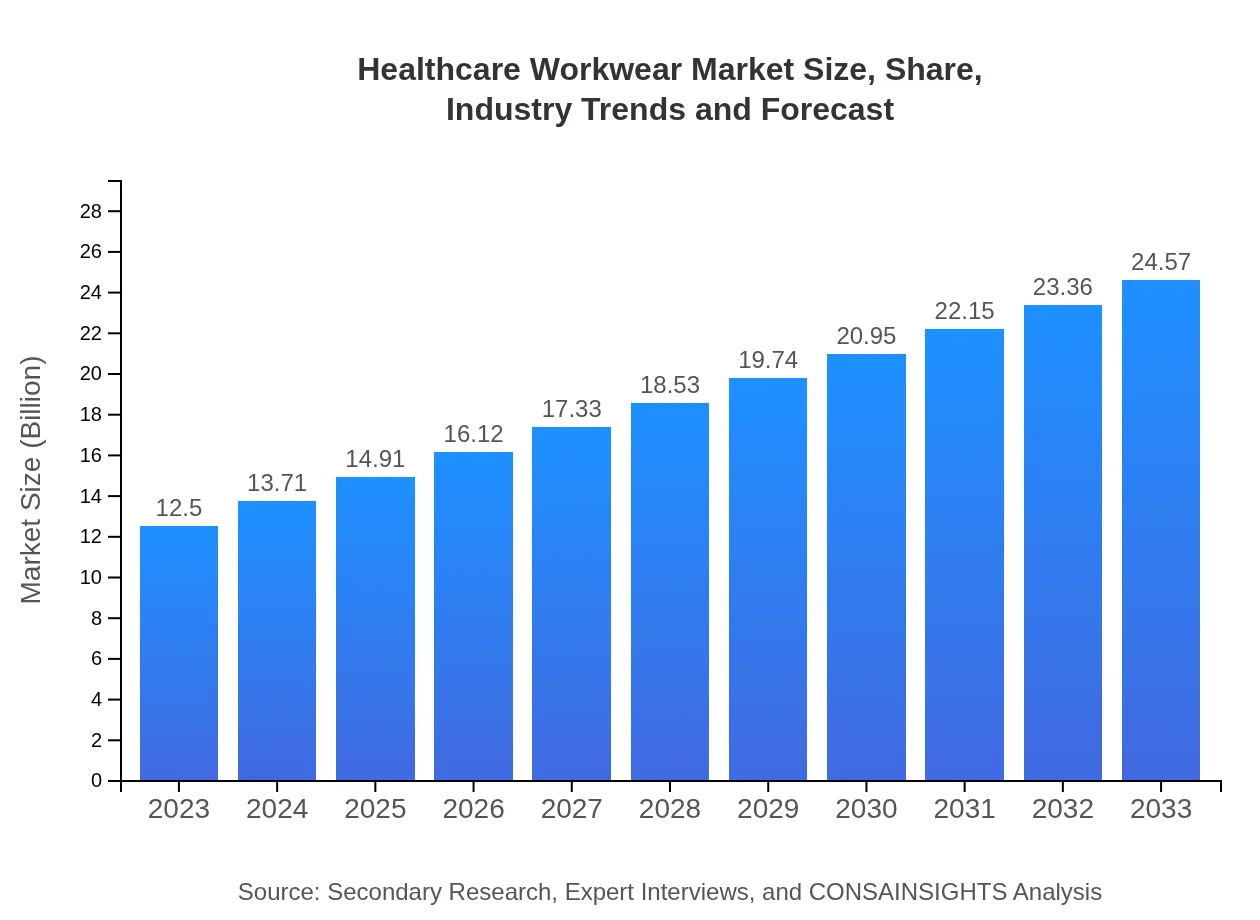
Healthcare Workwear Market — USD 12.5 billion in 2023, Growing to USD 24.57B by 2033 at 6.8% CAGR
This market report provides a comprehensive analysis of the Healthcare Workwear sector, focusing on trends, forecasts, and insights for the period 2023 to 2033, covering market dynamics, size, segmentation, regional analysis, and growth potential.
Key Takeaways
- Global market expands from $12.50 Billion in 2023 to $24.57 Billion in 2033, reflecting a 6.8% CAGR across 2023 to 2033.
- North America is largest regional market, while no single fastest-growing region is stated because regional CAGR differences remain within 0.15 percentage points.
- Material innovation, hygiene awareness, and protective wear adoption are primary growth catalysts supporting market expansion.
- Online and offline distribution channels both contribute to reach, while hospitals, clinics, and long-term care facilities drive end-use demand.
Healthcare Workwear Market Report — Executive Summary
North America remains largest market by forecast-period value, while no single fastest-growing region is stated because top regional growth rates are separated by less than 0.15 percentage points. The market for healthcare workwear is driven by rising hygiene standards, advances in textile technology, and an increased need for protective clothing across care settings. Demand reflects growth in hospitals, clinics, and long-term care facilities, with materials such as cotton, polyester, and blended fabrics underpinning product development. Sustainability initiatives and integration of functional features—antimicrobial finishes and comfort-focused designs—are shaping product roadmaps. Distribution remains split between online and offline channels, while key participants including Medline Industries, Inc., Crocs, Inc., HENRY Schein Inc., and Uline play prominent roles. The report synthesizes primary interviews, company reports, and expert trend analysis to present actionable insights for suppliers, purchasers, and investors evaluating opportunities through 2033.
Key Growth Drivers
- Heightened hygiene and infection-control requirements increasing demand for specialized workwear in clinical settings.
- Fabric innovation delivering improved durability, antimicrobial properties, and wearer comfort, expanding product adoption.
- Policy and regulatory focus on protective attire prompting procurement upgrades across hospitals and long-term care facilities.
- Growing preference for sustainable textiles encouraging manufacturers to introduce eco-friendly material blends and processes.
- Expansion of e-commerce channels improving accessibility and procurement efficiency for institutions and individual professionals.
| Metric | Value |
|---|---|
| Study Period | 2023 - 2033 |
| 2023 Market Size | $12.50 Billion |
| CAGR (2023-2033) | 6.8% |
| 2033 Market Size | $24.57 Billion |
| Top Companies | Medline Industries, Inc., Crocs, Inc., HENRY Schein Inc., Uline |
| Published Date | 11 October 2024 |
| Last Modified Date | 25 May 2026 |
Healthcare Workwear Market Overview
Customize Healthcare Workwear Market Report market research report
- ✔ Get in-depth analysis of Healthcare Workwear market size, growth, and forecasts.
- ✔ Understand Healthcare Workwear's regional dynamics and industry-specific trends.
- ✔ Identify potential applications, end-user demand, and growth segments in Healthcare Workwear
What is the Market Size & CAGR of Healthcare Workwear Market Report market in 2023?
Healthcare Workwear Industry Analysis
Healthcare Workwear Market Segmentation and Scope
Tell us your focus area and get a customized research report.
Healthcare Workwear Market Report Market Analysis Report by Region
Europe Healthcare Workwear Market Report:
Europe grows from $3.33 Billion in 2023 to $6.55 Billion in 2033. Regional expansion is supported by stricter hygiene protocols, sustainability initiatives in textile manufacturing, and adoption of functional fabrics in clinical uniforms.Asia Pacific Healthcare Workwear Market Report:
Asia Pacific grows from $2.4 Billion in 2023 to $4.72 Billion in 2033. Growth stems from expanding healthcare infrastructure, heightened awareness of infection control, and rising uptake of performance fabrics across care settings.North America Healthcare Workwear Market Report:
North America is largest regional market, rising from $4.78 Billion in 2023 to $9.39 Billion in 2033. Demand is driven by institutional procurement in hospitals and long-term care, emphasis on advanced textile technologies, and regulatory focus on protective attire.South America Healthcare Workwear Market Report:
Latin America grows from $0.96 Billion in 2023 to $1.9 Billion in 2033. Market progression reflects greater healthcare service penetration, improving procurement for hospitals and clinics, and growing supplier presence in the region.Middle East & Africa Healthcare Workwear Market Report:
Middle East and Africa grows from $1.02 Billion in 2023 to $2.01 Billion in 2033. Local drivers include investments in healthcare capacity, increased emphasis on protective wear, and adoption of modern materials and supply-chain channels.Tell us your focus area and get a customized research report.
Research Methodology
Healthcare Workwear Market Analysis By Product Type
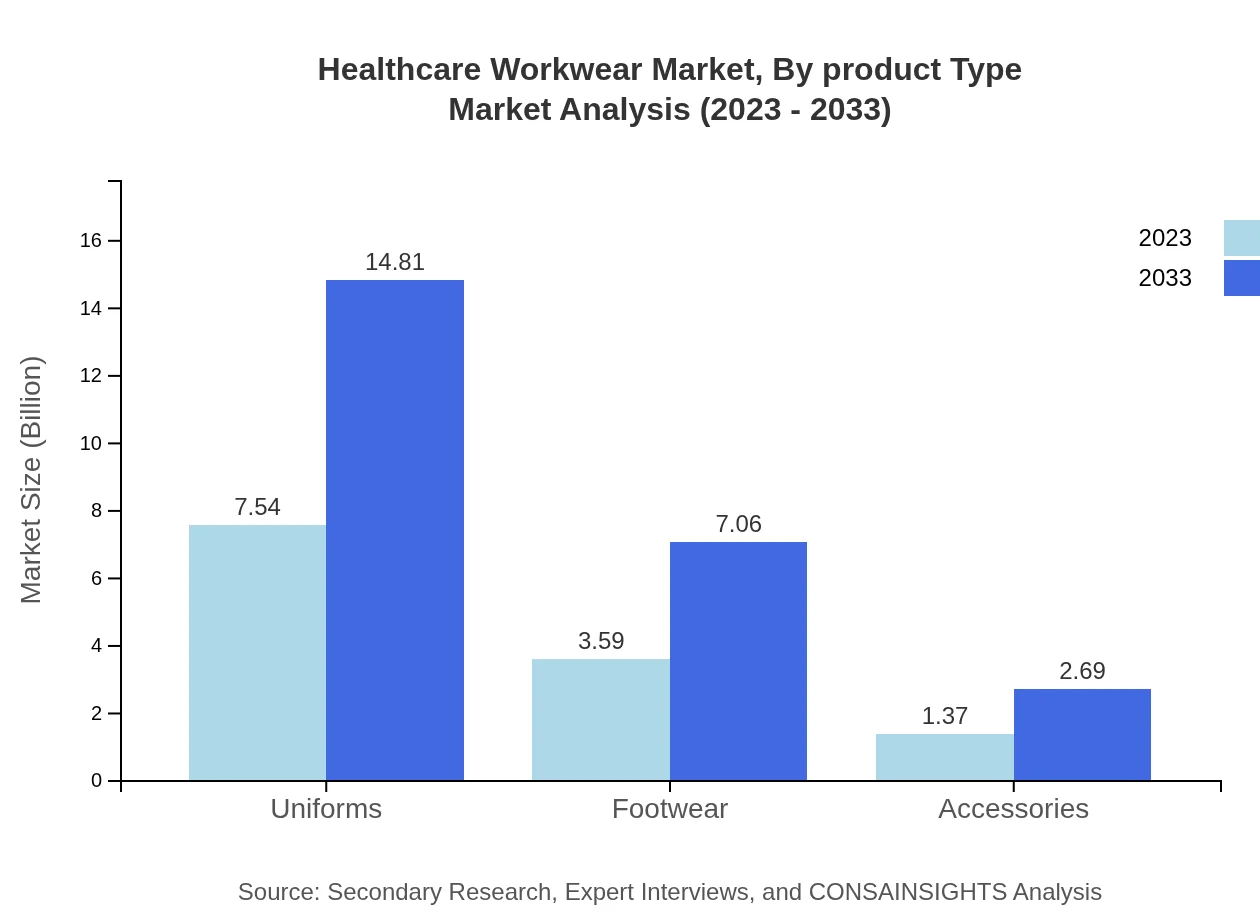
The product types in the Healthcare Workwear market include uniforms, footwear, and protective wear. Uniforms, including scrubs and lab coats, dominate the market, with a significant share of 60.29% in 2023, projected to maintain this share through 2033. Protective wear, critical for infection control, has a strong market presence, and its size is expected to grow rapidly, making up 87.28% of the market by 2033.
Healthcare Workwear Market Analysis By Material
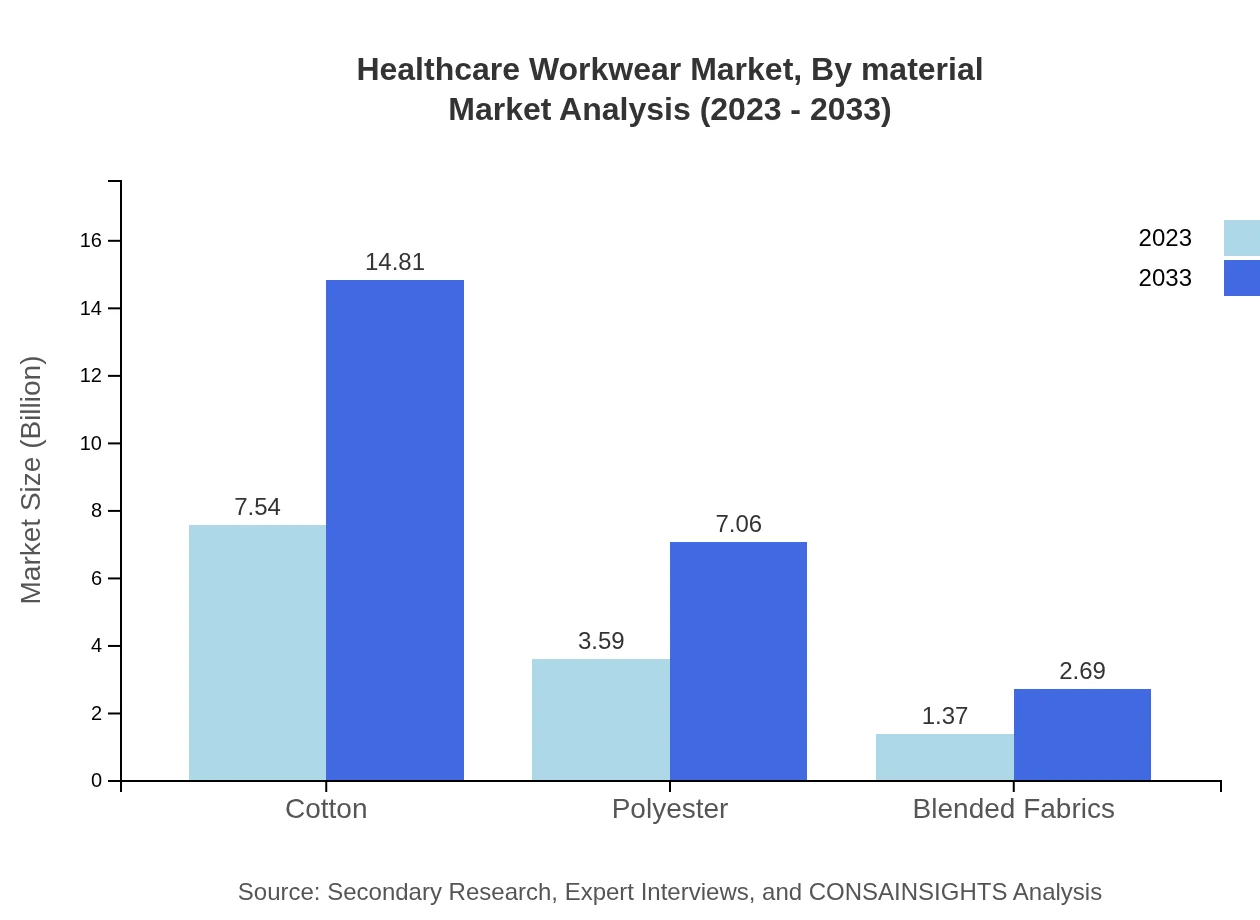
Market segmentation by material highlights cotton as the leading choice, accounting for 60.29% of the market share in 2023 and expected to remain dominant in 2033. Polyester and blended fabrics follow, being increasingly favored for their durability and performance in demanding healthcare environments.
Healthcare Workwear Market Analysis By End Use
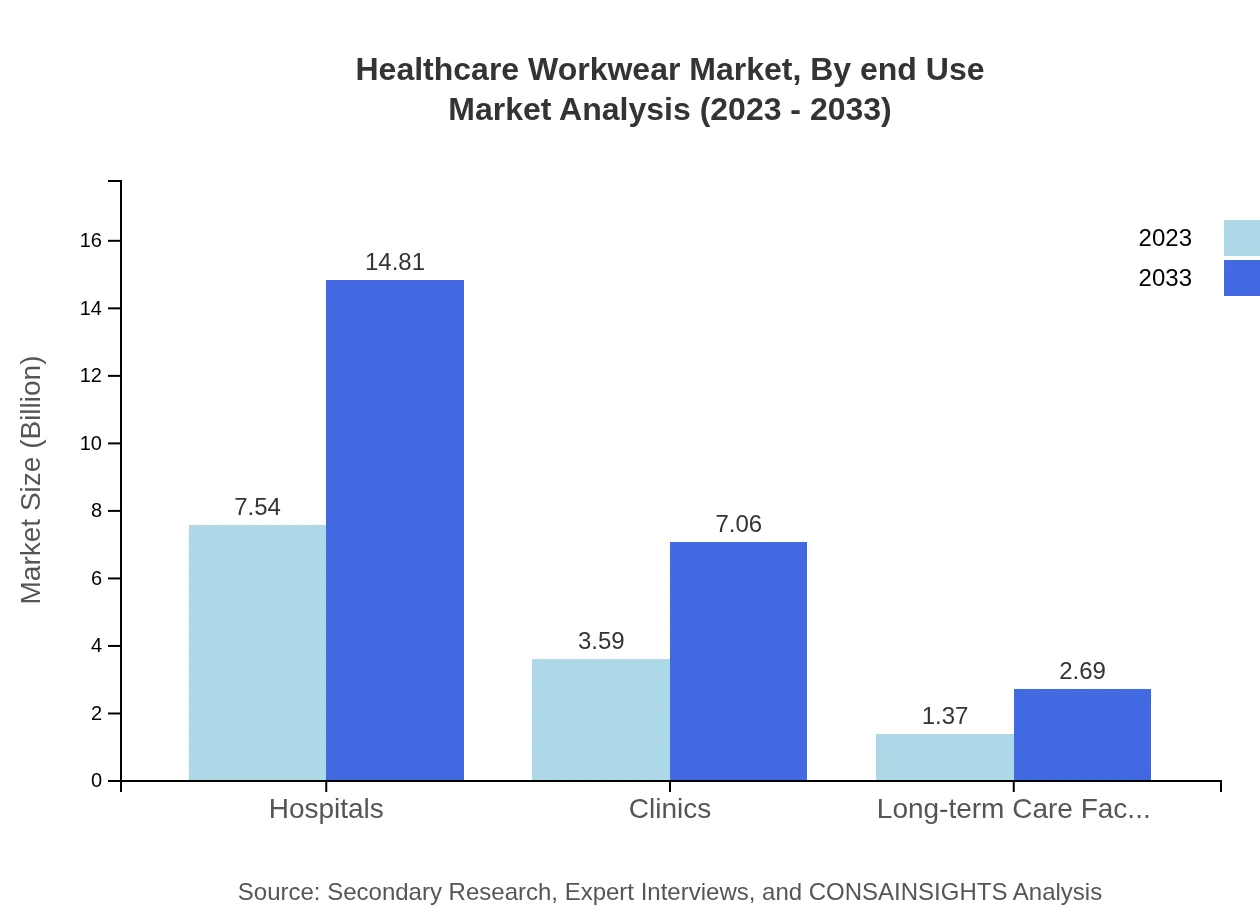
Hospitals account for the largest segment in Healthcare Workwear, with a market size of $7.54 billion in 2023, expected to nearly double by 2033. Clinics and long-term care facilities also represent substantial segments, indicating an overall expansion in healthcare service demand.
Healthcare Workwear Market Analysis By Functionality
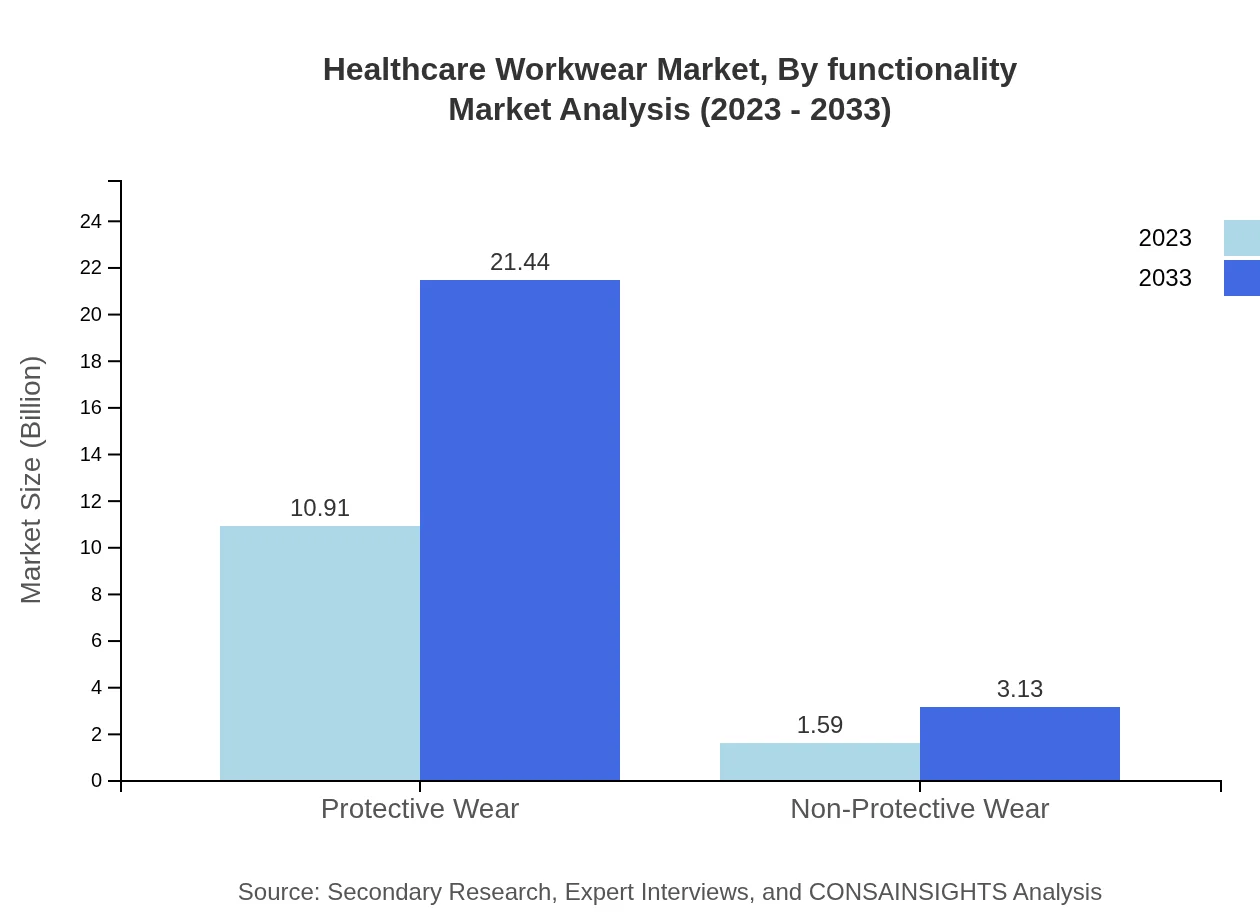
Functionality is a key driver in the market, with products designed specifically for protective wear gaining popularity due to the increasing focus on safety and hygiene in healthcare settings. The utility of workwear extends to significant features such as antimicrobial properties, comfort, and ease of movement.
Healthcare Workwear Market Analysis By Distribution Channel
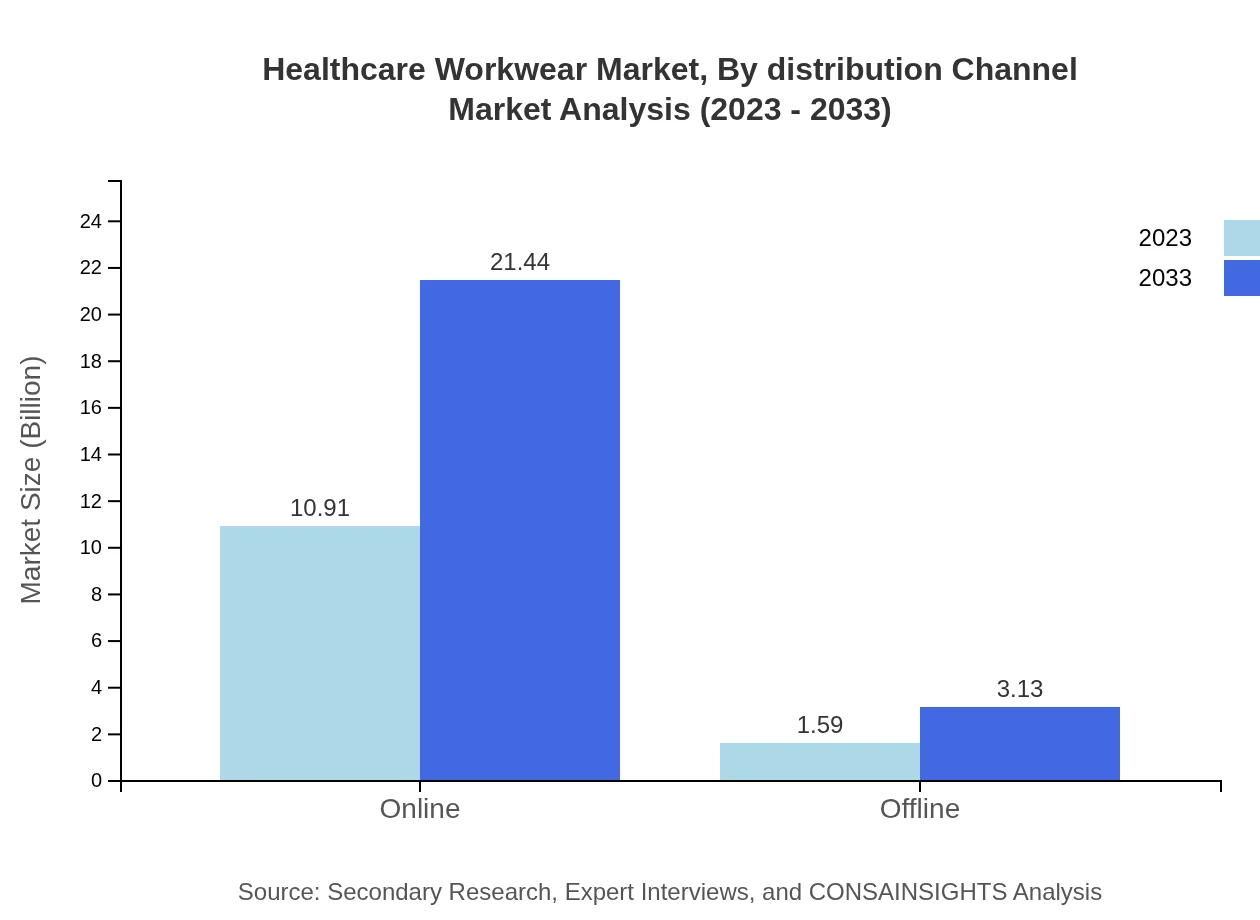
The distribution channels of the Healthcare Workwear market include online and offline segments. Online sales are dominating the market with an 87.28% share in 2023, reflecting consumer preference for the convenience of e-commerce, while offline channels remain crucial in regions with less internet penetration.
Healthcare Workwear Market Trends and Future Forecast
Tell us your focus area and get a customized research report.
Global Market Leaders and Top Companies in Healthcare Workwear Industry
Medline Industries, Inc.:
A leading supplier of healthcare products, Medline is known for its comprehensive range of medical textiles, including scrubs and protective wear tailored to meet healthcare professionals' needs.Crocs, Inc.:
Famous for their comfortable clogs, Crocs also leads in manufacturing footwear ideal for healthcare settings, focusing on comfort, slip-resistance, and durability.HENRY Schein Inc.:
This global provider of health care products and services is also a key player in healthcare workwear, offering a range of medical uniforms and protective clothing.Uline:
Uline is known for its extensive offerings in all types of industrial and commercial supplies, including a robust selection of healthcare workwear and safety gear.We're grateful to work with incredible clients.









FAQs
What is the market size of the Healthcare Workwear Market Report in 2023?
The market size in 2023 is $12.50 Billion, reflecting baseline demand across hospitals, clinics, long-term care, footwear, and accessories segments.
How big will the market be in 2033?
The market is projected to reach $24.57 Billion in 2033, based on ongoing demand drivers and material and distribution trends over the forecast period.
What is CAGR for the forecast period?
The compound annual growth rate for the 2023 to 2033 forecast period is 6.8%, reflecting steady expansion driven by multiple industry trends.
Is there a single fastest Growing region in the Healthcare Workwear Market Report market?
No single fastest-growing region is stated for the Healthcare Workwear Market Report market because the top regional implied CAGR values are within 0.15 percentage points of each other, making the ranking too close to call reliably.
Which companies are prominent in the market?
Top companies noted include Medline Industries, Inc., Crocs, Inc., HENRY Schein Inc., and Uline, representing manufacturers and distributors across product categories.
What end Use segments drive demand?
Hospitals, clinics, and long-term care facilities are primary end-use segments, accounting for consistent procurement of uniforms, footwear, and protective wear.
How do distribution channels affect market reach?
Both online and offline channels expand market access: online platforms boost convenience while traditional distribution supports institutional purchasing and bulk orders.
What materials are commonly used in healthcare workwear?
Common materials include cotton, polyester, and blended fabrics, chosen for comfort, durability, and performance features relevant to healthcare environments.
Why are protective features important?
Protective features, including antimicrobial finishes and barrier properties, address infection-control priorities and regulatory expectations in clinical settings.
Who provides the market insights for this report?
Insights derive from primary interviews with industry experts, company reports, and triangulated secondary research validated by internal analysts.