

Nasal Drug Delivery Market Report
First published: 08 October 2024 | Last updated: 25 May 2026 | Report Code: nasal-drug-delivery
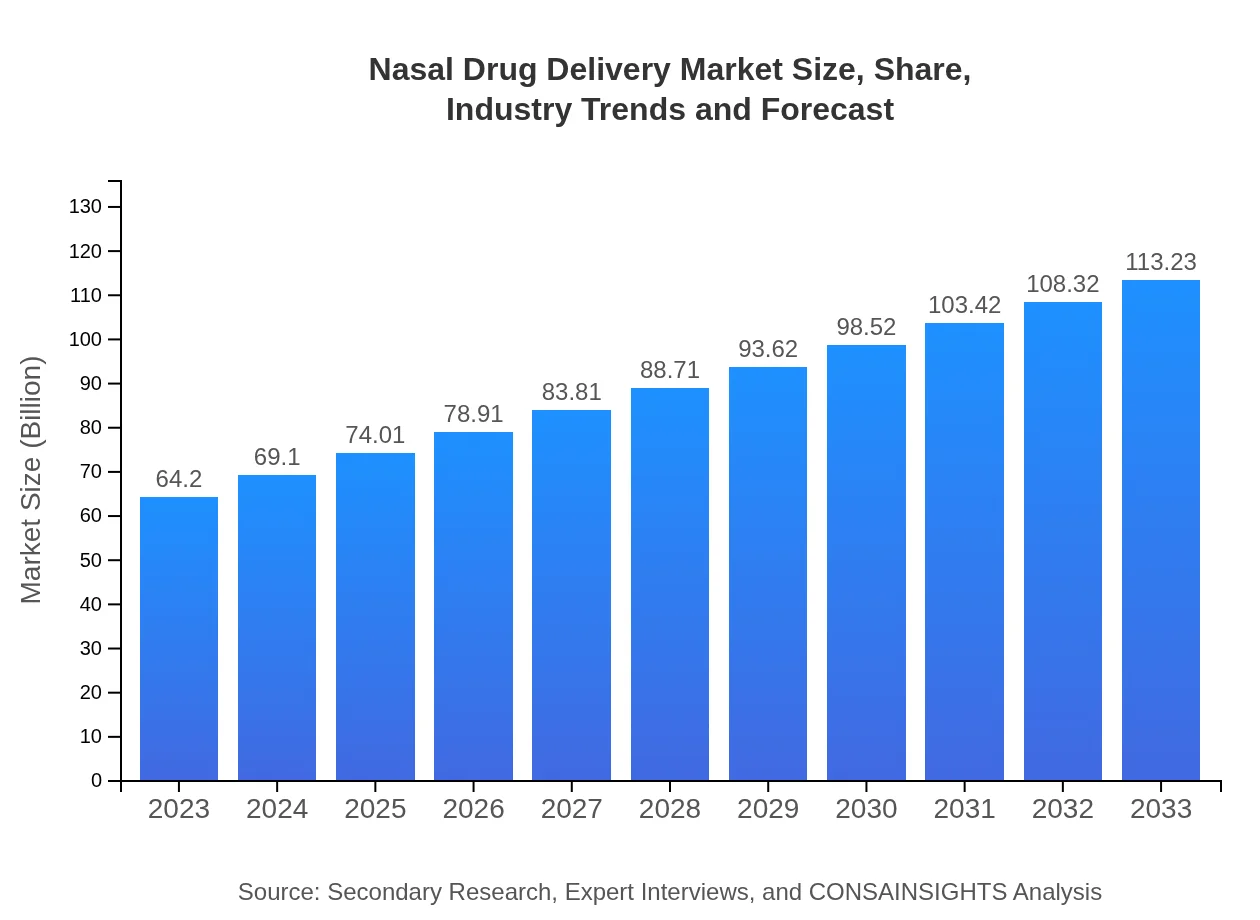
Nasal Drug Delivery Market — USD 64.2 billion in 2023, Growing to USD 113.23B by 2033 at 5.7% CAGR
This report provides an in-depth analysis of the Nasal Drug Delivery market, covering market size, growth trends, regional insights, and competitive dynamics from 2023 to 2033. The insights include market segmentation by applications, devices, and end-users, along with technology advancements influencing the sector.
Key Takeaways
- Global market projected from $64.20 Billion (2023) to $113.23 Billion (2033) at a 5.7% CAGR.
- North America is largest regional market, while no single fastest-growing region is stated because regional CAGR differences remain within 0.15 percentage points.
- North America leads regional value, rising from $23.5 Billion in 2023 to $41.45 Billion in 2033.
- Regional growth supported by improved formulations, device innovation, and rising respiratory conditions.
- Leading firms include Boehringer Ingelheim, GlaxoSmithKline, AstraZeneca, Novartis, and Pfizer.
- Market segmentation spans formulation, application, device type, and end-user settings.
Nasal Drug Delivery Market Report — Executive Summary
North America remains largest market by forecast-period value, while no single fastest-growing region is stated because top regional growth rates are separated by less than 0.15 percentage points. The nasal drug delivery market is expanding due to advantages such as rapid absorption, patient convenience, and growing demand for non-invasive therapeutic options. Between 2023 and 2033 the market increases from $64.20 Billion to $113.23 Billion at a 5.7% CAGR. Key trends include advances in device design, novel formulations for biologics, and heightened interest in patient-centered delivery systems. The market structure covers formulation types (solutions, suspensions, sprays), applications (analgesics, vaccines, corticosteroids, others), device categories, and end-users including hospitals and home care. Competitive activity is driven by research and development investments from established pharmaceutical companies listed in the report. Regulatory complexity and development costs are persistent constraints, while technology integration and growing prevalence of respiratory and chronic disorders support ongoing expansion.
Key Growth Drivers
- Preference for non-invasive administration supporting faster systemic absorption and patient adherence.
- Innovations in device engineering improving dose accuracy and user experience.
- Development of nasally delivered biologics and advanced formulations expanding therapeutic scope.
- Rising incidence of respiratory and chronic conditions increasing demand for nasal therapies.
- Greater healthcare spending and focus on outpatient and home care treatment settings.
| Metric | Value |
|---|---|
| Study Period | 2023 - 2033 |
| 2023 Market Size | $64.20 Billion |
| CAGR (2023-2033) | 5.7% |
| 2033 Market Size | $113.23 Billion |
| Top Companies | Boehringer Ingelheim, GlaxoSmithKline, AstraZeneca, Novartis, Pfizer |
| Published Date | 08 October 2024 |
| Last Modified Date | 25 May 2026 |
Nasal Drug Delivery Market Overview
Customize Nasal Drug Delivery Market Report market research report
- ✔ Get in-depth analysis of Nasal Drug Delivery market size, growth, and forecasts.
- ✔ Understand Nasal Drug Delivery's regional dynamics and industry-specific trends.
- ✔ Identify potential applications, end-user demand, and growth segments in Nasal Drug Delivery
What is the Market Size & CAGR of Nasal Drug Delivery Market Report market in 2023?
Nasal Drug Delivery Industry Analysis
Nasal Drug Delivery Market Segmentation and Scope
Tell us your focus area and get a customized research report.
Nasal Drug Delivery Market Report Market Analysis Report by Region
Europe Nasal Drug Delivery Market Report:
Europe grows from $15.74 Billion in 2023 to $27.76 Billion in 2033. The regional expansion is supported by established pharmaceutical manufacturing, growing demand for non-invasive therapies, and investments in device and formulation development.Asia Pacific Nasal Drug Delivery Market Report:
Asia Pacific grows from $12.29 Billion in 2023 to $21.68 Billion in 2033. Regional drivers include expanding healthcare access, increasing prevalence of respiratory conditions, and rising interest in outpatient and home-administered treatments.North America Nasal Drug Delivery Market Report:
North America is largest regional market, rising from $23.5 Billion in 2023 to $41.45 Billion in 2033. Growth in this region is driven by advanced healthcare infrastructure, significant R&D investment by pharmaceutical firms, and strong adoption of innovative delivery devices and formulations.South America Nasal Drug Delivery Market Report:
Latin America grows from $4.43 Billion in 2023 to $7.81 Billion in 2033. Market progress is linked to improving healthcare expenditure, greater access to treatment options, and adoption of simpler drug delivery methods suited for outpatient care.Middle East & Africa Nasal Drug Delivery Market Report:
Middle East and Africa grows from $8.23 Billion in 2023 to $14.52 Billion in 2033. Growth factors include increased healthcare investments, attention to non-invasive therapies, and demand driven by respiratory and chronic disease management.Tell us your focus area and get a customized research report.
Research Methodology
Nasal Drug Delivery Market Analysis By Formulation
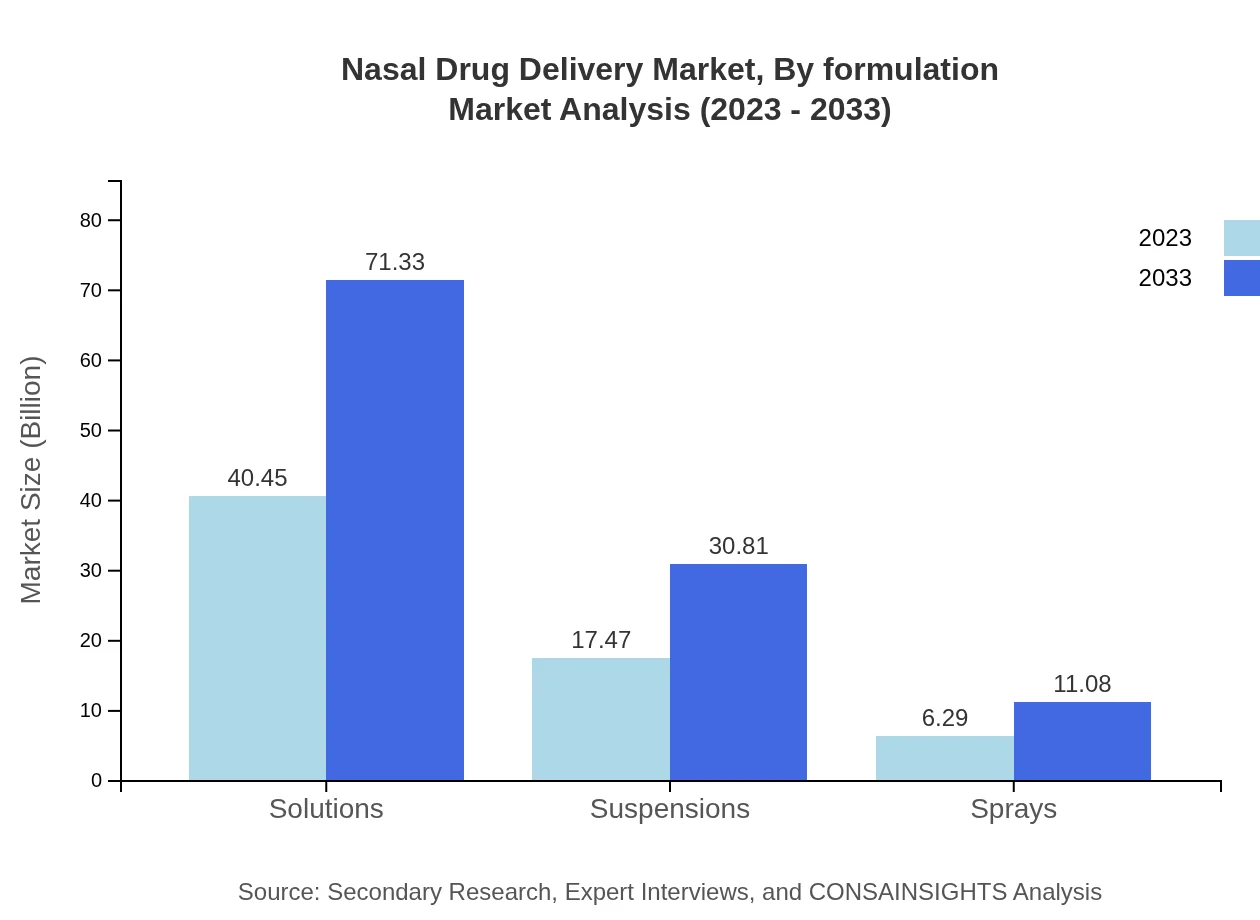
The market for nasal drug delivery by formulation includes solutions, suspensions, and sprays. In 2023, solutions contribute significantly to the market size, valued at USD 40.45 billion, projected to grow to USD 71.33 billion by 2033. This reflects the preference for solutions among both patients and healthcare providers due to their rapid onset of action. Suspensions and sprays also maintain substantial shares and are critical in treating various conditions.
Nasal Drug Delivery Market Analysis By Application
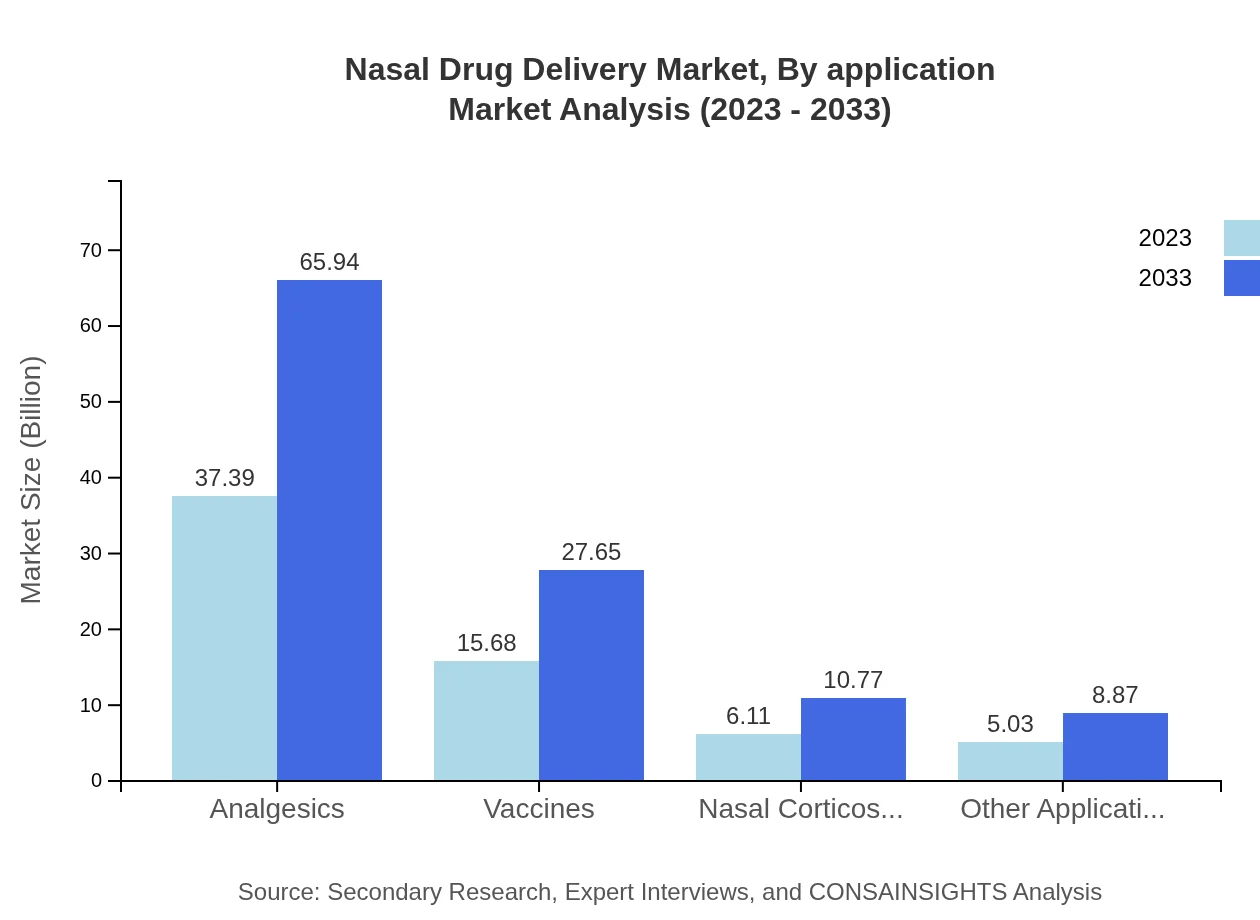
The application of nasal drug delivery extends across analgesics, vaccines, corticosteroids, and other applications. The analgesics segment held a significant market share at USD 37.39 billion in 2023, expected to reach USD 65.94 billion by 2033. Vaccines denote substantial potential growth as they represent a crucial delivery method, especially in universal vaccination campaigns. Additionally, corticosteroids play a vital role in managing allergies and rhinitis, with significant growth expected.
Nasal Drug Delivery Market Analysis By Device
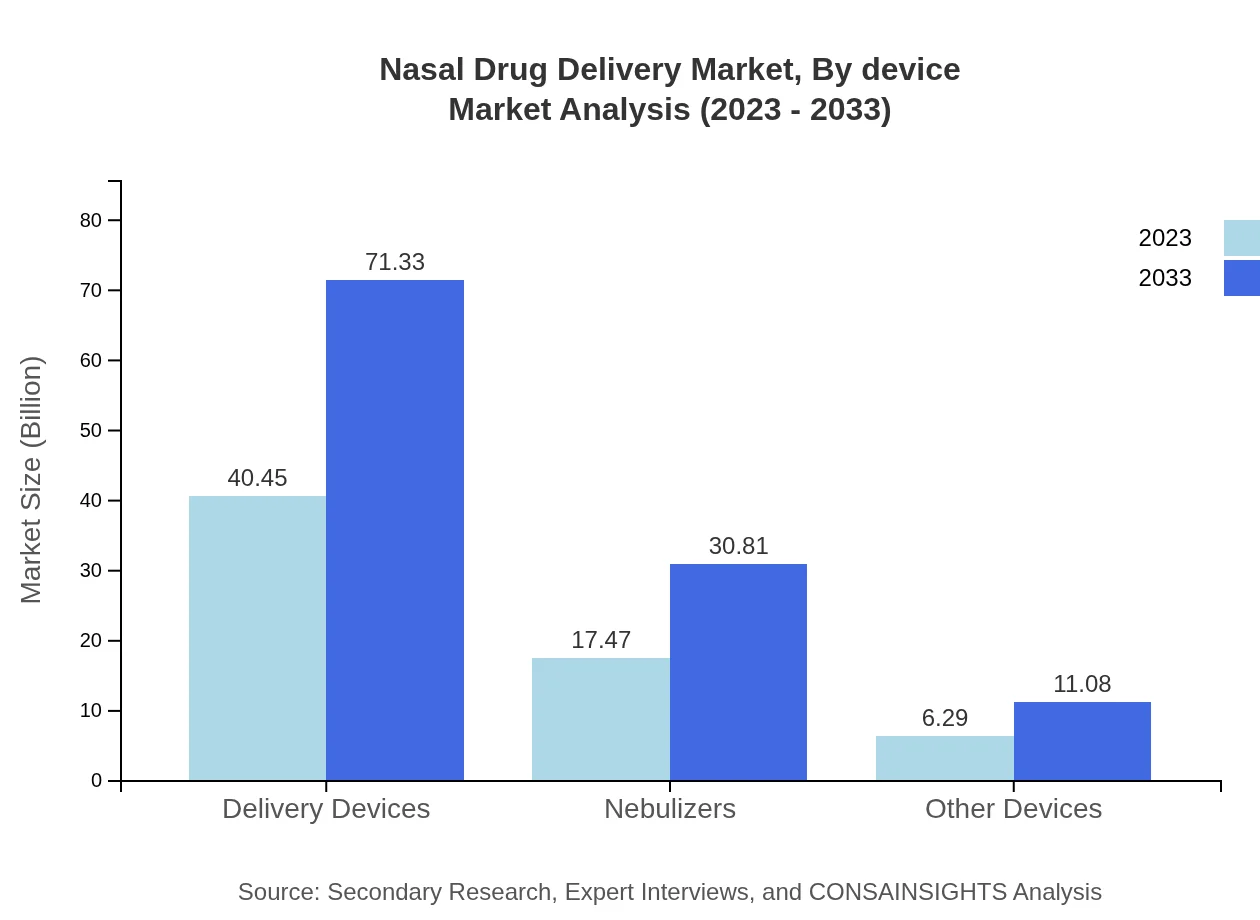
This segment highlights various devices used in nasal drug delivery, specifically delivery devices, nebulizers, and others. Delivery devices represent a market size of USD 40.45 billion in 2023, increasing to USD 71.33 billion by 2033, highlighting their significance within the sector. Nebulizers also show growth, expanding from USD 17.47 billion to USD 30.81 billion over the same period, emphasizing the need for effective respiratory disease management.
Nasal Drug Delivery Market Analysis By End User
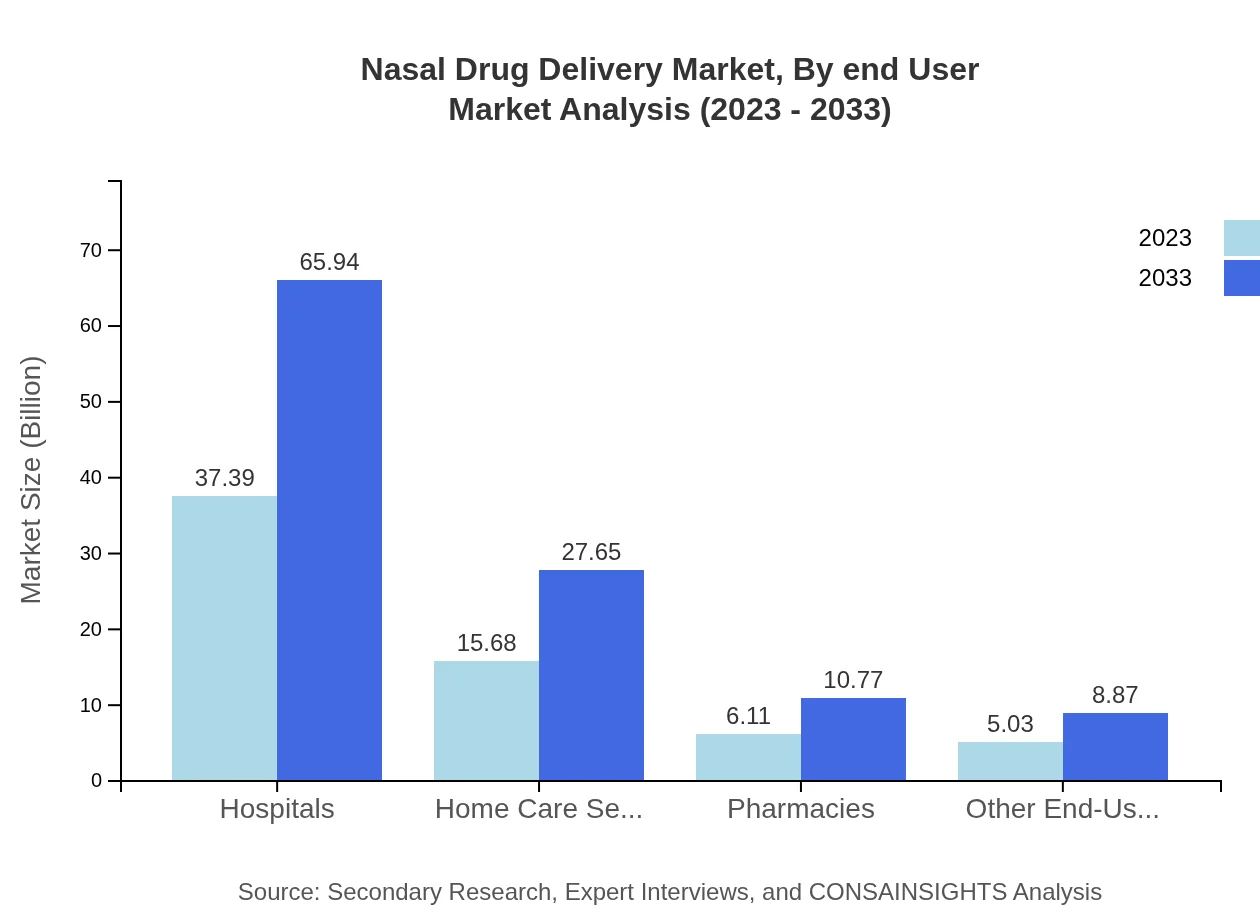
End-users in the nasal drug delivery market include hospitals, home care settings, pharmacies, and other users. Hospitals accounted for the majority of market share at USD 37.39 billion in 2023, projecting to reach USD 65.94 billion by 2033. Home care settings also show strong potential for growth, transitioning from USD 15.68 billion to USD 27.65 billion in the same timeframe, driven by increasing preference for self-administered treatments.
Nasal Drug Delivery Market Trends and Future Forecast
Tell us your focus area and get a customized research report.
Global Market Leaders and Top Companies in Nasal Drug Delivery Industry
Boehringer Ingelheim:
A leading global pharmaceutical company known for its commitment to research and development, Boehringer Ingelheim has developed innovative nasal drug delivery solutions.GlaxoSmithKline:
A key player in the healthcare sector, GlaxoSmithKline offers a variety of nasal drugs, particularly in the field of vaccines and therapies for chronic respiratory diseases.AstraZeneca:
AstraZeneca focuses on developing respiratory medicines, including formulations for nasal delivery, essential for treating various conditions effectively.Novartis:
With a strong portfolio in biologics and innovatively formulated nasal drug delivery systems, Novartis aims to enhance patient outcomes in therapeutic areas.Pfizer :
Pfizer is known for its diverse range of nasal drug products and a leader in vaccinations, leveraging nasal delivery systems for broader immunization strategies.We're grateful to work with incredible clients.








FAQs
What is the current market size of the nasal drug delivery market?
The market size in 2023 is $64.20 Billion, as reported for the Nasal Drug Delivery Market Report.
How big will the market be by 2033?
The market is projected to reach $113.23 Billion in 2033 according to the provided forecast.
What is CAGR of the market for the forecast period?
The reported compound annual growth rate for 2023 to 2033 is 5.7%.
Is there a single fastest Growing region in the Nasal Drug Delivery Market Report market?
No single fastest-growing region is stated for the Nasal Drug Delivery Market Report market because the top regional implied CAGR values are within 0.15 percentage points of each other, making the ranking too close to call reliably.
Which companies are profiled in the report?
Top companies listed include Boehringer Ingelheim, GlaxoSmithKline, AstraZeneca, Novartis, and Pfizer.
What are the main formulation segments covered?
Formulation segments specified are solutions, suspensions, and sprays as part of the market segmentation.
Who are the primary end Users identified?
End-user categories included are hospitals, home care settings, pharmacies, and other end-users.
What limits market expansion according to the report?
Regulatory hurdles and high development costs are cited as key constraints affecting market advancement.
What trends are influencing product development?
Trends include device usability improvements, biologics-friendly formulations, and greater integration of patient-centric features.
How is regional performance presented in the report?
Regional figures are provided with 2023 and 2033 values for each area, and regional drivers are discussed without implying a single regional growth market.