

Pelvic Inflammatory Disease Therapeutics Market Report
First published: 11 October 2024 | Last updated: 25 May 2026 | Report Code: pelvic-inflammatory-disease-therapeutics
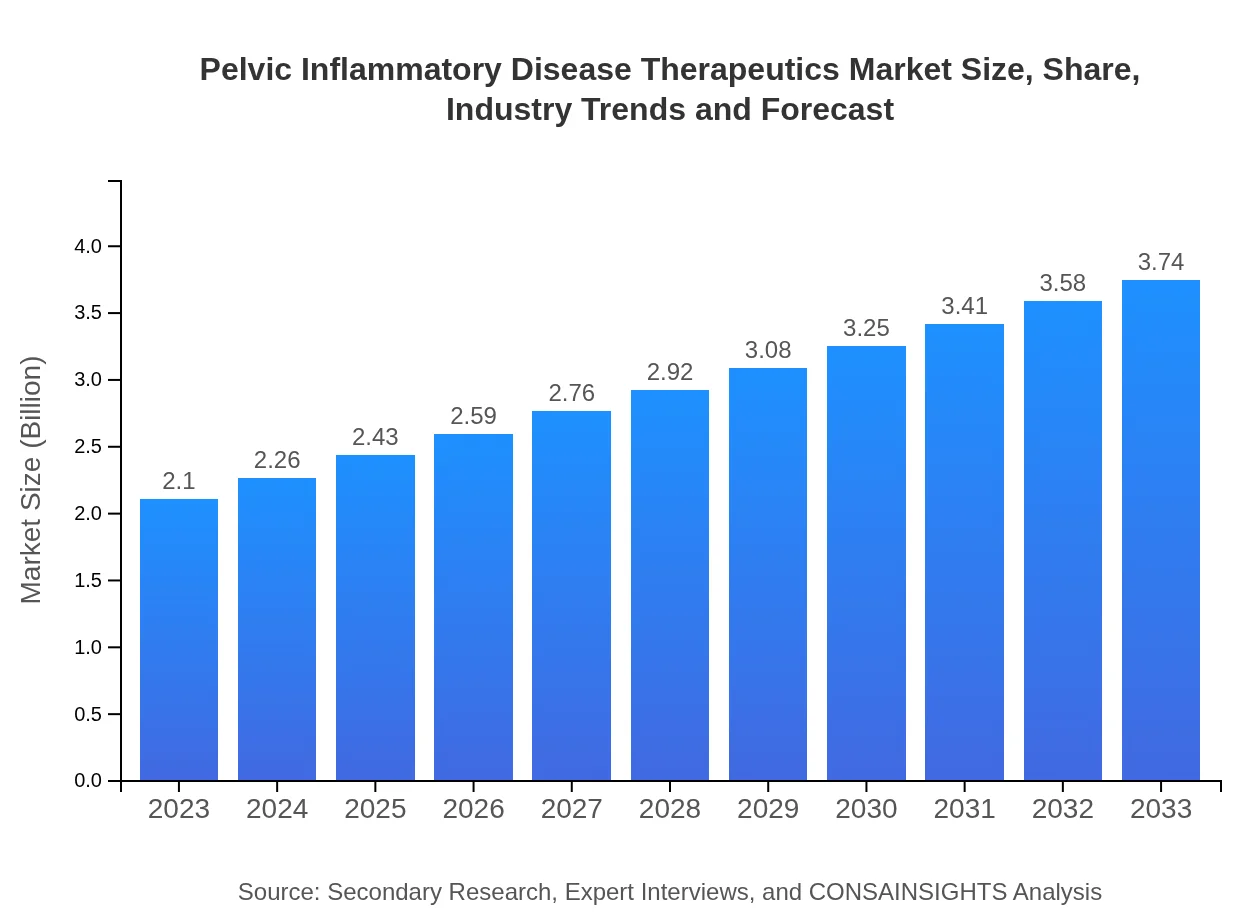
Pelvic Inflammatory Disease Therapeutics Market — USD 2.1 billion in 2023, Growing to USD 3.74B by 2033 at 5.8% CAGR
This report provides a comprehensive analysis of the Pelvic Inflammatory Disease (PID) Therapeutics market, addressing trends, size, regional insights, and forecasts from 2023 to 2033, along with key players and their roles in the evolving industry landscape.
Key Takeaways
- Global market expands from $2.10 Billion in 2023 to $3.74 Billion in 2033 at a 5.8% CAGR.
- North America is largest regional market, while no single fastest-growing region is stated because regional CAGR differences remain within 0.15 percentage points.
- North America is the largest region, rising from $0.75 Billion in 2023 to $1.34 Billion in 2033.
- Europe increases from $0.62 Billion in 2023 to $1.1 Billion in 2033, reflecting sustained demand for therapies.
- Top companies include Pfizer Inc., GSK (GlaxoSmithKline), Merck & Co., Inc., and Boehringer Ingelheim.
- Segmentation emphasizes antibiotics, hormonal therapies, and routes such as oral and intravenous.
Pelvic Inflammatory Disease Therapeutics Market Report — Executive Summary
North America remains largest market by forecast-period value, while no single fastest-growing region is stated because top regional growth rates are separated by less than 0.15 percentage points. The Pelvic Inflammatory Disease Therapeutics market is projected to grow from $2.10 Billion in 2023 to $3.74 Billion in 2033 at a 5.8% CAGR. Growth is driven by higher awareness of women’s health, rising incidence of sexually transmitted infections, and continuous therapeutic development. Market structure is led by pharmaceutical treatments—primarily antibiotics and hormonal therapies—delivered via oral, intravenous, and intrauterine routes. Patient segments include adult women, teenagers, and pregnant women, with treatment types spanning antibiotic therapy, surgery, and supportive care. Regional dynamics show North America as the largest market, supported by established healthcare infrastructure and greater access to diagnostics and treatments. Competitive activity features major pharmaceutical players such as Pfizer Inc., GSK (GlaxoSmithKline), Merck & Co., Inc., and Boehringer Ingelheim. Ongoing challenges include antibiotic resistance and access disparities, while opportunities arise from improved clinical guidelines and targeted therapeutic innovation. The report combines primary interviews and secondary sources to offer a validated view of market prospects and segment performance.
Key Growth Drivers
- Increasing awareness of women’s health issues leading to earlier diagnosis and treatment adoption.
- Rising prevalence of sexually transmitted infections fueling demand for effective PID therapies.
- Continuous development and approval of therapeutic regimens, especially in antibiotic protocols.
- Expanded access to healthcare services in developed regions supporting higher treatment uptake.
- Clinical guideline updates and professional education improving standardized management of PID.
| Metric | Value |
|---|---|
| Study Period | 2023 - 2033 |
| 2023 Market Size | $2.10 Billion |
| CAGR (2023-2033) | 5.8% |
| 2033 Market Size | $3.74 Billion |
| Top Companies | Pfizer Inc., GSK (GlaxoSmithKline), Merck & Co., Inc., Boehringer Ingelheim |
| Published Date | 11 October 2024 |
| Last Modified Date | 25 May 2026 |
Pelvic Inflammatory Disease Therapeutics Market Overview
Customize Pelvic Inflammatory Disease Therapeutics Market Report market research report
- ✔ Get in-depth analysis of Pelvic Inflammatory Disease Therapeutics market size, growth, and forecasts.
- ✔ Understand Pelvic Inflammatory Disease Therapeutics's regional dynamics and industry-specific trends.
- ✔ Identify potential applications, end-user demand, and growth segments in Pelvic Inflammatory Disease Therapeutics
What is the Market Size & CAGR of Pelvic Inflammatory Disease Therapeutics Market Report market in 2023?
Pelvic Inflammatory Disease Therapeutics Industry Analysis
Pelvic Inflammatory Disease Therapeutics Market Segmentation and Scope
Tell us your focus area and get a customized research report.
Pelvic Inflammatory Disease Therapeutics Market Report Market Analysis Report by Region
Europe Pelvic Inflammatory Disease Therapeutics Market Report:
Europe grows from $0.62 Billion in 2023 to $1.1 Billion in 2033. Regional expansion benefits from heightened women’s health initiatives, strong clinical guideline adoption, and continued availability of antibiotic and hormonal treatment options.Asia Pacific Pelvic Inflammatory Disease Therapeutics Market Report:
Asia Pacific grows from $0.41 Billion in 2023 to $0.73 Billion in 2033. Market drivers include improving healthcare access, increasing awareness of reproductive health, and rising demand for established therapeutic regimens across urban centers.North America Pelvic Inflammatory Disease Therapeutics Market Report:
North America is largest regional market, rising from $0.75 Billion in 2023 to $1.34 Billion in 2033. This growth is supported by established healthcare infrastructure, broader access to diagnostics and therapies, and active participation from major pharmaceutical firms.South America Pelvic Inflammatory Disease Therapeutics Market Report:
Latin America grows from $0.14 Billion in 2023 to $0.24 Billion in 2033. Growth is supported by improving healthcare delivery, greater recognition of PID risks, and gradual uptake of standardized treatment approaches.Middle East & Africa Pelvic Inflammatory Disease Therapeutics Market Report:
Middle East and Africa grows from $0.18 Billion in 2023 to $0.32 Billion in 2033. Drivers include expanding healthcare services, growing focus on women’s health, and increased availability of standard PID therapies.Tell us your focus area and get a customized research report.
Research Methodology
Pelvic Inflammatory Disease Therapeutics Market Analysis By Drug Class
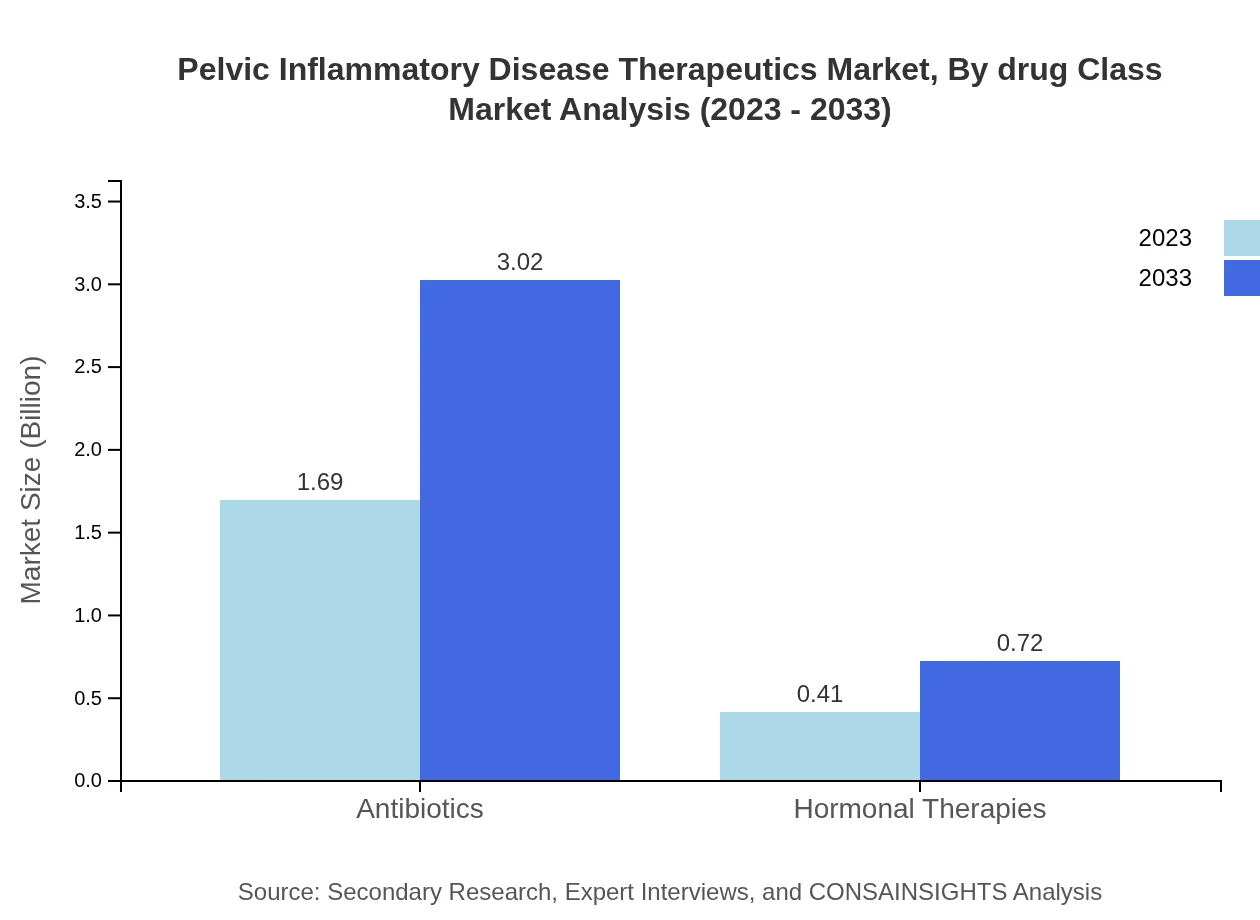
In the drug class segment, antibiotics are projected to dominate the market with a size of **USD 1.69 billion in 2023**, expected to rise to **USD 3.02 billion by 2033**, maintaining an 80.65% market share throughout the forecast period. Hormonal therapies, although smaller in scale, show growth from **USD 0.41 billion** to **USD 0.72 billion**, accounting for a 19.35% market share.
Pelvic Inflammatory Disease Therapeutics Market Analysis By Route Of Administration
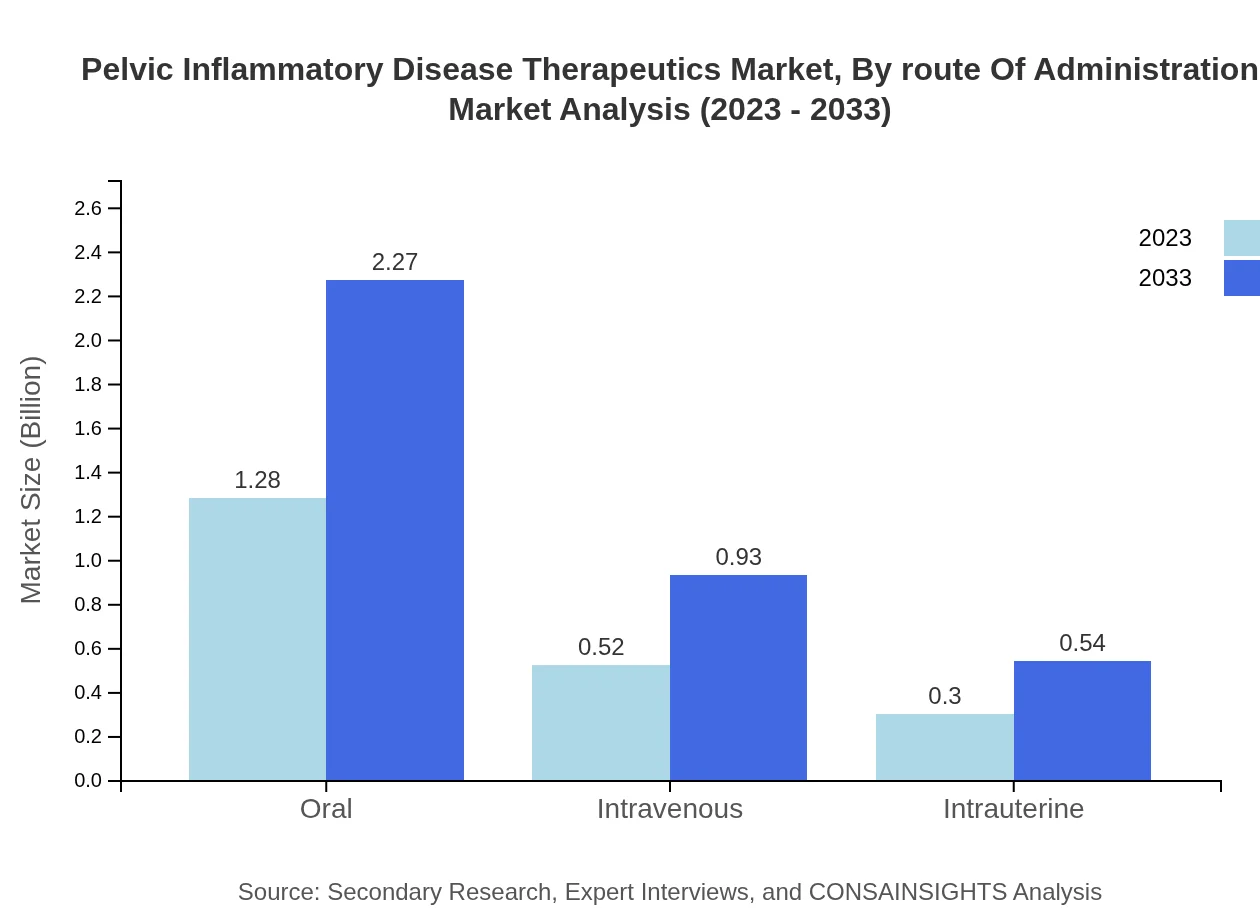
The oral route remains the most preferred among patients, with a market size of **USD 1.28 billion in 2023**, growing to **USD 2.27 billion by 2033**, representing a significant share of 60.77%. Intravenous administration holds a market of **USD 0.52 billion**, expected to reach **USD 0.93 billion**, highlighting its importance in more severe PID cases. Intrauterine techniques also show growth potential, rising from **USD 0.30 billion** to **USD 0.54 billion**, with a 14.32% market share.
Pelvic Inflammatory Disease Therapeutics Market Analysis By Treatment Type
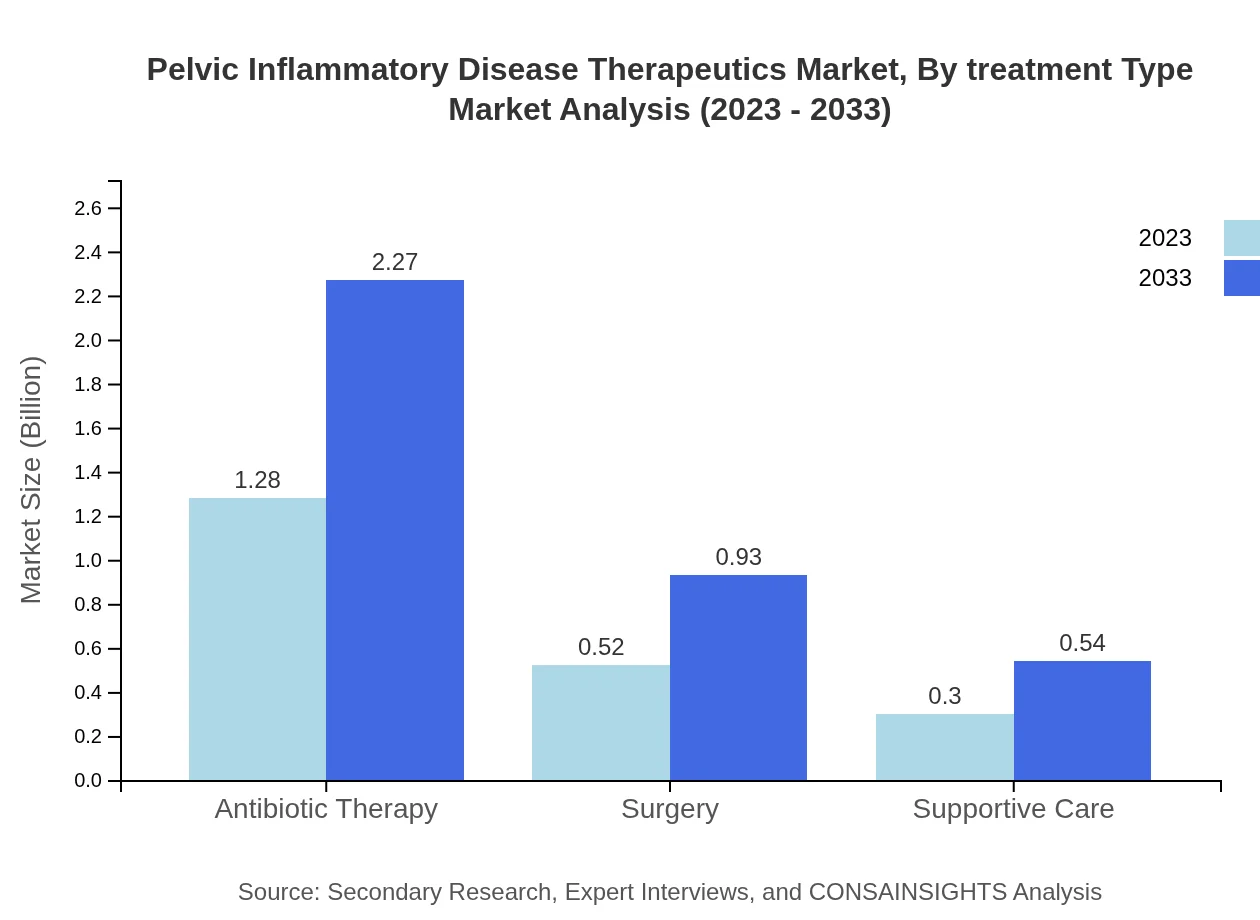
Among treatment types, antibiotic therapy leads with a size of **USD 1.28 billion in 2023**, anticipated to reach **USD 2.27 billion by 2033**, dominating with a 60.77% share. Surgical interventions represent a growing area, increasing from **USD 0.52 billion to 0.93 billion**, while supportive care accounts for **USD 0.30 billion** to **USD 0.54 billion**, reflecting the need for comprehensive patient management.
Pelvic Inflammatory Disease Therapeutics Market Analysis By Patient Type
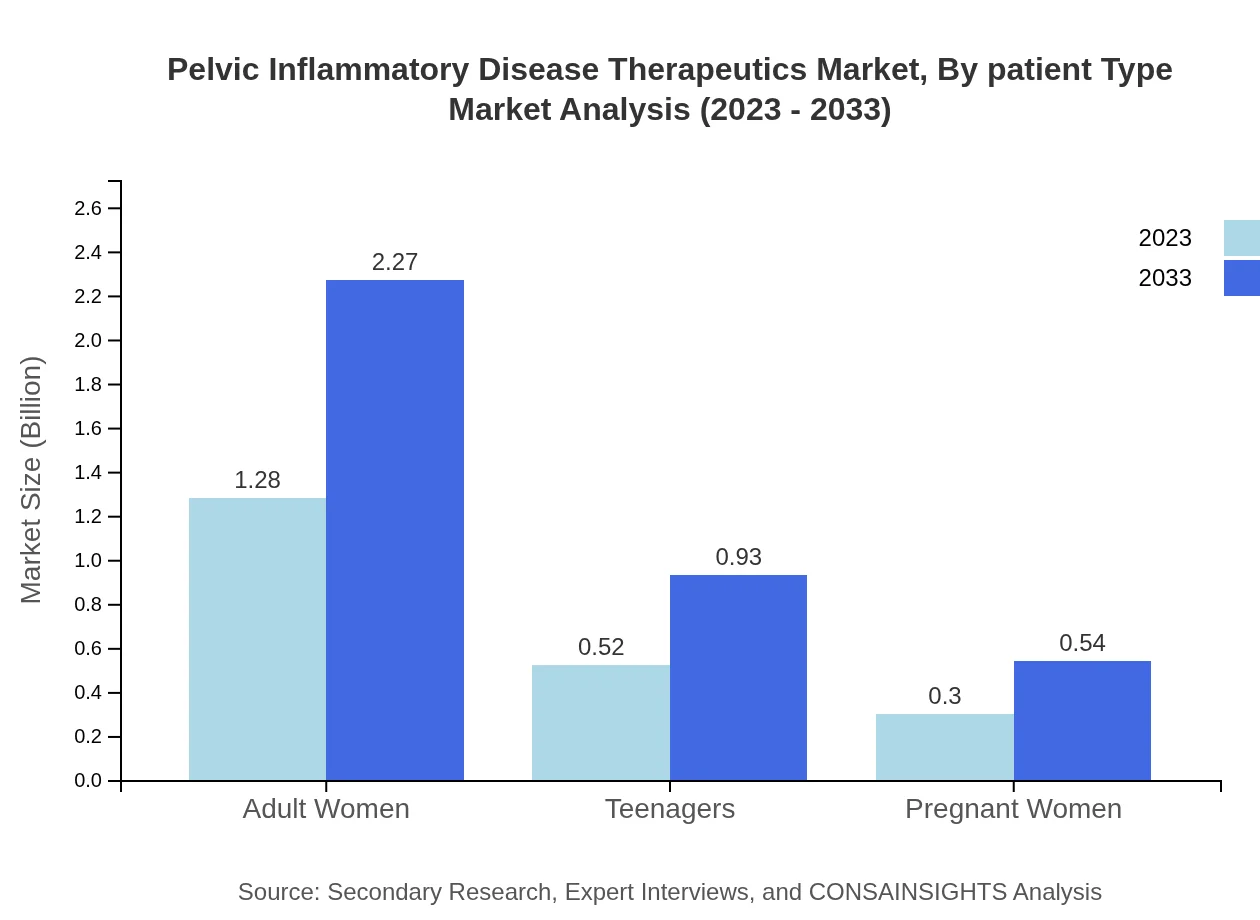
In terms of patient demographics, adult women account for **USD 1.28 billion in 2023**, projected to grow to **USD 2.27 billion** with a 60.77% share. Teenagers hold a market of **USD 0.52 billion**, expected to rise to **USD 0.93 billion**, while pregnant women represent **USD 0.30 billion**, growing to **USD 0.54 billion**, indicating a focused treatment approach for vulnerable populations.
Pelvic Inflammatory Disease Therapeutics Market Trends and Future Forecast
Tell us your focus area and get a customized research report.
Global Market Leaders and Top Companies in Pelvic Inflammatory Disease Therapeutics Industry
Pfizer Inc.:
Pfizer is a leading pharmaceutical company focusing on innovative solutions for health management, with a substantial portfolio in therapeutics addressing infectious diseases.GSK (GlaxoSmithKline):
GSK is a global healthcare company dedicated to research-based pharmaceuticals, particularly in antibiotics and women's health therapies.Merck & Co., Inc.:
Merck is well-known for its contributions to antibiotic therapies for treating STIs, which play a significant role in managing pelvic inflammatory diseases.Boehringer Ingelheim:
Boehringer Ingelheim is active in developing treatments for infectious diseases and has a key focus on antibiotics and women’s health therapeutics.We're grateful to work with incredible clients.








FAQs
What is the market size of the Pelvic Inflammatory Disease Therapeutics market in 2023?
The market size in 2023 is $2.10 Billion. This figure represents the global therapeutic market for pelvic inflammatory disease as reported for the base year.
How big will the market be in 2033?
By 2033 the market is projected to reach $3.74 Billion, reflecting the forecasted expansion over the 2023 to 2033 period based on current trajectory and drivers.
What is CAGR of the market for 2023 to 2033?
The compound annual growth rate over the 2023 to 2033 forecast period is 5.8%, indicating steady annualized expansion across the decade.
Is there a single fastest Growing region in the Pelvic Inflammatory Disease Therapeutics Market Report market?
No single fastest-growing region is stated for the Pelvic Inflammatory Disease Therapeutics Market Report market because the top regional implied CAGR values are within 0.15 percentage points of each other, making the ranking too close to call reliably.
Which treatment types are included in the market segmentation?
Treatment categories include antibiotic therapy, surgery, and supportive care, reflecting the primary clinical approaches for managing pelvic inflammatory disease.
Who are the leading companies in this sector?
Top companies listed include Pfizer Inc., GSK (GlaxoSmithKline), Merck & Co., Inc., and Boehringer Ingelheim, representing key pharmaceutical participants in the market.
What patient types are covered in the segmentation?
Patient segments include adult women, teenagers, and pregnant women, capturing demographic groups with distinct clinical needs and treatment pathways.
How is the route of administration segmented?
Routes of administration noted are oral, intravenous, and intrauterine, reflecting commonly used delivery methods for PID therapeutics.
What factors are driving market growth?
Growth is driven by rising STI incidence, increased awareness of women’s health, therapeutic advances, and improved access to diagnostics and treatment services.
What challenges could affect market expansion?
Challenges include antibiotic resistance and disparities in treatment access across regions, which may hinder optimal therapy effectiveness and adoption.