

Peripheral Vascular Devices Market Report
First published: 12 October 2024 | Last updated: 25 May 2026 | Report Code: peripheral-vascular-devices
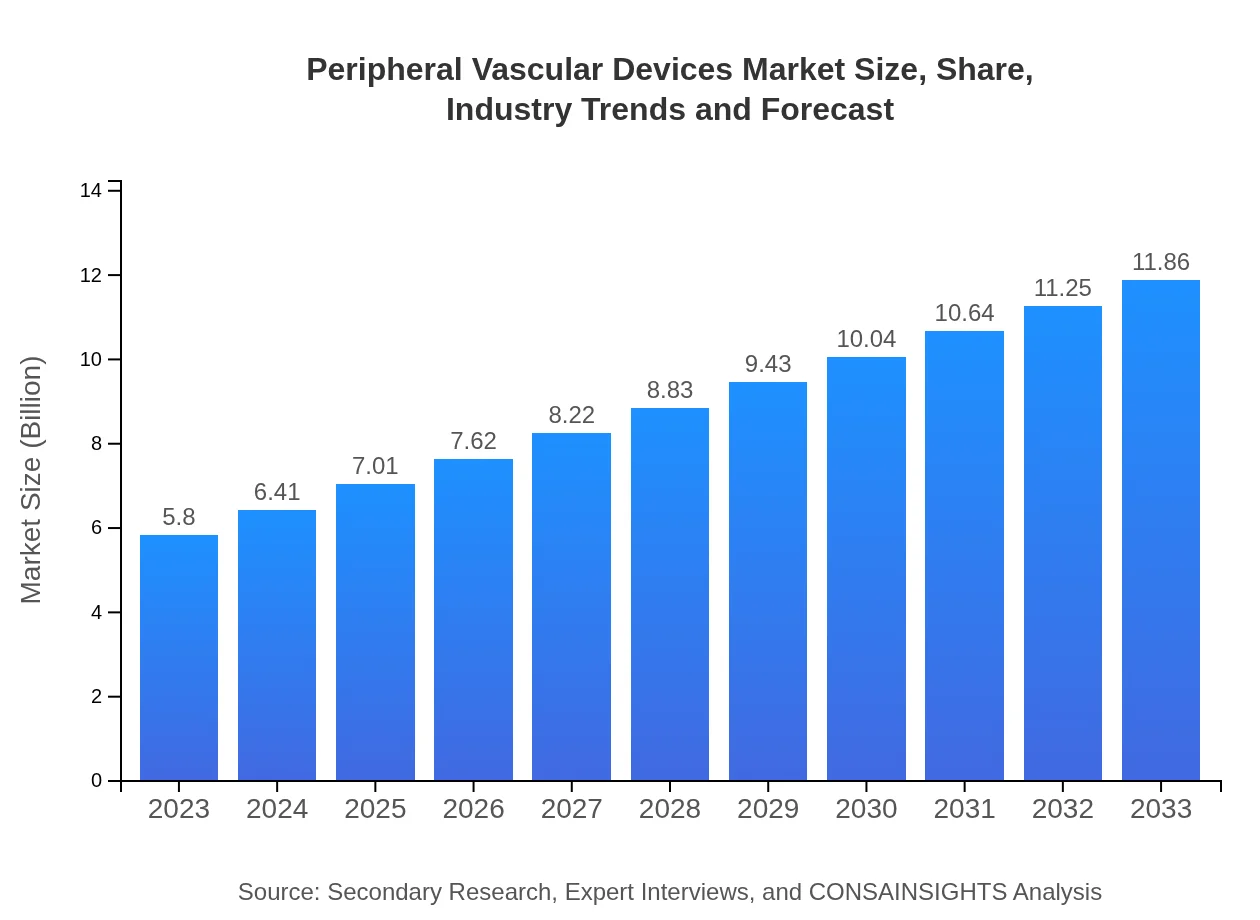
Peripheral Vascular Devices Market — USD $5.8 Billion in 2023, Growing to USD 11.86null by 2033 at 7.2% CAGR
This report provides a comprehensive analysis of the Peripheral Vascular Devices market from 2023 to 2033, outlining market dynamics, growth trends, and future forecasts. It covers market size, segmentation, regional insights, technological advancements, and key players driving the industry.
Key Takeaways
- $5.80 Billion market size recorded in 2023, projected to reach $11.86 Billion by 2033.
- A compound annual growth rate of 7.2% is expected between 2023 and 2033.
- North America is largest regional market, while no single fastest-growing region is stated because regional CAGR differences remain within 0.15 percentage points.
- Regional growth is supported by rising prevalence of vascular disease, minimally invasive techniques, and technological advances.
- Leading companies include Medtronic, Boston Scientific, Abbott Laboratories, and Siemens Healthineers.
- Clinical adoption across hospitals and outpatient surgical centers fuels device demand and distribution expansion.
Peripheral Vascular Devices Market Report — Executive Summary
North America remains largest market by forecast-period value, while no single fastest-growing region is stated because top regional growth rates are separated by less than 0.15 percentage points. This report analyzes the Peripheral Vascular Devices market, which expands from $5.80 Billion in 2023 to $11.86 Billion by 2033 at a 7.2% CAGR. Growth is driven by increased incidence of peripheral artery disease, demographic shifts, and rising diabetes prevalence. Technological improvements in minimally invasive interventions, device materials, and procedural techniques are pushing adoption, while regulatory and clinical-evidence demands remain important considerations. The market is structured across device types, procedures, end users, applications, and distribution channels; top manufacturers named include Medtronic, Boston Scientific, Abbott Laboratories, and Siemens Healthineers. Regional dynamics highlight North America as the largest market by value. The analysis synthesizes primary interviews and secondary sources to map opportunities, challenges, and competitive positioning for stakeholders planning investment, R&D, or commercial expansion in the coming decade.
Key Growth Drivers
- Growing prevalence of peripheral artery disease and diabetes increasing procedural demand.
- Wider adoption of minimally invasive techniques that favor peripheral vascular device use.
- Advances in device design and materials improving safety and clinical outcomes.
- Expansion of hospital and outpatient surgical center capabilities to perform vascular interventions.
- Increased healthcare spending and reimbursement support facilitating market uptake.
| Metric | Value |
|---|---|
| Study Period | 2023 - 2033 |
| 2023 Market Size | $5.80 Billion |
| CAGR (2023-2033) | 7.2% |
| 2033 Market Size | $11.86 Billion |
| Top Companies | Medtronic , Boston Scientific, Abbott Laboratories, Siemens Healthineers |
| Published Date | 12 October 2024 |
| Last Modified Date | 25 May 2026 |
Peripheral Vascular Devices Market Overview
Customize Peripheral Vascular Devices Market Report market research report
- ✔ Get in-depth analysis of Peripheral Vascular Devices market size, growth, and forecasts.
- ✔ Understand Peripheral Vascular Devices's regional dynamics and industry-specific trends.
- ✔ Identify potential applications, end-user demand, and growth segments in Peripheral Vascular Devices
What is the Market Size & CAGR of Peripheral Vascular Devices Market Report market in 2023?
Peripheral Vascular Devices Industry Analysis
Peripheral Vascular Devices Market Segmentation and Scope
Tell us your focus area and get a customized research report.
Peripheral Vascular Devices Market Report Market Analysis Report by Region
Europe Peripheral Vascular Devices Market Report:
Europe grows from $1.51 Billion in 2023 to $3.09 Billion in 2033. Demand is influenced by aging populations, rising incidence of vascular conditions, and gradual adoption of minimally invasive therapies across hospital networks.Asia Pacific Peripheral Vascular Devices Market Report:
Asia Pacific grows from $1.21 Billion in 2023 to $2.47 Billion in 2033. Growth drivers include expanding healthcare access, rising prevalence of diabetes and vascular disease, and increased procedural capacity in major urban centers.North America Peripheral Vascular Devices Market Report:
North America is largest regional market, rising from $2.09 Billion in 2023 to $4.27 Billion in 2033. Regional momentum reflects advanced clinical infrastructure, rapid uptake of novel interventional techniques, and concentrated manufacturer presence supporting device availability.South America Peripheral Vascular Devices Market Report:
Latin America grows from $0.3 Billion in 2023 to $0.62 Billion in 2033. Market expansion is linked to improving healthcare investments, growing awareness of vascular conditions, and gradual diffusion of interventional devices.Middle East & Africa Peripheral Vascular Devices Market Report:
Middle East and Africa grows from $0.69 Billion in 2023 to $1.41 Billion in 2033. Regional progress is associated with strengthening healthcare systems, increased diagnostic capability, and adoption of modern vascular intervention techniques.Tell us your focus area and get a customized research report.
Research Methodology
Peripheral Vascular Devices Market Analysis By Device Type
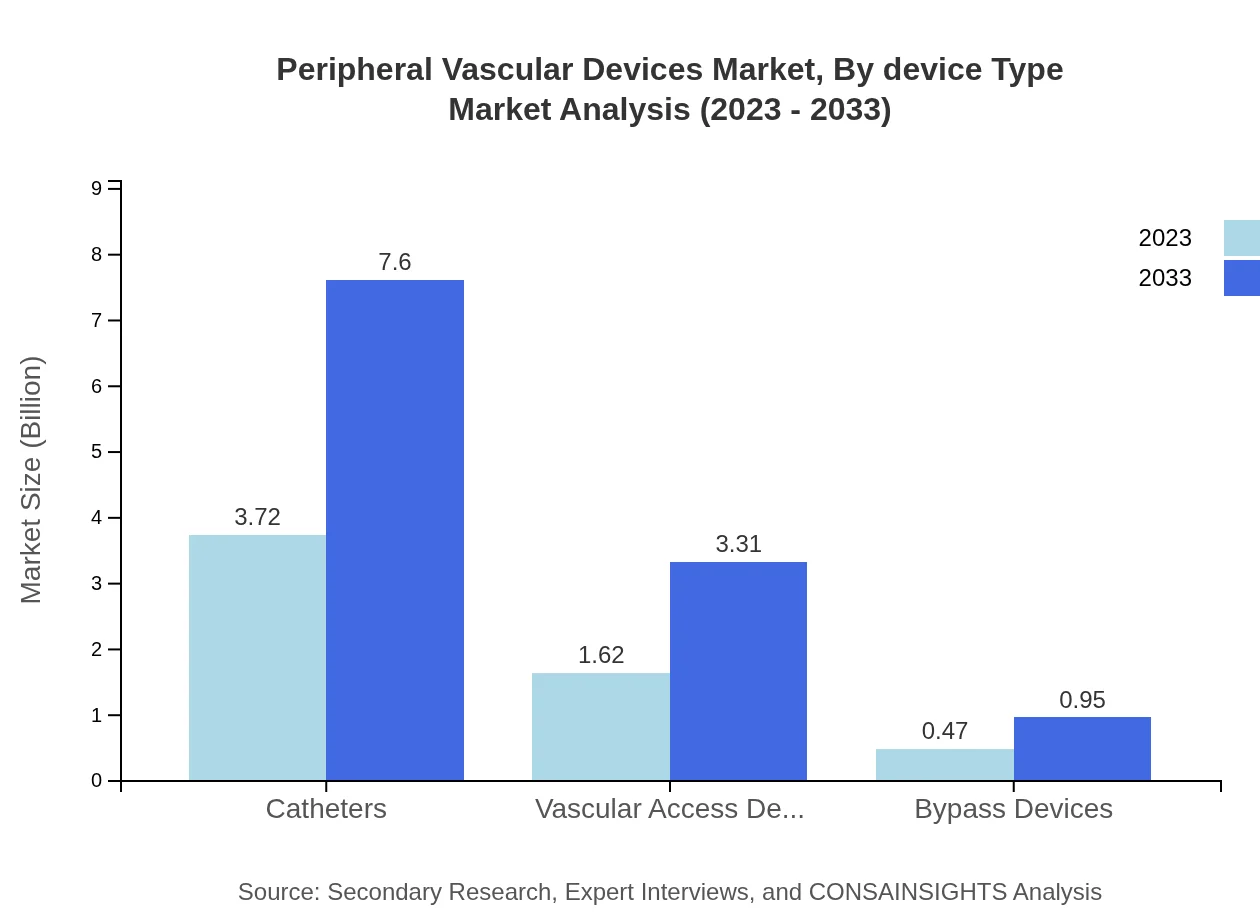
The market is segmented by device type, with key categories including Angioplasty devices, Stenting devices, Thrombectomy devices, Catheters, and Vascular Access Devices. Angioplasty devices dominate the market with a projected growth from $3.72 billion in 2023 to $7.60 billion in 2033, holding a 64.08% share. Stenting devices follow, accounting for a significant 27.9% share, with growth driven by technological innovations in stent design.
Peripheral Vascular Devices Market Analysis By Application Area
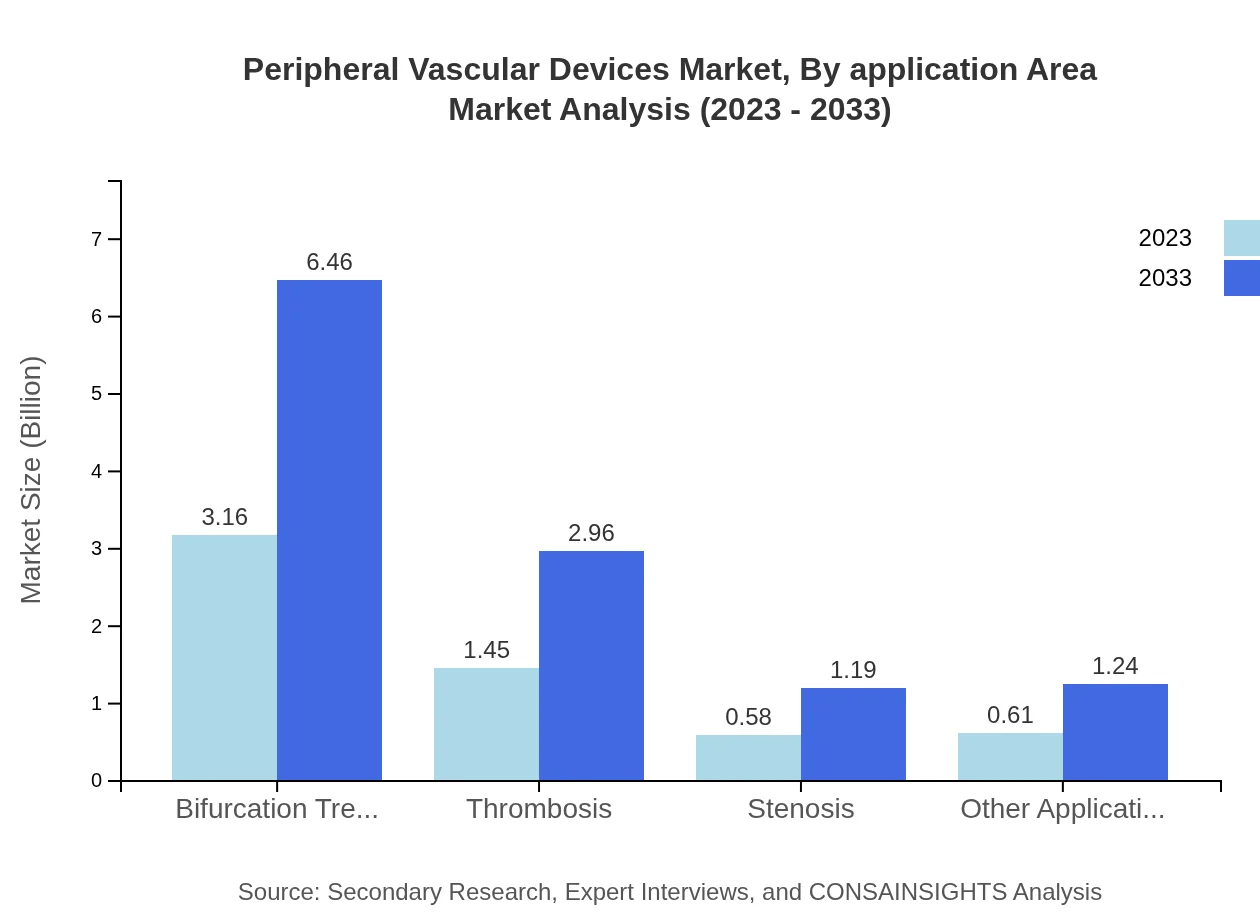
The application area segmentation includes Bifurcation Treatment, Thrombosis, Stenosis, and Other Applications. Bifurcation Treatment holds a leading position with a size of $3.16 billion in 2023, expected to reach $6.46 billion by 2033. This segment's share stands at 54.48%, highlighting the critical nature of these interventions.
Peripheral Vascular Devices Market Analysis By End User
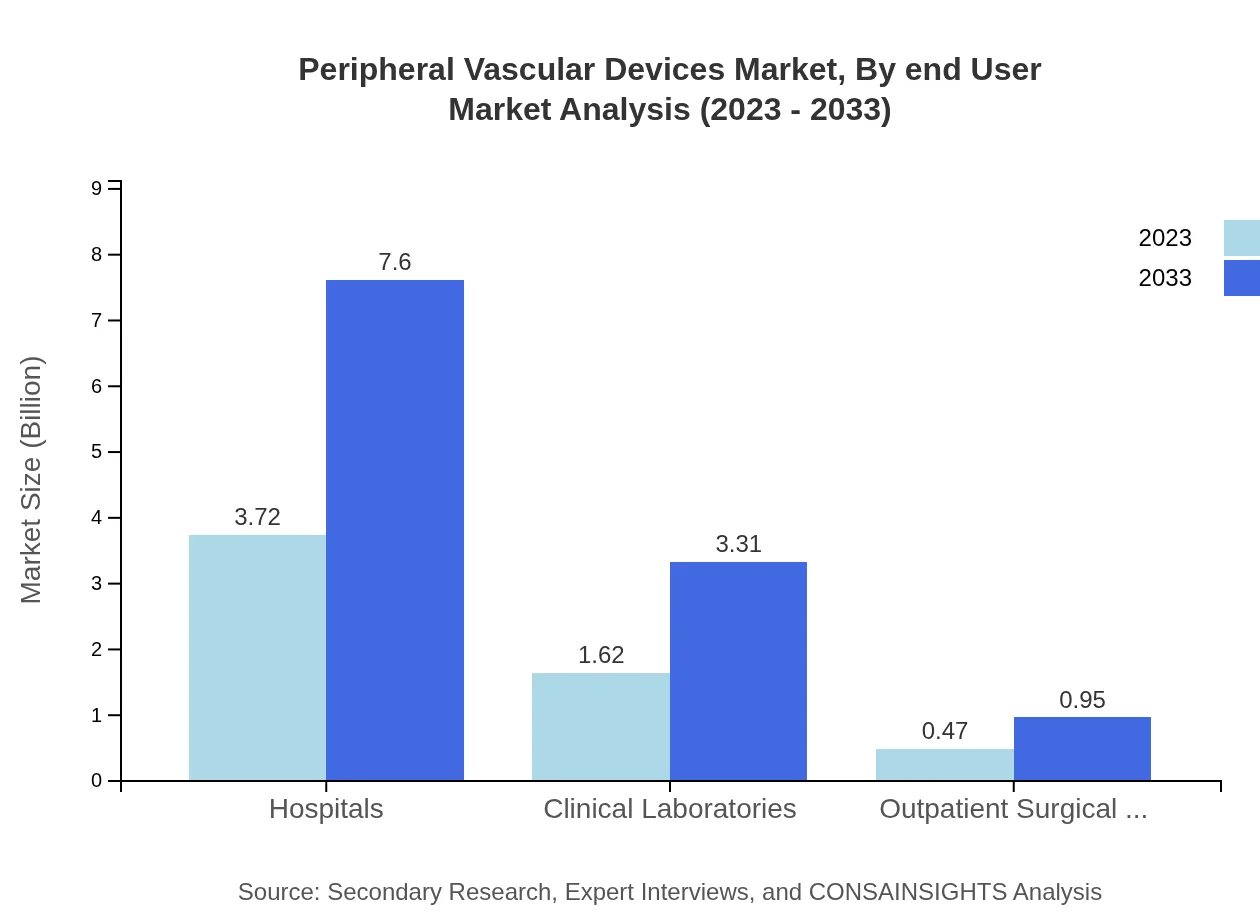
End-user segments include Hospitals, Clinical Laboratories, and Outpatient Surgical Centers. Hospitals dominate the market, growing from $3.72 billion in 2023 to $7.60 billion in 2033, representing 64.08% of the total market share. This trend reflects the central role hospitals play in vascular procedures.
Peripheral Vascular Devices Market Analysis By Procedure
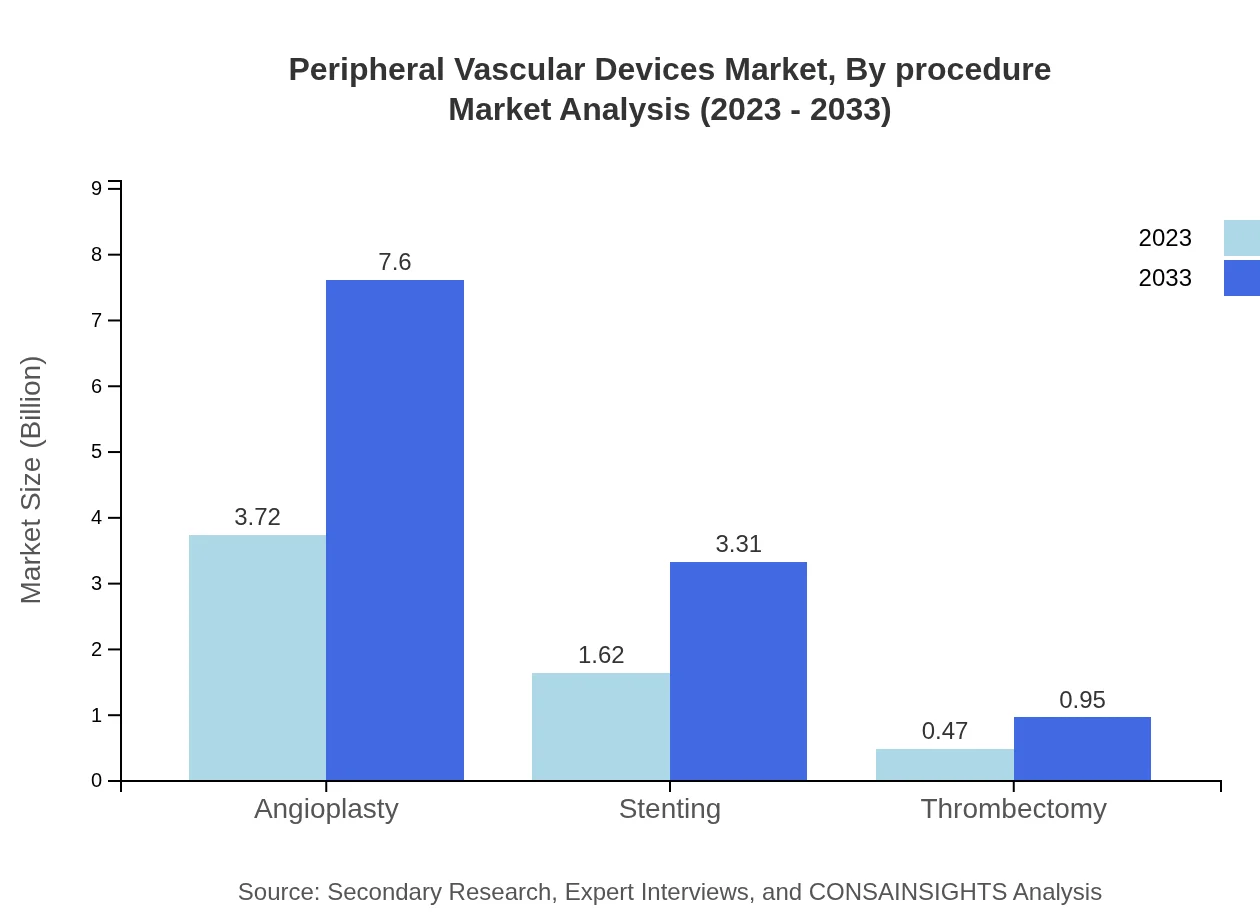
The procedure-based segmentation includes Angioplasty, Stenting, and Thrombectomy procedures. Angioplasties lead the market, reflecting advancements in catheter and balloon technologies that enhance treatment efficiency.
Peripheral Vascular Devices Market Analysis By Distribution Channel
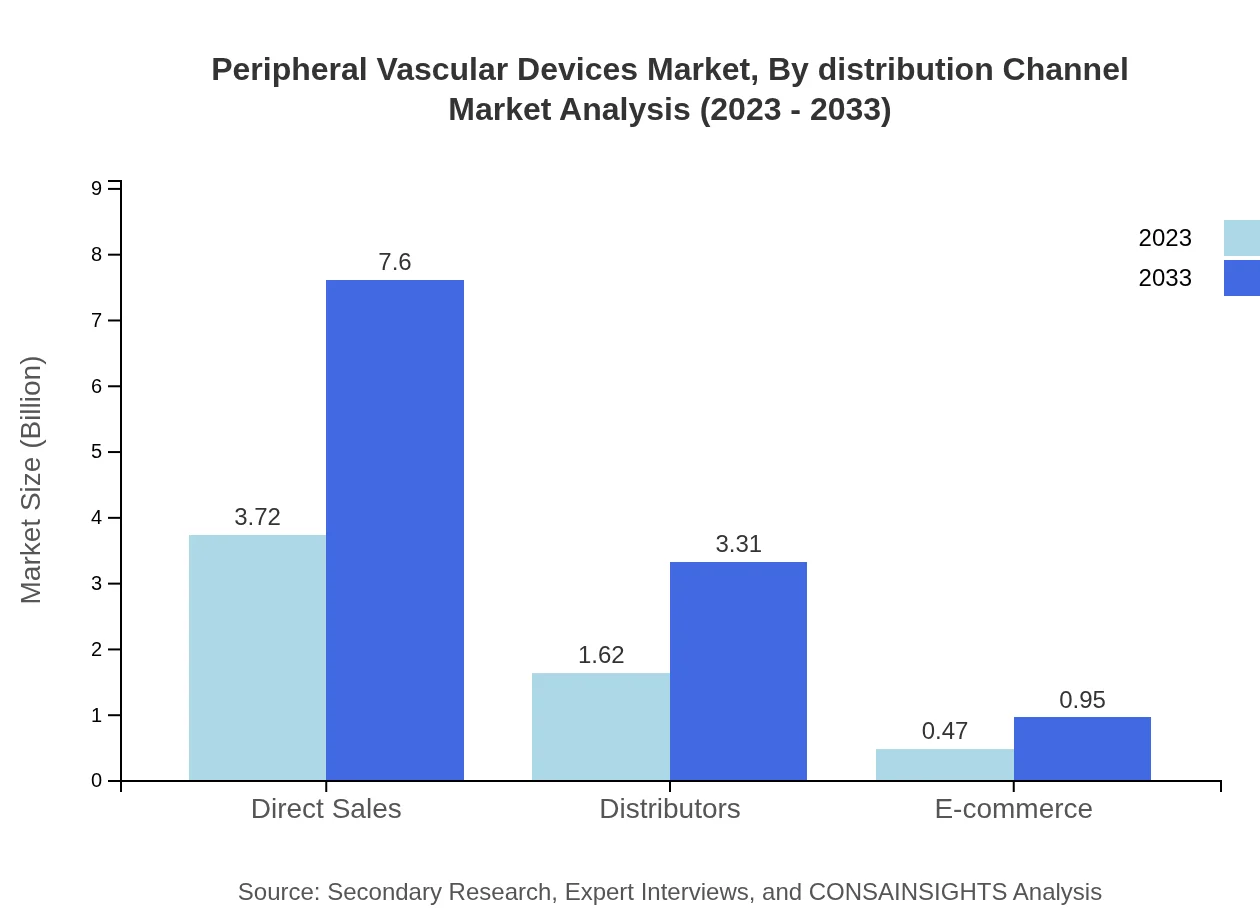
Distribution channels consist of Direct Sales, Distributors, and E-commerce. Direct Sales account for the largest share, expected to maintain a 64.08% market share, supporting manufacturers' direct engagement with healthcare providers.
Peripheral Vascular Devices Market Trends and Future Forecast
Tell us your focus area and get a customized research report.
Global Market Leaders and Top Companies in Peripheral Vascular Devices Industry
Medtronic :
A leading global healthcare solutions company offering a comprehensive range of vascular device technologies, driving innovation in minimally invasive treatments.Boston Scientific:
Renowned for its advanced peripheral vascular therapies, Boston Scientific is focused on providing quality devices that enhance patient care.Abbott Laboratories:
Abbott provides innovative vascular solutions and holds a strong market position through its product offerings in both coronary and peripheral domains.Siemens Healthineers:
Siemens specializes in diagnostic imaging and therapeutic devices, enriching the peripheral vascular landscape with cutting-edge technologies.We're grateful to work with incredible clients.









FAQs
What is the market size of the Peripheral Vascular Devices market in 2023?
The market size for 2023 is $5.80 Billion, based on the report's baseline year figure and used as the starting point for the 2023 to 2033 forecast.
How big will the market be in 2033?
The market is projected to reach $11.86 Billion in 2033, reflecting the report's end-period estimate for the 2023 to 2033 forecast window.
What is CAGR for the forecast period?
The compound annual growth rate for 2023 to 2033 is 7.2%, as stated for the overall market trajectory across the forecast period.
Is there a single fastest Growing region in the Peripheral Vascular Devices Market Report market?
No single fastest-growing region is stated for the Peripheral Vascular Devices Market Report market because the top regional implied CAGR values are within 0.15 percentage points of each other, making the ranking too close to call reliably.
Which top companies operate in this market?
Key market participants identified include Medtronic, Boston Scientific, Abbott Laboratories, and Siemens Healthineers, noted for product portfolios and geographic reach.
What are primary clinical applications driving demand?
Clinical applications such as bifurcation treatment, thrombosis, and stenosis are highlighted as core use areas supporting device utilization in vascular care.
How are end users categorized in the report?
End users include hospitals, clinical laboratories, and outpatient surgical centers, reflecting where peripheral vascular procedures and device deployment occur.
What distribution channels are covered?
Distribution routes examined comprise direct sales, distributors, and e-commerce, showing varied go-to-market approaches for device suppliers.
What is the forecast period for this report?
The defined forecast timeframe is 2023 to 2033, used to calculate growth projections and regional market evolution.
Who provided the research inputs for this analysis?
Research inputs include primary interviews with industry experts and secondary information from company reports and publications, as described in methodology.