

Tissue Engineered Skin Substitute Market Report
First published: 21 October 2024 | Last updated: 28 May 2026 | Report Code: tissue-engineered-skin-substitute
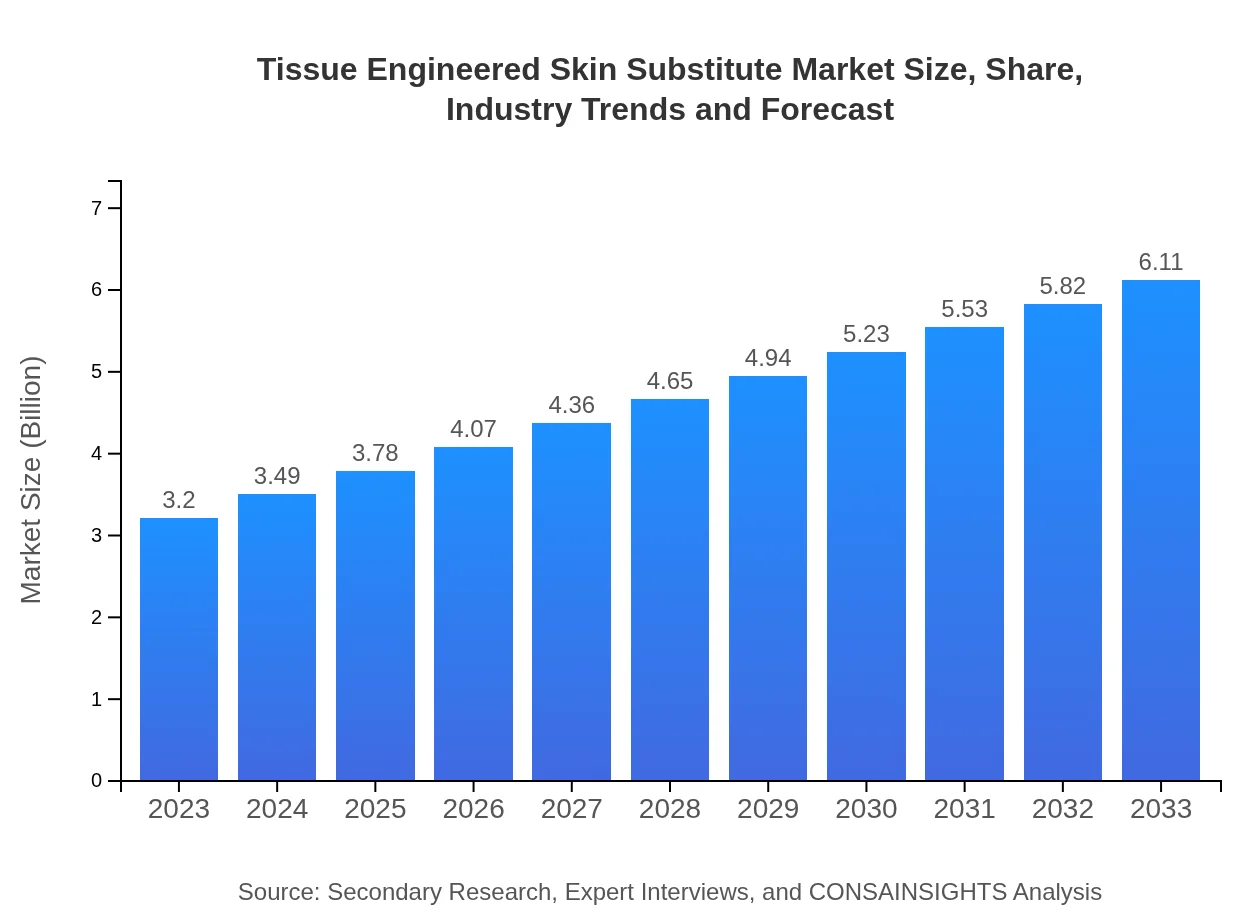
Tissue Engineered Skin Substitute Market — USD 3.2 billion in 2023, Growing to USD 6.11B by 2033 at 6.5% CAGR
This report provides an in-depth analysis of the Tissue Engineered Skin Substitute market, focusing on market trends, size, segmentation, and future forecasts from 2023 to 2033.
Key Takeaways
- Global market expands from $3.20 Billion in 2023 to $6.11 Billion by 2033 at a 6.5% CAGR.
- North America leads regional value, rising from $1.1 Billion in 2023 to $2.1 Billion in 2033.
- North America is largest regional market; Latin America is regional market region based on implied CAGR across 2023 to 2033.
- Europe and Asia Pacific are sizable regional contributors, with Europe growing from $1.04 Billion to $1.99 Billion and Asia Pacific from $0.61 Billion to $1.16 Billion.
- Key players include Organogenesis Holdings Inc., Acelity L.P. Inc. (now part of 3M), Smith & Nephew plc, and Avita Medical Ltd.
Tissue Engineered Skin Substitute Market Report — Executive Summary
Regional analysis shows North America as largest market and Latin America as fastest-growing region by implied CAGR. The tissue engineered skin substitute sector is advancing as clinical needs for burn management, chronic wound care, and surgical reconstruction expand. Market value increases from $3.20 Billion in 2023 to $6.11 Billion in 2033 at a 6.5% CAGR during 2023 to 2033. Growth is supported by progress in biological, synthetic, and composite materials, broader adoption across hospitals and outpatient clinics, and intensified R&D by leading firms such as Organogenesis Holdings Inc., Acelity L.P. Inc. (now part of 3M), Smith & Nephew plc, and Avita Medical Ltd. Regional dynamics vary: North America holds the highest regional market value, while Latin America shows the strongest implied growth rate. Product segmentation spans acellular and cell-based substitutes, transgenic variants, and distribution through direct sales, third-party distributors, and online retail. Regulatory requirements, manufacturing standards, and the need for clinical validation shape development priorities. Anticipated innovation areas include biomaterial refinement and patient-tailored approaches that address clinical efficacy and supply-chain scalability.
Key Growth Drivers
- Rising incidence of burn injuries and chronic wounds increases clinical demand for skin substitutes.
- Advances in biomaterials—biological, synthetic, and composite—improve functional performance and application range.
- Greater adoption in hospitals and outpatient clinics expands points of care for engineered skin therapies.
- Sustained R&D investments by established firms drive new product introductions and clinical validation.
- Focus on personalized regenerative strategies and manufacturing scale-up supports broader market penetration.
| Metric | Value |
|---|---|
| Study Period | 2023 - 2033 |
| 2023 Market Size | $3.20 Billion |
| CAGR (2023-2033) | 6.5% |
| 2033 Market Size | $6.11 Billion |
| Top Companies | Organogenesis Holdings Inc., Acelity L.P. Inc. (now part of 3M), Smith & Nephew plc, Avita Medical Ltd. |
| Published Date | 21 October 2024 |
| Last Modified Date | 28 May 2026 |
Tissue Engineered Skin Substitute Market Overview
Customize Tissue Engineered Skin Substitute Market Report market research report
- ✔ Get in-depth analysis of Tissue Engineered Skin Substitute market size, growth, and forecasts.
- ✔ Understand Tissue Engineered Skin Substitute's regional dynamics and industry-specific trends.
- ✔ Identify potential applications, end-user demand, and growth segments in Tissue Engineered Skin Substitute
What is the Market Size & CAGR of Tissue Engineered Skin Substitute Market Report market in 2023?
Tissue Engineered Skin Substitute Industry Analysis
Tissue Engineered Skin Substitute Market Segmentation and Scope
Tell us your focus area and get a customized research report.
Tissue Engineered Skin Substitute Market Report Market Analysis Report by Region
Europe Tissue Engineered Skin Substitute Market Report:
Europe grows from $1.04 Billion in 2023 to $1.99 Billion in 2033. Regional expansion is underpinned by clinical demand for wound care solutions, investments in biomaterials research, and broader adoption within surgical and chronic wound management settings.Asia Pacific Tissue Engineered Skin Substitute Market Report:
Asia Pacific grows from $0.61 Billion in 2023 to $1.16 Billion in 2033. Market momentum is driven by rising healthcare access, increased treatment rates for burns and chronic wounds, and interest in innovative regenerative therapies.North America Tissue Engineered Skin Substitute Market Report:
North America is largest regional market, rising from $1.1 Billion in 2023 to $2.1 Billion in 2033. The region's value reflects concentrated clinical adoption, advanced R&D activity, and commercial scale-up efforts that support product availability and use across hospitals and clinics.South America Tissue Engineered Skin Substitute Market Report:
Latin America is fastest-growing region by implied CAGR, increasing from $0.09 Billion in 2023 to $0.18 Billion in 2033. This region is noted as the fastest-growing market, reflecting accelerating adoption and emerging investment in clinical applications of engineered skin substitutes.Middle East & Africa Tissue Engineered Skin Substitute Market Report:
Middle East and Africa grows from $0.35 Billion in 2023 to $0.67 Billion in 2033. Growth is influenced by improving healthcare infrastructure, rising incidence of chronic wounds and burns, and gradual uptake of advanced therapeutic options.Tell us your focus area and get a customized research report.
Research Methodology
Tissue Engineered Skin Substitute Market Analysis By Material
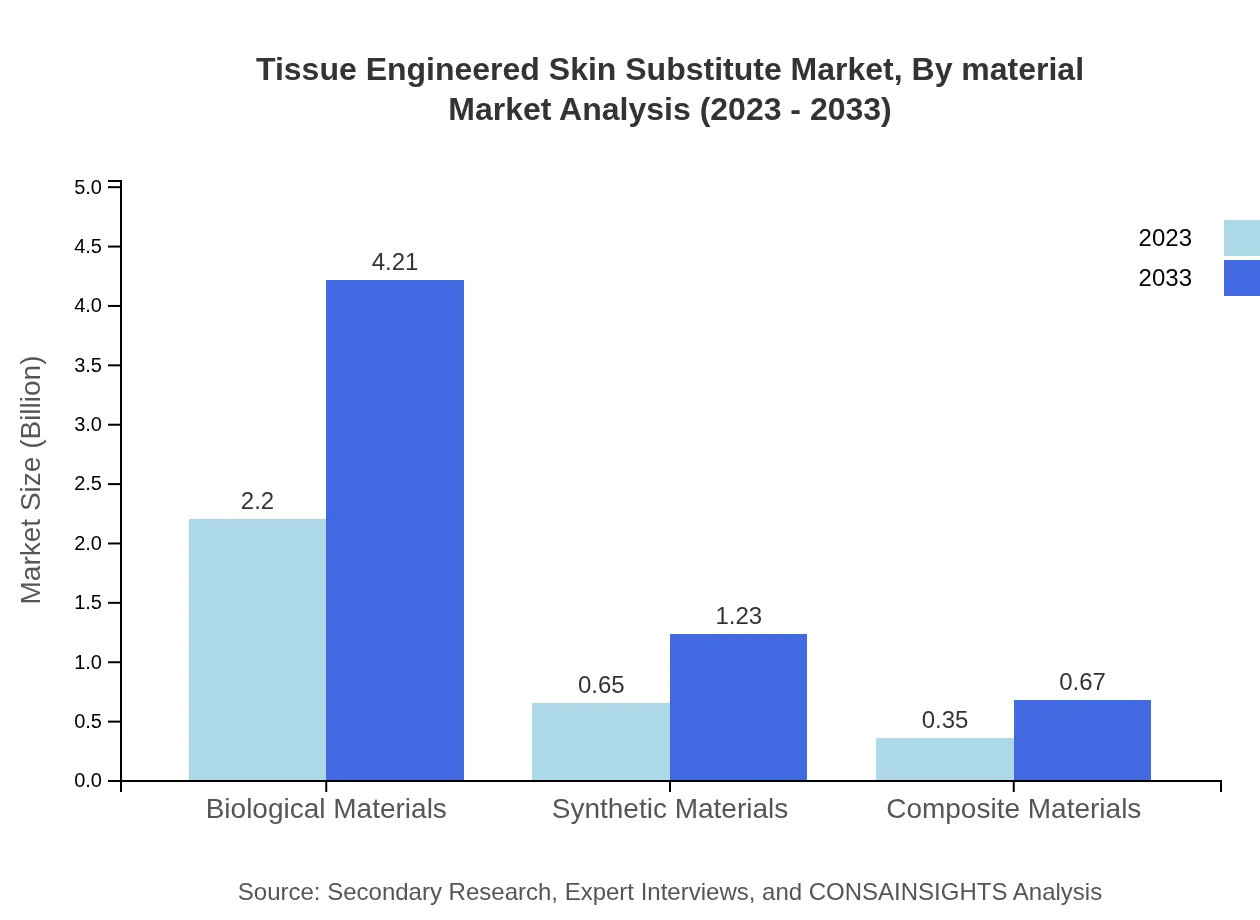
The Tissue Engineered Skin Substitute market can be segmented by material into biological, synthetic, and composite materials. As of 2023, biological materials are estimated to hold a significant share of the market, projected at $2.20 billion, with an expected growth to $4.21 billion by 2033. Synthetic and composite materials are also gaining traction, forecasting to grow based on their adaptability in varied applications.
Tissue Engineered Skin Substitute Market Analysis By Type
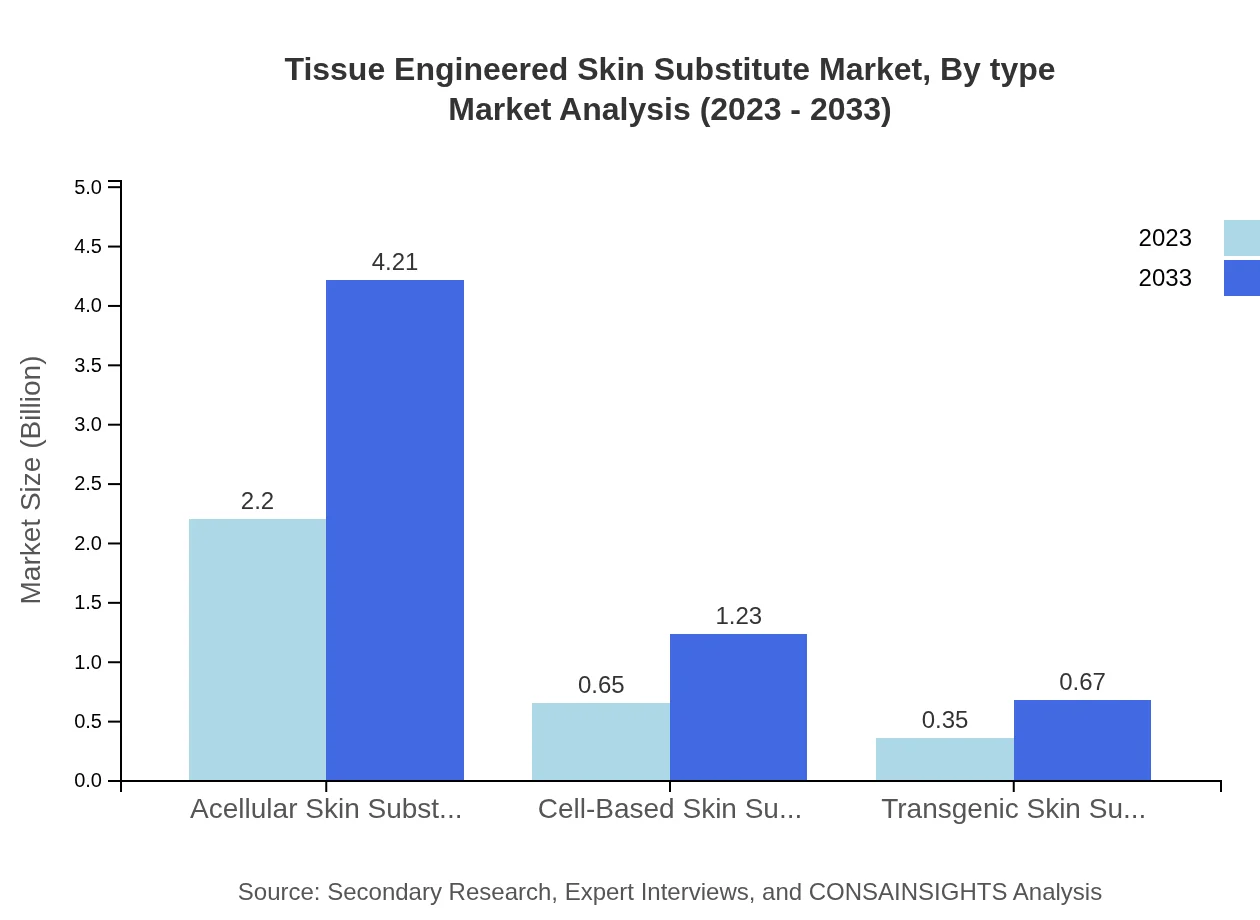
By type, the market is divided into acellular skin substitutes, cell-based skin substitutes, and transgenic skin substitutes. Acellular skin substitutes are leading the market with a projected size of $2.20 billion in 2023, increasing to $4.21 billion by 2033. The increasing demand for personalized medicine and advanced wound care products is propelling the growth of cell-based skin substitutes as well.
Tissue Engineered Skin Substitute Market Analysis By Application
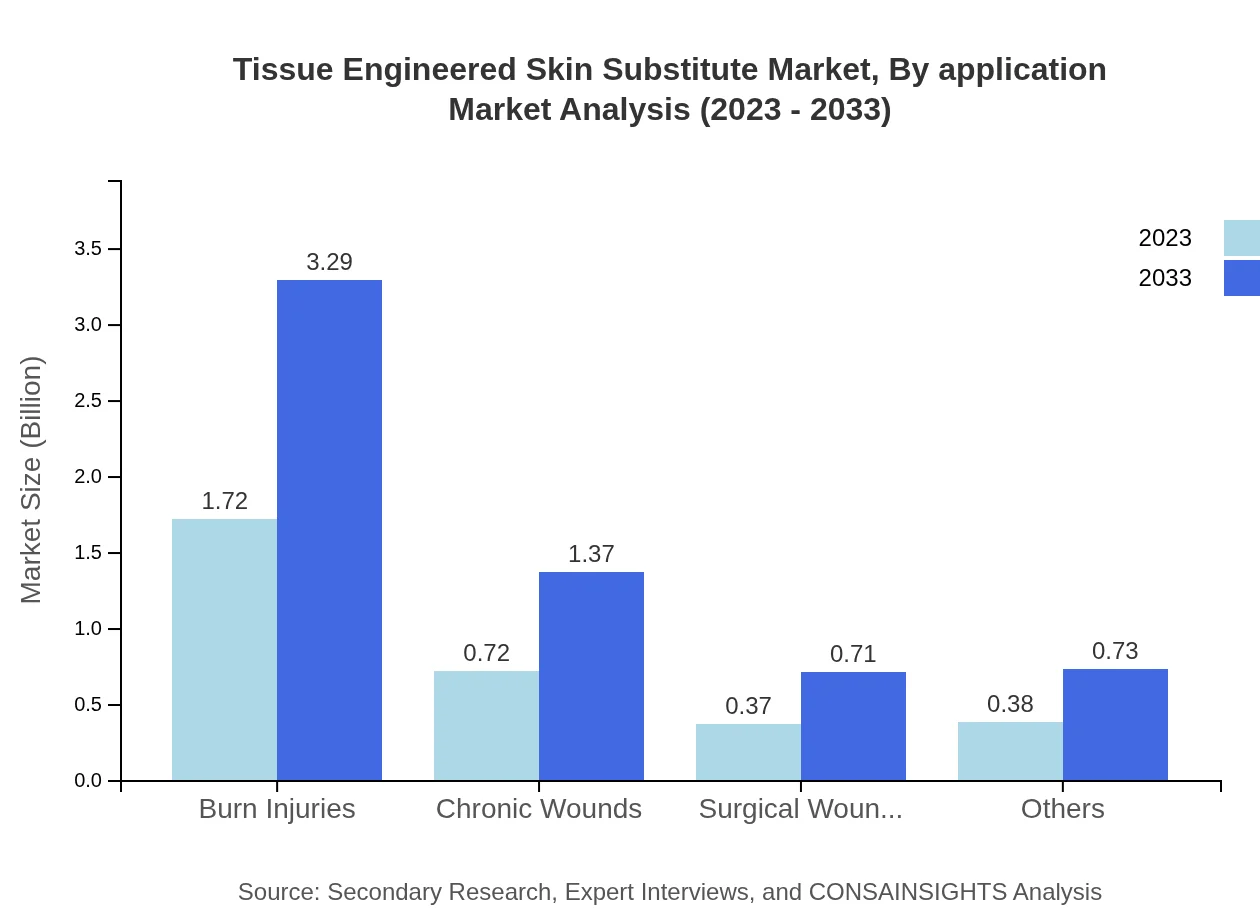
The applications of Tissue Engineered Skin Substitutes encompass burn injuries, chronic wounds, and surgical wounds. The burn injuries segment is expected to dominate the market, with sizes of approximately $1.72 billion in 2023, and forecasted growth to $3.29 billion by 2033. Chronic wounds also represent a significant segment showing considerable growth opportunities attributed to the aging population.
Tissue Engineered Skin Substitute Market Analysis By End User
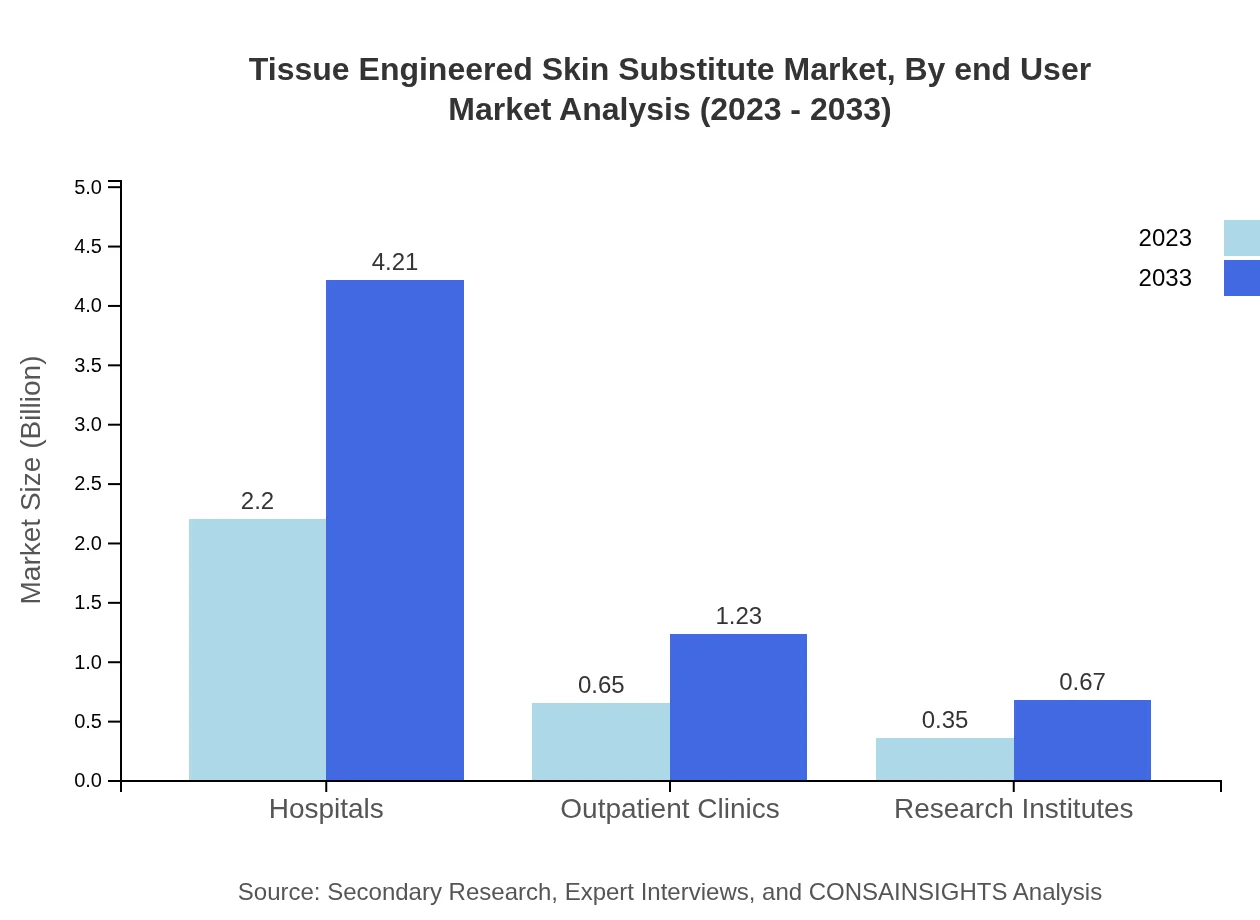
End-user segmentation includes hospitals, outpatient clinics, and research institutes. Hospitals dominate the market with a share of 68.86% in 2023, valuing at $2.20 billion, and are perceived to continue leading through 2033. This is due to the higher demand for advanced medical treatments in healthcare facilities.
Tissue Engineered Skin Substitute Market Analysis By Distribution Channel
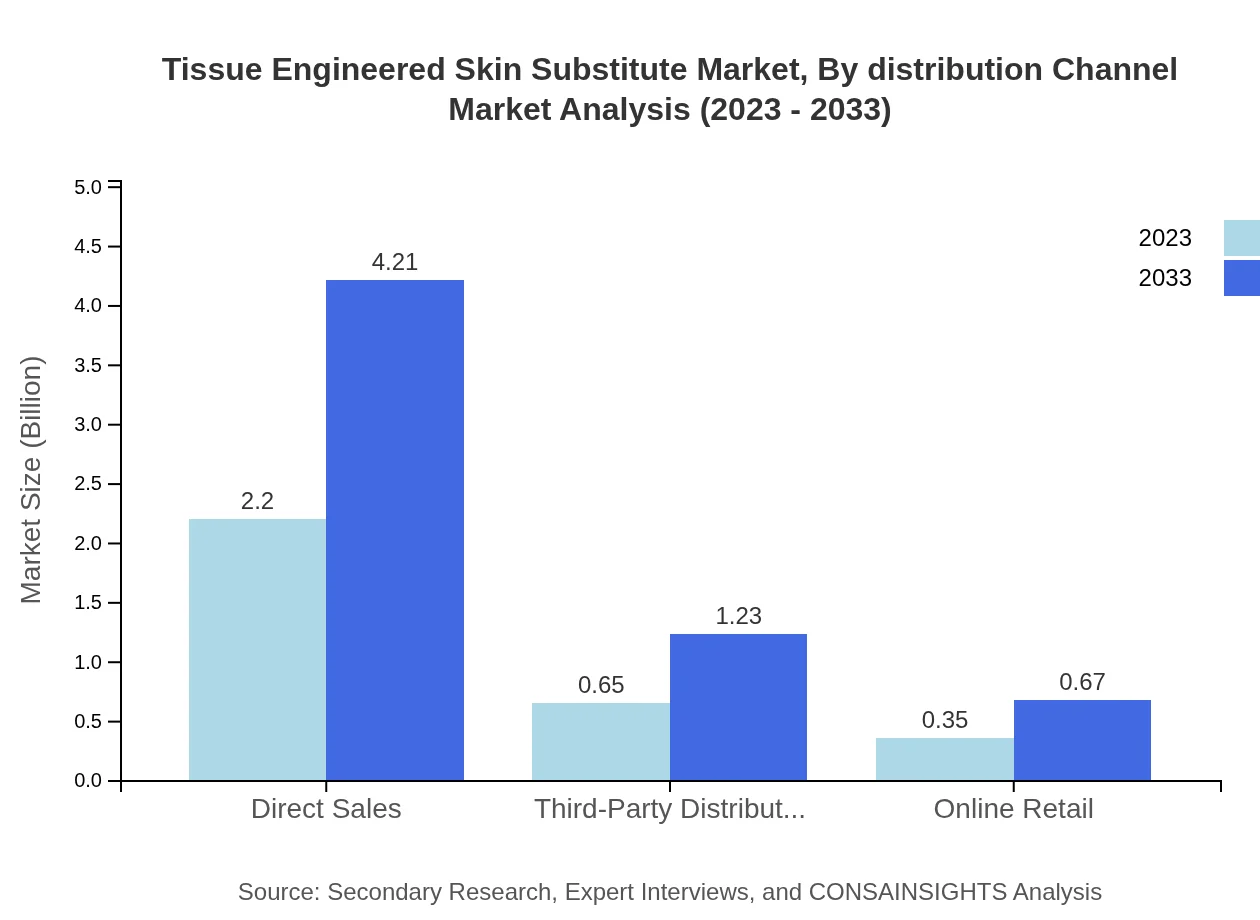
Distribution channels are classified into direct sales, third-party distributors, and online retail. Direct sales hold the largest share at 68.86% in 2023, amounting to $2.20 billion, and it's predicted to grow significantly due to the continuous advancement in supply chain efficiencies and provider partnerships.
Tissue Engineered Skin Substitute Market Trends and Future Forecast
Tell us your focus area and get a customized research report.
Global Market Leaders and Top Companies in Tissue Engineered Skin Substitute Industry
Organogenesis Holdings Inc.:
A leading regenerative medicine company specializing in the development of advanced wound care products and biologics.Acelity L.P. Inc. (now part of 3M):
Known for its comprehensive portfolio of wound management products and a pioneer in developing tissue-engineered solutions.Smith & Nephew plc:
An international medical technology business focused on advanced wound management and regenerative medicine solutions.Avita Medical Ltd.:
A regenerative medicine company that develops innovative technologies for the treatment of wounds, especially burn injuries.We're grateful to work with incredible clients.









FAQs
What is the market size of the Tissue Engineered Skin Substitute Market Report in 2023?
The market size in 2023 is $3.20 Billion, as reported for the Tissue Engineered Skin Substitute Market Report and used as the baseline for the 2023 to 2033 forecast.
How big will the market be in 2033?
The market is projected to reach $6.11 Billion by 2033 according to the report's forecast covering the period 2023 to 2033.
What is CAGR for the forecast period?
The reported compound annual growth rate (CAGR) for 2023 to 2033 is 6.5%, reflecting the market's expected growth trajectory over the decade.
Which region is the fastest Growing in the Tissue Engineered Skin Substitute Market Report market?
Latin America is the fastest-growing region, projected to expand from $0.09 Billion in 2023 to $0.18 Billion in 2033, reflecting an implied 7.18% CAGR over the forecast period.
Which region is the fastest Growing?
Latin America is cited as the regional market region, increasing from $0.09 Billion in 2023 to $0.18 Billion in 2033 at an implied 7.18% CAGR.
Who are the leading companies in this sector?
Top companies named include Organogenesis Holdings Inc., Acelity L.P. Inc. (now part of 3M), Smith & Nephew plc, and Avita Medical Ltd.
What are common end Users for these products?
Primary end-users listed are Hospitals, Outpatient Clinics, and Research Institutes, reflecting clinical and investigational application settings.
How are products typically distributed?
Distribution channels include Direct Sales, Third-Party Distributors, and Online Retail as the main routes to market identified in the report.
What is driving technological innovation in the market?
Innovations are propelled by advances in biological, synthetic, and composite materials, along with increasing R&D focus on personalized regenerative approaches.
What applications do skin substitutes address?
Key applications include Burn Injuries, Chronic Wounds, Surgical Wounds, and Others, covering a range of therapeutic and surgical uses.