

Tnf Inhibitors Market Report
First published: 20 October 2024 | Last updated: 28 May 2026 | Report Code: tnf-inhibitors
Tnf Inhibitors Market — USD 10.5 billion in 2023, Growing to USD 19.45B by 2033 at 6.2% CAGR
This report provides a comprehensive analysis of the TNF inhibitors market, offering insights into market size, growth potential, industry dynamics, regional performance, and future trends for the forecast period from 2023 to 2033.
Key Takeaways
- $10.50 Billion market size in 2023 and a projected $19.45 Billion by 2033, reflecting a 6.2% CAGR for 2023 to 2033.
- North America is largest regional market, while no single fastest-growing region is stated because regional CAGR differences remain within 0.15 percentage points.
- Europe and Asia Pacific show notable growth: Europe from $2.79 Billion to $5.17 Billion, Asia Pacific from $2.26 Billion to $4.19 Billion.
- Major industry players include AbbVie Inc., Johnson & Johnson, Amgen Inc., Sanofi, and Bristol-Myers Squibb.
- Market expansion is supported by higher autoimmune disease diagnosis rates, biologic therapy adoption, and advances in drug delivery and biosimilars.
Tnf Inhibitors Market Report — Executive Summary
North America remains largest market by forecast-period value, while no single fastest-growing region is stated because top regional growth rates are separated by less than 0.15 percentage points. This report examines the TNF inhibitors market across end users, drug classes, indications, distribution channels and regions, presenting a data-driven outlook for 2023 to 2033. The market recorded $10.50 Billion in 2023 and is expected to reach $19.45 Billion by 2033 at a 6.2% CAGR. Growth is underpinned by increased prevalence and diagnosis of autoimmune disorders, wider acceptance of biologic therapies and progress in formulation and delivery systems. Regional dynamics vary: North America leads in absolute market value, while Europe, Asia Pacific, Latin America and MEA each contribute distinct demand drivers such as healthcare investment, expanding patient access and rising awareness. The analysis includes segmentation by drug class (monoclonal antibodies, fusion proteins, other TNF inhibitors), routes of administration, and end-user settings (hospitals, specialty clinics, homecare). Competitive review highlights established pharmaceutical firms and their roles in product development and market shaping. Findings are supported by primary expert interviews and secondary data sources with internal validation.
Key Growth Drivers
- Rising prevalence and improved diagnosis of autoimmune diseases increasing therapy demand.
- Shift toward biologic treatments that target inflammation with higher clinical specificity.
- Advances in drug delivery and formulation improving patient adherence and treatment options.
- Increasing healthcare spending and broader patient access in multiple regions.
- Expansion of biosimilars and competitive pipelines enhancing affordability and availability.
| Metric | Value |
|---|---|
| Study Period | 2023 - 2033 |
| 2023 Market Size | $10.50 Billion |
| CAGR (2023-2033) | 6.2% |
| 2033 Market Size | $19.45 Billion |
| Top Companies | AbbVie Inc., Johnson & Johnson, Amgen Inc., Sanofi, Bristol-Myers Squibb |
| Published Date | 20 October 2024 |
| Last Modified Date | 28 May 2026 |
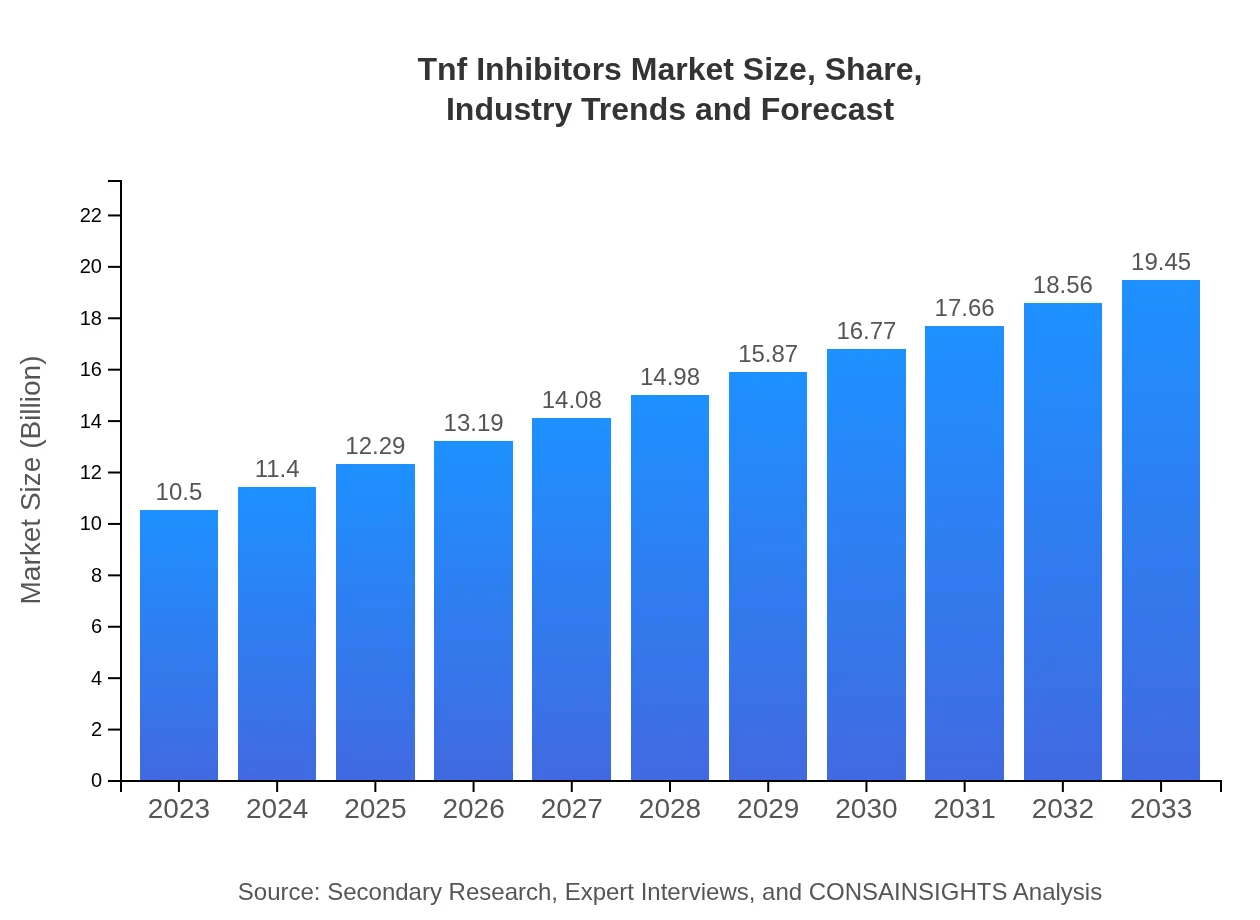
Tnf Inhibitors Market Overview
Customize Tnf Inhibitors Market Report market research report
- ✔ Get in-depth analysis of Tnf Inhibitors market size, growth, and forecasts.
- ✔ Understand Tnf Inhibitors's regional dynamics and industry-specific trends.
- ✔ Identify potential applications, end-user demand, and growth segments in Tnf Inhibitors
What is the Market Size & CAGR of Tnf Inhibitors Market Report market in 2023?
Tnf Inhibitors Industry Analysis
Tnf Inhibitors Market Segmentation and Scope
Tell us your focus area and get a customized research report.
Tnf Inhibitors Market Report Market Analysis Report by Region
Europe Tnf Inhibitors Market Report:
Europe grows from $2.79 Billion in 2023 to $5.17 Billion in 2033. 79 Billion in 2023 to $5.17 Billion in 2033, supported by increasing adoption of biologics, growing awareness of autoimmune disorders and evolving reimbursement frameworks that facilitate patient access to advanced therapies.Asia Pacific Tnf Inhibitors Market Report:
Asia Pacific grows from $2.26 Billion in 2023 to $4.19 Billion in 2033. 26 Billion in 2023 to $4.19 Billion in 2033, reflecting rising healthcare expenditure, improved diagnosis of autoimmune diseases and broader availability of biologic treatments and delivery innovations across the region.North America Tnf Inhibitors Market Report:
North America is largest regional market, rising from $3.54 Billion in 2023 to $6.56 Billion in 2033. Regional expansion is driven by high diagnosis rates, established healthcare infrastructure, and significant investment in biologic therapeutics and access programs.South America Tnf Inhibitors Market Report:
Latin America grows from $0.49 Billion in 2023 to $0.9 Billion in 2033. 49 Billion in 2023 to $0.90 Billion in 2033, with growth shaped by increased healthcare investment, wider disease awareness and gradual expansion of access to specialty treatments and biologics.Middle East & Africa Tnf Inhibitors Market Report:
Middle East and Africa grows from $1.42 Billion in 2023 to $2.63 Billion in 2033. 42 Billion in 2023 to $2.63 Billion in 2033, driven by expanding healthcare services, rising diagnosis rates and growing adoption of advanced therapeutics despite variable access across jurisdictions.Tell us your focus area and get a customized research report.
Research Methodology
Tnf Inhibitors Market Analysis By Drug Class
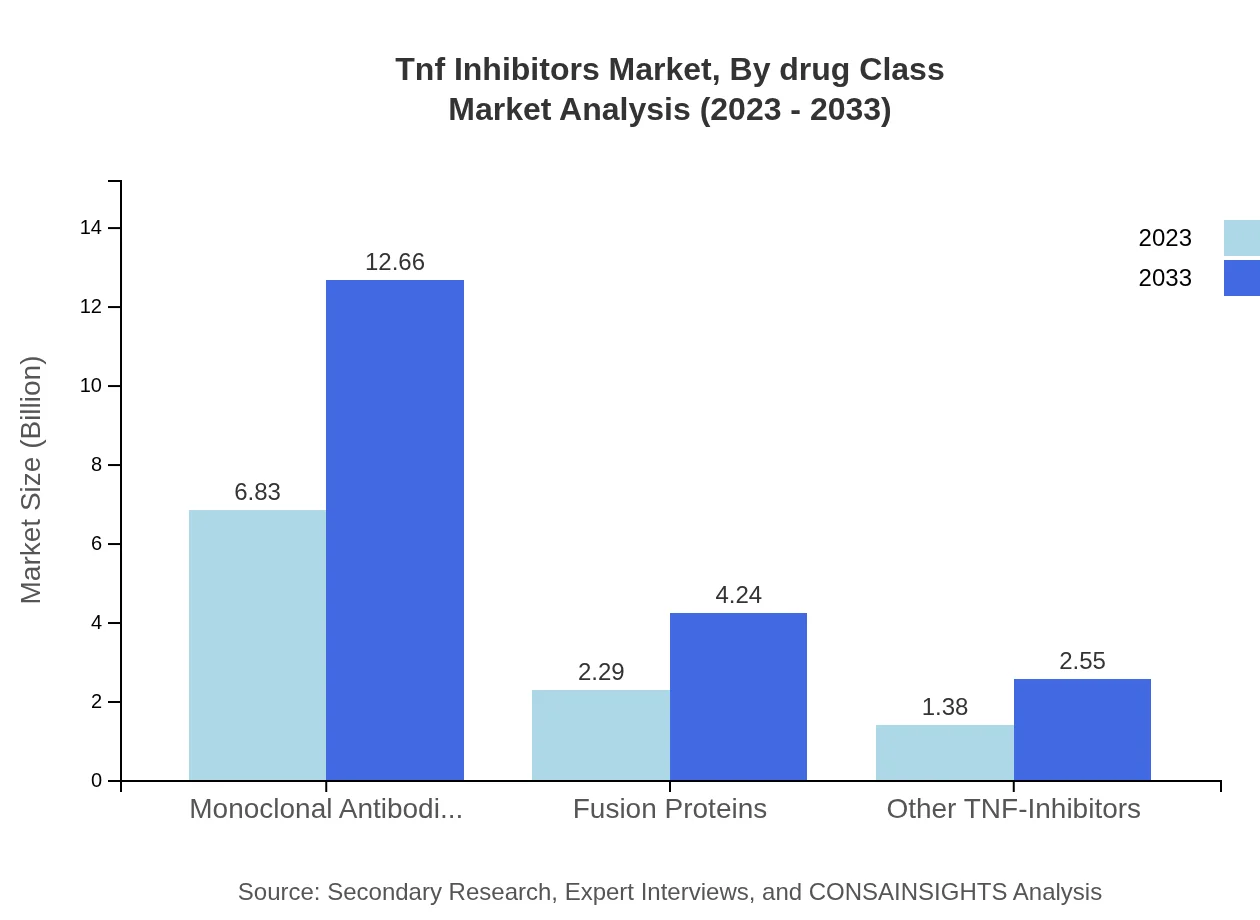
The TNF inhibitors market by drug class is dominated by monoclonal antibodies, representing a significant share of the market. Monoclonal antibodies contributed USD 10.81 billion in 2023 and are projected to reach USD 20.70 billion by 2033. Fusion proteins also hold a considerable part of the market due to their efficacy in treating chronic inflammatory diseases.
Tnf Inhibitors Market Analysis By Indication
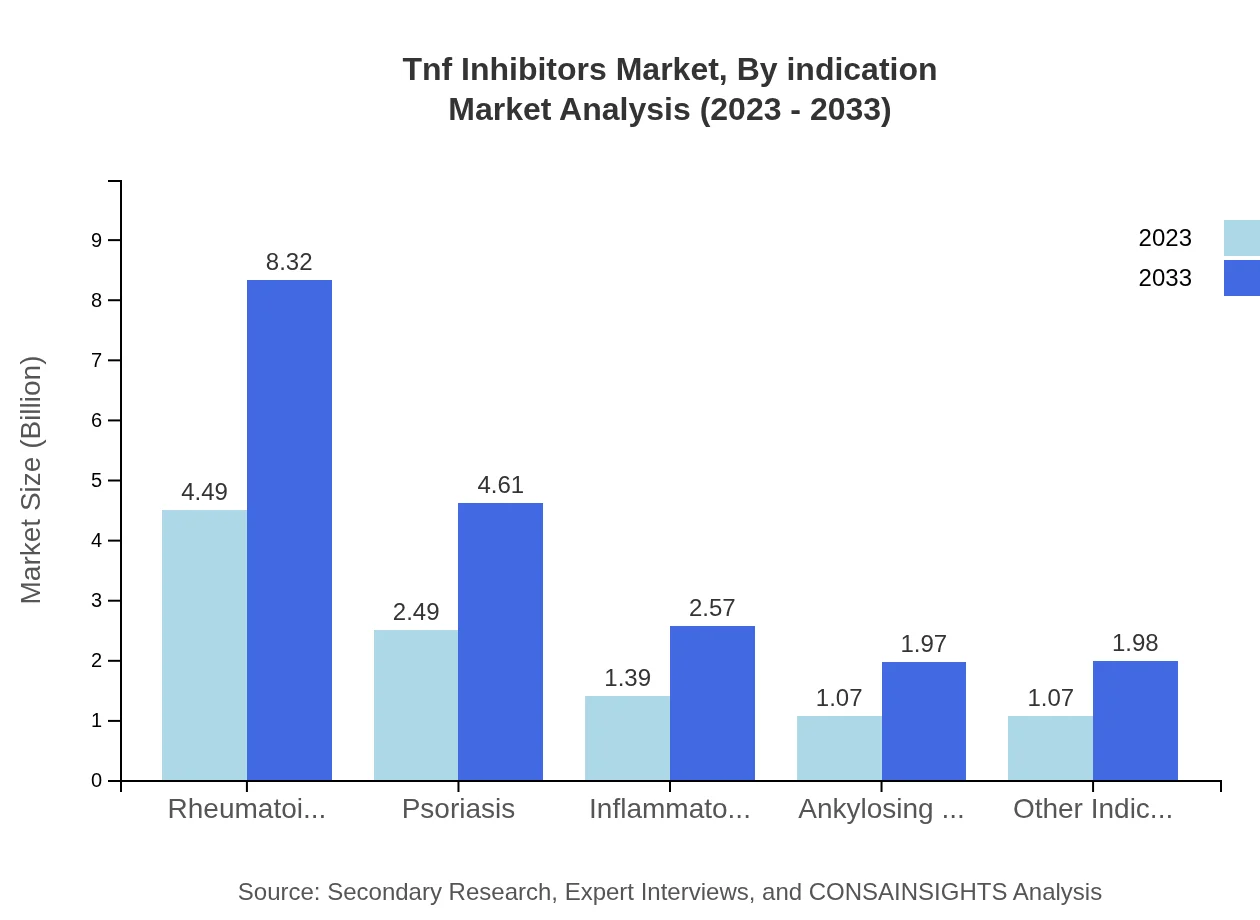
By indication, rheumatoid arthritis remains the leading segment in the TNF inhibitors market, valued at USD 4.49 billion in 2023 and expected to reach USD 8.32 billion by 2033. Other indications such as psoriasis and inflammatory bowel disease are also witnessing significant uptake, highlighting the versatility of TNF inhibitors in managing various inflammatory conditions.
Tnf Inhibitors Market Analysis By Route Of Administration
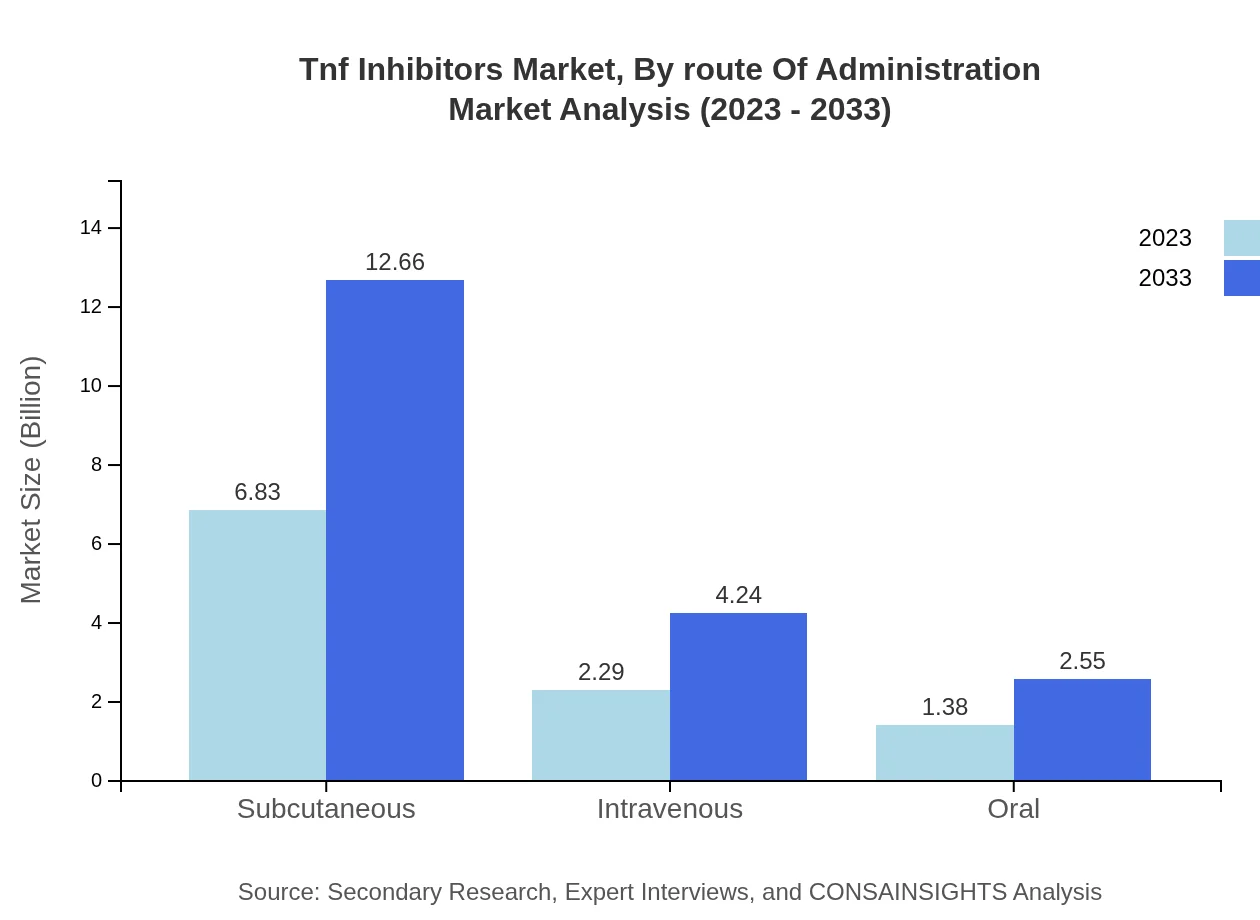
Subcutaneous injections dominate the TNF inhibitors market by route of administration, accounting for USD 6.83 billion in 2023, with a forecasted growth to USD 12.66 billion by 2033. This preference is largely due to ease of administration and patient compliance. Intravenous and oral routes also contribute to the market but with a smaller share.
Tnf Inhibitors Market Analysis By End User
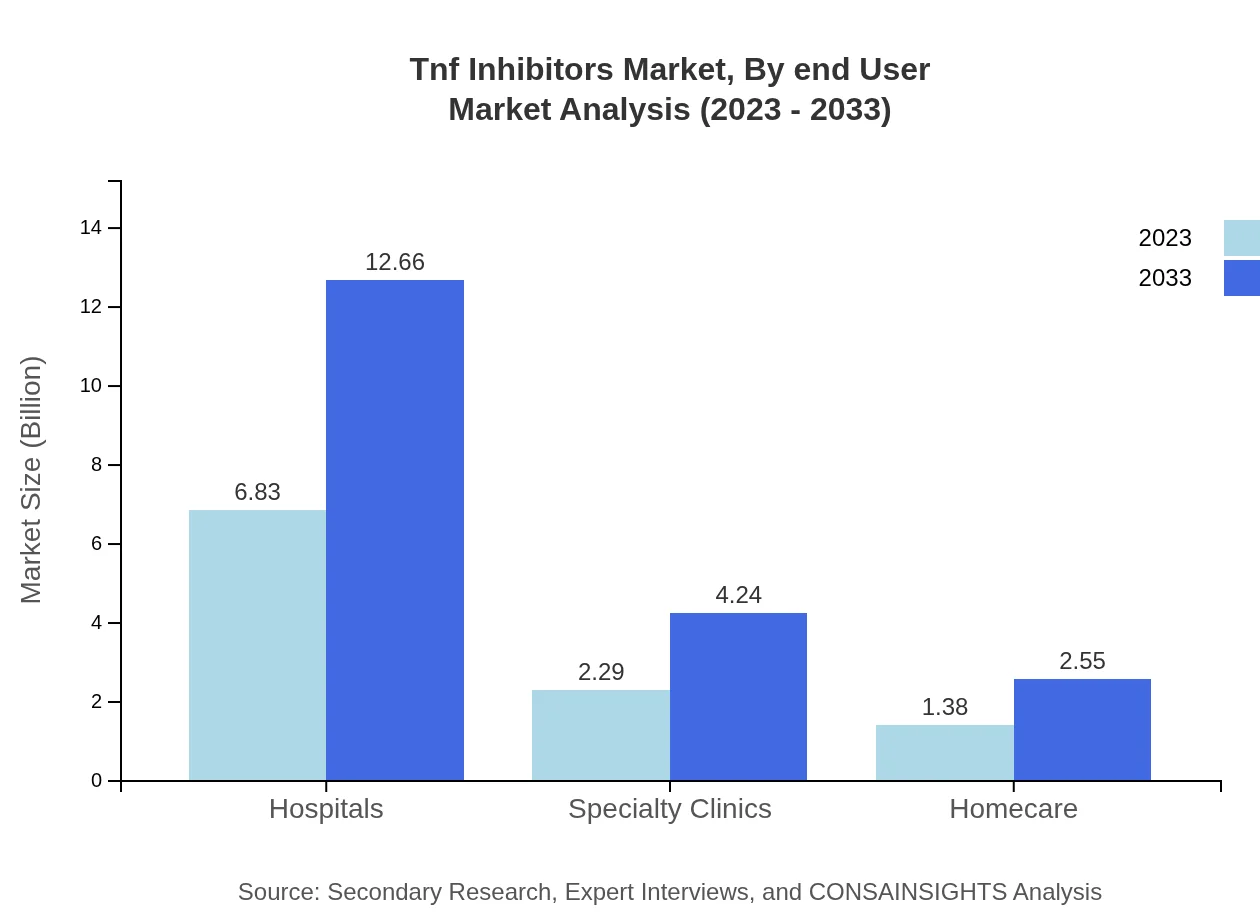
Hospitals are the primary end-users of TNF inhibitors, accounting for USD 6.83 billion in 2023 and set to grow to USD 12.66 billion by 2033. Specialty clinics and homecare settings also experience growth owing to increased patient preference for outpatient therapies and the rise of telemedicine and home healthcare services.
Tnf Inhibitors Market Analysis By Distribution Channel
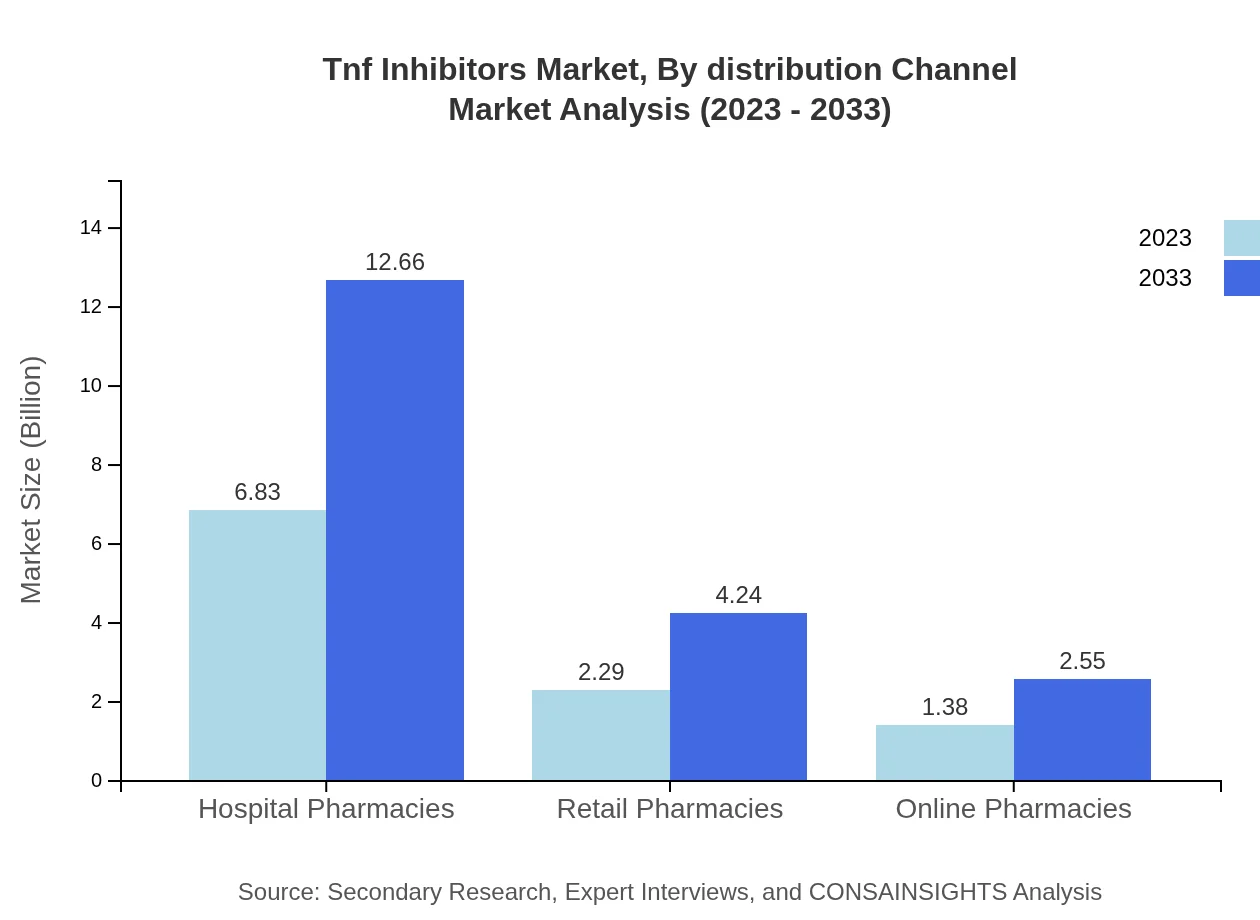
Hospital pharmacies dominate the distribution channels for TNF inhibitors, contributing USD 6.83 billion in 2023 and expected to reach USD 12.66 billion by 2033. Retail and online pharmacies also play crucial roles in improving access to these therapies, especially with the increasing trend of e-commerce in healthcare.
Tnf Inhibitors Market Trends and Future Forecast
Tell us your focus area and get a customized research report.
Global Market Leaders and Top Companies in Tnf Inhibitors Industry
AbbVie Inc.:
AbbVie is a global biopharmaceutical company known for its leading TNF inhibitor, Humira, which has transformed the treatment landscape for autoimmune disorders.Johnson & Johnson:
Johnson & Johnson is a major player in the TNF inhibitors market, known for Remicade, which provides effective treatment options for various inflammatory conditions.Amgen Inc.:
Amgen is recognized for its innovative approaches in biologics and has made substantial contributions with its TNF inhibitors like Enbrel.Sanofi:
Sanofi offers a range of therapeutic options in the TNF inhibitors sector, particularly through its product, Kevzara, contributing to significant market share.Bristol-Myers Squibb:
Bristol-Myers Squibb is known for its immunology portfolio, including TNF inhibitors that cater to patients with severe autoimmune diseases.We're grateful to work with incredible clients.








FAQs
What is the market size of the TNF inhibitors market in 2023?
The market size for TNF inhibitors in 2023 is $10.50 Billion, according to the report's baseline figure for that year.
How big will the TNF inhibitors market be in 2033?
By 2033 the market is projected to reach $19.45 Billion, reflecting the report's end-period forecast for the decade 2023 to 2033.
What is CAGR for the TNF inhibitors market during 2023 to 2033?
The compound annual growth rate for the TNF inhibitors market over 2023 to 2033 is 6.2%, as stated in the forecast.
Is there a single fastest Growing region in the Tnf Inhibitors Market Report market?
No single fastest-growing region is stated for the Tnf Inhibitors Market Report market because the top regional implied CAGR values are within 0.15 percentage points of each other, making the ranking too close to call reliably.
Which companies are named as leading participants?
Top companies listed in the report include AbbVie Inc., Johnson & Johnson, Amgen Inc., Sanofi, and Bristol-Myers Squibb.
How are market segments defined in the report?
The report segments the market by end user, drug class, indication, distribution channel and route of administration, using specified subsegments for each category.
What indications drive TNF inhibitor usage?
Key indications include rheumatoid arthritis, psoriasis, inflammatory bowel disease, ankylosing spondylitis and other related conditions noted among the report's indication subsegments.
Who contributed to the research methodology?
Research combined primary interviews with industry experts and secondary sources such as company reports, plus data triangulation and internal validation led by subject-matter analysts.