

Implantable Drug Delivery Devices Market Report
First published: 11 October 2024 | Last updated: 25 May 2026 | Report Code: implantable-drug-delivery-devices
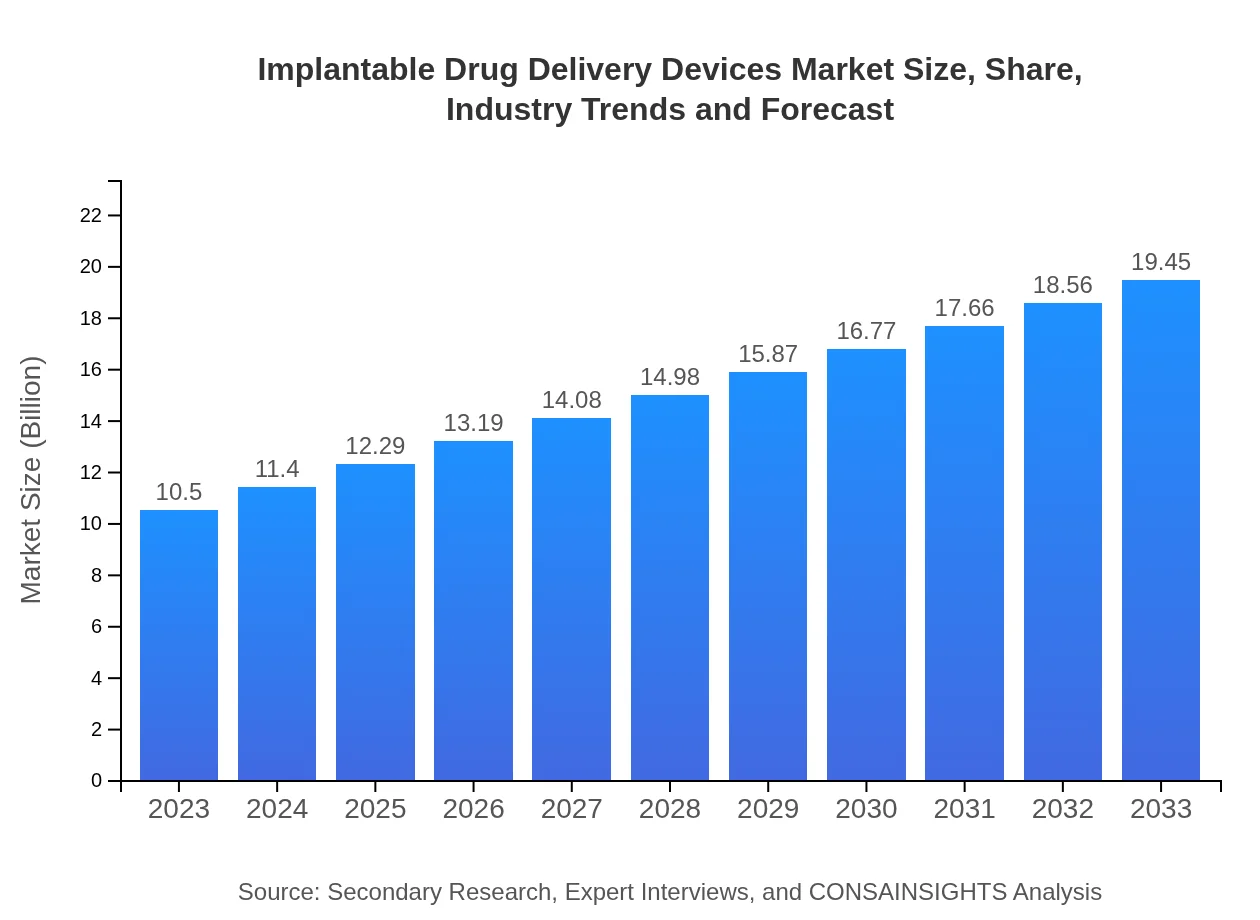
Implantable Drug Delivery Devices Market — USD 10.5 billion in 2023, Growing to USD 19.45B by 2033 at 6.2% CAGR
This report provides a comprehensive analysis of the Implantable Drug Delivery Devices market, including insights on market size, growth trends, and forecasts from 2023 to 2033. It encompasses various segments, regional analyses, and key players to furnish stakeholders with valuable data to inform strategic decisions.
Key Takeaways
- Global market grows from $10.50 Billion in 2023 to $19.45 Billion by 2033 at a 6.2% CAGR.
- North America is largest regional market, while no single fastest-growing region is stated because regional CAGR differences remain within 0.15 percentage points.
- Europe and Asia Pacific show sizable absolute growth: Europe from $3.17 Billion to $5.87 Billion; Asia Pacific from $2.00 Billion to $3.70 Billion.
- Device innovation and integration of smart delivery mechanisms are primary trends supporting long-term expansion.
- Leading companies include Boston Scientific Corporation, Medtronic, Roche, Johnson & Johnson, and Abbott Laboratories.
Implantable Drug Delivery Devices Market Report — Executive Summary
North America remains largest market by forecast-period value, while no single fastest-growing region is stated because top regional growth rates are separated by less than 0.15 percentage points. The implantable drug delivery devices market is on a sustained growth path driven by technological advances, wider therapeutic applications, and mounting demand for long-term, targeted therapies. The market size increases from $10.50 Billion in 2023 to $19.45 Billion in 2033, with a 6.2% CAGR across the forecast. Key growth drivers include improved device design, expanded use in oncology and neurology, and investments by major medical device firms. Regional dynamics vary: North America is the largest market, while other regions show important gains in absolute terms. The competitive landscape features established medical device manufacturers focusing on R&D, regulatory engagement, and strategic partnerships. Market segmentation spans device types such as infusion pumps, microchips, and implants, alongside delivery technologies from passive to smart systems. Regulatory pathways and development costs remain important considerations for entrants and incumbents. The report combines primary expert interviews and secondary sources to present a validated view of market trajectories and strategic implications for stakeholders.
Key Growth Drivers
- Advances in programmable and smart delivery technologies increase therapeutic precision and patient adherence.
- Rising prevalence of chronic conditions expands demand for sustained and targeted drug administration.
- Ongoing R&D investments and product launches by major medical device companies accelerate commercialization.
- Expanded therapeutic applications in oncology and neurology broaden clinical use cases and procurement by healthcare providers.
- Greater adoption of implantable options in post-surgical and home-care settings supports device utilization.
| Metric | Value |
|---|---|
| Study Period | 2023 - 2033 |
| 2023 Market Size | $10.50 Billion |
| CAGR (2023-2033) | 6.2% |
| 2033 Market Size | $19.45 Billion |
| Top Companies | Boston Scientific Corporation, Medtronic , Roche, Johnson & Johnson, Abbott Laboratories |
| Published Date | 11 October 2024 |
| Last Modified Date | 25 May 2026 |
Implantable Drug Delivery Devices Market Overview
Customize Implantable Drug Delivery Devices Market Report market research report
- ✔ Get in-depth analysis of Implantable Drug Delivery Devices market size, growth, and forecasts.
- ✔ Understand Implantable Drug Delivery Devices's regional dynamics and industry-specific trends.
- ✔ Identify potential applications, end-user demand, and growth segments in Implantable Drug Delivery Devices
What is the Market Size & CAGR of Implantable Drug Delivery Devices Market Report market in 2023?
Implantable Drug Delivery Devices Industry Analysis
Implantable Drug Delivery Devices Market Segmentation and Scope
Tell us your focus area and get a customized research report.
Implantable Drug Delivery Devices Market Report Market Analysis Report by Region
Europe Implantable Drug Delivery Devices Market Report:
Europe grows from $3.17 Billion in 2023 to $5.87 Billion in 2033. Regional expansion is supported by growing clinical adoption, active R&D across device suppliers, and regulatory channels such as CE Marked approvals.Asia Pacific Implantable Drug Delivery Devices Market Report:
Asia Pacific grows from $2 Billion in 2023 to $3.7 Billion in 2033. Growth is driven by broader access to advanced therapies, increasing healthcare investment, and rising demand for long-term treatment options in key therapeutic areas.North America Implantable Drug Delivery Devices Market Report:
North America is largest regional market, rising from $3.63 Billion in 2023 to $6.73 Billion in 2033. The region’s scale reflects mature healthcare systems, high device adoption rates, and significant activity by leading medical device manufacturers.South America Implantable Drug Delivery Devices Market Report:
Latin America grows from $0.52 Billion in 2023 to $0.96 Billion in 2033. Uptake is influenced by growing healthcare infrastructure investment and gradual adoption of implantable therapies across clinical settings.Middle East & Africa Implantable Drug Delivery Devices Market Report:
Middle East and Africa grows from $1.18 Billion in 2023 to $2.19 Billion in 2033. Market growth is supported by expanding healthcare services, increased focus on chronic disease management, and rising interest in advanced drug delivery solutions.Tell us your focus area and get a customized research report.
Research Methodology
Implantable Drug Delivery Devices Market Analysis By Device Type
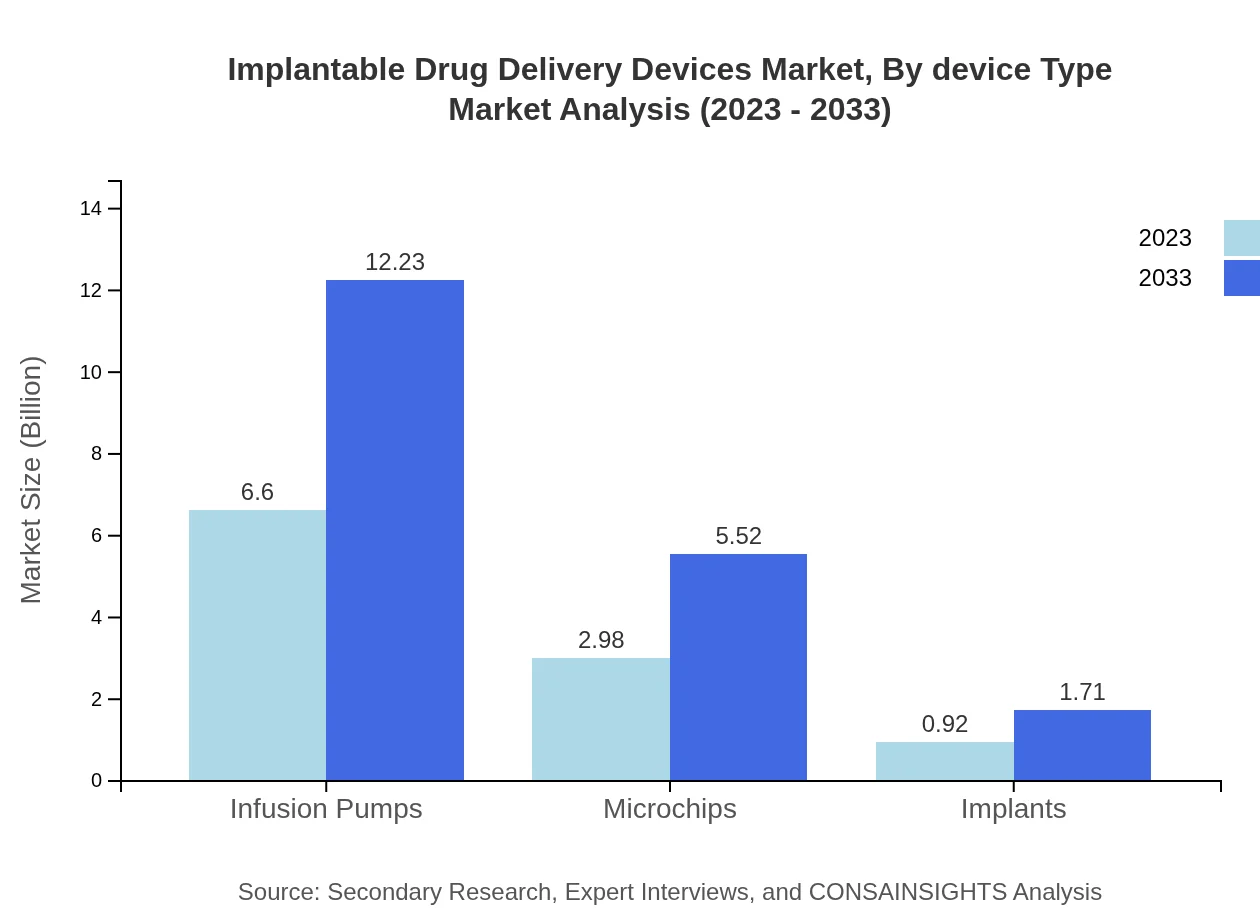
In 2023, the infusion pumps segment holds a significant market size of $6.60 billion, expected to reach $12.23 billion by 2033, accounting for 62.85% share of the market. Other segments, including microchips and smart delivery systems, also show growing trends, reflecting the diversity of delivery mechanisms tailored to specific therapeutic applications.
Implantable Drug Delivery Devices Market Analysis By Therapy Type
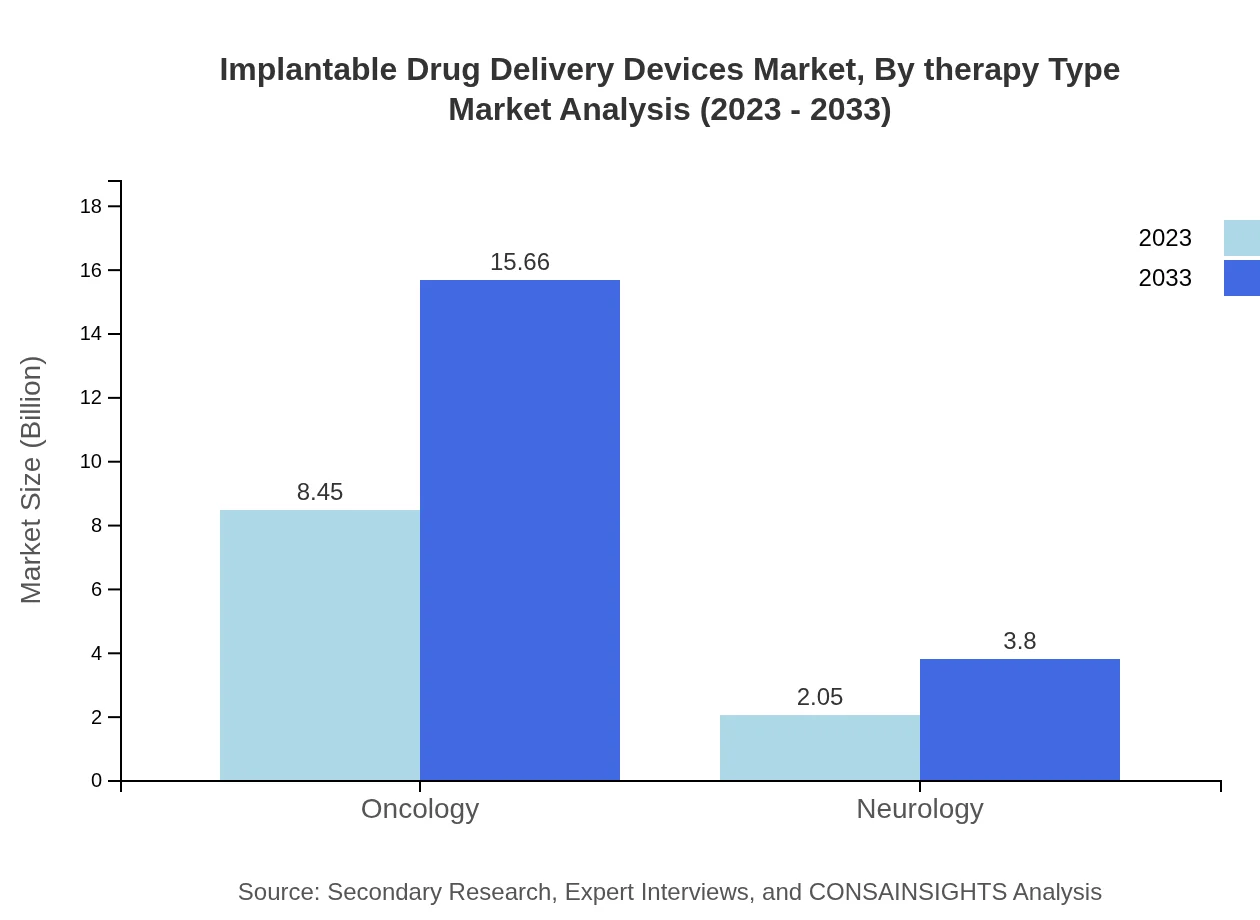
Oncology remains the leading therapy type, projected at $8.45 billion in 2023 and expected to grow to $15.66 billion by 2033, dominating with about 80.48% market share. Neurology devices follow, yet at a lower ₹2.05 billion market projection for 2023, rising to $3.80 billion by 2033, highlighting the urgent demand for effective drug delivery in neurological treatments.
Implantable Drug Delivery Devices Market Analysis By Technology
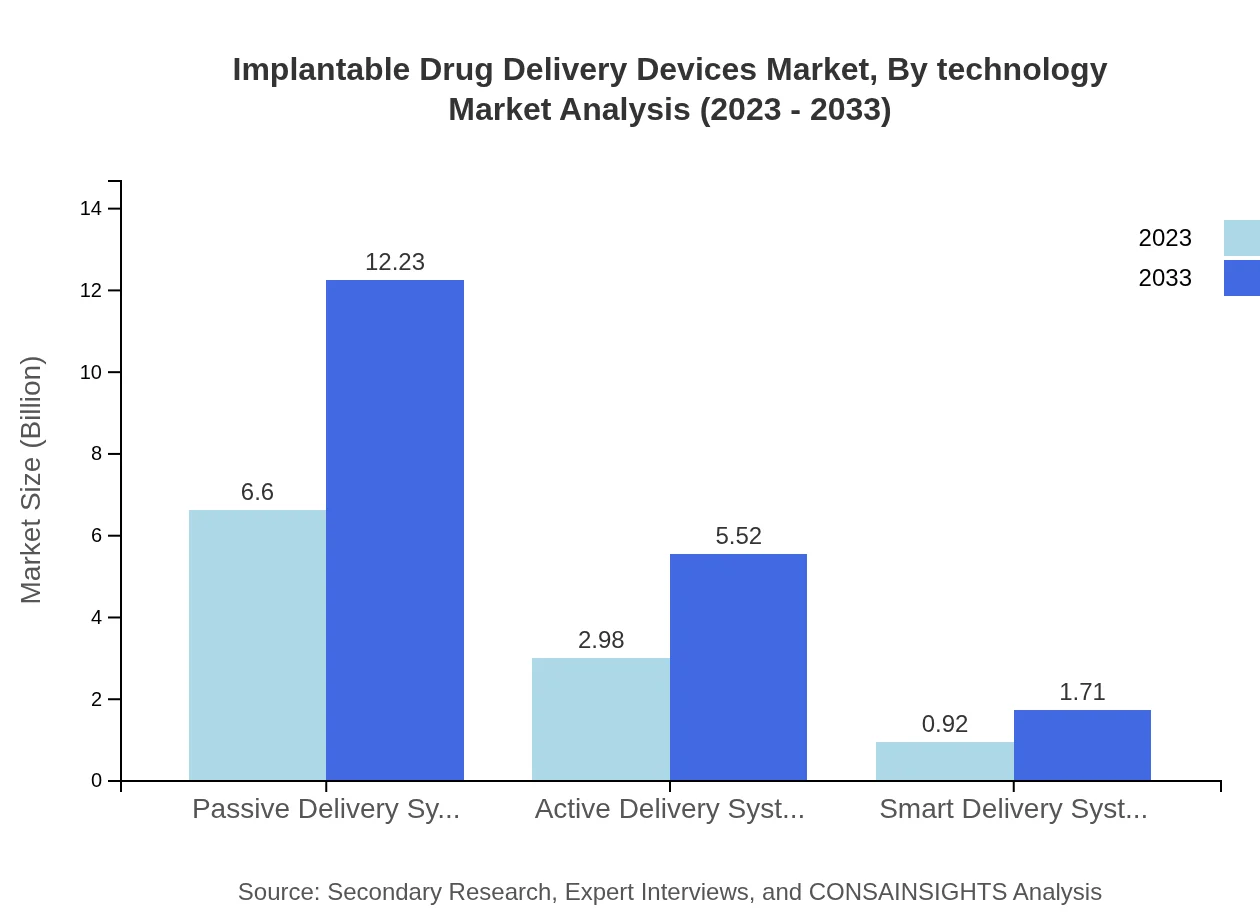
The market segmentation by technology showcases passive delivery systems holding a market size of $6.60 billion in 2023, ascending to $12.23 billion by 2033, reflecting their prominence in sustained drug delivery applications. Active and smart systems are also on the rise, driven by the need for enhanced monitoring and drug dispensing capabilities, reinforcing their presence in treatment protocols.
Implantable Drug Delivery Devices Market Analysis By End User
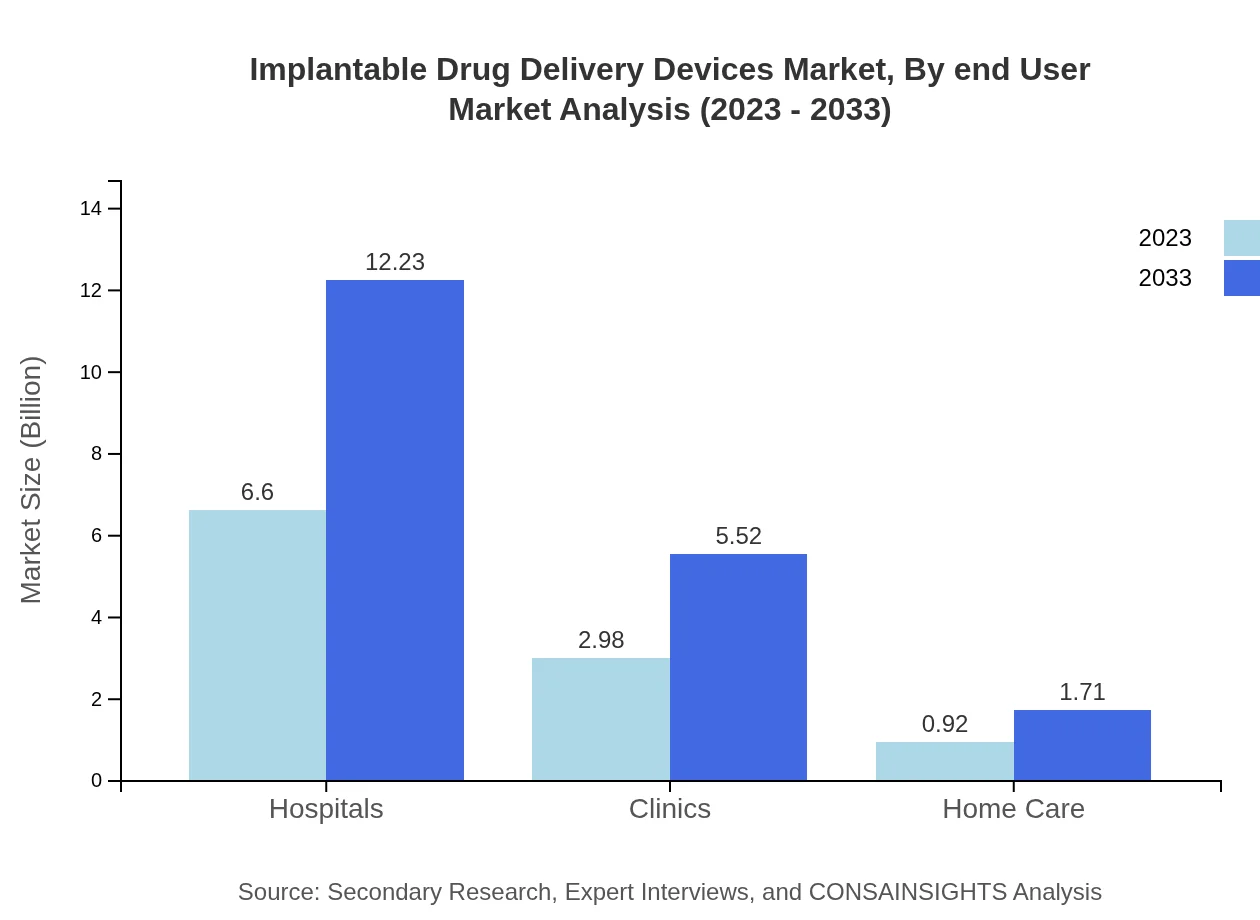
Hospitals represent the largest end-user segment with a market size of $6.60 billion in 2023 and an estimated growth to $12.23 billion by 2033, with a consistent share of 62.85%. Clinics and home care settings are increasingly adopting implantable devices, which indicates a trend toward outpatient care solutions.
Implantable Drug Delivery Devices Market Analysis By Regulatory Pathway
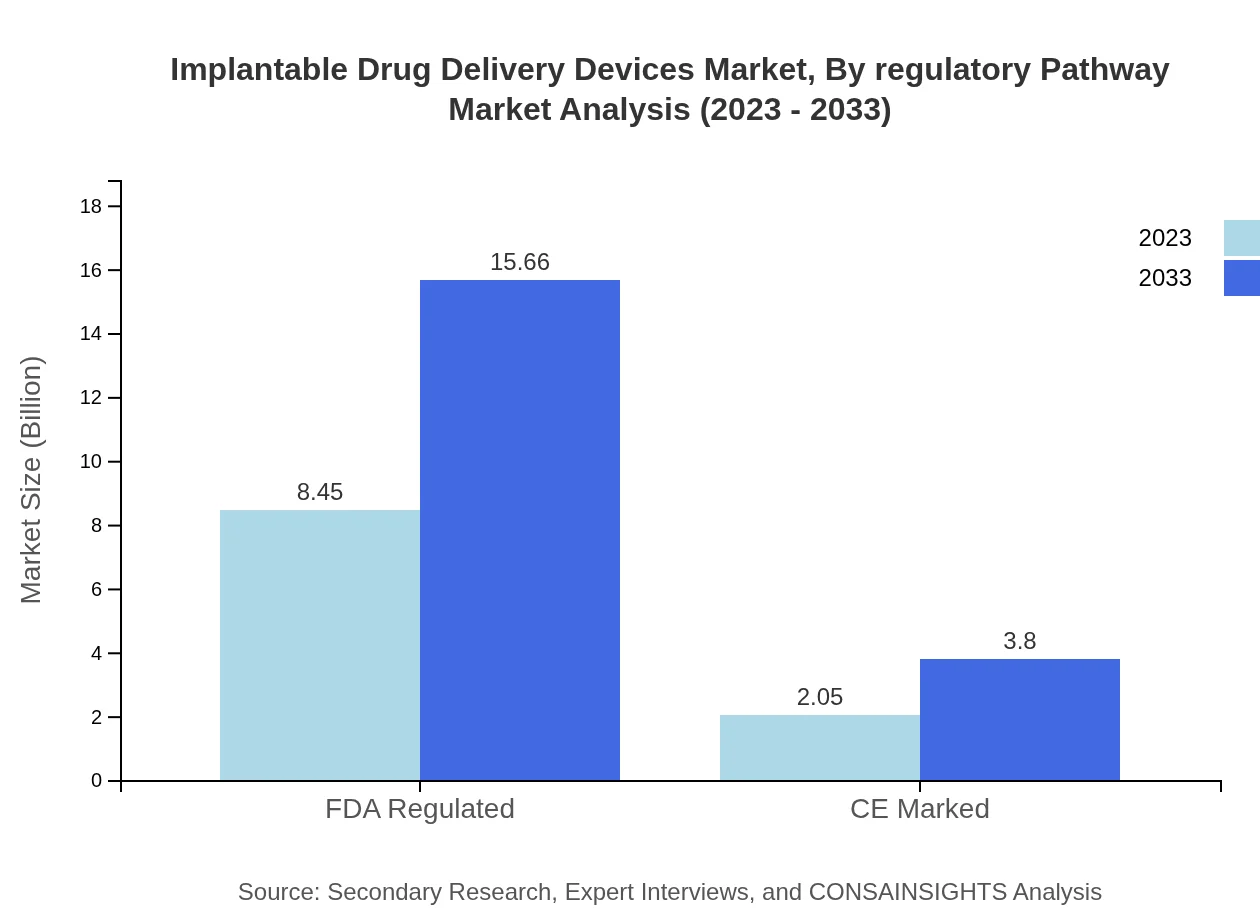
FDA approved devices dominate the regulatory pathway segment with a market size of $8.45 billion in 2023, growing to $15.66 billion by 2033. Their significant share reflects stringent approval processes fostering advancements, while devices with CE marking gain traction within the European market, registering a market size growth from $2.05 billion in 2023 to $3.80 billion by 2033.
Implantable Drug Delivery Devices Market Trends and Future Forecast
Tell us your focus area and get a customized research report.
Global Market Leaders and Top Companies in Implantable Drug Delivery Devices Industry
Boston Scientific Corporation:
A leading developer and manufacturer of medical devices, Boston Scientific specializes in innovative implantable drug delivery systems in various therapeutic areas, significantly contributing to market advancements through R&D.Medtronic :
Medtronic is a renowned global healthcare solutions company that develops and supplies a wide array of implantable drug delivery devices, focusing on enhancing patient outcomes through technological innovation.Roche:
Roche is a key player in pharmaceuticals and diagnostics, providing implantable drug delivery devices that improve treatment administration and patient adherence, mainly in oncology and chronic disease management.Johnson & Johnson:
A diversified global healthcare giant offering a variety of implantable devices, Johnson & Johnson is notable for its extensive research and development efforts in drug delivery technologies.Abbott Laboratories:
Abbott focuses on high-quality healthcare products including implantable drug delivery devices, playing a significant role in innovating drug therapies and operational methodologies within the sector.We're grateful to work with incredible clients.









FAQs
What is the market size of implantable drug delivery devices in 2023?
The market size in 2023 is $10.50 Billion as reported, representing the baseline for forecasting through the 2023 to 2033 period.
How big will the implantable drug delivery devices market be in 2033?
Projected market value for 2033 is $19.45 Billion, reflecting growth across device types and regional markets during the forecast period.
What is CAGR for the forecast period?
The compound annual growth rate for 2023 to 2033 is 6.2%, based on the reported 2023 and 2033 market values.
Is there a single fastest Growing region in the Implantable Drug Delivery Devices Market Report market?
No single fastest-growing region is stated for the Implantable Drug Delivery Devices Market Report market because the top regional implied CAGR values are within 0.15 percentage points of each other, making the ranking too close to call reliably.
Why is North America the largest regional market?
North America’s leadership reflects established healthcare infrastructure, advanced medical device adoption, and notable investment by leading medical technology firms.
Which companies lead the implantable drug delivery devices market?
Top companies listed include Boston Scientific Corporation, Medtronic, Roche, Johnson & Johnson, and Abbott Laboratories as principal market participants.
What are common device types in this market?
Reported device types include infusion pumps, microchips, and implants, which cover a range of delivery mechanisms and clinical applications.
How are regulatory pathways categorized in the report?
Regulatory pathways are presented as FDA Regulated and CE Marked, reflecting principal compliance routes in key markets.
What primary therapies drive demand for these devices?
Therapeutic areas called out in the report include oncology and neurology, which are central to sustained demand for implantable delivery solutions.
Who are the end users for implantable drug delivery devices?
End-user segments listed include hospitals, clinics, and home care settings as principal adoption channels for these devices.