

Next Generation Sequencing Market Report
First published: 11 October 2024 | Last updated: 08 July 2026 | Report Code: next-generation-sequencing
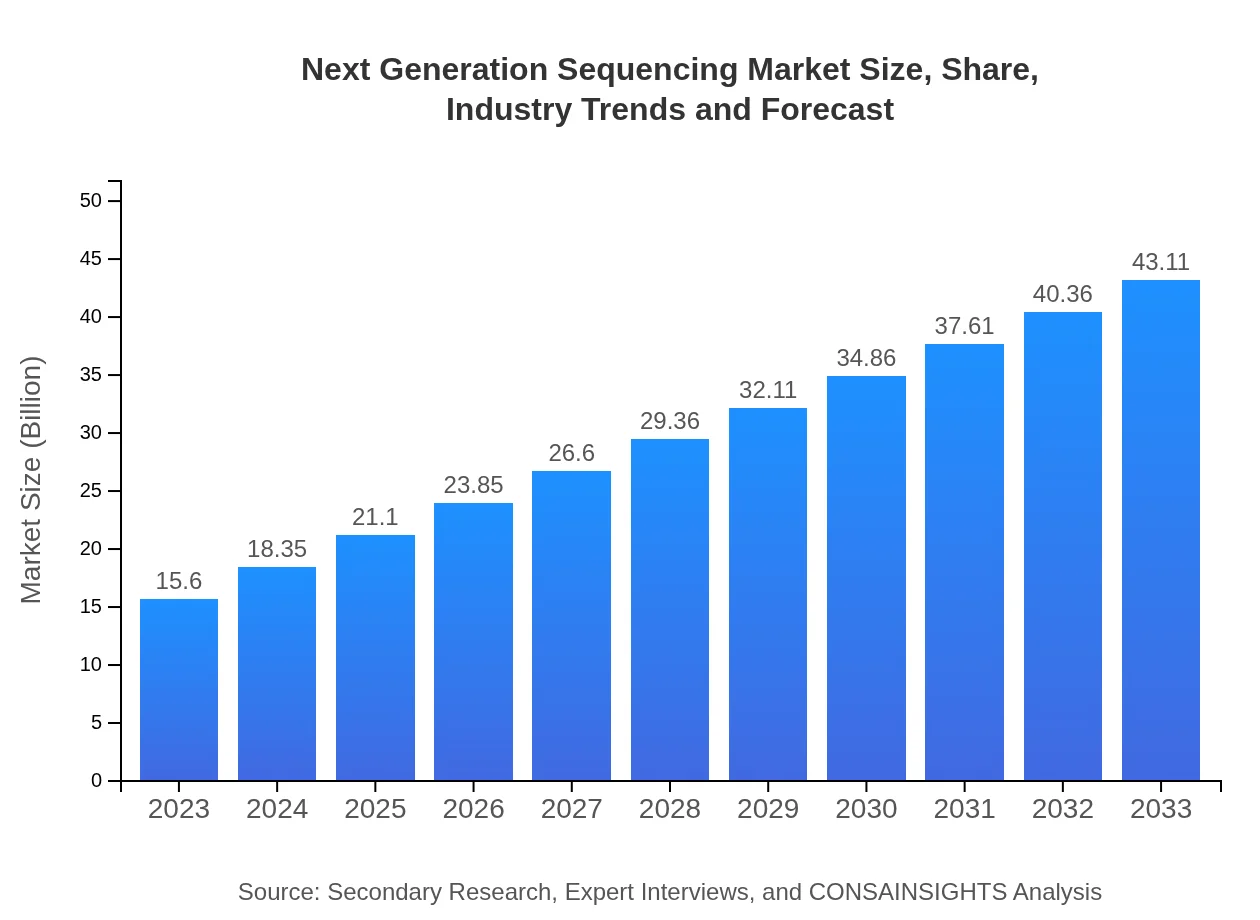
Next Generation Sequencing Market — USD 15.6 billion in 2023, Growing to USD 43.11B by 2033 at 10.3% CAGR
This report provides a comprehensive analysis of the Next Generation Sequencing (NGS) market, covering market size, growth trends, segmentation, regional insights, and forecasts from 2023 to 2033.
Key Takeaways
- Global market projected from $15.60 Billion in 2023 to $43.11 Billion in 2033 at a 10.3% CAGR.
- Europe is largest regional market, while no single fastest-growing region is stated because regional CAGR differences remain within 0.15 percentage points.
- North America grows from $5.16 Billion in 2023 to $14.27 Billion in 2033, reflecting sustained demand in clinical and research settings.
- Asia Pacific expands from $2.93 Billion in 2023 to $8.09 Billion in 2033 driven by rising genomics adoption.
- Top companies include Illumina, Inc., Thermo Fisher Scientific, Inc., and QIAGEN N.V.
- Segmentation highlights include technologies such as Illumina Sequencing, Ion Torrent Sequencing and Nanopore Sequencing across diverse end users.
Next Generation Sequencing Market Report — Executive Summary
Europe remains largest market by forecast-period value, while no single fastest-growing region is stated because top regional growth rates are separated by less than 0.15 percentage points. The Next Generation Sequencing market is forecast to grow from $15.60 Billion in 2023 to $43.11 Billion in 2033 at a 10.3% CAGR. Key forces include technological innovation in sequencing platforms, greater adoption in clinical diagnostics and research, and enhanced bioinformatics capabilities. Europe is identified as the largest regional market, increasing to $15.37 Billion by 2033. The report evaluates product and technology segments—Illumina Sequencing, Ion Torrent, Pyrosequencing and Nanopore—alongside end users such as academic and research institutes, clinical laboratories and pharmaceutical firms. Major vendors profiled include Illumina, Inc., Thermo Fisher Scientific, Inc., and QIAGEN N.V. Coverage includes trend analysis, regulatory and infrastructure considerations, and segmentation to support strategic decisions for stakeholders in life sciences and genomics.
Key Growth Drivers
- Advances in sequencing technologies and reduced processing times expanding application scope in diagnostics and research.
- Growing demand for genomic data analytics and integration with bioinformatics tools supporting higher-value use cases.
- Increased deployment of NGS in clinical laboratories and pharmaceutical R&D driving equipment and service uptake.
- Rising investment in precision medicine and genetic disorder research fueling sequencing volume and service requirements.
- Broader accessibility of sequencing platforms across academic and industry institutions stimulating market expansion.
| Metric | Value |
|---|---|
| Study Period | 2023 - 2033 |
| 2023 Market Size | $15.60 Billion |
| CAGR (2023-2033) | 10.3% |
| 2033 Market Size | $43.11 Billion |
| Top Companies | Illumina, Inc., Thermo Fisher Scientific, Inc., QIAGEN N.V. |
| Published Date | 11 October 2024 |
| Last Modified Date | 08 July 2026 |
Next Generation Sequencing Market Overview
Customize Next Generation Sequencing Market Report market research report
- ✔ Get in-depth analysis of Next Generation Sequencing market size, growth, and forecasts.
- ✔ Understand Next Generation Sequencing's regional dynamics and industry-specific trends.
- ✔ Identify potential applications, end-user demand, and growth segments in Next Generation Sequencing
What is the Market Size & CAGR of Next Generation Sequencing Market Report market in 2023?
Next Generation Sequencing Industry Analysis
Next Generation Sequencing Market Segmentation and Scope
Tell us your focus area and get a customized research report.
Next Generation Sequencing Market Report Market Analysis Report by Region
Europe Next Generation Sequencing Market Report:
Europe is largest regional market, rising from $5.56 Billion in 2023 to $15.37 Billion in 2033. 56 Billion in 2023 to $15.37 Billion in 2033 and is identified as the largest regional market. Research intensity, clinical uptake of sequencing, and regional investments in genomics and healthcare infrastructure support its leading position.Asia Pacific Next Generation Sequencing Market Report:
Asia Pacific grows from $2.93 Billion in 2023 to $8.09 Billion in 2033. Growth is driven by increasing genomics research, expanding laboratory networks, and rising application of sequencing in clinical diagnostics and agriculture across the region.North America Next Generation Sequencing Market Report:
North America grows from $5.16 Billion in 2023 to $14.27 Billion in 2033. Continued adoption in clinical laboratories, strong pharmaceutical and biotech R&D presence, and established sequencing infrastructure underpin demand for platforms and services in this region.South America Next Generation Sequencing Market Report:
Latin America grows from $1.5 Billion in 2023 to $4.14 Billion in 2033. Rising research activity, growing public and private healthcare initiatives, and expanding access to sequencing technologies contribute to market development.Middle East & Africa Next Generation Sequencing Market Report:
Middle East and Africa grows from $0.45 Billion in 2023 to $1.24 Billion in 2033. Investment in laboratory infrastructure, growing interest in genomics research and incremental clinical adoption support the region’s market expansion.Tell us your focus area and get a customized research report.
Research Methodology
Next Generation Sequencing Market Analysis By Technology
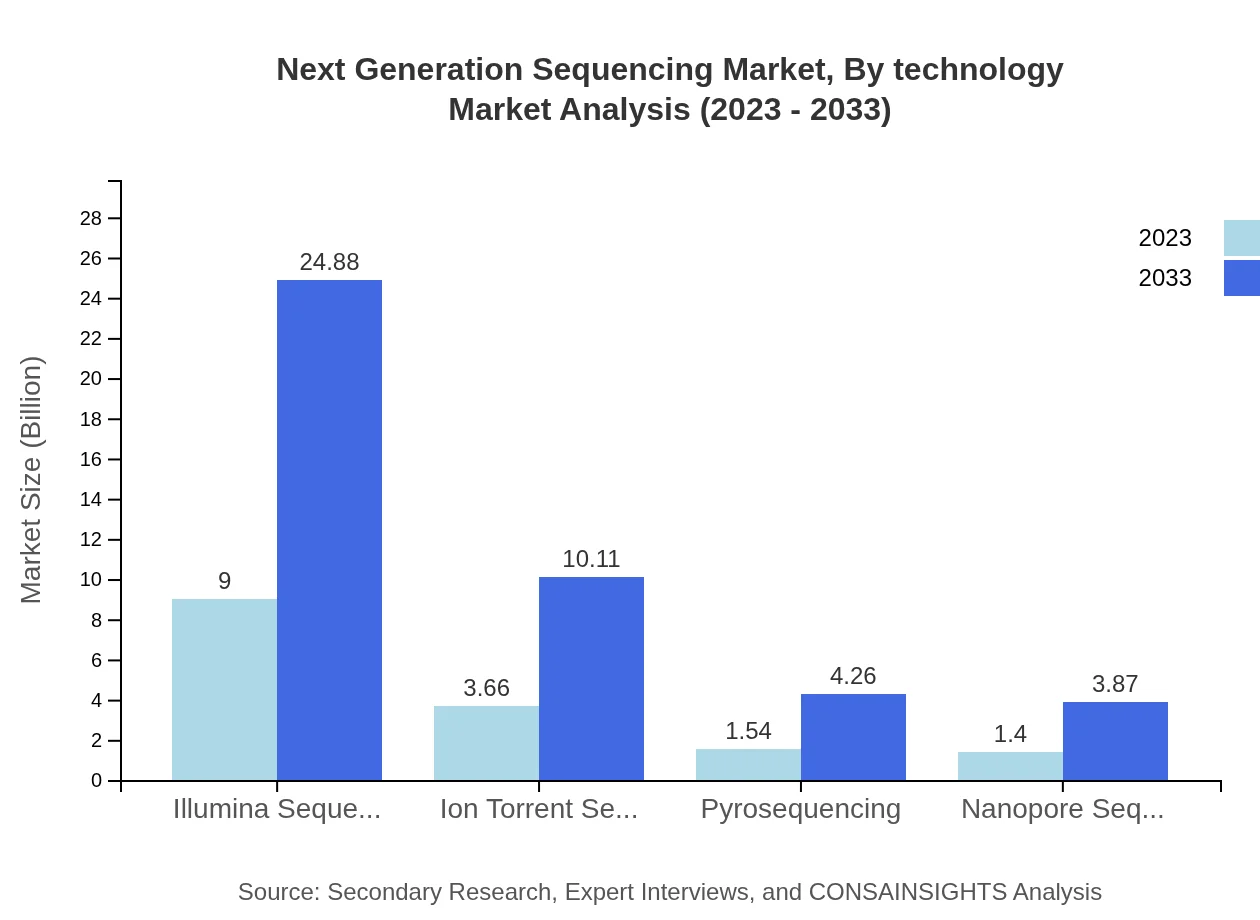
Key technologies contributing to the NGS market include Illumina Sequencing, with a significant market size of $9.00 billion in 2023 expected to expand to $24.88 billion by 2033, holding a share of 57.72%. Ion Torrent Sequencing, valued at $3.66 billion in 2023, anticipated to grow to $10.11 billion, comprises a significant 23.44% market share. Emerging technologies like Nanopore sequencing and Pyrosequencing are slowly gaining traction and are pivotal for specific applications.
Next Generation Sequencing Market Analysis By Application
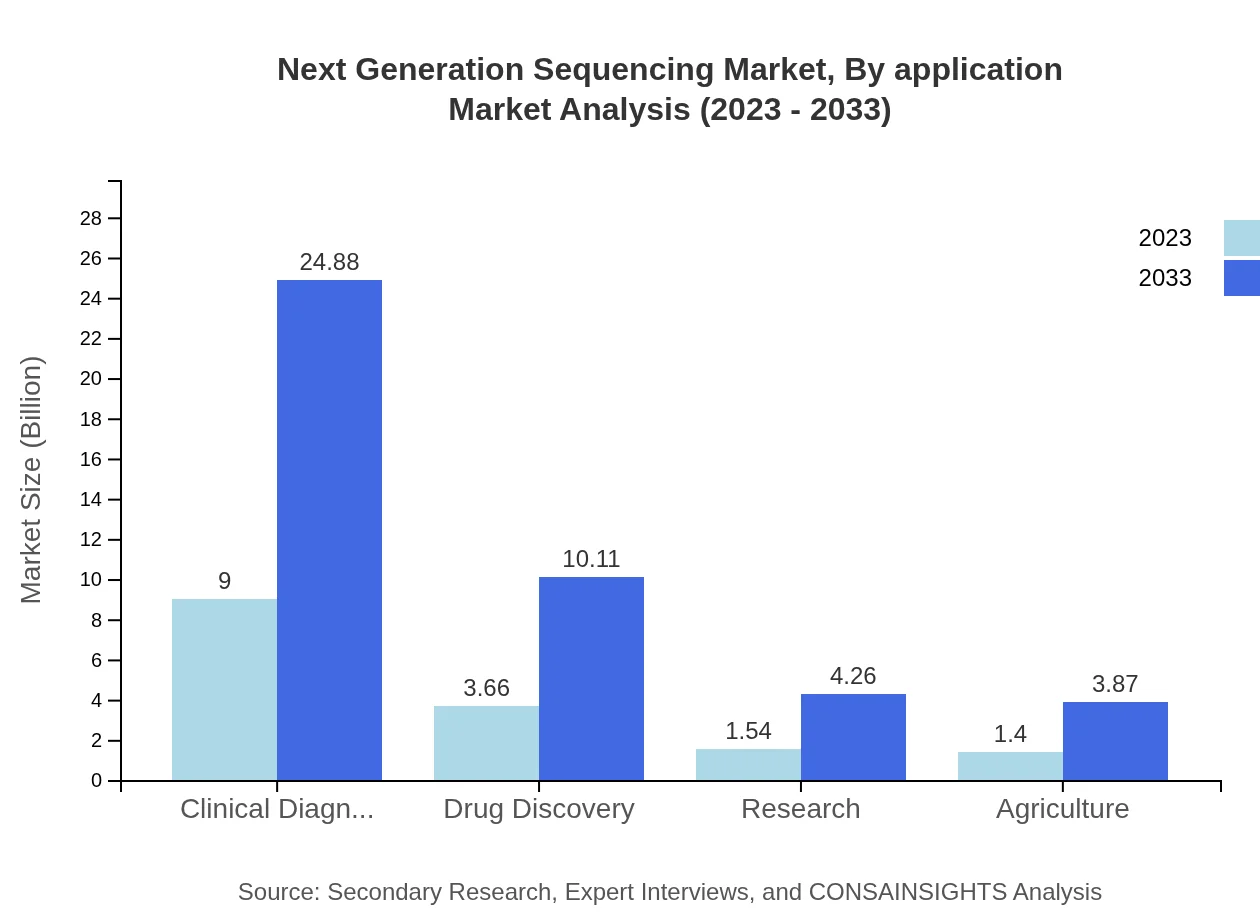
The application segments reveal the importance of NGS in various fields, such as Clinical Diagnostics (size of $9.00 billion in 2023, expected to reach $24.88 billion by 2033, with a 57.72% share), and Drug Discovery (size growth from $3.66 billion in 2023 to $10.11 billion by 2033, with a 23.44% share). The integration of NGS in research and agriculture reflects its versatility in developing sustainable practices.
Next Generation Sequencing Market Analysis By End Use
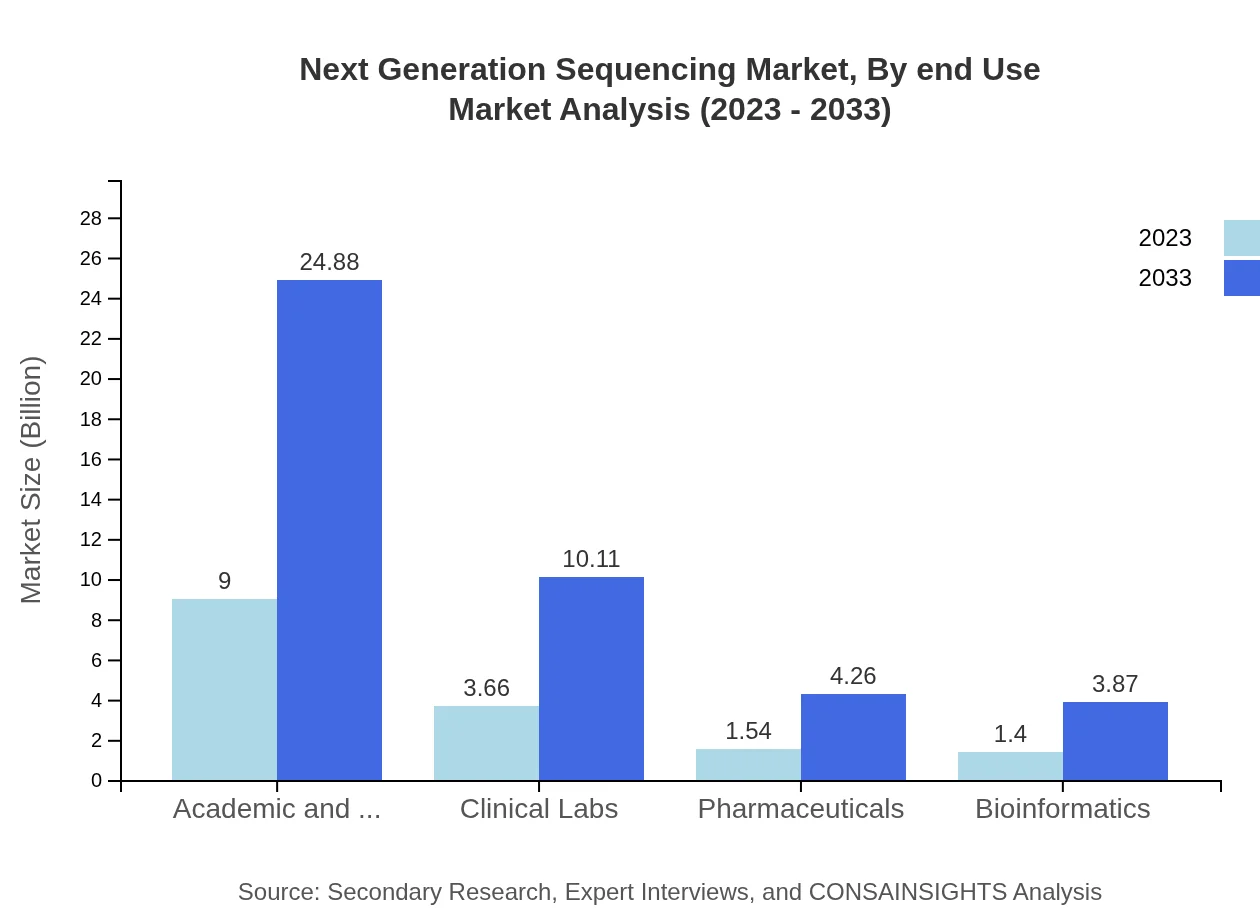
End-use segments emphasize the diverse applications of NGS across sectors. Academic and Research Institutes account for the largest share with a size of $9.00 billion in 2023, increasing to $24.88 billion by 2033 (57.72% share). Clinical Labs exhibit robust growth from $3.66 billion to $10.11 billion, representing 23.44% share.
Next Generation Sequencing Market Analysis By Regional Market
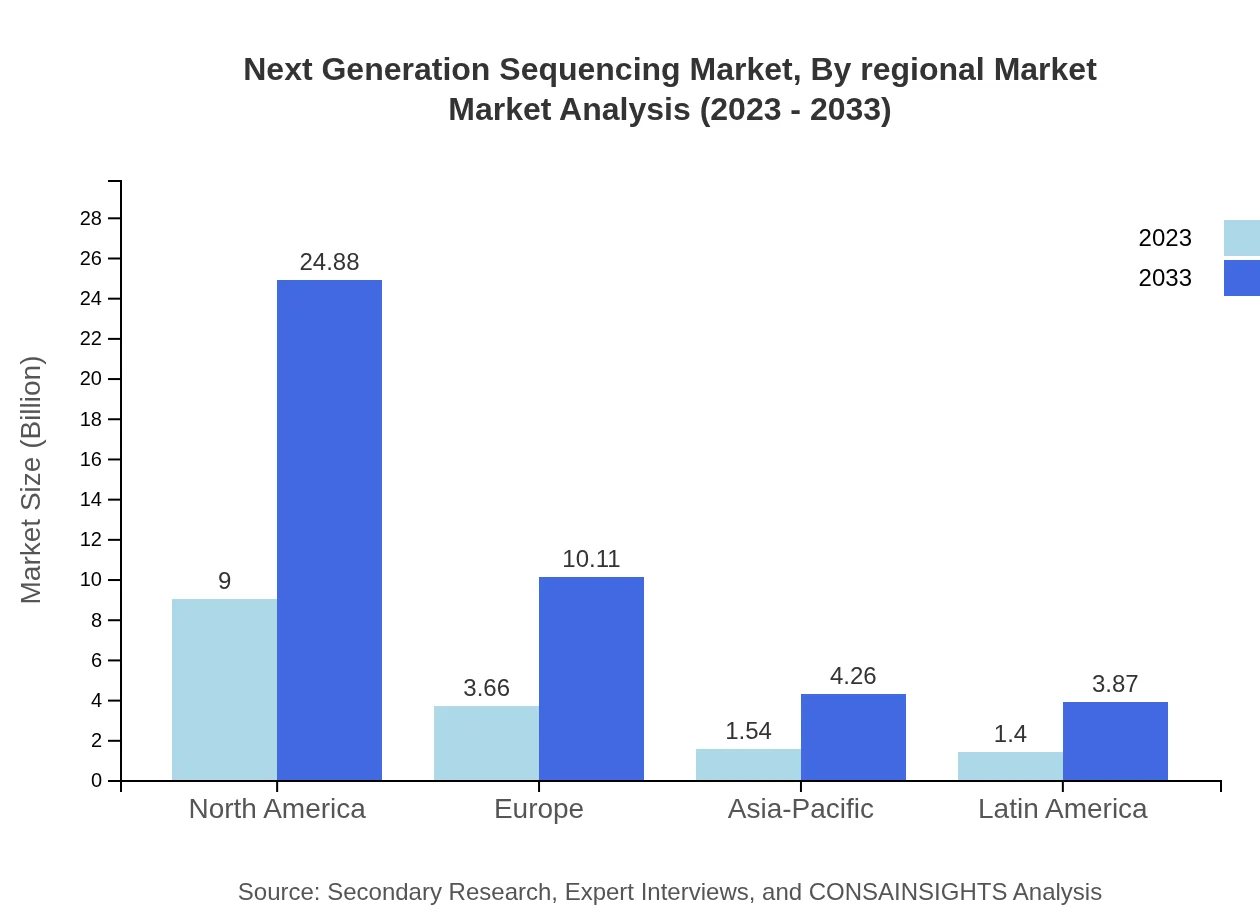
Regional segments highlight the variances in market potential, with North America leading while Asia-Pacific rapidly advances. Europe exhibits steady growth, while South America and MEA present opportunities for expansion as investments in genomics increase.
Next Generation Sequencing Market Trends and Future Forecast
Tell us your focus area and get a customized research report.
Global Market Leaders and Top Companies in Next Generation Sequencing Industry
Illumina, Inc.:
Illumina is a pioneering leader in DNA sequencing technology, renowned for its innovative platforms and solutions that empower genomic research and clinical applications worldwide.Thermo Fisher Scientific, Inc.:
Thermo Fisher Scientific provides a broad range of diagnostic and genetic sequencing products, playing an integral role in advancing proteomic and genomic studies through advanced NGS technology.QIAGEN N.V.:
QIAGEN specializes in the development of sample and assay technologies, including NGS-based solutions aimed at accelerating research and diagnostics for personalized medicine.We're grateful to work with incredible clients.






FAQs
What is the market size of the Next Generation Sequencing market in 2023?
The market size for 2023 is $15.60 Billion as reported for the Next Generation Sequencing market, serving research, clinical diagnostics and industry applications.
How big will the market be in 2033?
By 2033 the market is projected to reach $43.11 Billion according to the report, reflecting growth across technologies, applications and regions over the forecast period.
What is CAGR for the market during 2023 to 2033?
The compound annual growth rate for the 2023 to 2033 forecast period is 10.3%, based on the market expansion from 2023 to 2033 values provided.
Is there a single fastest Growing region in the Next Generation Sequencing Market Report market?
No single fastest-growing region is stated for the Next Generation Sequencing Market Report market because the top regional implied CAGR values are within 0.15 percentage points of each other, making the ranking too close to call reliably.
Which companies are leading in the market?
Top companies listed include Illumina, Inc., Thermo Fisher Scientific, Inc., and QIAGEN N.V., each active in sequencing platforms, consumables and related services.
What applications drive demand for sequencing technologies?
Clinical diagnostics, drug discovery and academic research are key application areas prompting demand for sequencing platforms, bioinformatics and related laboratory services.
How big is the North America regional market?
North America is reported to grow from $5.16 Billion in 2023 to $14.27 Billion in 2033, reflecting ongoing use in clinical labs, research centers and pharmaceutical R&D.
What regional growth details are available for Asia Pacific?
Asia Pacific is shown expanding from $2.93 Billion in 2023 to $8.09 Billion in 2033, driven by increased genomics adoption, research funding and expanding laboratory capacity.
Why are bioinformatics capabilities important?
Bioinformatics enables processing and interpretation of sequencing data, enhancing the value of NGS in diagnostics and research and supporting integration of sequencing workflows.
Which end users are covered in segmentation?
Reported end users include academic and research institutes, clinical laboratories and pharmaceutical companies, reflecting demand across research and clinical applications.