

Sicklecell Anemia Therapeutics Market Report
First published: 10 October 2024 | Last updated: 28 May 2026 | Report Code: sicklecell-anemia-therapeutics
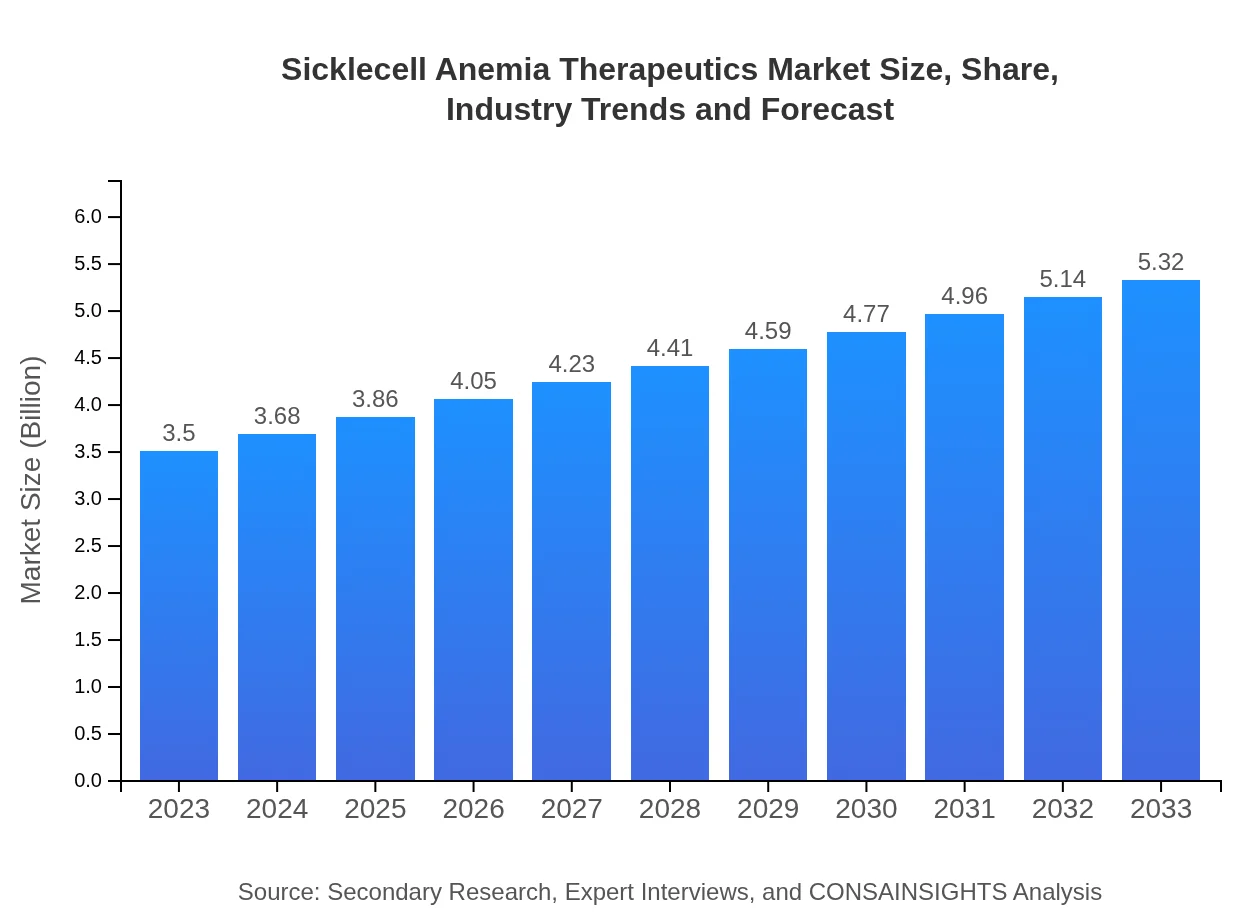
Sicklecell Anemia Therapeutics Market — USD 3.5 billion in 2023, Growing to USD 5.32B by 2033 at 4.2% CAGR
This report provides a comprehensive analysis of the Sicklecell Anemia therapeutics market, focusing on current trends, segment performance, regional insights, and growth forecasts from 2023 to 2033.
Key Takeaways
- Global market value rises from $3.50 Billion in 2023 to $5.32 Billion in 2033 at a 4.2% CAGR.
- North America is largest regional market, while no single fastest-growing region is stated because regional CAGR differences remain within 0.15 percentage points.
- Europe expands from $0.85 Billion in 2023 to $1.29 Billion in 2033; Asia Pacific grows from $0.74 Billion to $1.12 Billion.
- Therapeutic innovation—gene therapy, CRISPR-based treatments, and stem cell transplantation—drives long-term opportunities.
- Leading companies noted include Novartis, Bluebird Bio, Bristol Myers Squibb, and Pfizer.
Sicklecell Anemia Therapeutics Market Report — Executive Summary
North America remains largest market by forecast-period value, while no single fastest-growing region is stated because top regional growth rates are separated by less than 0.15 percentage points. The Sicklecell Anemia therapeutics market is on a steady upward trajectory, with market size increasing from $3.50 Billion in 2023 to $5.32 Billion in 2033 at a 4.2% CAGR over the 2023 to 2033 forecast period. Growth is underpinned by advances in disease-modifying approaches, emerging gene and CRISPR-based therapies, and continued investment from pharmaceutical and biotech firms. Supportive regulatory pathways and heightened focus on personalized treatment approaches further encourage adoption. The market structure includes disease-modifying therapies, pain management, blood transfusion therapies, multiple administration routes, and distribution channels spanning hospital, retail, and online pharmacies. Regional dynamics are diverse: North America leads in absolute value, while Europe, Asia Pacific, Latin America, and Middle East & Africa all show measurable expansion. Key players such as Novartis, Bluebird Bio, Bristol Myers Squibb, and Pfizer are active in clinical and commercial efforts, shaping competitive dynamics and therapeutic access.
Key Growth Drivers
- Advances in gene therapy and CRISPR-based interventions enhancing long-term treatment prospects.
- Rising R&D and investment by pharmaceutical and biotechnology companies focused on targeted sicklecell treatments.
- Regulatory support and evolving approval pathways facilitating faster development and market entry for novel therapies.
- Increased emphasis on personalized medicine and disease-modifying approaches altering standard care practices.
- Expanded distribution channels, including hospital and online pharmacies, improving patient access to therapies.
| Metric | Value |
|---|---|
| Study Period | 2023 - 2033 |
| 2023 Market Size | $3.50 Billion |
| CAGR (2023-2033) | 4.2% |
| 2033 Market Size | $5.32 Billion |
| Top Companies | Novartis, Bluebird Bio, Bristol Myers Squibb, Pfizer |
| Published Date | 10 October 2024 |
| Last Modified Date | 28 May 2026 |
Sicklecell Anemia Therapeutics Market Overview
Customize Sicklecell Anemia Therapeutics Market Report market research report
- ✔ Get in-depth analysis of Sicklecell Anemia Therapeutics market size, growth, and forecasts.
- ✔ Understand Sicklecell Anemia Therapeutics's regional dynamics and industry-specific trends.
- ✔ Identify potential applications, end-user demand, and growth segments in Sicklecell Anemia Therapeutics
What is the Market Size & CAGR of Sicklecell Anemia Therapeutics Market Report market in 2023?
Sicklecell Anemia Therapeutics Industry Analysis
Sicklecell Anemia Therapeutics Market Segmentation and Scope
Tell us your focus area and get a customized research report.
Sicklecell Anemia Therapeutics Market Report Market Analysis Report by Region
Europe Sicklecell Anemia Therapeutics Market Report:
Europe grows from $0.85 Billion in 2023 to $1.29 Billion in 2033. Regional growth is influenced by increased focus on personalized medicine, regulatory pathways that support novel treatments, and growing research collaborations.Asia Pacific Sicklecell Anemia Therapeutics Market Report:
Asia Pacific grows from $0.74 Billion in 2023 to $1.12 Billion in 2033. Market progress is driven by rising healthcare investment, expanding access to specialty therapies, and growing clinical development activity in the region.North America Sicklecell Anemia Therapeutics Market Report:
North America is largest regional market, rising from $1.2 Billion in 2023 to $1.82 Billion in 2033. Expansion reflects concentrated R&D investment, commercial activity by major firms, and early adoption of advanced therapies in clinical settings.South America Sicklecell Anemia Therapeutics Market Report:
Latin America grows from $0.28 Billion in 2023 to $0.42 Billion in 2033. Growth in this region is shaped by expanding healthcare infrastructure, greater awareness of treatment options, and incremental adoption of advanced therapeutics.Middle East & Africa Sicklecell Anemia Therapeutics Market Report:
Middle East and Africa grows from $0.44 Billion in 2023 to $0.67 Billion in 2033. Drivers include strengthening health systems, improving availability of specialized care, and interest in innovative treatment approaches.Tell us your focus area and get a customized research report.
Research Methodology
Sicklecell Anemia Therapeutics Market Analysis By Therapy Type
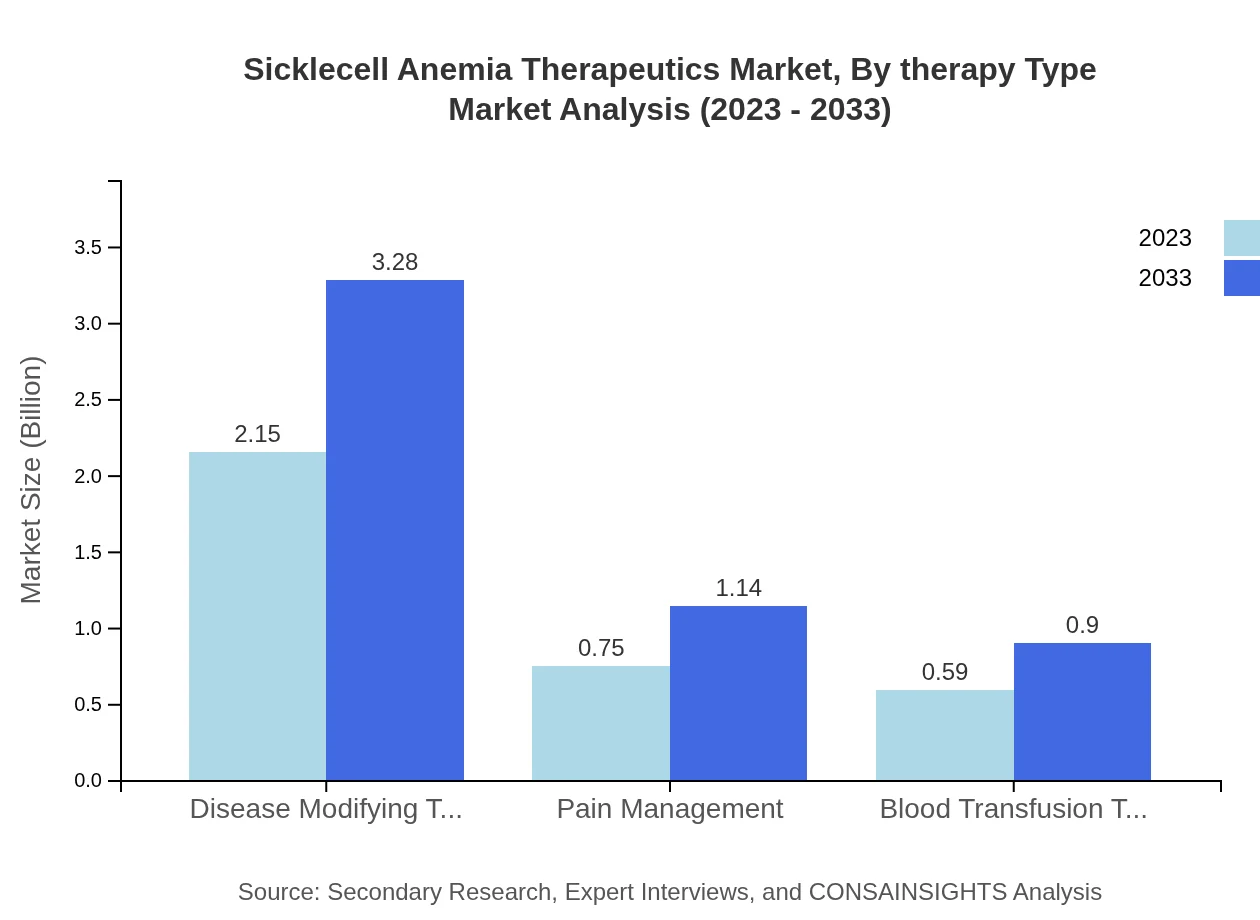
In 2023, the Disease Modifying Therapies segment dominates the market with a size of $2.15 billion and is expected to reach $3.28 billion by 2033, holding a 61.56% market share. Pain Management therapies account for $0.75 billion in 2023, projected to grow to $1.14 billion by 2033, while Blood Transfusion Therapies are valued at $0.59 billion, with an expected increase to $0.90 billion by 2033.
Sicklecell Anemia Therapeutics Market Analysis By Route Of Administration
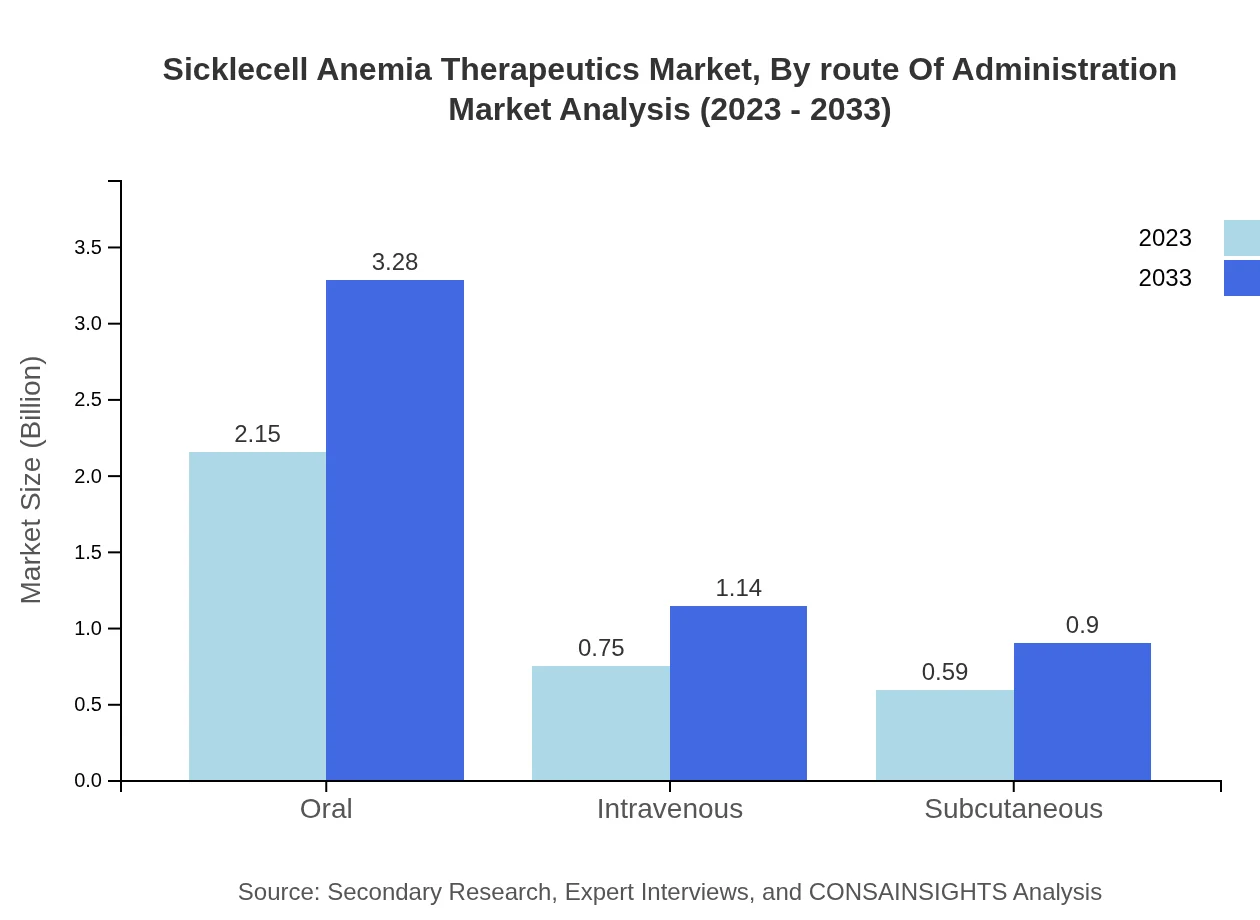
Oral administration remains the leading route, with a market size of $2.15 billion in 2023 and projected to reach $3.28 billion by 2033, constituting a significant share of 61.56%. Intravenous therapies are valued at $0.75 billion, expected to grow to $1.14 billion, while Subcutaneous therapies will move from $0.59 billion in 2023 to $0.90 billion by 2033.
Sicklecell Anemia Therapeutics Market Analysis By Patient Age Group
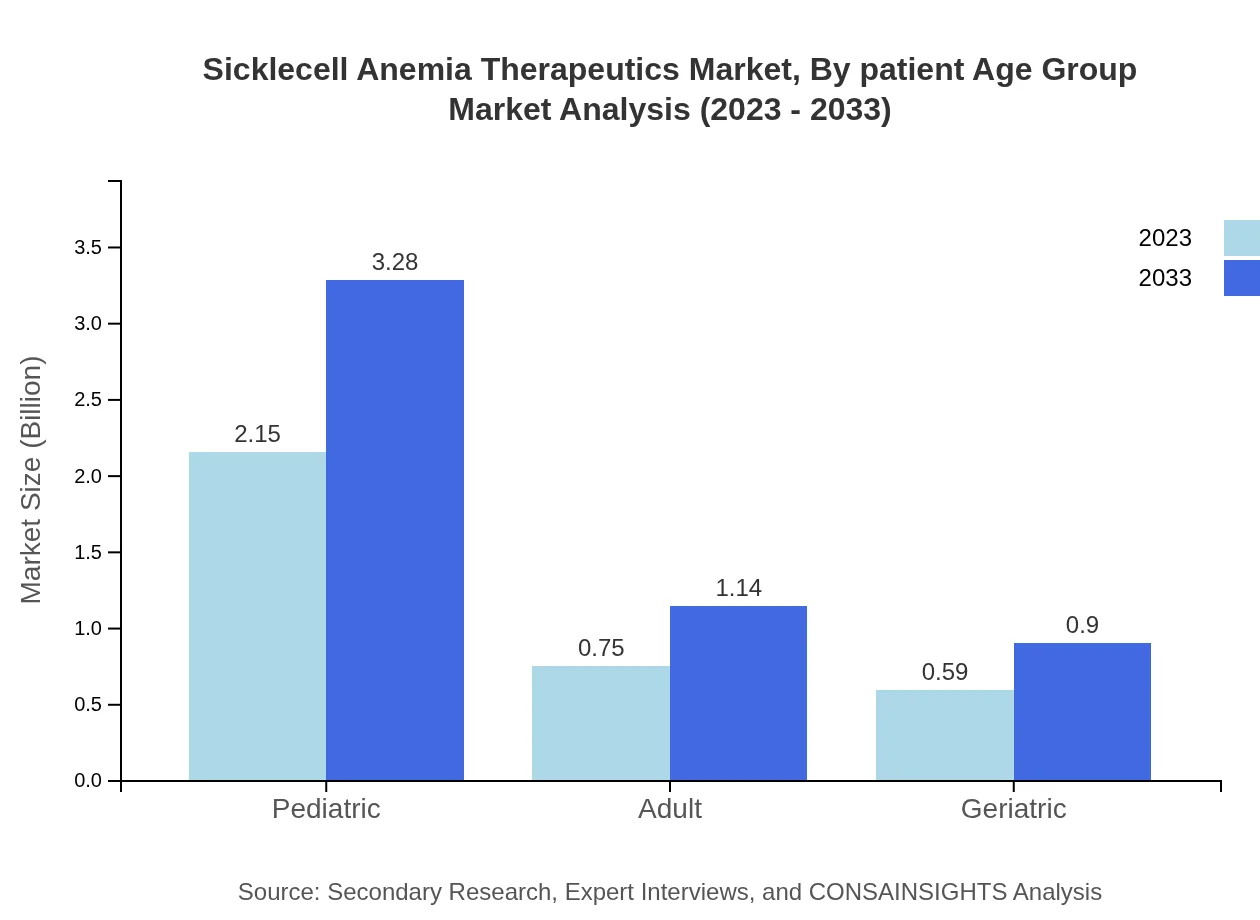
The Pediatric segment represents a significant portion of the market at $2.15 billion in 2023, anticipated to grow to $3.28 billion by 2033. The Adult segment is projected to grow from $0.75 billion to $1.14 billion, while the Geriatric segment is expected to grow from $0.59 billion to $0.90 billion over the same period.
Sicklecell Anemia Therapeutics Market Analysis By Distribution Channel
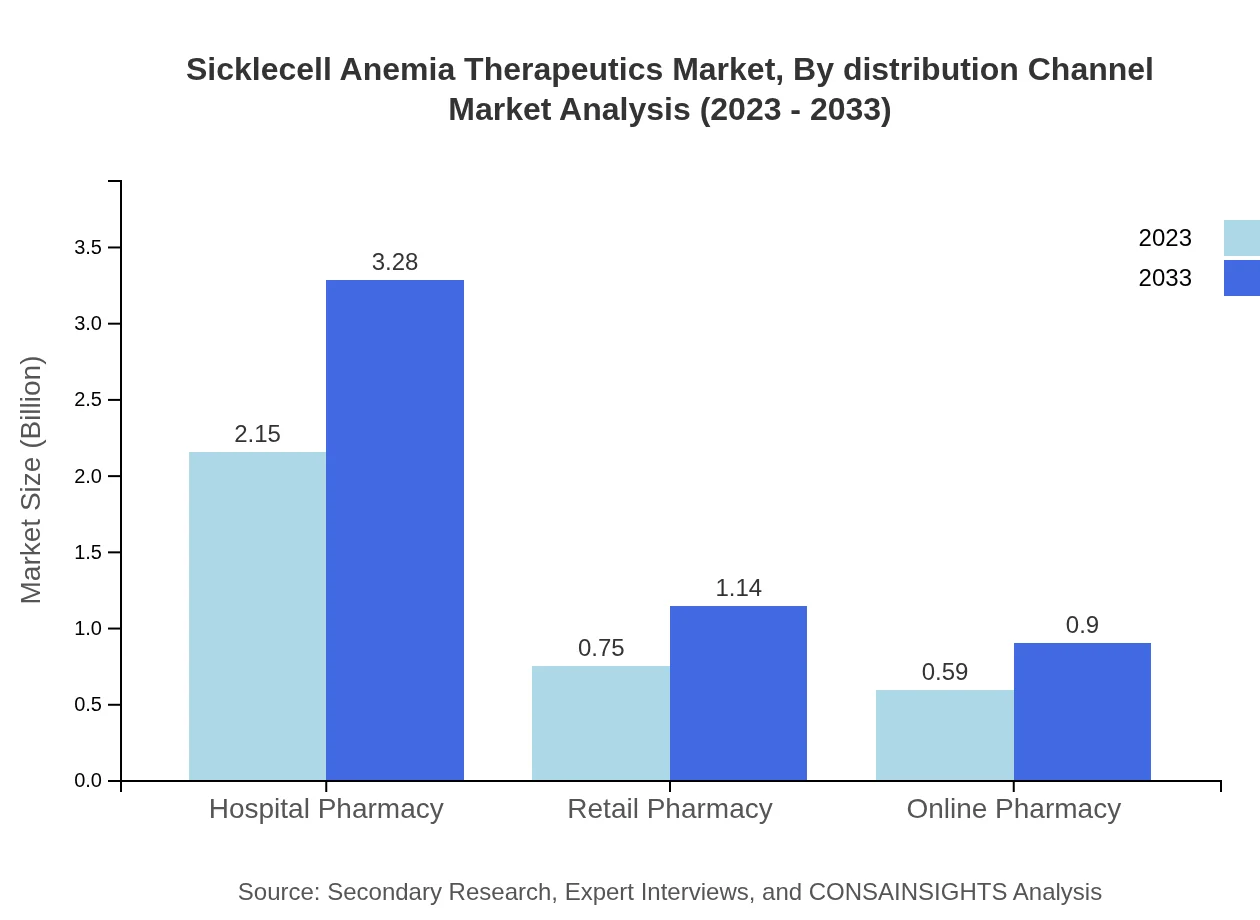
Hospital Pharmacy remains a dominant distribution channel, with a market size of $2.15 billion in 2023, predicted to climb to $3.28 billion by 2033. Retail Pharmacies and Online Pharmacies are also critical, with expected growth from $0.75 billion to $1.14 billion and $0.59 billion to $0.90 billion respectively.
Sicklecell Anemia Therapeutics Market Analysis By Therapeutic Advancements
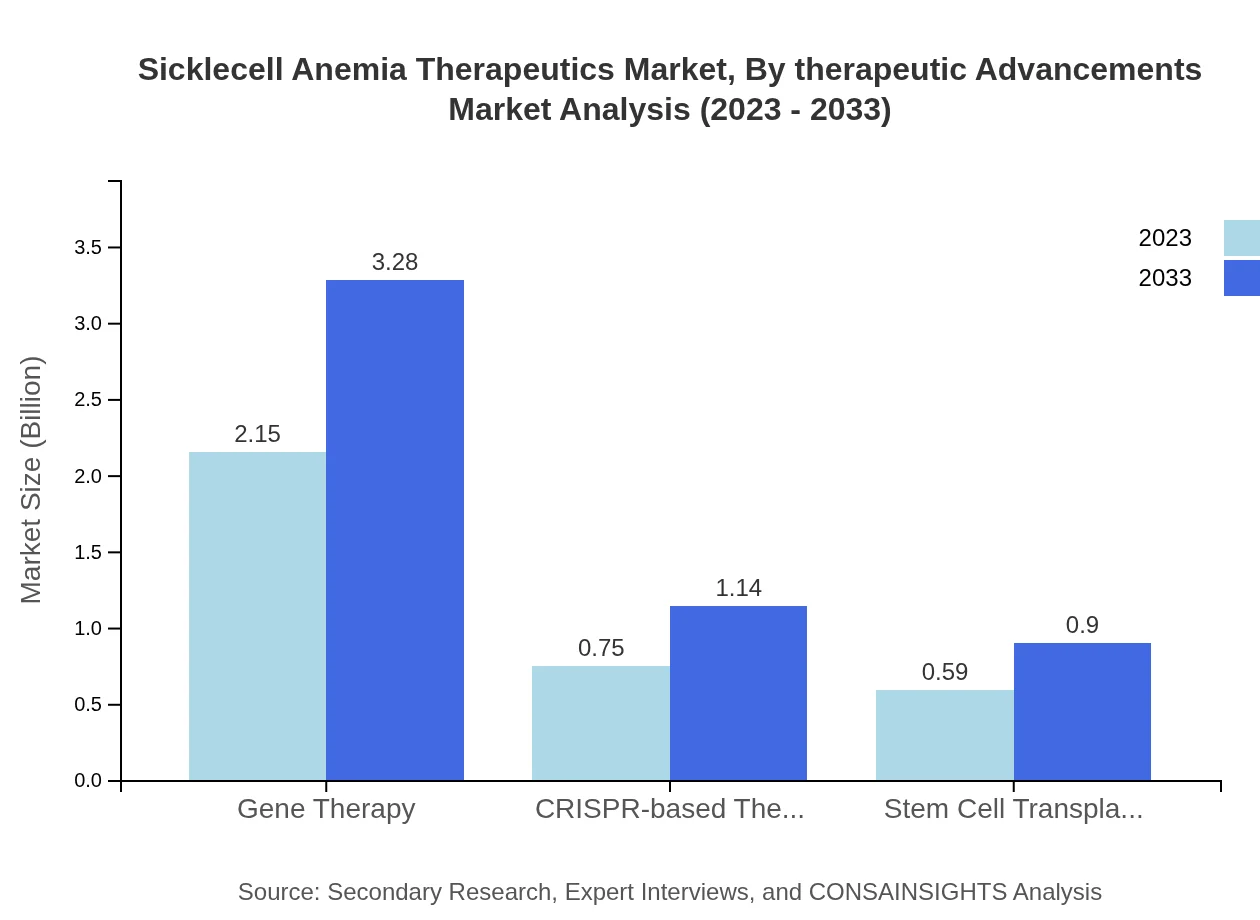
Advancements in Gene Therapy are reshaping the therapeutic landscape, with the market expected to grow from $2.15 billion in 2023 to $3.28 billion by 2033, due to increasing research focusing on innovative gene-editing technologies. CRISPR-based therapies and Stem Cell Transplantation are also expected to see growth, contributing significantly to the evolution of sector treatments.
Sicklecell Anemia Therapeutics Market Trends and Future Forecast
Tell us your focus area and get a customized research report.
Global Market Leaders and Top Companies in Sicklecell Anemia Therapeutics Industry
Novartis:
A leading player in the pharmaceuticals sector, Novartis is known for its innovative therapies in Sickle Cell disease management, including the development of hydroxyurea for treatment.Bluebird Bio:
A biotechnology company focused on developing gene therapies for genetic disorders, Bluebird Bio is renowned for its progress in curative therapies for Sickle Cell Anemia.Bristol Myers Squibb:
This global biopharmaceutical company has established itself through its diverse portfolio that includes impactful treatments for Sickle Cell Anemia through innovative research and clinical trials.Pfizer :
Pfizer contributes significantly to the industry with its range of therapies designed for Sickle Cell, utilizing modern science to create effective treatment solutions.We're grateful to work with incredible clients.








FAQs
What is the market size of the Sicklecell Anemia therapeutics market in 2023?
The market size in 2023 is $3.50 Billion according to the report's provided figures for that year.
How big will the market be in 2033?
By 2033 the market is projected to reach $5.32 Billion, as stated in the supplied forecast data.
What is CAGR of the market for the forecast period?
The compounded annual growth rate for the 2023 to 2033 forecast period is 4.2% as provided in the input.
Is there a single fastest Growing region in the Sicklecell Anemia Therapeutics Market Report market?
No single fastest-growing region is stated for the Sicklecell Anemia Therapeutics Market Report market because the top regional implied CAGR values are within 0.15 percentage points of each other, making the ranking too close to call reliably.
Who are the top companies active in this market?
Top companies listed include Novartis, Bluebird Bio, Bristol Myers Squibb, and Pfizer in the supplied company list.
Why are gene therapies important for this market?
Gene therapies are highlighted as major therapeutic advancements that can alter disease progression and are driving long-term research and investment focus.
What factors are driving market growth?
Key factors include therapeutic innovation, increased biotech investment, regulatory evolution, and broader adoption across distribution channels.
Which patient age groups are covered in segmentation?
Segmentation includes Pediatric, Adult, and Geriatric patient age groups as listed in the input sub segments.
How are therapies delivered according to the report?
Routes of administration specified include Oral, Intravenous, and Subcutaneous in the provided segment details.
What distribution channels are included in the market breakdown?
Distribution channels noted are Hospital Pharmacy, Retail Pharmacy, and Online Pharmacy per the input segment list.